GOODNESS is glory-lighted. Sinful flesh is opaque to the light of heaven, but righteousness quickly absorbs and radiates celestial glory. The redeemed rejoice at the shining of the glory of the coming King, while the wicked are destroyed by its brightness.
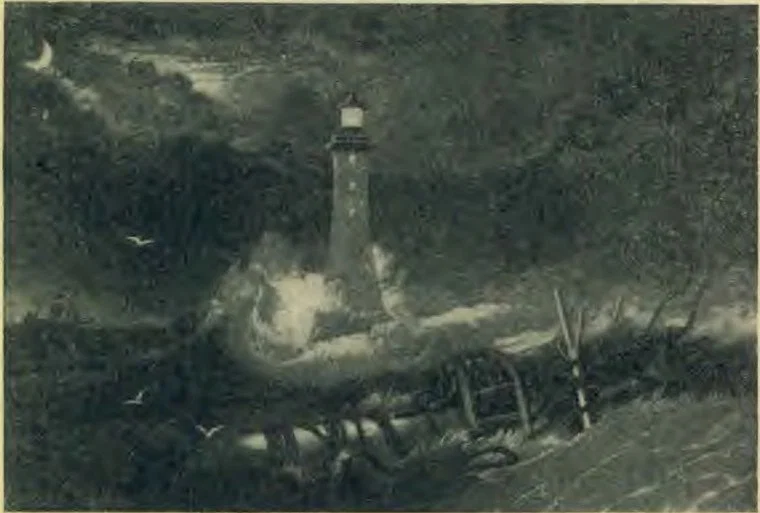
FOUNDED ON A ROCK
Stephen's face shone as if it had been the face of an angel; Moses veiled his face to hide the shining from Sinai's glory. The heavenly messenger foretelling the birth of Jordan's preacher left some of his splendor upon the devout priest. Flashes of heavenly glory may be caught upon the face of every true child of God, however plain the natural features, while even natural beauty fades away as a sinner's sin darkens and deepens.
Heaven makes no mistake. The gates of glory open to let celestial light stream through upon those only whose hearts have been purified in the cleansing blood of Jesus, and whose lives have been guided by heaven's own book of life. “Years ago, at one of the Northfield conferences, there was a man who carried about with him a very wonderful atmosphere. He seemed always to be on the heights with the light of God upon his face. An atmosphere like that does not ‘happen;’ it is not the result of ‘temperament;’ there is a reason for it, and Mr. Moody determined if possible to find that reason. So he asked the man about his work.
“He found that he was a street-car conductor, whose day began so early that he had to get up at four o'clock. But he rose still earlier than that. At half past three, even on the bleakest winter mornings, he was up, taking his orders for the day from the Word of God. Mr. Moody had discovered the secret.
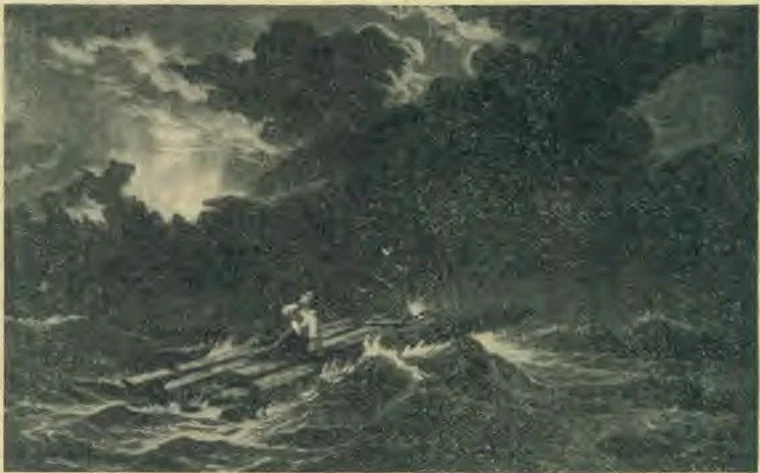
THE LAST PRAYER
“Will half an hour a day with the Bible always give such power?—No. There are several things to be observed about this man's study. In the first place, it was study and prayer—not a mere skimming over a number of pages until the time was up; it was a vital communion between him and his Master. And every moment face to face with God will unfailingly count in a life. Yet there is still more to be considered. He put God first in his day—first in time, first in thought, first in order of importance. There is an especial promise to those who do that. And finally it cost him something—it was a daily sacrifice that he offered. It was not an easy half hour when he had nothing especial to do—it was one that demanded resolution and constant sacrifice of his own ease. ‘Shall I give the Lord of that which cost me nothing?’ David cried.”
Getting Used to Things
By Max Hill
“You get used to it,” I overheard one friend remark to another concerning some matter of almost daily occurrence.
“Yes,” was the philosophical reply, “when you know you have to, you can get used to anything.”
And you can. Moreover, you must. Not everything in this world is just as we would have it, not everything is right; not everything can be right, for sin is here, and the results of sin are everywhere evident. We can overcome sin in ourselves. We can encourage others to overcome sin in their lives. But we cannot deliberately change present conditions in the world by our own efforts. Then we must call to our aid the good old philosophy, “What can’t be cured, must be endured.” We must simply “get used to it.”
Have you not known people who had the faculty of making the most of unpromising and uncomfortable conditions? Did you like them? They are so perennially sweet and pleasant, so unruffled and calm, so true and good, that we love them unconsciously. Do you not read the secret of life here? While we are in this unpleasant world, make the most of it; “get used to it,” and then our lives will win souls to the higher, better life of love and obedience to God.
MAX HILL.
The Best Time
By D. A. Fitch
If a blot or a mistake is made when writing with ink, it is much more easily erased while it is fresh.
A mistake in conduct or speech is much more easily corrected and gladly forgiven when fresh in the thought than after it has remained for some time in the mind and heart of the one who was wronged or offended. D. A. FITCH.
We Must First Be Sowers
By Carey
We must not hope to be mowers
And gather the ripe gold ears,
Until we have first been sowers
And watered the furrow with tears.
— Carey.
Frozen Eggs
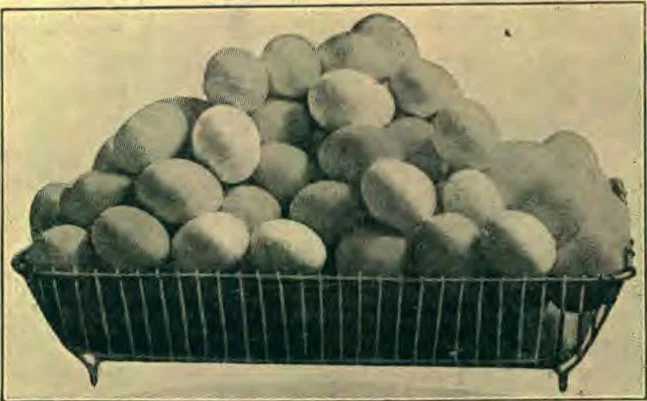
FROZEN EGGS
A RECENT bulletin of the Department of Agriculture gives the results of five years of careful study of methods of putting up frozen canned eggs for the market. The experts of the Department found that it is just as possible to make good canned eggs as it is to make good canned milk or good canned baked beans. And there is a good deal more of an economic reason for canning eggs than canning beans, for on account of their fragility, eggs cannot be kept and transported so easily as beans. Eggs are produced principally in the spring and summer, and there is practically no production in the winter. Unless the oversupply of eggs in summer can be kept in some way for winter use, there must be a shortage.
Of course, some of the summer eggs are kept in the shell in cold storage, but there are many perfectly good fresh eggs which are small or slightly cracked, or soiled, and which cannot therefore be kept in the shell, or which it would not pay to ship in summer from the corn belt to the egg-consuming markets. These eggs, the Department of Agriculture has found, can be broken and canned and kept in excellent condition for winter cooking. You may buy the whites separately in one can and the yolks in another, or you may buy whites and yolks mixed together in a single can. They are not yet put up in packages small enough for the average householder. The smallest commercial package is five pounds, and this would not be practicable for ordinary home consumption, because the eggs have to be used practically as soon as they are thawed out. They can be kept only two or three days at a temperature of 45° to 50°, which is the temperature of the average household refrigerator.
These hard frozen eggs, however, are already used by most bakers and manufacturers of macaroni, and they are practical for use in hotels, boarding houses, restaurants, and large families. In fact, some hotels with progressive chefs are already using them. They cannot, of course, be used for poaching, but they can be used for all cooking purposes in which eggs are required. They are excellent for pies, puddings, and custards, far cheaper than fancy shell eggs, and far better than seconds or storage eggs. They are cheaper because they are put up largely in the egg-producing belt of the Middle West, at the time when hens are laying best, and because they can be shipped closely packed in refrigerator cars, so that there is no waste space and so that the usual ten-per-cent loss from egg-breakage is saved. They are fresh because only fresh eggs are allowed to go into the cans, and after they are frozen, they are kept in absolutely air-tight tins, without deterioration either in quality or in freshness until they are used.
As soon as the eggs are received at the examining house they are sent to a chilling room and kept for about twenty-four hours at a temperature between 35° and 38° F., which removes all heat from them. They are then candled and recandled in another chilled room, and all eggs which the candling shows to be other than good are discarded. These graded eggs are then broken in refrigerated rooms, which are so constructed that they are as aseptic and as light as it is possible to make them. No dust or flies can get into these rooms, and the temperature in them never rises beyond 65° F. These rooms, moreover, are absolutely water-tight and steam-proof, so that they can be thoroughly cleaned.
Owing to the perishable nature of eggs, their canning under the method developed by the specialists of the Department of Agriculture calls for even greater cleanliness than is considered necessary in canning other products. In fact, the egg-canning rooms which the Department is striving to get egg handlers in the egg-producing centers to establish, look more like the operating rooms of modern hospitals than commercial factory plants, and represent the acme of scientific sanitation. The utensils used for breaking the eggs are all of metal, so that they can be steam sterilized, which is necessary in order that the work of breaking and canning the eggs can be done with bacteriological cleanliness. The operatives clean their hands much as a surgeon does before beginning an operation, and they dress in clean caps and gowns, such as are used by trained nurses.
Each egg is broken into a separate glass cup and carefully inspected before it is poured into a sterile container. Wherever a doubtful egg is broken, it is at once cast aside and all the utensils used in connection with it are cleaned and sterilized, and the operative cleans her hands. All the traces of the bad egg must be removed before work can be continued. In order to make certain that the egg breakers will give sufficient attention to each egg, a definite speed of breaking is set and maintained. Girls who attempt to work too rapidly and carelessly are checked. As soon as a can is filled with broken eggs, the contents are mechanically churned to a cream, and the can is then taken to the “freezer,” which maintains a temperature of 10° F., and sometimes much lower.
The freezer is an immaculately clean room, filled with row on row of shelves formed by pipes covered with thick hoar frost. Inside the pipes there is a flow of brine or other chemical solution which is kept far below the freezing point, so that the heat in the room10is absorbed by the pipes, in exactly the opposite manner from the way in which steam radiator pipes throw heat out into a room. The can of frozen eggs is placed on one of these shelves and in twenty-four to thirty-six hours the eggs in the can are hard frozen. They are then carefully covered and kept until required for use. Until the canned eggs are actually opened and melted for use in cooking, they are kept hard frozen. The exceedingly low temperature which is maintained prevents the multiplication of bacteria, and when the eggs come out of this storage, if proper conditions have been maintained, they are just as sweet and fresh as the day they went in.
Such is the process which makes fresh laid eggs in winter a staple instead of a luxury. Hard frozen eggs cannot now ordinarily be bought at retail because they would have to come to the housewife absolutely hard frozen, and very few retailers are equipped with sufficient cold storage facilities to keep any hard frozen articles. The eggs have to be kept at a temperature of 32° or below, and most refrigerators in retail stores are from ten to fifteen degrees warmer. The possibilities of refrigeration are still in their infancy, and some day, if there is the right kind of refrigeration all along the line, it will be possible for the egg dealer to deliver to the housewife a two-pound box of frozen eggs on baking day, much as the milk dealer now delivers his standing order of milk. In this way the housewife would be getting her eggs at the equivalent of twenty-two cents a dozen instead of fifty cents or more in the middle of winter.
Until that happy time comes, however, the possibilities of the wider use of frozen eggs in restaurants, hotels, first-class baking establishments, and by manufacturers of commercially prepared food products, should be known and appreciated. Frozen eggs are a boon in that they offer a means of raising the standard of life at the same time that they decrease the cost of living. The years of careful study which the Department of Agriculture has devoted to the matter and the resulting wise direction which has revolutionized and standardized the frozen egg business, represent a service of inestimable value to the people of the country. — The Forecast.
— Hazeltine Fewsmith, in The Forecast
By Hazeltine Fewsmith
Autumn
LITTLE wren, that came to me with your cheery springtime song,
You thrilled my heart with melody all the laughing springtime long.
Little scold, that coaxed for me your babies from their summer nest,
At sunset, crooning tenderly, you hushed my heart to summer rest.
Little wren, so soon from me must you take your autumn way?
Ah! lonely then my heart shall be, little wren, that autumn day.
— Hazeltine Fewsmith, in The Forecast
The Biggest Pump Known — the Sun
By F. R. Moulton
AMONG the most powerful modern machines are the great pumps used in supplying water to cities and raising it out of deep mines. One of the largest pumps in the world is at Bethlehem, Pennsylvania. It is driven by a 7,000-horsepower engine. When it is remembered that one horsepower will raise 16½ tons one foot a minute, the immense power of this pump is apparent.
It is an inspiring sight to see the immense machinery of modern industry doing the work of thousands of men. But there is a larger pump than any man has ever invented which works silently and continuously all around us. Reference is made to the sun which raises into the atmosphere all the water which falls11in the shape of rain or snow. It is clear that all the water which runs in the thousands of rivers that cover the earth and which fills its great lakes, came down originally as rain; for all these bodies of water would soon fail if they were not replenished from the skies.
A little computation will show that an astonishing amount of water falls on the earth every year. Even a big rain is a much more important thing than is ordinarily supposed. In summer there are rains in which almost an inch of water falls over a large area, and occasionally there are those when two or three inches fall in the course of a few hours. An inch of water on an acre weighs over 100 tons, and on a square mile, more than 60,000 tons. Rain ordinarily falls from a height of about half a mile. The fact that it ascends in the form of vapor does not mean that the same work was not expended to raise it, as would have been done if it had been elevated to that height as water. The same amount of energy is used in one case as in the other.
The average rainfall for the whole United States a year is about 20 inches. That is, on the average 1,200,000 tons of water fall each year on every square mile in this country from a height of half a mile. There are in the United States 3,600,000 square miles. Therefore the sun has pumped up the 4,320,000,000,000 tons of water which each year fall upon the United States.
A simple calculation shows that one horsepower will raise about 3,500 tons one-half mile in one year. Therefore it would require 1,200,000,000 horsepower, working continuously, to pump up the water to the sky which falls as rain on the United States. But the area of the whole world is fifty times that of this country, and the average rainfall on it probably does not differ much from 20 inches.
It follows from this discussion that the sun pumps up annually from the earth more than 20,000,000,000,000 tons of water. It is, therefore, immeasurably beyond the most powerful pump yet devised by man. If the energy of the descending rain could be used to drive our machinery, no other source of power would be required. But this is only one of the ways in which the sun’s heat does work upon the earth, and the whole amount of energy which strikes the earth is many times that which is used in evaporating the water and raising it to the sky. While the amount of energy the sun pours upon the earth is appalling, the earth is so small as seen from the sun that only one part in eight billion of the energy that streams out from it strikes this little planet upon which we live.—F. R. Moulton.
Ambrine: a French Surgeon’s Wonderful Discovery
“SOMEWHERE in France,” working night and day in the field hospitals, an unknown doctor is performing cures almost miraculous. He has discovered a new remedy for burns, and for frozen feet and hands: a cure that saves hands and feet after gangrene has made them things of horror, that rebuilds a man after his flesh has been eaten away by liquid fire and burning tar.
The unknown is Dr. Barthe de Bandfort. An American woman nursing the French soldiers tells, in The Outlook, of his wonderful work. Ordinarily, when gangrene begins its deadly work, the foot or hand, or more often the entire limb, has to be amputated. Of the dozens and dozens sent to this surgeon, only one had to have his legs amputated. And not one man flinched or cried out under the treatment, because not one suffered any pain. That is the most wonderful thing of all.
One man lay on a stretcher, rolling a bandage unconcernedly while they dressed his stumps.
“Does it hurt?” asked the American.
“Not at all,” he replied, “but before I reached here—”
There were dozens—all interested in their cases, all witnessing to the fact that they felt no pain, all fast recovering.
“And then we came to the burning tar cases,” the nurse goes on. “One doctor told me that it was considered the most terrible form of suffering. When I caught sight of the first of them, I could not believe my senses. I could not believe that any man in such a state could be living. But do you know, will you believe, that very man—that apparent wreck, every feature of whose face was then indistinguishable, eyes closed, lips and parts of his face burned to the bone, teeth all exposed like a grinning mask, whose hands were too dreadful for me to describe—talked with Mrs. T. only ten days later? That the features of his face are not only plainly distinguishable, but that the deep wounds are healing up, the flesh fast healing over with new white skin, that there remains on his forehead but one place not yet fully recovered, and that there will not be, within another week, even a scar? His skin was as soft as a baby’s.”
The new treatment is so simple that the wonder of it is no one has thought of it before. It consists of a mixture of wax, paraffin, and resin, heated to 120° C., at which degree it becomes like water and of the color of honey. Then it is ready to use. If you dip your fingers into it, it has only a comfortable warmth, and dries at once when you remove your fingers, incasing every little fold or crease in an elastic covering through which you can see.
The nurse describes the simple principles on which the doctor works.
“All air is kept out,” she explains, “and there is no moisture; and, you know, air and moisture are the greatest causes of suffering to burned people. If the skin is not too sensitive, the wax (or ambrine, as the surgeon has named it) can be painted on with a brush. If it is, the liquid is sprayed on with a small pump. The member is then wrapped in cotton and gauze, to keep the waxy covering from breaking, or, as in the case of faces, with a mask of gauze only. In the beginning, the wax covering is removed every twelve hours, and a new one painted on. The removing of the wax causes no pain. Later it is taken off but once in twenty-four hours.”
“To my surprised inquiry if that were really all that produced such marvelous results, the surgeon replied: ‘Mademoiselle, we do nothing. Nature left alone does it all. It is as if we covered the man as one covers a plant in a conservatory, away from all harmful influences, and there the skin grows again, untouched, as a plant grows under the influence of the sun. That is all.’—Every Week.
Her Widow’s Mite was Fourteen Cents
By Grace M. Sissons
A WOMAN’S tears can start about anything. In Mrs. Shields’s case they started her into the retail coal business.
It happened this way: She was sitting in her husband’s bare office in Marysville one dreary November morning, facing the problem of supporting herself and her fatherless little son.
Her handicap, she discovered on adding up the pile of statements of indebtedness lying on the desk, amounted to $400; her assets, she found on investigating her purse, came to a nickel and nine pennies.
It was at this point the tears began to flow.
It was also at this point a traveling salesman chanced into the office and found Mrs. Shields dolefully contemplating her fourteen-cent capital. But instead of making a hasty exit from the dolorous scene, he demanded in a big-hearted fashion to know what the trouble was all about.
A Carload of Coal to Sell
“Now, Mrs. Shields,” he announced at the end of the story, “the best thing for you to do is to go into the retail coal business. I represent the Sunday Creek Coal Company, and I’ll have a carload of coal shipped to you right away. I’ll stand good for it and the freight, and all you have to do is to sell the coal. Then you can pay me back and get another car.”
“Well,” finally consented the new customer, “send me the tiniest little car you have, and I’ll try it.”
But when the freight agent notified her a few days later that the coal had arrived, Mrs. Shields was appalled to find a gigantic forty-ton car awaiting her on the sidetrack.
“Take it away!” she telegraphed the salesman frantically.
“Get out and sell it,” wired back the salesman.
There was nothing else for it. With quaking knees she set out to canvass the business section of the town. For the most part, the men were good-naturedly ready to help her dispose of her forty tons, though occasionally a “gentleman of the old school” on whose help she had especially relied refused to give her an order, sternly reminding her that “a woman’s place is in the home.”
But, on the whole, Mrs. Shields was so encouraged that when the first car was gone she ordered a second. By the first of May she had sold five forty-ton cars, and decided definitely to stick to the coal business.
Marysville was not a manufacturing place, and in the summer there was not much doing in the fuel line. The coal dealers paid little attention to their business till fall.
But to Mrs. Shields this slack time was her opportunity. She made a house-to-house canvass of the entire town, courteously soliciting a share of the people’s patronage.
In a little notebook she jotted down the kind of stoves and furnaces in each house, and made a study of the grade of coal best adapted to their individual use. In this way she learned exactly what the trade needed and demanded, and was able in the fall to risk keeping a variety of coal on hand.
That winter her business grew rapidly. Her motto was, “Satisfy the customer.” This included more than giving prompt service and honest weight. It meant showing a customer how to make his new hard-coal stove burn; it meant dropping everything to go to the help of some wrathful housekeeper whose “range wouldn’t go;” it meant studying the idiosyncrasies of worn-out furnaces.
A Member of the Board of Trade
But it paid in friendship and dollars—and in the good opinion of “gentlemen of the old school” who owned refractory furnaces.
That year Mrs. Shields’s business associates acknowledged her success by making her a member of the Marysville Board of Trade.
The next summer she again made her round of “trade calls.” But this did not occupy all of the dull season—a “luxury” which, Mrs. Shields argued, no business could afford. And as soon as her coal trade was on a firm basis, she added a “summer specialty” in the shape of building material.
By the third year her enterprise was thoroughly established. Never since the fourth season has the volume of sales amounted to less than $40,000 a year. She has out a standing challenge to match tonnage with any other dealer in town.
Troubles of a Woman Pioneer
It has not all been smooth sailing. In addition to the usual business man’s troubles, she has had to meet the petty vexations encountered by every woman who pioneers in a new field.
But these things amount to a very small handicap when compared with her present assets, which include her home, bought and paid for, a college education for her son, and one of the most reliable and best-known businesses in central Ohio.
Moreover, supplying her townspeople with their winter fuel has in no wise lessened her feminine qualities. She has still the housewife’s orthodox fondness for a big white apron—and is a firm believer in the efficacy of woman’s tears.—Grace M. Sissons, in Every Week.
Master and Servant
By Helen Rosser
I HAVE a Master in the skies—
The King of kings is he;
Yet he came down and left his crown,
A servant here to be.
The angels praise him day and night
Upon the glassy sea;
Yet since man's fall he left it all
To serve humanity.
The earth is his and all therein;
He rules the stormy sea;
Yet greater service no man did
Than what he did for me.
HELEN ROSSER.
A Missionary Pear
By Henrietta Rea
IT was the very queen of pears—a Bon Cretian; color, light yellow, slightly tinged with red; large size, weighing nearly eight ounces; smooth as a baby’s cheek, and tapering gracefully at the top into a stout stem of twice the usual thickness. It was exhibited at the agricultural show, standing alone upon a plate, the perfection of its kind.
“I am going to send this pear to your wife, Colonel,” said its owner, on the morning of the second day of the exhibition. “Tell her it has taken a prize, and, besides, is the finest specimen that I ever had the pleasure of growing.”
“Or seeing either,” replied the colonel. “My wife will appreciate the honor, I assure you.”
So home it went with him to dinner, and Mrs. Colonel could not admire it enough, and instead of giving it a place with the other fruit, brought out a china dish and an embroidered doily for its reception.
“But we must never eat it ourselves,” she said. “Such a pear as this ought to have a mission. What do you say to my sending it to old Mr. Swallow?” Of course the colonel assented.
A few streets farther on, Mr. Swallow was found, sitting by the window of his farmhouse. On one side was the sunny orchard; on the other, the barn, that the old gentleman, now a cripple, liked to keep in view. The colonel’s little daughter brought in the pear.
“Your mother was very kind to send me such a present,” he said, putting it down upon the window sill before him. “It beats any that I ever saw before.”
“But I won’t eat it,” he added to himself after the child left. “It was a mighty kind thing to spare one so nice, and I’ll do the same by somebody else. There’s Jimmy’s school-teacher. She’s another kind one, and she shall have it.”
When Jimmy had run home at recess, he was greatly delighted by his grandfather’s commission to take the pear carefully in a box to Miss Brown.
Miss Brown placed it upon her table, and allowed the whole school to look and admire without handling. Into the exercises of the afternoon she introduced an object lesson upon fruit, and, after school was dismissed, sat down to decide what should be done with her gift.
“I couldn’t have the heart to cut such a wonderful pear. How kind is old Mr. Swallow to send it to me. There’s Mary Burch just getting over a fever. How pleased she’d be to have it!” And so again the pear found another resting place.
“I won’t ask to eat it, mother, if you’ll just let me hold it and smell it. Oh, what a beauty!”
Mary’s eyes sparkled, and she took, figuratively speaking, a long stride toward health from the vision of green fields and shady roadside brought to her by the pear’s mellow fragrance.
“Now, mother, who shall have it? for I wouldn’t eat such a beauty if I could. Perhaps Mr. Jules will paint it. Let me send it to him.”
Mr. Jules’s studio was a pleasant place, but its owner was a little too fond of the fascinating easel, and a little too forgetful of other people’s comfort. An invisible influence from the pear before him began to make helpful suggestions.
“Very kind of that sick young lady. I’ll sketch and paint it for her. I’ll do it at once, before it grows dark; and I’ll not eat such a present, either.”
About eight o’clock that evening, the minister, who had entered into an argument with the artist the day before, and had left a little wounded and sore in feeling, was surprised and pleased by the present of an uncommonly fine pear.
“So kind in Brother Jules to take such a pleasant way of assuring me that he wasn’t offended; and such a magnificent specimen! If Catherine agrees, we’ll pass it along tomorrow for somebody else to enjoy. How much comfort there is in kindness!”
One might begin to wonder, by this time, how the pear escaped bruises, but each owner had held it so carefully and admiringly that not a pressure was to be seen upon its surface.
In a doctor’s office the next morning, a young man sat reading, when a tap at the door, and the minister entered.
“I was just going by, and I thought I’d step in a minute, and show you what our district could do in the way of producing pears.”
Half an hour later, and the young doctor stood alone holding the pear.
“Well, I’ll rent a sitting in his church—see if I don’t. I won’t neglect it any longer. I didn’t know before that ministers could be so friendly. Now, what shall I do with this beauty? It has helped me enough already. Somebody else must have it, to be sure.”
Now, Mrs. Colonel, its first owner, was blessed with excellent health. To use her own words, she was “never sick.” But this particular morning she awoke with a headache. The pain became so intense that she sought a lounge and a darkened room, and the colonel went down town with an anxious face. Meeting the doctor’s clerk, and knowing him well, he mentioned the fact of this unusual illness.
“Just the time,” said the young man to himself as he hurried home, “for a chance to send her my splendid pear. She has been so kind to me here, I wonder I never thought of such a thing before.”
Biddy, the maid at the colonel’s, answered the bell, and took the message and the plate to her mistress’s room.
“The jintleman has called, mum, to say he’s sorry you’re sick, and he’s left the finest pear that was ever seen.”
“A pear? Roll up the curtain a little, Biddy, and let me see it.”
Then, greatly to Biddy’s surprise and even terror, as she turned to leave the room Mrs. Colonel began to laugh.13“Sure, I believe she’s losin’ her sinses. I wish the colonel would come;” and when he arrived an hour later, she sent him hastily up to the room. Mrs. Colonel was sitting up in her rocking-chair, with a face as bright as if a headache had never troubled her.
“Look here, Ben. See my present.”
“Why, it’s our very pear again! Where did you get it, wife?”
“Charles Hadley brought it, and there’s no guessing where it may have traveled. It’s so funny to have it come back to me; and I’ve enjoyed thinking of it so much that my headache has all gone, and I’m going down to dinner.”
Mrs. Colonel decided to take a walk that afternoon, and trace the pear’s wandering. Being of a cheerful turn herself, she brought a gleam of sunshine into every call. Old Mr. Swallow told his part, and he hadn’t felt so merry or laughed so much for a long time. The teacher, Miss Brown, wished she could put it into story. Mary, the sick girl, was sure she could go downstairs the next day, that pear had been such a strengthener; and “Just look,” she said, “at my present!” And there it was in a lovely painting. Then Mr. Jules put on his hat to walk over to the minister’s too. At the parsonage the story of the “missionary pear” was again repeated, and they only wished it could have gone all through the town; and the young man who gave it away at the last decided that his move was the best of all.
The pear was finally cut into seven pieces, one for each stopping place, and, of course, was delicious. The decision was made that its history should be written out, for a suggestion to all holders of fruit in this season of abundant harvest.—Henrietta Rea.
Our School in Chile
By Colina Cameron
Our school is located about six hundred and forty-two kilometers, or four hundred miles, south of Santiago. It is in the country about five kilometers, or three miles, from the station of Pua. The railroad is quite near here. We can see the trains passing many times a day.
At the south of the school there is a little stream. On each side of this stream are bushes and trees that are green all the year. In the spring they are covered with white and yellow flowers. To the north is a grove with very large trees, for they have not been cut down or burned as have most of the woods here in Chile. I like to go to the north side of the grove on a summer’s evening where we can see the little town of Pua with its houses shining in the sun, and the big blue hills to the west, which look white in harvest, with the wheat and oats that grow there. On a clear day we can see many houses, covered with sheet iron, at the foot of the hills.
To the east not far from here is a pond, where we often go on Sabbath afternoon for a walk. This pond used to be surrounded with weeping willows, but last summer there was so much dry grass around there that it caught fire and burned the willows.
A bell rings at five-thirty in the morning to awaken us; at six-thirty all assemble in the dining-room, where we study the Sabbath school lesson, sing a hymn, and pray, before breakfast. At eight another bell rings and we go into the classroom for worship. We sing a hymn there. The director or one of the teachers reads a chapter and prays, then the recitation work for the day begins.
The members of the first-year missionary course have a Bible class the first hour. We are studying the prophecies of Daniel. We also study Oriental, Greek, and Roman history. Mr. Brower, our director, teaches these classes. We recite grammar and arithmetic to Mr. Arias; geography, botany, and zoölogy to Miss Block, our music teacher. She came from Argentina about three years ago.
The second-year class of the missionary course study Bible, physiology, botany, zoölogy, arithmetic, grammar, and history.
The fourth-grade pupils recite their lessons in the same room as we do. They study five or six different things. The first, second, and third grades have their classes in a room by themselves. Nearly all of them are day pupils and live near here.
Mr. Arias is our drawing teacher. In the summer we are to go outside to draw the trees, hills, and houses. We are all happy to know that the spring (September, October, and November) will soon be here, after the long rainy winter, when we can see once more the fields covered with flowers, and the happy birds singing and building their nests. In about a month we shall have a vacation for a week. The eighteenth of September is the independence day of our country.
Our school will close in December. We shall all be glad to get a long vacation after a hard year’s study.