The Youth’s Instructor, Vol. 47, No. 39.

A BEATING INDUSTRY

The Youth’s Instructor

Oct 5, 1899

Review and Herald Publishing Company · Battle Creek, Mich. · Oct 5, 1899

A BEATING INDUSTRY

At the corner of West Broadway and Spring Street, New York City, there is a firm that literally makes money by beating. One might think there was nothing peculiar or strange about that; for perhaps within the knowledge of many of our readers there are a number of firms that seem inclined to make money by “beating.” The peculiarity of these people is that they hire respectable-looking men, and pay them well, for no other purpose than to beat for them; and they don’t seem to care who knows it.
By courtesy of the manager of this firm of beaters, the writer was permitted to visit the place, and learn some of their methods. He must say that he never before saw, in so small a compass, so many “beats;” but it must also be confessed that the lively bustle and air of thorough business that surround their corner impress one with the idea that they are anything but “dead-beats.”
Reference is made to the W. H. Kemp Company, which is, we believe, the largest gold-beating establishment in this country, and perhaps the largest in the world.
Doubtless there are many who do not realize that the gilt on the edges, and stamps on the covers, of books; on the lettering on signs on glass and boards; on picture-frames and moldings; and on nearly everything looking like gold, indoors and out, is almost pure gold: and few understand just how the gold-leaf is made with which this gilding is done.
The pure gold is purchased in “bricks” from the United States assay office. Upon being melted, it is alloyed with silver and copper to twenty-two and one-half carats’ fineness. Pure gold is twenty-four carats fine; and a simple calculation shows that the material from which the gold-leaf is made is fifteen sixteenths pure gold. That is finer than our gold coin, which is but eighteen carats fine.
To melt the gold, it is put into a stoneware jar called a crucible, and placed in a furnace capable of being heated very hot. When melted, the gold is run into bars, or slugs, called ingots, about six inches long, an inch and a quarter wide, and one fourth of an inch thick, weighing from twenty to thirty ounces. These ingots are taken to a powerful rolling-machine, of which this firm has two, and rolled out into a ribbon an inch and a quarter wide, and so thin that were a thousand of them laid one upon another, the pile would be but one inch high.
A piece of this gold ribbon weighing fifty-six pennyweights, and worth just fifty-six dollars, is cut off and handed to a beater, whose account is charged with the amount. He first anneals the gold by rolling the ribbon up in a roll, and putting it in the fire till it is red-hot. When cooled, it is soft and easily worked. He then cuts the strip into pieces as long as it is wide, making about two hundred and ten tiny squares. These little pieces are laid singly between sheets of a specially prepared paper cut three and one-half inches square, which are made into a firm package called a “cutch.” This cutch is then beaten until the pieces of gold are spread out as large as the sheets of paper. The pack is then opened, and each of the gold sheets is cut into four square pieces. These pieces are laid between other, but still more carefully prepared, sheets of paper, a little larger than those in the cutch, which form another pack, with about eight hundred and forty leaves and sheets, called a “shoder.” The shoder is then beaten until the little gold pieces are expanded to the full size of the sheets between which they are laid. The package is then opened, and the sheets of gold are once more cut into quarters. This time each quarter is placed between two sheets four inches square, a thousand of which make a package called a “form.” The sheets of which this form is composed are of a material called “bull’s bung.” It is really the intestines of the ox, prepared especially for this purpose.
In this business, as in some others, the condition of the weather has much to do. Dry weather is best. Dampness is detrimental to the work.
All sheets between which the gold is beaten must be carefully kept. Those in the cutch and shoder are pressed and thoroughly dried each time after being used, being placed in a small press previously heated in a furnace kept hot for that purpose. The sheets of the form are not only kept smooth and dry; but each time after being used, they are cleansed by being rubbed on both sides with a preparation of chalk, applied with a brush. Everything, in fact, in which the gold is worked—such as the crucibles, which are used but a single time and thrown aside; the sheets of the various packs, etc., after having outlived their usefulness—is, with the sweepings from the floor, preserved and turned over to the assay office, which has the happy faculty of extracting every particle of the precious metal that may be lurking within.
There is more or less waste, as some of the leaves in the pack are not perfect, and must be thrown among the scraps; so the good leaves in one shoder, cut in quarters, will usually fill three forms of one thousand leaves each. The beating of these forms is the last act in that process, and requires, if possible, more scientific work than is necessary for either the cutch or the shoder.
The hammers used are of cast-iron, with large, rounded faces, and vary in weight from seven to ten pounds. The handles are short. The anvil upon which the pack is placed to be struck is a solid block of granite. This is used in preference to iron or steel, as it is more elastic, and the hammer rebounds from it more easily, thereby making easier the work of the beater. But one hand is used to swing the hammer, while with the other the pack is turned around or over at every stroke. The men who do this work become ambidextrous.
When the forms are beaten sufficiently, they are taken to another department, where they are opened, and the gold leaves put into books of twenty-five leaves each. This work is done by a number of young women, who handle these delicate sheets of gold with surprising ease. The full-sized gold-leaf is caught up and laid out on a “pallet” with a pair of large wooden tweezers, somewhat resembling a pair of Chinese chop-sticks. A gage of bamboo,—the best material known for the purpose,—which has two cutting edges set, for ordinary work, three and one-half inches apart, is then taken up; and with two skilful movements the leaf is cut to exact size and accurately square. Again it is picked up with the tweezers, and this time placed between the leaves in the book, when it is ready for the market. So light and soft is the metal leaf, that, should wrinkles occur in it, they are quickly smoothed out with a gentle puff of the breath.
When the three forms are emptied, and the books filled, all the scraps from that beating are collected, and melted into a “button.” The books are counted, each one having a fixed value. The beater is credited with the value of the books and button; and if the amount is just fifty-six dollars, his account balances. If it amounts to more or less than that sum, he makes or loses the difference.
At the close of each day, all the unfinished work of each man is put into a tin box, and placed in one of five enormous safes, which are thoroughly fire-proof and equipped with a most complete burglar-alarm. In these safes is stored gold and silver bullion, together with all the gold-, silver-, and aluminum-leaf on hand. This is usually no small amount, as this firm makes and handles all kinds of metal leaf, platers’ supplies, bronze powders, etc., in large quantities. T. A. KILGORE.

SIGNS OF AUTUMN

The sumac leaves begin to show A touch of that rich crimson glow That autumn days will bring; While from the tree-tops by the way, A ringing chorus all the day The clanning blackbirds sing.
The bluejay, silent all the days While songsters sang their roundelays, Is now a common scold,— The feathered tattler of the wood, The cynic of the neighborhood, With language harsh and bold.
The spiders spin their silken strands O’er fallowed fields and stubble lands That now are bare and brown; While floating in the dreamy air, Like flakes of silver, here and there, Are gleaming thistle-down.
The waving plumes of goldenrods, The bursting, browning milkweed pods, The curling hazel husk,— All tell the story, o’er and o’er, That has been hinted at before By katydids at dusk.
—William Adolphus Clark.
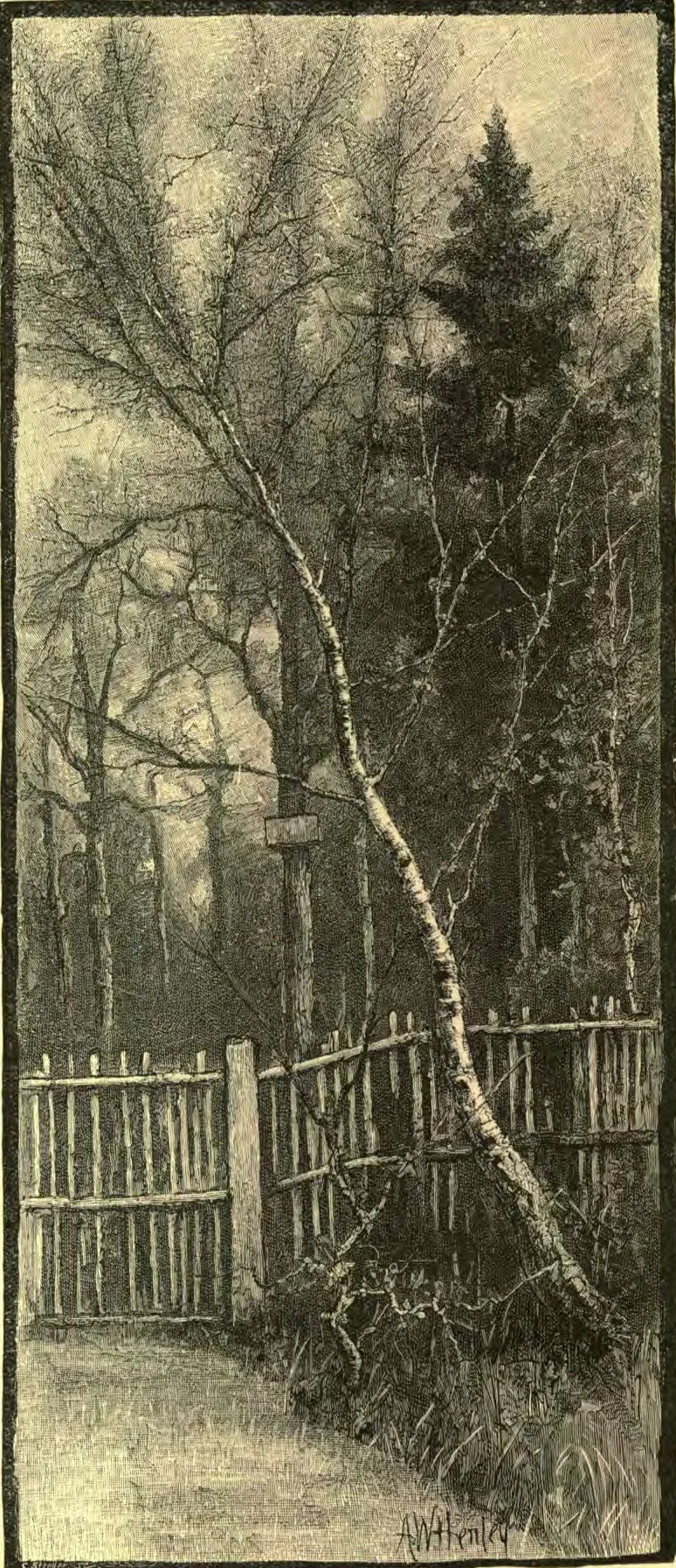
AUTUMN WOODS.
AUTUMN WOODS.

WHO SHALL BE GREATEST?

DEAR Master, in thy kingdom, So glorious and so fair, Speak thou the word, and tell us, Lord, Who shall be greatest there.
Shall Simon, Andrew, Matthew, Or Peter, James, or John? Oh, who shall stand at thy right hand When victory is won?
Here's John, the loved disciple, Who leaneth on thy breast; Lord, shall not he be next to thee, And greater than the rest?
And here's impulsive Peter: He'd brave the powers of hell, He would not fear when foes were near; Sure, he would serve thee well.
Then spoke the blessed Master, In loving tones so sweet, And gently bare a child so fair, And placed him at his feet.
“Ye ask who shall be greatest: Behold this little child! Except ye be as pure as he, Humble, and meek, and mild,—
“Except ye be converted, ‘Your every sin forgiven, Pure, undefiled, e'en like a child,— Ye can not enter heaven.”
MRS. L. D. AVERY-STUTTLE.

“WE HAVE SEEN HIS STAR”

I

“Now when Jesus was born in Bethlehem of Judea, in the days of Herod the king, behold, there came wise men from the east to Jerusalem, saying, Where is he that is born King of the Jews? for we have seen his star in the east, and are come to worship him.”
These men were men of noble birth, learned in art and science. They were astrologers, and in the heavens they had seen the glory of God. But they had not a full knowledge of the Author of the wonders they studied. The magi of the East varied in honor and integrity, some sinking to a low level, and using their knowledge of science to impose on the credulity of others for their own selfish ends; while others refused thus to dishonor themselves and deceive the people. The latter class were noble men, who followed the indications of God’s providence as revealed in the heavens and the earth.
It was not God’s purpose that the light he had given to patriarchs and prophets should be confined to the Jewish nation. He designed that it should be carried to all parts of the earth. But the Israelites misinterpreted the command given them in regard to intermarrying with other nations. This command was given to guard God’s people from idolatry. But they made it a wall of separation, a barrier to any communication with other nations. They regarded themselves as the only people whom God would acknowledge, and looked upon all others as despised by him. Thus they became narrow in their ideas; and while separating themselves from the heathen, they also separated themselves from God. By walking contrary to his requirements, they were building a wall of separation between themselves and God.
The children of Israel did not walk in the light given them by Him who had been their invisible leader through forty years of wilderness-wandering. Had they cherished the light and practised the gracious lessons given them by Christ, forming characters in accordance with the principles of truth, they would have retained God’s favor. Great wisdom and knowledge would have been given them. God would have made them channels through which he could communicate truth, and by which he would have been made a praise in all the earth. Thus his wisdom and matchless love would have been sounded throughout the world.
God’s people failed to carry out his purpose, but there were among them those who were faithful and loyal. In the providence of God, the Jews were scattered by captivity through all countries; and during these years of bondage, faith in God was kept alive by faithful witnesses. There were those who would not disregard the Sabbath of the Lord, who would not observe heathen festivals. These were persecuted, and many lost their lives, as God’s people always have since the death of Abel. From the time of his expulsion from heaven, Satan has been working on these lines.
In various ways the light of truth was communicated to those in darkness. In Egypt, Joseph’s example of unbending integrity witnessed for God; and the treatment he received shows that there were those in the kingdom who respected nobility of character, even when found in captives who were regarded as slaves. Loving and fearing God did not detract from the usefulness of God’s servants; for God honored them and worked for them, so that they were enabled to be standard-bearers, carrying the banner of truth and knowledge through the dark places of the earth.
The history of Daniel and his three companions in Babylon is another instance of the way in which the Lord uses faithful men. They did not yield up their faith; but through all the temptations to which they were exposed, they preserved the knowledge of God. They made his honor prominent. They would not break his law to save themselves from being thought singular. When brought before kings and rulers to explain why they would not obey the laws of the land, they repeated the precepts and statutes of God, which they dared not transgress. And so wonderfully did God work in the kingdom of Babylon, that Nebuchadnezzar the king sent a proclamation throughout his dominion exalting the God of the Hebrews as one to be honored and revered above all heathen gods.
Thus through faithful witnesses the truth of God went to all parts of the earth. In every generation God manifested his power through those who held aloft the banner of truth, calling the attention of idol worshipers to the true and living God, the Creator of the world.
Because of a perverted knowledge of the system of sacrifices and offerings that God had established in Israel, the heathen offered sacrifices to idols. Many of these idolaters were as sincere in the performance of their religious service as were the Israelites in theirs; and as the worshipers of the true God were brought face to face with these practices, light shone forth, and many noble and learned men listened eagerly to the truth in regard to the Messiah, and the true origin of sacrifices and offerings. Many believed, as they were told that these offerings symbolized the one great Sacrifice that was to be offered for the sins of the world.
Thus the knowledge of truth was imparted by the true Israelites to those living in idolatry. While they hung their harps upon the willows, bemoaning their captivity, light was shining in darkness, dispelling sophistry and superstition, and revealing the Saviour.
MRS. E. G. WHITE.

Our Spiritual Deformities Matter More Than Physical Ones

“We are hurt and ashamed by our physical deformities, and would willingly undergo much to have them removed. Are we equally sensitive to our spiritual deformities? Yet they are much more important than those of our mortal bodies.”

Religion as Motive and Life, Not Restraint

“RELIGION is not a high fence, built about a life to keep it from wandering or coming to harm. Such a narrow conception of the gospel—and not a few persons unconsciously entertain it—is a slander on the teachings of the great One, who came to give men life more abundantly. Religion is rather a motive, an impulse, than a series of restraints. It is the indwelling Spirit of God constraining us to all things pure, beautiful, and good. It is life, boundless and eternal.”

IN EXILE

The noise of hurrying crowds all day Has driven up against my door; Yet have I wandered far away, Along a sunny, silent shore. O seaward-sloping meadows wide! O happy waters, far and blue! Where white sands wait the swinging tide, My homesick heart has gone to you.
All day my window-blinds have stirred To jarring hoofs and wheels below; Yet I am listening for a bird, That sings beneath a tree I know,— A slender tree against the sky,— An orchard paling, brown with years, A blackbird's whistle, clear and shy— Why do my eyes grow dim with tears?
The crowds go back and forth all day, The sun burns fierce along the street; But I have found a shady way, With cool white clover at my feet. Far off beneath the branches low The foot-path wanders, still and fair; My feet are fast with toil,— but oh, To-day my heart is walking there!
— Mabel Earle.

THE CARDINAL-FLOWER

Among the lovely wild flowers of New England, there is none more beautiful than the scarlet cardinal-flower. In my rambles one sultry August day, I came to the ruins of an old mill-dam, the whole side of which was covered with vigorous ferns, while, shaded on each side by overhanging boughs, was a small woodland stream, swollen by recent rains. Here grew the cardinals in all their glory of flaming color. Gleaming through the shade, touched into greater brightness by stray sunbeams, they sprang from the water, the scarlet blossoms nodding on their stalks, with the feathery ferns in the background, forming a beautiful picture, and one not easily forgotten. But these special beauties were inaccessible; I reached for them, but in vain; so I gathered some in the meadow, where they were easy of access, and kept them fresh for a week or longer. [Some of them came to the editor’s desk, on a background of the dark-green ferns. They revived and lasted two or three days, and the ferns were fresh much longer.—A. B. C.]
“This showy flower belongs to the lobelia family. The corolla is irregular, cleft nearly to the base on the upper side; stamens with the anthers united above into a curved tube longer than the corolla. The flowers are on short pedicels, few or numerous, in a superb, nodding raceme. The early French Canadians were so struck with its beauty that they sent the plant to France as a specimen of the beauties of the wilds of the New World. Perhaps at that time it received its English name, which likens it to the gorgeously attired dignitaries of the Roman Church.”
MRS. A. W. HEALD.

ELECTRIC BATTERIES AND COUNTER-CURRENTS
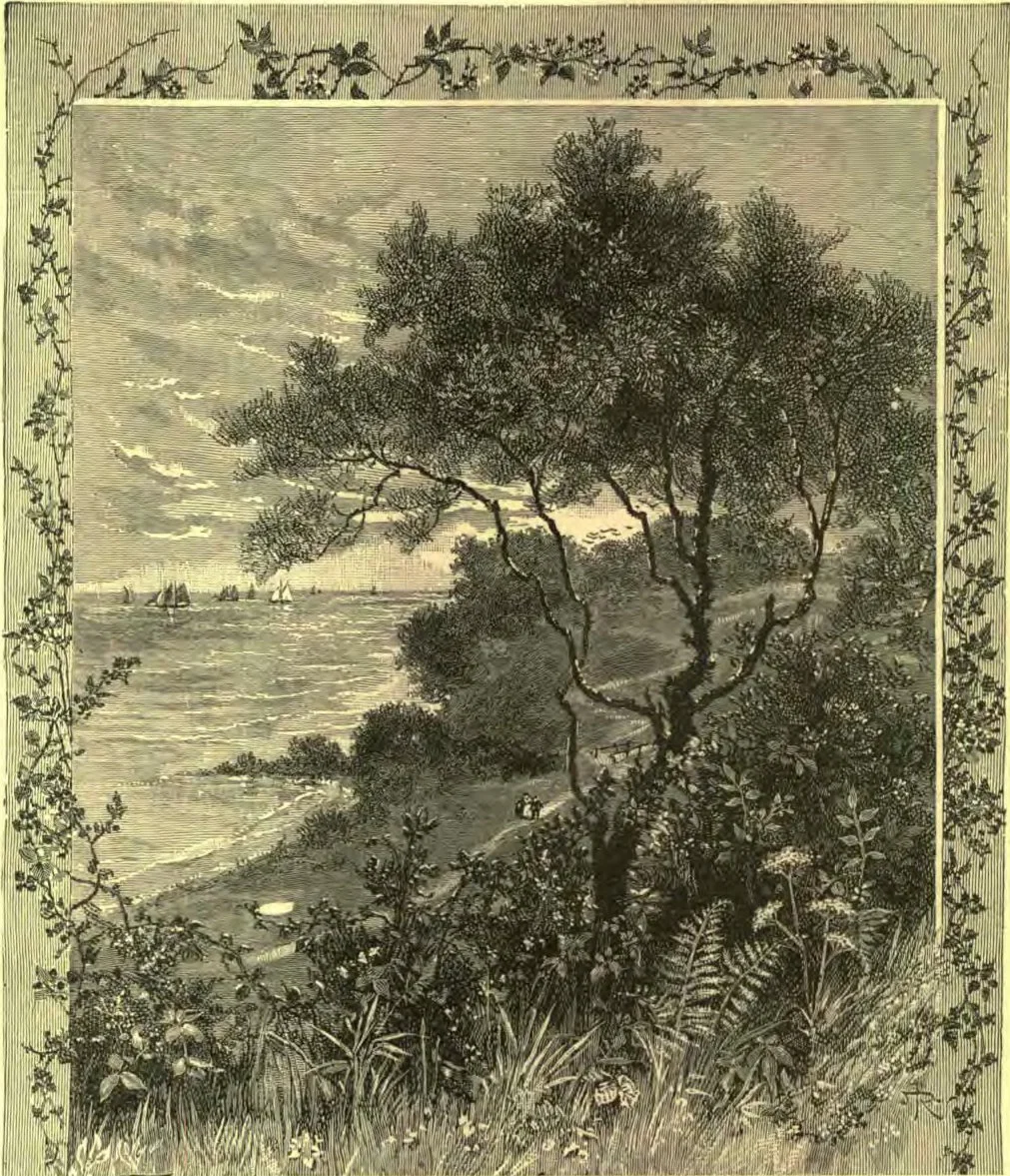
“O HAPPY WATERS, FAR AND BLUE!”
Though I exert all my strength upon this piece of zinc, I can not succeed in pulling it apart, because of the power of cohesion (“by Him all things consist”); but if I drop it into sulphuric acid, it will crumble, and heat will be given off. In this case exactly the same energy that was used in holding the particles together now manifests itself in the form of heat, which is only another form of God’s power. There is a time coming when all things will be dissolved, and then much of the energy now stored up in metals and in various other ways will manifest itself in heat. When the earth, which is now upheld by God’s power, shall return to chaos, we shall see taking place on a larger scale what we now see in miniature in this piece of zinc. If we make only a slight change in the arrangement of the particles of the metal, however, we have electricity instead of heat. This may be done by slipping into the acid another metal of a different potential,—one not so susceptible to the corroding influence of the acid. When the two metals are connected with a wire above, a current of electricity will flow from the crumbling metal to the other, and then through the wires and back again, thus making a complete circuit.
Little by little the piece of zinc is eaten away; and tiny particles of it become lodged on the other metal. By this means, many counter-currents are set up, which obstruct, or tend to neutralize, the main current. Sometimes this goes so far that the current ceases to flow; but by vigorously shaking the jar holding the acid and the metals, the particles are thrown off, the current again flows freely, and the battery works well for a time. At other times it is necessary to take the metals out, and have them thoroughly cleansed. Often they are worn out in maintaining these currents from which no one receives any benefit.
There is a lesson in all this for us. We should be live batteries, from which God’s energy may flow out for the service of humanity; but often jealousy, faultfinding, and criticism lodge about us, setting up counter-currents, and thus destroying the main current. Then we are shaken by revivals, the particles of dross are shaken off by confession and restitution, and the current flows well again for a time.
Batteries are now invented in which it is impossible for these counter-currents to be produced. These are known as “continuous batteries.” God would have us tarry before him, and thoroughly put away all sin, that, as we are endowed with power from on high, we may become continuous spiritual batteries; and as the metal in the battery is consumed in doing its legitimate work, so, in a certain sense, may we be; but there is a vast difference between being consumed in loyal service and being consumed by our own lusts.
David Paulson.

DOUBTFUL FICTION

A MOTHER and daughter walked along a country road. The daughter carried a modern novel, the pages of which ran into the hundreds.
A great moral, or great truth, was contained within. The daughter spoke of the truth conveyed by the famous writer through the medium of the pages, but the mother did not approve of the method of teaching even truth. It was not that she doubted that truth was there. She knew the teaching of the book was not evil. The daughter said she read it only for the great truth it contained.
As they walked, they passed a barnyard. Cattle walked deep in mud and filth. The air was filled with sickening odors.
The mother plucked a rose growing by the wayside. She held it toward her daughter. “Is it not beautiful?” she asked.
“It is perfect,” answered the daughter.
The mother cast the rose from her into the midst of the mud and filth of the barnyard, and bade her daughter go and pick it up.
The daughter, instead, lifted up her dainty skirts and walked away. She preferred clean shoes to the rose.
“It yet is a perfect rose,” remarked the mother.
“But I must wade through filth for it.”
“It is still fragrant.”
“True, but not fragrant enough to kill the odor of the barnyard that will cling to me.”
The mother said no more, but walked on. The daughter followed. The mother glanced back. The book, in pieces, was flung into the mire.—Jean K. Baird.

Do Each Duty in Its Hour

You have a disagreeable duty to perform at twelve o'clock. Do not blacken nine and ten and all between with the color of twelve. Do the work of each, and reap your reward in peace. So, when the dreaded moment in the future becomes the present, you shall meet it walking in the light, and that light shall overcome its darkness.—George Mac Donald.

SEASONABLE HINTS ABOUT FLOWERS

If you intend to change the location of any of your hardy plants or flowers, do so when their leaves begin to fall.
DON'T buy “cheap” palms, ferns, etc., advertised by florists. They are all young plants, and there is no pleasure in keeping them until they are old enough to be ornamental.
DON'T buy young begonia plants expecting to have much satisfaction out of them the first winter. If you can afford it, buy large, well-developed plants. It takes time, patience, and money to raise one that you need not be ashamed to exhibit.
REMEMBER the geranium slips planted in the garden according to directions given last spring (“Missionary Money in Geraniums”). Cut around them now, and two weeks later put into pots, as directed. If possible, procure a Madame Salleroi geranium for its leaves. This plant does not flower, but it is a good foliage plant, and the leaves make an excellent backing for cut flowers.
ARRANGE to have a “table plant” this winter. Ferns are best and most easily managed. If you can afford to buy a six-inch “fern-pot,” and have it filled by a florist, it will be most satisfactory. The cost will be about fifty or seventy-five cents. Buy a porous pot, not the china one that usually comes with a jardinière. If you can not obtain a fern-pot, use something that is broad and shallow, as fern roots do not strike deeply, but spread out. Do not use the maidenhair fern, as it does not stand the heat of living-rooms. Every night shower the plants with tepid water. If you have a bath-room, put the pot in the bath-tub, shower it, and leave it there all night. Treated in this way, it will remain a fine center-piece for the dinner-table all winter.
THE season of cut flowers is near at hand, and you should know how to care for them so as to make them last for several weeks. Every night remove them from the glass, and, protecting the blooms, wash the stems thoroughly, removing everything that is wilting or decaying. Do this work with the fingers, under running water if possible, gently scrubbing the stems free from slime. Do not let water touch the blooms at any time. Make strong soap-suds, and insert the stems well in it, protecting the blooms, and leave in a dark, cool place all night. In the morning rinse well, and snip off a small shaving from the end of each stem. Place in clear water for two or three hours, still being careful not to wet the flowers. Let the stems remain in the water as long as possible before you need them to exhibit; then put in the vase in which they are to remain during the day, adding a few drops of sulphate of ammonia, a cheap drug, which is a fertilizer to plants, and which, with the soap-suds, will feed the stem and flower, and revive them daily. The plant needs to live in clear water for at least a third of the time, else it will be overfed by the stimulants you give it, and lose vitality. If you have set pieces, or arranged flowers, as for a wedding or a funeral, moisten cotton-batting, and place the flowers on it, in a cool, dark place, covering with a wash-basin or some large vessel. Maidenhair fern, particularly, should be treated this way.
W. S. CHAPMAN.

INTO THE LIGHT

AFTER the departure of Elder Barnes and May, Mrs. Conwell wished to review the texts that he had given them. They dwelt especially on the last one read: “For this we say unto you by the word of the Lord, that we which are alive and remain unto the coming of the Lord shall not prevent them which are asleep. For the Lord himself shall descend from heaven with a shout, with the voice of the archangel, and with the trump of God: and the dead in Christ shall rise first: then we which are alive and remain shall be caught up together with them in the clouds, to meet the Lord in the air: and so shall we ever be with the Lord.”
“Can it be possible, Jane, that we have been in error all these years, and that all our dead friends are sleeping?” asked Mrs. Conwell.
“It seems so, from what we have read, and it is a comforting thought to me,” replied her sister, whose hair was snowy white, although she had hardly reached middle age. “Some of those we loved died out of the ark of safety; and it is pleasant to think of them as quietly resting. We know that our Saviour does all things well. We can trust them to him.”
Mrs. Conwell’s eyes filled with tears as she thought of her sister’s husband, once noble, honored, and dearly beloved, sleeping in a drunkard’s grave; and of the son, wandering in sin, his mother knew not where.
“‘And we know that all things work together for good to them that love God,’” quoted Grace, adding, “and I am sure, Aunt Jane, that if any one ever loved him, you do.”
“Thank you, Grace. Truly ‘in the Lord Jehovah is everlasting strength.’”
For a few moments there was silence; then Mrs. Conwell said, “I wonder where these false ideas of death, or rather, the idea that there is no death, originated.”
“Why, mama, they started in the garden of Eden, when Satan said to Eve, ‘Ye shall not surely die.’ She believed him instead of God, and her descendants have continued to do the same thing.”
“Well,” said Aunt Jane, “we ought to be very thankful that the Lord is opening our eyes.”
“Yes, indeed! May says that our only defense against the awful deception of Spiritualism, which is to sweep the whole world, is a thorough knowledge of the truth that ‘the dead know not anything.’ If our faith is founded on the Word, and we know it, and can point to the texts, saying, like Christ, ‘It is written,’ Satan and all his host can not prevail against us.”
“You notice the sixteenth verse reads, ‘The dead in Christ shall rise first,’” said Mrs. Conwell. “I suppose that means the righteous. Are not the wicked raised at the same time?”
“I do not know, mama, but here comes papa, and supper is not ready. To-morrow night we will ask May about the wicked.”
The next afternoon May sent her little brother with a note, saying that as her mother was not well, she would stay at home, and help her, but would try to come the next day.
The Conwells were disappointed, but Grace remarked, cheerfully: “We can not always have May with us. Why not take the concordance, and study by ourselves?”
All agreed to this; but just as they were ready to begin, Elder Barnes knocked at the door. After greetings had been exchanged, he said: “Pardon me for calling again so soon, but I have here a pamphlet, ‘Man’s Nature and Destiny,’ written by one of our ministers, and bearing directly upon the subject we studied yesterday. I am sure it will be a great help to you, if you care to read it.”
“We are thankful to you for remembering us, and shall be very glad to read the book. We were just preparing to continue our study, and would be much pleased to have your help, if you can spare the time.”
“My time is always at the disposal of those who wish to study the word of God,” he replied; “shall we begin where we left off yesterday?”
“If you please. That text reads, ‘The dead in Christ shall rise first.’ Are not all the dead raised at the same time?”
“No; there are two resurrections. We will read Acts 24:15, which shows this: ‘And have hope toward God, which they themselves also allow, that there shall be a resurrection of the dead, both of the just and unjust.’ The righteous are raised at Christ’s coming, as you read in Thessalonians. They enter upon their reward at that time, as set forth in Luke 14:14.”
“When are the wicked raised?”
“You will find an answer to that question in Rev. 20:5, where it is said that ‘the rest of the dead,’ the wicked, lived not again until the thousand years were finished. By reading the rest of that chapter you will see that some time after their resurrection, they come up around the city of God, the New Jerusalem, and try to take it, and that fire comes down from God out of heaven and devours them.”
“‘Devours them,’— and do they not burn on forever and ever?”
“Oh, no! In the fourth chapter of Malachi God says that they shall be ashes under the soles of the feet of the righteous, and in the sixteenth verse of Obadiah he says, ‘They shall be as though they had not been.’ He goes still further in Ps. 37:10, and says that even the place of the wicked, the earth in its present condition, shall not be.”
“I never could reconcile the idea of the eternal burning of the wicked with what I know of God’s mercy and love,” said Aunt Jane.
“It is only another of Satan’s plans for making infidels and skeptics,” was the reply. “Paul sums up the whole matter in these words: ‘For the wrath of God is revealed from heaven against all ungodliness and unrighteousness of men,’ and if men will not separate from the sin, they must be destroyed with it; for God will have a clean universe. In Revelation 21 the prophet says that he ‘saw a new heaven and a new earth;’ and in the fifth chapter he says: ‘And every creature which is in heaven, and on the earth, and under the earth, and such as are in the sea, and all that are in them, heard I saying, Blessing, and honor, and glory, and power, be unto him that sitteth upon the throne, and unto the Lamb forever and ever.’”
LENA E. HOWE.

CONTENT

The world was full of rivers, and on their mighty tide Ten thousand ships went threading through and through; Ten thousand teeming cities stood on the river-banks,— And I was but a tiny drop of dew. But as I lay unheeded upon a blade of grass, A weary bee fell near me, scarce alive; With hope revived, he saw me, and drank, and quenched his thirst, And bore his load of nectar to the hive.
A chain of mighty mountains stood guard upon the earth, And reared their heads where eagles never soar. The joy of all beholders, what dignity was theirs!— And I was but a pebble by the shore. Of value or of beauty, no single gift was mine, The beach was strewn with millions just like me: Yet for a puny baby I once was made a toy, And changed his fretful cries to tones of glee.
By night the silvery moonbeams rejoiced the dreamy world, A myriad twinkling stars shone clear and bright; By day the dazzling sunlight its golden splendor shed,— I was a little taper in the night. I know my ray was feeble; but in a window set, All night I burned, and did my little best; And ere the dawn of morning,—ah! what a joy was mine!— A soul I guided home to peace and rest. ELIZABETH ROSSER.

Fidelity Outlasts Inconstancy With a Dull Ax

“Fidelity can do more with a dull ax than inconstancy with a sharp one.”

WHO WERE THEY?

Five little mates, in wintry weather, Side by side sat down together; Crowded close in a tiny room, Left to themselves in the dusky gloom, They lived in love, no little brother Pushing unkindly against another. And they lived in hope; for they thought, with glee, “When bedtime comes, we are all set free.”
Side by side, in summer weather, Five little mates ran out together; Bare and free in the sunshine sweet, Brown and strong and merry and fleet, On the greensward soft they frolicked and played, But apart from each other they never strayed. They were one in friendship and glad endeavor,— The five little mates who quarreled never.
—Joy Allison, in Youth’s Companion.
Continue reading: A FAITHFUL MOTHER