Your ShelfYour Projects

Review and Herald, Vol. 80, No. 36.

Foreign Publications
Earlier text: Foreign Publications

Power to Finish the Work

G. B. THOMPSON
In the early days of what is called the “Christian dispensation” the church of God had power. The believers were filled with the Holy Spirit; God worked with them “confirming the word with signs following.” “Then he called his twelve disciples together, and gave them power and authority over all devils, and to cure disease.” Luke 9:1. “And the seventy returned again with joy, saying, Lord, even the devils are subject unto us through thy name. . . . Behold, I give unto you power to tread on serpents and scorpions, and over all the power of the enemy: and nothing shall by any means hurt you.” Chap. 10:17, 19. “Ye shall receive power, after that the Holy Ghost is come upon you: and ye shall be witnesses unto me both in Jerusalem, and in all Judea, and in Samaria, and unto the uttermost part of the earth.” Acts 1:8. “And when they had prayed, the place was shaken where they were assembled together; and they were all filled with the Holy Ghost, and they spake the word of God with boldness. . . . And with great power gave the apostles witness of the resurrection of the Lord Jesus: and great grace was upon them all.” Acts 4:31-33. “And the hand of the Lord was with them: and a great number believed, and turned unto the Lord.” Acts 11:21. Like a warrior seated upon a white horse, the church went forth “conquering and to conquer.” Though opposed by the greatest system of power and darkness which perhaps has ever been suffered on earth to appear,—the Roman empire,—the gospel in a very brief time was carried to all the world. Thus was the church clothed with power during the former rain. Prison bars, flood, flame, the rack, sword, hunger, death, and beasts of the earth could not stay its progress.
The closing hours of human probation have arrived, and the appointed time to finish the “mystery of God” has fully come. And in this time we are promised the “latter rain” in greater abundance than the former rain was bestowed upon the church on the day of Pentecost. Surely the need is as great. There has been delay because God’s people have not been ready. The time has come when there should be delay no longer. This message is not a fable; it is the truth. The Lord is at the door. This generation is to witness the end of the great controversy which for six thousand years has enjoyed the attention of the universe, and is to see the Deliverer coming on the cloud. The finishing work is the thing now on hand. Numbers alone can not do the work. Numerous or large institutions amount to nothing, only as they become a channel through which the real agency can work. The closing struggle with the principalities of darkness will be tremendously fierce. Satan, we are told, no longer able to trust the tried rulers of his kingdom, to marshal his forces, will take the field in person. Every home and agency he can use, or ever has used, to destroy souls will be lined up for battle. And we are even now in this very conflict. But, cheer up, brother pilgrims; the Lord will not leave his chosen struggling remnant to perish or to be overcome. The Captain of the armies which are in heaven will take the field also, and great power will rest upon those who stand faithful unto the end.
In “Early Writings” we read of the closing work of the message:—
“Mighty miracles were wrought, the sick were healed, and signs and wonders followed the believers. God was in the work, and every saint, fearless of consequences, followed the convictions of his own conscience, and united with those who were keeping all the commandments of God; and with power they sounded abroad the third message. I saw that this will close with power and strength far exceeding the midnight cry. Servants of God, endowed with power from on high, with their faces lighted up, and shining with holy consecration, went forth to proclaim the message from heaven. Souls that were scattered all through the religious bodies answered to the call, and the precious were hurried out of the doomed churches, as Lot was hurried out of Sodom before the destruction. God’s people were strengthened by the excellent glory which rested upon them in rich abundance, and prepared them to endure the hour of temptation.” Page 139.
“I heard these clothed with the armor speak forth the truth with great power. It had effect. Many had been bound; some wives by their husbands, and some children by their parents. The honest who had been prevented from hearing the truth, now eagerly laid hold upon it. All fear of their relatives was gone, and the truth alone was exalted to them. They had been hungering and thirsting for truth; it was dearer and more precious than life. I asked what had made this great change. An angel answered, ‘It is the latter rain, the refreshing from the presence of the Lord, the loud cry of the third angel.’” Page 133.
This blessed experience will be enjoyed by many. It will be the condition of the church as it finishes the work. It should be the condition of the church now, for the set time to favor Zion has fully come. Some will put away sin and seek God till he can trust them with his Spirit as here mentioned, and under its mighty inspiration the work will speedily be done. I can think of no sadder experience that can come to one of God’s servants in this time than to be passed by in the refreshing because he refuses to give up his sins, and while the word is being proclaimed with power by others he be left barren like the hills of Gilboa which are without dew or rain.
“The careless and indifferent, who did not join with those who prized victory and salvation enough to perseveringly plead and agonize for it, did not obtain it, and they were left behind in darkness, and their places were immediately filled by others taking hold of the truth, and coming into the ranks.” Id., page 132.

The Promised Refreshing

J. N. LOUGHBOROUGH
“REPENT ye therefore, and be converted, that your sins may be blotted out, when the times of refreshing shall come from the presence of the Lord; and he shall send Jesus Christ, which before was preached unto you: whom the heaven must receive until the times of restitution of all things, which God hath spoken by the mouth of all his holy prophets since the world began.” Acts 3:19-21.
Here is brought to view a time of refreshing. This is spoken of in close connection with Christ’s second coming. This undoubtedly refers to the same time as that mentioned by the apostle James: “Be patient therefore, brethren, unto the coming of the Lord. Behold, the husbandman resiteth for the precious fruit of the earth, and hath long patience for it, until he receive the early and latter rain. Be ye also patient; stablish your hearts: for the coming of the Lord draweth nigh.” James 5:7, 8.
The early and latter rain is also mentioned by the prophet Joel in connection with the description of the last days. The coming of the “former rain moderately” is called in the margin of the text, “A teacher of righteousness, according to righteousness.” Joel 2:23. The outpouring of the Spirit of God on the day of Pentecost—the coming of the Comforter as a teacher—was comparable to the “former rain,” which caused the newly sown seed of the husbandman to take root and grow. So in the ripening of the harvest of the earth, just before the end, the husbandman—our Heavenly Father (John 15:1)—is waiting for the “latter rain,” the “refreshing,” to aid in ripening the harvest of the earth. The Lord says by his prophet, “Ask ye of the Lord rain in the time of the latter rain; so the Lord shall make bright clouds, and give them showers of rain, to every one grass in the field.” Zech. 10:1. And thus will be fulfilled his promise: “Then shall we know, if we follow on to know the Lord: his going forth is prepared as the morning, and he shall come unto us as the rain, as the latter and former rain unto the earth.” Hosea 6:3.
In the prophecy of Ezekiel is given a description of the preparation for, and the final deliverance of, God’s people: “I will bring you into the wilderness of the people, and there will I plead with you face to face. Like as I pleaded with your fathers in the wilderness of the land of Egypt, so will I plead with you, saith the Lord God. And I will cause you to pass under the rod, and I will bring you into the bond of the covenant.” Eze. 20:35-37. The deliverance of Israel from Egypt, and their entrance into Canaan, is typical of the final deliverance of God’s people into the heavenly Canaan. Israel passed through a literal wilderness, but these through “the wilderness of the people.” So we find, in the Revelation, an account of the people of God going into the wilderness for twelve hundred and sixty years of the Dark Ages. Rev. 12:6, 14. In the Song of Solomon we have a reference to the church coming out of the wilderness. He says, “Who is this that cometh up from the wilderness, leaning upon her Beloved?” Song of Solomon 8:5. Again he speaks of her as “she that looketh forth as the morning, fair as the moon, clear as the sun, and terrible as an army with banners.” Song of Solomon 6:10.
The Lord says that he will plead as he pleaded when he brought his people out of Egypt. He pleaded with them respecting his law and his Sabbath, saying, “How long refuse ye to keep my commandments and my laws? See, for that the Lord hath given you the Sabbath.” Ex. 16:28, 29. In this latter pleading the Lord says he will bring his people “into the bond of the covenant.” The bond of the covenant must be its confirmatory seal, or sign of its authority. The sign of God’s covenant (this covenant commanded, he declares, is the ten commandments. Deut. 4:13) is the seventh-day Sabbath. That Sabbath, four times in the Scriptures, is said to be his sign. Ex. 31:13, 16, 17; Eze. 20:12, 20. We see, therefore, that in the preparation for the final deliverance there is to be an agitation of the law of God, and a restoration of the seal to that law, and that seal is the Sabbath of the Lord.
There is still another feature that was connected with the deliverance of Israel, which is mentioned by the prophet Hosea when he says, “By a prophet the Lord brought Israel out of Egypt, and by a prophet was he preserved.” Hosea 12:13. As there is a similarity in the last deliverance to that from Egypt, we may look for the gift of prophecy to be connected with the preparation for the deliverance.
The prophet Isaiah refers to the last days in these words: “Now go, write it before them in a table, and note it in a book, that it may be for the time to come forever and ever [“Heb. the latter day,” margin]: that this is a rebellious people, lying children, children that will not hear the law of the Lord: which say to the seers, See not; and to the prophets, Prophecy not unto us right things, speak unto us smooth things, prophesy deceits; get you out of the way, turn aside out of the path, cause the Holy One of Israel to cease from before us.” Isa. 30:8-11. By reference to 1 Sam. 9:9, we learn that a seer and a prophet mean one and the same; for there we read that “he that is now called a Prophet was beforetime called a Seer”—one who had visions from God and prophesied. The force, then, of this scripture is that the gift of prophecy will be connected with the proclamation of God’s law in the last days. This the masses will reject because they do not like reproof, preferring a smooth path.
The apostle Paul, when speaking of the people who would be waiting for Christ’s second coming, says: “The testimony of Christ was confirmed in you: so that ye come behind in no gift; waiting for the coming of our Lord Jesus Christ: who shall also confirm you unto the end, that ye may be blameless in the day of our Lord Jesus Christ.” 1 Cor. 1:6-8.
From this we see that all the gifts are to be manifest among the people who shall meet Christ in peace at his coming. One gift is especially singled out, the confirmation of which prepares the way for all the gifts to be developed in the church. That one gift he calls the testimony of Jesus. What is the testimony of Jesus? In Revelation 12, after the persecution of the Dark Ages, we find the apostle speaking thus of the last of the church in her probationary state: “And the dragon was wroth with the woman [a symbol of the church], and went to make war with the remnant of her seed, which keep the commandments of God, and have the testimony of Jesus Christ.” Verse 17. By a remnant we understand the last of that of which we speak. The remnant of cloth is the last of the bolt. So the remnant of the church is the last of the church in its probation here. In Joel’s prophecy, just before the great and terrible day of the Lord, he says, Salvation shall be “in the remnant whom the Lord shall call.” Joel 2:32. This remnant will have war made on them for keeping all of God’s commandments, and for having manifested among them the testimony of Jesus. The testimony of those who were taught in vision by the Spirit of God is called the testimony of Jesus. “For the prophecy came not in old time by the will of man: but holy men of God spake as they were moved by the Holy Ghost.” 2 Peter 1:21. When speaking of those ancient prophets, Peter said, “Searching what, or what manner of time the Spirit of Christ which was in them did signify, when it testified beforehand the sufferings of Christ, and the glory that should follow.” 1 Peter 1:11. The instruction of those prophets in holy vision was the “testimony of Jesus.”
In Revelation, chapter 19, is a scripture definition of the “testimony of Jesus.” When John was about to worship the angel, he said to him, “See thou do it not: I am thy fellow servant, and of thy brethren that have the testimony of Jesus: worship God; for the testimony of Jesus is the spirit of prophecy.” Rev. 19:10.
When we have a scriptural definition of a word or phrase, it is proper to substitute the definition in the text. In doing this, 1 Cor. 1:6, 7, would read, “The spirit of prophecy was confirmed in you: so that ye come behind in no gift; waiting for the coming of our Lord Jesus Christ.” And in Rev. 12:17 it would read that the dragon went to make war with the remnant who “keep the commandments of God, and have the spirit of prophecy.” We see, then, that the remnant church, the members of which will be keeping all of God’s commandments, are to have the gift of prophecy among them, and that that gift is to lead out in preparing the way so that all the gifts will at last be manifested among the people who are waiting for Christ’s coming. So, then, as the Lord’s people return to the keeping of all his commandments, the gift of prophecy is restored to them.
In Paul’s letter to the Thessalonians he speaks of Christ’s second coming, and of a people prepared to meet him, in these words: “But ye, brethren, are not in darkness, that that day should overtake you as a thief.” He exhorts as follows: “Rejoice evermore. Pray without ceasing. In everything give thanks: for this is the will of God in Christ Jesus concerning you. Quench not the Spirit. Despise not prophesyings. Prove all things; hold fast that which is good.” 1 Thess. 5:4, 16-21. From this we learn that the gift of prophecy will be among the people waiting for Christ’s second coming.
What could be more consistent than to expect the Lord directly to teach his people who are to pass through the perils of the last days, and be prepared to meet the Saviour in peace at his coming? It is that point of time to which the patriarchs, and the true prophets of all past time, have looked with intense interest, when the conflict of ages—the controversy between sin and righteousness—is to close,—the time when the age for which all other ages were made is to be brought in. It can not be that God, who is abundant in mercy, will refrain from specially instructing his people. Thanks be to God, he has not left this as a matter of mere supposition; for he will guide his people by the spirit of prophecy, as the Scriptures clearly teach. Such a manifestation of all the gifts in the church will be indeed a “time of refreshing” as is meet to herald the coming of the Master.

Some Perplexities in Prayer

To many persons the difficulty connected with prayer is not intellectual, but practical. They believe their prayers have been sincere and earnest; yet no definite answer to them has been forthcoming. It may help such to recall the three chief Bible cases of what we may agree to call for the moment unanswered prayers; i. e., the request of Moses to enter the promised land, the plea of Elijah that he might die, and the entreaty of Paul that the thorn in the flesh might be removed.
These eminent servants of God proffered certain definite requests, which were not granted. And why not? We may best answer the question by placing each of them alongside the perfect request in Gethsemane, “Not my will, but thine, be done.” At once we see their defects. These requests lacked the essential element of true prayer. At their heart was dictation rather than submission.
None of these petitions were granted; but in each case a far better thing was given. For Moses was reserved the honor of burial by the divine hand, an honor which would never have been his had he died in the ordinary way in Canaan. For Elijah a rare passage home was designed, a far grander departure than the disappearance of a disappointed man. To Paul special grace was given, which won for him a veritable triumph. So if God refuses to grant to us the thing we ask for, we may be sure that his Fatherhood is reserving a better thing for us further on.
We have even a more striking instance of this larger answer which God gives to his children, in the life of Paul. The apostle prayed that when he visited Rome he might have “a prosperous journey.” Rom. 1:10, 11. In this was included the hope of a smooth sea passage, since there are one or two indications in the Acts that the apostle was a poor sailor. How did God answer the prayer of his most devoted servant? We are told in the graphic story of the voyage recorded in Acts 27: There arose “a tempestuous wind.” Verse 14. “Exceedingly tossed with a tempest.” Verse 18. “Neither sun nor stars in many days appeared, and . . . all hope that we should be saved was then taken away.” Verse 20. “The soldiers’ counsel was to kill the prisoners.” Verse 42. And finally there was a shipwreck. Surely this was a singular kind of “prosperous journey!” A discouraging answer to a saint’s prayer! Did the apostle think his prayer was answered? Did he regard it as a “prosperous journey?”—Undoubtedly. He was the only man on board the ship possessed of a cool head and tranquil heart. His presence prevented a general massacre of the prisoners. God gave him “all . . . that sailed with him.” Verses 23, 24. “Prosperous journey!” Indeed it was. According to the letter it was not; according to the spirit the prayer was answered two hundred and four score times more liberally than he had dared to request. In saving the whole ship’s crew and passengers, God more than answered Paul’s own personal request.—F. C. Spurr.

Territory of Misiones, Argentina

N. Z. TOWN
This territory forms the extreme northeast of the Argentine Republic, being bounded on the north, east, and south by Brazil, and on the west by the republic of Paraguay and the province of Corrientes. It has an area of 5,395,400 hectares. The territory takes its name from the missions founded there by the Jesuits in the sixteenth century. Before their expulsion in 1768, Misiones had a population of over one hundred thousand, but the latest geographies give the present number of inhabitants as thirty-three thousand. The capital is Posadas, which has four thousand two hundred inhabitants.
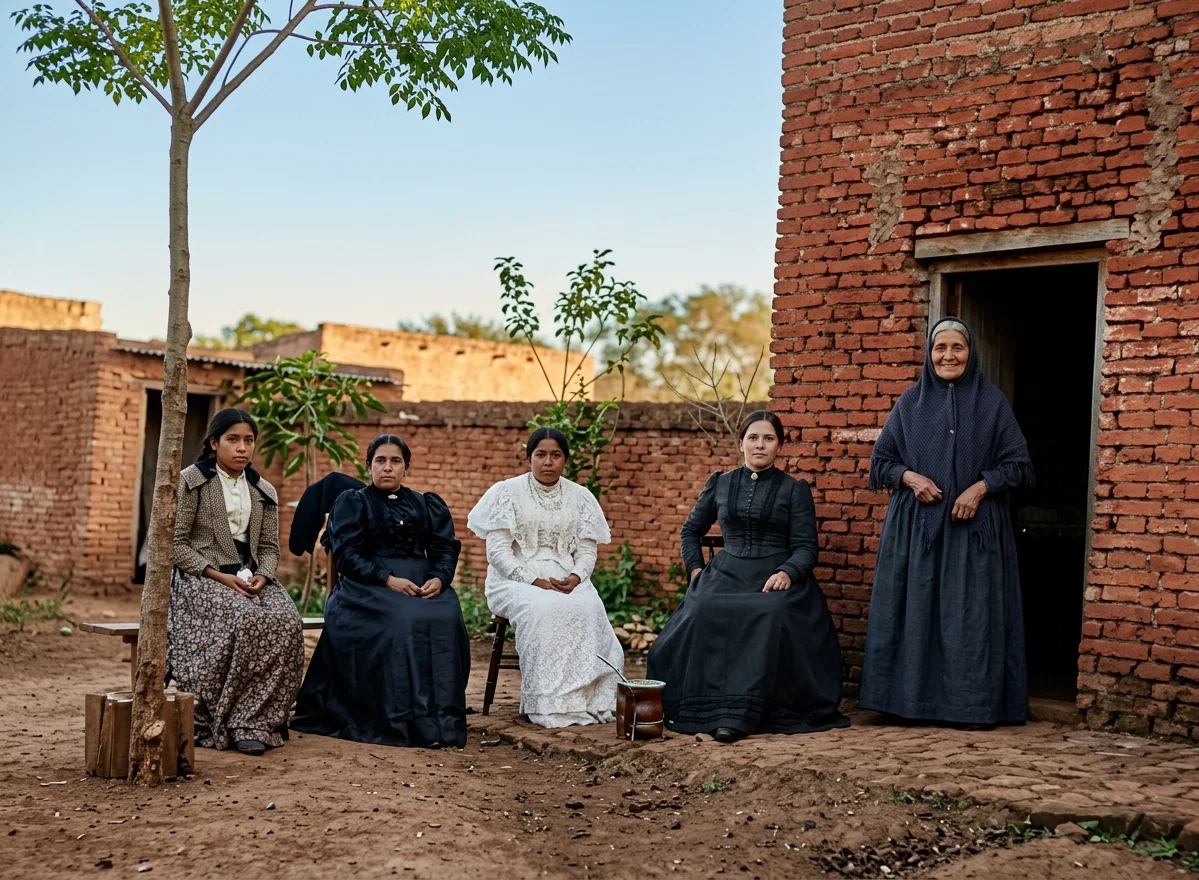
DRINKING MATE
DRINKING MATE
The climate of Misiones is warm, but healthful. The annual mean temperature is seventy degrees Fahrenheit. One writer says that “Misiones is a splendid garden, a bewitching mansion. With its chains of low hills covered with thick forests of orange trees, and the mate tree, its numerous picturesque streams, half hidden in the foliage, this territory is the Argentine Eden.”
But the following from another writer presents a somewhat different picture: “It should be made known, on the other hand, that Misiones is a theater where one pays very dearly for the contemplation of her magnificent natural scenery. The palatable dishes are substituted by a little farina, beans, maize, and charque (meat dried in the sun). These are always cooked and eaten in the same way, and at times make one prefer, instead, a piece of the raw heart of a palm tree, which has a taste similar to the chestnut. Here one should learn to forget the good bed and mattress. These are impossible luxuries. Above all, one should resign himself to support the mirin, a little bee that makes a tart honey in the crevices of dry trees. These bees are so numerous at times that it is almost impossible to open the mouth to speak. They cover the hands and the face, but do not sting. At times they retire, and then come the jegenes in equal numbers, and these bite until the hands and face are swollen. Then there are an infinity of other stinging insects, like the horse mosquito, tabano (a large poisonous fly), and mosca groude, which, when it stings, deposits eggs. These soon hatch into worms, which must be allowed to remain four or five days before one can press them out with the fingers. During the night the gnats are almost insupportable.”
The soil of Misiones is adapted to sugar cane, rice, coffee, and tobacco. The staff of life there is the mandioca, and maize takes the place of all other dishes. Wheat bread is unknown to many of the people.
One of the chief industries is the cultivation of the yerba tree, from which mate, or Paraguay tea, is made. This plant was first introduced into Misiones from Paraguay by the Jesuits. The work in the yerbales, or mate plantations, is done chiefly by Indians, who receive little more than the mate they drink and the tobacco they chew and smoke. The cultivation and use of the yerba mate is one of the greatest curses to these South American countries. Argentina pays to Brazil and Paraguay over four million dollars gold annually for mate.
But what interests us most is the fact that the third angel’s message is gaining a foothold in Misiones. After Brother Westphal arrived in Brazil on his last trip, he wrote back that Brother Schwantes had been across to Misiones, and that in Posadas he found a company of twelve keeping the Sabbath, and that another company of eight at a place called San Juan began to keep the Sabbath as a result of his visit. Those in Posadas received the Sabbath truth from a brother who came from Chile to escape military service. But along with this truth he taught them erroneous doctrines concerning the keeping of the day of atonement, etc. As Brother Schwantes reported that there was an interest on the part of others to hear, and also a prospect of helping the Posadas company out of their error, our conference committee planned for Brethren Habenicht and McCarthy to go there.
The third day after arriving in Posadas, Dr. Habenicht wrote: “I am full of joy to-day. In our meeting Sabbath afternoon we were able to show these people the error in the tracts they were studying from Chile, and the victory was won. One link after another in the chain was broken until this morning we had a bonfire of the Chilian tracts, and two brethren and their families are united in the truth. The field here is ripe for the harvest.”
Six days later he writes this: “I drop you a line to-day to let you know how the work is progressing. We are full of joy at the prospect. We organized a Sabbath-school yesterday with twenty-eight members. Sixteen adults have begun to keep the Sabbath. Others still are interested, and we have all we can do to fulfil our promises to see the people.” Five days later he reports that, including eight children, thirty have begun to keep the Sabbath. There are still others interested.
We are thankful for such a good beginning in that isolated part of our conference. The keynote that is sounding out in the home land, “The message to the world in THIS generation,” touches a responsive chord in our hearts in this dark corner, and we are with our brethren heart and hand in this work.
Buenos Ayres, Argentina.

The Scandinavian Union and Swedish Meetings
GUY DAIL
In conjunction with the Swedish Conference, which was held on our industrial school farm at Nyhyttan, Sweden, June 23-28, was also a council of the Scandinavian Union Committee, attended by Elder P. A. Hansen, chairman of the union; Elder O. A. Johnson, of Norway; Brethren Hoffman, Boettcher, Anderson, and Sandelin, from Finland; the leading brethren of the Swedish Conference; and Elders Conradi and Irwin, and Dr. Paulson.
The Scandinavian Union Council considered a number of important questions that concern the Scandinavian field as a whole. The Swedish brethren heartily united in calling for a Scandinavian Union Conference to be held near Göteborg, Sweden, next summer. It is thought that the proposed meeting will materially strengthen the bond of brotherhood and union that should prevail among our people everywhere. It was voted to conduct a winter institute for the training of workers for Scandinavia and Finland. This will be done in connection with some public evangelical effort in one of the cities of the country. An effort was made to aid the Christiania Publishing House, by furnishing it as much of the printing of the three Scandinavian countries as possible. The school now conducted at Nyhyttan received encouragement from the union. The leading medical institution will be given to Denmark, the publishing house will be reinforced in Norway, and the school will be built up in Sweden. It was also decided to do as much as possible toward making our work in the Scandinavian countries absolutely self-supporting, even more than that—to bring up the tithes and offerings until this field may carry the missions in Finland and Iceland and Greenland.
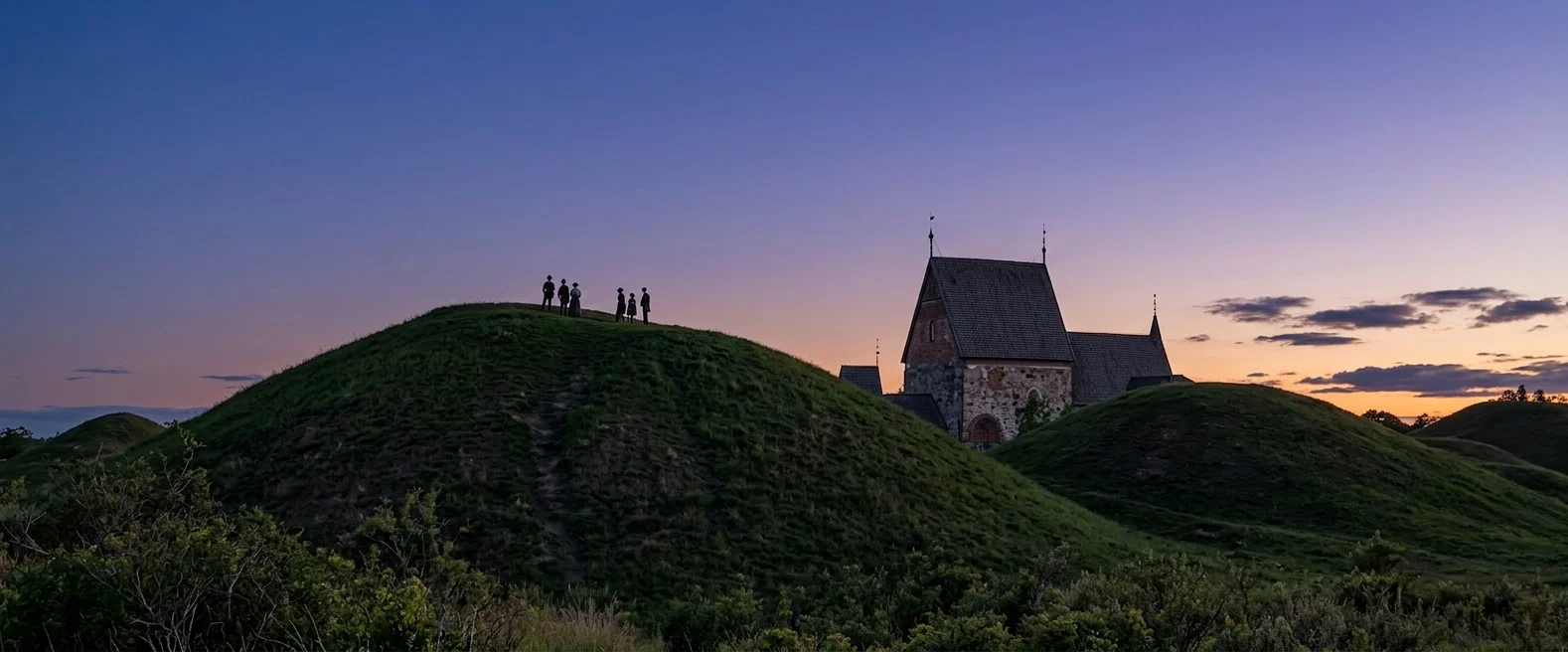
MOUNDS AND CHAPEL, OLD UPSALA, SWEDEN
To speak in particular about the Swedish Conference: this was the smallest of the three Scandinavian meetings of the season; but we believe that in some respects it was the most remarkable and beneficial. The subject of the spirit of prophecy, as received by believers in the message, was given some attention by Elder Conradi and others, and this important doctrine is now much better understood by the people than heretofore. Another thing that will be helpful to our Swedish brethren was the more complete revelation of the spirit actuating the man who has for several years been seeking to become recognized as a prophet. He was given a hearing, and allowed the use of the pavilion; but this did not satisfy him. When Elder Conradi was ready to address the congregation Sabbath forenoon, he created such uncalled-for disturbance that it was necessary to conduct him from the grounds. Fully half an hour was required to overcome the confusion. After this God's tender Spirit came in with power, and the meeting became one of special blessing. God witnessed to his word. Souls were touched. The difference between the false and the true appeared in great contrast, and decisions for God were made. When those who wished to come into closer covenant relation with God were requested to rise, nearly every one in the congregation responded. The manifestation of Satan's power had only created a deeper longing for that practical experience which comes through a genuine acquaintance with the Holy Spirit.
The business sessions were harmoniously conducted. Practically the same laborers will be employed in Sweden the coming year as the past, and the same officers were re-elected save that E. Niemann was chosen secretary of the Sabbath-school Department, and the auditors are E. Lind and A. F. Roos.
A vote of thanks was passed to the American brethren for the money they had furnished the Swedish school fund from the sale of “Christ’s Object Lessons.” It was voted to make a more determined effort to circulate “Christ’s Object Lessons” and our other religious literature throughout the field; loyally to support the health work, including the small health institution recently opened in Örebro; to seek the furtherance of the Sabbath-school work, and to devote the Sabbath-school offerings for the coming year to the mission in Finland, and the First-day offerings to the Icelandic field. A small company was baptized at the meeting, six or seven candidates taking part in this holy ordinance.
Statistics show that during the year ending Dec. 31, 1902, eighty-one were added to our number in Sweden, making their total membership 784; tithe, $3,804.1; Sabbath-school donations, $255.03; First-day offerings, $13.24; annual donation, $184.95; general gifts, $241.36; book sales, $16,140.30.
The Finnish Committee being so largely represented, there were also several sessions of that body, in which progressive plans were laid for the spread of the gospel in that important land.
Each country presents peculiarities and difficulties of its own. Sweden is no exception. But God is working in every country, and he is at work in Sweden. He will have a chosen and elect body of believers from this nation to meet him with joy at his appearing. Hope and courage must be shown; for God is going before us. O that we may all follow closely in his leading! It means much—it means that we must give all to service—if we are to help form that glad company out of every nation and kindred and tongue and people, when he appears; but the crown is worth the cross.
Friedensau.

Conditions in the New Hebrides

The Mission World gives the following extract from a letter from Dr. J. G. Paton, of the New Hebrides, as to the present condition of affairs among those islands:—
“God has given us over sixteen thousand worshipers, and over three hundred and thirty of them native teachers and evangelists, who are now helping us in the work of trying to bring the remaining population, from forty thousand to sixty thousand cannibals, yet on the group, to fear and serve our dear Lord Jesus Christ. On Malekula and its surrounding islands the natives are almost entirely without clothing. They frequently strangle the very aged and those long sick, or bury them alive. When their female children come to be from six to twelve years of age, they knock out their two front teeth, and then sell them to the highest bidder, for from six to ten or twelve hogs for each. The purchaser may have three or more wives already; he may be young, but is generally old. The poor girl may weep, and plead not to be sold, but she has no choice in it. Her father disposes of her at will, and, under a guard armed with loaded rifles, her purchaser takes her to his home. If she runs away, as is often the case, she is forced to return; if she runs away a second time, she is fetched back, and a row of three or more holes is burned in her breast or side by fiery sticks; if she runs away a third time, a hot stone is placed behind her knee, or knees, so burning her that she can not run away again. So some are lamed for life. The buyer can sell her again, or kill her at will, and none dare find fault. She is his own. He bought her, and can do with her as he pleases. So women are slaves, and used as beasts of burden to men.”
“The teaching of our dear Lord Jesus is the only effectual cure for all these evils. At the three mission stations on the island of Malekula, occupied only a few years, there are: At Uripiv, fifty-four church-members and three hundred and nine attending the services; at Pangkumu, eighty-six church-members and four hundred and fifty attending the services; and at Aulua, one hundred church-members and five hundred attending the services. These are doing all they can to help the missionary in bringing others to worship and serve Jesus Christ.
“How it would have rejoiced our helpers in the home lands to have seen nearly three hundred assembled on a recent Sabbath, when I baptized eleven adults, and dispensed the Lord’s supper to six whites and one hundred and fifty-three of our natives sitting on the green grass, where only a few years ago I baptized the first six converts and celebrated the first communion! Our converts form Christian villages generally, live near one another, and begin and close every day with praise and prayer. They try to work for Jesus in teaching and preaching the gospel to others. By grog, ammunition and firearms given the savages, chiefly by French and other traders, many have lately been ruined and killed, and great suffering has been caused.”

Mexico

There are many things for which the friends of the message in Mexico feel to praise the Lord.
Those who are in the field with our literature are having some success and many interesting experiences. Brother Harzman began labor in Toluca, and as a result of seventy hours’ work the last of July, sold papers and books amounting to $21.72 Mexican and took thirteen yearly subscriptions for El Mensajero. Brother Bodwell has been working at San Luis Potosi, with his usual success. Brother M. V. Erkenbeck has been selling the little paper published by the young people of Guadalajara, and though he can speak but little Spanish, sells about fifty copies a day.
The sanitarium is enjoying a good patronage for this time of year, and the work at the medical mission, which has been a little slack for a time, is increasing.
People come long distances for the sake of being treated at the mission. Recently one made a four days’ journey on foot for this purpose, and was so pleased with what was done for him that he sent for his wife and daughter to come, that he might remain and continue to receive treatment.
The work has been carried on in a rented building, but we believe that the time has come for erecting a small building on ground belonging to the sanitarium, thus saving rent, and at the same time having the work where it will be more accessible.
We believe that God is moving upon people to come to Mexico; for we are receiving letters from those who desire information concerning the country and opportunities for self-supporting missionary work. To all interested we can say, There is a great work to be done here, and he whom God leads to come will make no mistake in coming.
We earnestly request our brethren and sisters to pray for God’s blessing upon the work and workers in this needy field.
GEO. M. BROWN.
Continue reading: Greater New York