ETERNAL life is the life of God, the life given by the "eternal Spirit," the life which operates only in harmony with God's eternal, immutable law. God's law is the law of man's life. Nay, more, it is the law of His own life, the expression of His own character, everlasting and immutable as His throne. Those who know righteousness are those who have God's law in their hearts. See Isa. 51: 6, 7. Therefore the law "was ordained to life," to life without end. Death had no part or place in its object. "In the way of righteousness is life; and in the pathway thereof there is no death." Prov. 12: 28.
Man was created upright and pronounced by his Creator "very good." He was in harmony with God's law, the expression of God's character, the law of God's endless life. That man might live the righteousness of God, he was given the power of the "endless life" of God, or eternal life. But he held this by faith. This was so of necessity. While man was "holy and without blame" before God, he had not yet perfected character. He was not righteous in the sense of having a righteous character. He had not developed character under test. Faith includes absolute and willing submission to God. Anything less than this would be in opposition to God's law. The life of God could, therefore, be held only by faith, by a perfect harmony with the law of God. As soon as unbelief came in, man disobeyed. He departed from God's law in purpose, and God's life could not operate contrary to God's law.
Pervert the straight and it becomes crooked. Good perverted becomes evil. God's law perverted becomes sin. Life perverted becomes death. So when man transgressed the law of life, the perverted law in him became the law of sin and death. Therefore says the apostle, "The commandment which was ordained to life, I found to be unto death." Rom. 7: 10. Man by sinning set his will against God's will, and found naught but destruction and death in his course. By thus doing he cut himself off from the Source of life. When, therefore, man sinned, he lost eternal life.
But while possessed of eternal life when he came pure from the hands of his Maker, he was not immortal. Immortality means incorruptibility, genuineness, deathlessness, that which is not corruptible.
Such is God in His very essence: "Who only hath immortality" (1 Tim. 6: 16), that is, inherently, in his very nature. But while man was innocent, guiltless, holy, he was susceptible of being corrupted. Had he been immortal, he would never have known sin or death. Were he mortal, he had also sin, for mortality is a consequence of sin. Man was, therefore, neither mortal nor immortal. He possessed a pure and innocent nature, and was a candidate for immortality.
The condition of life-continuance, as before stated, is faith. The choice rested in man's will. The power to do was in the life of God in His holy law, responsive ever to faith. But man sinned, and thus perverted the law of God in him, and lost eternal life. By faith through and in Jesus Christ man may again connect with God's life, and place himself in the channel of its working, so that life may bring forth fruit in Him. "He that believeth on the Son hath everlasting life; and he that believeth not the Son shall not see life." John 3: 36. "He that hath the Son hath the life; he that hath not the Son of God hath not the life. These things have I written unto you, that ye may know that ye have eternal life, even unto you that believe on the name of the Son of God." 1 John 5: 12, 13, R.V. Says the regenerated Paul: "Christ liveth in me; and the life which I now live in the flesh I live by the faith of the Son of God." Gal. 2: 20.
If man thus choose God's will, if he let God's life infuse him, if he constantly and forever submit to the eternal law of God, the law of righteousness and life, he thus perfects a righteous character, a character incorruptible. By enduring all tests, he is purged from all corruptible elements, and builds into his character the incorruptible commands and promises of God, the words of life. And when that character is perfected, and the judgment of God of which His law is the rule, shall so declare, then God shall place upon man the stamp of the incorruptible character—immortality.
Immortality is, therefore, the seal of man's character. It is the outward expression of the character that is within. It declares that as the physical man will know no decrepitude, age, or death, because of the change wrought by the power of God, so the character within is fitted, has been perfected under test, by the same power so that it will nevermore sin, because its will is eternally set to do the will of God alone. Man can not sin, because he will not, eternally will not. The moral fiber of his character has been wrought in the workshop of heaven; the chords of his whole being are forever attuned to the music of the eternal law.
All this being true in the very nature of the case, we are not surprised to read in the Word of God, contrary tho it be to false and popular theology, that God "only hath immortality" (1 Tim. 6: 16); that man, instead of possessing it here, should seek for "glory and honor and immortality" (Rom. 2: 7); that it is not in man of himself, but comes alone through "Jesus Christ, who hath abolished death, and hath brought life and immortality to light through the Gospel" (2 Tim. 1: 10); that instead of man possessing immortality here, it will be given only when Jesus Christ shall come the second time, and then "this mortal must put on immortality," fulfilling the expression, "death is swallowed up in victory" (1 Cor. 15: 51-55).
This view, the Biblical, Gospel view, gives no man opportunity to glory in men; for all is of God through Jesus Christ. The law is of Him, the life is of Him, the righteousness is of Him, the mercy, the goodness, the power, the glory, are all of Him; and to Him every soul that knows His life and receives the boon of immortality will ascribe endless praise. "Thanks be to God for His unspeakable gift." Reader will you not choose life, that you may live?
THE CULMINATION OF PROPHECY.
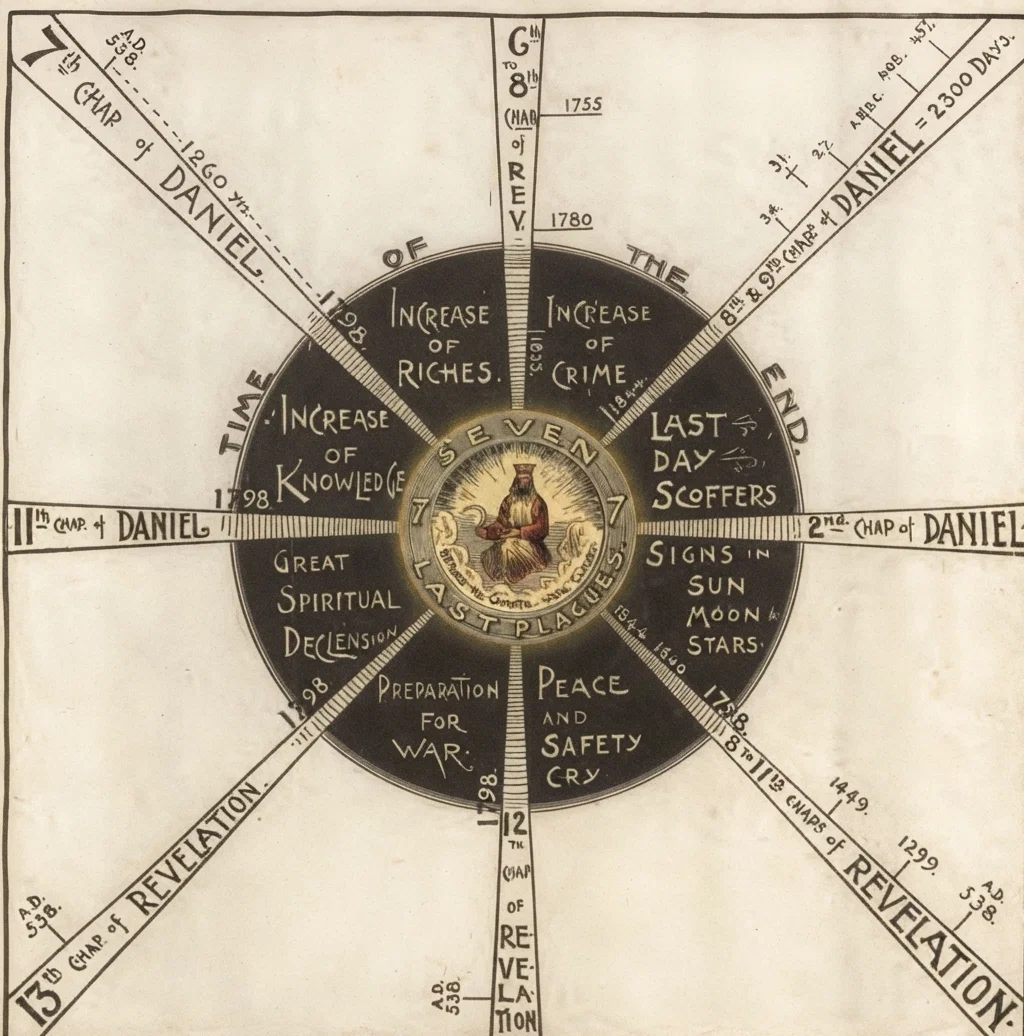
THAT the coming of our Lord in glory is near, is manifest in fulfilled and fulfilling prophecy. And this is especially true in the culmination or closing of the prominent lines of prophecy, which were given centuries ago for the very purpose that those who should observe the progress of events might discern the signs of the times, and be ready for the great event to which they pointed.
In the Book of Daniel.
In Daniel 2 we have, in the prophecy of the great image shown to Nebuchadnezzar in a dream, the advance history of the world from that time to the establishment of the kingdom of Christ in the earth. In the four sections of the image were the representations of four universal kingdoms, beginning with Babylon. These were to be the only kingdoms of such extent until the eternal kingdom should be ushered in and fill the whole earth. The prophecy has been fulfilled in the rise and fall of Babylon, Medo-Persia, Grecia, and Rome. The territory of the Roman Empire is now in the divided state indicated by the iron and clay of the feet and toes. The only unfulfilled part of the prophecy is that the God of heaven will set up a kingdom which will fill the whole earth, and will stand forever.
In the seventh chapter of Daniel the same ground is covered by another line of prophecy, the difference being that the characteristics of these four great kingdoms are given by symbolic beasts. As the four universal kingdoms before mentioned are the only ones the world has known, the fourth must be Rome. The last phase of this empire was the domination of the Papacy, symbolized by the little horn, of which the prophecy says, "He shall speak words against the Most High, and shall wear out the saints of the Most High; and he shall think to change the times and the law; and they shall be given into his hand until a time and times and half a time." All of this is in the past, and the next view the prophecy opens is of the judgment, and the everlasting kingdom.
We have this history line upon line, that it may be deeply impressed upon our minds. In the eighth and ninth chapters the story is repeated with further variation. The prophecy is given just as Babylon is passing away and Medo-Persia comes into actual view, and for this reason Babylon is omitted. Medo-Persia and Greece are specifically named in their order; therefore the succeeding one is Rome, as Rome followed Greece in history. The description also fits Rome, and fits no other; for "he"—the "king of fierce countenance"—"shall stand up against the Prince of princes." But, as in the case of the great image, "he shall be broken without hand."
This prophecy also shows a definite time that ended in 1844, at the close of which would begin the investigative judgment.
The eleventh chapter of Daniel is a prophecy beginning in the time of the Persian Dominion and reaching to the time when Michael shall stand up (chapter 12: 1). Events which have transpired during the past century, up to the present time, are described in this prophecy as pertaining to "the time of the end."
Predictions of Our Lord.
In Matthew 24, in Mark 13, in Luke 21, our Lord has set forth what should come to pass, covering the time from the destruction of Jerusalem to the second advent. Certain signs in the heavens were given to indicate the approach of the end. All but one of these are in the past, and "this generation shall not pass, till all these things be fulfilled." Certain conditions were foretold, and these conditions are everywhere manifest to-day.
What Paul Declares.
In the second chapter of 2 Thessalonians is a brief prophecy covering the period from the time of its writing to the coming of Christ. The "mystery of iniquity" was working in the church at that early day, and would increase until it developed "the working of Satan with all power and signs and lying wonders, and with all deceivableness of unrighteousness," just before the coming of the Lord. The world to-day is overrun with these deceptions, which are permeating the nominal churches of Christ to such a degree that they would deceive, if possible, the very elect.
In the Revelation.
Chapters 2 and 3 of the Revelation contain a prophetic history of the church from John's day to the time when the Lord stands at the door and knocks. The conditions described as obtaining in the last period of this history are significantly prevalent in our time. The message of Inspiration says: "I know thy works that thou art neither cold nor hot; I would thou wert cold or hot. So then because thou art lukewarm, and neither cold nor hot, I will spue thee out of My mouth." Lukewarmness in the churches is the general complaint of church officials and journals in our time.
Chapters 5-7 present in a prophetic line the Gospel work, both in heaven and on earth, from the ascension of Christ to the time of His return. The successive phases of this work and the experiences of the church are set forth under the symbol of a seven-sealed book. The sixth seal (or chapter) closes with the sealing of the people of God—placing on them the mark of final approval. This is the judgment work, and it is marked in the prophecy by events in the earth that locate it beyond doubt in our own time. The seventh seal opens to the advent of our Lord.
The Seven Trumpets.
In chapters 8-11, another prophetic line presents an outline history of political events from the breaking up of the Roman Empire to the coming of the Lord in glory. In this revelation of then future events we have the symbol of seven trumpets. It is well to note that the number seven in all these features of the Revelation implies completeness—the end of the prophetic story. These seven trumpets sound in succession, revealing successive events. The sixth, which ends with the ninth chapter, discloses the passing of the Turkish Empire under the control of the European allied powers, August 11, 1840. This is followed by the great advent movement, as foretold in chapter 10 and chapter 11 to verse 14. Then the seventh trumpet announces the kingdom of Christ, with the assurance that "He shall reign forever and ever."
The Great Controversy.
The twelfth chapter opens to view the great warfare of Satan against Christ and His church, from the birth of Christ till the time of the "remnant" of the church. The remnant must be the last of the web—the closing generation. It is said that Satan makes war with this remnant because they "keep the commandments of God, and have the testimony of Jesus Christ." For fifty years the people who answer this description have been subject to this warfare.
In the prophecy of chapter 13 we have the symbol of a great composite beast, which represents the principle of church and state government, especially as represented by Rome under the guise of Christianity. There is represented the wounding unto death of this power, and its eventual restoration, which in chapter 17 is shown to be but for a short time. There is also a two-horned beast, or government, which at first manifests a mild, lamb-like character, but in time assumes the dragon-like character of the "first beast." It practically becomes the servant of the "first beast." All this is being fulfilled in a marked manner by the increasing influence of Rome in the governments of earth, and especially in the great American Republic, which, in every particular, answers the prophecy of the two-horned beast. But the near consummation of the careers of these two powers is so plain, to the student of prophetic history—as also to the student of current political events—that the end is virtually in sight. The next scene opened by the prophecy is "the Lamb standing on Mount Zion." Chapter 14: 1-5.
All these lines of prophecy culminate in "the time of the end," and bring us to the conditions noted by special predictions—such as the increase of crime, spiritual decline in the churches, the accumulation of wealth, the rise of false prophets, and their working of deceptive signs and wonders. These conditions are matters of general remark, and no one need be mistaken as to their portent. "The coming of the Lord draweth nigh."
Fraudulent Charitable Associations
One of the curses of city life is pauperism. Much of it is fraudulent, the would-be objects of charity being imposters in various lines. Then the call for charity and charitable associations, and the success of these in raising money, opens the way for another imposition—the fraudulent charitable association. These charity "grafters" became so nearly epidemic in San Francisco that the merchants—the principal patrons of organized charities—were obliged to protect themselves against fraudulent appeals for aid. So they have appointed a Charities' Endorsement Committee, whose card will be required of any society asking aid. And this endorsement card will only be granted after thorough investigation. When the crowning grace of charity becomes a cloak for systematic fraud, the world's cup of iniquity must be about full.
THE SABBATH.
The Institution; the Day.
THIS paper does not attempt to set forth an exhaustive study of the Sabbath question; it will simply aim to set forth in the briefest way the principal facts concerning this important subject, which has become of world-wide interest in both religious and political circles.
What day is the Sabbath of the Lord, or the Lord's day? It is the sacred duty of every Christian and every man to ask the question. It is not a settled question with the people. It has not been for centuries. A question is not settled until it is settled right. A question is never settled right with a Bible Christian, with the true Protestant, till it is settled according to, and upon, the rock of God's Word. Councils, creeds, "fathers," traditions, courts, or Legislatures can not determine the question; what says the Bible?
Its Origin.
The origin of the Sabbath as it pertains to this earth is recorded in Gen. 2:1-3, as follows:
"Thus the heavens and the earth were finished, and all the host of them. And on the seventh day God ended [ceased from] His work which He had made; and He rested on the seventh day from all His work which He had made. And God blessed the seventh day, and sanctified it; because that in it He had rested from all His work which God created and made."
Note the following facts in regard to the Sabbath, as expressed in the above text:
1. The Sabbath was instituted before sin entered the world, and therefore was not given as a type of better things to come. Like other moral requirements, it originated before sin. It, like the law of marriage, "was in the beginning." Man needed it even in his sinless condition.
2. It was not a Jewish institution, for it was made 2,500 years before a Jew existed. It was made and given to the father of the race and all his posterity. "The Sabbath was made for man." Mark 2:27.
3. Note the steps by which the Sabbath was made: (a) The Creator rested on the seventh day; that made the seventh day His rest day. (b) He blessed the seventh day; that made the seventh day God's blessed rest day. And what God blesses is blessed: (c) He sanctified the seventh day. "Sanctified" means to set apart, separate from, separate unto. So God separated the seventh day from the other "six working days" (Eze. 46:1), and set it apart, or sanctified it unto Himself. This made the seventh day God's blessed and sanctified rest day. He placed within it His own presence and made it holy.
4. He did not bless and sanctify the particular day on which He rested, but the seventh day of the weekly cycle for all time to come, "because that in it [the seventh day] He had rested."
5. As the Lord "made" the Sabbath "for man," and as the Lord then set apart that day, He must, in the very nature of the case, have given man a command to keep the day. There is no escaping this conclusion.
6. The Creator of the heaven and the earth was God, but He did it through our Lord Jesus Christ. See John 1:1-3; Col. 1:16; 1 Cor. 8:6. It was therefore the Son of God who wrought, who rested, who set apart the day. The seventh-day Sabbath of creation is therefore the Lord's day. Compare with Rev. 1:10; Mark 2:27, 28; Isa. 58:13; Ex. 20:8-11. This is the only day which the Lord calls His own, but in this He is very specific.
The Divine Law.
The law of the Sabbath teaches the same great truth:
"Remember the Sabbath day, to keep it holy. Six days shalt thou labor, and do all thy work; but the seventh day is the Sabbath of the Lord thy God; in it thou shalt not do any work, thou, nor thy son, nor thy daughter, thy manservant, nor thy maid-servant, nor thy cattle, nor thy stranger that is within thy gates; for in six days the Lord made heaven and earth, the sea, and all that in them is, and rested the seventh day; wherefore the Lord blessed the Sabbath day, and hallowed it." Ex. 20:8-11.
Principles of Interpretation.
The following are recognized principles in the interpretation of law, as all jurists will admit; let us apply them to God's law:
"In the case of all law, it is the INTENT OF THE LAWGIVER that is to be enforced."
"When words are plain in a written law, there is an end to all construction; they must be followed."
"When the intent is plain, nothing is left to construction."
Certainly the words of the fourth commandment of the Decalogue are plain. If language means anything, that law means that the intent of the Lawgiver was that the seventh day should be regarded by His subjects as the Sabbath. And this law God based upon reasons—His resting on that day, blessing the day, and the sanctification, or setting apart of the day—which can apply to no other day of the seven; for God rested on no other day, blessed no other day, set apart no other day.
But God did not leave His intent to be declared by words alone. He showed by the threefold weekly miracle of the manna for forty years that the seventh day was the Sabbath, thereby precluding any construction of the plain words of the law.
The Seventh Day of the Week.
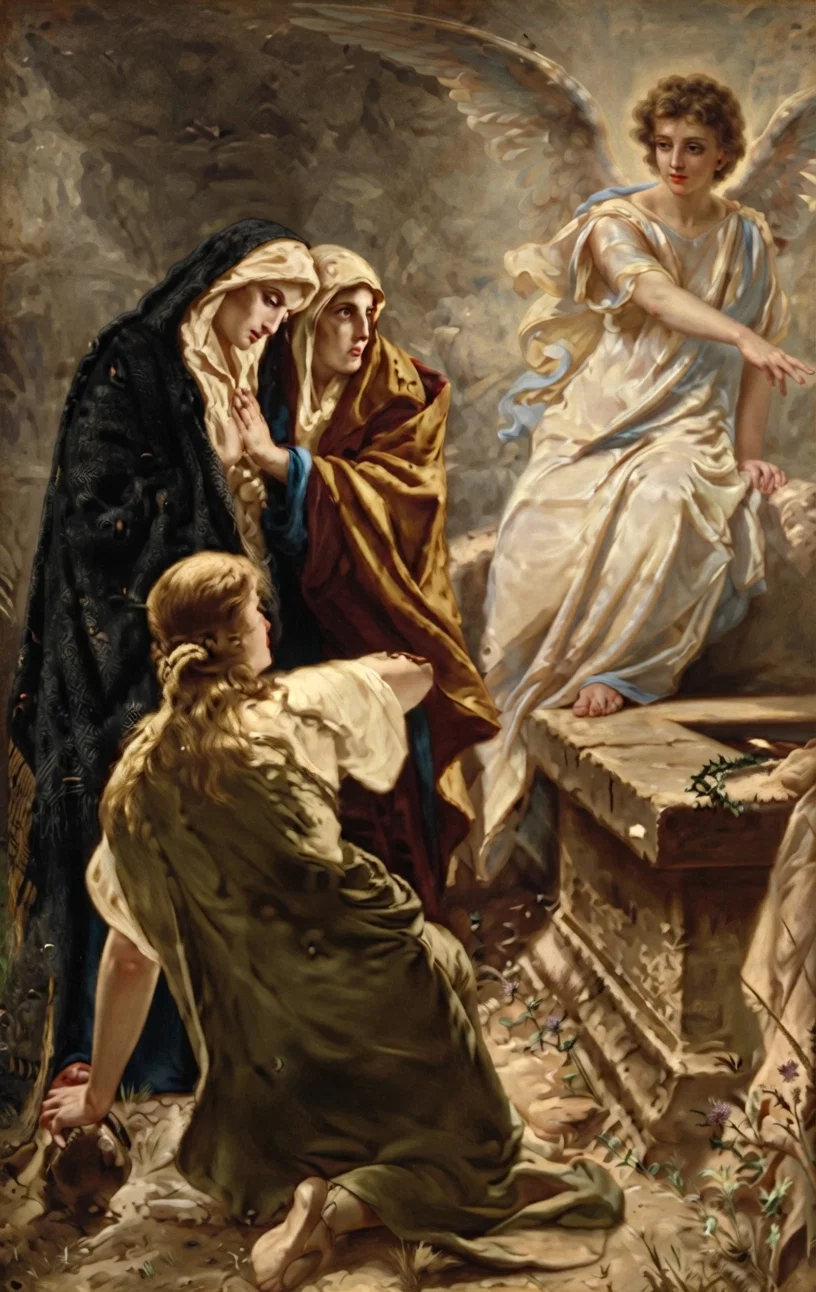
More than this; this seventh-day Sabbath was the seventh day of the week, for it was the day which came just before the first day of the week. See Matt. 28:1; Mark 16:1, 2; Luke 23:56; 24:1. In short, the only weekly Sabbath, or holy day, known to the Word of God is the seventh-day Sabbath, the memorial of creation, and the sign of sanctification, redemption, or recreation in Christ. Eze. 20:12. It was the day hallowed by Christ, the Creator, in Eden, kept by patriarch and prophet, and magnified and made honorable by the holy obedience of Jesus Christ, our Example. We can "profane" only that day which God has hallowed. We can "desecrate" only that day which God has made sacred. We can remember to keep holy only that day which God has made holy. God has placed His honor upon one day only, namely, the seventh day of the week.
Christ and the Law.
Of the law of which the Sabbath was a part, our Lord utters the following emphatic words:
"Think not that I am come to destroy the law, or the prophets; I am not come to destroy, but to fulfil. For verily I say unto you, Till heaven and earth pass, one jot or one tittle shall in nowise pass from the law, till all be fulfilled. Whosoever therefore shall break one of these least commandments, and shall teach men so, he shall be called the least in the kingdom of heaven; but whosoever shall do and teach them, the same shall be called great in the kingdom of heaven. For I say unto you, That except your righteousness shall exceed the righteousness of the scribes and Pharisees, ye shall in no case enter into the kingdom of heaven." Matt. 5:17-20.
"And it is easier for heaven and earth to pass, than one tittle of the law to fail." Luke 16:17.
The apostle James bears like witness to the same law:
"If ye fulfil the royal law according to the scripture, Thou shalt love thy neighbor as thyself, ye do well; but if ye have respect to persons, ye commit sin, and are convinced of the law as transgressors. For whosoever shall keep the whole law, and yet offend in one point, he is guilty of all. For He that said, Do not commit adultery, said also, Do not kill. Now if thou commit no adultery, yet if thou kill, thou art become a transgressor of the law. So speak ye, and so do, as they that shall be judged by the law of liberty." James 2:8-12.
Note that our Lord tells us that it is easier for heaven and earth to pass than for even a jot or tittle of the law to fail; and neither jot nor tittle will fail till all the prophecies are fulfilled; but this will not be until eternity is past, for of this the prophets foretell. It is the most emphatic way of saying that the law will never, can never, be abolished. Compare with Ps. 111:7, 8; Isa. 51:6, 7.
James declares, twenty-nine years this side of the Cross, that he who offends in one point of that "royal law according to the [Old Testament] Scripture," is guilty of all; for he thus shows his contempt for the Lawgiver.
The Man of Sin.
There is one power, however, which the Word of God declares would think to change the times and law of God. Dan. 7:25. He could not truly change them, and yet, in God's inscrutable wisdom, this power was permitted to seem to have accomplished this for more than twelve centuries. This power is a religious power; for he "opposeth and exalteth himself above all that is called God, or that is worshiped; so that he as God sitteth in the temple [church] of God, showing himself that he is God." 2 Thess. 2:4. Because of this he is called "the man of sin," "the son of perdition," and the principle, the working power of his system, "the mystery of iniquity." Verses 3, 7.
All this has been fulfilled, and the very power which made the change answers to the description given by the prophets, and boasts of its work. (See "Who Changed the Sabbath?" or "The Lord's Day," advertised on page 2.)
The Word of God knows but one holy weekly day, the seventh-day Sabbath, even as it knows but one Saviour, the Lord of the Sabbath, Creator, Redeemer, Sanctifier. Redemption and sanctification are re-creation (Eph. 2:10), of both of which the Sabbath is a sign. Eze. 20:12, 20.
It may be said that the first-day sabbath has been kept by good men for centuries, and these men have been blessed. True; so have good men held other errors and have been blessed. Abraham was a polygamist, but God blessed him, because Abraham had a heart to do what was right. Of the evils of polygamy, he was ignorant. God blesses men in error, not because of the error, but in spite of it; not to confirm them in sin, but to lead them to greater light. Good, honest men have ignorantly passed counterfeit bills, but this did not make the bills genuine, even tho they went through the hands of a thousand honest men. Nor is the genuine less genuine tho men recognize it not. It has God's image and superscription.
Lastly, we have for the seventh-day Sabbath the example of all the prophets and apostles, and of our Lord Himself, who kept His Father's commandments. John 15:10. It will not do to say to this that Christ was a Jew, and therefore kept the Sabbath. He came to do God's will for all. He finished the work God gave Him to do. And we are expressly told that He left us an example, that we should follow His steps (1 Peter 2:21), that we should "walk even as He walked." 1 John 2:6.
Reader, is it not safe to follow God's Word? Is it not safe to follow the example of Jesus Christ? What more can you ask? May you at His coming be found among those who "keep the commandments of God, and the faith of Jesus." Rev. 14:12.
A Sabbath Reform Predicted
A Sabbath Reform Predicted.—In Isa. 56:1-7 is a prophecy of a reform on the Sabbath just before the second coming of Christ, when His "salvation is near to come" (see Luke 21:28; Isa. 25:9). He pleads with the stranger, the eunuch, the outcast, to take hold of His everlasting covenant, and live, and He pronounces a blessing upon the man who will do that, and who will keep the Sabbath from polluting it. Reader, do you not want God's blessing? He says, "Blessed is the man that doeth this, and the son of man that layeth hold on it; that keepeth the Sabbath from polluting it, and keepeth his hand from doing any evil." This is paralleled by our Lord's words, "Blessed are they that do His [God's] commandments, that they may have right to the tree of life, and may enter in through the gates into the city." Rev. 22:14. Reader, do you not want this blessing?
WHEN WAS THE SABBATH CHANGED?
[Here is a very good answer to the question from a secular paper, the New York Tribune of Wednesday, Feb. 23, 1898.]
Seventh Day.
J. M. (Red Creek, N. Y.): 1. When did they change the Sabbath from the seventh day of the week to the first day? 2. Why did they do so?
1. The first observance of Sunday that history records was in the fourth century, when Constantine issued an edict (not requiring its observance, but simply abstinence from work) reading, "Let all the judges and people of the town rest, and all the various trades be suspended on the venerable day of the sun." At the time of the issue of this edict, Constantine was a sun-worshiper; he refused to unite with the church until on his death-bed (337).15At the church council in 536 the religious observance of Sunday was recommended, but very little attention was paid to it. In 780, Alcuin, an English prelate, became the spiritual adviser of Charlemagne, when for the first time it was formally declared that the fourth commandment covered the first day of the week; but this declaration was observed by comparatively few, and for eight centuries thereafter Sunday was observed far more for a day of sport and festivity than as a religious one. The English Parliament sat on Sundays, and English courts were held on that day, down to the reign of Elizabeth. In 1593 Dr. Nicholas Bound, of Suffolk County, England, published a work called "The True Doctrine of the Sabbath," in which he maintained, not that Sunday was divinely appointed as a Sabbath, but that the obligation to observe a Sabbath was divine. It was as late as at the opening of the seventeenth century when the Puritans in England began the practice of calling Sunday the Sabbath.
2. There never were, and are not now, any satisfactory reasons given for the calling and observing of Sunday as the Sabbath day. Says Bishop Potter: "Their [the Puritans'] warrant for what they did [with reference to the observance of Sunday as the Sabbath], whether we look for it in the pages of the New Testament or in the traditions of Catholic Christendom, was neither substantial nor sufficient."
GIVEN TO PLEASURE.
By B. F. Richards, M.D.
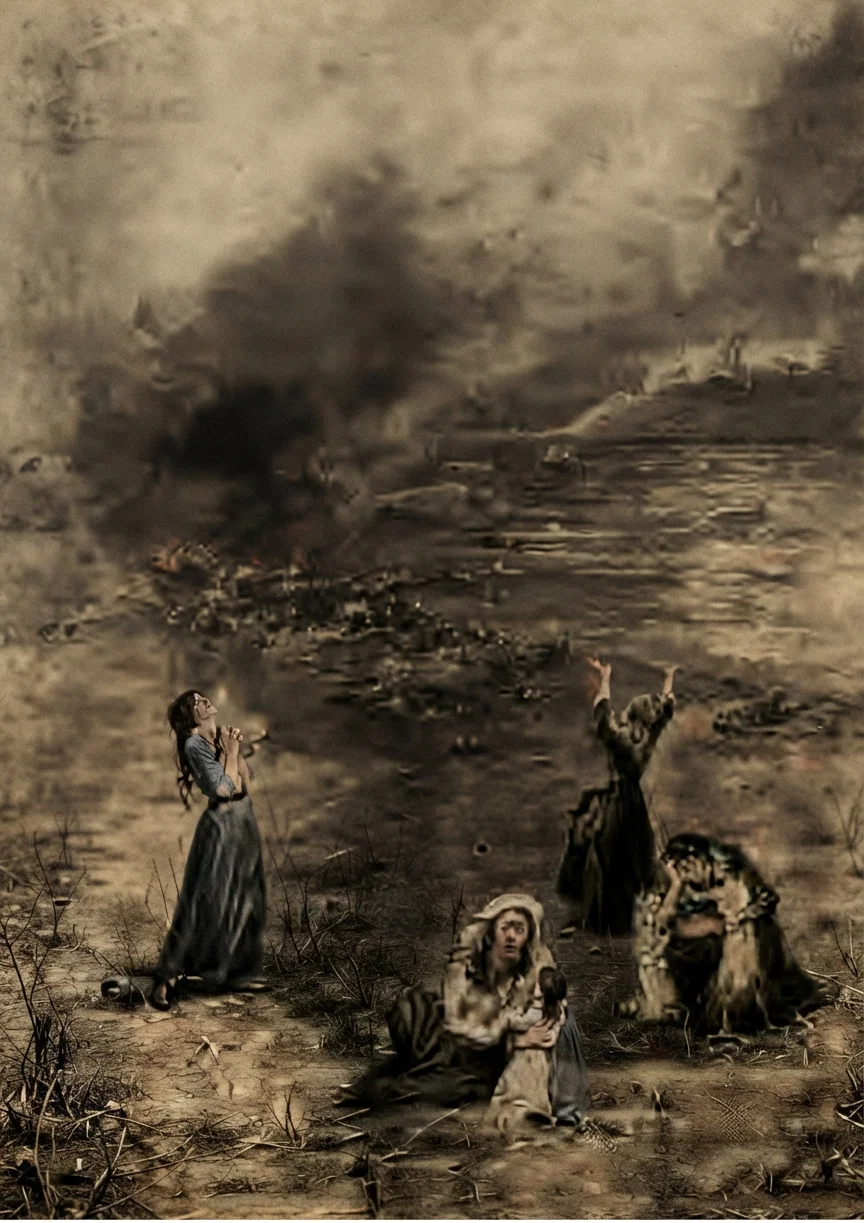
AS THE observer of current events takes note of conditions in our metropolitan cities, he beholds new playhouses just completed, others being built, even store buildings converted into places of amusement; and he sees the people flocking to them, often with even standing room at a premium. But the large and costly churches have many empty seats. So the increase of pleasure-seeking and the decrease of reverence for God are two noticeable features among the people of to-day. Now the Lord says that this condition will be characteristic of the time of the end. "This know also that in the last days perilous times shall come. For men shall be lovers of their own selves, . . . lovers of pleasures more than lovers of God." 2 Tim. 3:2-5. Now bear in mind the people referred to are church-members, "having a form of godliness," and should have greater love for God than for pleasure. We would expect them to be reverent and ready to acknowledge God's power as manifested in His universe and in the salvation of sinful men, but we are told that in the last days they will be "denying the power."
Consequently, if these be the last days, we may look for a teaching to be spreading among church-members, as well as in the world, which shall question whether, after all, the worlds and man are really God's handiwork, and whether there is any need of the saving power of His Gospel. How does evolution fulfil the specifications of the prophecy, having for its fundamental principle the theory that both the world and man were developed by the agency of natural laws, unaided by God? And was there ever a greater denial of the necessity for the Gospel's power to save than is being made all over the "Christian" world by the "New Thought" doctrine, which declares man has only to will strongly enough in order to accomplish anything he chooses?
God's messages always correct errors prevalent at the time they are to be given. Then we would expect the message for the last days to be one emphasizing the creatorship of the Lord. In the first part of the final message to the world we read (Rev. 14:7): "and worship Him that made heaven, and earth, and the sea, and the fountains of waters." And this message is being made prominent to-day by those who realize the importance of keeping "the commandments of God, and the faith of Jesus," together with the fact that "the coming of the Lord draweth nigh." B. F. RICHARDS, M.D.
1. What is a prominent characteristic even among professed religionists in the last days?
"This know also, that in the last days perilous times shall come. For men shall be lovers of their own selves, covetous; . . . having a form of godliness, but denying the power thereof." 2 Tim. 3:1-5.
2. What does this covetous spirit lead them to do?
"Ye have laid up your treasure in the last days." James 5:3.
3. To enable them to do this, what course has been pursued?
"The hire of the laborers who have reaped down your fields, which is of you kept back by fraud, crieth." Verse 4.
4. How have these thoughtless rich regarded the cries of the poor?
"Ye have lived in pleasure on the earth, and been wanton; ye have nourished your hearts, as in a day of slaughter. Ye have condemned and killed the just." Verse 5, 6. "The wicked devoureth the man that is more righteous than he." Hab. 1:13.
5. In what value do they hold men?
"And makest men as the fishes of the sea, as the creeping things, that have no ruler over them." Hab. 1:14.
6. How do they use them?
"They take up all of them with the angle, they catch them in their net, and gather them in their drag; therefore they rejoice and are glad." Verse 15.
7. How grasping is such avariciousness?
"That join house to house, that lay field to field, till there be no place, that they may be placed alone in the midst of the earth." Isa. 5:8. "He is a proud man, neither keepeth at home, who enlargeth his desire as hell, and is as death, and can not be satisfied, but gathereth unto him all nations, and heapeth unto him all people." Hab. 2:5.
8. What does prophecy say of the outcome of such a course?
"Go to now, ye rich men, weep and howl for your miseries that shall come upon you." James 5:1. "Shall they not rise up suddenly that shall bite thee, and awake that shall vex thee, and thou shalt be for booties unto them? Because thou hast spoiled many nations, all the remnant of the people shall spoil thee." Hab. 2:7, 8. "And the songs of the palace shall be howlings in that day, saith the Lord God; there shall be many dead bodies in every place; they shall cast them forth with silence. Hear this, O ye that swallow up the needy, even to make the poor of the land to fail." See Amos 8:3-6.
9. How does the Lord regard such oppression?
"The Lord hath sworn, . . . Surely I will never forget any of their works. Shall not the land tremble for this, and every one mourn that dwelleth therein? and it shall rise up wholly as a flood; and it shall be cast out and drowned, as by the flood of Egypt." Verses 7, 8.
10. What counsel does the Lord give to both classes?
"Be patient therefore, brethren, unto the coming of the Lord." James 5:7. "With righteousness shall He judge the poor, and reprove with equity for the meek of the earth." Isa. 11:4. "Avenge not yourselves; vengeance is Mine; I will repay, saith the Lord." Rom. 12:19. "Charge them that are rich in this world, that they be not high-minded, nor trust in uncertain riches, but in the living God, who giveth us richly all things to enjoy; that they do good, that they be rich in good works, ready to distribute, willing to communicate; laying up in store for themselves a good foundation against the time to come, that they may lay hold on eternal life." 1 Tim. 6:17-19.
New York City's Population
The city of New York now has a population more than half of the Empire State, and exceeds all the other states in the union save three, Illinois, Ohio, and Pennsylvania. It has fifty per cent. more people than Paris, twice that of Berlin, a greater population than the combined figures for Chicago, Philadelphia, and St. Louis.
THE BIBLE.
By Anonymous
STUDY it carefully,
Think of it prayerfully;
Deep in thy heart let its pure precepts dwell.
Slight not its history,
Ponder its mystery;
None can e'er prize it too fondly or well.
Accept the glad tidings,
The warnings and chidings,
Found in this volume of heavenly lore;
With faith that's unfailing
And love all-prevailing,
Trust in its promise of life evermore.
With fervent devotion
And thankful emotion,
Hear the blest welcome, respond to its call;
Life's purest oblation,
The heart's adoration,
Give to the Saviour, who died for us all.
—Anonymous.