THE first expression of faith in the saving power of God is the offering of a lamb without blemish and without spot. Gen. 4:4. That lamb was the type of the Lamb of God, slain in purpose before the foundation of the world, and meeting the climax of Love's sacrifice for guilty man on the cross of Calvary. 1 Peter 1:19; Phil. 2:5-8. When the sinner placed his hand on the head of the innocent victim, he confessed that he was a sinner, worthy of death, and that he took God's sacrifice for his substitute, of which the Lamb was a type.
In the patriarchal age we see this repeated over and over in object-lesson. In the Levitical dispensation the Infinite sacrifice and provision for human needs were greatly elaborated into numerous object-lessons that the people of Israel, and all the world through them, might be taught the exceeding sinfulness of sin, God's mighty power and infinite fulness to save, the conditions on which their full atonement was granted, and the grand culmination beyond the judgment of absolute oneness with God to all eternity.
These things are still left on record for "our learning," especially in the last four books of the Pentateuch, but now especially in Exodus, Leviticus, and Daniel in the Old Testament, and in Hebrews and the Revelation in the New Testament. Those who live in the last days are especially told to "remember ye the law of Moses My servant, which I commanded unto him in Horeb for all Israel, even statutes and judgments," that the things "written aforetime were written for our learning, that through patience and through comfort of the Scriptures we might have hope;" and that what happened unto Israel was left to us "by way of example; and they were written for our admonition, upon whom the ends of the ages are come." Mal. 4:4; Rom. 15:4; 1 Cor. 10:11.
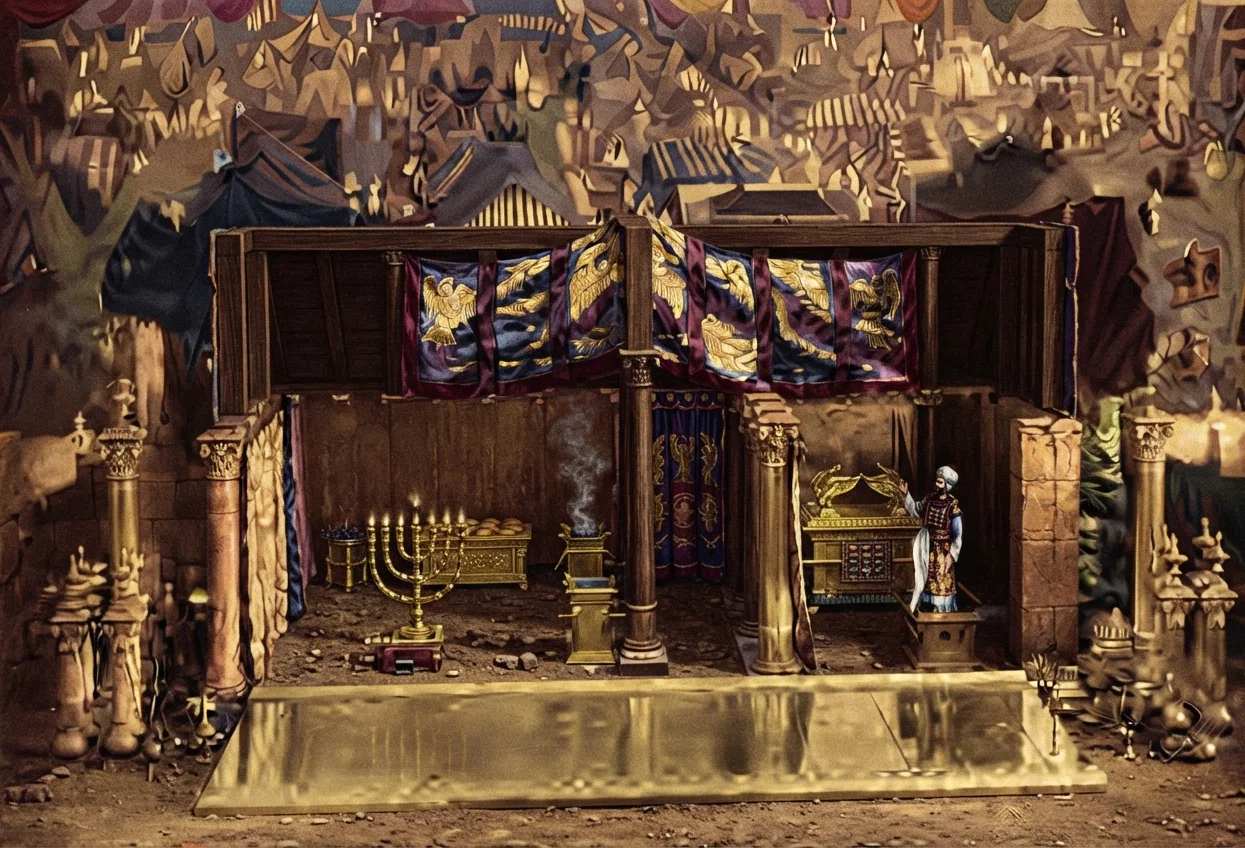
The Sanctuary, Open at Side.
Therefore it is important that we heed the Word of God; but this study can give only the barest outline of this vitally-important subject, and must refer the reader to books and pamphlets listed elsewhere in this issue.
Let us look at the work of Christ our Saviour from the view-point of the greatest object-lesson of the Bible, the center of all other object-lessons, the harmonizer of all seeming inconsistencies,—the ancient tabernacle, or sanctuary, in the wilderness, continued in the temple, and typical of the greater and "more perfect tabernacle, which the Lord pitched and not man."
When Israel stood at the base of Mount Sinai, from which the great Jehovah had thundered His unchangeable law in ten immutable precepts, He said to Moses for the people, "Let them make Me a sanctuary; that I may dwell among them." Ex. 25:8.
That sanctuary was built costly and beautiful in structure and material. It was perfectly proportioned, in feet, 45 x 15 x 15, consisting of two rooms separated by a heavy veil—the holy place 30 x 15, and the most holy place 15 x 15—built of boards overlaid with gold without and within, and covered with a curtain gloriously embroidered in cherubim.
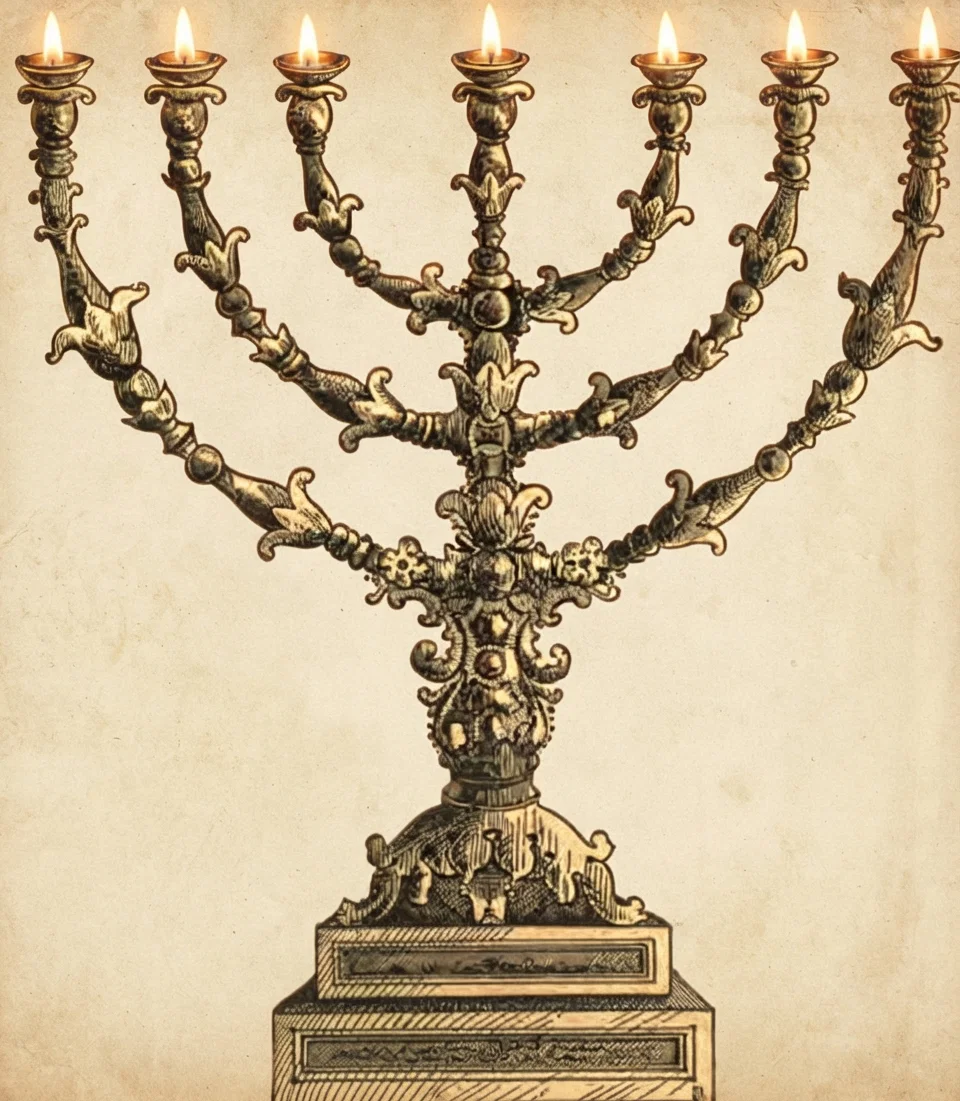
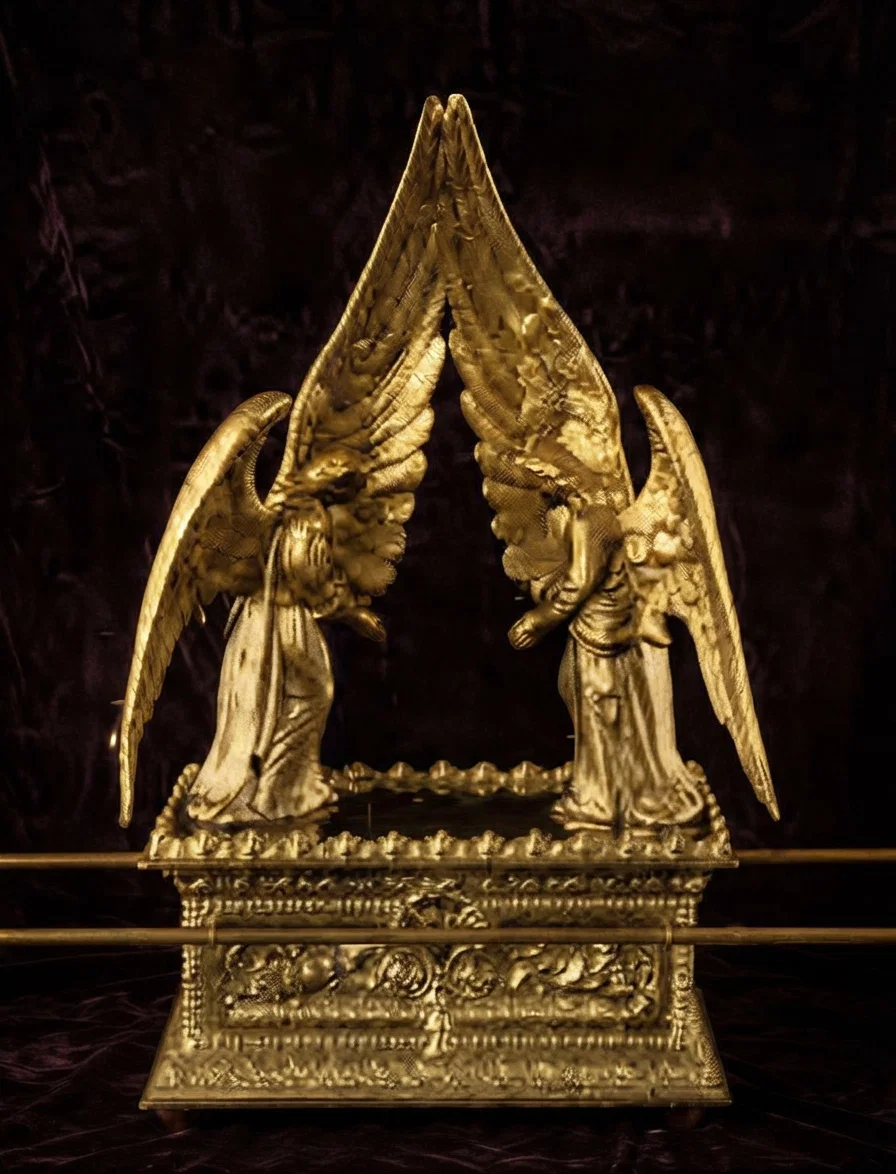
The outer apartment contained the seven-branched golden candlestick, representing the light of God's Spirit through His Word and church; the table of presence bread, eaten every Sabbath, representing the feeding upon the Bread of Life by His people, and so partaking of His life; and the altar of incense, where God's infinite grace mingles with the effectual prayers of His people. The most holy place contained the ark of the covenant, testimony, or testament, over which was the mercy-seat, and within which was the holy law of Ten Commandments, the doing of which embraced all duty, and the transgression of which included all sin. Eccl. 12:13, 14; 1 John 3:4; Rom. 7:7. Above the mercy-seat, between the cherubim, above the Holy Shekinah, the visible manifestation of the presence of God. Before the ark on the east was the altar of burnt-offering.
The Way of the Repentant Sinner.
When the sinner would be reconciled to God, he brought a firstling of the flock without blemish as in figure, laid his hand upon its head, confessing his sinfulness and worthiness to die instead of the beast; the offering was slain, and the priest took the blood—the life forfeited by sin—into the holy sanctuary, and sprinkled of it seven times before the veil, and placed of it upon the altar of incense. Thus the sin was transferred in figure by the priest to the sanctuary, and the sinner was forgiven. And this went on in various ways and forms for 364 days every year, the essential thing of which was the shedding of blood and the removal of sin by means of the blood, from the sinner to the sanctuary of God's presence. For without the shedding of blood, there is no remission of sin. Heb. 9:22. And we are washed from our sins by His blood (Rev. 1:5), or cleansed by His life.
In the end of the year, came the great day of atonement, described in Leviticus 16 and 23, the judgment day of the year. Two goats were brought, one goat for Jehovah, one for Azazel, "the strong one who revolted." The Lord's goat was slain, its blood brought into the most holy place and sprinkled upon the mercy-seat, underneath which was the law transgressed. All the transgressions of every repentant soul of the year are gathered up in the person of the priest, brought out by him to the door of the sanctuary, and confessed upon the head of the goat for Azazel—Satan—and the goat is sent away into a land of forgetfulness and destroyed. The penitent souls are free and clear from sin, at one with God.
The Antitype.
All these earthly rites and ceremonies were typical of the greater realities, the effectual things above and to come.
"Now of the things which we have spoken this is the sum: We have such an high priest, who is set on the right hand of the throne of the Majesty in the heavens; a minister of the sanctuary, and of the true tabernacle, which the Lord pitched, and not man." Heb. 8:1, 2.
The Ark of the Testament.
"Then verily the first covenant had also ordinances of divine service, and a worldly sanctuary. For there was a tabernacle made; the first, wherein was the candlestick, and the table, and the shewbread; which is called the sanctuary. And after the second veil, the tabernacle which is called the Holiest of all; which had the golden censer, and the ark of the covenant overlaid round about with gold, wherein was the golden pot that had manna, and Aaron's rod that budded, and the tables of the covenant; and over it the cherubims of glory shadowing the mercy-seat; of which we can not now speak particularly. Now when these things were thus ordained, the priests went always into the first tabernacle, accomplishing the service of God. But into the second went the high priest alone once every year, not without blood, which he offered for himself, and for the errors of the people; the Holy Ghost this signifying, that the way into the holiest of all was not yet made manifest, while as the first tabernacle was yet standing; which was a figure for the time then present, in which were offered both gifts and sacrifices, that could not make him that did the service perfect, as pertaining to the conscience; which stood only in meats and drinks, and divers washings, and carnal ordinances, imposed on them until the time of reformation. But Christ being come an High Priest of good things to come, by a greater and more perfect tabernacle, not made with hands, that is to say, not of this building; neither by the blood of goats and calves, but by His own blood He entered in once into the holy place, having obtained eternal redemption for us." Heb. 9:1-12.
The sanctuary of earth represented God's great sanctuary on high, the holy places were figures of the true. Heb. 9:23, 24; Rev. 4:4, 5; 8:3; 11:19.
The young bullock, the kid, the lamb without blemish, typified "the Lamb of God, that beareth the sin of the world." John 1:29, margin. The offering of that lamb symbolized the death of Christ Jesus upon the cross, once for all. Heb. 10:12, 14; 9:14, 26. The ministration of that blood by the priests each year, in holy and most holy places, was the type of the complete ministration of Jesus Christ by His own blood, for sin, once for all, in the holy places of the sanctuary on high. Heb. 8:4, 5; 9:12, 23, 24.
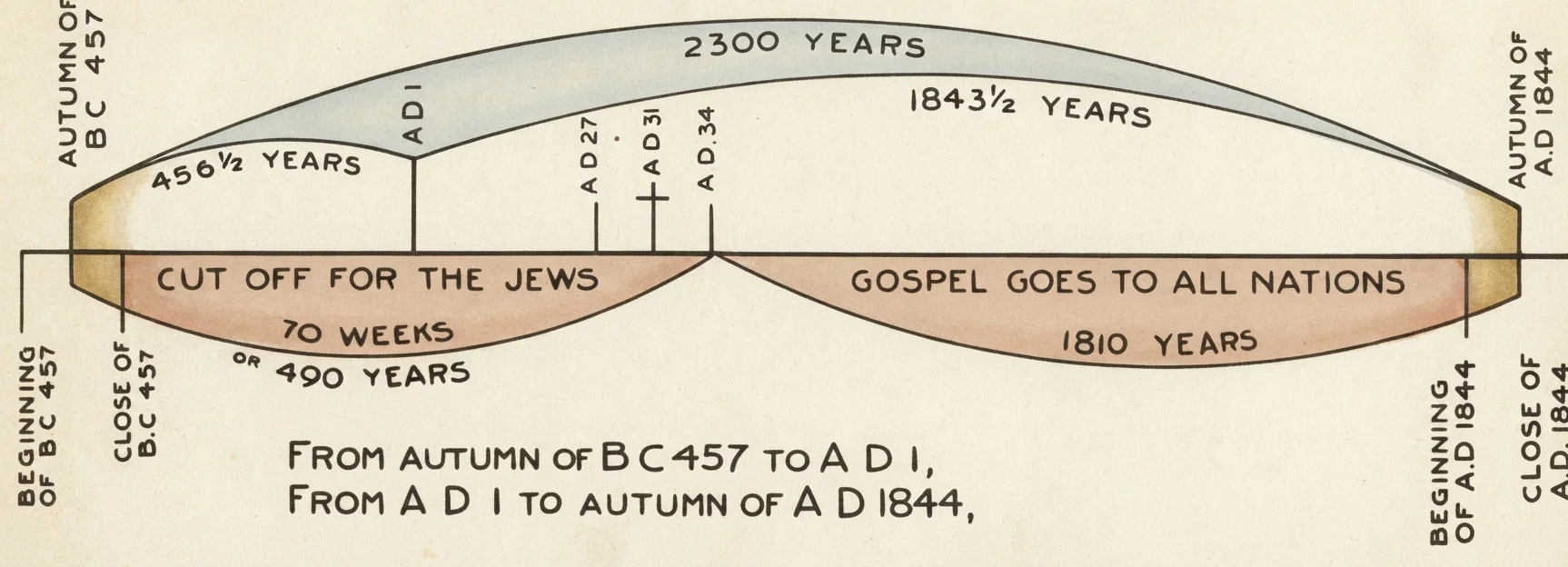
FROM AUTUMN OF B.C 457 TO A. D. 1, 456½ YEARS FROM A D 1 TO AUTUMN OF A D 1844, 1843½ YEARS TOTAL 2300 YEARS
In that holy place on high, our Lord has ministered since He took His seat on the right hand of the Majesty in the heavens, immediately after His sacrifice. Heb. 10:12-14.
But to every work of probation and trial, comes an end, a judgment, that it may be ascertained who have availed themselves of the opportunities offered, who have complied with the conditions, who have been successful candidates. Even so in God's work. Long ago He appointed a day in which He would judge the world in righteousness by Jesus Christ. Acts 17:31. Long ago His plan was devised, His purpose formed, the elect number of elect characters written in the books of heaven; and sometime, for the benefit of all the actors in the great drama6of eternal life, will be revealed in the judgment those who have yielded to God's infinite love, and through Christ are worthy to be called sons of God and heirs with Christ forever.
In that closing work the remembrance of all sin recorded against the children of God in the heavenly sanctuary shall be blotted out, because blotted out of their lives, and thrown back in right degree upon the head of him who instigated them, the senior partner in the firm of Sin, Satan. He is the antitypical scape-goat. Rev. 20:1-4.
The earthly sanctuary was justified from its remembrance of sin, represented by the sprinkled blood; the holy places of the heavenly temple must be cleansed, justified, also, by the Better Sacrifice. Heb. 9:23. Then the temple of God will be further opened in heaven, the most holy inner temple be revealed, and the ark of God's testament be seen, bringing again to view in the latter days His holy law, the rule of His judgment, and demanding the proclamation of that phase of His everlasting Gospel, "The hour of His judgment IS come." Rev. 14:6, 7.
The time of the beginning of the antitypical day of atonement (Lev. 23:26-30; Heb. 8:5), the cleansing of the heavenly sanctuary (Heb. 9:23), the finishing of the mystery, or Gospel, of God (Eph. 6:19; Rev. 10:7), the accounting worthy of the faithful (Luke 20:35), the blotting out of sins (Acts 3:19), the blotting out of the names of the unworthy (Rev. 3:5), the investigative judgment (Dan. 7:9, 10), is revealed in Dan. 8:14: "Unto two thousand and three hundred days; then shall the sanctuary be cleansed [literally, "justified"]." These days represent in symbolic prophecy so many literal years. Eze. 4:4-6. When they began, when parts of them end, is told in Dan. 9:24-26, a part of the prophecy of the eighth chapter. Seventy weeks of the 2,300 years—490 years—are marked off or decreed upon the Jewish people, during which time the everlasting righteousness of Christ is to come in, the vision sealed or made sure, the transgression of the Jewish nation to be filled up.
This period of 2,300 years began with the going forth of the commandment to restore and to build Jerusalem. This occurred in its fulness in B.C. 457, in the seventh year of King Artaxerxes Longimanus, as recorded in Ezra 7:7-26. Seven weeks of the time—49 years—reached to 408, the last work of Reformation under Nehemiah, according to Prideaux. Sixty-two weeks more—434 years—reached to "Messiah [the Anointed] the Prince," our Lord Jesus Christ, baptized and anointed of the Holy Spirit in A.D. 27. Luke 3:21, 22; 4:18-21; Acts 10:37, 38. In the midst of the seventieth week, after the sixty-nine weeks, the sacrifices were to cease by the cutting off of the Messiah. And this occurred at the Crucifixion, A.D. 31. Three and one-half years later the Jews rejected Jesus by stoning Stephen, and the Gospel was given to the world.
Four hundred and ninety years from 2,300 years leave 1,810 years. This period added to A.D. 34 brings us to 1844. Then began the closing work of Jesus Christ as high priest in the sanctuary on high. Then began that last-day proclamation of the Gospel, "The hour of His judgment is come" (Rev. 14:6, 7), resulting in the development of a company who keep "the commandments of God, and the faith of Jesus." Rev. 14:12. Man, therefore, is now in the solemn work of God's harvest-time, the judgment of His people, beginning at the house of God (1 Peter 4:17), the time when names will be blotted out of the book of life unless sin is blotted out of character. It is a fearfully-solemn time, however the scoffing world and the pleasure-loving religionist may regard it. As truly as God's sun rises and sets, there is coming God's great judgment day. Nay, it is already here. Each one of us will meet it, must meet it. God would have us by confession in Jesus Christ send our sins beforehand to judgment, and be acquitted in that day. Only so can we have boldness in the judgment. "Prepare to meet thy God."
THE LAST THREEFOLD MESSAGE.
SOMETIME this age will close, as truly as have all the others in the past. Sometime the long night of travail and sorrow, pain and anguish, will be over and the golden dawn which knows no night, will break over the hills of eternity.
Of the characters of the inhabitants of that new era it is said: "Thy people shall be all righteous."
Surely that is not the condition of this age. Everywhere in God's Word its corruption is pointed out; everywhere we are told it will end. All signs indicate that the end is near. A better age is coming. May we share it? What is necessary on our part that we may? What has God done on His part that we may be ready? What remedy has He provided to heal the world's multitudinous ills? What has He to heal the divisions, the confusion of this age? God calls it Babylon, for "Babylon" means "confusion,"—confusion of creeds and beliefs and non-beliefs and theories and fancies and sophistries and dreams and traditions and philosophies and superstitions, of which the old world is full? How are the scattered, disorganized forces of His remnant army to be rallied? What is His standard to be lifted aloft? What is the rallying cry which will bring order out of the chaos, Zion out of Babylon?
For surely without prejudice the present condition of Christendom is well termed Babylon, confusion. Its creeds are numerous as its heavenward-pointing spires. Every "wind of doctrine" is blowing. The old "landmarks" are submerged. Many churches have swung from the rigid power of creed to a liberalism which makes of none effect the work of Christ, and places the salvation of the poor sinner in himself, his hope in long ages of evolution.
God has a standard to be lifted; for "when the adversary shall come in like a flood, the Spirit of Jehovah will lift up a standard against him." Isa. 59:19. Therefore God calls to His servants: "Go through, go through the gates; prepare ye the way of the people; cast up, cast up the highway; gather out the stones; lift up an ensign for the peoples" "Say ye to the daughter of Zion, Behold, thy Salvation cometh; behold, His reward is with Him, and His work before Him." Isa. 62:10, 11.
God has a gathering call: "Gather yourselves together, yea, gather together, O nation that hath no shame ["longing"]; before the decree bring forth, before the day pass as the chaff, before the fierce anger of Jehovah come upon you, before the day of Jehovah's anger come upon you. Seek ye Jehovah, all ye meek of the earth, that have kept His ordinances; seek righteousness, seek meekness; it may be ye will be hid in the day of Jehovah's anger." Zeph. 2:1-3.
This standard and this call are more fully set forth in the great threefold message of Rev. 14:6-12, as follows:
First Angel's Message.
"And I saw another angel flying in mid heaven, having eternal good tidings to proclaim unto them that dwell on the earth, and unto every nation and tribe and tongue and people; and he saith with a great voice, Fear God, and give Him glory; for the hour of His judgment is come; and worship Him that made the heaven and the earth and sea and fountains of waters."
Second Angel's Message.
"And another, a second angel, followed, saying, Fallen, fallen is Babylon the great, that hath made all the nations to drink of the wine of the wrath of her fornication."
Third Angel's Message.
"And another angel, a third, followed them, saying with a great voice, If any man worshipeth the beast and his image, and receiveth a mark on his forehead, or upon his hand, he also shall drink of the wine of the wrath of God, which is prepared unmixed in the cup of His anger; and he shall be tormented with fire and brimstone in the presence of the holy angels, and in the presence of the Lamb; and the smoke of their torment goeth up forever and ever; and they have no rest day and night, they that worship the beast and his image, and whosoever receiveth the mark of his name. Here is the patience of the saints, they that keep the commandments of God, and the faith of Jesus." Rev. 14:6-12.
Of old God desired to cure Babylon. "We would have healed Babylon, but she is not healed." In this day He desires to heal the divisions and diseases of modern Babylon. The first angel's message is the potent, healing remedy. It is the everlasting Gospel, the power of God unto salvation to every believing soul. It bears as a part of its all-comprehending burden a special message for the present hour, when human "justice is turned away backward:" "The hour of His judgment is come." The last High Court of Appeal is sitting, and will soon close. In view of that, "Fear God, and give Him glory; worship Him," the Creator of the heaven and earth. It is a time of man-fearing and man-worship. Men bow to men. Men worship creeds in stone and paper, worship idols of silver and gold, worship constitutions and state, worship halting, limping "science," while God is forgotten. Let the church return to the fear of God, reverence for His Word; let her serve God—the highest form of worship (Matt. 4:10); let her turn from her traditions, her creeds, her constitutions of dead hands, to the oracles of the living God; let her cut loose from the world, its pleasures, its follies, its principles, its customs, and let her "fear God, and give Him glory," and "worship Him," the Creator, taking the Lord Jesus Christ in His fulness as the Way, the Truth, and the Life, and that power and union will be seen for which Christ prayed and suffered and died. John 17. Federation will not then be needed or even asked for. Union, life-union, will bind together the hearts of God's children, error will give place to truth, and condemnation to righteousness, and the glory of God will be seen upon His people. Isa. 60:1, 2.
First of all the message has gone to the churches. "Blow ye the trumpet in Zion, and sound an alarm in My holy mountain;" that ever is the first step, then, "let all the inhabitants of the land tremble." First Jerusalem and Judea, then Galilee, Samaria, and the world. Ever since 1844 that message has been going forth. How has the church, in her Babylon of creeds, received it?—A few have accepted it in every community, evidencing that the message was clear enough and strong enough to reach hearts. But the great majority have turned aside. Some have bitterly opposed it. As a result the spiritual condition of the church has grown rapidly worse. In the words of Jesus, "The love of the many" has waxed cold, and the condition of things foretold by the apostle is everywhere manifest in religious circles. Read 2 Tim. 3:1-5. "Lovers of pleasures more than lovers of God," "lovers of their own selves, covetous, boasters, proud," "having a form of godliness, but denying the power thereof." Such, and even a worse condition is what the Word of God declares. Such, and even worse condition is what has been voiced by men and journals in every religious denomination in the land. In one long wail of sorrow, reaching over the last fifty years, have we heard in the various branches of God's church that "Babylon is fallen, is fallen." Catholic Babylon rejected the message of the Reformation; she would not be healed. The Babylon of Protestantism, by rejecting God's last healing message, falls from her high spiritual plane, and joins herself to the Babylons of the past.7
The Last Form of Apostasy.
Having chosen the way of error rather than a return to the Word of God; having really set aside that Word through vain philosophy, higher criticism, and hoary tradition, professed Protestantism is doing just what every church has ever done which has passed over the same road—she is seeking to the Egypt and Assyria of earthly power, to maintain her dead traditions and empty forms by civil law. Even so went the early apostasy, and formed the beast power, which tyrannized the world for the centuries of the Dark Ages. Yet in the face of the warnings of God's Word, in the face of all the lessons of history in all the past since Israel of old, Protestantism is turning from the Word of the living God, which made her all that is of worth, to traditions and laws of men; turning to federation of men instead of to life-union with God, and is reaching out eager hands to Rome to secure her co-operation in the control of civic forces for what seems to her to be righteousness, essential and all-embracing, yet which are mere dead forms, as empty of Christ and life as Joseph's tomb to-day.
Against this the third angel's warning goes forth. Worship not the beast. Worship not its image of Protestant erecting. Receive not its mark of subjection to pagan Roman authority, the state-enforced sabbath, the Sunday. This last message of protest and awful warning presents in striking, appalling contrast the conditions of last-day apostasy to God's requirements as set forth in the first part of this threefold message. The fear—loving reverence—of God is set over against the fear of persecuting earthly powers (see Rev. 13:7, 8, 14-17); the worship of God is set over against the worship of the beast and his image; the worship of the Creator against the worship of the human creature; the power of the everlasting Gospel against the power of human apostasy crystallized into system and law; the cool, sweet water of life as against the wine of Babylon, and the wine of the wrath of God; the freedom which the everlasting Gospel gives against slavery to the beast and his image; the seal and name of God, assuring everlasting continuance, against the mark of the beast, the badge of everlasting degradation and death. Which shall we choose? The former may mean the shame and obloquy of the world, with sufferings from apostasy, such as the Master endured, but beyond, everlasting life. The latter may promise present ease and prosperity, but these are the prologue to everlasting death.
The meaning of these messages is further declared in the class of people developed by them, the class which heeds and obeys: "Here is the patience [the endurance] of the saints, they that keep the commandments of God, and the faith of Jesus."
These messages are going to the world, they are gathering out a people. Multitudes are in the valley of decision over the questions which God thus brings before them. Seventh-day Adventists are endeavoring to give this simple, awful threefold message of God. But the message is not thus because of them. They, if true, are what they are because of the message. But if every one should reject these messages of God to-day, the message will go on and do its work for God; because it is of God. And in it is salvation for every believing soul.
Reader, friend, it is for you to make the choice. God warns, entreats, pleads, with all the hoarded love of eternity, demonstrated in the eternal sacrifice of Christ; but the choice must be thine. Shall it be man or God? Shall it be tradition or truth? Shall it be obedience to worldly powers or to Him to whom you owe all? Shall it be eternal loss, with the cry of "the harvest is past, the summer ended, and I am not saved"? or shall it be victory over the beast and over his image and over his name, with the song of Moses the servant of God, and the song of the Lamb? Rev. 15:2-4.
The next event after these messages have done their work is the second coming of Christ Jesus to reap the harvest of the earth, the wheat and the tares, the wheat for God's garner, and the tares for the burning. In which reaping will you be found? The choice must be thine.
SIN IS DEATH.
Not only is the penalty of sin death, but sin of itself is death. Not only is death in the sin, but the sin of itself is all death. Sin may not appear death.
In the beginnings of leprosy we do not see the dread disease, but when full grown we see it in all its fearful effects and repulsiveness. But it is no less incurable in the beginning than when fully developed. The human family is stricken by the dread disease of sin. In its incipient stages it does not seem death, and we laugh at its presence, amuse ourselves with its mild stings, and slumber under its intoxicating wine; yet, nevertheless, "sin, when it is full grown, bringeth forth death." Death is its legitimate fruitage. He, therefore, who chooses sin chooses death. It matters not how harmless, beautiful, entrancing, delightful, or joyous sin may seem, to choose it means to choose death.
To choose sin against light and warning, means to reap by and by utter extinction of being. For it is not God's will that sin should exist forever; He will sometime have a clean universe, where all intelligences praise Him. Rev. 5:13. Sin will be destroyed, and every soul which has identified himself with sin will be destroyed with it. He thereby cuts himself off from the life of God, and must, apart from Him, inevitably and eternally perish.
Memorials of Christ's Death and Resurrection.
A GREAT LITERAL PROPHECY.
This Generation.
(Continued from last week.)
IN our last we were brought in our study of Matthew 24 to "this generation" in verse 34. It was developed in that study that the specific signs in the sun and moon and falling stars occurred in May 19, 1780, and Nov. 13, 1833; for this there is abundant historical testimony. We also learned that in connection with, and in addition to, these specific signs, foretold in Joel 2 and in Rev. 6:14-17, twenty years after the destruction of Jerusalem, there are numerous other omens of Christ's coming foretold in the prophetic word. Among these are abounding iniquity, backsliding and spiritual declension among Christians, "distress of nations," "perplexity," fearful convulsions of nature, increase of knowledge, of crime, of riches, of social unrest, of capital and labor troubles, of Socialism, of Catholicism; Mormonism, Spiritism, false peace-and-safety cry, preparation for war, last-day scoffers, and the preaching of God's last warning message. That as many of these are mentioned by our Lord Himself in His prophetic discourse, as all were inspired by His Spirit, as He knew that all these would be in evidence in the very days when men saw the great signs in the sun, moon, and falling stars in the light of His words, He must have included them among "all these things" in His great lesson. Read again verses 32-35:
"Now from the fig tree ["and all the trees," Luke] learn her parable; when her branch is now become tender, and putteth forth its leaves, ye know that the summer is nigh; even so ye also, when ye see all these things, know ye that He is nigh, even at the doors. Verily I say unto you, This generation shall not pass away, till all these things be accomplished. Heaven and earth shall pass away, but My words shall not pass away."
We know the parable. It is evident to any one who ever observed the tree budding of spring. When the buds and leaves put forth, we know that summer is nigh. A cold frost at night may seem to negative our belief, but we know that just on beyond lies waiting summer. With the same positiveness when we see all these signs,—now in tremendous evidence,—we may know that He is nigh, even at the doors. These signs are the footsteps upon the sidewalk, the opening of the gate, the walk to the steps, the ascent of the steps to the door. Here stands the Master waiting for a lost world to reach out for His healing power, that they may welcome Him when He appears in glory.
What Does the Term Mean?
Then to emphasize the nearness of that coming when these things are seen,—not to becloud it,—He continues, "Verily, I say unto you, This generation shall not pass away till all these things be accomplished. Heaven and earth may pass away, but My words shall not pass away." What generation? We know that this question has been obscured by the constant inquiries. What does a "generation" mean? How long is a generation? To the first question it is replied that "generation" means race or nation, and our Lord meant that the Jewish race or nation would not pass till Christ came and gathered His own. But while the term may have that for one of its several meanings, it would make nonsense of our Lord's lesson so to apply it here. He tells us that when certain signs occur, His coming is nigh, and then, knowing that men would question, He emphasizes it by saying that a certain "generation" which He defines as "this generation" shall not pass away till His coming should occur. He must mean—He could mean no other—a certain time in which a class of people should live who would see these signs and witness His coming. He did not mean that generation represented by the disciples before Him; for sixty years afterward John gives the same signs to occur way down the centuries, just prior to Christ's coming. Rev. 6:12-17.
Note the use of the term, not "generation," but "this generation," in other scriptures: God said to Noah, "Thee have I seen righteous before Me in this generation," (Gen. 7:1); that is, among the people who lived at that time. Of those who started out from Egypt, the Lord said, "There shall not one of these men of this evil generation see the good land, . . . save Caleb," etc. This certainly means the men who left Egypt with Caleb. Also, "unto this generation" (Ps. 71:18); "whereunto shall I liken this generation" (Matt. 11:16), those before Jesus as He spoke. See also Mark 8:12; Luke 7:31. The latter text has evident reference to a period of time. One more, Ps. 95:10: "Forty years long was I grieved with this generation." What generation?—That of the wilderness wandering.
How Long the Generation?
"How long is a generation?" We do not know. Some, from Genesis 15, have said one hundred years; from Israel's experience, forty years; from Noah's time, one hundred and twenty years; from Psalm 90, seventy years; from Matthew 1, about forty-two years; from the average of human life, about thirty to thirty-five years. All these are vain speculations. What is the meaning, then, of Matt. 24:34? Just this: That some, at least, of the people who see in the light of God's Word these signs included in this discourse which Jesus gave, shall not pass from among earth's living till Christ shall come again.
Where does that generation begin?—It seems evident to us that it is synchronous with the last great threefold message of Rev. 14:6-14, the proclamation of the Gospel of the kingdom in its fullest sense. This generation, witness of God's tokens, bearer of His message, shall not pass till Christ shall come. Years we are in that generation, and the Master still tarries. But His chariot is near. The various events foretokening His coming are the rumbling of His chariot wheels, and soon He will come. In a little while His message of warning shall be given to every nation of the world, and those who will not have Him reign over them will have allied themselves with iniquity forever, and then the Master will come, take His children home, and enter upon the eternal reign of peace.
What May We Know As to His Coming?
[In the light of Matt. 24:36-51, we will consider this question next week.]