The Youth’s Instructor, Vol. 65, No. 40.

A handful of tungsten powder will make the filament for a thousand electric lights
Earlier text: The Government’s Flag Factory

THE MEASURING ROD OF OUR LIVES

The Ten Commandments Are the Standard of the Judgment
CARLYLE B. HAYNES
With a new determination in his heart to be obedient to the Lord, Donald Hunter came to the big tent on the baseball lot on Thursday night. Nothing had so stirred him in all this series of meetings as the talk of Wednesday night on the judgment which he learned had been going on in heaven since 1844. He found a great desire in his heart to know more of the truth of the Bible, that he might accept it and bring his life into harmony with it.
Tonight Brother Harris had put up a great chart which contained the law of ten commandments. He began his sermon by saying:
“More important than any other question connected with the judgment is this: By what standard of righteousness will God judge his people? What is the divine rule which will be applied to every life in the judgment in heaven, and by which we shall stand or fall? Are our lives to be weighed and measured by some fixed standard, or is each soul to decide for himself what is right and wrong?
“It is evident that God will not judge his people in heaven by some rule which has been unknown on earth. This would be unjust, and God is a God of justice. No, God will first acquaint his people with his rule of righteousness, and earnestly encourage them to heed and obey it.
“What, then, is the great standard of the judgment? Note well the answer: It is the law of ten commandments, the law of God. This was the standard of righteousness in the typical service of the earthly sanctuary, and in the typical day of atonement when that sanctuary was cleansed; and it is the standard now in the antitypical service of Christ in the heavenly sanctuary, in the antitypical day of atonement while the sanctuary above is being cleansed. This is plain from such passages as James 2:10-12 and Eccl. 12:13, 14.
“Very clearly do these verses show that the law will be the standard of the judgment. And certainly if the ten-commandment law is to be the judge of our lives in the great judgment in heaven, now taking place, it is important that we give some study to it. We must not enter in the judgment ignorant of the very standard by which our lives will be measured and weighed. What does this law require? How does it instruct us to live? And, above all, are we now living in accordance with its precepts?
“This great law is the only part of the Bible which is above inspiration. God did not commit it to men to write. God himself came down to earth and spoke it in the hearing of millions of people, and then wrote it with his own finger on two tables of stone. Deut. 4:12, 13; Ex. 24:12; 31:18. This reveals the high importance God attached to the principles which this law contains. Of great importance are all the teachings of the Bible given by inspiration, but of larger importance are the commandments of this law, given by God himself on Mt. Sinai.
“A code of laws partakes very largely of the character of its author, and in the estimation of men is held to be of greater or lesser importance according to the standing of its author. There are several systems of law in this world which stand out above all others. There is the Napoleonic code, the code of Justinian, the British Magna Charta. And greater than all these stands the American Declaration of Independence. But looming far above all that have been or can be mentioned is that great code of law which God spoke with his own voice amid the thunders of Sinai. This law, spoken in the hearing of men more than thirty centuries ago, and preserved through all the changes of passing ages, has worked its way among the nations of the earth, and influenced humanity as no other law has ever done.
“It is not easy to produce a complete and perfect law. The works of the very wisest lawgivers, from Lycurgus, Numa, Draco, and Solon, down to Justinian and Napoleon, exhibit many defects. But in the ten commandments we have a code of law which forbids all sin and inculcates all virtue, and a law, too, which has outlived the laws of all the ancient emperors and conquerors, and has entered into the jurisprudence of the world, and exercises even today a greater influence on the morals and manners of mankind than any other law that was ever made.
“The authority of all other ancient codes has died away. But rolling down through thrice one thousand years there comes a voice, reaching over the wreck of ruined temples and fallen images and idols which have been cast to the moles and bats, and sounding forth not only throughout the civilized world, but even to those nations which still sit in the darkness and the shadow of death, and that voice still proclaims with an authority which has never lessened, ‘I am the Lord thy God. . . . Thou shalt have no other gods before me.’
“That word is heard and obeyed. Dumb are the ancient oracles; forsaken are the images of Egypt; lost in eternal oblivion are the idols and idolatries which thirty centuries ago were followed by the cultured, the learned, the rich, and the mighty. But held in everlasting remembrance are the words of God which were spoken from the sacred mount in the hearing of Israel. That law has been published to all lands, printed in more tongues than any other law which has ever existed. And today, wherever one may find righteousness and truth, purity, intellect, intelligence, science, art, invention, discovery, education, order, morality, and good government, he will find that this law has preceded these things as a schoolmaster to bring men to Christ, that men may learn of him the way of life and peace.
“This law, being given by a perfect God, is itself perfect. Ps. 19:7. The claim is made today that this law was given only for a limited time, that it was intended to be superseded by the gospel at the time of the death of Christ. But this claim is utterly denied by the teachings of the Bible. This law is eternal and unchangeable. All of its commandments were to continue in force throughout all the ages to come. Ps. 111:7, 8.
“This is the teaching of the New Testament as well as of the Old, for we find Christ himself teaching that he did not come to abolish or change the law, but to fulfil, or do, it. Matt. 5:17-19.
“This law is the summing up of the righteousness and the truth of God. It is the foundation of all truth and righteousness. So say the Scriptures. Ps. 119:142, 172.
“Faith in Christ does not make this law void to the believer, but rather establishes it. Rom. 3:31.
“Those who profess to serve God, to be his faithful children, and who refuse to keep his commandments, are utterly mistaken as to what true worship is. Notice what God says of them in 1 John 2:4.
“And those who find the preaching of the law so distasteful that they refuse to hear it, even their prayers are said to be an abomination to the Lord. Prov. 28:9.
“In the law is summed up the love of God, as well as his truth and his righteousness, for we read, ‘For this is the love of God, that we keep his commandments: and his commandments are not grievous.’ 1 John 5:3.
“This law, then, being the standard by which God will judge our lives, it becomes our duty, especially at this time in view of the judgment above, to closely examine our lives in the light streaming from the law. Are we obeying it? Do we keep the ten commandments? Do we keep every one of them?
“There is no dispute in the religious world regarding nine of the ten commandments. All are agreed that it is the duty of every child of God to keep the first, second, third, fifth, sixth, seventh, eighth, ninth, and tenth commandments. But there is a dispute about the fourth commandment. Some claim that it should be kept; more claim that it has been abolished, and need not be kept. In view of the fact that our lives will be judged by the standard of the ten commandments, we must know the truth of this question. We must not make any mistake, for a mistake here may be fatal to our eternal salvation. Tomorrow night we shall give this question of the fourth commandment, the observance of the Sabbath, earnest study.”
The church school at Kiang-yin, China. In the upper row at the left is the school-teacher, next to him is K. H. Wood, director of the Kiangsu Mission, and at the end of row is one of our native evangelists.
There were many at the tent that night who began to see for the first time that the Sabbath question was of much greater importance than they had thought. Donald had heard many comments on this question throughout the city since Brother Harris had been preaching. All were ready to admit that he was a wonderful preacher, and made things very plain in his teaching of the Bible. “But,” they said, “he is a Seventh-day Adventist. What a pity it is that these people, who are such a good people, and such fine Bible students, should make so much of such a small and insignificant thing as the Sabbath.”
Donald had been half inclined to agree with this view, and look on the Sabbath question as too small a matter to give much attention to. But now, in view of the judgment, seeing clearly that the lives of all were to be measured by the ten-commandment law, a new light was thrown on the question of the Sabbath. All could see that this view of the matter clothed the Sabbath with a new importance. He heard many comments on this point as he went home that night. The people of the city who had been attending the meetings were much stirred over the question, and on every corner little groups gathered and discussed it. But while many arguments were started, all seemed to agree that they would like to hear Brother Harris the next night. A week before, many would not have cared to attend a meeting where this question would be presented. But now, after hearing the sanctuary question and the judgment, the Sabbath question loomed much larger in their estimation than it ever had before, and became clothed with a significance and importance of which they had not dreamed.

Nature of God's Law

(Texts for October 7-13)
We were standing on one of the broad avenues in Colorado Springs, gazing at the mountains. My friend was seeing Pike's Peak for the first time. Presently a cloud flitted over her face. “I am disappointed in Pike,” she began. “Why, it doesn't look any higher than the mountain just this side and a little to the left of it.”
“No, that is true; it doesn't from where we are now standing,” I agreed, “but look at the timber line. This nearer peak, which appears as high, is covered with trees, while Pike's old bald head with its straggling locks of snow is infallible proof that it towers high above all the peaks clustering around it.” This was all the proof we really needed, and every other test we applied only helped us to appreciate more fully the superior height of this famous old peak in the Rockies.
This little experience taught me a lesson. Sometimes God's law does not appear so great to us as it really is. However, our feelings in the matter do not change facts. The law of God remains infinitely superior to laws of human origin whether we feel it or not. When we get a right perspective, we shall see that this is true; and if we will apply just tests we shall convince ourselves of its superiority.
Human laws may be good; usually, however, time reveals flaws in the best of them, and amendments must be made. But “before this earth was called into being, God's law existed;” so far it has not become obsolete or needed the slightest changing; and the Word that never fails says: “One jot or one tittle shall in no wise pass from the law, till all be fulfilled.” God's law is perfect, and is the guide for truly successful living. It was given to guide our first parents; it has always been the rule for true living; and it is the rule by which we are admonished to live, for it is the rule by which our lives will be measured on the great final reckoning day.
The life of Christ is the best interpretation that the world has ever had of the law of God. His life revealed its nature; he came to magnify the law—to explain it; he lived in full obedience to it; every act of his life was an expression of the spirit of the law; and his whole life was a concrete explanation of the Word of God—the law of God. Would you know the nature of God's law? Then study your Bible diligently, for from Genesis to Revelation it is an exposition of the law. Make a special study of the life of Christ; copy his life, and you will be obeying the law that will lead you into the life of eternal happiness.
There is one nature of the law we must not overlook. Those who endeavor to obey it through Christ will understand the real values of life. They will know that God's law is better than the silver and gold for which so many are clamoring, and which will drag many down to everlasting destruction. A heavenly light shines upon the pathway of those who obey God's law so that they may walk and not stumble or fall. They also are given a peace from heaven—the only peace that will not flee before earth's testing troubles. And finally those who endeavor to obey the law of God through Christ will become like him, and when the losses and gains of this life are past, and the rewards are meted out, they will receive their inheritance and become joint heirs with him in the home of eternal bliss.
MEDITATION.—Somehow the beauty of the law is unfolding to me. The use of a recipe is determined by the dish that is prepared from it; so the value and nature of a law must be measured by the character it produces. The life of Christ is a result of complete obedience to the law,—it is a perfect interpretation of the law. His life is altogether lovely. As I look at the law through him, I see it in its beauty; and my desire to live by it grows deeper and deeper.
SPECIAL PRAYER.—Father, come into my life this morning. Fasten self a little more securely upon the cross; it dies so slowly, and is ever reaching for the scepter. Seat Christ a little more securely on the throne of my heart. Teach me a little more fully today how to surrender all to him. O Father, write thy law in my heart that those about me may read it in my looks, in my words, in my deeds; and that my life may reveal its beauty to others.
M. E.

Missionary Volunteer Society Programs for Week Ending October 6

The programs for this date, with notes, illustrations, and other helpful material, will be found in the Church Officers’ Gazette for October.

The Bible Year

Senior Assignment

October 7. Matthew 8 to 10: Miracles; commission to the twelve.
October 8. Matthew 11 to 13: Jesus teaches and preaches; prophetic parables.
October 9. Matthew 14 to 16: John beheaded; Sabbath keeping; faith commended.
October 10. Matthew 17 to 20: The transfiguration; parables.
October 11. Matthew 21 to 23: Triumphal entry; parables.
October 12. Matthew 24 to 26: Christ’s great prophecy; parables; Gethsemane.
October 13. Matthew 27, 28: Crucifixion and resurrection.
For notes on this assignment, see Review for October 4.

Junior Assignment

October 7. Luke 13: Parables of the fig tree and the mustard seed.
October 8. Luke 14: Parable of the great supper.
October 9. Luke 15: The lost sheep; the prodigal son.
October 10. Luke 16: The unjust steward; the rich man and Lazarus.
October 11. Luke 17: Ten lepers healed.
October 12. Luke 18: The unjust judge.
October 13. Luke 19: The parable of the pounds.

Earthly Stories with Heavenly Meanings

“Tell me a story, Aunt Amelia,” begged a little three-year-old one evening, climbing up into his aunt’s lap. Of course, she couldn’t refuse that eager voice, nor the look of entreaty in the big blue eyes; so soon, if you had been listening, you would have heard her telling one of the most interesting stories. When she had finished, there was silence in the room for a moment, then, “Tell it again,” came the same little voice. “O Boy Blue, surely you don’t want the same story again?” “Yes, the very same one, Aunt Amelia.”
I wonder if you can imagine what kind of story it was that little Bernhard was so fond of hearing. Yes, it was a Bible story. We may hear these stories over and over and never tire of them. And best of all they help us to do right, and to serve God.
When Jesus was here upon earth, he used to tell little stories called parables. You remember the little girl said that a parable is “an earthly story with a heavenly meaning.” That is a good definition, though of course it isn’t quite like the one the dictionary gives. If you look up the word “parable,” you will no doubt find something like this: Parable: a short narrative of a possible event in life, from which a practical lesson can be drawn.
Every one likes stories, and often when a truth is illustrated with a story, it makes more impression on the mind. Jesus used many parables in teaching the people the truths he wished them to learn.
In our Bible reading this week you may be surprised to see how many interesting everyday things of life are used by Jesus to direct the minds of his hearers to spiritual things. As you read, it would be a good plan to make a list of them.
You have often watched your mother make bread, haven’t you? Isn’t it surprising that a little yeast cake can leaven a whole baking of bread, perhaps six or seven loaves? Jesus says that the kingdom of God is like unto leaven which a woman took and hid in three measures of meal till the whole was leavened. When a boy accepts Jesus, and begins to study God’s Word and to pray, what a change is seen in him! He is kind and obliging, where perhaps before he was disagreeable and rude. He is pure, honest, and obedient. When others see this change, they are influenced by it, and soon the “leaven” has helped a large number to love and serve Jesus.
One parable which is especially dear to boys and girls is that of the lost sheep. If you have ever seen the song called “The Ninety and Nine” illustrated in a stereopticon song service, I am sure you still remember the picture of the Shepherd climbing the mountains through the darkness of night, with a little lamb in his arms, and such a look of love and tenderness on his kind face. As the shepherd in the parable could not bear the loss of even one of his sheep, but was willing to suffer hardship and weariness to save it, so Jesus watches and cares for each child, not willing that even one should be lost. When a child gives his heart to the Lord, there is great rejoicing in heaven among the angels, and especially is the Saviour made glad; for he died for every one.
There is a good lesson in the parable of the grain of mustard seed. Although the mustard seed is one of the smallest planted by the gardener, yet when fully grown it becomes one of the largest herbs in his garden. “A small, truth-laden particle—a word, a tract, a letter, a deed, a prayer—will bring forth abundantly under God’s blessing.” Every child can sow these little seeds.
“Little words of kindness, Little deeds of love, Make this earth an Eden, Like the heaven above.”
ELLA IDEN.

II — The Ten Commandments

(October 13)
MEMORY VERSE: “I delight to do thy will, O my God: yea, thy law is within my heart.” Ps. 40:8.

Questions

1. What does Paul say of the commandments of God? Rom. 7:12.
2. How does David describe the law of the Lord? Ps. 19:7.
3. What is the Bible definition of sin? 1 John 3:4.
4. How do many regard sin? Prov. 14:9.
5. How is the power of sin illustrated? Prov. 5:22.
6. What is said of the way of the transgressor? Prov. 13:15.
7. What is made known by the law? Rom. 3:20, last part.
8. To what is the law compared? James 1:23-25.
9. What experience is necessary in order to keep the law? Eze. 36:26, 27.
10. How does the converted heart feel toward God’s requirements? Ps. 40:7, 8.
11. How many of the commandments are sure? How long will they stand fast? Ps. 111:7, 8.
12. What did Jesus say he did not come to do? Matt. 5:17, 18.
13. What is said of those who break the commandments? What is said of those who keep them? Verse 19.
14. What will enable us to keep the law? Matt. 22:36-40.

Notes

Steal Bases

IN a recent article in the Baseball Magazine the famous player, Ty Cobb, makes a strong plea for base stealing. He recognizes, of course, the value of skilful hitting, pitching, and fielding; but all of these are cut and dried, they do not introduce the element of the unexpected. But when a swift and daring runner starts out from first base on a wild career, no one knows what will happen. Rules are thrown to the wind. Programs go to tatters. The infield, the pitcher, and the catcher become demoralized. The most absurd errors are quite likely to be made, and the defense is completely confused.
Of course, base stealing is risky business. That is why baseball managers frown upon it. They prefer to play safe, to run the game in steady and plodding fashion. They want to hold their players to a routine, and keep them from anything original and erratic. Ty Cobb has a different notion.
I believe with Ty Cobb as to baseball, and certainly I hold with him when it comes to the game of life. For here the humdrum, the scheduled, the ordinary, will answer up to a certain point, but not for the whole game. The player who confines himself to it will never get to home base. Success in the game of life largely consists in watching for unexpected opportunities and availing oneself of them; it does not consist in staying on one base until pushed off of it and then waddling along to the next one.
“I’ll find a way or make one,” says the gallant player of the game of life. “I’ll do something different. I’ll open up new avenues of service. I’ll discover new methods. I’ll utilize what never has been utilized before. I’ll keep the devil guessing. I’ll be as enterprising in the Father’s business as the shrewdest business man is in the world’s affairs. I’ll not wait for others to make hits. I’ll do some running on my own account.”
That might be called the Ty Cobb type of Christian. — Caleb Cobbweb.

A Measure of Efficiency

ARE you an up-to-date teacher? Do you do thorough work for your pupils? Are you a better teacher this year than last? If these questions can be answered affirmatively, you are taking advantage of the means within your reach for self-improvement, not the least of which is the Christian Educator, a thirty-two-page monthly magazine full of helpful suggestions, especially to teachers of the lower grades. Subscription price, $1. Order of your tract society, or of the Review and Herald Publishing Association, Takoma Park, Washington, D. C.

“Fifty Missionary Heroes”

“What an inspiring book!” I exclaimed as I finished the last page. Nothing I have ever read has created a more ardent desire and firmer resolve to fill my place in earth’s harvest field to labor for my King. The author gives a vivid portrayal of the circumstances surrounding these brave men and women in their mission fields, tells of the difficulties surmounted, and of how they were upheld by Omnipotent power. It also shows that these “heroes” had few advantages in preparing for service, and that it was consecration to God which made them efficient. Not once does the reader’s interest slacken, and he is inspired with a firm resolve to be more zealous in preparation and work which he has to do, and to say with Henry Martyn, “Now let me burn out for God.”
Erva B. Taylor.

Frugality Always in Season

PRUDENCE in expenditure, particularly now, is evidence of sanity, of right living and right thinking.
John Wanamaker’s first pay was only $1.20 a week, and he walked four miles to and from work each day to save a part of it as a cornerstone for the gigantic fortune he has built. John D. Rockefeller still has the little book in which he kept strict account of every penny at a time when his salary was infinitely smaller than that of any of the vast army of men working for him today.
Not all of us can be Wanamakers or Rockefellers, nor want to be; but their experiences point out very clearly the way to money-making through money-keeping; and most of us can, if we will, go a reasonable length in that direction.
And for frugality there are other uses than getting rich. James A. Garfield, teaching school at twelve dollars a month, saved money to carry him through college. Young Abe Lincoln denied himself comforts and walked fifty miles to buy a single book. The notable instances of frugality by which men have worked themselves up in the world would fill volumes. Most of the really great men of the past, and of the present, in all lines of endeavor, are self-made — made through their own self-denial, fixed purpose, and helpful habits.
Stinginess and greed are to be abhorred. They are at the one extreme, while profligacy and carelessness are at the other. The golden mean of saving thrift is to be found halfway between.—The Christian Herald.

Meditation Thoughts

“NECESSITY is a priceless spur.”
“COURAGE to walk straight ahead is better than genius.”
“THE nearer we get to heaven, the heavier earth’s goods become.”
THE eternal stars shine out as soon as it is dark enough.— Carlyle.
ADVERSITY is the diamond dust heaven polishes its jewels with.— Leighton.
“BETTER to say, This one thing I do, than, These forty things I dabble in.”
“CONTENTMENT is a richer gem than sparkles in a diadem, and gives us greater peace.”
“SHEET lightning is not destructive; but when concentrated, it becomes a mighty power.”
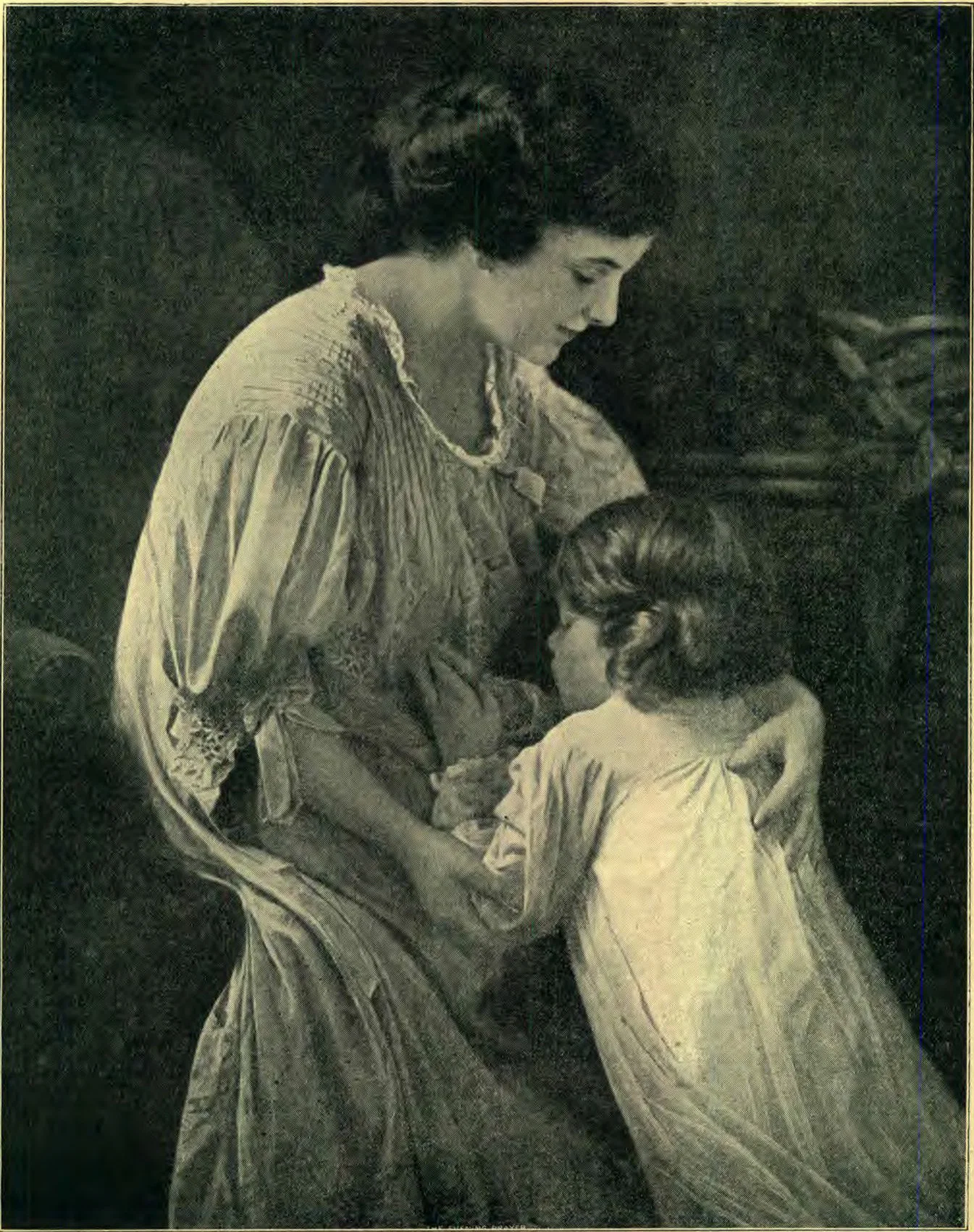
“Dear Lord, make me pure and holy as Jesus was when a child”
THE MEASURING ROD OF OUR LIVES
The Ten Commandments Are the Standard of the Judgment
THE MEASURING ROD OF OUR LIVES The Ten Commandments Are the Standard of the Judgment

You have reached the end of this edition.

The Youth’s Instructor · Oct 2, 1917