THE first published requirement that the tithe be returned to the Lord is recorded in Lev. 27: 30-32. “And all the tithe of the land, whether of the seed of the land, or of the fruit of the tree, is the Lord’s: it is holy unto the Lord. . . . And concerning the tithe of the herd, or of the flock, even of whatsoever passeth under the rod, the tenth shall be holy unto the Lord.” But several hundred years previous to the giving of this commandment, Abraham and Jacob are on record as paying tithes of all, as though it was an established rule. Evidently their paying tithe did not create the custom, but they conformed to the custom because it was an established one of which God was the author. Jacob did not possess those traits of character which make it easy to part with this world’s goods unless prompted by conscience to do as God requires. It is certainly interesting to note God’s dealings with these faithful tithe-payers, for it is said of Abraham that he was very rich in cattle, in silver, and in gold. When he wanted to go to the rescue of his nephew, Lot, who had been taken prisoner, it was no trouble to arm more than three hundred servants trained in his own house. Gen. 14: 14. Reading the story of Jacob, we see he was not a poor man by any means, although Laban had tried to deprive him of a just share of his earnings.
Since God has said, “The tithe is holy,” we must believe it, and suit our action to his word. It is not to be used for secular purposes. Anciently it was for the support of those who ministered in the tabernacle. This is very plainly told in Num. 18: 24. Since those who now give their time and effort to the teaching of God’s word are in a corresponding place, why should not they be supported in the same way?
MRS. D. A. FITCH.
Where the Children Hide
By Rose Seeley Miller
It was raining out of doors. Grandmother, who had just arrived from California, had gone to her room. Mother was busy with the baby.
“I wonder what we can do now?” said Tommy, disconsolately.
“We’ve played most everything already!” sighed Ruth.
“We don’t want to make any noise,” said thoughtful Dorothea. “We haven’t very many grandmothers. We must be ‘just as good’ to the few we have.”
“She’s come such a long ways,” added Rob.
“I know what we can do,” said Florence, happily. “It’s a ‘sit still’ game, and we can have just oceans of fun.” Four pairs of very bright eyes were turned on Florence.
“You always do think of the nicest things,” said Tommy.
“We’ll just hide,” and Florence laughed at the very idea.
“We’ll make a noise hiding. We can’t help but —”
“Oh, but we can help!” said Florence. “We’re just going to hide ‘in our minds,’ you know.”
“I don’t see,” said Rob.
“Blindy!” said Florence, and she was almost laughing. “It’s like this. We’ll let Ruth hide first. She is the smallest. You just think of some place you’d like to hide if you — why, if you could.”
“You hide first, Florence. Then we’ll all see how.”
Florence thought a moment. “I’m hid.”
“Somewhere in the room?” asked Dorothea.
“Yes, somewhere, in something, in the room, but in a place I really couldn’t hide, only in my mind.”
“Why, that’s jolly!” said Tommy. “There are no end of places you could hide that way. Is it in the clock?”
“No,” laughed Florence, softly.
“The book shelf?” “The lamp?” “The sewing-machine drawer?” “The match-safe?” “The stovepipe?” These guesses followed fast upon one another. Florence only gave a negative shake of her head.
“I think it’s in the teakettle spout,” said Ruth, who had not spoken.
“How did you ever guess?” asked Florence.
“Why, I just thought I’d like to hide there myself and find out something about steam.”
“I haven’t found out much yet,” said Florence.
“You’ve found something better,” said Tommy. “You’ve found out the very best game, and you are always finding good things.”
“It’s your turn, Ruth. You guessed the place, so now you can hide.”
The guessing went on. All seemingly possible and impossible places were suggested.
“I believe she’s hid in Florence’s mind. She wants to find out how she thinks of things,” said Dorothea.
“That’s right!” exclaimed Ruth, gleefully. “I didn’t find out much.”
“You will in time,” said Florence. “The world, the books, everything is full of lovely things to learn.”
Rob hid in Tommy’s ear, and Tommy in the fire, without getting burned.
Suddenly Ruth looked at the door. There stood grandmother and mother. They were looking very happy.
“What makes you all so still?” asked grandmother.
“We’re playing hide-and-seek,” said Ruth.
“In our minds,” added Rob. He told how it was played.
“It’s a nice game,” said grandmother. “I have some things in my trunk to show you.”
Off ran the children. Grandmother “almost” kept up. “I’m sure I did in my mind,” she laughed.
“That’s quicker than anything else,” said Florence.
“Mind is a great racer,” said grandmother. “The more you use it, the faster it goes. I hope you’ll all win some ‘mind’ races.”—Rose Seeley Miller, in Youth’s Companion.
Abraham Lincoln’s Two Texts
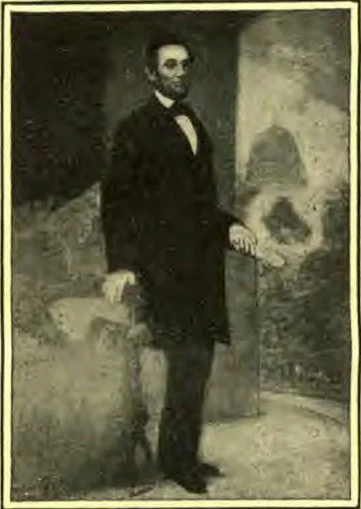
AMONG those who might fairly claim to have known Abraham Lincoln were the pupils in a primary and intermediate school located near the White lot in Washington, the yard of which was separated by a fence from the rear end of the White House grounds. Most of the reminiscences of the president, which the boys carried away with them were small events not easy to relate, but such, nevertheless, as gave to them a growing love, for the great man who sometimes found recreation in watching and applauding their sports, and who more than once visited the school and addressed the children. One incident, however, stood out distinctly, and is described by a witness, one of the boys then attending the school.
One day the teacher gave a lesson on neatness, and asked each boy to come to school next day with his boots blacked. They all obeyed; but one of them, John S., a poor one-armed lad, brought down upon himself no end of ridicule, for he had used stove-blackening, the only kind of polish which his home afforded.
Boys are sometimes merciless in their ridicule. The poor child, only nine years old, and doubly sensitive because of his lost arm, tried to be brave, but his lips were quivering, and the tears were in his eyes, when the jeering suddenly stopped; for there, leaning upon the fence and listening, stood the President.
Mr. Lincoln uttered no word of reproof, but entered the schoolhouse and made inquiry of the teacher. He learned that John was the son of a dead soldier, and that his mother, who had other children, was a washerwoman. Then he went away, and it was many days before he came back again.
The next morning John was at school in a new suit, and with new shoes radiant with the best blacking. The change was so great the boys hardly recognized their companion, whom they plied with questions. John replied that the afternoon before, the President and Mrs. Lincoln and another lady had called at his home in their carriage; that the President had taken him to a clothing store and bought him two suits, and that while he was doing this, the ladies made inquiries of his mother, which later were followed by clothing for the two little girls, and a supply of coal and groceries. In addition to this information, the lad brought to his teacher a scrap of paper containing a verse of Scripture, which Mr. Lincoln had requested to have written on the blackboard:— “Inasmuch as ye have done it unto one of the least of these my brethren, ye have done it unto me.”
Some weeks afterward, when Mr. Lincoln visited the school again, the verse was still there, and the teacher called his attention to it. Mr. Lincoln adjusted his spectacles and read it, then removed his glasses and wiped them, and the boys thought there were tears in his eyes. But he replaced his glasses, and taking a crayon, said, “Boys, I have another quotation from the Bible, and I hope you will learn it, and come to know its truth as I have known and felt it.” Then below the other verse he wrote:—
“It is more blessed to give than to receive.”
A. LINCOLN.
One boy, at least, never forgot it. He is now himself a teacher in the public schools, and often tells the boys he teaches of the two texts which President Lincoln taught to him and his schoolmates.—Selected.
Blessed Be the Name of the Lord
“BLESSED be the name of the Lord From this time forth and forevermore.”
The Parrot and the Dog
MR. BROWN had a dog called a pointer. That name is given to dogs because, when they see a bird, they stand still and point at it with their nose; then the hunter sees where the bird is, and can shoot at it.
Well, the bird and the dog of which I am telling you were owned by Mr. Brown, for there was a parrot in the house that came there as a gift. When the dog came into the room, he saw the bird. He stopped and slowly pointed at it.
What do you think the parrot did then? It came slowly across the room, stood in front of the dog, looked him in the eye, and then called out loudly: “You’re a rascal!”
The dog was so surprised to hear a bird talk that he put his tail between his legs and ran away; and from that day he was never known to point at a bird.—The Picture World.
A Round Lunch-Basket
By E. M. F. Long
Model 10
MATERIAL, reeds Nos. 1, 3, 4, 5, 6, and 9.
Diameter of base, six and one-half inches; top, ten inches; height, seven and one-half inches.
Thirty-eight stakes, twenty inches long, of No. 4 reed. Insert one each side of each spoke, and use double. Use No. 3 reed for weaving. Five rows of triple twist; five and one-half inches of double weaving. Now separate the stakes and use them singly.
This is done to make the top of the basket stronger and the border firm and close. One row of triple twist; cover ridge, two rows of triple twist.
Cover ridge, border, and cover same as darning basket. Handle same as handy basket.
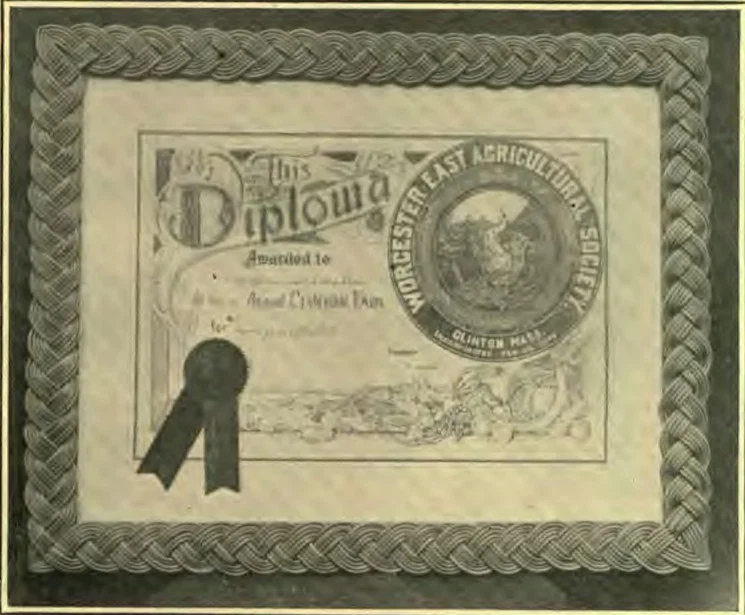
Fig. 2 shows a reed picture-frame. Fifteen No. 5 reeds in groups of five were used to form a three-strand braid. This was made in one long piece, and afterward fitted to a pine foundation, and glued and tacked in place.
The corners were mitered.
MRS. E. M. F. LONG.
[The picture-frame encloses a diploma given to the South Lancaster Academy for its display of basketry at the Clinton Fair. The braid for the frame was made by one of the academy students.—Ed.]
Making Mountains into Mirrors
By John L. Cowan
TRAVELERS between Harrisburg and Altoona, Pennsylvania, can hardly help noticing a ragged, serrated line of mountains stretching off toward the northeast, not far from a busy mountain town called Tyrone. This particular range is conspicuous not on account of its height, but because the rock strata of which it is composed are literally turned on their edges, giving it the abrupt, serrated appearance of some titanic saw. As one approaches nearer, he notices its peculiar, scarred appearance, and a closer view reveals the cause in large numbers of men engaged in blasting and quarrying at its rocky sides. From the main line of the railroad run off numerous branches and side-tracks, terminating at long, low buildings scattered along the bases of the mountains for several miles.
Those rough and ragged mountains are the foundation on which has been built a great and important American industry, the manufacture of plate glass. They are composed of silica, unmixed with mica and other impurities that render ordinary sandstones worthless for this purpose. From them hundreds of thousands of tons of rock are blasted, to be ground into white sand in the crushers in the valley, and then shipped to scores of plate-glass manufacturing establishments located all through Pennsylvania and adjoining States. Within ten days after the quarrymen have blasted the rock from the mountainside, it may be transformed into a show-window for a great department store, or may be fitted into a private residence, ready to be backed with lace curtains.
After the sand arrives at the glass factory, the first step taken consists in mixing the “batch.” This consists of sand, limestone, old glass, soda ash, and various other chemicals. The nature of these chemicals, and the proportion of each of the ingredients, are trade secrets which the manufacturers guard with great care.
The “batch” is placed in a great hopper, and passed through rolls that grind it into a fine powder. Then it is conveyed to the melting pots, composed of fire clay heated to a white heat, inclosed in the furnaces. In these pots the batch boils and bubbles at a temperature of more than twenty-five hundred degrees for twelve hours. By this time it has been changed by the alchemy of heat into glass—a yellow, fiery mass having much the consistency and appearance of Hallow-e'en taffy. The door of the furnace is opened, revealing the melting pot heated to a dazzling white heat by a seething gas fire. The pot is lifted from the furnace, and placed upon a small wagon mounted on casters. The furnace door is closed again, and the workmen rush the wagon to the casting room.
The operation of casting is the crucial point in the manufacture of plate glass. The doors of the casting room are closed, to prevent drafts, and the smallest particle of dust might cause a defect that would ruin the entire cast. At the same time quick action is necessary, as the molten glass cools very rapidly, and must be poured out while still perfectly fluid.
A hydraulic crane with immense iron clamps is lowered over the pot, and this lifts it seven feet above the floor. Several men run up and wipe from the pot every trace of dust and soot. Then the crane carries it over the exact center of the casting table, where its edge is tilted up, allowing the contents to flow quickly out. The casting apparatus consists simply of a steel bed twenty feet square, provided with a heavy steel roller. The moment the molten glass flows upon the table the roller starts on its course, and rolls out a great plate about half an inch in thickness. Almost instantly the plate cools sufficiently to be recognized as glass, translucent and corrugated on both surfaces. If allowed to cool now, the plate would begin to crack in a very few minutes. Two minutes after the pot has been emptied, the rough sheet of glass, still resting upon the casting table, is pushed into the tempering furnace, or lehr.
For the next three and one-half hours no one sees the glass. On a moving bed, like the straw carrier of a threshing-machine, the sheet is carried slowly through a gradually diminishing degree of heat for a distance of one hundred feet. At the farther end of the tempering furnace the sheet is taken out and placed on a wooden rack and allowed to cool.
Next comes the grinding. In order to save time, several sheets are ground at the same time. Mounted on trucks are round, revolving tables, each twenty-four feet in diameter. The sheets are buried on top of these in a thick layer of plaster, and tightly wedged in place. When the plaster sets, the tables are run on the trucks to the middle of the grinding room, and are there placed on another truck that conveys them underneath two “spiders,” fitted with twenty heavy steel grinding “shoes.” The table is connected up with power by means of belts, and revolves at the rate of twenty-four revolutions a minute. The grinding spiders, weighing several tons, revolve in the opposite direction, and water and fine, hard sand begin grinding away the plaster and the corrugated surface of the glass. For three hours the tables are operated with sand, and then for another hour with emery powder. By this time the corrugations have been ground down, so that the upper surface of the sheet of glass is perfectly flat.
The glass plate is then given another coat of plaster, and is ready for the polishing machine. This is operated in exactly the same manner as the grinding machine, except that the spiders are fitted with shoes covered with felt. After three hours under the polishers, a fine, transparent surface is put on the glass. The sheet is then turned, and the other side is subjected to the same processes. Then the sheets are placed in a rack, and washed with water and a mild solution of sulphuric acid. Then they are taken to the cutting room, and given a final polishing off, to be ready for the inspector.
What would pass for a perfect sheet of crystal under the eye of an untrained observer often fails to meet the requirements of the inspector. He makes a critical examination of every square inch of the surface before pronouncing it perfect. Sometimes he merely runs his hand over the glass, and then orders it back to the polishing room for more perfect finishing. Air bubbles, scratches, and blemishes of various kinds are detected and marked with a piece of chalk. If these are of such a nature that they can not be removed by further polishing, the sheet must be cut into sizes that will allow of cutting out the imperfections entirely. Then comes the cutter. With his diamond and rule, he soon converts the irregular sheet into “lights” of standard measurements.
The glass is then finished. The time required to carry it from the casting tables to the cutters is less than twenty-four hours. From the mixing of the raw sand in the batch to the final boxing and stenciling of the finished product requires about forty-eight hours. Frequently the finished plates of glass are shipped from the factory in the same car that conveyed thither the identical sand out of which those plates were made. The rocks blasted from the mountainside are often transformed into window lights and put in position in a building in less than two weeks’ time.
However, it is in mirrors that the highest manufactured form of the mountain sandstone is seen. The plates of glass are first cut into the required sizes, and then beveled on rapidly revolving emery wheels. When the beveled edge has been cut down far enough, it is polished by wheels of felt. For both beveling and polishing the plate of glass is held lightly against the wheel by the workmen. As soon as both surfaces of the glass, including the beveled edges, have been reduced to a condition of as nearly perfect smoothness as is possible, the plate is passed on to the silvering department.
An amalgam of mercury and tin was formerly used for backing mirrors; but mirrors made in this way reflect but imperfectly, and the workmen are exposed to the certainty of sooner or later contracting mercurial poison. For this reason nitrate of silver is now used exclusively for this purpose. This is dissolved in ammonia, and then precipitated by a solution of tartaric acid. The plates of glass are then placed, face down, on warm metallic tables, and the solution poured over them. The heat causes the silver to be precipitated and to adhere to the glass. As soon as this hardens, it is given a coat of shellac, and then one of paint. The plates are then ready for their frames, and the rough, unsightly sandstone has been transformed into a beautiful and useful mirror for the adornment of our homes.—John L. Cowan, in The Children’s Visitor.
A Blind Student
ALONE and unassisted, paying his way with money which he earned by lecturing last year, E. Ray, a blind student from the mountains of North Carolina, is pursuing his studies in the Harvard graduate school.
Ray is the first blind student who ever had the courage to come to Cambridge and secure an education without the help of a tutor or some outside person. Other blind students there have been, but none, not even Helen Keller herself, who was graduated from Radcliffe, the Harvard Annex, last year, came without some helper to supplement the wonderful intelligence and instinct which the sightless always possess.
Ray was graduated from the University of North Carolina in 1903, taking four years’ course in three.
Traveled 1,000 Miles
Then, after lecturing a year, he traveled a thousand miles alone, finding his way about with wonderful intuition until he reached Cambridge.
Soon after reaching here he learned the principal streets and buildings, still unassisted, and now walks confidently about the college grounds, as if in the full possession of his sight. He uses a cane, but very unostentatiously; takes his notes in the lecture-room on a “point-writing” machine, and hires a fellow student to read aloud the books required as outside reading.
Ray is one of the most cheerful fellows imaginable, and, although he is taking some of the hardest courses in Harvard, seems thoroughly to enjoy his work. He is studying to teach.—Selected.
MEMORY VERSE: “Be of good comfort: thy faith hath made thee whole; go in peace.” Luke 8:48.
“And it came to pass, that, when Jesus was returned, the people gladly received him: for they were all waiting for him.
“And, behold, there came a man named Jairus, and he was a ruler of the synagogue: and he fell down at Jesus’ feet, and besought him that he would come into his house: for he had one only daughter, about twelve years of age, and she lay a dying. But as he went the people thronged him. And a woman having an issue of blood twelve years, which had spent all her living upon physicians, neither could be healed of any, came behind him, and touched the border of his garment: and immediately her issue of blood stanched.
“And Jesus said, Who touched me? When all denied, Peter and they that were with him said, Master, the multitude throng thee and press thee, and sayest thou, Who touched me? And Jesus said, Somebody hath touched me: for I perceive that virtue is gone out of me.
“And when the woman saw that she was not hid, she came trembling, and falling down before him, she declared unto him before all the people for what cause she had touched him, and how she was healed immediately. And he said unto her, Daughter, be of good comfort: thy faith hath made thee whole; go in peace.
“While he yet spake, there cometh one from the ruler of the synagogue’s house, saying to him, Thy daughter is dead; trouble not the Master.
“But when Jesus heard it, he answered him, saying, Fear not: believe only, and she shall be made whole.
“And when he came into the house, he suffered no man to go in, save Peter, and James, and John, and the father and the mother of the maiden. And all wept, and bewailed her: but he said, Weep not; she is not dead, but sleepeth. And they laughed him to scorn, knowing that she was dead. And he put them all out, and took her by the hand, and called, saying, Maid, arise. And her spirit came again, and she arose straightway: and he commanded to give her meat.
“And her parents were astonished: but he charged them that they should tell no man what was done.”
Questions
1. When Jesus returned to the western shore of the Sea of Galilee, who were there to meet him? What were they doing? How did they receive him?
2. What man came to see Jesus? What honorable position did this man hold? What did he do when he came to Jesus? What great trouble had fallen upon his household?
3. For what place did Jesus immediately start? How great was the company that followed him? Who came behind him? How long had she been ill? What did she do when she came near Jesus? What was the result?
4. What did Jesus ask? What did the people deny? What did Peter say to Jesus? How did Jesus answer him?
5. When the woman saw that she was not hidden, where did she come? What did she tell Jesus? Repeat the words of comfort that Jesus spoke to this believing woman.
6. While he was yet speaking to her, what sad message was brought from the house of Jairus? What did Jesus answer when he heard it? Where did he go?
7. When Jesus reached the ruler’s house, who only did he allow to enter with him? What was going on in the house? What did Jesus say as he saw the weepers? How were his words received? Why? Where did Jesus then send these hired mourners?
8. When Jesus had put them all out, what did he do? What gentle command did he give to the dead child? What was the result? What did Jesus then tell her parents to do? How did they feel? What did he charge them not to do?
A Fighting Coward
By Helen A. Walker
Pussy lay on the side porch, so comfortable in the warm afternoon sun. Her eyes closed and then opened, and then closed and then opened again. Even the slow waving of her tail spoke of peace and content.
But you should have seen her a moment later, when Tucker, as fine and well-meaning a dog as ever gnawed a bone, came up the steps and passed near where Miss Pussy was lying. Her eyes flew open and stayed open. Her tail stiffened, and she seemed to say, “Yes, you’ve come here to make trouble, but I’m ready for you.”
Tucker took no notice of Pussy. I don’t think he even saw her. He sat down at a little distance, and looked out over the fence at a passing wagon. When a fly lighted on his nose, he brushed it off with his paw.
“Hi there!” Pussy was greatly excited by this movement of Tucker’s. “Hi! you want to fight, do you?”
Still Tucker took no notice of Pussy. He heard a bird singing in the maple tree, and lifted his head up high to look for it.
Pussy started to her feet, and raised her back, on which every hair stood straight out. “Snapping at me, are you? I’ll show you!” And Pussy raised her paw,—so soft a while ago, now full of claws,—and made a dab at Tucker.
But Tucker only thought she was scaring away the flies, so he looked kindly at her, and wagged his tail. It thumped a little on the floor, and Pussy grew still more excited.
“You can’t frighten me that way. I can growl, I can!” And Pussy did growl.
Tucker put his ears forward to listen in a rather kind fashion. But Pussy drew back. “Oh, I know you’re getting ready to spring on me, but I’ll show you,—yes, I will!” And Pussy made another dash at him with her paw full of claws, and then drew back to make ready for a real rough and tumble fight. But the edge of the porch was too near, and over she went into a rose-bush. Getting out as well as she could, off she ran, while Tucker watched her, wondering why she was in such a hurry.
Pussy “showed fight,” and Tucker didn’t, but still I call Pussy a coward, and Tucker a gentleman.—Helen A. Walker.
VI—Trying the Heart
(August 5)
MEMORY VERSE: “Who is wise, and he shall understand these things? prudent, and he shall know them? for the ways of the Lord are right, and the just shall walk in them.” Hosea 14:9.
Questions
1. To what is the kingdom of heaven likened? Matt. 25:14.
2. How did the Lord distribute his goods to his servants? Matt. 25:15.
3. What did he require of them on his return? Matt. 25:19.
4. By what means does the Lord require of man a constant acknowledgment of his ownership? Lev. 27:30, 32; note .
5. What is said concerning Abraham’s faithfulness in paying tithes? Gen. 14:18-20; note .
6. How was Abraham regarded by the Lord? James 2:23.
7. What special honor was bestowed upon him? Rom. 4:11, 17.
8. Will faithfulness now receive the same recognition? Gal. 3:9.
9. When Jacob became converted, how did he at once recognize the Lord’s ownership? Gen. 28:20-22.
10. What did Jesus teach concerning the obligation of paying tithe? Matt. 23:23.
11. What specific instruction has the Lord given concerning the support of the gospel ministry? 1 Cor. 9:13, 14.
12. What blessing is pronounced upon those who follow the Lord’s plan in the support of the ministry? Mal. 3:10.
Notes
Converted Through a Sparrow
MR. THOMAS PAYNE, the evangelist, related the following incident recently:—
“In a London slum there lived a working man, his wife, and four children, all wretched and miserable through drink. In wandering about one day, the drunken wife saw a sparrow pick up a crumb and carry it to her young. The poor woman turned pale, trembled, and burst into tears. The day of repentance had come to her. ‘O,’ she exclaimed, ‘that sparrow feeds her young while I neglect my little ones! And what for?—Drink—nothing but drink!’”
“Under a sense of guilt and shame, she wrung her hands, while tears continued to flow down her cheeks. Presently she made her way home, and, throwing herself upon her knees, she cried unto God in her distress, and he sent the message of forgiveness to her soul. Then her face wore a new beauty, and her husband and family looked wonderingly upon her. She kissed them all one by one, and told them how she had become a changed woman. The husband, under his wife’s influence, afterward became a true Christian, and a happy home, with comfort and peace and plenty, soon followed.”—Selected.
Youthful Strategy
A SWEET little tot of four summers was in a precarious situation. Her mama was seriously contemplating the virtues of the birch rod as a reformer. Tears, grief, anger do not always effectively serve little people in time of need; somehow mother is able to withstand their influence. But wise is the little culprit who has the tact to use a bit of strategy; for it is quite sure to provoke a smile, and the battle is won. If our little friend did not reason so in detail, she acted upon the latter method, and sweetly said, “Now, mama, be calm, be calm! Let us reason together.”
THE outside gate opened; and a dear little girl with a seriousness of expression and a solicitude that at once attracted attention, stepped out and offered her hand to her baby brother, saying, with an air of earnest regard for his health, “Come, let us walk up and down the sidewalk.” While marveling at the apparent self-disinterestedness of the meek little lassie, I heard the demand of an older sister for their immediate return. At once I perceived that the serious look of solicitude was due to an eagerness to improve unobserved the opportunity offered by the unlatched gate. The little strategist will have to try again.
Build a Little Fence of Trust
“BUILD a little fence of trust around to-day;
Fill the space with loving thoughts, and therein stay;
Look not from its sheltering bars upon to-morrow,
God will help thee bear what comes, of joy or sorrow.”