Your ShelfYour Projects

The Youth’s Instructor, Vol. 59, No. 8.

Singing in the Rain
Earlier text: Singing in the Rain

Arouse to Action, Volunteers!

M. E. KERN
THE dark shadow of intemperance hangs like a pall over home and country. Every missionary volunteer should do his utmost against this terrible evil. For months a mighty weapon for temperance warfare has been in preparation. Soon the Temperance number of the INSTRUCTOR will come from the press, ready to be circulated by the loyal missionary volunteers, who love God and humanity. An excellent work was done last year with this special issue, two hundred ten thousand copies being circulated. But is this all that twenty-one thousand Seventh-day Adventist young people of America can do? We should put out at least half a million this year.
The following plans for circulating the forthcoming Temperance INSTRUCTOR are suggested:—
1. Plan a rousing temperance rally in your church, based on the Temperance number. This paper will bear date of March 7. Suggestions for this program are given in Missionary Volunteer Series, No. 34. “Temperance Torchlights” will also be helpful. Take time to prepare thoroughly for this rally, and to rouse the interest of your church and your society to the highest pitch. Such a program might be repeated in other churches, in public halls, or schoolhouses. At the close of these meetings, give opportunity for those who will sign the temperance pledge to do so. Lithographed pledges against liquor and tobacco, or against liquor alone, may be obtained from the Missionary Volunteer Department for one cent each when ordered in quantities of five or more. Plain pledges against liquor may be obtained from the Review and Herald Publishing Association for seventy-five cents a hundred. In “Ministry of Healing” we are told that everywhere Christian workers should present to the people the principles of true temperance, and call for signers to the temperance pledge.
2. Let certain ones who have tact, wisdom, and consecration introduce this Temperance number of the INSTRUCTOR to pastors, Sunday-school superintendents, public-school teachers, and leaders of other organizations. Excellent work was done by some along this line last year. One superintendent wrote, “We placed in our Sunday-school one hundred twenty-five copies of the Temperance number of the YOUTH’S INSTRUCTOR, and will say that it has proved to be one of the most helpful contributions that was ever given to our young people. It was a splendid investment, and will do lasting good.”
3. District your town or community, and let members of your Missionary Volunteer society and the older church-members sell the paper from door to door. In this way you will be helping the cause of temperance, and at the same time earning, perhaps, more wages than you could make at other work. Last year several young people earned scholarships by selling the Temperance number of the INSTRUCTOR.
4. If there is a temperance issue on in your community or State, be sure that you do your part in the campaign. Sometimes it is a good plan to offer your services to those who are leading out in the temperance cause, and to co-operate with other temperance workers. This should be done judiciously, and by counsel from your church officers.
5. Continue the plan of last year, by asking the Review and Herald Publishing Association to send to the public libraries, Y. M. C. A. and Y. W. C. A. reading-rooms, or any other like institutions in your community, sample copies of this Temperance issue. They will send these free of charge, provided you will solicit subscriptions from the librarians either by letters or by personal visits. Doubtless many will subscribe; but where the librarian seems interested and can not for any reason subscribe, offer to give a six months’ or yearly subscription free. The Review and Herald Publishing Association will make a special price of seventy-five cents for one year or forty cents for six months, when ordered by or for the librarians. Be sure to ask for “special library rate.”
Shall we not grasp the great opportunity which comes to us at this time, and strike a telling blow against the foe which has ever been the mortal enemy of peace, prosperity, and happiness? The Lord expects every missionary volunteer to do his duty.

Judas Iscariot

It would seem significant that the name of Judas Iscariot should come last in the list of apostles in this third chapter of Mark, and also that the name of Simon, who was surnamed Peter, should come first.
This first-mentioned apostle denied Jesus with an oath; the one last referred to sold him for thirty pieces of silver, and has gone into eternity with the awful sin of murder charged against him. The difference between the two is this: Their sins were almost equally great, but the first repented, and the grace of God had its perfect work in him, and he was the object of Christ's forgiveness; the second was filled with remorse without repentance, and grace was rejected. The first became one of the mightiest preachers in the world's history; the second fills us with horror whenever we read the story of his awful crime.
I would like to imagine another picture: What if, instead of going out to the scene of his disgraceful death, Judas had waited until Jesus had risen? What if he had tarried behind some one of those great trees near the city along the way which he should walk, or, possibly, on the Emmaus way? What if he had hidden behind some great rock, and simply waited? While it is true that he must have trembled as he waited, what if after all he had simply thrown himself on the mercy of Jesus, and had said to him, “Master, I have from the first been untrue; for thirty pieces of silver I sold thee, and with these lips I betrayed thee with a kiss; but, Jesus, thou Son of David, have mercy upon me”? There would have been written in the New Testament Scriptures the most beautiful story that the inspired Book contains. Nothing could have been so wonderful as the spirit of him who is able to save to the uttermost, and who never turned away from any seeking sinner. He would, I am sure, have taken Judas in his very arms; he, too, might have given him a kiss, not of betrayal, but of the sign of his complete forgiveness, and Judas might have shone in the city of God as will shine Joseph of Arimathæa. Paul the apostle, Peter the preacher.
The saddest story I know is the story of Judas, for it is the account of a man who resisted the grace of God for time and eternity.—Wilbur Chapman.

Straight Spines

It is only necessary to glance casually at our fellow men and women in our daily journeyings, to be impressed with the fact that very few people carry their bodies properly; still fewer ever stop to think how grave is the injustice they thereby do themselves, not only as regards appearance, but in their general health and well-being.
In the Spartan days of the last century it was demanded of children that they hold themselves erect. This was often the cause of much well-meant cruelty to the delicate children, and resulted in a sort of spinal survival of the fittest, as proved by the erect old people of that day who boasted of never having troubled a chair-back in their lives; and it is no wonder the spines that survived the schoolroom furniture of that day emerged from the ordeal strong enough to carry their owners upright for the rest of their days. But people began to realize that when Spartan methods did not make they were apt to mar, and bonfires were made of all the old backless forms, so high that the feet dangled far from the floor, and seats and desks were constructed with some consideration for the needs of the young developing frame.
When standing, that position of the body which is known in military drill as “attention” is the position which should be constantly demanded, until it becomes an automatic habit, because it is the one in which the body can properly carry on its functions. The first thing gained by proper carriage, either sitting or standing, is good chest expansion. This means that the lungs have room in which to do their work, and will go far to prevent or cure respiratory troubles. But it is not only the lungs that are crowded and impeded when people loll and lounge and stoop; the other organs in the body also suffer.
The heart needs all the room allotted to it by nature, and if this room is narrowed by a habitual stoop, its action will be impeded. Good posture is of great importance to the abdominal organs, also, as they depend upon it largely for proper support. If the abdominal muscles are allowed to lose their tone and grow weak, the stomach and kidney and liver can not maintain their respective relations to each other; the digestive processes are interfered with; and the entire organization suffers.
When a spine has been allowed to become an invalid—a “neurotic spine”—it should be coaxed back to health with the help of some good brace or support, a cure often being hastened by local massage.—Youth’s Companion.

Clean Hands

Most persons who take any pride at all in the preservation of habits of ordinary cleanliness take it for granted that their hands are clean, for this would seem to be the very foundation of personal decency. In all cities the large department stores, as well as the drug stores, are fitted with a vast assortment of things that are solely for the care of the hands,—manicuring tools, files, polishers, and whiteners,—leading one to suppose that much thought and care are directed to the beautification of the hands, and as a natural deduction that here, at least, cleanliness might come even before godliness.
It is sad to be obliged to suggest, nevertheless, that most persons have hands that are not washed often enough and not washed thoroughly enough.
The bacteriologists tell us that if half a dozen people simply dip their hands into a basin of water, and then remove them without any effort at cleansing, the water will be found to swarm with bacilli. One shudders to think what would happen to that water if a few of the average cooks or bakers or handlers of fruit should dip their hands in it.
It is the food question that makes this matter of clean hands so vital. All the food we eat must first pass through human hands, and sometimes through many of them. It has been proved that typhoid fever can be transmitted to others by a person who has long ago recovered from the attack, and that it may be and is done through the agency of dirty hands. A case has been reported where a cook infected member after member of the families she worked for, although she had been a well woman herself for years.
As to food, we are perhaps more at the mercy of our cooks than of any one else. The food may be, and probably is, not really clean when it is delivered at the kitchen door, and it rests with the cook herself so to handle it and clean it that it shall be free from germs when served to the family.
Some dirty hands are harmless, and some apparently clean hands are dangerous. A hand covered with the soil of gardening may be a terrible sight, and yet there may not be a dangerous germ on it, whereas the pretty hand of the girl who goes out without gloves and holds a car strap or touches a railing may be invisibly soiled with teeming multitudes of germs, some of which she will convey to her mouth with the next piece of candy she eats.
Hands should always be most carefully washed before food is touched, never mind how harmless the previous occupation may seem; and gloves should always be worn when one is outdoors.—Youth’s Companion.

Knowledge Comes, but Wisdom Lingers

“KNOWLEDGE comes, but wisdom lingers.”

The One Strange Land

NONE is more darkly, utterly unknown Than the long-trodden field beneath our feet. — Charlotte Perkins Gilman.

The Power of Lightning

CAREFUL scientific calculations have revealed the fact that an ordinary stroke of lightning is of fifty-thousand-horse-power, a force sufficient to drive the largest ship ever built. Lightning travels at the rate of one hundred eighty-six thousand miles a second. When we think we see a flash of lightning, all we see in reality is the memory of the flash. The electric current has been absorbed by the earth long before we are conscious of having seen the light. The time required for the discharge of a bolt is about one twenty-thousandth of a second. An electrical expert asserts that “some day a wizard will arise who will capture and bind a bolt of lightning, and with it turn all the wheels of a great city.”—Young People’s Weekly.

Moses

It's a story old and hoary, But I tell it here again, For it's full of life and glory, Though there are some thoughts of pain. Once a helpless babe was carried, Laid for safety in an ark, And his sister by him tarried, Near that fragile little bark.
Came the daughter of a tyrant With her maidens to that place, Saw the precious little infant, Saw his sad and tearful face. She, her heart with pity filling, Called a nurse to care for him. One was found so glad and willing Tears of joy her eyes made dim.
Ah! the years, they passed so swiftly; Soon he entered Pharaoh's home; Honors waited, but he quickly Spurned the offer of the throne. But his zeal exceeded wisdom. Sorely tempted, then he fell, Slew a man of Egypt's kingdom, And the news did many tell.
Then he left this place in silence,— Jethro's home he soon did find,— And for just one deed of violence Home and friends were left behind. Forty years he toiled in meekness, Learning lessons of great worth, And he learned that human weakness Must not by itself go forth.
From the burning bush God called him, Told him of his people's need; He must go and help to save them; He must Israel boldly lead. Hesitating, long he waited, But at last he yielded, went, And he did not go unaided As to Egypt he was sent.
Aaron, Moses' brother, hastened Out to meet him on his way, And he told of Israel chastened,— Chastened sorely day by day. To the palace now they ventured, For their people asked relief; But they by the king were censured, Told that such requests must cease.
Moses trusted, daily praying. Pharaoh's heart grew harder still; Day by day he kept delaying, And resisting Heaven's will. Finally he half relented, His advisers urged him so; Quite unwilling he consented, Though his land was filled with woe.
Sweet deliverance came at midnight; They were hastened from the land. In their souls was heaven's daylight; They were rescued by God's hand. Moses' work was scarce beginning,— Israel vexed his righteous soul; And though oft he found them sinning, Tried to lead them to their goal.
Moses, patient, meek, and gentle, Finally was laid to rest, And the man who wore his mantle Was by Heaven chosen, blest. If we from this life of meekness Learn a lesson of sweet trust, God will honor human weakness And reward us with the just.
BURTON CASTLE

Human Speech

THE music that can deepest reach To cure all ills, is human speech. — Emerson.

Sweet Sabbath Day

SWEET Sabbath day, thy holy hours, Bright-winged with sunshine, all have flown; Their offering, though, of Eden flowers I've plucked with joy and made my own.
Now, happy soul, their fragrance rare Enjoy through all the coming week; While, heart attuned with humble prayer, A sweet succession still you seek.
So let glad Sabbaths come and go Till night shall follow day no more; Till one glad round of joy we'll know Through nightless hours the ages o'er;
Till Day-star rise on life's deep night To shine away its gathering gloom, And throw its shafts of shimmering light Beyond the portals of the tomb;
Till sun shall shine with sevenfold strength, And moon take on sun's erstwhile glow, While ages run their endless length, With joy unmeasured in its flow.
F. FREDERICK BLISS.

PEARL WAGGONER

Dreams

Men smile at dreamers and their dreams, Or push them ruthlessly aside, Far too engrossed with weightier themes To drift at times on fancy’s tide.
Too busy they in wrangling mart, Too busy with the toil and strife, To list to nature’s throbbing heart, And there to learn the truer life.
They speak with scorn of the ideal, As but befitting poets’ dreams; And in their scorning miss the real, With which pulsating nature teems.
For which is of the greater worth, The smoke and turmoil of the fray, Or gentle dew, which, leaving earth, Seeks higher air and lives alway?
And yet anon it leaves the skies To serve the thirsty earth again, And blessing brings in newer guise Of cool and soft, refreshing rain.
So every true and noble dream, Each thought which seeks heaven’s purer air, May light some toiler with its gleam, Or cool some feverish heart’s despair.

PEARL WAGGONER

Oliver Wendell Holmes

[The following poem was written by Dr. S. F. Smith, author of “America,” on the death of his long-time friend and classmate, Oliver Wendell Holmes, in 1894.]
DEAR master of the tuneful lyre, How shall we breathe the word, “Farewell”? How shall we touch the trembling wire Which vibrates with thy mystic spell?
The world seems poor, of thee bereft, The evening sky without the sun. The setting, not the gem, is left; The frame remains, the picture gone.
As birds that float on heavenward wing, Unseen, the air with music fill,— Singing they soar, and soaring sing,— Thy broken harp yields music still.
Life’s golden bowl was dashed too soon, But love still holds thy cherished name; No sunset thine, but fadeless noon; No shadow, but immortal fame.
So the dear chrysalis we hide, For God’s safe keeping, in the tomb, And in firm hope and faith we bide The dawn that breaks the silent gloom.
Wait the fair day, the glorious hour, The precious form, enshrined in clay, Instinct with new-created power, Shall wake, and heavenward soar away.

A Little Way Down Street

My boy, you came in rather late last night, and this morning, when your mother asked where you were, you said, “Down street.” Then when she wanted to know whereabouts down the street, you said, “O, just a little ways!” Now, I don’t think you intended to falsify to your mother. As a rule you are a truthful boy, and your mother can believe you. But
I wonder if you know how far down street you were last night? You were right when you said you were “down street.” Whenever a boy comes home late at night, and is afraid or ashamed to tell just where he has been and what he has been doing, I know as well as he does, and his mother knows, and everybody who knows anything about boys knows, that he has been down street.
And more than that, my boy, I know that he has been a long way down street, a long, long way. Have you a map of your route last evening?—No! Well, never mind; we know you were down street, and we can make a map in a minute or two. Sit down here, and we’ll see how far a boy travels when he leaves home after supper, and goes down street a little way, and doesn’t get back till ten o’clock or later.
MEMORY TEXT
MEMORY TEXT
Here is your home, this bright little spot like a star on the map, the sweetest, purest, safest place this side of heaven; the home where, from father to baby, they love you better than all the rest of the people in all the big, wide world. Now, when you start from here and go down street,—somehow the street always has a down grade from home when you sneak out after night,—see how far you get from respectability and self-respect when you reach this corner, “just a little way down,” where you loafed—eh? Well, I’ll say loitered, if you prefer it—where you loitered last night. Here are the fellows with whom you loitered. You had to meet them here, because you can never meet them in your home, for two reasons: In the first place, your father wouldn’t permit one of them to come into his house; and in the second place, you would be ashamed to invite them there, whether your father forbade it or not. Sweet gang for your father’s son to loiter with, isn’t it? It is a long way from your respectable home, from your mother’s friends and your father’s guests, to this corner down street, isn’t it?
Then—look at the map, my boy—see how far it is from manliness and decency. Two ladies hurried past this corner, friends of your mother; possibly they had been spending the evening at your home. You were thankful that they could not see you as you slunk back into the dark doorway, feeling like the sneak that you were; and, as they passed by, one of the loafers with whom you were loitering shouted an insulting remark after them. Your cheeks burned in the dark, at that. Didn’t your home and sisters seem to be a thousand miles away just then?
See, too, how far you were from purity. Some of the boys told some stories; do you think you could repeat them to your sisters? Don’t you wish this morning that you could forget them forever? Don’t you wish you had never heard them? Don’t you know your mind will never again be as pure and innocent as it was before you went “just a little way down street” last night? While you were listening to these stories, punctuated with profanity, the dear ones at home gathered in the sitting-room, your father opened the Book, and read. They knelt at the family altar and commended themselves to the keeping of the Heavenly Father, and tenderly remembered the boy who was “just a little way down street.” Then the lights went out one by one, the house was still, and only the loving mother waited anxiously and sleeplessly for the boy who was down street. It was more than ten million miles away from the sweet old chapter that your father read, down to the stories that you heard, my boy. And what a steep grade, all the way down!
And it was a long, long way from the truth. When you evaded your mother’s question, and said you were only “a little way down street,” the lie in your false heart looked guiltily out of your eyes as it rose to your cowardly lips. Just see where you were; you, ordinarily a brave, manly, truthful boy, turned into a liar and coward! You would fight, I know, if any boy called you such names, but just tell yourself the truth; don’t lie to yourself. Were you not ashamed to tell your mother where you were?—Yes. Well, doesn’t that make you a sneak? And weren’t you afraid to tell your father?—Yes. Well, what does that make you? And did you tell the honest truth when your mother asked you where you were?—No. Well, what are you then? And let me tell you that the half-truth and half-lie you told your mother is like all half-breeds,—it has all the worst traits of the viler race and none of the virtues of the better.
“But,” you say, “a boy doesn’t have to go with toughs and riffraff when he goes down street; there are some mighty nice boys go down street at night.” My boy, I know it; there are some “mighty nice boys” go out of nights, but they are not so nice when they come back. You can’t select your company on the street. The corner is free to everybody. There is no exclusiveness in street company. There is no safe corner for you after night except the chimney-corner. And when you leave that, and spend your evening on the street, and give no account of your doing on your return beyond the bald statement that you were “just down street a little way,” we know, with pain and sorrow, that our boy has locked up in his mind and heart shameful, guilty things that he dare not tell in his home. Keep off the street after night, my boy. Other people will think better of you, and what is a far more important thing, you will think much better of yourself.—Selected.

Recollections of My Childhood

In the African Kongo
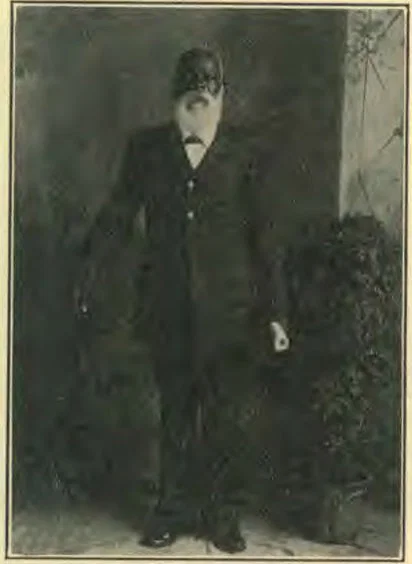
LONG years ago, as a little child, I was stolen from my village home in the Kongo, and sold as a slave. Later I was liberated from a slave-ship by a British man-of-war, and taken to the island of St. Helena. In after-years I saw service in the British army in the West Indies and West Africa. By these strange providences the Lord brought me out from the Kongo wilds, and led me into his truth for these last days.
I remember one day I, with other boys, was sitting on the ground in the town where I was born. We were asking one another questions to find out where the first man and woman came from. Of the origin of the human family we had no knowledge; but concerning Jehovah we had heard from the grown-up people that his name was Nzambi Mpungu, which means God Almighty, and that he lived in heaven. This much was talked by the wisest of the village; but of his Son Jesus Christ we had never heard.
When a great man or woman died, the body was kept for months, or a year or more, before burial, and at night all the chief friends of the mourners called at the homes of those who mourned, joining in lamentations over the departed ones, and calling upon God in heaven. This was their style of mourning the dead, in my childhood before I was stolen.
The children of my home had no schools. No missionaries had ever reached that part of Africa then. Our favorite pastime was to play at fighting and war, and we used to go to see slaves sold, both adults and children.
I remember also that when the fields were abandoned by their owners, who took to cultivating new ground, the old fields were left to the poor of the land. All wild fruits and provisions were for anybody. We used to wonder when we saw so much provision growing among the large trees.
Away in the distance from my home we used to see beautiful hills and mountains. The children thought the sky rested down upon the tops of these mountains. Those hills we took to be at the extreme end of the earth. We had no idea there were people on the other side.
I was about eight or nine years old when stolen from my home. The slave raiders came through, and another boy and I were taken captive and carried a long distance from home. One day in the market-place I was put up to be sold. I cried, however, and the man who was about to buy me feared at first that I was sick. At last I was sold. The buyer came from the southern Kongo region. After this I came into the hands of another owner, and was treated very kindly until his death. I then fell into other hands, and was being sent down the coast with others, with every prospect of receiving the hard treatment that wears out men's lives. Then it was that we were overtaken by the British gunboat, and all were liberated.
As a child, I tried often to escape from slavery, but could not make my way home; for I was too little and young, and the people would not let me pass peaceably through their lands. They loved to receive rewards for turning back an escaped slave. But the Lord loved me with an everlasting love, and led me out of darkness, and gave me a knowledge of himself. Therefore I am his and he is mine. Therefore my prayer is, “Keep me, O Lord, under the shadow of thy wings, and receive me when thou comest in thy kingdom. Amen and amen.” A. Snow.
Jamaica, West Indies.

Early Lesson in Business Philanthropy

“Why are you sobbing, my little man?”
“My pa’s a millionaire philanthropist.”
“Well, well! That’s nothing to cry about, is it?”
“Isn’t it? He’s just promised to give me five dollars to spend for Christmas provided I raise a similar amount.”—Chicago Record-Herald.

Tangled Web of Deception

O! WHAT a tangled web we weave, When first we practise to deceive! — Shakespeare.

The Alaskan Telegraph Line

A TRIUMPH in scientific construction is the Alaskan government telegraph line just completed by the United States Signal Corps. Prior to the Spanish-American War the United States had no cable whatever, the world's cables being handled by English, German, or French ships and workmen. Now our government is second in the number of miles of submarine wire laid and owned, France being in advance by about one thousand five hundred miles. The new all-American Alaskan cable was laid up the coast from Seattle to Skagway, near the head of the Lynn Canal; branches were run to Sitka, to Juneau, to Haines Mission, and to two other places along the coast. In order to accomplish this, almost insurmountable difficulties had to be overcome, due to the wildness of the region, the extremes of climatic condition, as well as other perils. However, the new cable has already been proved to work perfectly. Relay stations at frequent intervals and repair crews ready for instant action have been established.—Young People.

Missionary Volunteer Reading Courses

Senior No. 4 — Lesson 20: “Story of John G. Paton,” Chapters 52-59

Test Questions

  1. How well were Paton’s efforts in Scotland rewarded?
  2. Why did he not take the volunteers back with him?
  3. In what ship did Paton and his wife return to the islands?
  4. What immediately called them back to Australia?
  5. How was this mission greatly hindered?
  6. Contrast methods used by the English and French in dealing with the natives. Compare results.
  7. Upon his return to the islands where did Paton settle?
  8. Why do you think Nowar was so anxious for them to stay at Tanna?
  9. Describe Aniwa. How did the people receive the missionaries?
  10. How was the mission house built?
  11. What practical hints are given on learning a new language?
  12. How did a piece of wood help spread the gospel on Aniwa?

Notes

The following notes are taken from Paton’s “Autobiography:”—
“It was indeed one of the bitterest trials of my life not to be able to return to dear old Tanna; but I could not go alone, against the decided opposition of all the other missionaries. For this reason I settled on Aniwa, the nearest island to the scene of my former woes and perils, in the hope that God would soon open up the way, and enable me to return to blood-stained Tanna.”
“On Aniwa we found ourselves face to face with blank heathenism. The natives at first expected the missionary’s medicine to cure at once all their complaints. Disappointment led to resentment in their ignorant minds. Again, our medicines relieved or cured them, so they blamed us also for their diseases,—all their sacred men not only curing but also causing sickness. Further, they generally came to us only after exhausting every resource of their own witchcraft and superstition, and when it was probably too late. If one dose of medicine did not cure them, it was almost impossible to get them to persevere. But time taught them its value, and the yearly expenditure for medicine soon became a heavy tax on our modest salary.”

Society Study for Sabbath, March 11

The Way to Christ, No. 3 — Confession

Leader’s Note.—Be sure that the papers and talks are thoroughly prepared. If those who have part on the program put thought and earnest prayer into their work, God may send by them a message to some waiting heart. Many with whom we come in contact day by day are anxious to come to Christ, and long to know the way. Save a few moments for a consecration service at the close of the program. Have your report of work during the first part of the program.

Program

Scripture drill (review Morning Watch texts for week).
Report of work done.
Bible Study on Confession. See reading below.
Reading (selections from “Steps to Christ,” chapter 4).
Confession of Judas (five-minute paper). See “Desire of Ages,” chapter 76.
Judas Iscariot (reading). See page 8.
Achan (three-minute talk). See “Patriarchs and Prophets,” chapter 45.
David (five-minute talk). See “Patriarchs and Prophets,” chapter 71.

Bible Reading

1. What will sincere repentance lead us to do? Ps. 32: 5.
2. Does God recognize a confession that is forced from the sinner? Joshua 7: 19-21, 24, 25.
3. If we are conscious of our sins and too proud to humbly confess them, can we expect forgiveness? Prov. 28: 13.
4. What is necessary besides confession of our sins? Same verse.
5. What has the Lord promised to do if we confess and forsake our sins? 1 John 1: 9.
6. What example has he given us of true repentance and acceptable confession? Ps. 51: 1-13.
7. How does David say we should come to the Lord? Verse 17.
8. What wonderful example have we of Christ’s willingness to forgive? Luke 23: 40-43.
9. If you have one sin unconfessed, one wrong unrighted, will you not acknowledge it to-day and have peace and pardon?

Note

“It is always the noblest nature, the most loyal heart, which is the first to cry: ‘I was wrong, forgive me.’”

My Deceitful Heart

Hear, O my heart, my hard, deceitful heart, How full of desperate wickedness thou art; Out from thy core in dark profusion spring Malice, and hate, and every evil thing. We tell what rules the heart in word and tone, Its secrets oft till then to us unknown; But there is One who knows each secret thought Before in words to men it has been brought. We can not do until we first decide, Whether to good or ill the heart shall guide; We think before we either speak or do; O, then, how needful that the heart be true! Lord, take my heart, and help it now to be Submitted to thy will, to none but thee, So that my life, which by thy life was bought, May still be pure and right in every thought. —Selected.

Test Questions

Junior No. 3 — Lesson 20: “Those Bible Readings,” Pages 133-153

NOTE.—To each member of the Junior Reading Course has come a rare opportunity. Are you grasping it? As you read the weekly assignments, do you try to fix in mind some of the scriptures which give a reason for our hope? Some day the precious Bible will be taken from us; and while we have God’s Word, shall we not store our minds with its treasures? To-day this opportunity is ours; but to-morrow it may be gone forever.

Test Questions

1. What two texts were used to introduce the subject of Spiritualism?
2. What did Mr. Gray say about the origin of modern Spiritualism?
3. What did grandmother say about ancient Spiritualism?
4. What is the foundation of almost every false religion?
5. Tell what you have learned in this reading about Satan performing miracles.
6. Why did Mr. Hartman ask Josie to read Isa. 8:20 and 1 John 4:2?
7. Will you not read 1 Sam. 28:3-21, and then try to give as good a synopsis as Beth did?
8. Give a Bible text showing that Saul did wrong in consulting the witch of Endor.
9. Could Saul depend upon the information received from the spirit at Endor?
10. What reasons do you see in this lesson for more thorough Bible study?
Continue reading: IX — Stephen’s Address Before the Sanhedrin