Of the little more than half a century of the existence of the Seventh-Adventist movement, the last twenty-five years has witnessed a rapid growth and extension of their work. Up to the year 1874, the work of this people was confined almost entirely to the United States of America, and more particularly to that portion lying eastward of the Missouri River and parallel with the southern boundary of the State of Missouri. The early pioneers of this movement held to the belief that, inasmuch as the United States was a government of such liberal laws, and freedom was granted to every man to worship God according to the dictates of his own conscience, it would, within the time allotted to the message, become the home of the persecuted and oppressed of every nation; hence they thought that to preach the message in the whole United States would be a fulfilment of the threefold message of Rev. 14:6-12, as the message so proclaimed here would, according to the above reasoning, reach the sincere, honest, and accessible souls of all nations.
Skodsborg Sanitarium, Denmark.
The Lord's plan of having the "Gospel of the kingdom" preached in all the world was different from all this human planning, and comprehended an actual interest established in the various nations of the earth, even before "many people, nations, tongues, and kings."
In following briefly the execution of that plan, we would note that in the year 1874 the first mission in territory outside of the United States was opened by Elder J. N. Andrews, in central Europe, with headquarters at Basel, Switzerland. In that field now is a conference consisting of 14 evangelistic laborers, 24 colporters, and 24 churches, with 743 members. The German field in Europe was opened in 1876. During 1898 a conference was organized. It now has 32 evangelistic laborers, 50 colporters, and 50 churches, with a membership of 1,534. The Scandinavian field was first entered in Denmark, in 1877, by Elder J. G. Matteson. In Scandinavia are now 3 conferences, 37 evangelistic laborers, 77 colporters, and 61 churches, with a membership of 1,995.
One of the Nebraska Sanitariums, Near Lincoln.
The message was first carried to Great Britain by Elder J. N. Loughborough in 1878. There is now 1 organized conference, consisting of 30 evangelistic laborers, 41 colporters, and 15 churches, with over 800 members. The Australasian field was opened by Elder S. N. Haskell and others in 1885. In that field are now three organized conferences, 78 evangelistic laborers, 50 colporters, 7 teachers, 2 physicians, 15 trained nurses, and 35 churches, with 2,000 members. Russia was first entered by our ministers in 1886. There are now 10 evangelistic laborers, 5 colporters, and 28 churches, with a membership of 995. In Turkey there are 7 evangelistic laborers, and a membership of 120. Our first work in South Africa was at Cape Town, in the year 1887. That field now has an organized conference of 10 churches, 300 members, 8 evangelistic laborers, and 8 physicians and medical missionaries. British Guiana was entered in 1887. It now has 7 laborers, 4 churches, and a membership of 140. The work was opened in Argentina, South America, in 1891. There are now in that field 13 laborers and 11 churches, with a membership of over 311. In Brazil, which was first entered in 1891, we have 18 laborers, 10 churches, and 300 members. Our work was opened in Jamaica, West Indies, in 1892. There are now 22 laborers and over 600 Sabbath-keepers.
The work was first commenced in India in 1893. We have now 31 evangelists and medical missionaries there. Matabeleland, South Africa, was entered in 1894, with 1 physician, 1 minister, and 3 teachers. It now has 15 laborers. In Mexico the work was opened at Guadalajara, in 1894. As the result of that beginning, we now have a sanitarium and school, 7 evangelistic laborers, 10 physicians and medical missionaries. Chile, South America, opened in 1895, already has 14 laborers and 3 churches, with 100 members. Japan was entered in 1896, with 2 laborers, 1 a native educated in America, and now has 10 additional teachers and a flourishing school.
Nebraska Sanitarium, Near Lincoln.
In the year 1881 ship missionary work was begun in Hull, England. Since that time ship missionary work has been opened and prosecuted with success in the following cities: Liverpool, England; Hongkong, China; San Francisco, Cal.; New York City, N. Y.; Port Said, Egypt; Hamburg, Germany, and elsewhere.
Membership.
In 1874 there were 60 ministers, 67 licentiates, 291 churches, 7,500 members, 12 conferences, and the General Conference; and there was contributed $37,381.56. June 30, 1898, there were 435 ministers, 370 licentiates, 1,506 churches, 58,650 members, and scattered companies not yet organized sufficient to swell the number to over 65,000, 40 local and 3 union conferences, and a General Conference; and the tithe raised the previous year for the support of the work was $423,591.59. Besides this, large sums were contributed during the year for home and foreign missions, and the support of various benevolent and educational institutions.
Acting in conjunction with the ministry in spreading the third angel's message are three important auxiliaries, viz., publishing houses, to print books, pamphlets, tracts, and periodicals and establish agencies for their sale and distribution; sanitariums, to treat the sick, teach the principles of rational treatment and hygienic living, and educate and train young men and women as physicians and medical missionaries; and schools, to educate the young for the ministry and mission work.
Publishing Houses.
In 1874 there was 1 publishing house, in Battle Creek, Mich., in which books and tracts were printed in 5 languages, viz., English, Danish, Swedish, French, and German. Now there are 11 publishing houses, and 5 branch houses, in which are printed books and tracts in 36 languages, viz., Arabic, Armenian, Basuto, Bengali, Bohemian, Bulgarian, Chinese, Danish-Norwegian, Dutch, English, Ethiopian, Fijian, French, Finnish, Greek, German, Hawaiian, Hungarian, Icelandic, Italian, Japanese,13Kafir, Lettish, Livonian, Maori, Portuguese, Polish, Roumanian, Russian, Spanish, Swedish, Servian, Tahitian, Tongan, Turkish, and Welsh.
Haskell Home for Orphans, Battle Creek, Mich.
Prior to 1874 there were established 3 English and 1 Danish periodical. Now there are 46 general and 41 local papers, a total of 87, published in 8 languages, viz., 62 English, 5 Danish-Norwegian, 5 Swedish, 3 German, 3 Spanish, 2 French, 2 Dutch, and 1 Finnish. These papers are printed in 15 countries, in every continent on the globe. The combined subscription lists of all papers in 1874 amounted to 20,400; in 1898, about 320,000, and the present year, 400,000.
A copy of each of the books published, and a year's subscription to all the papers could be procured in 1874 for $19; in 1898 it would require about $350. There are now printed in the various languages some 825 different books, pamphlets, and tracts. Since 1874 up to the present time there has been sold about $8,500,000 worth of these publications.
Schools.
In 1874 there was 1 school, with an attendance of 120. That year Battle Creek College was erected, in Battle Creek, Mich. This was the first institution of the kind in the denomination. Now the Adventists have 6 colleges, 6 academies, and 19 mission schools, with an attendance of over 3,000, besides many local church schools, with a large attendance. These schools are located in 20 different countries.
Sanitariums.
In 1874 there was 1 small sanitarium. Now there are, under the direction of the International Medical Missionary and Benevolent Association, 17 sanitariums,—8 in the United States, and 1 each in Mexico, Switzerland, Denmark, Hawaiian Islands, South Africa, Samoa, Tonga, India, and Australia. There are also several orphanages, medical missions, and other charitable and benevolent institutions managed by this association, in addition to a well-equipped and flourishing medical college. With the various sanitariums and medical missions are connected 58 physicians, 300 graduate nurses, over 400 student nurses, and 110 medical students.
Foreign Missions.
Since the first missionary sent to a foreign field, in 1874, several hundred have gone out under the auspices of the denomination, and upwards of a million and a half dollars have been contributed for the extension of the work. At present all foreign countries not included in organized conferences are under the control of a Foreign Mission Board, located at Philadelphia, Pa. Aside from the organized conferences in foreign fields, there are missions established in Argentina, Bay Islands, Brazil, British Guiana, Chile, China, Cook Islands, Colombia, Fiji Islands, Finland, Gold Coast of West Africa, Hawaiian Islands, India, Iceland, Jamaica, Japan, Lesser Antilles, Matabeleland, Mexico, Pitcairn Island, Queensland, Russia, Society Islands, Samoa, Tonga, Trinidad, and West Australia.
Our missionary ship Pitcairn, built in 1890, has made five voyages, distributing missionaries in the South Pacific Ocean; and by the time this article is read, will have sailed on another voyage, loaded with supplies for the missions already established.
The foregoing brief and condensed statement will give the reader only a meager conception of "what Seventh-day Adventists have been doing for the last twenty-five years;" but a careful perusal of this article will reveal the fact that from a few thousand communicants of this faith in 1874, confined to a small portion of the United States, and with very limited facilities for promulgating their views, at the present time their work has encircled the world, and that they are now equipped with facilities to furnish, and agencies to scatter, the truths of the third angel's message like the leaves of autumn. All this has been accomplished in the face of persistent, and in some cases bitter, opposition, even to the appealing to, and using of, the strong arm of civil law. That it has steadily gone forward in spite of all obstacles, is proof positive that "this work is not of men," but of the Lord, and instead of "coming to naught," will accomplish that whereunto it has been sent,—the warning of the world, and that right speedily; for it has reached the point where the Lord can, and will, soon cut it short in righteousness. GEORGE A. IRWIN.
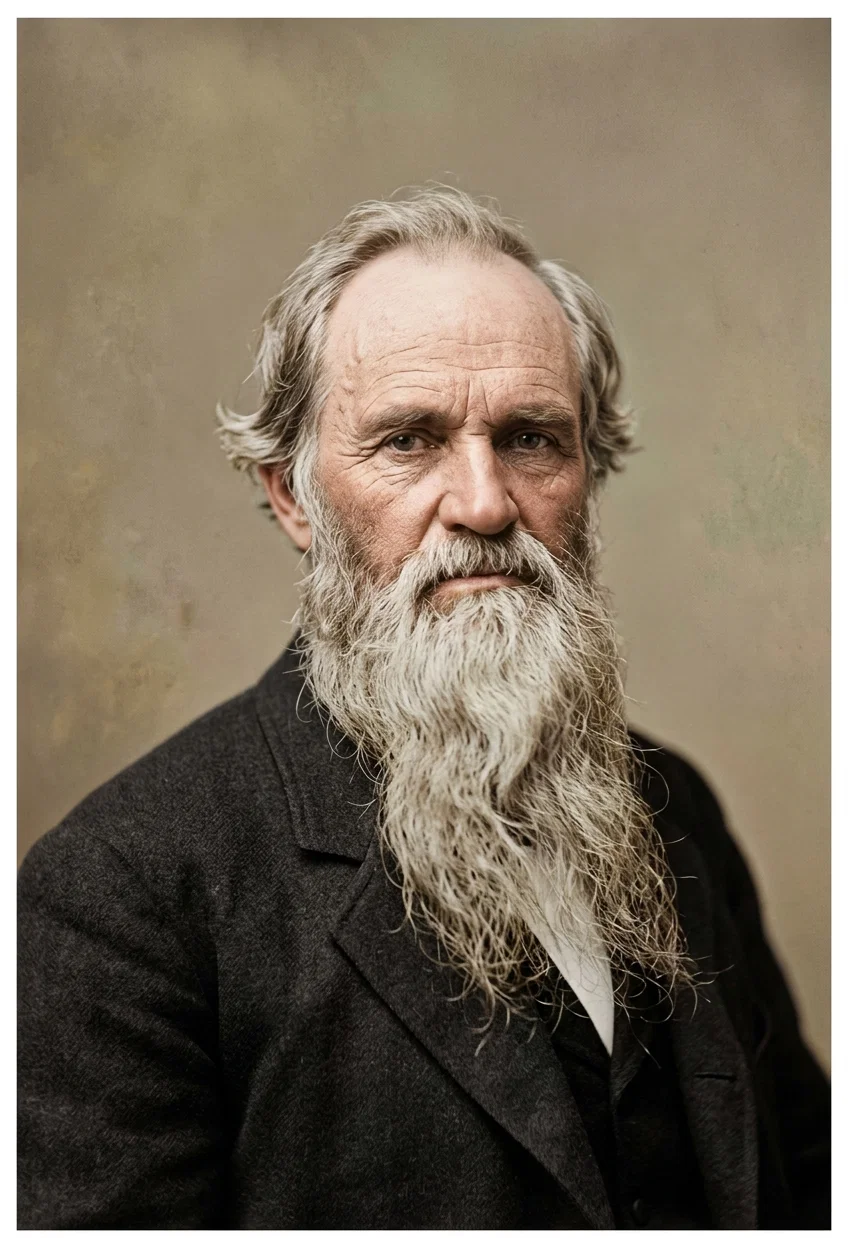
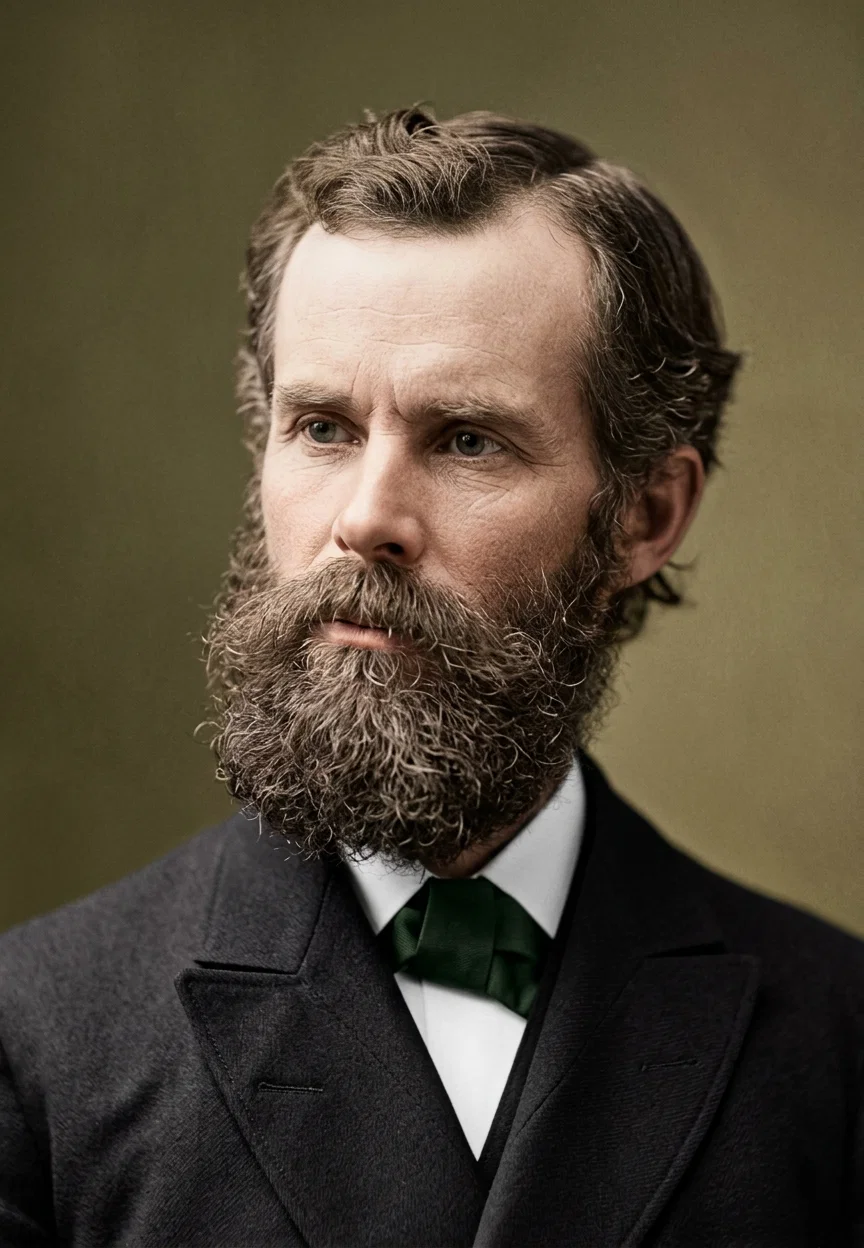
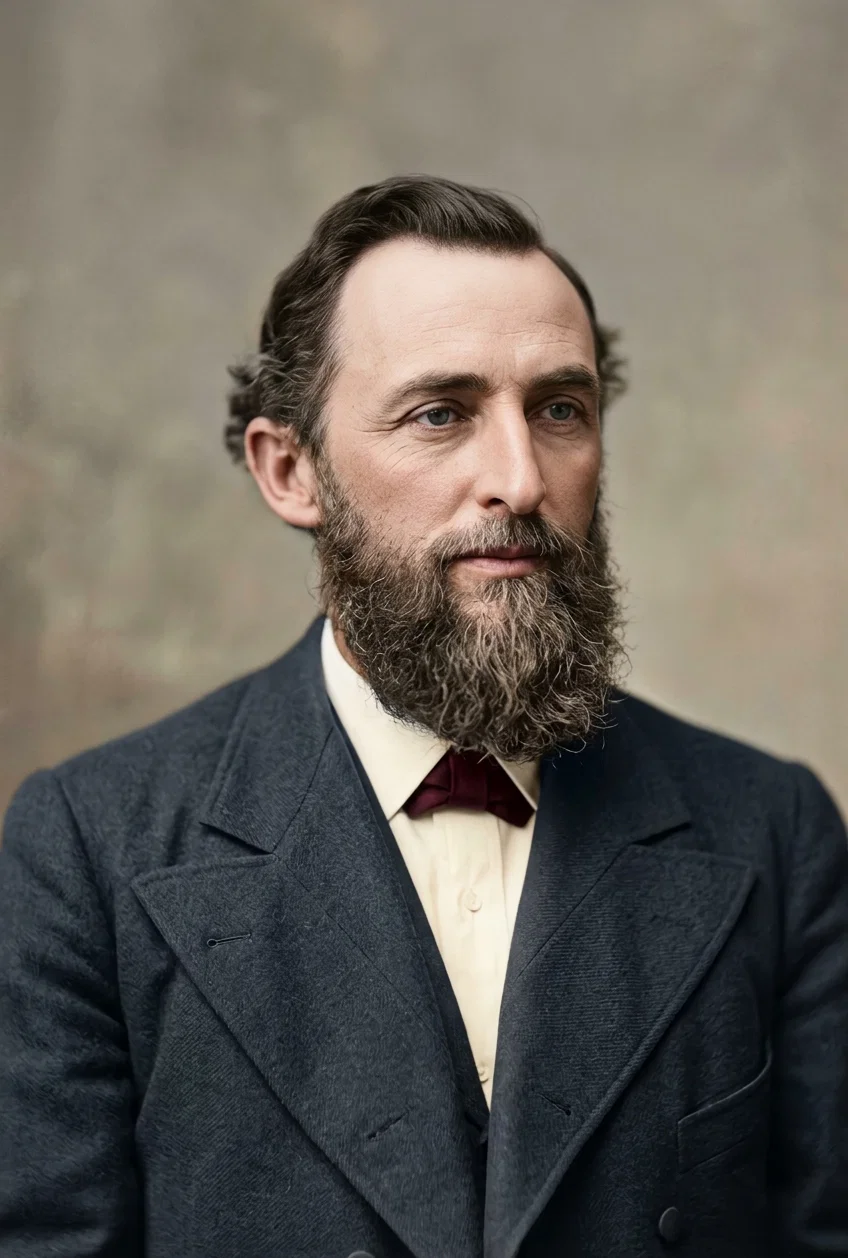
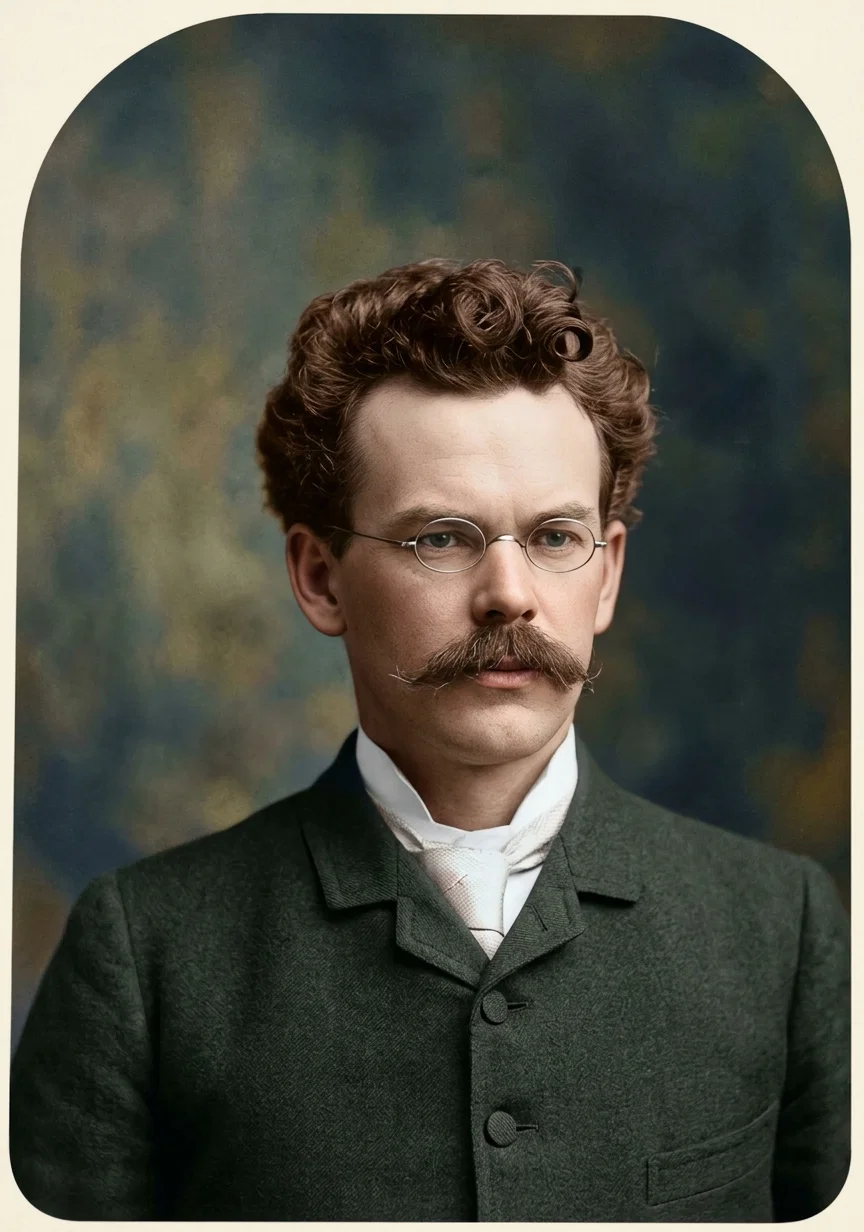
Joseph Harvey Waggoner, one of the first editors of the SIGNS and an able contributor to the Review; author of "The Atonement," and other works. Died at Basel, Switzerland, at the age of 69. April 17, 1889.
John Nevins Andrews, former contributor to the SIGNS and the Review and editor Les Signes des Temps; author "History of the Sabbath." Died at Basel, Switzerland, Oct. 21, 1883, at the age of 54.
Uriah Smith, one of the pioneers, for many years editor of the Review and Herald; author of "Daniel and the Revelation," "Here and Hereafter," and other works.
James White, founder of both the Review and the SIGNS, and of Battle Creek College; the chief pioneer of the cause; for many years president of the General Conference. Died Aug. 6, 1881, at the age of 60.
Alonzo Trevier Jones, editor of the Review and Herald; one time associate editor of the SIGNS; author "Two Republics," "Rights of the People," "Empires of the Bible," etc.
Ellet Joseph Waggoner, son of J. H. Waggoner, editor of the SIGNS, 1884-1891, now editor of the Present Truth, London, England; author of "Gospel in Creation," and other works.
The present editor of the SIGNS OF THE TIMES, Milton Charles Wilcox; first editor of the Present Truth, London, England, 1884-1886.
THE THREEFOLD MESSAGE.
By A. Swedberg
[By editor of Sion's Vaktare, Battle Creek, Mich.]
IN Rev. 14: 6-12 we find three messages described which are to be proclaimed immediately preceding the second coming of Christ (verses 14-16); hence these messages must be intimately concerned in preparing a people for this great event. From this we can judge of their importance, and the necessity of giving heed to the admonition and warning they contain.
A close scrutiny shows that the principle involved in these messages is whether we will obey God or man (Acts 5: 29), whether God's commandments or human enactments shall constitute our rule of life.
The first message calls attention to the fact that the time of the judgment has come, in which all cases will be eternally decided according to the only rule of action God has given man for his conduct—the law of Ten Commandments (Eccl. 12: 13, 14), and admonishes men to worship the Creator—mark, the Creator—for He only is the true God.
The second message calls attention to the fallen and confused state of Christendom, designated by Babylon, a condition which the first message would, if received, have healed, but which rejected makes necessary the fearful warning contained in the third message.
The "beast" and the "image" of the beast mentioned in the third message are fully described in the previous chapter of Revelation.
All Protestant commentators agree that the beast is a symbol of a Church-and-State power, the greatest manifestation of which we have had in this world being the Papacy. By this power human theories and laws are forced upon man in preference to God's commandments, man thus being forced to worship human power instead of divine, the created thing instead of the Creator.
The "image" of the beast is, of course, another power, which, like the beast, endeavors to enforce its own doctrines and laws upon the people instead of God's requirements. Such a power we have seen gradually, but nevertheless surely, developing within our own government, and, judging from present indications, the time can not be far distant when the creed element of this nation will by and through the State endeavor to dominate the consciences of men. These messages are not consecutive, but contiguous, following one after the other, but all uniting together in one threefold message, giving a clear-cut distinction between God's authority and14man's, admonishing the people to acknowledge the former in the worship of the only true God, the Creator of the heavens and the earth, and warning against yielding to the authority of man, which constitutes the worship of the beast.
Mark, the Creator has a sign whereby He distinguishes Himself from all other claimants to the right to be worshiped. This sign is the memorial He has instituted of His created works—the only true, divine Sabbath that has ever been instituted. "Verily My Sabbaths ye shall keep; for it is a sign between Me and you throughout your generations; that ye may know that I am the Lord that doth sanctify you." "It is a sign between Me and the children of Israel forever." Ex. 31: 13, 17. See also Eze. 20: 12, 20.
The beast also has a sign, whereby he seeks to draw men to worship him. This sign is necessarily of the same nature, i. e., a sabbath, yet entirely a different thing, a false sabbath. And so the State-church (the man) power says through its authorities that the proof "that the church hath power to command feasts and holy days" is found in her "very act of changing the Sabbath into Sunday," and that "by keeping Sunday they [the Protestants] acknowledge the church's power to ordain feasts and command them under sin;" and, further, "thus the observance of Sunday by the Protestants is an homage [worship] they pay, in spite of themselves, to the authority of the [Roman Catholic] Church." This constitutes the "mark" of the beast.
It is plain, then, that the messages in question could not present a clear distinction between the authority of God and the authority of man without holding up these two signs in bold comparison, that the people may see the difference, and may thus know how to choose the right side and worship the true God.
Of course it has been the duty of man to acknowledge and worship God in all ages; but how appropriate that just prior to the second advent of Christ, when all human authority shall forever cease, and only God's authority be acknowledged throughout His boundless universe—how appropriate, we say, that special attention should be called to the importance of obeying God rather than man!
And as a result of the proclamation of those three messages we see (verse 12) that a people is brought out who indeed acknowledge the authority of the Creator and worship Him, for they "keep the commandments of God [not of man, but of God], and the faith of Christ."
Reader, on which side do you stand?
A. SWEDBERG.
THE PRINCE OF THE POWER OF AIR AND HIS WORK.
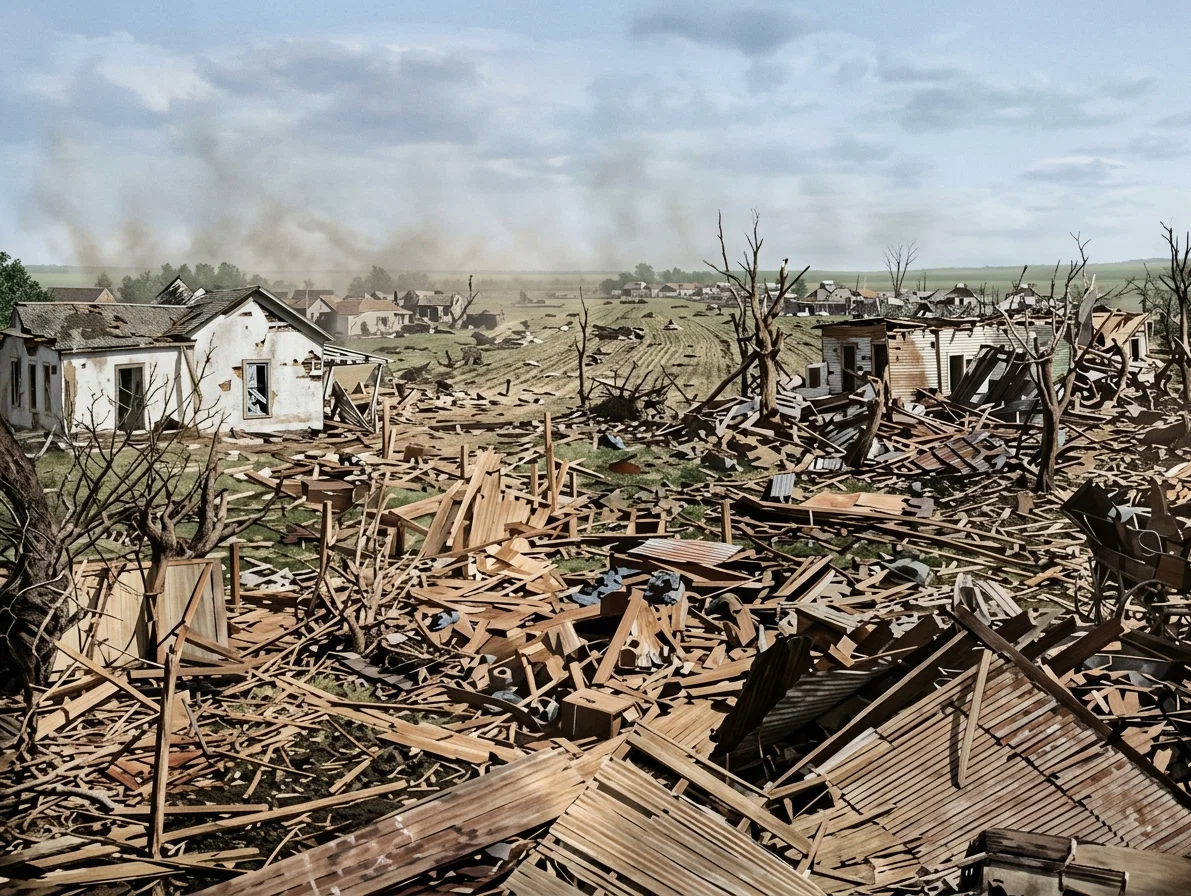
The Kirksville Tornado.
A Photographic View of Kirksville Ruins.
THE normal ruler of this world is God. When man was created, God gave him dominion over the world and all that was therein. Man was prince under God. Gen. 1: 26-28. Under God he possessed power over all the secrets and resources of nature. He was ruler de facto as well as de jure,—in both fact and right. He was free to obey his Sovereign—God—or to disobey; but to disobey meant misery and death, not simply in the decree of God, but in the very nature of things. Obedience—harmony with the all-power of the universe—meant life and peace and joy forevermore.
But man yielded to the enemy. Yielding himself, he yielded all under him, the earth and all of the earth. "For the creation was subjected to vanity [sin, death], not of its own will, but by reason of him [Satan, man] who subjected it." Rom. 8: 20, R.V.
In this way Satan became prince of this world in fact, tho not by right. It could be truly held subject only to God. Man proved a traitor, and Satan usurped the authority of the rightful ruler of earth. He thus became "prince of this world," "god of this world," "prince of the power of the air," etc. God could not meet Satan's usurpation by force. It must be demonstrated in the very working out of disobedience that God's plan is good and only good, that obedience is life, that sin is death, and that God is law. And so Satan still rules, by God's permission, and will until the universe shall see that sin is death and righteousness is life.
The abnormalities, therefore, that we see are not of God. Death and destruction are of sin, and sin is of Satan. Devastating fire and earthquake and tempest are not of the normal rightful Ruler of earth, but of its usurper, the devil. And these things will grow worse and worse as the old earth waxes older, till finally the last great earthquake shall rend it in ruins, and the poisoned atmospheric heavens shall roll together as a scroll and pass away before the presence of God.
This is the lesson taught by the fearful cyclones and tornadoes of these later years. One of the worst, which chilled the blood of thousands, swept from Nebraska through Southwestern Iowa, into Northern Missouri, doing but little damage on its southeasterly way; then it turned, almost doubling on its track, and swept backward to the northeast, striking the city of Kirksville, and the villages of Newtown, Lancaster, Carrollton, Macon, and Linnaeus, and country places, in its course. In the two first named the greatest loss of life took place. This occurred in the afternoon of April 27, about 6 o'clock. Kirksville is the county seat of Adair County, and the population is variously estimated at from 5,000 to 8,000. Newtown has a population of about 550. At Kirksville the loss of life as thus far determined is 33 killed, and more than 90 have been seriously injured, and many others slightly. In Newtown 13 have been killed; 25 were injured.
At Kirksville are two colleges of osteopathy, and a State normal school. The path of the tornado, from 2 to 3 blocks wide, was between one of these colleges and the normal school, where many students boarded, and where were many new and beautiful houses, of which 284 buildings, mostly residences, were damaged or destroyed, and over 200 of these are a total wreck, scarcely a single board remaining whole. The damage to Kirksville is probably $250,000.
Nothing could withstand the fury of the storm. It mattered not whether the building were of brick or stone or wood, it was leveled before the tremendous force of the tornado. It mattered not whether a box or a tree were in its path; both were added to the tremendous and conglomerate cargo borne by the storm. Horses, cattle, houses, furniture, clothing, carpets, trees, branches, boards, timbers, and men and women, with rain and hail and mud and water, were carried in one indiscriminate heterogeneous mass by the storm demons, to be scattered abroad a few minutes later over the face of the earth.