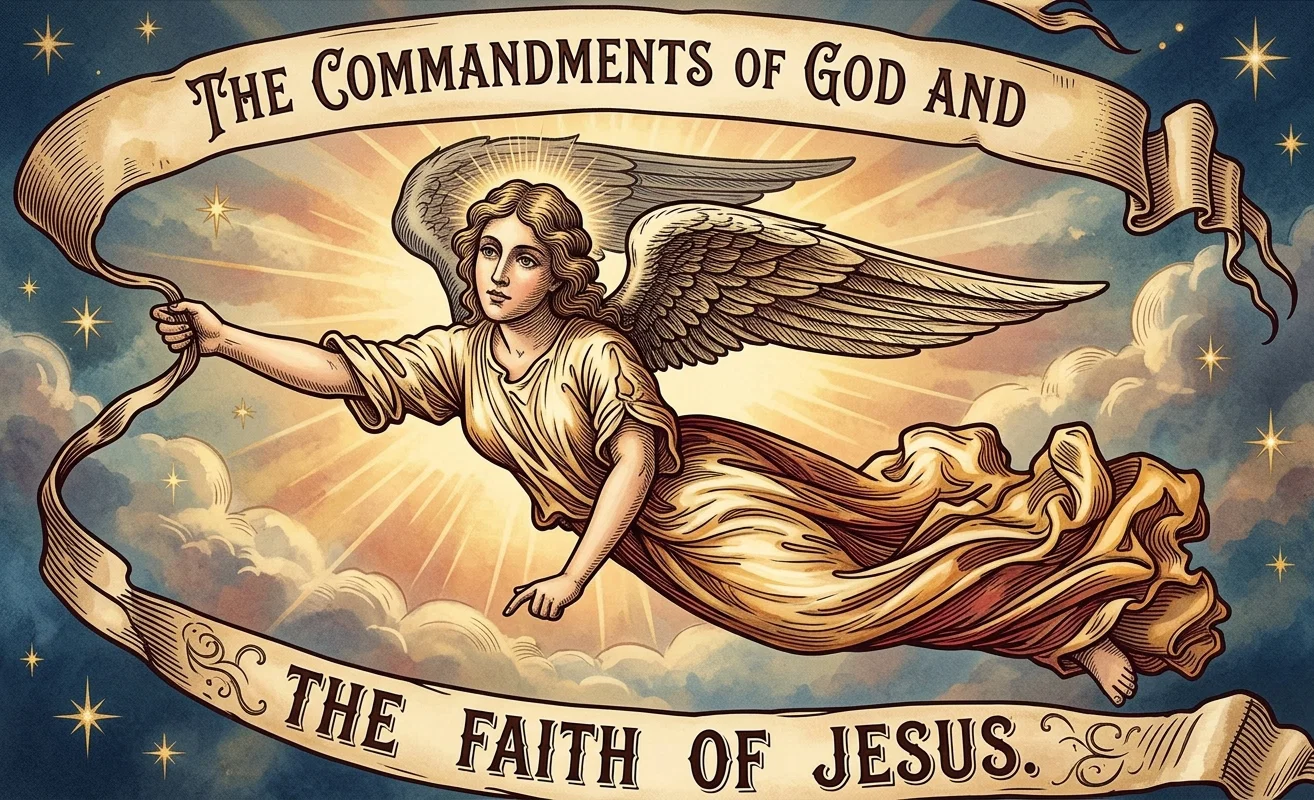
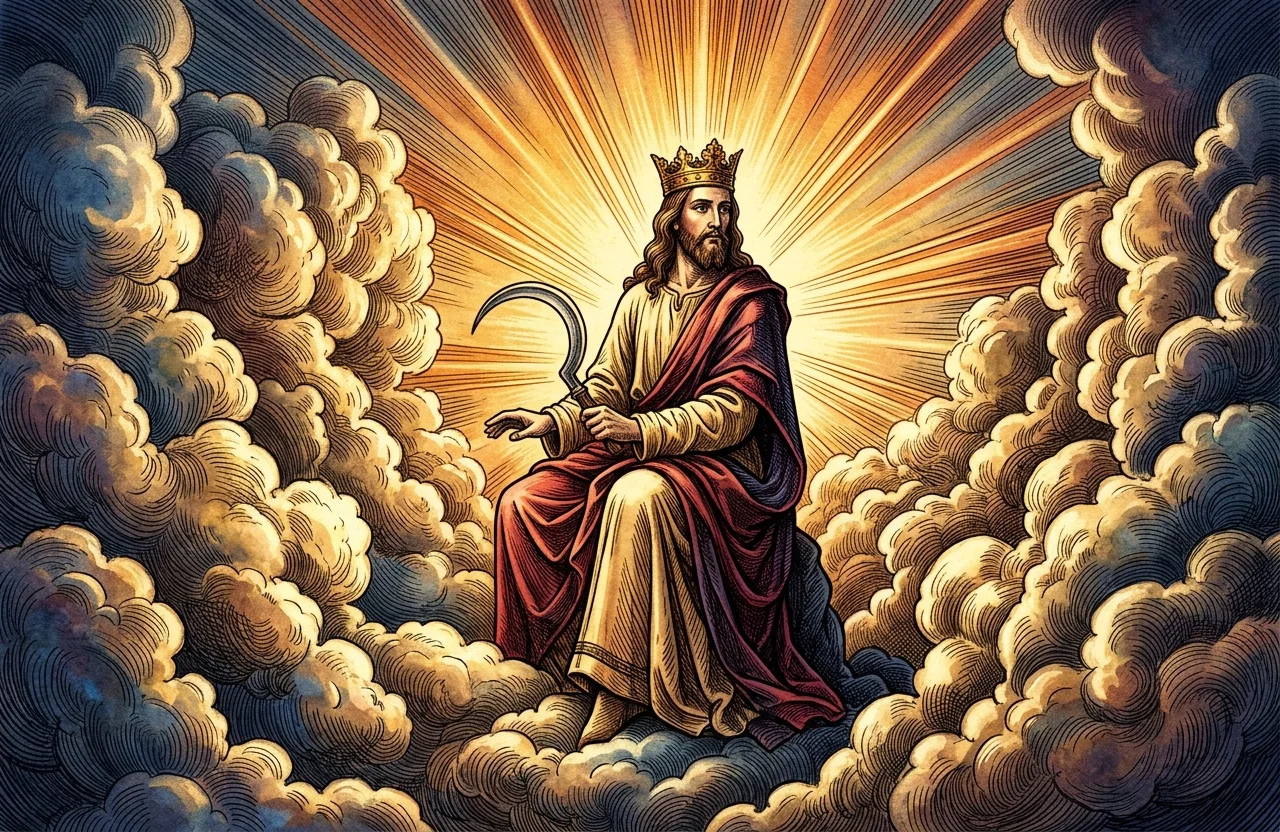
In Rev. 14:6-11 three angels are represented as flying successively through the heavens, each having a message for the inhabitants of the earth, which he proclaims with a loud voice. The nature of the messengers and the manner of giving their messages indicate the importance of the mission upon which they are sent. An angel was sent to Mary to inform her that she had been chosen to be the mother of the Saviour, and again angels were sent to the shepherds to announce his birth. When God would have the Gospel go to the gentiles, he sent an angel to Cornelius to direct him to send for Peter, who would tell him what he ought to do. Angels are not sent to interpose in the affairs of men except in matters of great importance to those in whose interests they come. The message under consideration will not be literally given by angels, for literal angels do not preach the Gospel; that is a work that has been committed to men. But angels may, and do, direct in important movements among God's people on earth.
The importance of the message is further indicated by the subject matter and by the solemnity of the language used. The first has the everlasting Gospel to preach to every nation, kindred, tongue, and people, and calls upon all who dwell upon the earth to fear God and give glory to him who made the heavens and the earth, and bases his message on the fact that “the hour of his judgment is come.” This message clearly implies an apostasy from the true principles of the Gospel and from the true worship of God; and the message itself represents a reform movement to bring men back to the truths of the Gospel and to the unadulterated worship of the true God. The second angel declares the fall of those who refuse to heed the message which the angel gives, calling them Babylon—confusion—because they have adulterated the Gospel and the worship of God by bringing into them that which God has not placed there; and the third pronounces severe judgments against those who worship the “beast and his image” or “receive his mark” in their foreheads or in their hands. This gives a key to the whole prophecy. Men have been worshiping—rendering obedience—to the “beast,” Papal Rome, or the “image” of the beast in place of the true God, and have been taking upon themselves his “mark,” or sign, in place of the sign or “seal” of God.
Chronology of the Message.
The chronology of the message is indicated by its nature and by its position in the line of prophecy in which it is found. (1) The first angel proclaims the hour of God's judgment come. This judgment is the closing work of Christ in the heavenly sanctuary just before his second coming. In the anti-typical judgment work—the closing of the yearly round of service in the worldly sanctuary—the people were required to confess their sins and afflict their souls while the high priest went into the most holy place to perform the atonement work; so in the anti-type the two following messages go forth, which are to remind the people of their sins and of the impending judgments of God, which are so soon to fall upon the disobedient; that, understanding these, they may be led to repentance. This shows that this message will be given in the last days, just before Christ comes to execute judgment.
2. To draw a conclusion from the position which this message occupies in the line of prophecy in which it is found, it will be necessary briefly to refer to the style in which this particular prophecy is written, which is in some respects peculiar to the book in which it is found. In the twelfth chapter the church is introduced under the symbol of a woman, just at the time of the birth of Christ, or the beginning of the Christian era. Then follows a sketch of its history, in which it is represented as struggling against Satan down to the “remnant,” or last generation, when a special persecution is waged by Satan against those who “keep the commandments of God and have the testimony of Jesus Christ.” The thirteenth chapter goes back and takes up the civil powers through which Satan has waged his warfare against the church. Pagan Rome is represented by a dragon and Papal Rome by a beast with a body like a leopard, the feet of a bear, the mouth of a lion, etc.; and in the latter part of the chapter another new symbol is introduced, of a beast having two horns like a lamb and speaking as a dragon. It is through the power symbolized by this latter beast, especially, that the persecutions referred to in the last verse of the twelfth chapter are to be waged; and immediately following this the hundred and forty-four thousand are represented as standing upon the sea of glass, having their Father's name written in their foreheads, in contradistinction to the “mark of the beast,” which was placed in the foreheads or in the right hands of those who worship the beast and his image.
Following this the threefold message, which we have under consideration. The everlasting Gospel is the platform on which the “remnant of the seed of the woman”—the church—will stand in the final conflict with Satan; the second angel proclaims the fall—spiritual declension—of those who take the side of the dragon in his opposition to the remnant church, which is revived by the preaching of the everlasting Gospel; and the third angel proclaims the judgment of God which will fall upon those who “worship” the beast and his image, and receive his “mark” in place of the seal of God. The next event in the prophecy is Christ coming on the white cloud to reap the harvest of the earth. In chapter 15 the seven angels, having the seven last plagues, in which “is filled up the wrath of God,” are introduced; and in the sixteenth chapter is a record of the pouring out of the plagues and the events that follow. “The first went, and poured out his vial upon the earth; and there fell a noisome and grievous sore upon the men which had the mark of the beast, and upon them that worshiped his image.” This shows that the worshiping of the image and the receiving of the mark of the beast occur just before the pouring out of the first plague. “And the fifth angel poured out his vial upon the seat of the beast; and his kingdom was full of darkness; and they . . . blasphemed the God of heaven because of their pains and their sores.” This gives us an idea of the length of time which passes under the pouring out of the different plagues. The sores come as a consequence of the first plague, and men are still suffering from these sores under the pouring out of the fifth. Here we have unmistakable evidence that they are poured out in rapid succession, for only a short time elapses between the first and the fifth.
When the seventh plague is poured out, a voice is heard out of the temple in heaven saying, “IT IS DONE.” The everlasting Gospel has been preached to the world; the warnings have been given; those who have accepted the Gospel have been sealed with the5seal of God, and have been shielded by divine power from all harm, while the vials of the unmingled wrath of God have been poured out upon those who have rejected the Gospel, and worshiped the beast and his image, and received his mark, just as the children of Israel were shielded by the power of God in the days of Moses from the ten plagues that fell upon the Egyptians. The next event in chronological order is the coming of Christ as Lord of lords and King of kings to execute the judgments written.
SHOULD JESUS’ COMING BE FORGOT?
By Herman H. Fowler
BY HERMAN H. FOWLER.
[Sung to Scotch Air, “Auld Lang Syne.”]
Should Jesus’ coming be forgot,
Or seldom brought to mind?
Should God’s great plan concerning man
Such few believers find?
Chorus—
For when that glorious morn doth break,
Which nothing will bedim,
We shall, through grace, behold his face;
And then we’ll be like him.
The whole creation groans in pain;
And man, the chief of all,
Through weary years of blood and tears
Hath travailed since the fall.
The Spirit helpeth us to pray
For just what’e’er we ought;
And we do know all things below
For good to us are wrought.
So there’s a hand, my Christian friend,
And give me hand of thine;
We’ll toil along, with prayer and song,
Abiding in the Vine.
And you, backslider from the truth,
Who feels the chastening rod,
Repent, believe; you shall receive
The promises of God.
And you, dear unconverted one,
Let Jesus come within!
He will give light, restore your sight,
And cleanse your heart from sin.
(All rights reserved.)
LAWFUL TO DO GOOD ON THE SABBATH.
By Ellen G. White
BY MRS. E. G. WHITE.
“AND it came to pass, as he went into the house of one of the chief Pharisees to eat bread on the Sabbath day, that they watched him. And, behold, there was a certain man before him which had the dropsy.”
Jesus had been invited to the house of this chief Pharisee, and he had accepted the invitation in order that, as his custom was, he might sow seeds of truth in his conversation at the table. There were many who through this means had been privileged to become acquainted with Christ. He met them on familiar terms, and disclosed truth to their minds. They were convicted of the truth not only by what he said, but by the purity and elevated nobility of his character. The occasions when men met with him at the homes of their countrymen were not to be forgotten; but even after his humiliation, his trial, rejection, condemnation, and crucifixion, after his resurrection, when he came forth from the tomb a triumphant conqueror, men would remember the words which he had spoken at the times when they had shared with him the hospitality of the people.
The Pharisee who had invited Christ to his house on this occasion was a ruler in Israel, a member of the Sanhedrin, a man of repute and influence. Jesus had not accepted his invitation for the purpose of gratifying his appetite, or to furnish himself with an hour of amusement; but he had accepted it for the purpose of representing the character of God. He was to bear witness of the truth, and (as far as possible) to leave the impress of his own divine image upon human souls. He was the Teacher sent of God, the Light of the world, who had risen to shed divine rays of light upon all who were in the darkness of error. He was the Revelation of God, and was to speak words that the Holy Spirit should afterward bring to their remembrance.
Christians may safely accept invitations to dinners where a promiscuous company shall gather, if they will but follow the example of Christ, and act from the same motives as did our Saviour. Their influence will be on the right side if they speak words that will impress with divine truth those who are assembled, and thus sow seed unto eternal life.
But the Pharisees had not invited Christ for the sake of hearing of eternal things. Filled with jealousy and envy, he and his guests had laid plans by which they hoped to bring Christ into disfavor. The man with the dropsy who sat before Christ had been purposely chosen as a means by which to bring Christ under condemnation. The suffering man was placed directly before Christ, “and they watched him” to see whether he would violate their traditions and heal the man on the Sabbath day, in order that they might find occasion to condemn him to death. They knew that Christ always expressed sympathy for human woe, and that he ever exercised his power to relieve suffering humanity. Jesus read their hearts as an open book. They had no need to tell him what were their thoughts. He forestalled all their arguments, and revealed the fact that he read their questionings and purposes. “And Jesus answering spake unto the lawyers and Pharisees, saying, Is it lawful to heal on the Sabbath day?” If he had healed the man without closing the mouths of his accusers, they would at once have charged him with Sabbath breaking. He asked this question before the guests in order that these men might not venture to take the position that it was not lawful. They would have been obliged to answer, if they answered honestly, “The law does not forbid the work that relieves the suffering of man or beast on the Sabbath day.” Jesus gave them an opportunity to disclose their sentiments, and to point out the ground of their objection to his works of mercy. But “they held their peace.” They were wise enough to see that this was the best policy. They knew that their Guest understood the law perfectly, and that he was able to make plain their misrepresentations, and to unveil their subterfuges before those who were present. And he took the man with the dropsy, “and healed him, and let him go.”
But, notwithstanding their silence, Jesus knew that the Pharisees were planning in their minds just how they might fasten guilt upon him. And he “answered them, saying, Which of you shall have an ass or an ox fallen into a pit, and will not straightway pull him out on the Sabbath day?” When he asked them, “Is it lawful to heal on the Sabbath day?” the record says, “They held their peace.” And when he presented his argument, “they could not answer him again to these things.” But, although they could not answer him, they were none the less displeased because their scheme to condemn him had called forth their own condemnation. They knew that it was the practice of their people to save the life of a dumb creature, even if it required attention on the Sabbath day. They felt it in accordance with the Sabbath commandment to lead their ox or their ass to water, and why was it not altogether proper to relieve human suffering on the Sabbath?
Christ had spoken in a calm, convincing manner. By restoring the sick man to health he had given evidence that in him was life. By the lessons he had given, by the miracle he had performed, he had answered the question as to whether it was lawful to heal on the Sabbath day. He showed the fallacy of the arguments of the scribes and Pharisees which they had advanced on several occasions previous to this in accusing him of violating the Sabbath in healing the sick and relieving the suffering. They were constrained to keep silent, for they could find no argument by which to answer the Lord Jesus which would not place them in a most unfavorable light. The reasoning that they had used when among themselves had seemed very conclusive, and they had leavened the minds of many who were present by the subtlety of their arguments. But now, before they could present their arguments, Christ had answered them, and they were left helpless; for all recognized that Christ had spoken words of truth and righteousness.
Christ understood how to act in a calm, intelligent manner, and to bring to naught their plans to bring him into condemnation. The words of the Lord were as sharp arrows that went to the mark, and wounded the hearts of his accusers. Every time Christ addressed the people, whether his audience was large or small, his words took saving effect upon the souls of some of his hearers. No message that ever fell from the lips of Christ was to be lost. Every word he spoke placed a new responsibility upon those who heard it. Ministers who are giving the last message of mercy to the world, who are presenting the truth in sincerity, who are relying upon God for strength, need never fear that their efforts are in vain. No one can say that the arrow of truth has not sped to the mark, and pierced the souls of those who are listening. Although no human eye could see the flight of the arrow of truth, although no human ear heard the cry of the wounded soul, yet the truth has silently cut its way to the heart. God has spoken to the soul, and in the day of final account God's minister will stand with the trophies of redeeming grace to give honor unto Christ, to whom honor is due. God, who seeth in secret, will openly reward those who have declared the truth in his name.
THE PLACE OF THE SECOND ADVENT.
By W. N. Glenn
BY W. N. GLENN.
In the order of events comprising the great work of salvation, the place of the second coming of Christ is of inestimable importance. In that event centers the consummation of the hope of his people. In discussing briefly this point, the reader will please bear in mind that the question of the order of events is not a question of specific date.
One consideration which makes it important to know the place of the second advent in the scheme of redemption, is the fact that concerning this event we are told there will be great deception. The enemy of souls will make special effort to mislead the people in regard to the coming of the Lord “the second time . . . unto salvation,” in order that they may not be prepared for that event. Therefore if we do not know at what point in the ever-unfolding plan to look for the returning of the Lord, we will become easy prey to the deceiver; will be either entirely engrossed with the cares or pleasures of this life, or, like the foolish virgins, be found asleep, with no oil in our vessels.
Foreseeing the effort of Satan to deceive the world in regard to this important event, our Lord has given this plain warning:—
“Take heed that no man deceive you. For many shall come in my name, saying, I am Christ; and shall deceive many.” Matt. 24:4, 5.
“And many false prophets shall rise, and shall deceive many.” Verse 11.
“Then if any man shall say unto you, Lo, here is Christ, or there; believe it not. For there shall arise false Christs, and false prophets, and shall show great signs and wonders; insomuch that, if it were possible, they shall deceive the very elect. Behold, I have told you before.” Verses 23–25.
If we should become so careless as not to heed this oft-repeated warning, and thus be ignorant of these things, we certainly will be without excuse. These words of the Saviour were verified in the days of the apostle Paul, when Hymeneus and Philetus erred concerning the truth, saying that the resurrection was past already, and overthrew the truth of6 (86)some. 2 Tim. 2:18. Others went so far as to write letters to the Thessalonians in Paul’s name, saying that the day of Christ was then at hand. This called out a strong appeal and warning to the church from the apostle:—
“Now we beseech you, brethren, by the coming of our Lord Jesus Christ, and by our gathering together unto him, that ye be not soon shaken in mind, or be troubled, neither by spirit, nor by word, nor by letter as from us, as that the day of Christ is at hand. Let no man deceive you by any means; for that day shall not come, except there come a falling away first, and that man of sin be revealed, the son of perdition; who opposeth and exalteth himself above all that is called God, or that is worshiped; so that he as God sitteth in the temple of God, showing himself that he is God. Remember ye not, that, when I was yet with you, I told you these things?” 2 Thess. 2:1–5.
In course of instructions to his disciples in regard to his going away, the Saviour said, “I will come again, and receive you unto myself.” John 14:3. That this coming again for his people means the second advent, is shown by Heb. 9:28, from which we learn that his coming “without sin unto salvation” is his coming “the second time.” These scriptures, in connection with 2 Thess. 2:1, previously quoted, show conclusively that the second advent of Christ is the occasion of the gathering of his people. But there are more testimonies to the same effect. That the second advent is the time of the resurrection of the just is shown by 1 Cor. 15:21–23:—
“For since by man came death, by man came also the resurrection of the dead. For as in Adam all die, even so in Christ shall all be made alive. But every man in his own order; Christ the first-fruits; afterward they that are Christ’s at his coming.”
To make the location emphatic, the next verse says, “Then cometh the end,” etc. Coming at the “end,” the second advent must be when the Gospel shall have been “preached in all the world for a witness unto all nations,” for “then shall the end come.” Matt. 24:14. At the coming of the Lord is the harvest of the earth, and in explanation of the parable of the tares the Lord says, “The harvest is the end of the world; and the reapers are the angels.” Matt. 13:39. To this we add the following further testimony:—
“The Lord himself shall descend from heaven with a shout, with the voice of the archangel, and with the trump of God; and the dead in Christ shall rise first; then we which are alive and remain shall be caught up together with them in the clouds, to meet the Lord in the air; and so shall we ever be with the Lord.” 1 Thess. 4:16, 17.
“And then shall appear the sign of the Son of man in heaven; and then shall all the tribes of the earth mourn, and they shall see the Son of man coming in the clouds of heaven with power and great glory. And he shall send his angels with a great sound of a trumpet [margin, “with a trumpet and a great voice”], and they shall gather together his elect from the four winds, from one end of heaven to the other.” Matt. 24:30, 31.
Kingdom and Judgment.
The second advent of Christ will be at the time of the setting up of his kingdom, and the execution of judgment:—
“I charge thee therefore before God, and the Lord Jesus Christ, who shall judge the quick and the dead at his appearing and his kingdom: Preach the word.” 2 Tim. 4:1, 2.
“When the Son of man shall come in his glory, and all the holy angels with him, then shall he sit upon the throne of his glory; and before him shall be gathered all nations; and he shall separate them one from another, as a shepherd divideth his sheep from the goats; and he shall set the sheep on his right hand, but the goats on the left. Then shall the King say unto them on his right hand, Come, ye blessed of my Father, inherit the kingdom prepared for you from the foundation of the world. . . . Then shall he also say unto them on the left hand, Depart from me, ye cursed, into everlasting fire, prepared for the devil and his angels.” Matt. 25:31–41.
“Behold, the Lord cometh with ten thousand of his saints, to execute judgment upon all, and to convince all that are ungodly among them of all their ungodly deeds which they have ungodly committed, and of all their hard speeches which ungodly sinners have spoken against him.” Jude 14, 15.
“Seeing it is a righteous thing with God to recompense tribulation to them that trouble you; and to you who are troubled rest with us, when the Lord Jesus shall be revealed from heaven with his mighty angels, in flaming fire taking vengeance on them that know not God, and that obey not the Gospel of our Lord Jesus Christ; who shall be punished with everlasting destruction from the presence of the Lord, and from the glory of his power; when he shall come to be glorified in his saints, and to be admired in all them that believe (because our testimony among you was believed) in that day.” 2 Thess. 1:6–10.
“The mystery of iniquity doth already work; only he who now letteth [hindereth] will let, until he be taken out of the way. And then shall that wicked be revealed, whom the Lord shall consume with the spirit of his mouth, and shall destroy with the brightness of his coming.” Chap. 2:7, 8.
The second advent will be when the mansions are prepared in the Father’s house, and the time has come for bestowing upon the righteous their final reward:—
“In my Father’s house are many mansions; if it were not so, I would have told you. I go to prepare a place for you. And if I go and prepare a place for you, I will come again, and receive you unto myself; that where I am, there ye may be also.” John 14:2, 3.
“I have fought a good fight, I have finished my course, I have kept the faith; henceforth there is laid up for me a crown of righteousness, which the Lord, the righteous judge, shall give me at that day; and not to me only, but unto all them also that love his appearing.” 2 Tim. 4:7, 8.
“Behold, I come quickly; and my reward is with me, to give every man according as his work shall be.” Rev. 22:12.
GOD WORKS BY HIS SPIRIT.
By Wm. Covert
BY WM. COVERT.
The mysteries associated with the operations of God’s Spirit are numberless as the sands upon the seashore, yet its results may be studied with profit. The power of God’s Spirit has wrought in every good thing in both heaven and earth. As stated of Christ when personated under the figure of wisdom, so may the Spirit say: “The Lord possessed me in the beginning of his way, before his works of old. . . . When he prepared the heavens, I was there.”
Our senses can not take hold of a time when the Spirit of God was not present. With regard to duration the apostle calls it “the eternal Spirit.” See Heb. 9:14.
The Biblical account of creation shows that as God in the beginning made our world, his “Spirit was brooding upon the face of the waters.” Gen. 1:2, margin Revised Version. In these moments God was through his Spirit giving form and imparting life to all that was brought into being.
Not only was the Spirit force and life manifested in creating our world and all that related to it, but one, in writing of the works of the Lord, says, “By his Spirit he hath garnished the heavens.” Job 26:13. The glory, the brilliancy, and the life, which are seen beaming forth from every twinkling star, and smiling through every shining orb, are a visible testimony plainly revealed through all the meadows of heaven, declaring that God is perpetually working by his Spirit. The fact that all worlds keep their proper places, and follow precisely their appointed rounds, shows that the strength of creation has never slackened its hold upon that which grew into being by the power of this life.
The potency of this eternal Spirit is seen in the workings of the forces which men term nature’s laws. That which the scientist claims for the laws of nature the Scripture teaches is done “by the word of his power.” Heb. 1:3.
In speaking of the sustaining force which upholds the worlds the prophet says to mankind:—
“Lift up your eyes on high, and behold who hath created these things, that bringeth out their host by number; he calleth them all by names, by the greatness of his might, for that he is strong in power; not one faileth.” Isa. 40:26.
In the twelfth and thirteenth verses of the above-mentioned chapter the writer shows that the Lord by his Spirit has measured the waters, and weighed the mountains, and computed the dust of the earth in measure. Through the same agency he has also calculated the distances and meted out the spaces for the ceaseless journey of all the host of suns, moons, and planets which traverse the plains of heaven. By his infinite power and wisdom he controls countless systems of worlds in their relation one with another, so that not a mistake nor crash has taken place among them from the days of eternity.
Of the Lord’s might the psalmist writes, saying: “I know that the Lord is great, and that our Lord is above all gods. Whatsoever the Lord pleased, that did he in heaven, and in earth, in the seas, and all deep places.” Ps. 135: 5, 6. In harmony with these thoughts David elsewhere queries with himself, saying: “Whither shall I go from thy Spirit? or whither shall I flee from thy presence? If I ascend up into heaven, thou art there; if I make my bed in hell, behold, thou art there. If I take the wings of the morning, and dwell in the uttermost parts of the sea; even there shall thy hand lead me, and thy right hand shall hold me.” Ps. 139:7-10.
The thought is here expressed that no place can be found where God’s Spirit does not reach. Should the sinner attempt to flee from the presence of God’s Spirit, he would only try in vain. The heavens nor the earth will give no hiding place, and even the grave, with all its darkness, affords no retreat from the searchings of God’s Spirit. From thence all must come to face the issues of life. Therefore the only safety lies in being directed by the Spirit of God day by day, and step by step, right on forever.
Burlington, Vt.
“FREE INDEED.”
By H. A. St. John
BY H. A. ST. JOHN.
“If the Son therefore shall make you free, ye shall be free indeed.” John 8:36. Just before this Jesus had said, “The truth shall make you free.” There is no practical difference in these two utterances, as Jesus himself is “the Truth.” John 14:6. Jesus is the agent, while the truth is the instrument. The truth came through him.
The liberty, or freedom, of which Christ here speaks, is not what is commonly called religious liberty, or freedom, but something infinitely greater, and higher, and better. Earthly governments, or our fellow-men, may protect us in religious liberty, or liberty to exercise unmolested our religion, but Jesus only can give a man that freedom of which he speaks. Earthly governments may take away religious liberty, but they can not deprive us of soul liberty, or true freedom, or freedom indeed. This no man or set of men can either give or take away.87
A person may be free indeed, have the highest kind of real freedom, and at the same time be in chains, in prison, in banishment, or in the lion’s den, deprived of both civil and religious liberty. He who hears the sayings of Christ, and does them, is free indeed. He whom Christ makes free from sin is free indeed. He who abides in the truth,—abides in Christ,—is free indeed. Any other kind of freedom or liberty is only formal, not real. To be free indeed is to be an Israelite indeed, and to be children of the New Jerusalem, which is above, which is free. Reader, seek for this highest freedom, and this highest home of the free.