Recently a boy said to his mother, "Won't you ask father if I can have a pair of skates?" The mother replied, "You ask father; he is in the other room." But the boy replied, "I don't know father very well."
In hundreds and thousands of homes, this sad experience is duplicated. Parents are so busy providing food, clothing, and schooling for their children that they haven't time to live in the lives of their boys and girls. The boys grow to manhood, the girls to womanhood, and the parents who have toiled and slaved for their children often stand in dire need of an introduction to their finished product. Brethren, these things ought not so to be!
Our country has recently been awakened from its Rip Van Winkle sleep over this matter by an aggressive campaign encouraging father and son to be chums during 1914. Nearly two hundred mayors joined in calling fathers and sons to be comrades. Many a man has been brought up with a jerk who has been robbing his boys of the sympathy, love, and companionship due them. Many fathers have discovered that they and their sons are strangers. Money, cares, and misunderstandings have made a yawning gulf between them and their boys.
Many a boy who has been blundering along in his teens sadly in need of sympathy and a loving, steady grip, not understanding himself, and confident that no one else understands him, will now share the confidence and fellowship of his father because of this agitation. To a large extent this will in the future prevent boys from saying, "If I had had some one to talk with, I should not have gone wrong."
A big son said to his father, late one evening: "Do you mind staying awhile, father? I want to talk over my problems with you." And they talked all night. It was one of the best nights of their lives. The boy wanted his father's companionship, and counsel in solving his problems. How many big boys are hungry for such a talk with father.
Every sympathetic Missionary Volunteer secretary in the land is well-nigh overwhelmed with the problems of boys which their fathers have been little or no help in solving. The real problem is to sensitize the father-mind and to warm the son-heart toward the mutual need which each has of the other.
The proclamation of Newton D. Baker, mayor of Cleveland, was published December 26, and read in the pulpits of the churches and to the 80,000 pupils in the schoolrooms of that city; 40,000 messages were handed to the boys to carry to their homes. One man said: "This agitation about fathers and sons has waked me up. I have been doing a lot of thinking, and I am going to practice it."
Mayor Wallace G. Nye issued, in a proclamation to the fathers and sons of Minneapolis, these words: "Fathers and sons must be drawn together in that companionable relationship which will develop in both an inspiration for things which are wholesome and ennobling."
The editor of the Youngstown Vindicar, in an editorial, said, "Sons are not likely to go wrong when the fathers go right and take the sons with them."
The Philadelphia North American, in an article, said: "Once or twice in the average life each individual meets or knows of a few fathers who are 'boys' with their boys. The writer recalls one such instance, and even to this day the remembrance of the remarkable comradeship that existed between that father and his four sons stands out as an object lesson."
Secretary Stratton, of Charleston, S. C., expressed the matter well in these words: "Show me a man that is interested in children; who loves their companionship; who plans for their health, comfort, and happiness; who is interested in their amusements and problems, and I will show you a man with a pure heart, a healthy soul, and a good mind."
Mayor Buschemeyer, of Louisville, struck the keynote: "It is the duty of the mother to be the guardian angel of the daughter, but the protection of the son against the many pitfalls of city life rests primarily with the father. He ought to lead the son with a firm hand through the days of boyhood. He ought to make a companion and a friend of him as he grows to manhood. Infinite misery and unhappiness are frequently caused by nothing else but the fact that the father neglects to gain the confidence of the son, and thereby misses the opportune time to warn him against besetting dangers."
Of all people, the hearts of Seventh-day Adventist fathers should be warm and sympathetic toward their children.
Sunday Legislation in Massachusetts
By G. B. Starr
A VERY interesting hearing was given by the joint committee on legal affairs, representing the Massachusetts House of Representatives and Senate, at the Statehouse in Boston, Wednesday, February 18. No less than eleven Sunday bills of various kinds were to be considered. Anticipating a live interest and a large audience, the committee selected Room No. 240, the largest committee room in the Capitol. The entire time from 10:30 A. M. to 1:30 P. M. and from 3:30 to 5:30 was devoted to this hearing.
We have never seen a committee give more respectful attention to this subject than did this committee. It was also very fair in the division of time, dividing it equally between those favoring such legislation and those opposing it. These eleven bills, with the exception of one, were all designated as acts respecting the observance of the Lord's Day. The following objects were sought by the bills: Permission to unload vessels on Sunday not to be granted except on a sworn affidavit that it is absolutely necessary; permission to fish with hook and line, the same forbidding fishing with nets or for commercial advantage; prohibition of concerts on the Lord's Day where admission fee is charged; permission in the city of Holyoke to play baseball on the Lord's Day; permission for baseball playing in all the public parks on Sunday between the hours of 2 and 6 P. M.; permission for professional baseball playing in all the cities on the Lord's Day; permission to sell flowers and plants on the Lord's Day to those who wish to decorate graves; authorization of labor on the Lord's Day in household gardens — this to permit a man to hoe in his own flower garden on Sunday without being arrested; but he must not hoe anything that is to be sold the next day.
It would have been of interest to the REVIEW readers to listen to all the arguments, pro and con, on these bills. Gentlemen of good address seriously pleaded with the committee for the privilege of working in their own gardens on Sunday without molestation. The officers of the Civic League pleaded for the youth of the large cities who are crowded into small quarters, that they might have the privilege of ball playing on Sunday, without arrest, similar to the privileges granted to people with automobiles and other means of obtaining pleasure and recreation. Eloquent appeals were made in behalf of these youth, and it was urged that engaging in such sports would keep them out of practices that are evil and injurious.
The representatives of the Lord's Day League and the Catholic priest representing Cardinal O'Connell, made their usual plea for the strict observance of the Lord's Day, as they termed it. The Catholic priest was very emphatic that the Lord's Day should not be desecrated by ball games, fishing, tennis, and work. He opposed all these bills and favored strict Sunday observance. He was followed by a young Catholic who represented the Associated Young Catholic Sports Societies.
He stood for strict Sunday observance, in harmony with the cardinal and the priest. His testimony, however, was entirely broken down by questions from a member of the committee, who clearly brought forth evidence that this same association that this young man represented plays baseball and tennis on Catholic grounds in Baltimore and Washington on Sunday.
The first talk representing our view of Sunday legislation followed these two last-mentioned appeals, and came just before the intermission. The position was taken that the titles of all the bills were ambiguous, and that in all legislation everything of that kind should be perfectly clear. An act to prohibit certain things on the Lord's Day without defining which day of the week is referred to was objected to. The claim was made that the question as to which day is the Lord's Day is a debatable one. It was urged upon the committee that they, recognizing the religious phase of the question, which had been emphasized by all the speakers, could not recommend action by the Massachusetts Legislature in any of these proposed measures.
The thought was emphasized that this committee representing the legislature of Massachusetts could not afford to make a crime, on any particular day, of that which on any other day was perfectly innocent and not a crime or misdemeanor.
It was claimed that baseball, fishing, tennis, work in the garden, and any other work are all innocent things in themselves, and cannot be made a crime or misdemeanor. It was also pointed out that laws prohibiting labor on the first day of the week are in direct opposition to the higher law of Jehovah, which forbids labor on the seventh day of the week, and that the enactment of such laws makes it difficult for the people to obey the law of God, obedience to which constitutes the whole duty of man.
Reference was made to the statement of the Catholic priest that Christians were forced to appear annually at these hearings to appeal for their rights for Sunday rest. To this Seventh-day Adventists objected, stating that the only right that any religious body could claim of any State legislature is the right of peaceable assemblage any day of the week. It was affirmed that we could meet in the center of Boston on Saturday afternoon and enjoy our worship unmolested, notwithstanding the traffic of the city. The chairman wished to know then if Seventh-day Adventists were in favor of the bills granting the privilege of ball playing, working in the garden, etc., to which this reply was made: "Most assuredly! All men should be left free to select their day of worship; no pressure should be brought to bear upon any mind, except the persuasion of the Word of God."
Four Seventh-day Adventists were given opportunity to speak on this bill,—Elders J. E. Jayne, H. C. Hartwell, and F. W. Stray, and the writer. The members of the committee were respectful and attentive to all our speakers. We were not subjected to close questioning as were some of the opposition. We really felt we had the sympathy of the best minds of the committee.
G. B. STARR.
Progress of the Publishing Work
By W. W. Eastman
Up to the present I have attended five of the twelve union conferences planned for at the fall council. As it has been my work to look after our publishing interests at these meetings, I wish to mention a few things that have been reported in connection with them that indicate the Lord's providential leading in this important department of our work.
In the Atlantic Union Conference our brethren are grappling with such problems as great cities, large foreign population, and large numbers of Catholics, but nevertheless are gaining victories and making progress. One of their colporteurs reports having repeatedly gained entrance to a Catholic convent and a parochial school, where he successfully sold our literature, having the consent of the priest and the mother superior, a thing probably unknown heretofore in the history of our work.
In the Southeastern Union Conference the work had made a good gain over the last biennial period. Special progress has been made in the development of successful colored colporteurs. Two of this class of workers have each sold and delivered over a thousand dollars' worth of our books to their people during 1913. In fact, the work has made such encouraging progress among the colored people that it has become necessary to provide colored helpers to the field agents, to act as trainers of colored workers. This is a new feature in our work, and a very encouraging one indeed, for it has great possibilities for the rapid spread of the message to the millions of colored people of the South.
In the Southern Union Conference new records are being made by the colporteurs in the sale of our literature, and the work is making a most encouraging growth.
Brother C. G. Bellah, who has been so ably filling the position of general agent of the Central Union Conference for the past eight years, showed by his report that there had been a gain in that union of fourteen per cent over the last biennial period. Some very remarkable records have been made by different persons in the sale of literature in this union.
In the Northern Union, the most noticeable feature of the literature work is the development of student canvassing during vacation. A large number of young people are now in the denominational schools of the union because they have been able to earn scholarships by the sale of our literature during the summer vacation. The gain in sales for the union over the sales of former years, as shown by F. E. Painter, the general agent, in his splendid report, was especially encouraging.
On my way from the Minneapolis meeting to Lacombe, Canada, I met Brother Jacob Skodsheim, who has been spending the winter selling our books in the northwestern part of Minnesota. In January of the present year, in less than a month he sold over four hundred dollars'21worth of "Ministry of Healing" and "Great Controversy" in the Indian reservation, mostly among the Catholic Indians. Brother Skodsheim has had some remarkable experiences, which clearly indicate the hand of God in this work, and show what can be done when our brethren go forth with the burden of souls upon them.
W. W. EASTMAN.
Field Notes
The recent conversion of twelve persons is reported from east Kansas.
Elder F. W. Stray recently organized a company of believers at Montpelier,22Vt.
Fourteen new members have been received into the Halfway (Oregon) church since the conference camp meeting.
B. Hagle and wife report the conversion of four adults in Corunna, Mich. The new church building at Holland was recently dedicated to the worship of God.
Fifteen or more new Sabbath keepers have become well grounded in the truth as the result of the labors of Elder Luther Warren in Vancouver, British Columbia.
Sixteen students of Walla Walla (Wash.) College received baptism at the close of the week of prayer. Elder J. W. Boynton reports the baptism of six persons at Eden.
Elder E. W. Wolfe writes that twenty-three persons have taken their stand for present truth under his labors in the State of Iowa, since the camp meeting in September.
Elder E. E. Farnsworth reports that seven persons received baptism at Columbia, Mo., the last of December. After this ordinance a church of twenty-five members was organized.
Importance of Reporting Missionary Work
So much difficulty has been experienced in obtaining reports of our missionary work, from both individuals and societies, that it may be profitable to notice a few things the Scriptures say concerning the matter of reporting. The experience of one of the ancient prophets of Israel at least suggests that much harm might have been prevented had the people of God been faithful in reporting.
Elijah was a man of God. "He prayed earnestly that it might not rain: and it rained not on the earth by the space of three years and six months. And he prayed again, and the heaven gave rain." Yet, because of the failure of other "laborers together with God" to report their work and experiences, this man, whose faith and Christian experience were such that he was finally translated, became so utterly discouraged that he wanted to die. He thought he was all alone, as far as human help and sympathy were concerned, in his battles against the evils of his day; and the thought overwhelmed him, forcing from his lips the admitted defeat, "I have been very jealous for the Lord God of hosts: for the children of Israel have . . . slain thy prophets with the sword; and I, even I only, am left; and they seek my life, to take it away." "It is enough; now, O Lord, take away my life; for I am not better than my fathers." 1 Kings 19:10, 4.
A dismal failure after the glorious victory which just preceded this experience! If the seven thousand of God's children mentioned in verse 18 had reported their missionary work and faith in God, what an additional victory might have been gained for the cause of truth!
Were our foreign missionaries and home workers of today suddenly to cease sending in the inspiring reports that so often appear in the REVIEW and in our union conference papers, how soon would many of us, like Elijah, either become discouraged because of the difficulties in the way or become indifferent in giving the "advent message to all the world in this generation"?
Some have asked, What particular good is to be derived from reporting; that is, from telling what we have done and are doing to win souls to Christ? By so doing we show our love for one another and for the Lord's work. "Then they that feared the Lord spake often one to another;" and when they thus spoke to one another, the angels reported it; for "a book of remembrance was written before him for them that feared the Lord, and that thought upon his name." Mal. 3:16.
All need encouragement and sympathy. Even the Saviour longed for human sympathy and encouragement. We may read the sorrowful words expressed during his anguish in the garden of Gethsemane, "What, could ye not watch with me one hour?" Matt. 26:40.
The apostle Paul realized the value of reporting. Notice the similarity between his report of individual experience and ours:—
Other items of interest: "In journeyings often, in perils of waters, in perils of robbers, . . . in weariness and painfulness, in watchings often, in hunger and thirst, in fastings often, . . . besides . . . the care of all the churches." See 2 Cor. 11:23-28.
We find the apostle used this means most effectually, for, "when they were come, and had gathered the church together, they rehearsed [or reported] all that God had done with them," and "caused great joy unto all the brethren." Acts 14:27; 15:3, 4, 12.
Thus he sets the example, and then says, after speaking of "good reports," "Those things, which ye have both learned, and received, and heard, and seen in me, do: and the God of peace shall be with you." Phil. 4:9.
Finally, we may be encouraged to know that the angels of heaven are kept busy reporting. Read the interesting pen picture in Eze. 9:2, 3, 11. A man is represented clothed with linen, and having a writer's inkhorn by his side. A cherub calls to him and gives him some missionary work to do, and after the work was completed, "behold, the man clothed with linen, which had the inkhorn by his side, reported the matter, saying, I have done as thou hast commanded me."
So let us be more faithful in this matter, and receive the promise that "the God of peace shall be with you" in this life, as Paul said, and also the rich reward promised by the Saviour in the life to come. "Well, thou good servant: because thou hast been faithful in a very little, have thou authority over ten cities." Luke 19:17.—Selected.
Work for Church Members
By Ellen G. White
LET us remember that we are pilgrims and strangers on this earth, seeking a better country, even a heavenly. Let us work with such earnestness, such devotion, that sinners will be drawn to Christ. Those who have united with the Lord in the covenant of service are under bonds to unite with him in the great, grand work of soul saving. Let church members, during the week, act their part faithfully, and on the Sabbath relate their experience. The meeting will then be as meat in due season, bringing to all present new life and fresh vigor. When God's people see the great need of working as Christ worked for the conversion of sinners, the testimonies borne by them in the Sabbath service will be filled with power. With joy they will tell of the precious experience they have gained in working for others.
Our ministers are not to spend their time laboring for those who have already accepted the truth. With Christ's love burning in their hearts, they are to go forth to win sinners to the Saviour. Beside all waters they are to sow the seed of truth. Place after place is to be visited; church after church is to be raised up. Those who take their stand for the truth are to be organized into churches, and then the minister is to pass on to other equally important fields.
Just as soon as a church is organized, let the minister set the members to work. They will need to be taught how to labor successfully. Let the minister devote more of his time to educating than to preaching. Let him teach the people how to give to others the knowledge they have received. While the new converts should be taught to ask counsel from those more experienced in the work, they should also be taught not to put the minister in the place of God. Ministers are but human beings, men compassed with infirmities. Christ is the one to whom we are to look for guidance. "The Word was made flesh, and dwelt among us, . . . full of grace and truth." "And of his fulness have all we received, and grace for grace." John 1:14, 16.
The power of the gospel is to come upon the companies raised up, fitting them for service. Some of the new converts will be so filled with the power of God that they will at once enter the work. They will labor so diligently that they will have neither time nor disposition to weaken the hands of their brethren by unkind criticism. Their one desire will be to carry the truth to the regions beyond.
The Lord has presented before me the work that must be done in our cities. The believers in these cities can work for God in the neighborhood of their homes. They are to labor quietly and in humility, carrying with them wherever they go the atmosphere of heaven. If they keep self out of sight, pointing always to Christ, the power of their influence will be felt.
As a worker gives himself unreservedly to the service of the Lord, he gains an experience that enables him to labor more and more successfully for the Master. The influence that drew him to Christ helps him to draw others to Christ. The work of a public speaker may never be laid upon him; but he is none the less a minister for God; and his work testifies that he is born of God.
It is not the Lord's purpose that ministers should be left to do the greatest part of the work of sowing the seeds of truth. Men who are not called to be ministers are to be encouraged to labor for the Master according to their several ability. Hundreds of men and women now idle could do acceptable service. By carrying the truth into the homes of their friends and neighbors, they could do a great work for the Master. God is no respecter of persons. He will use humble, devoted Christians, even if they have not received so thorough an education as some others. Let such ones engage in service for him, by doing house-to-house work. Sitting by the fireside, they can—if humble, discreet, and godly—do more to meet the real needs of families than could an ordained minister. MRS. E. G. WHITE.
Obituaries
HORST.—Reginald Andrew Horst, infant son of Brother and Sister Andrew Horst, was born in Battle Creek, Mich., July 2, 1913, and died Jan. 13, 1914. This loss is keenly felt by the parents, but they sorrow not as those who have no hope. Words of consolation were spoken from Jer. 31:16, 17.
C. W. CURTIS.
SMITH.—Wilson M. Smith died in Oakland, Cal., at the age of 59 years. He was born in Illinois, and came to California about forty years ago. At the time of his death he was a faithful member of the Oakland (Cal.) church, having accepted present truth under the labors of Elders J. H. Waggoner and William Healey. Four children and two brothers mourn. The services were conducted by the undersigned, assisted by Elder N. P. Neilsen.
J. H. BEHRENS.
MILLER.—Died at her home in Newark, Ohio, Jan. 29, 1914, Mrs. Carrie B. Miller, aged 61 years. Two sons and three sisters survive to deeply mourn their loss. Some fifteen years ago the deceased united with the Seventh-day Adventist Church. Under many cares and afflictions she remained a kind, devoted Christian, and her life was an example of patience and faith. The funeral service was conducted by Elder F. H. Henderson.
MARTHA WINTERMUTE.
CAYLOR.—Elizabeth Williams was born in Boston, Mass., July 17, 1876, and died at Ontario, Cal., Feb. 4, 1914. She was married to Andrew J. Caylor, Jan. 7, 1907, and in March of the same year was baptized into the Seventh-day Adventist faith. Though a sufferer for several months before her death, she was cheerful and patient until the last, and died in the love of the truth. She leaves a husband and two sisters, who look forward with bright hope to the resurrection morning.
CLARENCE SANTEE.
OSBORN.—Harriette Withall Osborn was born in Petersfield, England, July 23, 1830, and died in Tekonsha, Mich., Feb. 5, 1914. For the last seventeen years of her life Sister Osborn was a zealous exponent of the third angel's message. The universal testimony is that she was a consistent follower of the Master, and we laid her to rest with the assurance of reunion in the resurrection morning. Seven children, together with a large circle of friends, mourn their loss.
W. A. WESTWORTH.
BEADLE.—Eunice Moon Beadle was born in Dewitt, Ill., Dec. 29, 1861, and died in Battle Creek, Mich., Jan. 30, 1914. She came to Battle Creek when one year old, and resided there practically all the time until her death. At the age of thirteen years she united with the Seventh-day Adventist Church. The deceased was married to Harlow Moon when twenty-two years old. From this union three children survive. Mr. Moon was laid to rest nine years ago. Last September our sister was united in marriage with Williston Beadle, who survives her. She suffered much during her last sickness, but was sustained by a firm hold on the promises of her Lord, and died in the hope of a part in the first resurrection.
W. A. WESTWORTH.
GAMMON.—Phebe Ann Chamberlain was born at Waterford, Maine, April 6, 1823. On Nov. 11, 1841, she was married to William W. Gammon. Eight children were born to them. Mrs. Gammon died at Milwaukee, Wis., Sept. 17, 1913. During the greater part of her Christian experience she was a member of the Seventh-day Adventist Church. She was a woman of strong faith, and at one time was raised from what earthly physicians pronounced her deathbed, in answer to prayer. The deceased was a faithful wife and mother, and at all times a kind neighbor. She passed through the disappointment of 1844, but her faith was not undermined, and to the day of her death she continued a firm believer in the nearness of the second advent of our Lord.
W. H. LITTLEJOHN.
Southwestern Union Conference Association
THE seventh biennial meeting of the Southwestern Union Conference Association of Seventh-day Adventists will be held at Keene, Tex., in connection with the Southwestern Union Conference, April 1-12, 1914. The association meeting will be called Thursday, April 9, at 10 A. M. This meeting will be held for the election of officers, and the transaction of such other business as may properly come before it.
G. F. WATSON, President;
C. E. SMITH, Secretary.
NOTICES AND APPOINTMENTS
The Review and Herald Publishing Association
NOTICE is hereby given that the eleventh annual meeting of the members of the constituency of Review and Herald Publishing Association, Washington, D. C., will be held in the Tabernacle, at Battle Creek, Mich., April 20, 1914, at 10 A. M., for the election of five trustees for the coming year, to take the place of those whose term of office expires at that time, and for the transaction of such other business as may properly come before the meeting.
The following persons are members of this corporation:—
The executive committee of the General Conference of Seventh-day Adventists, the executive committee of the Atlantic Union Conference of Seventh-day Adventists, the executive committee of the Canadian Union Conference of Seventh-day Adventists, the executive committee of the Lake Union Conference of Seventh-day Adventists, the executive committee of the Columbia Union Conference of Seventh-day Adventists, the executive committee of each local conference of Seventh-day Adventists within the territory of the above-named union conferences of Seventh-day Adventists, the general agents of the above-named union conferences of Seventh-day Adventists, the field agents and tract society secretaries within the territory of the above-named union conferences of Seventh-day Adventists, the editors of periodicals published by the Review and Herald Publishing Association, the managers of the publishing house departments and branch offices, and such persons as have received certificates of membership in the association.
By order of the board of trustees.
F. M. WILCOX, President;
I. A. FORD, Secretary.
California Medical Missionary and Benevolent Association
NOTICE is hereby given that the seventeenth annual constituency meeting of the above-named association will be held at Sanitarium, Napa Co., Cal., on Wednesday, March 11, 1914, at 12 M., for electing directors, amending by-laws, and transacting such other business as may properly come before the meeting.
E. W. FARNSWORTH, President;
J. J. WESSELS, Secretary.
Pacific Union Conference Biennial Meeting
ThE seventh biennial session of the Pacific Union Conference of Seventh-day Adventists is called to convene at the Seventh-day Adventist church, 535 Twenty-fifth St., Oakland, Cal., at 7:30 P. M., March 10, 1914, and continue until the thirteenth, for the purpose of electing the officers and the executive committee of the Pacific Union Conference of Seventh-day Adventists and a board of eight trustees for the Pacific Union Educational Association for the ensuing biennial term, and transacting such other business as may properly come before the meeting.
Each local conference shall be entitled, aside from its president, to one delegate in the sessions of this conference, without regard to numbers, and one additional member for every three hundred church members in the conference.
A ministerial institute will be held immediately following this session of the conference, beginning the fourteenth and continuing until the twenty-second of March.
By order of the executive committee.
E. E. ANDROSS, President;
J. J. IRELAND, Secretary.
Business Notice
WANTED.—Position on farm by strong young man of experience. Must be with Sabbath keepers. North Dakota preferred. Address R. E. Beckwith, Continental, Putnam Co., Ohio.
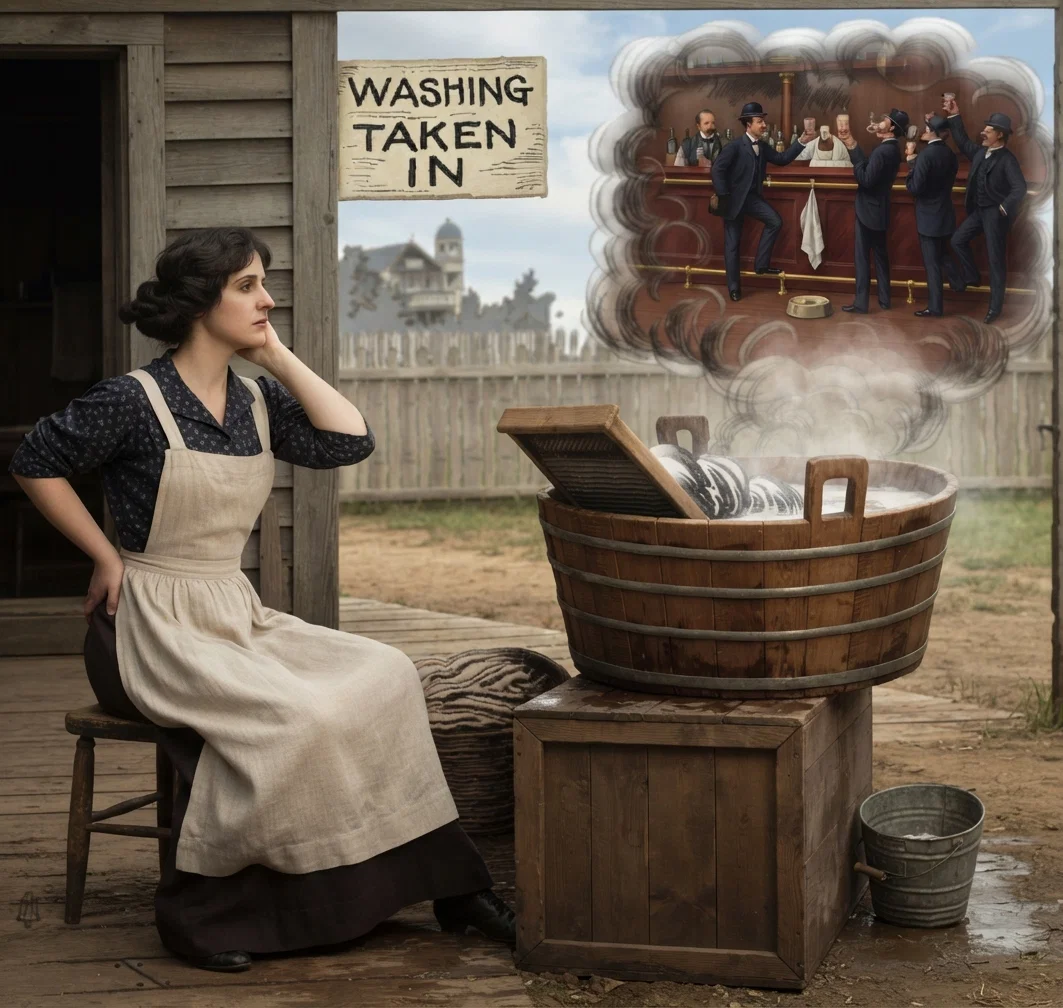
Washings Taken In
"Bar Washings" and Tub Drudgery
The "bar washes" take away manhood and force the wife to tub drudgery.
The Temperance Instructor
is working for the removal of the bar with all of its poisonous "washes," and solicits the help of every woman of the land in casting out her most dangerous enemy. The Temperance Instructor in the homes of the people means less forced tub drudgery, better men, and happier homes.
Furnished in lots of 50 copies 4 cents per copy
Easy Steps in the Bible Story
ENTERTAIN the young people, and you can more easily teach them. "Easy Steps" is a book of narratives of the Old and New Testaments. It is written in easy words for the young, yet in strong English that will command the attention of older readers. The author's style is easy and refreshing, and many spiritual lessons are drawn from the incidents related.
The book contains 616 pages, 69 full-page illustrations, 19 three-color plates, numerous marginal illustrations and small cuts, and is one of the best books of its kind ever written for CHILDREN.
INSTRUCT the young person regarding the demands of good form, and when older he will do and say the proper thing with grace and ease. Leave this important training until later in life, and he will never, or with great difficulty, become a good conversationalist, nor acquire a pleasing manner in society.
"Good Form" is complete in its scope and attractive in its style, and treats the subject in a thoroughly practical manner.
It contains about 300 pages, is richly bound in cloth, and will be prized by lovers of society, business men, ministers, and YOUTH.
Price, Cloth, - - 75 Cents
REVIEW AND HERALD PUBLISHING ASSOCIATION, Washington, D. C.
Order of your tract society
Olsen Visits Washington
Elder O. A. Olsen, secretary of the North American Foreign Department, stopped in Washington for a day last week on his way from New York to Chicago.