The Youth’s Instructor, Vol. 66, No. 14.

Current News Briefs from Around the World
Earlier text: Gems in Their Natural Shapes

What a Resourceful Texas Boy Did

THE old adage, “Where there’s a will there’s a way,” has recently been well illustrated by an enterprising Texas boy, according to press reports. Quoting the American Magazine, the New York Times relates the following interesting and successful experiment:

“Cows at College”

“There are ways and ways of making one’s own expenses through college. It remained, however, for a resourceful Texas boy to hit upon a method of expense making entirely new in records of the Agricultural and Mechanical College of Texas, where he is enrolled as a student.
“P. S. Goen, of Harvey, a rural community near College Station, the home of the college, ‘showed up’ at that school last fall with the typical baggage and equipment of a young collegian and, in addition, two good-grade Jersey cows.
“‘We had an extra supply of cows and a shortage of currency at home,’ Goen explained to President Bizzell. ‘I want a college education, and I am not going to let the lack of money defeat me. I have decided that I can sell enough milk to the residents of the campus to enable me to meet at least my incidental expenses. All I ask is the use of a barn and a small pasture.’
“Through the influence of the president, Goen was given the use of a barn and small pasture, and thus entered upon the dairy business. From the beginning he experienced no trouble in disposing of the product of the two cows at the satisfactory figure of nine cents a quart for whole milk. The two cows brought him an average return of $54 a month. Feed cost approximately $7 per head a month, leaving the enterprising young Texan a profit of $40 a month. Expenses at the college were very low, and with this income Goen finished the year with a little change in his pockets.”
This interesting personal story teaches the lesson that where there is a determined will to get an education there will, in the Lord’s providence, be a way open to secure it somewhere, somehow. With this thought in mind, study John 7:17 and 2 Cor. 8:12, with Phil. 4:19.
No doubt more of our young people could today be in school if they were as determined to get an education as the Texas boy. Do it, my young friends, do it! God will help you. ARTHUR L. MANOUS.

Comfort in Passing Troubles: A Verse from Herrick

AND this for comfort thou must know, Times that are ill won't still be so; Clouds will not ever pour down rain; A sullen day will clear again. — Herrick.

Attention, Missionary Volunteers!

ARE you saving your copies of the YOUTH'S INSTRUCTOR and the Review? Keeping them on file, I mean, where you can refer to them when needed? Or are you like the little boy who went to school to “Jane Jones,” and always lacked the one particular thing that spelled success? If you haven't a file, make one; and if you can't get any kind of “back” for your file, just use a shoe string. That will hold the papers together,—and their neatness depends on who ties the strings. I have in mind a pile of files that are models of neatness, and all the equipment for the lot was a foot rule, a punch (an awl would do very well), and some shoe laces. Plus. And plus in this case meant an orderly eye and a faithful hand.
The reason for saving them? Almost every copy of these papers has in it something that will be useful in a Missionary Volunteer program by and by. For instance, our program for the week ending April 13 is called “Mission Pictures from China.” And here in the INSTRUCTOR of February 5 is a very “picture-y” article from Mrs. Davenport, of Honan. It is just exactly what is needed to give a personal touch to your meeting. But it is not mentioned in your prepared program, because—so often the leader and other officers have not kept the INSTRUCTOR on file, and so do not have it to refer to.
Watch the program announcements in the Gazette (they are given for three months in advance, four times a year), and then be on the lookout for helpful material to weave into the programs.
And conserve—by saving the splendid articles on our own mission work that are all the time appearing in our papers. A. B. E.
Have you a set of Missionary Volunteer Outline Mission Maps? 75 cents for a set of seven. Order of Review and Herald Pub. Assn., Takoma Park, D. C. You will need them constantly during 1918, for a mission study has been arranged for every month.

Which Way Was the Better?

HORACE listened in Sabbath school to a lesson on the terrible needs of the heathen. He said, “If I had a thousand dollars, I would give it all.” But he had not a thousand dollars, and it would be years before he would have, if ever. But he did have at that very minute ten pennies in his pocket, and he did not give one penny of them.
He thought: “Well, next Sabbath I shall have a lot to give.” He liked to feel the coins in his pocket, and kept jingling them from time to time until the teacher said he had better put them into the offering basket; then for fear he would have to do that, he kept his hands out of his pocket.
On Monday he started for school, with all the ten pennies in his pocket. Sometimes his mother wished him to ride in the trolley car. But this morning he need not; he was well, and it was a beautiful day. But though mother warned him of the time, Horace dawdled until it was so late that mother said: “You cannot get to school in time unless you ride; you will have to go on the car.” So into the conductor’s hand went the first five pennies. Horace thought: “Oh, dear, I did mean to take those to Sabbath school next week. Well, I can’t help it.”
Then he remembered he needed a new lead pencil. He paid only one cent for the pencil; but pulling out his handkerchief in haste, one penny rolled out, and slipped down a crack in the sidewalk. He could not get his finger into the crack, and he poked his new lead pencil in, and broke it off so short that he went back to the little store and bought another.
Now, how many pennies had Horace left?—Only two. “I shall certainly have two for Sabbath school, anyway,” thought Horace, for he had not yet forgotten. But when lunch time came, he felt hungry. His mother would have given him some good sandwiches, but he said he did not want just plain sandwiches. Then she said he must pay for what he got.
He bought a ginger cake and a stick of candy. His head would have felt clearer for the arithmetic examination he dreaded so, if he had eaten the sandwiches instead. He paid one cent for the cake and one for the candy. How many pennies were left now?—Not one! And this was only Monday, and he would have needs all the rest of the week.
In Sabbath school the next week Horace felt like an injured boy because his father said, “I cannot give you more on last week’s account. You must learn how to manage better.” So Horace had no money for the offering that day. What do you boys and girls think of Horace?
Now, see if you like Elizabeth’s way better. She had fifty cents. That is a great deal, but it was to last her for a month. She asked her mother to give her some strips of cretonne left from a shoe bag her mother had made. She took a long narrow strip, and on this she laid another strip, and sewed them together at the sides and bottom. Then she sewed straight lines down the goods, making several little pockets.
She thought of the many things she ought to do with that money. First of all she put five pennies in a pocket labeled tithe. Then she wanted to put some in the offering at church, so she counted out five more, and dropped them into one little pocket on which she basted a slip of paper labeled church money. The next pocket was labeled missionary; into this she put fifteen cents; for she said to herself, “The poor heathen do not have the Bible and teachers as I have.”
Five more went into a pocket for birthday gifts. Now, how much had she left?—Twenty cents! Half of this went into the pocket labeled school. “My, but I shall have to be careful not to waste paper, nor to lose my pencil,” she thought, for she had only ten cents left for other needs.
Now, how do you like Elizabeth’s way? Shall we make this rule for ourselves? To lay by regularly money for the Lord’s work?—Adapted.

Myself

I HAVE to live with myself, and so I want to be fit for myself to know. I want to be able, as days go by, Always to look myself straight in the eye. I don't want to stand by the setting sun And hate myself for the things I've done. I don't want to keep on the closet shelf A lot of secrets about myself, And fool myself, as I come and go, Into thinking that nobody else will know The kind of boy I really am,— I don't want to dress up myself in sham.
I want to go out with my head erect; I want to deserve every one's respect. And here in the struggle for fame and pelf, I want to be able to like myself, I never can hide myself from me; I see what others may never see; I know what others may never know,— I never can fool myself,— and so Whatever happens, I want to be Self-respecting and conscience-free.
—Selected.

What He Was

THERE is a boy of seven—Dick his name is—who has belonged to the Junior society for four years. He and his ten-year-old brother Warren are just beginning their fourth year of perfect attendance at the meetings—that is, without an unexcused absence. These two boys are always together, and to speak of one is to speak of the other in the same breath. Last year they were both on the same committee, but this year Warren was elected assistant leader. When their father heard of it, he jokingly asked, “If Warren is assistant leader, what are you, Dick?” Drawing himself up proudly, small Dick answered promptly, “Why, I’m one of the boys who make that society go.” That is what every Junior should try to be, a member that helps to make a Junior meeting a real success. Are you that kind of member?

II — Jacob and Esau

  • (April 13) *
LESSON SCRIPTURE: Gen. 25: 27-34; 27: 1-40.
MEMORY VERSE: “The life is more than meat, and the body is more than raiment.” Luke 12: 23.
STUDY HELPS: “Patriarchs and Prophets,” pp. 177-182; “Bible Lessons,” McKibbin, Book One, pp. 94-97.
“Too often, dear Saviour, have I Preferred some poor trifle to thee; How is it thou dost not deny The blessing and birthright to me? No better than Esau I am, Though pardon and heaven be mine; To me belongs nothing but shame; The praise and the glory be thine.” —John Newton.

Questions

1. What were the names of Isaac’s sons? What is said of each son? By whom was each most beloved? Gen. 25: 27, 28. Note 1.
2. Being the elder, to what blessings was Esau heir? Note 2.
3. How did each son regard the birthright? Note 3.
4. Under what circumstances did Esau sell his birthright? Verses 29-34. Note 4.
5. When Isaac was old, what plans did he make to give Esau the birthright blessing? Gen. 27: 1-4. Note 5.
6. Who heard what Isaac said? What plan was devised that Jacob might have the blessing? Verses 5-10.
7. What difficulty did Jacob see in the plan? How did his mother persuade him to obey her? Verses 11-13.
8. How did they receive Isaac? Verses 14-17.
9. What occurred when Jacob took the savory meat and bread to his father? Verses 18-25.
10. What blessings did Isaac pronounce upon him? Verses 26-29.
11. As soon as Jacob had received his blessing, who came in? What did Esau say? Verses 30, 31.
12. What did Isaac ask? What effect did the reply have upon him? Verses 32, 33.
13. When Esau heard the words of his father, what did he do? What did he ask? Verse 34. Note 6.
14. What did Isaac say Jacob had done? How did Esau then speak against Jacob? Verses 35, 36.
15. How did Isaac confirm the blessing he had given Jacob? Verses 37-40.

Can You Tell

What was Rebekah’s sin in this transaction?
What was Jacob’s sin?
What was Esau’s sin?
What blame, if any, is attached to Isaac?
In how many ways was a lie told in this lesson?

Notes

1. Twins are usually strikingly alike in thought and disposition, as they are commonly alike in physical characteristics and appearance. But Jacob and Esau were opposites in character and appearance. “Esau grew up loving self-gratification, and centering all his interest in the present. Impatient of restraint, he delighted in the wild freedom of the chase, and early chose the life of a hunter. . . . Jacob, thoughtful, diligent, and care-taking, ever thinking more of the future than the present, was content to dwell at home, occupied in the care of the flocks and the tillage of the soil.”—“Patriarchs and Prophets,” p. 177.
2. “The promises made to Abraham, and confirmed to his son, were held by Isaac and Rebekah as the great object of their desires and hopes. With these promises Esau and Jacob were familiar. They were taught to regard the birthright as a matter of great importance, for it included not only an inheritance of worldly wealth, but spiritual pre-eminence. He who received it was to be the priest of his family; and in the line of his posterity the Redeemer of the world would come. On the other hand, there were obligations resting upon the possessor of the birthright. He who should inherit its blessings must devote his life to the service of God. Like Abraham, he must be obedient to the divine requirements. In marriage, in his family relations, in public life, he must consult the will of God.”—Id., pp. 177, 178.
3. “The birthright belonged to Esau, but he did not prize the spiritual blessings that were given with it. He loved power and riches, but he did not care for a religious life. Jacob earnestly longed for the spiritual blessings of the birthright. He wished to commune with God as did Abraham, to offer sacrifice for his family, and to be the one in whose family Christ should come. He thought about it day and night, and tried to think of some way by which he could get the birthright away from Esau.”—“Bible Lessons,” McKibbin, Book One, p. 95.
4. “Thus Esau despised his birthright! In disposing of it he felt a sense of relief. Now his way was unobstructed; he could do as he liked. For this wild pleasure, miscalled freedom, how many are still selling their birthright to an inheritance pure and undefiled, eternal in the heavens!”—“Patriarchs and Prophets,” p. 179.
5. “Esau had violated one of the conditions of the covenant, which forbade intermarriage between the chosen people and the heathen; yet Isaac was still unshaken in his determination to bestow upon him the birthright. The reasoning of Rebekah, Jacob’s strong desire for the blessing, and Esau’s indifference to its obligations, had no effect to change the father’s purpose. Years passed on, until Isaac, old and blind, and expecting soon to die, determined no longer to delay the bestowal of the blessing upon his elder son. But knowing the opposition of Rebekah and Jacob, he decided to perform the solemn ceremony in secret. In accordance with the custom of making a feast upon such occasions, the patriarch bade Esau, ‘Go out to the field, and take me some venison; and make me savory meat . . . that my soul may bless thee before I die.’”—Ibid.
6. “Esau had lightly valued the blessing while it seemed within his reach, but he desired to possess it now that it was gone from him forever. All the strength of his impulsive, passionate nature was aroused, and his grief and rage were terrible. . . . Esau was not shut out from the privilege of seeking God’s favor by repentance; but he could find no means of recovering the birthright. His grief did not spring from conviction of sin; he did not desire to be reconciled to God. He sorrowed because of the results of his sin, but not for the sin itself.”—Id., p. 181.

Five Little Brothers

FIVE little brothers set out together To journey the livelong day; In a curious carriage all made of leather They hurried away, away! One big brother and three quite small, And one wee fellow, no size at all.
The carriage was dark and none too roomy, And they could not move about; The five little brothers grew very gloomy And the wee one began to pout, Till the biggest one whispered, “What do you say? Let’s leave the carriage and run away!”
So out they scampered, the five together, And off and away they sped— When somebody found the carriage of leather, Oh, my, how she shook her head! ’Twas her little boy’s shoe, as every one knows, And the five little brothers were five little toes.
— Unidentified.

Lawlessness and Anarchy

THE apostle Paul in writing to Timothy, said that the world would wax worse and worse as it neared the end of time.
There is little doubt but this condition exists today; for almost every paper gives startling statements concerning existing lawlessness and anarchy. Russia is bound hand and foot by anarchy’s strong cords; Finland is writhing under the bloody lash of the Red Guards. An Associated Press dispatch from London says:
“Lawlessness is spreading alarmingly in the west and south of Ireland. In parts of Clare cattle drivers, in fear of cattle thieves, have called for small bodies of troops. The telegraph wires have been cut and trees are thrown across the roads daily to hinder the movements of troops and police. Farms are being seized in the name of the Irish republic.”

Special Cable from the London “Times”

“Raids for arms have not ceased and the atmosphere and life throughout the south and west of Ireland is one of insecurity and alarm. Many well-to-do families have taken refuge in Dublin, but the small farmers and shopkeepers cannot follow this example. A sinister feature of the situation is the apparent powerlessness of the Roman Catholic clergy to control their flocks. Last week Sinn Feiners in the county Mayo, demanded a public apology from a priest who denounced lawlessness. Many Roman Catholic bishops are known to be profoundly concerned at the state of affairs, but the church as a whole has not spoken. The impression that its counsels are divided is producing unfortunate consequences.”
One manifestation of lawlessness was made in an attack upon “a group of American sailors in County Cork, Ireland. They were attacked and stoned by Sinn Feiners. The sailors paid no attention to the jeers with which the Sinn Feiners greeted them, but when stones began to fly, the Yankees charged their assailants. Advices from Dublin and other Irish cities indicate that the Sinn Feiners are getting bolder and that the cases of lawlessness are increasing.”
The treatment recently accorded Mr. Bryan when he attempted to fulfil an engagement to speak in Toronto, Canada, is another illustration of the general mob spirit taking possession of the world. Mr. Bryan was greeted by hoots and jeers, a chorus of catcalls, songs, and impertinent questions, when he was introduced to the audience. Returned soldiers are held to be chiefly responsible for this embarrassing conduct.

Juvenile Crime Increasing

Wolf von Schierbrand says that in Vienna “the number of crimes committed by boys and girls under eighteen in the year 1915-16 was 340 per cent greater than in the year 1913-14. And apparently the record is continually growing worse.”
In every warring country there has been marked increase in juvenile crime. Here in our own country word comes from Detroit that “State troops were recently accepted by the police commissioner to crush the wave of banditry that has been sweeping over the city for several weeks past. The constabulary forces which guarded elevators, docks, railroad yards and other places also patrolled various sections of the city at night.”
Our INSTRUCTOR boys and girls must be on guard lest they be caught in the maelstrom of lawlessness, crime, and anarchy that is about to swallow up the world. The enemy is thus seeking to destroy souls; but God is seeking to seal his people unto himself. Let us allow him to bind us to him by the strong cords of love that nothing can break but our own carelessness and indifference. Let us be obedient, courteous, and reverent; for only in this way can we hope to escape the evils of the last days.

The Older Man's Prayer

LIKE one whose limbs are bound in trance I hear the day sounds swell and grow, And see across the twilight glance, Troop after troop, in swift advance, The shining ones with plumes of snow!
I know the errand of their feet, I know what mighty work is theirs; I can but lift up hands unmeet The threshing floors of God to beat, And speed them with unworthy prayers.
O power to do! O baffled will! O prayer and action! ye are one. Who may not strive may yet fulfil The harder task of standing still, And good but wished with God is done! — John G. Whittier.

A Call for the Temperance Instructor

A SECRETARY of one of our largest tract societies writes:
“We have been holding up our work in the temperance line until we could get a little ammunition to work with. We have been straining our eyes for the last three weeks, watching for sample copies of the new TEMPERANCE INSTRUCTOR, and have even been dreaming how we were going to work to give this a good circulation and help to make a dry State of New York. But still we fail to get the sample copy. For weeks the people have been asking for the paper.”
We are glad the INSTRUCTOR is being anxiously awaited. We hope every State is stretching out its arms for this paper, as is New York, eager to send it forth on its mission of education and vote making.
The servant of the Lord has told us that there should be “no compromise, and no cessation of our efforts till victory is gained.” While victory apparently hovers over the nation, we shall not be sure that it has come to abide with us until the American Congress speaks the word of welcome.

The 1918 Temperance Annual Is Ready

With this efficient weapon at our command, we can all have a part in the nation-wide ratification campaign. Let us bestir ourselves as never before, and scatter the TEMPERANCE INSTRUCTOR throughout the land. Now is our opportunity. Let us prove true to our trust.
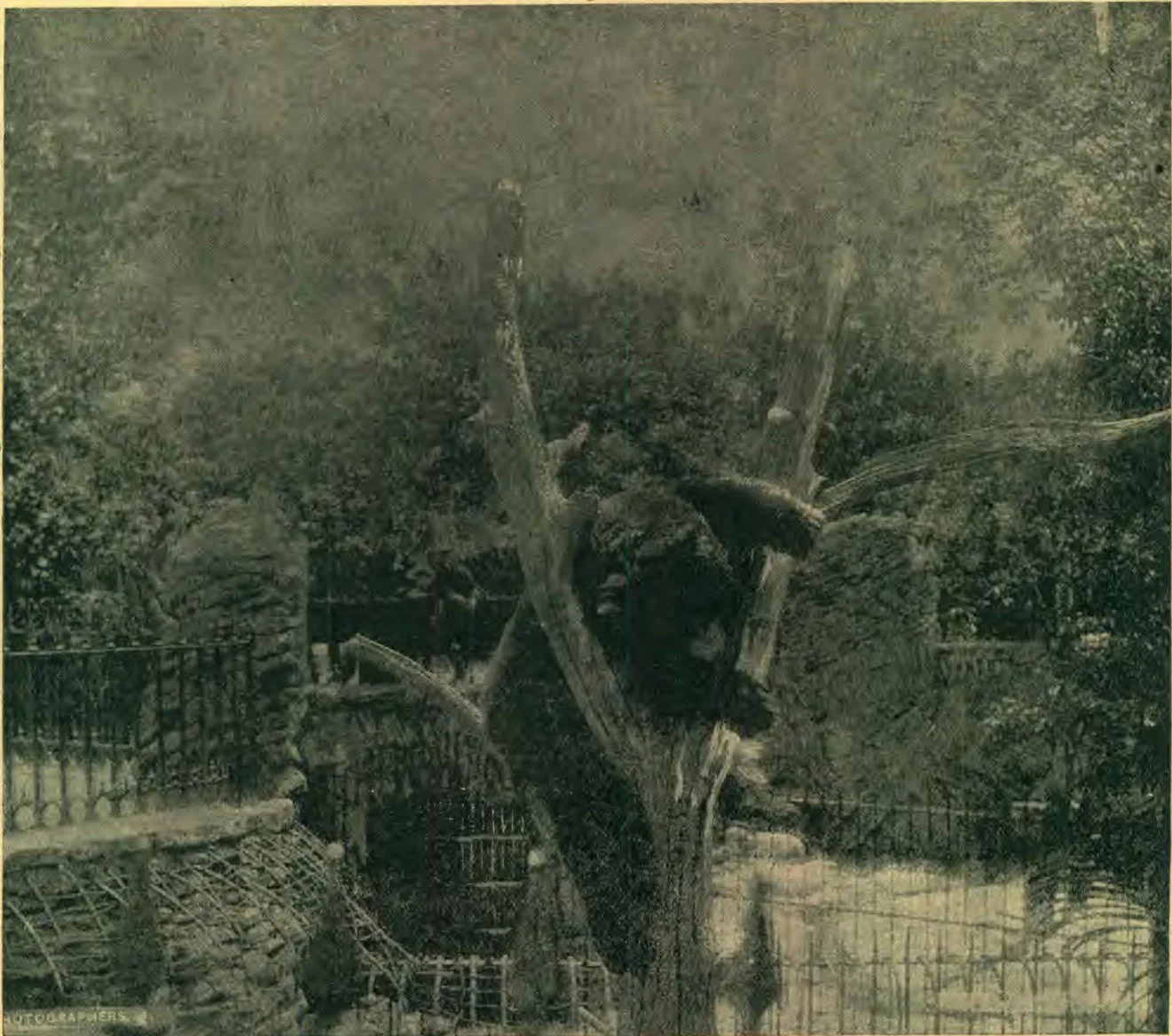
BEAR PIT, LINCOLN PARK, CHICAGO

You have reached the end of this edition.

The Youth’s Instructor · Apr 2, 1918