The Youth’s Instructor, Vol. 64, No. 3.

Belgian Relief Funds and Continued Need
Earlier text: The Christian Sabbath Guardians

A Father’s Christmas Gift

My commuting companion yesterday morning was a rich man—his name good for more thousands than some of us have tens. So, when he asked me if I’d care to see what he was going to give his ten-year-old boy for Christmas, and took out his gold-rimmed cardcase, naturally my first guess was a check.
“My, but I’d like to be able to start my boy off with a fat savings account!” I thought to myself.
So you may imagine my surprise when I read on the slip of paper these words:—
For one year from date, I promise to give my son, —, one hour of my time every day, with two hours on Sunday. And I promise that this time shall be solely his, without interference for business or pleasure of any other sort, and that I shall regard it as a prior engagement each day.
The father’s name was signed at the bottom. And I wonder what that boy will think and say on Christmas morning when he reads this paper.
If he is an average boy, probably he will not know what to make of it. As an average boy with an average father, his first thought may be to question the value of such a gift.
For we American fathers, as a rule, give our boys and girls so little of our time, and then mostly fag-ends, that none could blame them for doubting the worth of an agreement of this sort.
Yet, before many days have passed, this particular boy will have learned that his father could have given nothing quite so fine.
For this man is the most charming of companions. His range of knowledge is wide. He has the faculty of entering into things enthusiastically—that is one reason for his success in business. And he understands human nature.
His Christmas present is so worth while that I want to pass along what he said about it.
“Would you like to know what made me think of it?” he asked.
“Well, the other day a young fellow came to me for a job. I had known his father years ago, and they were a fine family. Now this son is down and out. He looked as if he’d been drinking, and evidently he had no funds.
“When I asked how he had come to such a pass, and with such a father,” I added, he half broke down.
“‘My father must have been a fine man,’ he said, ‘but, unfortunately for me, I only knew it through others. He always was too busy to pay much attention to me. As a matter of fact, I never knew him as a companion, a friend, or anything but a man who paid the bills.’”
“As I sat listening to that poor chap, I suddenly realized that he was painting my picture, too. I’ve been ‘too busy’ many a time to take an interest in the things brought to me by my boy. I never have been a companion to him. We’re not friends now. Think of that!
“Think of a man neglecting the most important business in which he can engage,—the proper raising of a child or children to help strengthen humanity and carry on the world’s work. It came over me like a flash, and I know I must have reddened with shame. And I gave the fellow a job, and told him he’d given me the best job I’d ever had. He didn’t say anything, but I think he understood.
“So, you see, I’m going to put it as a gift, though it’s the highest sort of duty. And really I ought to make it more than an hour a day, considering the years I’ve been neglecting this biggest of opportunities.
“Do you know, I feel like hiring a hall and inviting as many fathers as could crowd in, and begging them to join hands with me in this sort of thing. Here I’ve been all these years, rushing and working and worrying at a work any ordinarily intelligent and industrious man could do, and paying the least possible attention to a work no other man in the world can do but myself—being my boy’s father.
“Now, I’m going to try to make up to him—and to myself—what we’ve lost. Already I’ve arranged matters at the office so as to get away an hour earlier in the afternoon. It may decrease the profits a little, but even if it should cut them in half, I’d rather leave my boy the remembrance of a father who was his comrade, than a whole mint of money.
“Anyway, the more you have to do with money, the more you understand how powerless it is to take the place of things that can’t be seen or held or stored away,—except in the mind or the heart.”
Neither of us said anything for a minute or so. Then he asked me if I agreed with his idea.
“Do I agree with it! Why, if every father in this land should give his children the same sort of Christmas gift, and live up to it, this would be the best Christmas that ever came along.”
And nearly every father could. Some do already, thank God.—Leigh Mitchell Hodges, in Philadelphia North American.

Missionary Volunteer Society Programs for Week Ending January 29

In accordance with our usual custom, this, the fifth Sabbath program, is left to be arranged by the local leaders for both Seniors and Juniors. It is recommended that a study on current missions, gathered from late issues of the Review and other papers be given.

Missionary Volunteer Reading Courses

Senior No. 9 — Lesson 16: “History of William Miller,” Pages 115-212

NOTE.—If possible, read this week what “The Great Second Advent Movement” says about the growth of the advent message in all countries. See pages 126-147.
1. When did William Miller begin his public work? How was the Lord’s call made clear to him? What were his views on Universalism? How did he express his regard for the Word of God?
2. Where did Mr. Miller obtain his license to preach? What reason have we to believe that he was a strong personal worker?
3. How great was the demand for his lectures? How were his expenses met? What testimony did the Boston Investigator bear to his work? The Lynn Record? The Signs of the Times?
4. How was Joshua V. Himes led to join Mr. Miller in his work? Why are the names of Josiah Litch and Charles Fitch, mentioned in this week’s assignment, of special interest? See “The Great Second Advent Movement,” pages 129, 124.
5. How and when was the Signs of the Times first published? Where and when was the first General Conference of Adventist believers held?
6. How does Mr. Miller’s answer to “Anonymous” show his thorough acquaintance with the Bible? How did his lectures affect Lawyer Northop?
7. How many copies of the printed report of the first prophetic conference in America were circulated?
8. Describe the first camp meeting of Adventist believers. When and where was it held? What did the poet Whittier say of this meeting?
9. What helpful lesson may we learn from the letter written by Mr. Miller to the believers, Jan. 1, 1843?
10. Show that Mr. Miller was held in high esteem by many who did not indorse his view of the prophecies. In what large cities did he lecture? How many series of lectures did he give in Boston?
11. Mention ten important subjects upon which Mr. Miller met much controversy.

Junior No. 8 — Lesson 16: “Friends and Foes in Field and Forest,” Pages 135-168

1. In what six ways do spiders differ from most insects? What are the five principal spider families?
2. How does the spider spin its web? Why cannot flies walk on it easily? Read carefully the spider’s oration on page 140.
3. Where does the spider live that catches birds in its web? Who does the work in this spider family? What other interesting things have you learned about this spider?
4. What do you know about the balloons and parachutes some spiders make?
5. For what purpose do some astronomers use spiders’ webs? What do you know about the Madagascar spider? About the silk it spins?
6. What spider wears shoes? What spider makes a raft? How does the water-spider breathe? What does she do with her eggs? How do spiders care for their children?
7. How do spiders build bridges? How did spiders once help to liberate a prisoner?
8. Where does a spider live that is as large as a pigeon’s egg? What is it sometimes called? Describe its home. How does it care for its eggs? How do some spiders make towers and tents?
9. What have you learned about tramp spiders? About spiders that imitate ants? About daddy-long-legs? About the spider and the tuning fork?
10. What is a scorpion? Why is its sting dangerous? Where does it live? What does it eat?
11. How do beetles and bugs differ? To what family do beetles belong? How many kinds are there? Tell what you have learned about the beetle’s wing cases, legs, food, and eyes. How does it breathe?
12. What is the potato beetle? How did it reach the Atlantic coast?
13. What is the ladybirds’ true name? Describe their dress. What color are the larvae? How do they change into perfect beetles? Why are they desirable in the garden? What becomes of them in winter?
14. Tell four things about the tiger-beetle. How does the beetle with a gun protect itself?
15. What beetle is called the farmer’s policeman? Why? What beetle has a spring in its body? Why do we destroy wireworms?

The Oldest Storybook

(Continued)
17. THE story of the first tent meeting, and how the tent was made. Exodus 26 and 33.
18. The story of ten cowards and two brave men. Numbers 13 and 14.
19. The story of the death of the man whom God buried. Deuteronomy 34.
20. The story of how a multitude crossed a sea (Exodus 14) and a river (Joshua 3) without boats, and did not get wet.
21. The story of a strange siege and a strange capture. Joshua 6.
22. The story of how an army of thirty-two thousand men was cut down to three hundred; and how these three hundred, with no weapon but pitchers and lamps and trumpets, defeated a vast army. Judges 7.
23. The story of the boy who heard God calling him. 1 Samuel 3.— Rev. Claude Allen McKay.
(To be concluded)

Have You Finished “The Sabbath in History”

FROM several sources has come the complaint that “The Sabbath in History” (Part II of “The History of the Sabbath”) is a very difficult book for the young people to read. We realized, when choosing the book, that it would test the staying qualities of many of our young people, and might be a real source of discouragement to some. But the great importance of knowing the facts about the Sabbath and Sunday (so essential to one who endeavors to tell the truth to others) led us to choose this book anyway.
During Mrs. E. G. White’s sickness she was much exercised over the needs of our young people. One morning she began to talk to her nurse about selecting books for them that would make their minds strong. Her son, W. C. White, was called, and he wrote down, as fully as possible, what she said. Here are a few words:—
“There are books that are not looked at by our young people, that are of vital importance. They are neglected because they are not so interesting to them as some lighter reading. We should advise the young to take hold of such reading matter as recommends itself for the upbuilding of Christian character.”
I wonder if “The Sabbath in History” would not come under the list of books “of vital importance”? Look over the review questions on this book in the INSTRUCTOR of January 4. Do you not think these questions important?
What shall be our attitude toward hard things? When a boy, I lived on a farm in northwest Missouri. It was a rolling prairie country, and the plowing was very easy,—no stumps, no stones. There was a milkweed, though, that had a rather tough taproot, which would give the plow a little jerk when it cut through. Well do I remember a young horse with which I plowed. He was not overenergetic, being perfectly safe for a boy to drive. That colt, whenever the plow would strike one of those milkweeds, instead of leaning just a little heavier against the collar, as the old horse did, would fly back and look around with such a distressed and lazy look! Oh, that awful milkweed!
It is really the hard things that we do that develop strength and sinew. Unused muscles become flabby, and I have been told that a continuous use of mushy foods results in decay of the teeth. The mind which is never taxed to master hard things becomes flabby and loses its power of growth. After all, our progress does not depend so much on the obstacles we run against as it does on what runs against the obstacles.
Some one has truly said, “The tendency to persevere, to persist in spite of hindrances, discouragements, and impossibilities,—it is this that distinguishes the strong from the weak.”
While I would not censure any young person who finds “The Sabbath in History” difficult, I would encourage every one to stick to it, and read every chapter, for the sake of the valuable information in it, and for the sake of the development of that necessary quality of perseverance. M. E. KERN.

V — Hypocrisy and Its Remedy

(January 29)
LESSON SCRIPTURE: Matt. 23 : 13-26.
MEMORY VERSE: “This people draweth nigh unto me with their mouth, and honoreth me with their lips; but their heart is far from me.” Matt. 15 : 8.

Questions

1. After warning the multitudes, to whom does Jesus again turn? What does he call them? What had they done? Matt. 23 : 13. Note .
2. How did Jesus again address the scribes and the Pharisees? What was the reason for this? Verse 14, first part.
3. How did they try to cover up this wicked practice? Verse 14, next sentence. Note .
4. Although they might deceive men, whom could they not deceive? How would their punishment compare with the punishment of those who did not pretend to be good at all? Verse 14, last part.
5. For what did Jesus pronounce a third woe, or curse, upon the Pharisees? Verse 15. Note .
6. What did Jesus next call the scribes and Pharisees? Verse 16, first part.
7. How did they show their blindness? Verse 16, last part.
8. By what question did Jesus reveal their blind reasoning? Verse 17.
9. What other example of their blindness does Jesus give? Verse 18.
10. By what question does he expose their foolishness in this case? Verse 19.
11. What did he say of him who shall swear by the altar? By the temple? By heaven? Verses 20-22.
12. For what did Jesus pronounce a fifth curse upon the Pharisees? Verse 23, first part.
13. What was the right course for them to follow? In what, then, did they do wrong? Verse 23, last part. Note .
14. By carefully keeping the outward forms of service, and omitting the real inward power, of what foolishness had they been guilty? Verse 24.
15. For what did Christ pronounce a sixth curse upon them? Verse 25.
16. Which should come first, the cleansing of the outside, or of the inside? Why? Verse 26. Note .

V — Hypocrisy and Its Remedy

(January 29)
LESSON SCRIPTURE: Matt. 23:13-26.

Questions

1. How did Jesus address the scribes and the Pharisees directly? Matt. 23:13, first part.
2. What did he charge them with doing? What did they not do? Verse 13, last part.
3. How did he address them again? Verse 14, first part.
4. What reasons does he give for calling them hypocrites? What is the consequence of such a course? Verse 14, last part.
5. How did Jesus denounce them a third time? Verse 15, first part. Note 1.
6. What was the basis for the uttering of this third woe? Verse 15, last part. Note 2.
7. What does Jesus next call the scribes and the Pharisees? Verse 16, first part.
8. How did they show their blindness? Verse 16, last part.
9. By what question did Jesus make their blindness appear foolish? Verse 17.
10. What other example of their blindness did Jesus give? Verse 18. Note 3.
11. By what question did he expose their foolishness in this case? Verse 19.
12. What conclusion did he draw about the altar? Verse 20.
13. What is his conclusion about the temple? Verse 21.
14. How did he apply the same principle to heaven? Verse 22.
15. What ground did Jesus give for repeating the woe again? Verse 23, first part. Note 4.
16. What was the right course to follow? Verse 23, last part.
17. In what striking language did Jesus characterize such a course? Verse 24. Note 5.
18. What is the basis for another repetition of the woe? Verse 25.
19. How can so blind a course be corrected? Verse 26.

Notes

1. Repetition is one of the strongest ways of emphasizing. It is a way that is much used in the Scriptures. It is an idiom in the Hebrew of the Old Testament; as, “Blessing I will bless thee.” It is employed in the Greek of the New Testament, as, “Rejoice in the Lord alway; and again I say, Rejoice;” “Babylon is fallen, is fallen;” “Woe, woe, woe to the inhabitants of the earth.” In the twenty-third chapter of Matthew the woe pronounced upon the scribes and the Pharisees is repeated seven times in the same words, and uttered once with a little variation, making eight times in all. We must conclude that the sins enumerated under these woes are particularly offensive. They should be carefully studied, lest the principle of some of them be found in our own lives.
2. Jesus does not condemn the zeal of the scribes and the Pharisees in making proselytes, that is, worshipers, or converts. Paul was a Pharisee of the most zealous type. When converted, his zeal never flagged, carrying him to all parts of the known world, through much peril and suffering, to win souls to Christ. Jesus himself traveled to and fro from Bethany to Sidon, and from beyond Jordan to the coast, seeking and saving the lost. It was the hypocritical example and influence of the Pharisees over converts that Jesus condemned.
3. The avarice of the Pharisees is made plain in this two-fold denunciation. The gold of the temple and the gift on the altar had commercial value. Taking advantage of religious scruples for gain is one of the most wicked methods of the hypocrites. Jesus encountered it on the occasion when he drove the money changers and the stock dealers from the temple.
4. Jesus does not here denounce scrupulous painstaking to tithe the smallest income, as is shown by the next expression. We cannot be too particular to render to God every whit that belongs to him as the special portion of our income that he has asked. Our failure is, rather, to grow careless in this matter. But along with this, Jesus would have us heedful of things of greater moment as affecting the building of character—the exercising of the Christlike qualities of impartial judgment, of plenteous mercy, and of faith that works by love.
5. The Revised Version states it thus: “Ye blind guides, that strain out the gnat, and swallow the camel.”

A Distinctive Plant

TAKE a characteristic of the palm tree. Wherever the palm tree may grow, its fruit will not and cannot be made to mix with the fruit of any other tree. It is very different in this respect from most trees. It is impossible to graft a palm tree. It seems to be a distinctive plant, like no other tree in that it will not mix. David said, “The righteous shall flourish like the palm tree.” The righteous man shall be able to live in an environment and not become contaminated by it. I pity the man who has no more religion than to blend with the crowd in which he moves.
But take another characteristic of the palm tree. Wherever the palm tree is found, it is the sign of comfort and life. In the East, wherever one sees a palm tree while traveling through the desert, one knows at once that there is water with which to quench thirst. “The righteous,” says David, “shall flourish like the palm tree.” He shall be a sign of blessing, comfort, and life to a thirsty, starving, dying world. In order to impress this world with the religion of Christ we must show people that when we have it in our hearts, it expresses itself in our lives, and makes us care for their sufferings.
The older the palm tree gets, the sweeter its fruit becomes. It is said that the most celebrated palm known is two thousand years old, whose fruit, while not so plentiful, is so precious that a huge wall has been built around the tree, and it is always carefully guarded. The fruit from the tree is kept for the royal family, and no one else eats it. David said, “The righteous shall flourish like the palm tree.”
I like young people. I pray that I may never get so old that I shall not enjoy the pleasures and sympathize with the sorrows of the young. But sometimes I almost envy the opportunities of the old and infirm. They do not always seize them, but they have them. Their opportunities for sweet and loving Christian service for the young are not to be found elsewhere. Think of the influence for good that comes from the life of the old soldier of the cross! Thank God, the longer we live, the older we grow, the sweeter will be our fruit.—Dr. Len G. Broughton.

J-O-Y

An Acrostic

JESUS came into my life, Joy and comfort bringing; Just to tell what he has done, Joyfully I'm singing.
O the joy of pardon! O the bliss of peace! O the help in trusting! Oh, our faith increase!
You may think it very strange, You who still are sinning; Yet the joy of perfect faith Yields the joy of winning.
GEORGE E. HOLLISTER.

The Secret of Unity

I SUPPOSE there has not been in England in the last century a man more prominently useful to the realm than the late Earl Cairns, Lord Chancellor of England. He was a man greatly respected, and perhaps, during the latter part of his life, next in influence to the sovereign himself. The last time I was in England, I had the privilege of talking for quite a time with his widow, the Dowager Lady Cairns, in her beautiful home in Bournemouth. She told me this very striking incident in the life of her late husband.
She said that they were attending a state dinner in London, toward the latter part of his life, and one of the chief ministers of state took her in to dinner. In a lull in the conversation he turned to her and said: “Lady Cairns, can you tell me why it is that your husband has such an extraordinary power to help other people? We often have to face anxious and difficult questions and are sometimes at cross-purposes in our meetings for counsel in matters of state; but whenever your husband comes in, we feel that there is a great unifying influence and steadying power in the gathering, and we seem to come more easily to one purpose and one decision. What is the secret of his marvelous power and influence?” Lady Cairns turned to him and said: “Oh, it is ever so easy to tell you! It is because my husband has absolutely no confidence in his own judgment or in his own skill or ability; but as a habit of his life he never attends a meeting of the council of the realm without spending one full hour alone with God in prayer.”
The church of Jesus Christ would be miles ahead of where it is today if we were men and women like that great man through whom the power of God was working day by day.—Record of Christian Work.

Questions for the Finding-Out Club

Part I

GIVE a brief sketch of the life and work of the following persons:—
  1. Dr. Clara A. Swain.
  2. Samuel Chapman Armstrong.
  3. Joseph Hardy Neesima.
  4. Adoniram Judson.

Part II

  1. Describe a well-set dinner table.
  2. State difference between the visiting card of a woman and that of a man.
  3. In introductions, should the woman be introduced to the man or the man to the woman?

Black Diamond, the Aged Buffalo, Is Put to Death
BLACK DIAMOND, the aged buffalo whose portrait adorns the ten-dollar treasury notes and also the latest five-cent pieces put in circulation, was put to death on November 17 on account of old age. He was more than twenty years old, and was the largest buffalo in captivity.
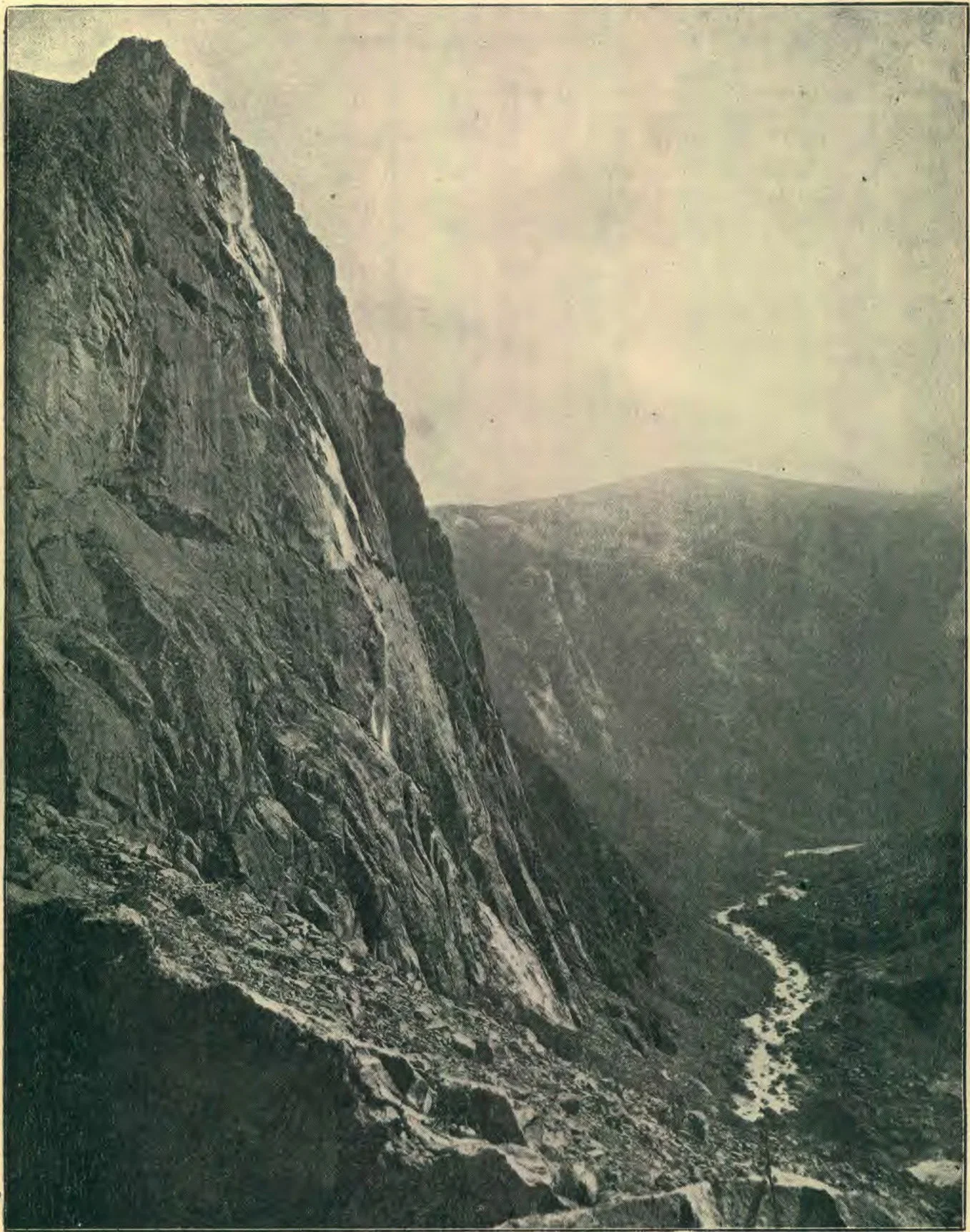
AND WATERY PATHS WIND BETWEEN.— Shelley
THE EARLY MORNING OFTEN FOUND JESUS IN SOME SECLUDED PLACE, MEDITATING, SEARCHING THE SCRIPTURES, OR IN PRAYER.

You have reached the end of this edition.

The Youth’s Instructor · Jan 18, 1916