The Youth’s Instructor, Vol. 34, No. 34.

INTERESTING PHENOMENA

The Youth’s Instructor

Aug 25, 1886

S. D. A. Publishing Association · Battle Creek, Mich. · Aug 25, 1886

INTERESTING PHENOMENA.
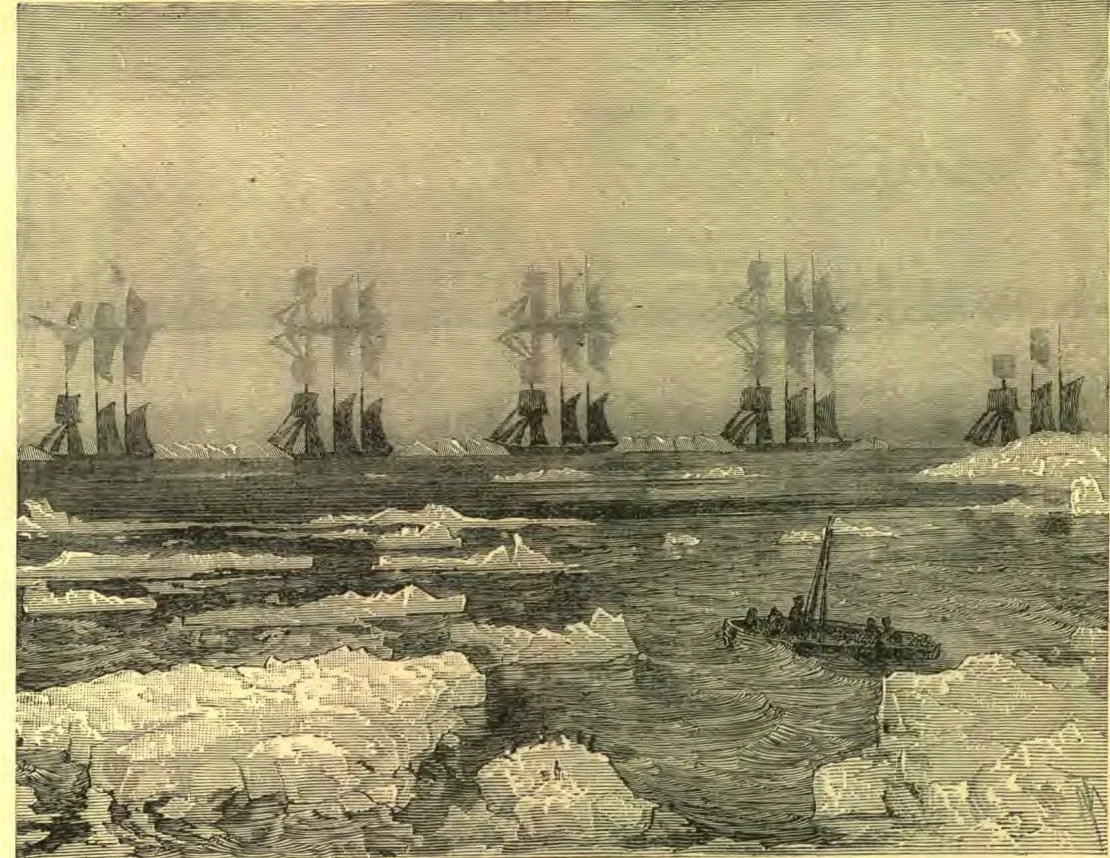
Most of our readers have no doubt heard of those wonderful phenomena of nature which deceive by their illusive, or false, appearances,—representing distant objects suspended in the air, or reflected from the surface of water, sometimes right side up, sometimes turned over, at other times double, being both erect and inverted. These phenomena are known as mirage (mi-razh). The word is French, from the Latin mirari, to wonder; and indeed the beholder is struck with astonishment at the first appearance of anything so unnatural which he cannot readily explain. Instances of this illusion are quite common in some localities, that in our picture representing a “mixed one” on Lake Ontario.
It is thought these phenomena were first explained by Gaspard Monge, a French mathematician who accompanied Bonaparte’s army on its Egyptian expedition. Certain it is that a wonderful mirage appeared to their view as the army crossed the desert upon that occasion, and possibly the circumstance led the professor to search out its cause. In describing the scene, the historian says:—
“The army found itself traversing boundless plains of sand without water or shade, and with a burning sun over their heads. All the wells on the road were either filled up or exhausted. Hardly a few drops of muddy or brackish water were to be found to quench their thirst. In the midst of the general depression, a sudden gleam of hope illuminated the countenances of the soldiers. A lake appeared in the wilderness, with villages and palm-trees clearly reflected on its glassy surface. Instantly the parched troops hastened to the enchanted spot, but it receded from their steps; again they pressed on with burning impatience, but it forever fled from their approach; and they had at length the mortification of discovering that they had been deceived by the mirage of the desert.”
It would make this article too long to explain fully how these phenomena are produced. After we tell you they are caused by refraction and reflection in different strata, or layers, of air of different densities, you will be interested in studying what causes affect the density of the atmosphere, also how refraction and reflection are affected by different degrees of its density, and in this way, like Professor Monge, you may learn how so many remarkable instances of mirage occur.
The phenomena of the mirage embraces a great variety of atmospheric illusions. One writer has said that “in particular climates, at certain seasons of the year, there are seen in the ocean and the sky, representations of cities, groves, mountains, rivers, spacious plains, castles, arches, and rows of superb pilasters. Like some splendid phantom, they fill the spectator with astonishment and delight, then vanish into air, or assume, with the rapidity of a kaleidoscope, new combinations, even more astonishing and beautiful than those which preceded them.”
“Some English voyagers were so enraptured with these splendid visions, as to term the place where they were seen ‘the enchanted coast.’ An eye-witness says that the general aspect of the coast ‘was that of an extensive and ancient city, with ruined castles, churches, hills surmounted by turrets, battlements, spires, and pinnacles. Scarcely was one particular object sketched than it assumed a different shape,—now a castle, then a cathedral or an obelisk, then, with equal suddenness, it would form a bridge, with an arch some miles in extent, presenting an appearance of the utmost magnificence, but of the most evanescent duration.’”
An instance of mirage is on record where the reflection of a party of travelers upon the thick mist, in the Himalaya Mountains, gave the appearance of a large body of armed soldiers advancing to attack them. And another, where an old tree, with four branches sticking out, was mistaken by a crew of sailors for a shipwrecked boat.
The several beautiful representations afforded by these phenomena may be pleasant to the eye, but they are only phantoms, fleeing as one approaches them, without returning any lasting benefit. The thoughtful observer discerns in every phase of this illusion a likeness to earthly pleasure,—that as the mirage vanishes as we approach it, so fades the latter, only dazzling to lead astray; and ere he is aware, he is giving utterance to such sentiments as—
“So passes away earthly glory!”
And—
“Where is the world in which a man was born? Alas! where is the world of eight years past? ’T was there; I look—’tis gone; a globe of glass, Cracked, shivered, vanished, scarcely gazed upon, Ere a swift change dissolves the glittering mass.”
The human mind naturally craving happiness, we all begin our lives in the pursuit of something which we hope may bring it. We are attracted hither and thither by what we suppose is its glitter of show, and though we fail to obtain the coveted treasure upon one trial, we are not disheartened; for kaleidoscope-like, other opportunities, in endless variety, present themselves, and we have but to make another choice. Thus, step by step, we are led on, finding at every attempt that “the glass cracks, shrivels, and vanishes, ere it is scarcely gazed upon.”
Shall we infer from all this that it was not the design of our Creator that mankind should be happy?—Just the opposite. He created man to be happy; and if he had not, in the Garden of Eden, transgressed God’s holy law, his would have been a life of “unending, perfect bliss.” God would have us learn that we were created to be happy in glorifying him, and that happiness sought otherwise, like the mirage of the desert, is delusive. M. J. C.

“THE NIGHT COMETH.”

An angel passed through a busy street, His step was swift, and his smile was sweet, And he sped in the path of the rising sun, Saying, softly, “The day is begun, ‘The night cometh.’”
He met a child who laughed and ran, Chasing the butterflies with her fan, A circlet of lilies, white and fair, Crowning her wavy yellow hair; And, stooping, he asked, in a gentle tone, “Do you love the Master, my little one?” She raised her beautiful, sunlit head,— “I am one of his little lambs,” she said; “Then do,” said the angel, “as he commands; Your work is ready, it waits your hands!” The child made answer, “I’ll not forget, I shall do my work ere the sun has set; But ’t is going to be such a long, long day; It is morning now, and I want to play!”
The angel watched her in sad surprise, As she flitted away with the butterflies; And he sped in the path of the rising sun, Whispering soft, “Will the work be done? ‘The night cometh.’”
An hour flew by, and the child lay dead, A stain on the beautiful, sunlit head, A stain which the lilies could not hide, Though they spread their waxen petals wide; And the weepers heard, in a voice divine, Like the solemn moan of a wind-stirred pine, “The night cometh!”
The angel passed through the busy street, And met a man with hurrying feet; “Stay,” he cried; “are you one of those Who love the Master and hate his foes?” “Oh, yes!” he replied; “my name is enrolled In the books of the church. I am safe in the fold.”
“Then do,” said the angel, “as he commands; Your work is ready, it waits your hands!” “Good sir,” said the man, “I shall do my work All in good season, I’m never a shirk; Just now I am busy, as you must see, But some time—yes, some time—I hope to be free To work for the Master; I’m still in my prime, With life before me,—there’s plenty of time!”
The angel watched him, speeding along With a troubled brow through the jostling throng; And he followed the path of the setting sun, Whispering soft, “Will the work be done? ‘The night cometh.’”
The years rolled on. Through a city street A man walked slowly, with tottering feet; His form was bent and his face was old, And his heart was as hard as his silver and gold; But he seemed to hear, like a mournful rhyme, “Life is before me, there’s plenty of time!” And those who were nearest him heard him say: “It is growing dark,—I have lost the day!” ‘The night cometh.’”
—Emma C. Dowd, in S. S. Times.

DICK'S MAN WITHIN.

“Now, mamma, you see I am just going to make Uncle Richard like me. I am determined he shall think well of me, so I hope you'll not tell him of any of my bad ways. I'm always going to be good now, and deserve his good opinion, so just please to let bygones be bygones. He's such a splendid fellow! It makes me wish to be just like him, so brave, and manly, and handsome! I am something like him in looks, mamma, am I not? I am going to grow just like him, so no more capers or tricks and mischief for me. No more poor school reports. Oh, you'll see how good I'll be now uncle is here.”
Dick's mother smiled at her boy's enthusiastic admiration of his soldier uncle, but sighed quietly at his confident promise of amendment. Was Dick a bad boy?—Why, no; as boys go, he was not so very bad, but he was heedless and mischievous, and you all know what snares and temptations these two characteristics lead boys into; so you will easily understand that he was not known either at home, at school, or in the neighborhood as a very good boy.
Now, however, the uncle for whom he had been named had come to stay with them for a while, and his upright, soldierly bearing, his genial, courteous manner, the varied experiences of his life, the simple truthfulness and sincerity of his purpose and character, made a delightful impression on the boy's mind. He was determined to become just such a man himself, and quite as determined that this uncle should never know of certain doings of his of which he felt sure the noble Christian man would disapprove.
What good times they had together! They soon became great friends and constant companions, and there was a very noticeable improvement in Dick's behavior and school reports. Dick flattered himself that his uncle thought him a pretty nice sort of a boy. He was quite ignorant of the fact that the kind eye was a very keen one, looking into corners of his mind that he thought were well concealed in darkness. He did not think that the quick ear caught meanings from tone and voice that were never put into words. It never occurred to him that the agreeable, delightful companion and playmate was taking to himself an intimate friend's privileges, and making a study of thoughts and purposes far behind his outside life, and forming acquaintance with the motives and desires of his inmost heart. But so it was; and the kind uncle, though much pleased with his namesake's affectionate admiration and love, was grieved to see how indifferent he was to the best things, the best motives, the best living, the best Friend.
One day they had been talking together of some daring exploits of a company of men under a gallant leader in the army, when Dick impetuously exclaimed, “I think it must be grand to serve under such a captain! If I were a soldier, I'd do anything to win the praise and commendation of a man like him.”
“You think a great deal of the good opinion and praise of some men, don't you, Dick?”
“Yes, sir. I just long to have great, splendid men think well of me. I'd like a chance every day to do something noble, so that splendid men would think I was a boy worth knowing and liking.”
Uncle Richard's voice was very kind, and the touch of his hand on the boy's curly hair very gentle, as he said, “My dear boy, there is one grand man whom I am sorry to see you do not always try to please.”
“I? Is it any one I know, uncle? Please tell me whom you mean?”
“I mean the man within.”
“The man within? I do not understand; within where?”
“Within your heart. Don't you know Garfield said once, ‘I care more for the good opinion of the man with whom I have to eat and sleep and live every day than for what everybody else thinks of me’? I am sometimes afraid you do not care very much for what the man within you thinks.”
“Well—but—uncle, I thought I ought not to try to please myself.”
“I do not mean to please yourself at all, but to win and deserve the good opinion of the man—your true self—whom God has set in your heart to be a guide and captain over your life. I am afraid you haven't fairly made his acquaintance yet. I am sure you are sometimes careless about obeying his orders. He is the leader appointed you by the Head of the army, and he would like to lead you, a brave, valiant soldier, to battle against sin and wrong in every shape. A good captain is of no account whatever without the help of steady, obedient soldiers. I love my dear name-child very much, and I do want him to be a good soldier in life, bringing all his impulses, thoughts, and actions under the leadership of this man God has put in his heart, till he shall be a host in himself in the army of the great Captain, the Lord of hosts.”—The Child's Paper.

Early History of Australia: Captain James Cook

EARLY HISTORY OF AUSTRALIA.—NO. 3.

CAPTAIN JAMES COOK, an English navigator of considerable note, made three expeditions to the great Southern Continent, but without adding much to what had already been learned of the country by earlier discoverers. On his third expedition to the Pacific, he sailed northward and eastward until he reached the Sandwich Islands. Here he allowed himself to be worshiped by the natives as a god; but on attempting to leave the harbor, a gale arose, breaking the fore-mast of his vessel, which caused him to return to the harbor for repairs. On seeing him subject to disappointment and trial, like other men, the conduct of the natives toward him immediately changed, and it was not long before an opportunity was sought to take his life. He fell a victim to their fury, Feb. 14, 1779. The sad end of this man illustrates the folly of allowing one's self to pass for what he really is not. Had he acted consistently at first among the natives of these islands, there would have been no occasion for the revulsion of feelings they afterward experienced, which resulted in his death.
After Capt. Cook, several navigators sailed along the shores of Australia, New Zealand, and Tasmania, but with little avail, as no attempt was made to explore the country inland. The most that any could report, was that they had landed at several points, and had seen strange animals and birds, and a large variety of plants, the most of which were unknown to naturalists. They also reported that they found the inhabitants entirely naked, and scattered along the coast, and in the woods.
England, however, determined to make use of this new world as a prison for her criminals. Accordingly, in the month of March, 1787, a fleet of eleven vessels was made ready, at Portsmouth, England, to sail for the almost unknown land of Australia. On board of these vessels were 850 prisoners, 308 soldiers, and the wives of forty of the soldiers. The colony to be founded by these banished subjects of England, was to be governed by Captain Arthur Phillip. A voyage of eight months brought the fleet to Botany Bay. After landing a part of their stores, it was decided that this was not the most favorable point at which to found the colony; and after a few days' exploration northward by the governor, along the coast, what is now known as Port Jackson was entered. The security of the harbor and the beauty of the scenery soon decided the governor to land his company at that place, the present site of the city of Sidney.
This was the first settlement of white people in Australia, and the commencement of its real history. The English Government continued to send their criminals to its shores for many years, or until the country became so fully occupied by free settlers that a strong protest was offered against such a course being longer practised. There are still a few, and but a few, living in the country who were sent as criminals from the home government; but the blot that was thrown upon the country by first settling it with criminals will not be wiped out with the death of the last of the criminals themselves. Their influence will still live and be a curse to many a poor unfortunate.
In the earlier days of the colony, the law was enforced by the aid of soldiers; and history shows that these supposed guardians of peace were oftentimes unscrupulous, and needlessly severe in their administrations. Some of the poor, ignorant convicts would at times try to escape from their restrictions by plunging into the forest, and traveling in a northerly direction, thinking that the land where they were was connected with China, and that they could reach that country by taking a northerly route. Such almost invariably perished in the woods. Many skeletons have since been found which the natives say are the remains of white men who were wandering in that locality.
For twenty-five years after the first settlement at Sydney, nothing was known of the country beyond the Blue Mountains. In the space, however, between the bay and the mountains the country was fully occupied. Vineyards and orange groves ornamented the hillsides, and the valleys were dotted with flocks and herds. The inhabitants began to feel the necessity of more territory. But no one had yet been daring enough to penetrate the Blue Mountains to the regions beyond. At length rewards were offered to the one who would discover a passage through those apparently impenetrable barriers. Many risked life and limb to secure the coveted rewards. Finally, in the year 1813, when a terrible drought had burnt up the herbage in the coast region, and the cattle were dying for want of food, the long-sought pass through the mountains was discovered, and rich, well-watered valleys beyond repaid the discoverers for their toilsome efforts.
Then followed many expeditions of discovery, which were attended with untold hardships. Many perished in these hazardous enterprises. Among those who thus lost their lives were Dr. Ludwig Leichart, Robert O. Burke, and William J. Wills. A very neat monument was erected in Melbourne a few years ago in honor of the two last-named explorers. Until recently it stood in a very prominent position in the center of Collins Street; but has now been removed to one of the public gardens, to make way for the new cable railway that is being built through various parts of the city. J. O. CORLISS.
Melbourne, Australia.

Lessons From Friend and Foe

Oft from my foe, as from my friend, comes good; My friend shows what I can do, my foe what I should. —Schiller.

BRIGHT THINGS FOR JESUS.

Do live bright lives for Jesus, That through them, unaware, His light may shine with wider power Than warmest words can bear. Make every service loyal, And daily you shall see How bright in sunshine or in cloud A Christian’s life may be.
Do keep bright hearts for Jesus, Like fountains in the sun, From which the streams of outward life Unstained and free may run; And all the banks they water Shall blossom in his sight. Oh, keep your hearts for Jesus, And he will keep them bright! —S. S. Times.

WHAT DO YOU READ?

I sometimes wish I could examine the books our INSTRUCTOR children are reading, and then talk to them a little while about them. I find some children who do not read any books at all. In these days it is a shame for a child ten years old not to be able to read. I hope that all the INSTRUCTOR family read more or less, not only the INSTRUCTOR, but other matter.
Between the years of eight and eighteen a large amount of very useful information can be obtained by reading good books.
But what I wish to talk about is the kind of books and papers you read. There is a great difference in these. It is a good thing to read some of them, and it is a very bad thing to read others. The books we read often influence us as much as the persons with whom we associate. You all know that it is a bad thing for children to associate with evil companions, those who are disobedient and idle, who will lie and swear, for before you know it or mean to do it, you will become just like them.
Now it is about the same in reading books. While you are reading a book, the author of it is virtually talking with you all the time. You naturally have more confidence in what is printed than you do in what is spoken; it has more influence upon you; hence if it is a bad book written by a bad man it will fill your mind and heart with bad things, and you may never be able to get them out. I took up a paper yesterday, and read the following, which illustrates what I want to say to you: “Fred and Willie Gerster, aged nine and eleven years, tired of their home in Cincinnati; so they stole three dollars and a pistol from their father and ran away. For three weeks they slept in barns or anywhere they could find a place, and became thorough tramps, till their sorrowing father finally found them. The boys say the ‘dime novel’ first inspired their love of this adventure.”
There, boys, put that down and remember it. Beware, therefore, of what you read. Let me give you a more noted case. Voltaire, a famous Frenchman, became a great infidel. He hated God and the Bible, and did much harm in the world. What influenced him to do this was some infidel verses which he committed to memory when only five years old. Those bad verses ruined him. David Hume, another great infidel, was made so by studying infidel books when a youth. Look out, children, what you read. Your early impressions, even against your wish, will remain with you all your life long.
You all know what a great and good man Mr. Lincoln was. He owed much, it is said, to a few books which he read over and over when a little boy. The first was the Bible. He read this so diligently that he could repeat a large share of it. “Pilgrim’s Progress” he read again and again, till he knew the most of it. “Æsop’s Fables” was another book which he delighted to read, and the “Life of Washington” was another. These good books inspired him with noble and high ideas, and turned his mind in the right direction.
You remember of reading in the Bible that Timothy became an excellent man and a good minister. Paul tells us what made him so. He says: “From a child thou hast known the Holy Scriptures.” This is the best book to begin with always.
Do not think that you can read a bad book without having it do you harm. The Bible says: “Can a man take fire in his bosom and his clothes not be burned? Can one go upon hot coals and his feet not be burned?” Just so you cannot have anything to do with a bad book without having it do you some harm. You may think you will not believe it, but it will stick to you always.
“Evil communications corrupt good manners;” that is, evil conversation will corrupt a person, will fill his mind with bad thoughts; and it is the same with books. If you do not want to be a bad man or a bad woman when you grow up, do not read bad books when you are young. If you mean to be a noble man or woman, then read good books about such people. Always advise with your parents about the books you shall read. Get good books, and read them carefully.
It does not matter if you do not have a great number of books, provided what you do have are carefully and thoughtfully read.
D. M. CANRIGHT.

“A SOFT ANSWER TURNETH AWAY WRATH.”

The horse of a pious man in Massachusetts happening to stray into the road, a neighbor of the man who owned the horse put him in the pound. Meeting the owner soon after, he told him what he had done, and added, “If ever I catch him in the road hereafter, I’ll do so again.”
“Neighbor,” replied the other, “not long since, I looked out of my window in the night and saw your cattle in my mowing ground. I drove them out and shut them in your yard; I’ll do it again.”
Struck with the reply, the man liberated the horse from the pound and paid the charges.

Well-Spent Childhood Hours Build Lasting Character

SOME of the ablest men of this world owe more than half their success in life to the well-spent hours of their childhood. The foundation of character is always laid in the days of youth.

THE WATCHING TIME.

“Now it is high time to awake out of sleep; for now is our salvation nearer than when we believed.” We have, through searching the Scriptures, come to believe that the end of all things is at hand. This knowledge of the nearness of Christ’s coming should not be allowed to lose its force, and we become careless and inattentive, and fall into slumber,—into an insensibility and indifference to realities. In slumber we are in an unreal world, and not sensible of the things which are taking place around us. Dangers very great may threaten, but there is no sign that they are appreciated. This spiritual sleep is to be avoided. The exhortation is given by the apostle, “The night is far spent, and the day is at hand. Let us therefore put off the works of darkness, and let us put on the armor of light.”
The youth are having precious opportunities in the Sabbath-school to become acquainted with the prophecies, and they can understand the waymarks God has given in his word. They can, by searching the Bible, be able to give to others intelligent reasons of their faith.
But there are those who have the blazing light of truth shining all around them, and yet are insensible to it. They are enchanted by the enemy, held under a spell by his bewitching power. They are not preparing for that great day which is soon to come to our world. They seem utterly insensible to religious truth. Are there not some youth who are awake? Those who see that the night cometh, and also the morning, should work with untiring energy to arouse their sleeping associates. Can they not feel their peril, pray for them, and show them by their own life and character that they believe themselves that Christ is soon to come? Will not the INSTRUCTOR family come in close connection with Jesus Christ, and obtain light and strength and power from him, that they may reflect his light upon others? The rapidly diminishing space of time between us and eternity should more deeply impress us. Every day that passes makes one less left us to complete our work of perfecting character. These truths have been repeated ofttimes, but they are not an old story until the event transpires. Are you, my dear readers of the INSTRUCTOR, saying in your heart, “My Lord delayeth his coming”?
These truths must not only be repeated in warnings and entreaties, but brought into our daily lives, we showing our faith by our works. As long as there are many asleep, many sporting away the precious hours in careless indifference, as it were, upon the very brink of the eternal world, those who do believe must be sober, must be awake, must be earnest and diligent, and watch unto prayer. “Blessed are those servants who when the Lord cometh shall be found watching.” “Yet a little while and he that shall come will come and will not tarry.”
Have you, dear youth, your lamps trimmed and burning? The work is going on in the heavenly court. In vision on the Isle of Patmos John said: “And there was given me a reed like unto a rod, and the angel stood, saying, Arise and measure the temple of God, and the altar, and them that worship therein.” This solemn work is to be done upon the earth. Look and see how stands your measurement of character as compared with God’s standard of righteousness, his holy law. The worshipers are to pass under the measuring line of God. Who will bear the test? Christ says, “I know thy works.” Nothing is hid from him of whom John says, “His head and his hair were white like wool, white as snow, and his eyes were as a flame of fire.” How many are purifying their souls by obeying the truth? How many are now in this time wholly on the Lord’s side? How many are seeking to be a blessing to those around them? Many need help, kind words, thoughtful attentions; and if you pray with such, you may be a blessing to them.
You can be faithful soldiers of Jesus Christ. If your example is Christ-like, that alone, if you do not say a word, will be a help to many. Patient continuance in well-doing will help others to place their feet in the path of truth and righteousness. Some may ridicule you for being so strict; they may call you self-righteous; but be careful to start right, and then keep quietly on. The history of Daniel, if all was written, would open chapters before you that would show you the temptations he had to meet, of ridicule, envy, and hatred; but he learned to master the difficulties. He did not trust in his own strength; he laid his whole soul and all his difficulties open to his heavenly Father, and he believed God heard him, and he was comforted and blessed. He rose superior to ridicule; and so will every one who is an overcomer. Daniel acquired a serene and cheerful state of mind, because he believed God was his friend and helper. The taxing duties he had to perform were made light because he brought the light and love of God into his work. “All the paths of the Lord are mercy and truth to such as walk in them.”
Remember that you are daily weaving for yourself a web of habits. If these habits are according to the Bible rule, you are going every day in steps heavenward, growing in grace and the knowledge of the truth; and like Daniel, God will give you wisdom as he gave to him. You will not choose the paths of selfish gratification. Practice habits of strictest temperance, and be careful to keep sacred the laws which God has established to govern your physical being. God has claims upon your powers, therefore careless inattention to the laws of health is sin. The better you observe the laws of health, the more clearly can you discern temptations, and resist them, and the more clearly can you discern the value of eternal things. May the Lord help you to make the most of your present opportunities and privileges, that you may daily gain new victories, and finally enter the city of God, as those who have overcome by the blood of the Lamb and the word of their testimony. MRS. E. G. WHITE.

THE FESTIVAL OF THE BULLOCKS.

Many hundred years before Christ, the Hindus believed there was only one god, Brahma, who held power over everything. His attributes were Brahma, the creative power—Vishnu, the preserving power—and Siva, the destroying power. But it was not very long before the Hindus imagined these attributes were separate gods. They “gave them wives, who became goddesses, to be worshiped; and sons and daughters, to become a new race of heavenly beings, to whom divine honors should be paid;” and since, the number of their gods and things which they esteem sacred has steadily increased until it now amounts to nearly 30,000,000. Their gods are symbolized by trees, rivers, stones, etc. Some of them are represented by animals. Festivals are celebrated in honor of their gods. One sacred day known as Martu-Pongul, or the “Festival of the Bullock,” is described by Mrs. E. De Riemer, in the Well-Spring, something as follows:—
“In this festival the cattle are well fed for a few days and then taken to a public square, or out in the fields. The natives flock out to the show as Americans go to the races. One horn of the bullocks is painted red, the other blue, and they are decorated with garlands of oleander blossoms. A bag of small coins or a piece of silver is tied to one horn, and the sacred animals are pursued by the crowd. There is a great scramble, and the fleetest runner secures the money on the bullock’s horn. It is a dangerous sport, as the cattle, furious with fright, plunge at every one who tries to approach them. The Hindus in spite of the heat and their usual indolence, enjoy this Martu-Pongul immensely. It occurs in the early part of the year. The Hindus never kill and eat bullocks, but allow them, when old, to wander in the fields till they die. The most valuable ones are pure white, and they are taught to trot like a horse, and always wear bells. They are fastened to the cart by a yoke, and the driver sits on the pole of the cart and twists their tails to make them run. When a man buys a new cart, there are ceremonies performed, and after that he will not permit anything dead to be carried in it.”
“A Hindu school-boy was taken sick, and his father took him in a bullock-cart to a heathen temple. While there, the poor boy died. They were miles away from home, but the bandy-driver would not take the dead boy in his cart. The father pleaded with him and offered money, but in vain. At last some coolies came to the temple to inquire the cause of the uproar, and they put the dead boy in a sheet, and four men bore him to his distant home; while the bandy was driven home empty.”
“The bullocks are called ‘Indian engines,’ by white folk, but real engines have found their way to India, and their shrill whistles are heard among the cocoanut-trees in many places; yet for some time to come fine Hindu ladies will be driven to their favorite temples by these ‘steeds of the jungles,’ and the horn that the bullock-driver blows when he calls for fresh bullocks will still be heard in India for many years.”
What advantage hath it us that we differ from them? Verily nothing, unless we worship the only living and true God.

IMPORTANT BIBLE SUBJECTS.

LESSON 21.—THE SHADOWY SABBATHS AND THE ENDURING SABBATH.

1. What does Paul say that Christ has blotted out? Col. 2:14.
2. What else has he done to these ordinances? Col. 2:14, last part.
3. Because this has been done, in respect to what are we not to be judged? Col. 2:16.
4. On what were the ten commandments written? Deut. 4:12, 13; 5:22.
5. How were they graven on these tables of stone? Ex. 32:15, 16.
6. Could words engraved in stone be blotted out?
7. Would it be proper to speak of “nailing to the cross” a law that was engraved in stone?
8. Then what must we conclude concerning the law spoken of in Col. 2:14?—That it has no connection with the ten commandments.
9. How did the ordinances that were blotted out stand related to men? Col. 2:14.
10. Is the Sabbath of the Lord contrary to us? Mark 2:27.
11. When was the Sabbath made for man? Gen. 2:1-3.
12. What was man's condition at that time? Gen. 1:31; Eccl. 7:29.
13. Did man then stand in need of a Saviour?—No. See 1 Tim. 1:15.
14. But what was the object of the Sabbaths mentioned in Col. 2:16? Col. 2:17.
15. Where do we find a record of sabbaths that were ceremonial and shadowy? Lev. 23:5-7, 24, 27, 34, 39.
16. How often did each of these sabbaths come?—Once a year.
17. Did the Lord command these sabbaths with his own voice as he did the Sabbath of the fourth commandment? Lev. 23:1, 4.
18. Were they to be confounded with the seventh-day Sabbath? Lev. 23:37, 38.
19. Repeat the fourth commandment.
20. How long is this to remain unchanged? Ps. 111:7, 8; 119:152, 160.

THE WATER-SNAKE AS A FISHERMAN.

A certain man's garden borders upon a little lake in which are some fish that come every afternoon to be fed. Here is a story this man tells the children of the St. Nicholas about them:—
“My children were in the habit of taking bread daily and throwing it into the lake for the fish to eat. The fish became so tame that they would eat out of our hands, and when a foot-fall was heard coming down the terrace that leads into the flower-garden by the lakeside, they would rush through the water by hundreds, expecting their food. They were of many kinds,—from the large catfish, or bullpout, weighing three or four pounds, to the small minnow.
“Once, while I was feeding them from my hand, a water-snake suddenly caught one of the fish by the head; and as a snake always must do, after catching his prey under water, he held the fish up out of the water for a moment while he took breath. I instantly caught the fish, and attempted to pull it out of the snake's mouth; but the snake as quickly twisted his tail around a root under the water, and resisted my attempt to deprive him of his expected dinner.
“While I continued to pull, I very soon found that the snake was beginning to swallow the fish, and was visibly sucking it in. Notwithstanding all my efforts to wrench it from his grasp, the fish gradually disappeared into the snake's mouth until I felt my thumb and finger touch against the jaws of the reptile, and even then they were irresistibly pushed back until my grasp was only upon the tip end of the fish's tail. Then the snake, with a sudden jerk, pulled it quite out of my hand and swam away. I was defeated, and the snake had gained the victory.”

THE SMOKE SIGNAL.

The Indians of our Western country have a various and complete system of signals. Like the sign language, it expresses a great many things in a very simple manner. The signals vary somewhat according to the tribe which uses them. Many of these signals are made with the blanket, in the use of which the Indian is an adept. He holds the blanket in a certain manner or waves it in a particular way, and so can communicate with others of his tribe who may be some distance away. He presents a very graceful picture at times as he stands on the back of his horse or on some eminence, waving his blanket with mysterious motions.
The Indians use the smoke signal when traveling in the mountains or “bad lands,” where the country is rough and broken. It serves to call war parties, or to assemble scattered bands to a council, or to show the general direction in which the main body of the tribe may be traveling. It is produced as follows: The Indians will bring to an eminence substances that burn slowly and with a dense smoke. When it is kindled, they cover the smouldering fire with a blanket or large buffalo-robe, holding the corners of the robe so as to give the fire sufficient air that it may not be extinguished and at the same time may cause more smoke than flame. When a sufficient quantity of smoke has collected, the robe is drawn away in a dexterous manner, allowing the smoke to ascend in a great ball like a balloon. This ball, with its trailing streak of smoke behind it, can be seen from a great distance, and thus information, intelligible to the Indians, can be conveyed among the rough mountain passes.—Christian Weekly.
Continue reading: AN ELEVATED RESIDENCE