Your ShelfYour Projects

The Youth’s Instructor, Vol. 47, No. 11.

We Have Made It Easy

The Youth’s Instructor

Mar 16, 1899

Review and Herald Publishing Company · Chicago, Battle Creek, Michigan, Atlanta · Mar 16, 1899

We Have Made It Easy

FOR YOU TO SECURE THIS $4.00

Self-Pronouncing S. S. Teachers' Reference Bible
By Offering to Send It Post-paid, and the “Youth’s Instructor” for one Year, to any Address in the United States FOR ONLY $2.50.
If your INSTRUCTOR subscription is about to expire, you may send us the $2.50 for another year's subscription and the Bible.
Last but not Least, we offer to send the Bible, post-paid, to any address in the Postal Union, for only FOUR NEW YEARLY SUBSCRIPTIONS to the “Instructor,” at $1, or for EIGHT NEW SIX-MONTHS' SUBSCRIPTIONS, at 50c.
Style No. 14.—Imperial Seal Binding Tuck Edges, known as "Divinity Circuit," Linen Lined, Rounded Corners, Full Gilt Edges, Publishers' Price, $4.00
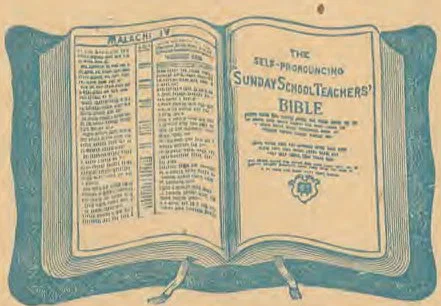
<strong>Specimen Page of the S. S. Teachers' Bible. Size, 5 x 7¾ inches.</strong>
They that sealed the covenant. NEHEMIAH, X. The points of the covenant.
gavest before them, neither turned they from their wicked works. 36 Behold, d we are servants this day, and for the land that thou gavest unto our fathers to eat the fruit thereof and the good thereof, behold, we are servants in it; 37 And e it yieldeth much increase unto the kings whom thou hast set over us because of our sins: also they have f dominion over our bodies, and over our cattle, at their pleasure, and we are in great distress.
B. C. 443. d Deut. 28, 48. Ezra 9, 9. e Deut. 28, 33, 51. f Deut. 28, 45. g Deut. 28, 48. 2 Kin. 23. 3. 2 Chr. 29, 10; 34, 31.
25 Rē'hām, Hā-shāb'nah, Mā-g-sē'iah, 26 And Ā-bī'jah, Hā'nan, Ā'nan, 27 Māl'luch, Hā'rim, Bā'a-nah. 28 ¶ e And the rest of the people, the priests, the Lē'vītes, the porters, the singers, the Nēth'i-nīms, f and all they that had separated themselves from the people of the lands unto the law of God, their wives, their sons, and their daughters, every one having knowledge, and having understanding;
The Text Conforms Exactly to the Oxford Teachers' Edition. The self-pronouncing feature enables the reader to pronounce all proper names at a glance. Contains the Celebrated Oxford Teachers' Helps, comprising nearly 400 pages. Also a complete series of fifteen new maps.
All the above features render this Bible especially desirable to Teachers and Students of the Holy Scriptures.

TWO LETTERS.

(Many more might be given.)
“The Bible was received two weeks ago. It is a very nice book. My daughter is very much pleased with it.” W. S. MILES, Monte Vista, Colo.
“I received the Bible, and find it answers in every respect to the description. I should like very much to get one more just like it. Have you any more?” MRS. C. M. LAKE, Orient, Ore.
Send at once for free INSTRUCTOR canvassing outfit. Only four new names, and the Bible is yours.
For 25c extra we will stamp your name in gold upon the cover.
Send all money by Draft, P. O. or Express Order, or by Registered Letter.

GOOD WATCH

Is not such a difficult thing to obtain after all. Notice what we now have to offer you. A—

Genuine Jeweled Watch

with German silver (white metal) case, stem wind and pendant set, small, thin size, enameled dial (not paper), and solid steel cut pinions.
The smallest watch for the money. Just the thing for boys or men. Not a clock, but a real watch.

OUR OFFERS.

NUMBER ONE.—We will send this watch and the INSTRUCTOR one year to old or new subscribers sending us only $2.50.
NUMBER TWO.—We will send the watch alone for only FOUR new yearly subscriptions to the INSTRUCTOR, at $1.00 each, the regular rate.
NOTICE.—Your own subscription will not count on the above offers.
Send for free INSTRUCTOR canvassing outfit, and begin work at once. We have only a very few of these watches on hand. Address—
THE YOUTH'S INSTRUCTOR, Dept. “W.”
Battle Creek, Mich.

SUBSCRIPTION ORDER

CUT THIS OUT AND RETURN TO US WITH YOUR RENEWAL OR A NEW SUBSCRIPTION.

SUBSCRIPTION ORDER.

REVIEW & HERALD PUBLISHING CO.,
Battle Creek, Mich.
Enclosed find One Dollar, for which please send THE YOUTH’S INSTRUCTOR for one year to the following address:—
Name
Street
Town
County
Begin Subscription
State

GRAND TRUNK RAILWAY SYSTEM.

Time Card in Effect February 5, 1899.

C. & G. T. DIVISION.

WEST-BOUND FROM BATTLE CREEK.

LEAVE.
No. 11, Mail and Express, to Chicago … 12.00 M.
No. 1, Chicago Express, to Chicago … 9.00 A. M.
No. 3, Lehigh Valley Express, to Chicago … 3.40 P. M.
No. 5, Pacific Express, to Chicago, with sleeper … 12.55 A. M.
No. 75, Mixed, to South Bend … 7.30 A. M.
Nos. 11 and 75, daily, except Sunday. Nos. 1, 3, and 5, daily.

EAST-BOUND FROM BATTLE CREEK.

No. 10, Mail & Exp., to Pt. Huron, East, and Detroit … 3.45 P. M.
No. 4, Lehigh Express, to Pt. Huron and East … 8.27 P. M.
No. 6, Atlantic Exp., to Pt. Huron, East, & Detroit … 2.25 A. M.
No. 8, Lehigh Express, to Saginaw, Bay City, Pt. Huron, and East … 6.50 A. M.
No. 74, Mixed, to Durand (Starts at Nichols) … 7.35 A. M.
Nos. 10 and 74, daily, except Sunday. Nos. 4, 6, and 8, daily.
E. H. HUGHES, A. G. P. & T. Agt., Chicago, Ill.
A. S. PARKER, Ticket Agent, Battle Creek.

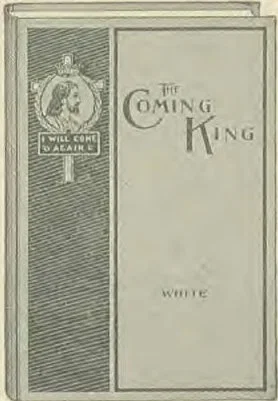
The Coming King

THE LIVE ISSUES OF OUR TIMES, &

as foretold by the prophecies of Christ and his apostles, point to the Second Coming of Christ. Large type and short chapters. Each subject given a separate chapter, which can be read and understood in a few moments. This meets the demands of busy people.
... BY ...
JAMES EDSON WHITE.

Some of the Live Issues Considered.

Famines, Pestilences, Earthquakes, Cyclones, Capital and Labor, The Money Question, The Coming Conflict, Iniquity (in political, social, and religious life) Shall Abound. Wars and Rumors of Wars, Distress of Nations, The Recent War with Spain and its Lessons. All point to the great culminating events,—the coming King, the King's reward, and the earth made new.
250 large octavo pages, 180 illustrations. Illustrations in bronze brown inks, text in blue, giving fine contrast. Standard edition, $1. Presentation edition, $1.50.

46,000 Copies Sold in Eleven Months.

Agents everywhere pronounce it a great seller. A very successful seller, even in the hands of inexperienced agents. Hundreds of new agents should be trained to handle it this season. Its popularity and easy selling qualities make it possible to introduce important truths for these times into the homes of thousands.

SOME TESTIMONIALS.

From ELDER GEO. A. IRWIN, President Seventh-day Adventist General Conference:— “I have just finished reading the book, ‘The Coming King,’ by Elder J. E. White. As the title implies, it treats upon the thrillingly interesting and, to every living soul, important subject of the Saviour’s return to this earth the second time, without sin unto salvation. “The Scriptures, historical facts, and current happenings bearing upon this event are considered in thirty-nine short chapters, in which the subject is unfolded in a clear, entertaining, and convincing style. A new chapter has been recently added, which brings the book right up to date, giving, among other things, the significant bearing of the Spanish-American war upon the subject under consideration. “This book should have a large sale, not only because of its intrinsic merit and the importance of the subject considered, but because all the profits accruing to the author are to be devoted to the education and Christianization of the colored people of the South.”
From DR. J. H. KELLOGG, Superintendent Battle Creek, Mich., Sanitarium, etc., etc.:— “The Coming King” is the title of a recent work by J. E. White, the subject-matter of which is well indicated by its title. In a most graphic, interesting, and instructive manner it presents the whole subject of Christ’s second coming and events connected therewith, and is written in an attractive and popular style. It is profusely and most appropriately illustrated, and can not fail to meet with appreciation. Popular works of this kind which are free from lengthy and prosy dissertations are the special needs of the time. The writer knows of no work which contains so much information upon the subject in so small a space, and presented in so attractive and readable form. The author of this work has for years been engaged in an extensive missionary work in the South, which has been almost wholly self-supporting. The entire proceeds from the sale of this book are devoted to the promotion and support of missionary work among the colored people. This fact, together with the intrinsic merits of the work, ought to enlist the interest of Christian people everywhere to aid in the circulation of this valuable book.”
From ELDER J. N. LOUGHBOROUGH:— “I have just completed a careful reading of the book, ‘The Coming King,’ from the pen of Brother J. E. White. It gives a view of the plan of salvation as wrought out through Christ, from the fall of man to the final possession of the kingdom by the saints of God. Many and instructive illustrations are interspersed through the book. It emphasizes, with clearness, the many signs of the near approach of our coming King. It is written in a manner to rivet the attention of the reader; and is one of those books that, when you begin to read, you are not satisfied until you have read it all. It is a book the mass of the people need at this very time, and it should have a wide circulation.”
From DR. E. J. WAGGONER, of London, England:— “I have given your book, ‘The Coming King,’ as careful an examination as I ever give to any book, and can honestly say that, taken as a whole, I am pleased with it. I like the plan of the work; it is simple, direct, easy to be understood, and, withal, evangelical. Of the attractive appearance of the book, I need not speak; for it speaks for itself; but I have felt moved to congratulate you on your success in breaking away from stiff conventionalism in illustration; it is really a pleasure to look through the pages. The book is one that every lover of truth will rejoice to see have a large circulation, for it can not but do good.”
From W. W. PRESCOTT, of London, England, President Seventh-day Adventist British Conference:— “I have examined the book, ‘The Coming King,’ and am much pleased both with the character of the matter and its typographical appearance. The subject is presented from such a standpoint, and is handled in such a manner, that it will be sure to command attention; and as a specimen of attractive book-making, the book ranks high. I hope it will have a large circulation, and that it will inspire many hearts with ‘the blessed hope.’”
Sold only by subscription. However, if there is no agent in your vicinity, the book will be sent to you, post-paid, upon receipt of price.
Complete canvassing outfit, only 60 cents, post-paid. Address your State tract society, for terms, territory, and outfit.
PUBLISHED BY
REVIEW & HERALD PUB. CO., PACIFIC PRESS PUB. CO.,
Atlanta, Ga. BATTLE CREEK, MICH. Toronto, Ont. New York City. OAKLAND, CAL. Kansas City, Mo.

SIMON POKAGON.

The original Americans, those whose ancestors inhabited this country before the advent of Europeans, are usually regarded by the latter as greatly inferior to them in every way. Those, however, whose hearts have been drawn out in sympathy for the poor, dying race, because of the countless and ceaseless injustices perpetrated upon them, are glad to notice that among this people are those who far outrank their egotistical judges in the qualities that make good human character. Of such was the subject of this sketch, who was buried January 29, at Hartford, Mich.
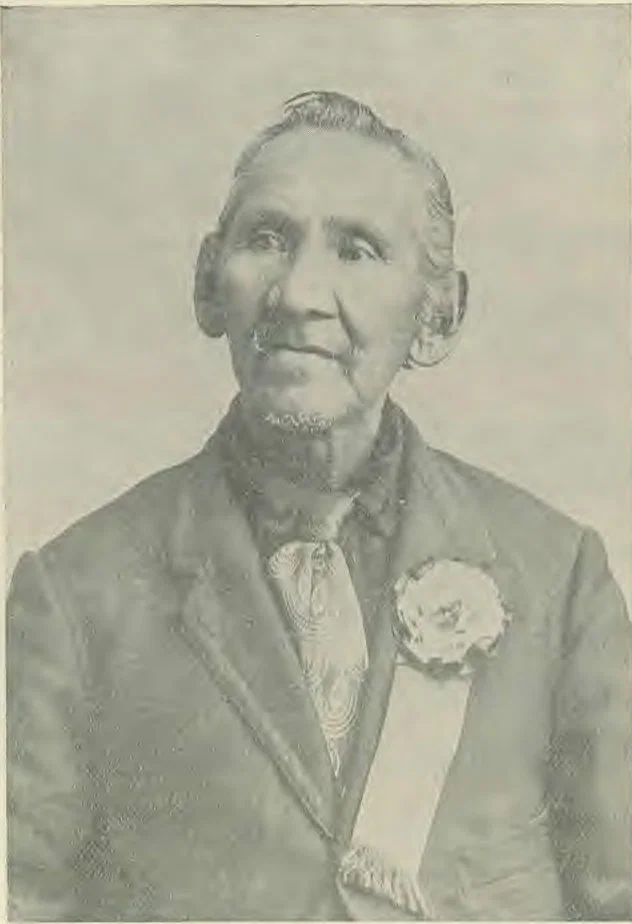
Chief Simon Pokagon
Chief Simon Pokagon
He was born in an Indian village on Pokagon Creek, near its convergence with the St. Joseph River, in Berrien County, Mich., in 1830. He inherited from his father, Leopold Pokagon, who held the position for forty-two years, the office of chief of the Pokagon band of Pottawattamie Indians. His mother tongue was the only language he could speak until he acquired English while attending school at Notre Dame, near South Bend, Ind. He began studying here at the age of fourteen, remaining three years.
His natural desire for education, which here began to bear fruit, was still further cultivated by a year in Oberlin College, Ohio, followed by an intellectual harvest of two years at Twinsburg, in the same State. These advantages were largely the result of his own efforts, his father having died when he was ten years old, and his mother being able to help him but little. He was acknowledged to be the best-educated and most distinguished full-blooded Indian in America.
After Abraham Lincoln became president of the United States, the first red man to visit him was Pokagon. Thirty years previous his father sold to the government the land on which Chicago has since been built, and this visit was to obtain the money due the tribe for this property. In 1866, after a second visit to the president, he succeeded in obtaining a partial payment of thirty-nine thousand dollars. Later he visited President Grant for the same purpose, and several years afterward one hundred and fifty thousand dollars of the remainder due was allowed by the Court of Claims. An appeal was made to the United States Supreme Court against this award, but after much opposition the decree of the lower court was affirmed. The amount was not paid, however, till a little over two years ago. It is claimed that there is still valuable property in Chicago to which the Pottawattamies have a right. Charles Pokagon, only son of the deceased chief, has been selected to succeed his father, and will take up and prosecute these claims.
Simon Pokagon spent many years, for the good of his people, in securing these appropriations from the government, but he died in comparative poverty, having received only an equal share in the apportionment with all the members of his tribe. In answering a question concerning this division of the allotment, he said, “The last child born received the same as I.”
Great disappointment filled the heart of the old chief at the opening of the World’s Fair because no appropriation was made for a congress of his people. As he visited the place, and saw all nations provided for, and the Indians—the true Americans—unrepresented, he was nearly heartbroken. Under the influence of this feeling, he wrote “The Red Man’s Greeting,” a pathetic recital of the woes of his race. This booklet is made of the bark of the white birch, and has received many words of appreciation both on account of its unique make-up and the striking sentiments expressed. It was placed on sale at the great Exposition. The lamentations expressed in it inspired Mayor Harrison and other readers to invite the author to attend the fair again, as the guest of the city. This he finally consented to do. He was received with much attention, and asked to make a speech to the vast audience assembled on “Chicago day,” which he did. He it was who rang the great liberty bell on that memorable morning. He told the interested crowd of the killing of buffalo and deer by his father on the very ground where they were standing, and of selling the land afterward to the whites, for three cents an acre. The present relations of the Indians to the whites were considered, and a desire expressed for universal peace.
Preceding this speech the venerable mayor spoke feelingly of the life and work of the aged chieftain. He called Pokagon a brother, and to support this claim of relationship announced to all that his veins carried Indian blood as a descendant of the renowned Pocahontas, a member of the same race. The two names have the same origin, coming from the Algonquin word “Poka,” a shield, or defense.
Soon after going home, Pokagon was again summoned by the mayor to return, and assist in the closing ceremonies of the Columbian Exposition. He did so, only to learn on arriving in the city that the kind-hearted executive had been cruelly assassinated the night before. The chief was almost incapacitated for his part in the exercises, so great was his grief.
The literary work of Pokagon was considerable. Besides the birch-bark booklet already mentioned, he furnished many contributions to the leading magazines, which elicited complimentary comment both in this country and in Europe. His latest work is now being printed at the office from which the INSTRUCTOR is issued each week. It is called “Queen of the Woods,” after the bride of his youth, to whom he gave that appellation. The book contains a picture of the chief; a sketch of his life, by the publisher; and a history of his people and his experiences with them, by the author. He tells, with words almost equaling in conciseness the language of Moses in Genesis, of hunting game in his youthful days, and withholding with superstitious awe the arrows when seeing the white, or albino, deer.
His words telling of his first meeting with Lonidaw, the young maiden who afterward became his wife, contain a delicacy of manner and purity of thought rarely met in stories of love written by white men. The alphabet, notation, and many words and phrases of the Algonquin tongue are given, with the hope to perpetuate, partially at least, the language of this people, even after Pottawattamies as a nation have passed away.
A study of the life of this poor red man, rich in intellectual attainments, must prove an incentive to youth to make the most of their opportunities. His efforts to obtain an education by which he acquired a knowledge of several languages, including Greek and Latin, are worthy of imitation. His labors for the interests of his fellows are especially commendable. H. E. SIMKIN.

Success Versus Failure: Creating or Following Precedents

A MARKED difference between success and failure in life is this: he who attains the first will create good precedents for others to follow, while he to whom comes the latter is satisfied simply to follow precedents set by others.

Integrity Better Than Achievement Won Dishonestly

BETTER remain ever in the valley land of humiliation and defeat with integrity intact, than to reach the mountain-top of far-famed achievement through the avenue of dishonest means.

AS CHRIST WOULD HAVE DONE.

It was a lovely home, and to look in upon the inmates generally, you would say they were a happy family; and so they were. There were four of them,—Henry Newcomb, an elder in the church, his wife, and their two children, Harry and Louise, both of whom had publicly professed Christ for nearly a year. But these young people, especially Louise, had one serious fault, which was a source of much perplexity and grief to their father. While anxiously considering how he could present it before them in a way that would be of lasting benefit, he thought of a plan which he determined to put into execution at the first favorable opportunity.
It was early evening. A light meal was prepared, and all were ready, except Louise, who had started out early in the afternoon to call upon some friends, and had not yet returned. The family, deciding to wait no longer, had just sat down when she entered the room. Her cheeks were flushed from walking; and as she took her place at the table, with a pleasant smile, she made a pleasing picture—so they who were already seated indulgently thought.
“Well, my dear, you must have had a delightful time this afternoon, judging from your late arrival,” remarked her mother, smilingly.
“Yes, sis; and now you may relate your experiences,” her brother chimed in, a little patronizingly.
“O, I’ve had a pleasant time, I suppose; though I can’t say that making calls is particularly enjoyable; for I always have to call upon so many I care nothing about.”
“Why, how is that?” inquired her father. “I supposed you young ladies all had great admiration for one another; at least, appearances always seem to indicate that, when I happen to see a bevy of you together.”
“Now, papa, I thought you understood my disposition well enough to know that I can have only one or two real dear friends. Of course I’ve lots of acquaintances, and it is necessary for us to call upon one another. Why, there wouldn’t be any sort of society if we didn’t. But I try to be careful even in selecting my acquaintances, thanks to my mama’s excellent training,” she added, quite complacently.
“But, really, I was so annoyed this afternoon. I called again on that Simpkins family you were so anxious to have me get acquainted with, papa. The same little girl came to the door,—a real sweet little thing, if she didn’t have such ugly hair,—and said her sisters weren’t at home. I was sure I saw one of them peeping through a window up-stairs when I went into the yard.”
“But why didn’t you go in and see Mrs. Simpkins? Weren’t you invited?” asked her father.
“Yes,” Louise answered; “but I went there to see the young ladies. Mama may do the calling on the older portion of the family.”
“I am sorry,” her father replied, quietly. “I admire Mr. Simpkins very much, and he has been quite urgent in asking me to have you call upon his girls; for he is anxious to have them become acquainted with a religious class of young people. But, of course, when they were not at home, you could not see them, though I can not see why that should be any great source of annoyance to you. Could you not have left word, setting a definite time to call upon them?”
“I can not say that I’ve been favorably impressed with the young ladies, myself, what little I’ve seen of them,” said Mrs. Newcomb. “I don’t believe Louise need be in any hurry to get acquainted with them, until time proves a little better what they are.”
“But, my dear, we have just taken the parents into church fellowship with us,” said Mr. Newcomb.
“That may all be,” returned his wife, with some spirit. “But that does not indicate the sort of family they may have.”
“O, and will you believe it,” said Louise, now eager to dismiss the present subject, “Sadie Anthony treated me so coolly this afternoon! Ever since she made a new start a few weeks ago, she has been trying to make up. Of course, I’ve been kind and pleasant all the time, but I’ve been a little slow about going to see her; for I felt in my bones she would treat me just the same as ever if we were alone. The other day she urged me to come and see their new conservatory, and promised me some flowers. So I thought I would run in a few minutes this afternoon. You know the big musicale at the Slades comes off to-morrow night, and I was wishing for something a little different from our scarlet geraniums to wear. I did feel so disappointed when she gave me just a little bunch of violets!”
“I remember hearing a certain young lady remark the other day that it is considered the best taste to wear violets nowadays,” said Harry, with a little wink at his mother.
“O, but there were quite a number of lovely tea-rosebuds that were just perfect. They would have looked so sweet with my new blue dress, while the violets will hardly show at all. The worst of it all was I had hinted just ever so little the kind of flowers I would especially like, if she wished to give me some.”
“Perhaps Sadie wishes to wear the buds herself,” Mrs. Newcomb remarked.
“No, she doesn’t; for I heard her tell Annie Slade just yesterday that she couldn’t attend the musicale. It is just the way she always has of tantalizing,—leading you on to think she will do something specially lovely for you, and then letting you drop. At least, that is the way she always makes me feel.”
“But what about the new conservatory? You haven’t told us anything about that yet,” pleasantly interrupted her father.
But another interruption occurred just then, which put a stop to any further conversation at the tea-table. Two young friends called to spend the evening with Harry and Louise, and it was not until the hour for prayers—half past nine—that the family were again by themselves.
It was their custom to read around, but this evening Mr. Newcomb remarked, as he took up his Bible, that he had something which he would like to read alone.
“First, however, I want to tell you, my daughter,” laying down his spectacles as he glanced over to Louise, “that I believe I know something about those rosebuds you were feeling bad about. Miss Sadie called at the office this evening just before closing time, and gave me some beautiful flowers, rosebuds, I think, with some feathery kind of green stuff, and asked me to give them to Mr. Simpkins when he quit work. They were for his mother, an aged woman, who has been a helpless invalid for years.”
Then, again putting on his spectacles, he began to read, as if from the Bible:—
“And Jesus went forth, and saw a great multitude, and was moved with compassion toward them, and he healed their sick. And when it was evening, his disciples came unto him, saying, This is a desert place, and the time is now past; send the multitude away, that they may go into the villages, and buy themselves victuals.
“And Jesus said unto them, Send ye them away, and come ye apart with me where we can rest a while; for I have somewhat to say unto thee. And when they were come unto a place of rest, and had partaken of the few loaves and fishes, he began to speak unto them, saying, Ye see how great a multitude have been healed to-day, and have listened to the words of my teaching. Many there be who will want to fellowship with us, not alone for the miracles, but because they will think it an honor to follow in our company. Beware how ye mingle too freely among them, except it be for personal profit, and at all times keep in your minds the holy mission for which I have set you apart. Some may desire especially to walk with you, but let all your associates be chosen with discretion. Many have come out from among publicans and sinners, and it is but wisdom that they first prove themselves true children. Greet all with kindness and a pleasant countenance; but again I say, Beware whom ye select to mingle among you as brethren, lest ye be called a friend of publicans and sinners.”
It is doubtful how much longer Mr. Newcomb might have continued reading, with grave and measured tones, had not Louise, with eyes full of tears, interrupted him with—
“Please, papa, do not read any more. I know what you mean. But can it be that I am as bad as that? I had no idea that I was representing Christ in such a light.”
“Louise, dear, I am sure the lesson was for my benefit also,” said her mother, who had grown very pale while listening to the reading.
“Well, now, I thought I was the proper one to listen to the most of that reading,” said Harry, who was blinking suspiciously.
“My dear family, we are all guilty, in one way or another, of thus misrepresenting the life of our Saviour. While the inspired record, thank God, does not read in that way, I fear we often make Christ’s life appear in some such light to those who know him not; for, you see, we are professing to follow in his steps.”
Then followed a long, earnest season of heart-searching and confession; and when they finally knelt in prayer, a blessing was received, the influence of which was felt by many others in the better days that followed.
MRS. ELIZABETH M. PATTON.

WHAT?

“I DIED to save you, sinner, I died to set you free.” The voice of Jesus softly asks, “What hast thou done for me?” C. F. LADD.

PARIS AND VERSAILLES.

HAVE you ever seen any real boulevards? That which would give the best idea of what they are in Paris, is Pennsylvania Avenue in Washington, D. C. They are immensely wide avenues, frequently with double rows of trees and sidewalks. These great thoroughfares run around Paris, and there are four sets of them. When the city was small, a wide avenue, or boulevard, ran around it. When it expanded to a certain degree, another boulevard was constructed. It must not be understood that these are all in geometrical lines, but they are easily followed.
One feature of Parisian life which is quite surprising is that of sitting outside the restaurants to eat and drink. You will often see as many as sixty or seventy tables out in the open air, and there these light-hearted people sit and eat and drink, smoke and chat.
Versailles is so intimately connected with Paris that a visit to the latter is not complete without seeing the former. Versailles is fifteen miles from Paris; it can be reached either by street-cars or steam-cars, and one passes through the historic and pretty places of St. Cloud and St. Germain. Versailles is associated with the name of Louis XIV, under whom it reached its height as headquarters of the French court. Such was the lack of natural surroundings necessary for the development of a park, that the sums expended for its building and support seem fabulous; for instance, the palace and park cost Louis XIV two hundred million dollars. Thirty-six hundred men and six thousand horses were employed at one time on the terraces of the garden, and in building a road to Paris. Water had to be brought a distance of over thirty miles. Even now the views, the arrangement of flowers, shrubbery, and statuary, and the lakes, are almost intoxicating in their beauty. There are in the palace, which is now an art gallery, some exquisite paintings and statuary. In the Trianon, which Louis built as a residence for Madame de Maintenon, many relics of great value are exhibited, such as the household furniture of Napoleon I.
The return to Paris is most beautiful. Against the purple haze, through which one can just distinguish the outline of Notre Dame, shines brightly the golden reflection of the gilded towers and domes, while nearer looms up the gigantic Eiffel tower, by which meanders the ever-winding Seine.
The beautiful park of Paris, the Bois de Boulogne, contains about twenty-two hundred and fifty acres of forest, field, and roadways. One may take a bus from the Place de la Concorde, and ride out along the Champs Élysées, by the great Arch of Triumph, and so on, to the Bois. The Champs Élysées is a wonder itself, over a mile in length, straight from the Place de la Concorde, of immense width, and flanked by rows, or rather groves, of trees, it forms the most fashionable promenade and drive in the city. The Arch of Triumph is the largest triumphal arch in existence, and can be seen from any part of Paris. The whole thing is one hundred and sixty feet high, and the arch is sixty-seven feet high. There are twelve avenues radiating from this place.
As to the Bois itself, one could hardly imagine that it was at one time in such evil report as to be the resort of robbers, thieves, suicides, and duelists; but such was the case for a long time, until it was developed, and many princely mansions were built in its vicinity. Now it is a most attractive and well-kept park. It lies on the west side of the city, just outside the ramparts.
In the opposite direction, away over in the east, is the principal of twenty-two burying-grounds, the cemetery of Père la Chaise. It is in reality a city of the dead, and a densely populated one at that. It contains one hundred and ten acres, and has about twenty thousand monuments, many of which are deeply interesting as memorials of illustrious persons.
G. E. M. TAYLOR.

THE MASTER'S FACE.

No pictured likeness of my Lord have I; He carved no record of his ministry On wood or stone. He left no sculptured tomb nor parchment dim, But trusted, for all memory of him, Men's hearts alone.
Sometimes I long to see him as of old Judea saw, and in my gaze to hold His face enshrined. Often, amid the world's tumultuous strife, Some slight memorial of his earthly life I long to find.
Who sees the face sees but in part; who reads The spirit which it hides sees all; he needs No more. Thy grace— Thy life in my life, Lord, give thou to me; And then, in truth, I may forever see My Master's face!
— Wm. Hurd Hillyer.
Continue reading: TOOTHLESS ANIMALS