The Youth’s Instructor, Vol. L., No. 33.

Sights and Scenes in San Francisco

The Youth’s Instructor

August 14, 1902

Review and Herald Publishing Company · Battle Creek, Mich. · August 14, 1902

Sights and Scenes in San Francisco

THE complete history of San Francisco would contain many interesting and even thrilling chapters; for few cities in America have passed through so many and so varied experiences, from the lawless days of the gold fever down to the present time.
Part of San Francisco is built on hillsides so steep that they are almost inaccessible. The commercial portion of the city is situated in the valleys between these hills.
The laying out of beautiful parks in and about our large cities is a divinely inspired thought, as it enables the poor to obtain glimpses of God, as he reveals himself in nature, that they otherwise would not be able to secure. San Francisco is particularly blessed in this respect; it has a number of small parks scattered here and there throughout the city, and in addition possesses the magnificent Golden Gate Park. Millions of dollars have been expended in beautifying this large tract of land, which possesses great natural attractions.
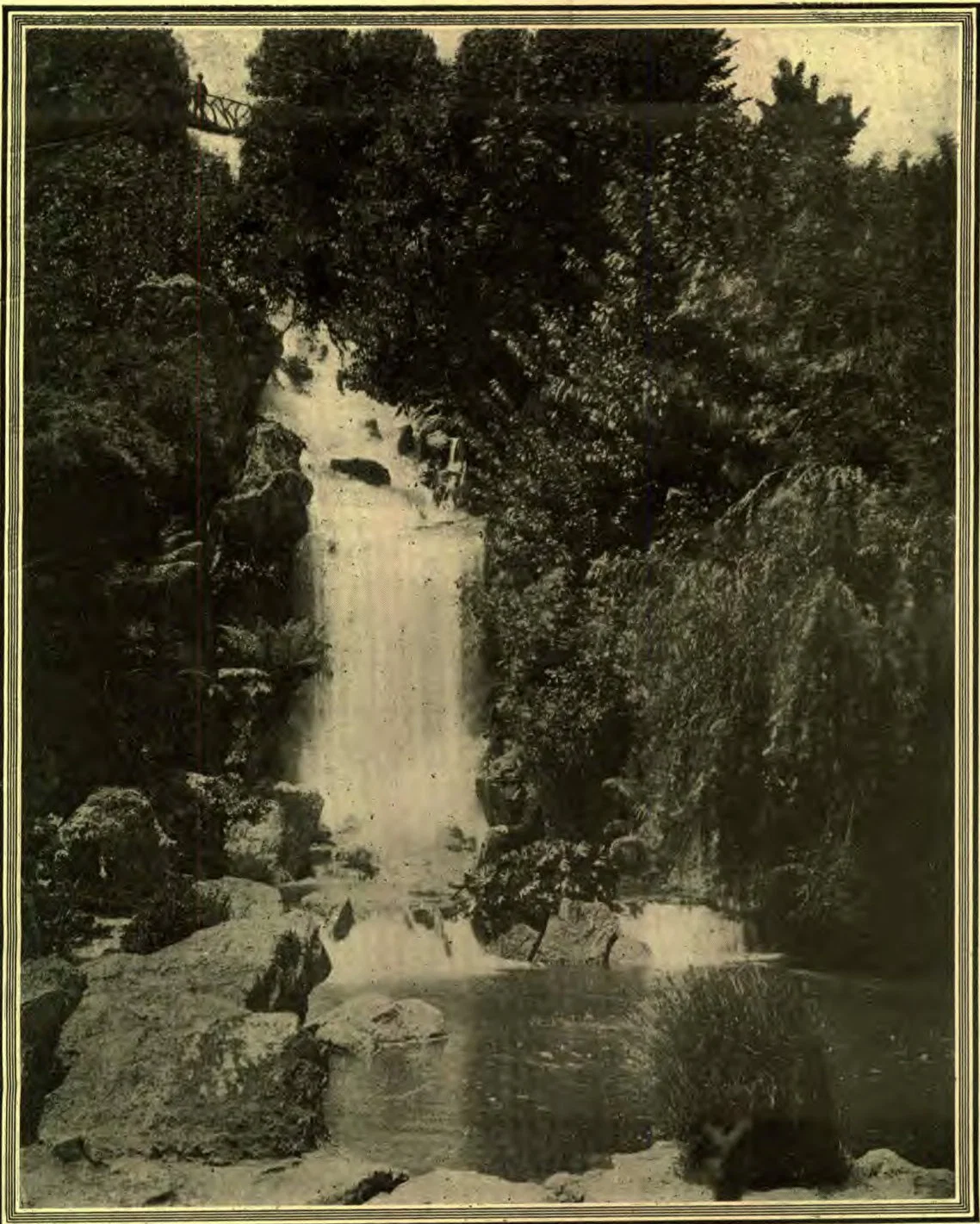
A number of wealthy, public-spirited citizens have personally expended enormous sums of money in helping enhance the natural beauties of this city. Claus Spreckels, the “sugar king,” built in the city park, at an expense of sixty thousand dollars, an artificial waterfall on one side of this hill. An enormous quantity of water is constantly pumped to the top, and then allowed to fall over projecting rocks. The illustration shows this fall, yet no picture gives a full idea of its beauty.
Telegraph Hill is one of the highest points in San Francisco. From its summit may be obtained a splendid view of the Golden Gate as well as the greater portion of the entire city.
DAVID PAULSON, M. D.

The Two Kingdoms of Judah and Israel

SABBATH, July 26, our Sabbath-school lesson was based on a part of the first chapter of Daniel, and there will be several lessons more on this important book. The first chapter in Daniel starts out with this historical statement: “In the third year of the reign of Jehoiakim king of Judah came Nebuchadnezzar king of Babylon unto Jerusalem, and besieged it.”
Now we shall have a much better understanding of the lesson if we have some knowledge of the kings who preceded and followed Jehoiakim. As there are two lines of Jewish kings for several hundred years before Jehoiakim’s time, it will be well to inquire into their history. First of all let us go back to the time when the Lord brought the children of Israel out of Egypt under the leadership of his servant Moses. See Ex. 3:1–10.
The great God by his power led the children of Israel from bondage; and after forty years’ wandering in the wilderness, he brought them to the border of Canaan, where Moses died, and Joshua, his prime minister, was appointed his successor. See Deut. 34:5–9; Joshua 1:1, 2. Under this leading of God, the authority of Moses was so great that the record says, “He was king in Jeshurun.” Deut. 33:5. “Jeshurun” is a poetic name for Israel; and though Moses had kingly power, he was not a king. The government was a theocracy, a government by God.
After the death of Joshua, the Lord governed the people of Israel for four hundred and fifty years by judges, as Paul tells us in Acts 13:20. There were fifteen of these judges, and their names may all be found in the book of Judges, with the exception of those of Eli and Samuel. The name of the first judge was Othniel, and the last one was Samuel, who was prophet as well as judge.
Toward the close of Samuel’s life the Israelites began to clamor for a king, that they might be like the nations around them. This was a great grief to the aged judge, but under the direction of God, he anointed Saul, the son of Cis, of the tribe of Benjamin, to be the first king over the united monarchy of Israel. See Acts 13:21 and 1 Sam. 10:1. Saul occupied the throne, and ruled Israel in an irregular way, for forty years, when he died for his multiplied sins. See 1 Chron. 10:13.
After the death of Saul, David succeeded to the throne of united Israel. 2 Sam. 5:1–5. His previous anointing as king is stated in 1 Sam. 16:1, 11–13. David subdued the adjoining heathen nations, and his reign was one of remarkable prosperity. In his religious life, David was truly a man after God’s heart, and he governed Israel forty years. During his reign the kingdom of Israel was extended from the border of Egypt to the great River Euphrates. 1 Chron. 18:3.
At David’s death, Solomon, his son, sat on the throne. He was in no sense a military man and leader of armies, but he was the wisest man that ever lived. 1 Kings 3:11, 12. The unparalleled glory of his kingdom is minutely described in the first nine chapters of Second Chronicles; but alas for poor, human nature, Solomon’s fall was as great as his exaltation. But the book of Ecclesiastes remains as a record of his unfeigned repentance. Solomon sat on the throne of the kingdom forty years, like his two predecessors. 2 Chron. 9:30. His death brings us to the year 975 B. C.
When Solomon died, his legal successor to the kingdom was his son Rehoboam, who went at once to Shechem to be crowned king. His aged advisers counseled him to lighten the burdens which his father Solomon had laid on the people. But the counsel of the young men was that Rehoboam should make these burdens much heavier than before. The immediate result of this was that ten of the twelve tribes rebelled, and set up a government of their own, and they chose Jeroboam, the son of Nebat, to be their king. See 1 Kings 12:19, 20. This rupture in the kingdom had been previously made known by the singular act of the prophet Ahijah in rending the new mantle of Jeroboam into twelve pieces, and giving him ten of them. See this record in 1 Kings 11:28–31.
And now for a long time we have introduced two lines of kings reigning over Israel and Judah, in the land of Palestine. This state of things continued until the time of the great captivity. These two monarchies are illustrated in the following diagram, which gives the names of the different rulers, with the dates and period of their respective reigns:—
KINGS OF THE ENTIRE NATION
B. C. Reigned
Saul 1095 40 years
David 1055 40 years
Solomon 1015 40 years
OF JUDAH OF ISRAEL B. C. REIGNED PROPHETS
Rehoboam 975 17 years
Jeroboam I 975 22 years
Abijah 958 3 years
Asa 955 41 years
Nadab 954 2 years
Baasha 953 23 years
Elah 930 2 years
Zimri 929 7 days
Omri 929 12 years
Ahab 918 22 years Elijah
Jehoshaphat 914 25 years
Ahaziah 897 2 years
Jehoram 896 12 years Elisha
Jehoram 892 8 years
Ahaziah 885 1 year
Athaliah, usurper 884 6 years
Jehu 884 28 years
Joash 878 40 years
Jehoahaz 856 17 years
Joash 840 16 years
Amaziah 838 29 years Jonah
Jeroboam II 825 41 years Joel
Uzziah 810 52 years Amos
No king—interregnum 784 12 years
Zachariah 772 6 months
Shallum 772 1 month
Menahem 771 10 years
Pekahiah 760 2 years
Pekah 758 20 years
Jotham 758 16 years Isaiah, Micah, Hosea
Ahaz 741 16 years
No king—interregnum 738 10 years
Hoshea 730 9 years
Hezekiah 726 29 years
Ten tribes go into captivity 721
Manasseh 697 55 years
Amon 642 2 years
Josiah 640 31 years Zephaniah
Jehoahaz 609 3 mos. Jeremiah, Nahum
Jehoiakim 609 11 years Habakkuk
Jehoiachin 598 3 mos. Daniel, Ezekiel, Obadiah
Zedekiah 598 11 years
Jerusalem destroyed by Nebuchadnezzar 588 Haggai, Zechariah, Malachi
From the foregoing table it will be seen that the kingdom of Judah lasted some three hundred and eighty-seven years, while that of Israel continued only two hundred and fifty-four years. In the line of the kings of Israel, every ruler was a wicked man; and of most of them and there is left on record this sad note: Such an one “did evil in the sight of the Lord.”
To make this table more helpful, the names of the several prophets who exercised their gifts during the time of the two dynasties are also given. As nearly as possible, these names are set down at the time when the prophets began their work. The prophets Haggai and Zechariah lived after the return from the Babylonish captivity in 536, while Malachi’s time is much later.
Of the Judean kings it should be added that many of them were eminently pious men, and some of them were the noted reformers of their time. In the kingdom of Judah there were twenty kings that sat on the throne of David, while in the line of Israel there were nineteen kings.
Before closing this sketch, a few words should be said in reference to the two books of Kings and First and Second Chronicles. At first sight they may seem quite similar; nevertheless there is a remarkable difference between them. The difference is this: The first and second books of Kings give an interblended history of both the kingdoms of Judah and Israel, while the book of Chronicles GIVES ONLY THE HISTORY OF THE KINGS OF JUDAH.
With these thoughts in mind, both Sabbath-school teachers and scholars will be better prepared to understand the times that led up to the historical statement in the first verse of the first chapter of Daniel. G. W. AMADON.

A Thoughtful Act

“THAT fellow is a missionary,” said my friend. Going to the window, I saw a man, with collar off, and coat swung carelessly over his shoulders, crossing the street. Near by stood a boy with an umbrella; for it was thundering and lightning, and the rain was descending in torrents. Small rivers flowed along the gutters, and diminutive ponds stood in every depression of the pavement and sidewalks.
The man had stepped across the street, from the corner where he had been waiting for a car, and with his foot had pushed aside a bunch of rubbish that had collected in the gutter, and was obstructing the flow of the water.
It was a little thing, and cost only a moment’s effort; but it was backed by a great principle. As far as he knew, no one witnessed his deed who would interpret the motive in it. His name will never appear in the newspapers; the city council will not extend to him a vote of thanks for his benevolent act; but the lad who stood there with the umbrella saw it, reflected a moment, seemed to catch the idea, and, stooping down, removed a big stick that lay in the way of the stream.
That man may never do anything great; yet if each day as he goes about his work, he performs these little thoughtful acts, the benefit of which may reach to one, or two, or a whole community, who will say that he is not worthy of reward? And the youth who saw, reflected, and acted,—may it not be that the example of that man has set his young feet in the right path?
LAURA L. FISK.

China's Empress Dowager

THE empress dowager of China, now about sixty-nine years of age, of whom so much is said and written in these days, and to whose account is laid the Boxer uprising of 1900, is by birth a Manchu, born of a noble family, well educated, and by nature decidedly capable and clever. She became the secondary wife of Emperor Hien Fung, and to her own and his great joy, gave birth to an heir to the throne. On account of this the emperor raised her to the rank of empress, the other, sonless wife holding a nominal precedence, and occupying a palace on the east, while the present empress dowager was given a palace on the west.
Upon the death of the emperor, the two wives exercised a joint regency in the name of this son; but the mother was then, and still continues to be, the ruling spirit. This son having been made emperor, died suddenly in 1875, in the eighteenth year of his age, failing to designate his successor to the throne (each sovereign is allowed to appoint his successor, either his son or some other person); hence the present occupant, Kuang Su, a nephew of the empress dowager, in consequence of palace intrigue directed by the dowager in concert with Prince Chun, was declared emperor.
Emperor Kuang Su was born in 1871, became emperor in 1887, and was married Feb. 26, 1889, to Yeh-ho-na-la, a niece of the empress dowager. A palace revolution took place, Sept. 21, 1898, and the empress again assumed the regency, ostensibly on the ground of the emperor's ill health. This gave her even more power than she had held before, since she was now sole regent, the eastern dowager having died in 1881.
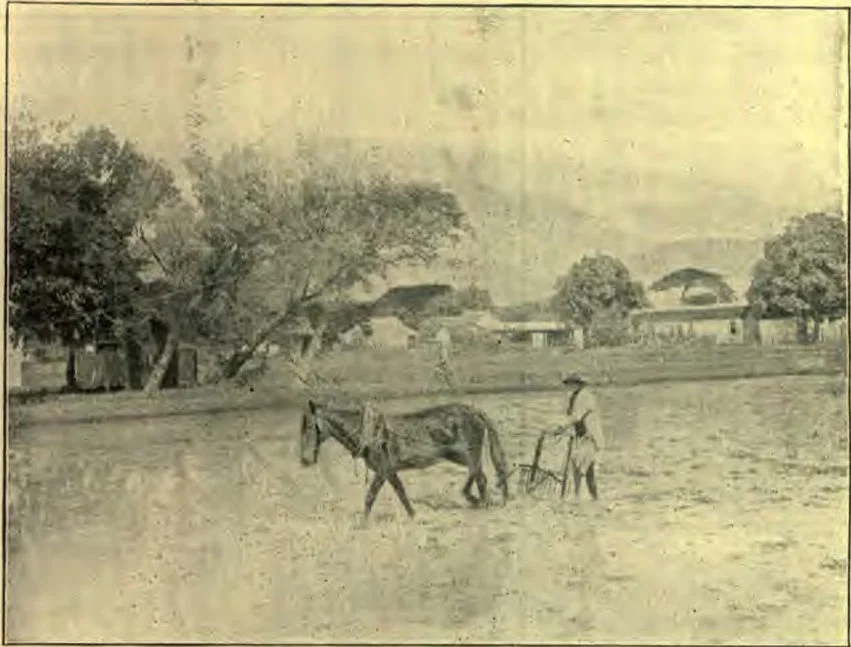
PLOWING IN CHINA
PLOWING IN CHINA
This unseating of the emperor, and the assumption of power by the empress dowager, are generally held to be the first step leading to the Boxer uprising of 1900, when northern China was convulsed by an insane hatred of everything foreign. How much the dowager was personally responsible for this, may always remain a matter of uncertainty. It is said that there was a plot laid to assassinate her, and that the knowledge of it served to fill her with a desire to crush all opposition. The very man who had been sent with secret orders to take the life of Yu Lu, a main supporter of her cause, suddenly changed his mind, and became one of the dowager's most trusted favorites.
About the time of the occupation of Peking by the allied army, the empress and her court fled to the interior, where she remained until late last year. Then she returned to the capital, when, after the enthronement of the deposed emperor, she has in a most clever way sought to make matters appear right.
By most Europeans she is distrusted, and looked upon as the direct instigator of all the recent troubles in China. The same conviction is entertained by many Chinese, while others look upon her as the helpless victim of a corrupt and intriguing court. But since we are in no way responsible for her deeds, nor is it in our power to grant her final acquittal, or to pass upon her her last judgment, we need not stop to inquire into her personal guilt. In common with the rest of mankind, she must answer to God for what she has done or failed to do. Our part is to do right, and hold high the banner of truth for all.
It may be of special interest to the INSTRUCTOR family, and at the same time assist them to remember this very distinguished woman, if I give her full name, which is Tsze hi Toanyn Kanzi Chaoyn Chang Cheng Shokung Chinhien Chung seh. J. N. ANDERSON.
Hong Kong, China.

Winning by Tenderness and Forgiveness

We win by tenderness; we conquer by forgiveness.—F. W. Robertson.

Aquilegia Canadensis

Wild Columbine

The Wild Columbine is one of our most common wild ornamental plants, growing freely on or about rocks in damp woods, especially on the hills and mountainsides.
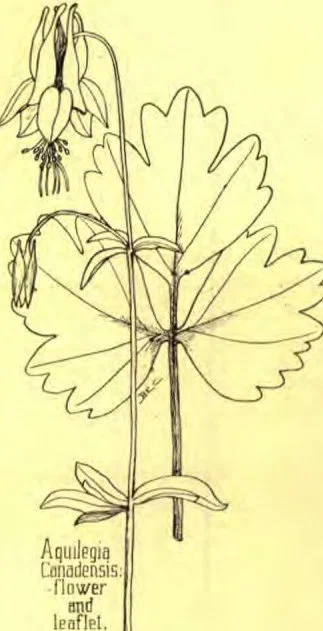
It is a perennial, branching considerably in herb, varying size, being usually from one to four feet high. The leaves, which are quite characteristic of the plant, are always once, twice, or more times ternately compound, often assuming that form known as ternately decompound; a decompound leaf being one that is more than three times compound, or in which the degree of division is variable.
Aquilegia Canadensis: Flower and leaflet.
The leaves bear quite a close resemblance to those of the meadow-rue, yet there are differences that are readily discerned by one well acquainted with both plants; so that the leaves alone tell in unmistakable terms to which plant they belong. It is true of many other plants, perhaps of the greater number, that the experienced botanist can recognize them by the leaves alone; but this ability can be acquired only by careful and accurate study and observation.
Nature in her multitudinous forms offers the best advantages for the development of the mind, especially the observing faculties, and he is wise who gives diligent heed to her teaching.
The handsome pendulous, or drooping, flowers of the Columbine are about two inches long, of a scarlet and orange color, and often light-yellow inside. There are five petals, each with a long, slender, straight, ascending spur. These spurs are filled with a honey-like substance called nectar, which fact has given to this plant the appellation “Honeysuckle,” though it differs from the plant properly known by this name.
The sepals are five in number, and the same color as the petals. Pistils five, in fruit forming narrow pods having somewhat the appearance of small pea-pods. The stamens and pistils project some distance beyond the corolla. The blossoms appear in spring and early summer.
Now, let us carefully pick one of the flowers to pieces. Removing the sepals and petals, we find a circle of numerous stamens surrounding the five pistils at the center. If we remove one of these, and view it through a small magnifying glass, we shall notice that it looks very much like A in the illustration. B shows the same more highly magnified, with a portion of the pistil cut away to show the interior.
Some of the pollen grains produced by the anthers at the tip of the stamens fall upon the moist, spongy tissue of the stigma at the tip of the style, and each gives rise to one or more minute, hair-like tubes, which pass downward through the loose tissue of the style, and come in contact with the ovules in the ovary. As soon as this takes place, the ovules grow rapidly, and in a short time develop into the ripened seeds.
The process by which pollen is conveyed from the anthers to the stigmas is known as pollination; while the growth of the pollen-tubes and their contact with the ovules constitute the process of fertilization. Each ovule that comes to maturity must first be fertilized by one of the pollen grains. The same process takes place in all the flowering plants. In the large number of plants, each pollen grain gives rise to but one pollen-tube, though the number varies, and is said to be as high as twenty or more in some cases.
The pollen is conveyed to the stigma in a variety of ways in the different plants. Sometimes it simply falls from the anther to the stigma, frequently it is carried by the wind; and in many instances it is conveyed by insects of various kinds that visit the flowers to gather pollen or nectar, or perhaps to gather both, as is the case with honey-bees and bumblebees. While thus supplying their own needs, they carry the pollen from the anthers to the stigmas, and from one flower to another.
Many plants are dependent upon the aid of insects, without which they could produce no seed. He who made both the flowers and the insects knew how to adapt them to each other’s needs, so that some flowers seem made for insects, and some insects for the flowers.
A few species of Columbine are cultivated in flower gardens. Of these, the most common is Aquilegia vulgaris. It is greatly changed by cultivation, the flowers being of various colors, and often more or less double.

Questions

  1. Where is the Wild Columbine most frequently found?
  2. Describe the leaves and flower.
  3. Where is pollen produced?
  4. What purpose does it serve?
  5. What is pollination? In what ways is it effected?
  6. Describe the process of fertilization.
  7. How are insects useful to plants?
B. E. CRAWFORD.

A Sunflower Lesson

WE planted some sunflower seeds in our garden, but only one grew; and as it was in an out-of-the-way place, the lonely plant was neglected for a time.
The grass and weeds were thick around it, and in its struggle to get above them, it grew tall and slender. One day the weeds were cut, leaving the tender sunflower at the mercy of the wind, which soon twisted and bent it till it was all out of shape, and as unpromising in appearance as a plant could well be.
Seeing its forlorn state, we determined to do our best to improve it. Securing a straight stick, we drove it firmly into the ground beside the plant, and tied it securely to the stick.
There was a bad crook in the stalk, which could not be straightened out; and notwithstanding our best efforts, it was a sorry-looking object. It seemed impossible that the crooked, misshapen plant could ever be straightened so it would lift its head to the sun after the manner of sunflowers.
Returning home after an absence of two weeks, I went to see the result of the labor bestowed on Mr. Helianthus. What a transformation had been wrought! There he stood, straight and strong, holding his head proudly above the castor beans by his side, seeming by his attitude to say, “Have I not improved my opportunity?”
As I looked at the flourishing plant, and remembered its former lack of promise, I could not but recognize the wonderful power of God, which had been at work. We had simply removed the hindrances to growth, and placed the plant under favorable conditions. The life of God within it had enabled it to assimilate the food stored in the earth; and the vivifying influence of the sun had imparted strength to the slender stalk, so that, sustained and directed by the support that had been provided, the sunflower was transformed.
There are human plants in many neglected corners of earth’s garden, which, because of neglect, are unpromising. Yet in these Jesus saw great possibilities for improvement; so he “came to seek and to save that which was lost.” Let us, dear young friends, be God’s husbandmen, ever seeking to co-operate with him by lifting up the fallen, and holding them where the sunshine of God’s love and the dew of his Spirit can do their great work of transformation.
We may then share in the joy of the Saviour as he presents them faultless before the Father.
GEO. M. BROWN.

Hollyhocks

THEY stand along the rude farm wall Like buxom dames and fair, Their rosy ruffles caught with bees, Their bright heads high in air; To lure the gypsy humming-bird Sweets in their crimson bowl they hoard.
They brighten all the sober farm With looks of holiday, Content to bide with humble folk Outside the garden gay, Though splendid as the lilies deep That in the warm, sweet sunshine sleep.
What flocks of golden butterflies About their tall heads flit! What songs the breezes sing to them When evening stars are lit! And, though they do not tell, I know They sing about the long ago.
And here, these still, sweet summer hours, The hearts of exiles come; For the bees’ ring in their gay cups Is like the bells of home, And dear, lost childhood’s voice of glee They keep as pink shells keep the sea.
—Susan Hartley Swett.
A. Pistil of Aquilegia Canadensis, magnified. B. Section of same, highly magnified a. Pollen grains b. Pollen-tubes c. Ovary d. Ovules e. Style f. Stigma

Selling the Life Boat in Chicago

NOTHING will so cheer and comfort your own heart as trying to cheer and comfort another. This I have proved by many interesting experiences in my work with the Life Boat. As I stand at the door waiting for the answer to my ring, I silently ask God to make me a messenger of peace, a ray of sunshine, in that home. The face that appears at the door often tells me of a life of unrest, sadness, pain, and bitterness. Only those who have had a taste of such a life, and then found a life of peace, can fully realize their condition and sympathize with them. A loving look, a kind word, a pleasant smile, will often break down coldness and reserve, even many times the contempt and harshness that are shown to me as a stranger and “peddler.” Often they invite me in; and before I leave, they tell me of their unhappiness, thus opening the way for me to tell them how Jesus came into my life, and that he longs to come into theirs in the same way.
It is a strange, new, beautiful thought to many that the God of the universe is interested in, and takes note of, the most minute details of their lives, and plans all the trials and events of each one, that they may be best fitted for heaven. Many with tears invite me to come again to read and pray with them.
One day a woman came to the door, tired and flushed from ironing. She seemed angry at being disturbed. I wished her a pleasant good-morning, asking God to help me say it in such a way that it might convey more to her than simply a form of introducing something I had to sell.
Her face relaxed a little, and then I told her I had a gospel paper for her that was filled with the good news of salvation, and that I was sure it would be a source of inspiration to her to read it. She impatiently and very emphatically told me that she did not want the paper, that she was a widow with several children to support, and couldn’t throw her money away. She was working herself to death now, and she did not have any faith in a God who would permit her husband, who was a good man, to die and leave her friendless and alone. “Why,” she said, “if it had not been for the little ones, I would have given up the struggle long ago.”
I silently put the paper back as she began speaking. As she poured out such a torrent of bitterness and despair, I found my own heart aching, and my eyes filling with tears at the memory of an awful time in my own experience, when, to my darkened understanding, it seemed as if even God had turned against me.
She seemed to find relief for her tired nerves and aching heart in talking. Just a look of sympathy and a few words made us sisters. She invited me into the house, where we had a long talk. As I rose to go, she said, “I believe I will take one of your little papers,” and “God bless you, dear child, for coming! Come back again.”
This is only one of the many experiences that come to me every week. There are hundreds here in Chicago, among the rich as well as among the poor, who are waiting for some one to bring them comfort and light. Angels long to do this work, and marvel that God’s professed children are so blind as to allow the golden opportunities to slip by unheeded, then wonder why they are not having a very bright experience.
Dear reader, there are just such souls around you, too. Not all of them live in Chicago. It may be you are sighing for an opportunity to do some great work for God. Begin now, where you are. There is no greater work than bringing sunshine and happiness to those who sit in darkness. Let Jesus shine from your face. Talk of him: don’t let your conversation be upon everything but him. If the Christian experience is a part of your life, you surely ought to be as interested in it as you are in the weather.
Do you want a glorious experience? If you have a few hours or minutes to spare, take a few copies of the Life Boat or the Signs of the Times, and visit your neighbors and people of your town. Sell them. If you are in earnest, they will sell. It doesn’t take talent, only willingness and prayer, to do this work. The Holy Spirit will speak for you. Tell the Lord you will visit: then he will open the way, make the rough places plain, and add his presence and blessing. Try it, brother! Try it, sister!
NINA NEWELL CASE.

A Letter

I HAVE read with much interest the reports from the Young People’s Societies in various places, and was especially pleased to see the report from Pawtucket in a recent number.
Some time ago I became impressed that more should be done in our small churches for the young people who have not the privilege of a church school or any of our academies. After some consideration of what would be practical, I appointed a meeting, and invited the young people of our Sabbath-school to come. The work which I had in mind was to instruct them in the fundamental truths for our time, so impressing them on their hearts and fixing them in their minds that they could never drift away from them. Realizing that there are many temptations and pitfalls for all our young people to meet, the need of a knowledge of the truth as an anchor was deeply impressed upon me.
The plan which seemed the best was to have a short Bible lesson, and learn to repeat the scripture, giving book, chapter, and verse. The first subjects taken up were: Charity, the New Earth, the New Jerusalem, and the Sabbath. We soon took up the lessons in the INSTRUCTOR, so as to keep in line with other young people in this work.
The assistant leader, Sister Margaret McClement, had charge of the field work, and each week would read one or two reports from some foreign field, thus keeping alive in our hearts an interest in the regions beyond. Our home missionary work has already been spoken of.
We have never been sorry that we took up this work when we did; for there are many instances which show the leading of the Lord’s own hand in it. At times it would seem that little or no good was being accomplished; but our determination to persevere at all hazards has been blessed of the Lord to the good of all who have been connected with us. There is great need of filling the minds of the young with that which is true, noble, and pure; and those who feel impressed to take up this work in their own church should by no means neglect to do so. As Elder Edwards has been called to work in the Bronx, I am separated from the work at Pawtucket; but letters from some of my girls tell me of the good meetings and interest they are having with Sister McClement as their present leader.
MRS. E. H. EDWARDS.

Walking in the Lord's Company

“THE day is long, and the day is hard, We are tired of the march and of keeping guard; Tired of the sense of a fight to be won, Of days to live through and of work to be done; Tired of ourselves, and of being alone: Yet all the while, did we only see, We walk in the Lord’s own company. We fight, but ’tis he who nerves our arm: He turns the arrows that else might harm, And out of the storm he brings a calm; And the work that we count so hard to do, He makes it easy, for he works too; The days that seem long to live are his, A bit of his bright eternities; and close to our need his helping is.”

Battles between Truth and Falsehood

STUDY PREPARED FOR THE YOUNG PEOPLE’S MEETINGS

Lesson XVII—The Meek Inherit

(August 17-23)
HOW TO STUDY THESE LESSONS.—(1) Read the lesson story; (2) try to recall or find scriptures in proof of each statement; (3) study the texts; (4) see how many missing links you can supply; (5) give the lesson to some one else. You will keep only what you give away.
All Christians are heirs to the redeemed earth. But they have one great lesson to learn before they receive the inheritance,—the lesson of meekness. Only the meek will inherit the earth.
A meek person is one who will not stand up for his own rights. You can rob or abuse a meek man; for he will not avenge himself. If you strike one cheek, he will turn the other. Rob him of his goods, he takes it joyfully. Sue him unjustly, and get his coat; and to show he has no ill-will, he will give you his vest. Compel him to go a mile, and he cheerfully goes two. If you are his bitterest enemy, he will rejoice to do you a service. If he deals with you, he will be on the watch to make sure of your getting the best of the bargain. He does not look out for number one, but for all the other numbers.
It seems to be a foolish way to live. The meek man is sure to suffer with Him who would not resent it, even when they spit in his face. But in “a little while” there will be only meek people on the earth. Then there will be “abundance of peace.”
The natural heart can not be meek. You must be born again. Then you will naturally be like the new Father.
Are you learning lessons of meekness?

Outline

Only the meek will inherit the earth. Matt. 5:5.
Meekness must be learned. Matt. 11:29; Zeph. 2:3.
The whole family are to be like Jesus. Rom. 8:29; 1 Peter 2:19-23; Rom. 12:14-21; 1 Cor. 4:9-13; Heb. 10:32-34.
All the children will be like their Father. Matt. 5:38-48.
Through suffering we become joint heirs with Jesus. Rom. 8:14-17.
Only “a little while” longer will the wicked cause the meek to suffer. Ps. 37:9-11.

MAGGIE E. FLETCHER

From Salt Lake City

We have read with interest the reports from the Young People's Societies that have appeared in the INSTRUCTOR, and the effort that many are making to give the message. The society at Salt Lake City desires to help in this work. Our membership is small, there being less than a dozen; but we hope, with God's help, to increase it in time. This field is one in which the enemy seems to have centered all his forces in the battle against the truth. Still the work is gaining victories here and there. In this great center of influence we need a church building. At present we have a tent pitched in which to hold services, but this will be unsuitable when the cold weather comes on.
Our Young People's Society has taken upon itself the responsibility of raising a fund to appropriate to this work. Pray that the effort may be blessed, and that we may soon have a permanent place of worship in this city.

MAGGIE E. FLETCHER

Continue reading: Roaches: Observations from the Island of Ruatan