Your ShelfYour Projects

Review and Herald, Vol. 93, No. 41.

The Voice of Infinite Love
Earlier text: T. E. BOWEN

Another Pioneer Laid to Rest

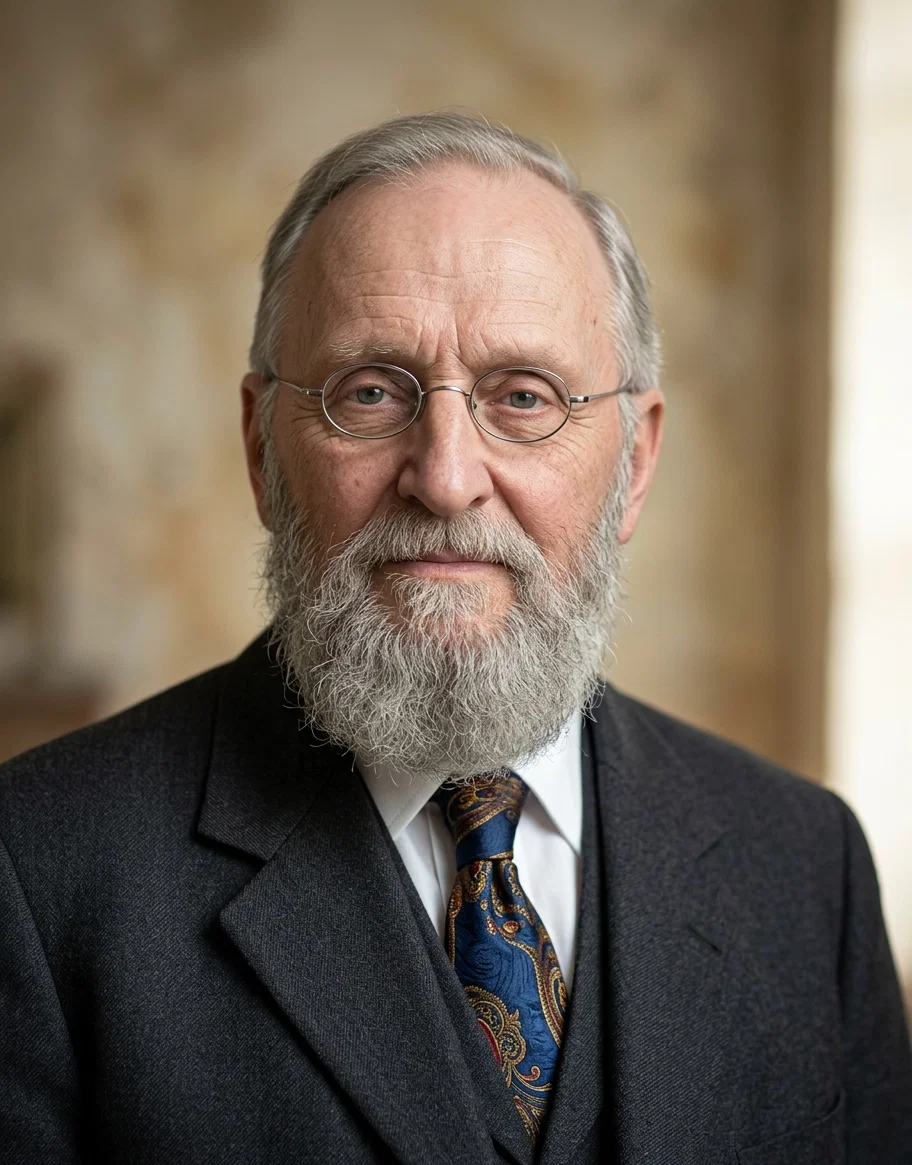
AUGUSTIN CORNELIUS BOURDEAU was born March 7, 1834, in St. Armand, Quebec, Canada, while his parents were on a visit from their home in Enosburgh, Vt. His father was of French descent, and his mother of French and English extraction; both were born in Canada, but reared in Vermont. In early childhood he evinced a strong inclination to study and work, attending school at four years of age. He was brought up a praying boy, a habit which never left him. At seven years of age he was able to read his Bible, and took pleasure in reading from its sacred pages to the neighbors.
The 1844 movement attracted the attention of his parents, and they attended many of the meetings of the advent people. At twelve years of age Brother Bourdeau was baptized and united with the Baptist Church. He afterward became a promising Baptist minister, laboring for the most part among the French-speaking people. He received a preparation for this work in a three-year course in La Mission de la Grande Ligne in the province of Quebec.
The Sabbath truth was brought to the attention of our brother in 1855, by his brother-in-law, William L. Saxby, who was on a visit from Massachusetts, and who had received the truth from Elder Joseph Bates. At first Elder Bourdeau took issue with the doctrine, writing his views to the REVIEW AND HERALD, which in turn presented incontestable Bible points favoring the seventh-day Sabbath. The next year, 1856, he accepted fully the Bible Sabbath, and began to teach it wherever he went, also writing extensively on the subject. He was baptized into the Seventh-day Adventist belief in 1857, at Morristown, Vt., and entered into the work of propagating the message with all his zeal and devotion, being ordained that year.
It was not long before he saw fruit of his labors. His wife, her sister, and their parents, his own parents, and his sister Sophia united with him, besides others in the neighborhood. He organized a church, and from his own means built a meetinghouse on his premises (Bordoville), which soon became the headquarters for Elder and Sister White and other pioneers. He had the privilege of bringing the truth to his brother, the late Elder D. T. Bourdeau, and other relatives. He raised up churches in Vermont and New Hampshire without remuneration, for eight years laboring as a carpenter and joiner to pay expenses, before the tithing plan was adopted and before conference organizations had been effected.
Under his labors the Vermont Conference was organized in 1862, of which he afterward became the president, serving in this capacity for eight years. In 1866 Elder Bourdeau was sent to Iowa to assist in reorganizing the churches in that State, where a rebellious spirit had intruded itself upon the brethren. Success attended this work. After laboring in Illinois, Wisconsin, and Missouri, he returned to Vermont, and succeeded in erecting three additional meetinghouses there. In 1875 he purchased a large tent and a family tent, and took up work in the eastern townships of Quebec, laboring there seven years. During that time he raised up churches, and built a meetinghouse on his own premises, purchased another meetinghouse, and organized the Quebec Conference, becoming its president.
ELDER A. C. BOURDEAU
Born March 7, 1834 and died July 7, 1916
ELDER A. C. BOURDEAU Born March 7, 1834 and died July 7, 1916
From 1884 to 1888 Elder Bourdeau labored in different parts of Europe,—in Italy, Roumania, Switzerland, and France. While in France, he published a monthly paper devoted to the message, and prepared a pamphlet entitled “Défense de la Vérité,” and other literature on the subject of present truth. In that country he contracted the black typhoid fever, from which he never fully recovered, returning to the States an invalid, but with undaunted courage. After his return to this country he labored in Canada, Vermont, Michigan, Pennsylvania, and Dakota.
In his ministry Elder Bourdeau labored with many of the old pioneers. One thing he prized above all was the association with Elder and Sister White and the communications received from the pen of Sister White.
His married life was happy and filled with blessings. Four children survive him: Arthur C. and Mrs. Sarah A. (wife of Elder Rodney S. Owen), both of whom live in Battle Creek; Jessie D., of Detroit; and Mrs. Cornelia M. Chinnock, of Oakland, Cal. All these, except Mrs. Chinnock, with Prof. and Mrs. W. J. Blake, the latter being his granddaughter, were with him in his last hours.
Elder Bourdeau was a man of unusual strength, mentally, physically, and spiritually. His judgment in matters of business was excellent, and his advice was often sought by neighbors, for whose welfare he ever showed unselfish interest. In his responsibilities as president of conferences or as pastor of churches, he ever manifested the grace of kindness in dealing with the erring. Always appreciative and considerate, taking time to be courteous, and exemplifying a burden for souls, he found access to many hearts who today mourn his loss.
Elder Bourdeau had been an active laborer in the vineyard until a few years ago, when from the effects of the fever contracted in Europe, and on account of advancing years, he found it necessary to restrict his energies to pastoral work. About seven years ago he was placed in charge of the Kalamazoo church, where he was appreciated by both members and neighbors. Last fall, accompanied by his helpful companion, he went to Canada, visiting the scenes of his early ministry, and also Mrs. Bourdeau’s relatives. He spoke in several churches, including other communions than his own, with effect. But the strain proved too much for him, and upon his return to Kalamazoo he became confined to his home. In March, a day or two before his eighty-second anniversary, we accompanied our dear brother to Battle Creek, where it was thought he might receive strength through sanitarium treatment; but it was perceived that the end was not far distant. He and Mrs. Bourdeau went to the home of her daughter, Mrs. Fitzgerald, where all that was possible was done for his comfort. Many times he was heard to say that life was as sweet to him as ever, and if God’s providence so decreed he should like to live to see the finishing of the work he loved so well, and to which he had dedicated his life.
Brother Bourdeau was fond of singing, and as long as he was strong enough he would chant the advent songs. Two nights before the end came, he sang these stanzas:
“Long for my Saviour I’ve been waiting, Long time have watched by night and day; Feared, lest my faith and hope abating, I should lose courage by the way.
“O it will be but little longer I must these many woes endure! Then let my faith and hope grow stronger; My Father’s promise still is sure.
“Jesus soon is coming; This is my song:— Cheers the heart when joys depart, And foes are pressing strong.”
Before lapsing into unconsciousness, he summoned the family to his bedside, and adjured each to be faithful and meet him in the kingdom. He also bore testimony of his faith and courage in God by such statements as: “The most important thing is, are we right with God?” “I have hold of the anchor, and it reaches within the veil;” “I want Jesus to say to me, This is my beloved son A. C. Bourdeau;” “I want this testimony within me, that I please God; and I ask, O, I ask for no more!”
Having for years been engaged in preparing for the end, it seemed fitting that he should be permitted to close his eyes in death on preparation day; for at six-thirty Friday morning, July 7, at the age of eighty-two years and four months to the day, our brother passed away, and is resting among those of whom it is written, “Blessed are the dead which die in the Lord from henceforth.” Thus, a consecrated life, a faithful expounder of truth, a loyal and tried laborer, fell asleep in Jesus, leaving a priceless heritage, for “his works do follow him.”
The funeral services were conducted at the Tabernacle in Battle Creek, on Sabbath afternoon, July 8, at three o’clock, in which participated Elders G. E. Langdon, W. Reefman, R. A. Hart, H. Nicola, and the writer. The services were largely attended.
On Sabbath, July 15, memorial services were held in the church at Kalamazoo, where Elder Bourdeau had served as pastor for several years, his wife, son, daughter, stepdaughter, and granddaughter being in attendance, besides the regular congregation and some of his neighbors. After the reading of the obituary, appropriate remarks were made by many present. S. B. HORTON.

Teachers’ Institute at the Oakwood Manual Training School

OUR teachers’ institute for the summer of 1916 has just closed. The last three days were spent in the arduous work of examination. Creditable work has been done by most of the class, and suitable certificates will be awarded by the respective union conference educational secretaries.
We are all glad for the atmosphere of good will that prevailed among the teachers and instructors throughout this entire term of six weeks. Although the weather was hot at times, and during the last two weeks of the summer school our campus was drenched with rain, and mud was in abundance, yet pleasant smiles and cheerful words were also in abundance.
The complete enrolment was thirty-two. Class work was carried on from 7 to 12 A. M., and from 3:15 to 5:30 P. M. Elder L. A. Hoopes, of the Southern Training School, had charge of the Bible work. His studies were entered into with enthusiasm on the part of the students. He also had charge of morning and evening worship, and conducted a series of Bible studies for the farm boys. The Morning Watch verses were studied with deep interest.
Prof. Lynn H. Wood, the educational secretary of the Southern Union Conference, carried the work in drawing, paper cutting, and Bible Nature, and had charge of the round table. The round table hour was a time of special interest, as about thirty or forty important school problems received discussion at these meetings.
Prof. Leo Thiel, educational secretary of the Southeastern Union Conference, had charge of the work in history, geography, and arithmetic.
Mrs. Marian Marshall, normal instructor at the Southern Training School, taught the class in primary methods and monumental work. We believe her work in behalf of the teachers will prove exceptionally helpful to them in their future work.
Mrs. Maude Wood taught the class in grammar and assisted in the monumental work.
Miss Bertha Bartholomew, normal instructor at Oakwood Manual Training School, conducted for a time a model school, and also assisted with the monumental work.
Miss Etta Reeder, superintendent of the nurses’ training department of the Oakwood school, carried the work in physiology. She also made some “first aid” demonstrations at the round table, and gave each of the teachers a thorough examination, notes of which are preserved in the regular records of the institution.
Prof. P. C. Parks (colored), who is connected with the United States Agricultural Department, gave one lecture each week on farm and home topics. An effort was made throughout the entire institute to arouse an interest in the subject of school gardens, poultry, dairy, canning, and topics of general interest to social and community workers.
The writer carried the work in spelling, and also some in arithmetic. At the morning chapel talks, subjects of interest to educators were taken up by various teachers. Elder Hoopes’s talks and charts on organization were profitable and timely.
We were pleased to have a visit from Sister Anna Knight, who is one of our old and tried workers. Her personal talks to the teachers were practical and enthusiastic.
We believe that the influence of this institute will be felt throughout the educational ranks of our colored people, and that the efforts put forth will prove of lasting benefit. It is our desire to see this work more firmly established, and we know the strength gained by these teachers will qualify them to do better work in the schools among our colored constituency in the South.
May the Lord’s blessing be added as our teachers go forth from this gathering to take up the work of dealing with the tender minds of the children.
C. J. BOYD.

Personal Experiences

LAST year I went to Berea, Ky., to give a few health talks and Bible studies to the students gathered in that great educational center. While there, one of the professors said to me, “You ought to have a talk with my wife. She has had a wonderful experience since she was up to Hinsdale.” The next morning I called on her. She told me she had always considered herself a Christian, but while attending the Bible studies held in the sanitarium and listening to the testimonies of the workers in the prayer meeting, she became convinced that there was something in the Bible and in Christian experience to which she was yet a stranger.
“I went home determined to discover this divine secret for myself. I read the Bible through earnestly and prayerfully, seeking light. I had nearly completed it the second time when I reached the words, ‘Though He be not far from every one of us.’ That verse brought a flood of new light to my soul; a new sense of blessed companionship with Christ came to me, and from that hour the Bible has been an entirely new book. Formerly I read it because it was a Christian’s duty to do so, but now my soul hungers for the divine instruction it contains for me.”
She said that now when she was about her household work, she could talk to God as she would to a friend, and she invariably received some comforting answer in her very next Bible study. She had come to have a terrible dread and hatred of sin, because it interfered with this sweet communion and companionship. For years she had been troubled with sleeplessness, but from the very next night after seeing the new light in that verse, she had slept like a child; and the hearing in one ear, which had been entirely lost since childhood, was gradually restored.
I know that God gives to each of his children a different experience; hence it is useless for one person to seek for just the blessings that have been so richly showered into another’s life. Nevertheless, I left Berea with a hungry, aching void in my soul. I felt as I never had before that although I was a teacher in Israel, I needed to know in a new sense what it meant to have Christ abide in this mortal flesh. I knew I could not say intelligently and without any hesitation, “I live; yet not I, but Christ liveth in me; and the life which I now live in the flesh I live by the faith of the Son of God, who loved me, and gave himself for me.” I was determined that come what might, I would know how, in a new way, to make the study of my Bible indeed the eating and drinking of the flesh of the Son of God.
On my return home new duties piled up, new perplexities accumulated, and the very situation seemed to compel me to give my best energies to the problems that crowded in so persistently. I did not forget my new resolution, but the way did not open to carry it out to my full satisfaction.
Early this year, while on one of my travels, I evidently drank of some contaminated water, and directly I came down with a severe attack of one of the forms of typhoid fever. This was followed by a serious and persistent siege of pleurisy.
During these long, weary months the Lord did not permit the enemy to cripple my mind. It was as clear and active as in health, and I have had plenty of time under trying circumstances to carry out my resolution made at Berea. I now know as I never did before that justification by faith is the work of God in laying the glory of man in the dust and doing for him that which it is not in his power to do for himself. I now know in a new sense that our entire spiritual experience depends on the vividness of our sense of Christ’s personal companionship; in other words, that Christ dwells in our hearts by faith “when we will consider what he is to us and what a work he has wrought out for us in the plan of redemption.”
I can now say with David, “It is good for me that I have been afflicted; that I might learn,” in a new and deeper sense, these simple fundamental truths; and I also have the conviction that when I have learned them as God desires to teach them to me, he will speedily complete the good work of restoration which he has so graciously begun.
DAVID PAULSON, M. D.

On Leaving Keizan, Chosen

We take the liberty of using a few paragraphs from Brother R. C. Wangerin's last letter to the Mission Board, written before he and his family left their beloved field to return to the States. It shows how reluctantly our missionaries come home. They need our earnest prayers and tender consideration and loving sympathy. He says:—
“I must write you once more before leaving our chosen field. You doubtless know before this that it has become necessary for me to leave Korea for a time in search of health. Oh, how we dread to go! It is not our planning or choosing.”
“When Brethren Daniells, Porter, and Fulton, together with Brother Butterfield, visited our station a little over one year ago, they viewed the situation at Keizan. Together we climbed the mountain in the rear of our station. It was from that elevation that the brethren saw with their own eyes more than one hundred villages, large and small,—a vast and densely populated country. Then we enjoyed a precious season of prayer. It was there and then, too, that Elder Daniells uttered what has since become a significant statement. He will said:—
“‘Now, brethren, suppose Brother Wangerin should get sick and die, or for some other reason be obliged to leave the field, whom would you send to take up his work?’”
“Brother Butterfield replied, ‘No one, unless we took a man from another part of the field, and sent him to the south here, thus leaving a vacancy, whatever shift was made.’”
“Well, this is just what had to be done. Brother W. R. Smith leaves his well-developed east-coast district without an actual overseer, until more help comes, while he comes south to direct this work.”
After speaking of the delay in getting help to them, Brother Wangerin adds: “We are glad and encouraged that eventually some will march forward and take their places at the front.”
“Before concluding this letter, I will also pass on the sad word of the loss of our little baby girl, seven and a half months old. After a lingering illness she passed away Sabbath noon, June 3. Dr. Riley Russell and Sister M. Scharffenberg were with us the last few days. That little missionary grave on old Keizan hill endears Korea and its people to our hearts only that much the more. The patient little sufferer is at rest. The glorious resurrection of the saints of God and the soon coming of the blessed Jesus mean more to us than ever before.”

Saskatoon Camp Meeting

THE largest company of Seventh-day Adventists ever assembled in Saskatchewan, met at camp meeting in Saskatoon, June 29 to July 9, 1916. The weather was favorable, and the facilities provided by the city on the exhibition grounds were of the best.
Stirred by the truths of the third angel's message and by the events taking place in the world, our people seem to have but one purpose in coming to camp meeting. Many of them are isolated during most of the year, and they appreciate every opportunity which the camp meeting affords of seeking the Lord with those of like precious faith, of learning more of the truth, and of studying ways of giving it to others.
One hundred and thirty tents were pitched, and nearly five hundred persons were encamped. The attendance from the city was not large, but some of those who did attend developed a deep interest and were convinced of the truth. Meetings were conducted in English, German, Russian, Serbian, Roumanian, and Scandinavian. Elder G. F. Haffner and Prof. J. F. Simon were present for the German work; Elder M. Ostoich for the Serbian; and Prof. H. O. Olson, of the Broadview Swedish Seminary, for the Scandinavian. Brother T. T. Babienco labored in the Russian language, and Brother T. M. Krainean in the Roumanian. Meetings were held for the children and young people twice every day. In addition, the children were given a play hour every day under the direction of some of their teachers. Professors Kellogg and Dick were present to assist in the educational work. The Sabbath school and children's meetings were under the charge of Mrs. A. C. Gilbert.
The book tent sales amounted to nearly $800. Brethren Rowse, Eastman, and Manfull gave help in the book work. Brother Manfull says the interest in the canvassing work is the best he has ever seen in western Canada, and the prospects are good for a big summer's work, and what is still better, for a permanent corps of canvassers and a more sustained effort in the distribution of our subscription books.
Brother J. J. Ireland was present one day, and gave a very interesting account of his observations in Central America. The general interests were represented by Elders E. W. Farnsworth and W. W. Eastman, and the writer.
The people rallied nobly to the support of the new school that is being established in Battleford. More than $4,000 was pledged to the school work and the cause of missions.
More than fifty persons were baptized at the meeting, and a number of other candidates will go forward in baptism in the near future. Two churches, with a combined membership of fifty-two, were admitted to the conference. On the last Sabbath an ordination service was conducted, and Brethren T. T. Babienco and W. G. Forshaw were set apart to the gospel ministry.
The people manifested a good degree of interest in the business meetings, and the work was carried forward harmoniously. The conference adopted the plan recommended by the North American Division Council, and elected officers for two years. Elder A. C. Gilbert was reelected president, and Brother U. Wissner secretary-treasurer. Some slight changes were made in the executive committee. The prospects for a rapidly strengthening work in Saskatchewan are bright indeed.
C. F. McVAGH.

Time to Hasten

MILDRED H. WAGNER
The sun is slowly setting, And night is coming on, The dusky shadows falling,— The day is almost done.
The grain in field is ripened, And darkness hastens on; But where are those to gather The grain ere set of sun?
There's a cry from Macedonia, A cry from far and near, A call, “Come, friends, and help us, For night is almost here.”
The time has come for hastening, Now must we heed the call; For the sun is slowly setting, And soon the night will fall.

Dedication of Mount Braddock (Pa.) Church

MOUNT BRADDOCK is a very small community, lying in the coke and coal district, adjacent to the big center of Pittsburgh. From time to time the seeds of truth have blown in that direction, and taken root and grown up. Occasional visits from workers in the conference encouraged the small beginnings, until a little company of about twenty members was raised up in this place. Their hearts were warm for the advancement of the truth, and they went to work to erect a church building. Their undertaking was prospered, and on Sabbath, July 22, in company with Elders D. A. Parsons and F. H. Robbins, I was able to join in the dedicatory services of this new house of worship. A good congregation was assembled, composed of believers and other friends. The Spirit of God was present in a marked manner.
The building and lot cost about $1,000, and there still remained a debt upon it of about $500. Those who had felt that from so slender a constituency it would be practically impossible to dedicate the building free from debt, even though a call for means to wipe out the remaining obligations might be made, were agreeably surprised. God blessed them beyond their expectations. So generous was the response from both believers and those not of our faith, that enough money was given and pledged to assure the complete liquidation of the church debt.
After the dedicatory ceremonies, visitors and church members retired to a long, spacious carriage shed, where dinner was served. Tables were joined end to end, extending for more than sixty feet, and were spread with an abundance of tempting food. We trust there will be many churches dedicated to the service of God free from debt, in all parts of the earth.
B. G. WILKINSON.

A New Training School for the South

FOR a number of years the need of a strong training school in the Southland has been sorely felt. The work in the South is rapidly developing, and doors are opening on every side to our laborers. There are hundreds of unworked cities and towns where well-trained young men and women could do a great work for God if they were ready to enter the field just now, as evangelists, Bible workers, or colporteurs. Calls are constantly coming to us from these places, but we are unable to fill them because of the lack of efficient workers.
While it is true that in the South there is some illiteracy, it is also true that we find a great deal of wealth and aristocracy, especially in the cities. There are great institutions of learning that will compare favorably with the best in the land. Any person who hopes to make a success of public life must be cultured and refined, and must possess a good education. It is necessary therefore that those who are sent out as representatives of the third angel's message first receive a very careful preparation.
God is turning the ears of the people in this field to hear the truth. In many cities where our faithful evangelists are laboring this summer, tents and halls are crowded to overflowing. Hundreds, and sometimes thousands, are flocking to hear God's solemn message. Our Bible workers and colporteurs are having splendid success, and calls are coming from many quarters for laborers to be sent to preach the truth, but there is a great dearth of efficient workers. To many of the calls we must say, No, for there is no one to send.
We have an abundance of good material from which to develop workers. There are hundreds of noble youth in our Southern churches who could do splendid work if they had the necessary training; but our educational facilities have been very meager, and we find that our greatest need is a strong industrial training school, where industries can be started to furnish employment to a large number of those who cannot pay for an education, thus enabling them to earn at least a part of their expenses while in training.
The school at Graysville, Tenn., has done good work in the past for the limited number who have attended it, but it has been impossible to develop strong industrial features there because of the lack of sufficient good land connected with the school, and because of its close proximity to the village. It has been felt for years that the location of this school was far from ideal, and recently conditions have developed which have caused general sentiment in favor of the removal of the training school to a more rural location, where a much better school can be established and maintained.
Some years ago the servant of the Lord gave this very definite instruction concerning educational facilities in the South: “We must provide greater facilities for the education and training of the youth, both white and colored, in the South. Schools are to be established away from the cities, where the youth can learn to cultivate the soil, and thus help to make themselves and the school self-supporting. In connection with these schools all the different lines of work, whether agricultural or mechanical, that the situation of the place will warrant, are to be developed. Let means be gathered for the establishment of such schools. In them students may gain an education that, with God's blessing, will prepare them to win souls to Christ.”—“Testimonies for the Church,” Vol. VII, pp. 231, 232.
This counsel has never as yet been fully carried out, but at the recent session of the Southeastern Union Conference steps were taken toward the broadening of the entire educational policy of the South. A vote was taken providing for the establishment of an industrial training school which will serve all the States comprising the Southern and Southeastern Union Conferences. After taking full counsel in regard to location, a large farm containing two hundred and ninety acres, situated two miles from Ooltewah, Tenn., and sixteen miles from Chattanooga, Tenn., was selected as a site for the new school.
This farm is in many ways a most ideal location. It is in the mountainous section, where the air is pure and healthful, and is practically isolated from the outside world by the mountains surrounding it. The water will be furnished from beautiful mountain springs which are on the place. There is an abundance of good valley land to furnish employment to a number of students the year round, and there is a possibility of developing all the other necessary industries.
While this site is so perfectly isolated, it is only two miles from Ooltewah station, one of the best railroad centers in the South, for a small town, having eighteen passenger trains daily. Through-train service can be had from any State in the South to this station. There is also a flag station at the school farm where local trains stop; also a private siding where freight may be unloaded right on our own land. This, of course, will be a great saving in time and expense.
This school is to carry fourteen grades of work after the first year. A strong faculty is being secured. It is the plan of the board to arrange for industrial courses to be carried in connection with the literary work, thus making it possible to give each student practical industrial as well as mental training.
We have been enabled to secure this farm for the sum of $12,600, which is a very reasonable price. Those who are leading out in the effort to establish this school are determined not to go in debt, and therefore they are waiting to secure all the money with which to pay for the farm. When the movement was started, we were confronted with a $14,000 debt on the old Graysville institution, and this was given the first attention. At the time of this writing, all this debt has been paid or provided for, and several thousand dollars has been collected toward the new school farm. At present a strong campaign is being carried forward in the South to raise $10,000 more by the first of September. This will make it possible to purchase the farm, move the equipment, and make a beginning this fall. It is planned that the school shall be conducted this year in the buildings which are already on the farm, supplemented by some tent houses. Then as money is received, suitable buildings will be erected for the school plant. Of course our needs are great. We cannot continue long in the temporary quarters, and yet in order to keep entirely free from debt we must go no faster in building up the plant than the funds in hand will allow. We have, however, seen many evidences of God's providence in connection with this move, and we have faith to believe that he will not fail to send the necessary help to complete this much-needed institution.
Those desiring a calendar of this new school should write to Prof. A. N. Atteberry, Graysville, Tenn.
W. H. BRANSON, *President Southeastern Union Conference.*

Prosperous Days for Mount Vernon Academy

It will be of interest to the readers of the REVIEW to know of the progress of the work in connection with Mount Vernon Academy. For a number of years this institution operated successfully as a college. A few years ago, on its becoming necessary to operate fewer colleges, Mount Vernon was reduced to an academy. While this proved quite a disappointment to many, it is becoming evident to all that the institution has a large and important field in which to operate as an academy.
About the same time that this change was made, we were in the midst of a campaign to pay off the debt of the institution. It has already been announced that Mount Vernon Academy is now wholly free from debt.
In connection with these two important changes,—the change of the status of the school and the freedom from debt,—a strenuous effort has been made by the managing board to bring about another change. It has been our object to make Mount Vernon one of our strongest academies. We are endeavoring to meet the high standard that has been set before us in educational reform. In working to this end, many changes and improvements have been made.
We have been successful in securing a strong and efficient faculty for the year 1916-17. The home has been much improved by changes that we have been able to make, and by the addition of some new furniture. The improvements that have been made in the dining-room, business department, library, and music department, will add much to the efficiency of the institution. Industries are being added, which we feel will make the school much stronger than it has been in the past.
We desire to appeal to the parents and young people of Ohio, western Pennsylvania, and West Virginia in behalf of this institution, and we urge that early plans be made on the part of those who expect to attend the academy the coming year. Those who desire to receive the annual calendar, or who wish to inquire regarding the institution, should write to Elder N. S. Ashton, who will give such inquiries prompt attention.
Quite an army of missionaries who received their training at Mount Vernon are now actively engaged in our work in foreign fields as well as in the homeland. Shall we not see every young per-

Educational Department

FREDERICK GRIGGS · · General Secretary W. E. HOWELL. Assistant Secretary

Sanitarium Work on the Island of Barbados
ON the morning of Sunday, July 9, the steamship “Vauban,” on which I was returning from South America to the United States, anchored in the harbor of Bridgetown, Barbados.
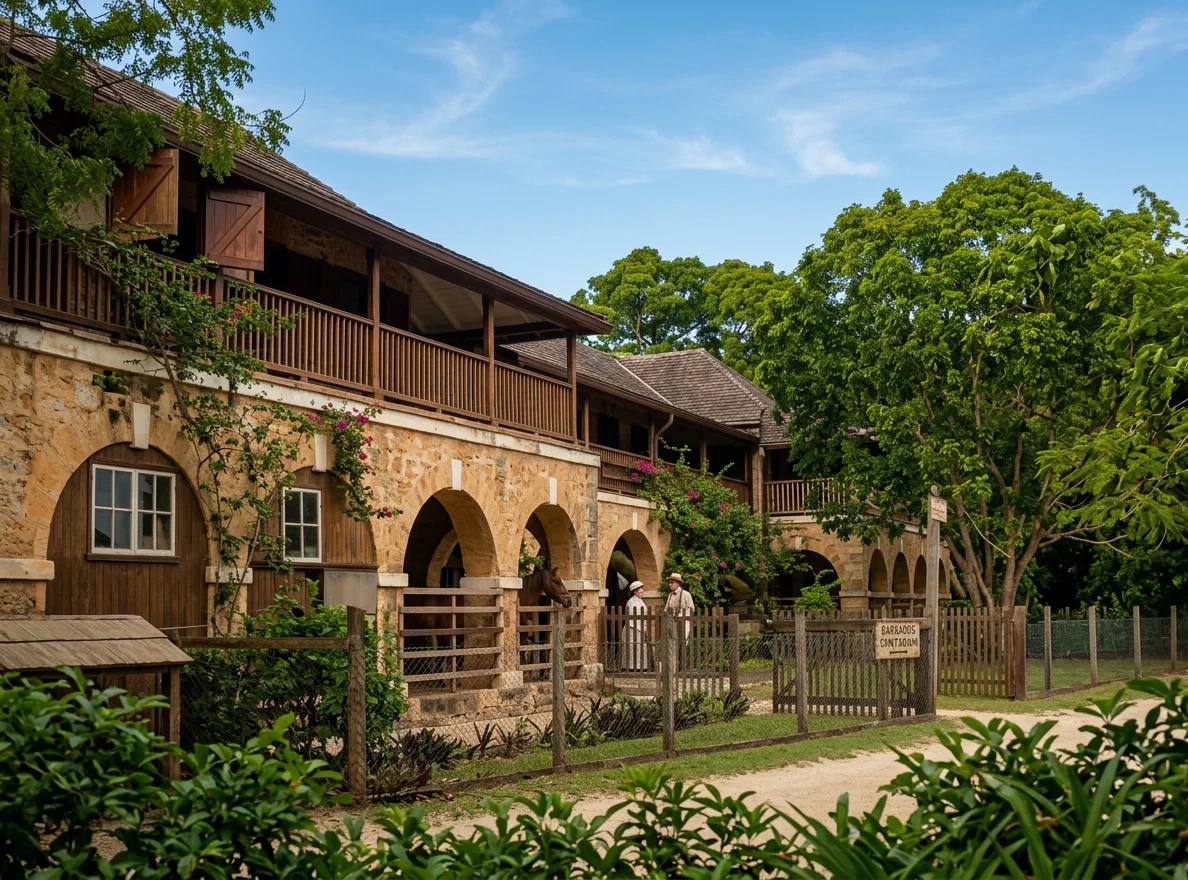
BARBADOS SANITARIUM
BARBADOS SANITARIUM
Before leaving Buenos Aires, I had learned from our Year Book that Dr. Charles Cave was conducting a sanitarium at Hastings, on the island of Barbados, and I decided to go on shore and pay a visit to his institution. One of the boatmen who took us from the ship to the pier informed me that Hastings was a suburb of Bridgetown, and that it could be reached by a car line. A ride of about half an hour brought us to the Barbados Sanitarium, which seemed to be well known to the conductor of the car. We were heartily welcomed by Dr. and Mrs. Cave, who showed us over the institution, and gave us a brief history of their experiences in Barbados.
It appeared that several years ago the British government quartered quite a large number of troops on the island, and that they constructed in that section several large buildings to accommodate the soldiers and officers. A short time ago the government withdrew its troops from the island, and these properties were then placed upon the market. The building occupied by Dr. Cave as a sanitarium was erected for the use of the medical officers. As shown in the illustration, it is a large two-story building, with ample porches on all sides. We found the rooms large and airy, and the outfit for medical treatments quite complete, including shower, spray, needle, and electric-light baths, and the usual provision for other treatments.
I learned from Dr. Cave that the institution was enjoying an excellent patronage, and had the good will and co-operation of the best class of people on the island. The grounds comprise four acres, with several buildings, in addition to the one shown in the illustration; and from the front of the main building a most beautiful view of the open sea can be had.
It was a refreshing change from life on board the ship to sit on the cool and airy porch of this sanitarium; and in addition to the pleasure of meeting Dr. and Mrs. Cave and learning of their work, we had the privilege of reading copies of the REVIEW AND HERALD and Youth’s Instructor, covering a period of several weeks, including practically all the papers which had not reached us in South America. We appreciated the courtesy shown us by Dr. and Mrs. Cave, and left them with hearty good wishes for the further prosperity of their work.
W. W. PRESCOTT.
Continue reading: The Bible Year