LAST week I related briefly the opening of the conference on June 15, and set forth some preliminary considerations bearing on the subject. I shall attempt in the present article, while touching but lightly the doings of the conference, to give some general impression of the situation as it appears at this very early stage.
The second formal meeting was held in the Ridderzaal at a quarter after three on Wednesday, June 19. It was an impressive sight, as carriage after carriage drove up, to see the large number of delegates representing so many different countries enter the historic building. One wanted to think that it really did betoken peace and good-will among the nations of the earth. Here were men of power and note from practically all the nations of the world, who had come together to deliberate concerning matters of the highest interest. Could they have come in vain?
Interesting Surroundings.
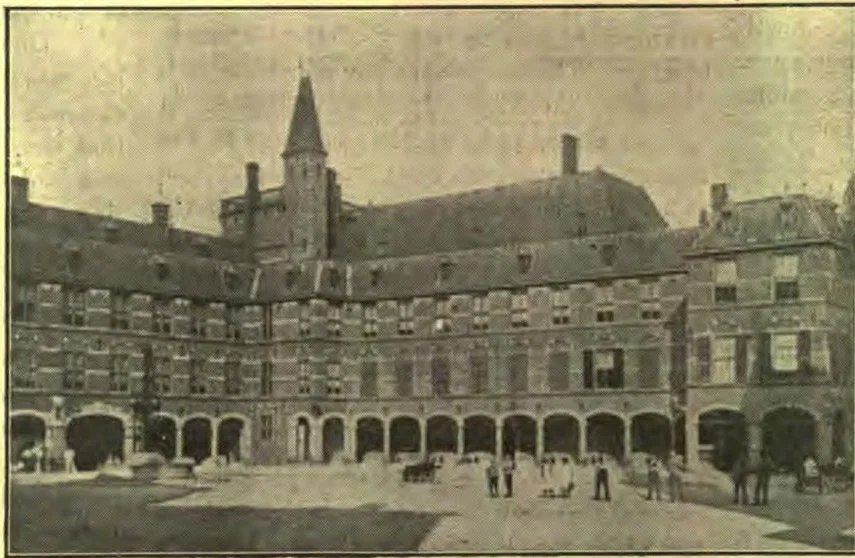
Almost unconsciously the mind wanders into the past, while the frock-coated, silk-hatted procession files in. The Binnenhof has a dark side to its history. Here, in May, 1619, the ill-fated John van Oldenbarnevelt was beheaded, "for having conspired to dismember the states of the Netherlands, and greatly troubled God's church." Yonder a few yards is the old Gevangenpoort (prison gate), a tower in which political prisoners were formerly confined. Here Cornelius De Witt was imprisoned, under a false accusation of conspiracy against the life of William III. His brother, hearing of his danger, came to rescue him; but the angry populace, availing themselves of their opportunity, forced their way into the prison, and seizing their victims, literally tore them to pieces.
Within these same gloomy walls, with old oak floors of surprising thickness, and apparently as sound and good to-day as when first laid down some six hundred years ago, there is a marvelous collection of instruments of torture. There is a frame-work in the shape of the letter "X" upon which it was customary to stretch the person condemned to death. The bones of legs and arms were then deliberately broken in two places, after which the executioner waited a full half-hour before administering the blow which put an end to the prisoner's life. One sees also thumb screws, racks, a piece of rock deeply hollowed out in two places by the action of dropping water under which the prisoners were placed. The men who suffered this latter punishment became insane the first day, and were dead in three days. In the second story, facing, and only a very few feet from, the open kitchen, is the heavily-grated chamber in which persons were starved to death, it being so located in order that the savory odors of the food should intensify the sufferings of the victim.
As might be expected, this prison was full to overflowing in the Duke of Alva's time, but it had long periods of service before and after his day. When the mind turns from the contemplation of cruelties so refined, and one may add, fiendish, to the gathering of men in the Ridderzaal, and the efforts they are apparently making to rid even war of some of its cruelties, it is by no means strange that one should indulge the hope that the world had changed for the better. But we need to be careful to distinguish between moral improvement and the change of customs and manners, which is really quite another thing. Tragedies have occurred in recent times which show that even an American mob can go to terrible lengths, and it is never safe to count on unaided human nature changing very materially.
The Second Meeting.
But to return to the second meeting of the conference. It was held behind closed doors, and was concerned with the receiving of telegrams from the Emperor of Russia and the Queen of Holland, and the arrangement of the four commissions, the first to deal with arbitration, the second with war by land, the third with war by sea, and the fourth with maritime rights. Even with these commissions the conference finds itself a pretty large and unwieldy body, and it is probable that most of the commissions will again be split up into smaller bodies.
The days immediately following were occupied with consultations between the chief officers of the different commissions, and on the 22d and 24th, respectively, the commissions held their first sittings, the time being occupied with the determining of procedure.
General Prospects.
What can be said of the general prospects of the conference? The answer will depend upon how much is expected. After interviewing a number of people, and watching the general course of the meeting during the opening days, I think I am safe in saying that with few exceptions the delegates do not expect to accomplish anything beyond the regulation of certain matters of actual warfare, and the enlarging of the sphere of arbitration, with the further probability of forming a permanent peace tribunal at The Hague. Within this sphere there seems to be a good deal of unanimity. Other things may and will be discussed, but without practical results.
Germany is, on the whole, much more favorable than at the conference of eight years ago. She is not particularly opposed to there being a discussion of the limitation of armaments, only she does not care to take part in such discussion, regarding it merely as a waste of time. England, tho she made it very clear previous to the conference that she wished the matter taken up, has said nothing of it thus far at the meeting. There is hardly any doubt but the question will be introduced and discussed, but it is also pretty sure that nothing whatever will come of it.
A Modest Program.
Nelidoff laid a very modest program before the delegates in his inaugural address, and a day or two later he made it quite clear in an interview that the conference was not likely to effect any large and decisive results in the direction of the limitation of armaments, nor to change materially the present situation of most European nations, which are staggering under heavy burdens of military expenditure. It was, however, he said, something that such a large number of nations should come together to deliberate in a friendly way regarding the maintenance of the world's peace, and to arrive at some definite understandings in reference to certain phases of war both on land and on sea.
Interesting Interviews.
General Davis, whom I interviewed yesterday, was reluctant to express himself fully, because the situation was still uncertain; the conference had not taken definite shape, and so many things were in the developing stage, as it were; but he said he was pleased with the general outlook, that the delegates were applying themselves seriously to the task in hand, and there seemed to be a very general spirit of cooperation. He thought there was reason to hope for some permanent results.
Mr. Grieg, one of the technical delegates of Norway, and his colleague, Mr. Lange, who is the secretary of the Nobel Peace Committee, expressed their belief that something should be arranged in the nature of a Commission of Inquiry which, by official inquiry into such incidents as the sinking of the Maine, might help to avoid unnecessary wars. They also spoke favorably of the prospects for an International Prize Court. This matter, it may be said in passing, has been broached by Germany at the conference, but the original suggestion came from Norway last February. Norway will gladly fall in line with any and all efforts to promote peace. In common with other small powers, she desires peace, tranquillity, and independence.
The United States of the World.
Probably Mr. W. T. Stead's opinions are fairly well-known in America. I met him last evening at the headquarters of the Foundation of Internationalism. Asked what his impressions were of the opening of the conference, he replied, "Good, very good."
"Do you think the United States of Europe is a feasible thing?"
"Rather," he replied, "the United States of the World. This latter is the more likely; for in any union of the different States of Europe, there is likely to be friction over details, while in a world alliance or union, matters of detail would not be expected to be taken up. The world has shrunk greatly the last few years; what with our numerous inventions in the way of rapid travel, it has become a very small place. The trouble is that the mechanical progress of the world has outstripped its moral and intellectual progress; it has made us neighbors before we have been made neighborly, and brought us close together before we have adjusted our old political relations."
"You are quite sure that we shall be made neighborly?"
"Certainly, the world is moving that way. In very early times each man did as he pleased, and made war upon any and everybody, if he so chose. Then this was found to be inconvenient; so the people gathered together in families and tribes; afterward out of these were formed the nations. For a time, long, in fact, till very recently, any nation has been free to make war, but at the present day the smaller nations are practically excluded. Only a very few great and powerful nations have the power. Thus there is a drawing together. It is all part of a great movement, and this conference is the natural outgrowth of the ages."
I also interviewed the Baroness Bertha von Suttner, the recipient of the Nobel Peace Prize in 1906, and Felix Moscheles, Chairman of the International Arbitration and Peace Association, and editor of "Concord." I shall give the gist of these interviews in my next contribution. The peace movement has grown with great rapidity in the last few years, and has taken on unwonted activity. There can be no doubt that the present Hague Conference is to a certain extent, at least, an outgrowth of the agitation which various branches of the great movement have been carrying on for years past. On this account it is of interest to trace the movement back to its earlier source, and endeavor, if possible, to ascertain what relation these peace societies sustain to the general public. Are they or the politicians nearest the hearts of the people? Are they, again, men in advance of their time, or do they lack practical common sense, and so give themselves to the elaboration of theories which can never be worked out under ordinary human conditions?
M. ELLSWORTH OLSEN.
The Hague, June 24, 1907.
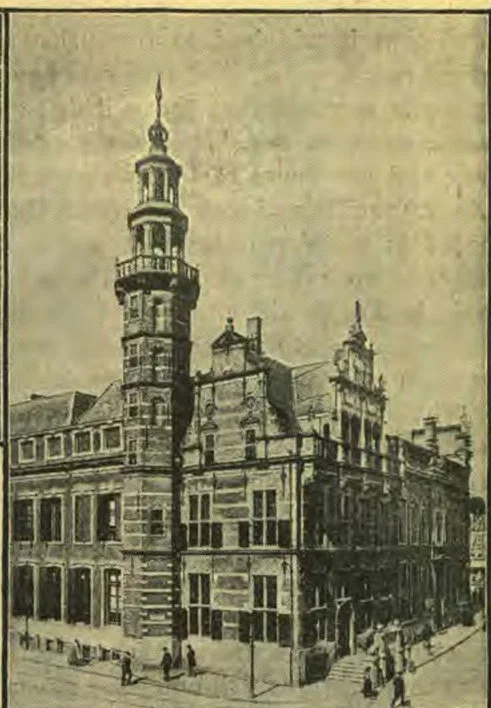
Town Hall, The Hague.
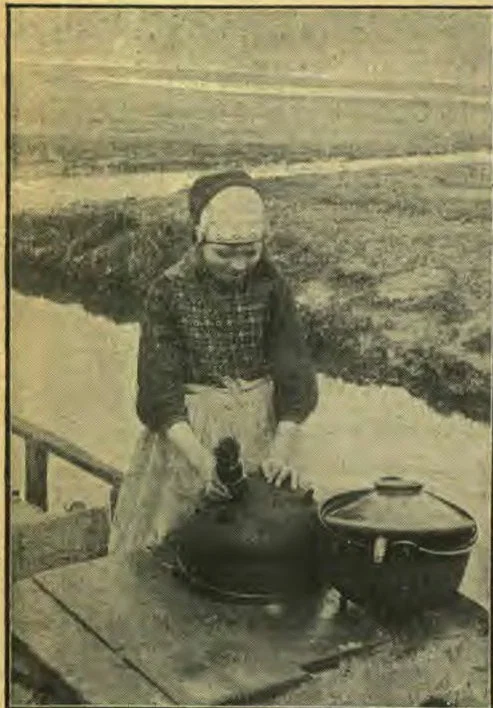
Domestic Labor.
M. de Beaufort, First Dutch Delegate.
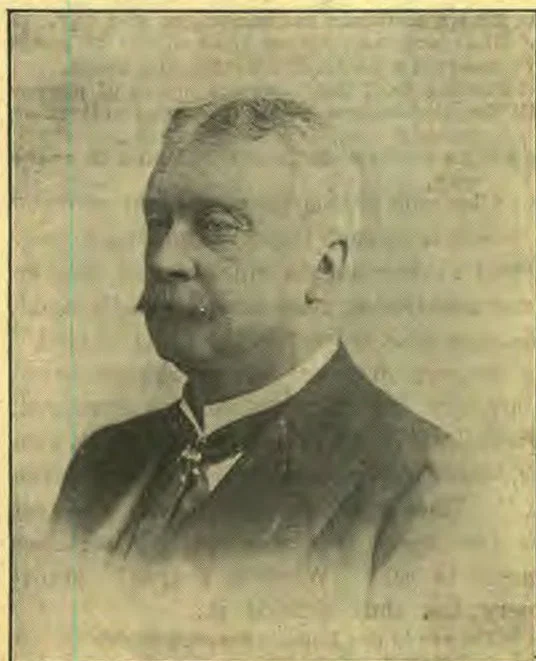
Sir Henry Howard, English Minister to Holland and Delegate to Peace Congress.
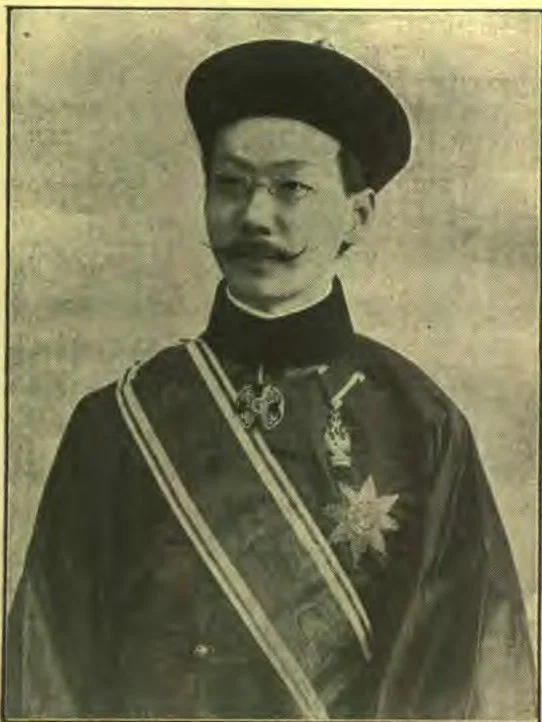
M. Lon Tseng Tsieng, First Chinese Delegate to The Hague.
Le Binnenbel.
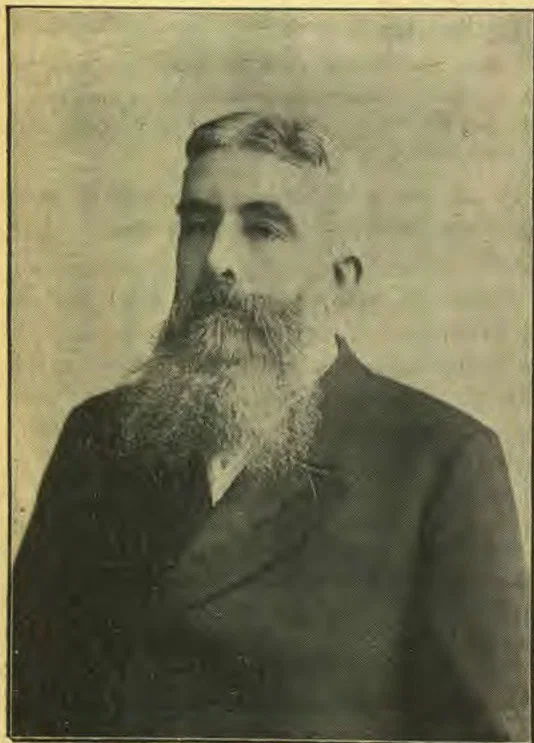
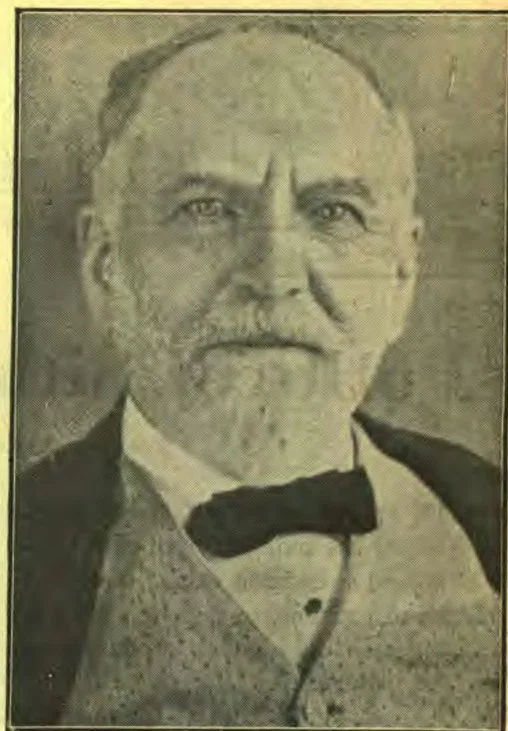
Wm. T. Stead.
“Big Brothers.”
A movement for the uplifting of young men and boys has been inaugurated by the West Side Branch of the New York City Y. M. C. A. Each member is given a young man or boy to help, one to whom he will act the part, as far as possible, of “big brother,” visit him in his home, help him to better conditions, associations, and ideals, by being a real friend. Each week they plan to spend some time together, and often a real warm friendship results. In the three years this plan has been tried, the Y. M. C. A. men have been able to help scores of unfortunate boys, many of whom have developed into useful citizens. It is the personal touch that accounts for the success of the plan, and its very simplicity and practicability recommend it to Christian men.
Papal Decree to Stop Liberalism!
"Papal Decree to Stop Liberalism!"—This is the title to an Associated Press despatch sent out from Rome under date of July 17. The decree promulgated by the pope specifically condemns sixty-five statements taken from the writers of leading Catholic modernist writers. Many of the foremost Catholics, particularly in this country, have some very advanced and liberal views, but it seems that this is not pleasing to the pope.
Beautiful Bible Mottoes
No home complete without them
There is no better time than the present to sell them. They sell readily everywhere and agents are making good wages. An inspiration to higher living in every home. Beautiful floral designs with motto in silver and gilt letters and cord for hanging, and many other styles. Send $1.00 and name of express office and we will send prepaid sample order, $2.00 worth of mottoes. Particulars free. Address Home Art Co., Box 114, College View, Neb.
WALL MOTTOES.
They are selling everywhere. Three agents ordered 5,000 each. One agent has taken, in less than eight months, 6,785 orders. If you send us a good recommendation from the elder of your church we will mail you one dozen on thirty days' time. Send a two-cent stamp if you want further particulars. Address, Hampton Art Company, Hampton, Iowa.
Political Situation in Korea
By F. W. Field
Korean Articles—Number Two
THE treaty by which China acknowledged the independence of Korea was signed at Shimonoseki, Japan, in May, 1895. Even previous to this time the Japanese Government had entered upon a vigorous policy of reform for Korea. In October, 1894, Count Inoue, a leading Japanese statesman, arrived in the country as "Resident," and proceeded to administer the government in the king's name. "There were Japanese controllers in all the departments, the army was drilled by Japanese drill instructors, a police force was organized and clothed in badly-fitting Japanese uniforms, a Council of Koreans was appointed to draft a scheme of reform, and form the nucleus of a possible Korean Parliament, and Count Inoue, as Japanese adviser, had the right of continual access to the King, and with an interpreter and stenographer sat at the meetings of the Cabinet.
The difficulties encountered in this campaign of reform were many and serious; for it was difficult to secure the cooperation of the Koreans themselves, so that Count Inoue was led to exclaim that there were "no tools to work with." Among the demands made by the Japanese and finally agreed to, the following may be mentioned: That the king's father and the queen should no more interfere in public affairs; that no relatives of the royal family should hold public office; that the number of court eunuchs and "palace ladies" should be greatly reduced; and that caste distinctions should be no longer recognized.
The Japanese doubtless meant well in their efforts toward reform, but in some matters they certainly showed a lack of tact in conciliating the Koreans. "The abolition of long pipes, alterations in court and other dress, many interferences with social customs, and petty and harrowing restrictions and regulations, embittered the people against the new regime."
Japanese Plans of Reform Broken Up.
Yet all might have been well in time but for one stupendous blunder, which discredited Japan before the whole world, and led her to withdraw from Korea, thus giving place to her keen rival, Russia. It is not too much to say that the events of 1895 had a direct bearing in bringing on the recent war between Russia and Japan.
The queen of Korea was acknowledged to be a woman of rare talent, and a shrewd diplomat; and she used her influence with the king to secure the advancement of the various members of her family to high government positions. Consequently she had many enemies, among whom was the Tai-Won-Kun, the king's father, who had formerly been regent for his son, and fain would regain the power he once enjoyed.
Plans to Assassinate the Queen.
In the fall of 1895, Count Inoue left Korea, and was succeeded by Viscount Miura as Japanese minister to Korea. The new minister soon entered into negotiations with the Tai-Won-Kun, to return him to power. And this was to be brought about by a diabolical plot to assassinate the queen in her own palace. The details of the plot were arranged by the secretary of the Japanese legation. The assassins, sixty of whom were Japanese, included Japanese policemen in civilian dress, and Japanese advisers to the Korean Government, and in its pay. The attack on the palace was made in the early morning of October 8. The Japanese soldiers stood guard outside the palace walls while the attacking party repulsed the palace guard, and pressed their way into the quarters occupied by the royal family. The reader may be spared the rehearsal of all the harrowing scenes which ensued. Let it suffice to say that the queen was at last discovered and slain; her body was then carried to a pine grove in an adjacent park, kerosene oil was poured over it, fagots were piled about it, and the whole set on fire.
The Tai-Wan-Kun accompanied the assassins when the attack was made; and having gained access to the palace, he at once usurped the government. A new cabinet was formed from among his friends and supporters. The king was practically a prisoner in his own palace; for the usurpers compelled him to sign decrees which he loathed; or in case he positively refused to approve, decrees were issued in his name in spite of his protest.
Trial of the Assassins.
It was soon known that the Japanese Government was entirely innocent of any complicity in the plot to murder the Korean queen. General Miura was at once recalled, placed under arrest, and with about forty-five of his accomplices, brought to trial. The evidence presented clearly established the facts as above narrated, up to the moment when the attack was made on the palace; but from that point the evidence was not sufficient to convict, the judgment of the court being that there was "no sufficient evidence to prove that any of the accused actually committed the crime originally meditated by them."
Meanwhile poor Korea was distracted and brought to the verge of revolt by the acts of the usurping government. The king was still a prisoner, surrounded by the murderers of the queen, and daily in fear of his own life. One attempt of his friends to rescue him was quenched in blood. Finally, on the eleventh of February, 1896, the news spread that the king had escaped from the palace, and had taken refuge in the Russian legation. He at once resumed the reins of government, formed a new cabinet, and for over a year held court in the legation of Japan's bitter rival.
A Severe Blow to Japanese Prestige.
No severer blow to Japan's prestige in Korea could have been struck. And, bowing to the inevitable, the Japanese quietly proceeded to retire from the country for the time. The king was left to carry on the government in his own way; and as a result, most of the reforms introduced by Japan were allowed to lapse. And what Japan lost in prestige and influence, Russia gained.
Korea a Stake in the War.
While the immediate cause of the recent13war was Russian occupation of Manchuria, it is well known that a predominating influence in Korea was one of the stakes in the game of war. And having won the game, Japan consistently resumed the policy so abruptly interfered with ten years before. By the treaty with Korea signed the 17th of November, 1905, a Japanese resident general again practically administers the government in Korea. And in order to make Japan's suzerainty effective, the treaty provides that the Korean Foreign Office shall be abolished, and that Japan shall take full charge of Korea's relations with other powers.
The acceptance of this treaty was a severe blow to Korean national feeling and spirit of independence. The following instances will show how keenly some of the Koreans took the matter to heart. At the final meeting between Japan's special envoy and the Korean Court for the ratification of the treaty, the prime minister openly opposed the measure, and was therefore dismissed from his office. Thoughts of the humiliation of his country so wrought upon his mind that he became insane, and after a few days committed suicide. Another high official was arrested on suspicion by the Japanese authorities; and from the time of his arrest he refused all food, and died after a week's confinement. Among the common people the feeling against Japan was quite strong. While Marquis Ito was riding in a train on the Seoul-Fusan Railway, a Korean threw a stone, which shattered the window opposite the Marquis, and drove the splinters of glass into his face.
Japanese Rule in Korea.
The firm, heavy hand of Japan may be seen in the following instances. The assailant of Marquis Ito was punished with one hundred strokes, and two months' imprisonment; the sentence being imposed by the Japanese military authorities. A certain newspaper published in Seoul which opposed the proposed arrangement with Japan was suspended. The Koreans complained that the Japanese freely appropriate land and other property "for the government."
On the other hand, Japan is taking hold again to reform the gross abuses of the Korean Government. The reform of the country's finances is one of the most important and difficult tasks on hand. And in order to relieve the stringency in money circles due to the war and to the necessary reform measures, Japan made a loan of a million and a half dollars to Korea, without security and without interest, payable in seven years. Reforms in other lines are under way. A just and equitable system of taxation will be enforced. Already the work of providing a public system of education has been begun.
Every nation that has been reduced to subjection by a stronger power has doubtless suffered injustice in the process. Yet in the case of Korea, it is not difficult to see that Japanese control and enterprise in that country will tend to advance and hasten the work of the Gospel. Life and property will be safer. The holding in check of the turbulent elements of the country will tend to the peace of society. Means of travel will be greatly improved. Since the war, the railway from Fusan in the far south to Wiju on the Yalu River has been opened; and a line from west to east across the country is being planned.
Religious Freedom under Japanese Rule.
The laws of Japan allow the utmost freedom in matters of religion; and this may be taken as a guarantee that Japan will not interfere with a similar state of freedom in Korea. But if Russia, with her State church and oppressive laws had gained the ascendancy in Korea, the case might have been different. However, the Lord's work in the earth has often had to advance in the face of restrictive human laws; but it goes forward in spite of these, thus revealing the divine power behind it. But if, in the providence of God, the Gospel for the last days is to be given free course in Korea, we will rejoice that it is so, and pledge ourselves to take advantage of every opportunity thus afforded.
Tokyo, Japan.
F. W. FIELD.
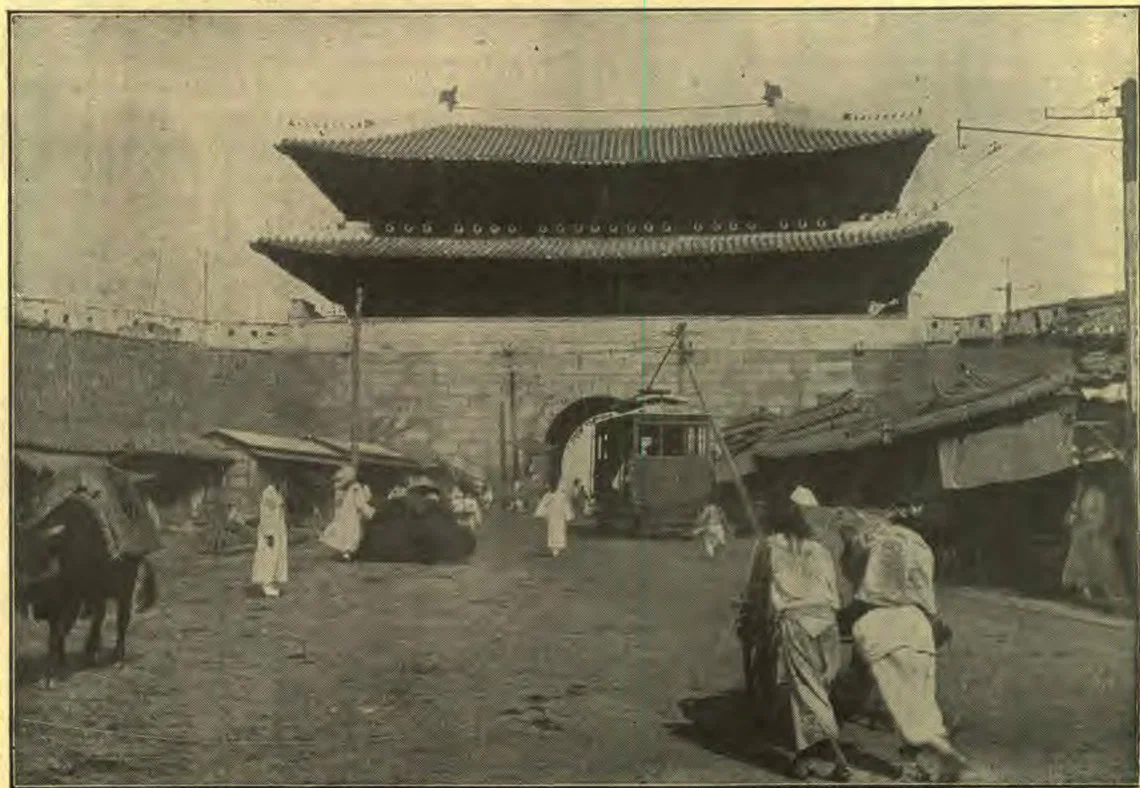
Outside the South Gate—Seoul.
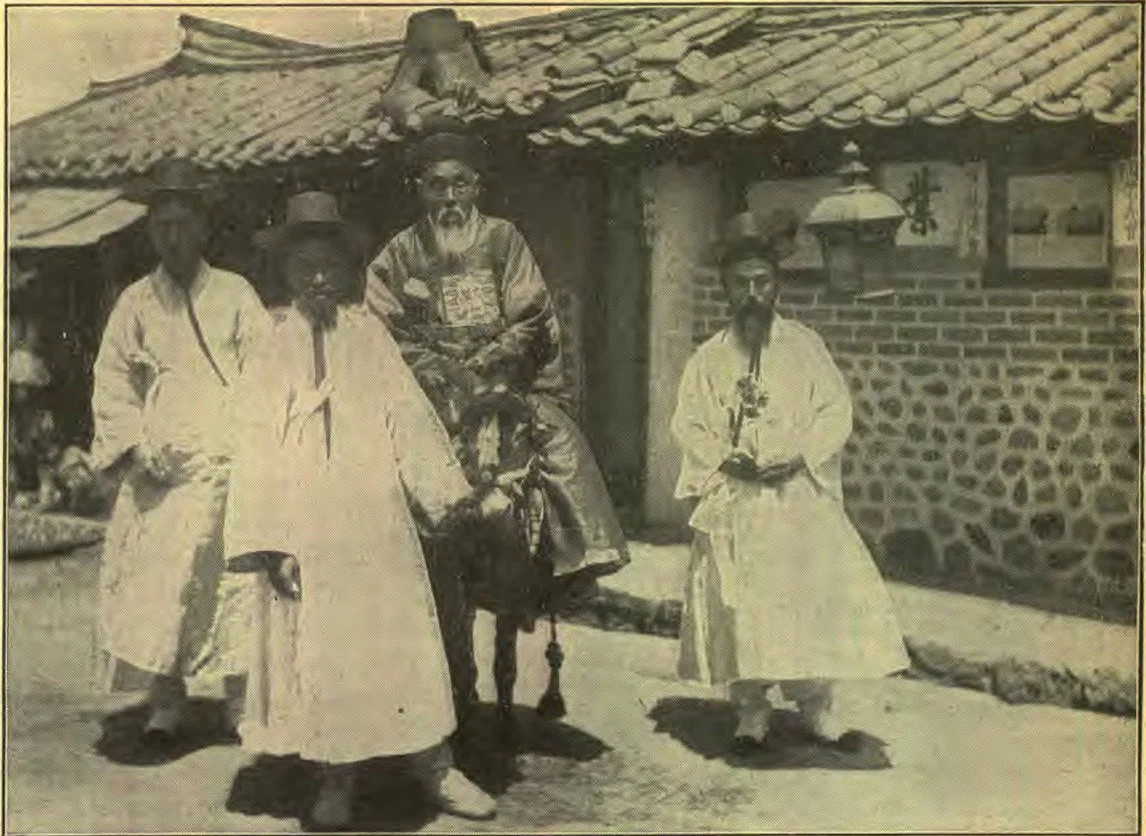
Korean Official and Escort.
NOTICE.
Several of my old agents for E-Z Washing Tablets have written me to know if I have discontinued my business in Baltimore. Will say that my business there is still carried on, and all orders and inquiries addressed to me at Elksridge Station, Baltimore, Md., will have proper attention.
E-Z WASHING TABLET CO.
Alfred Mallett, Mgr.
920 Fifth Street - - Sacramento, Cal.