The Youth’s Instructor, Vol. LII, No. 45

Boy Habits Mould the Man

The Youth’s Instructor

Nov 8, 1904

Review and Herald Publishing Assn. · Washington, D. C. · Nov 8, 1904

Boy Habits Mould the Man
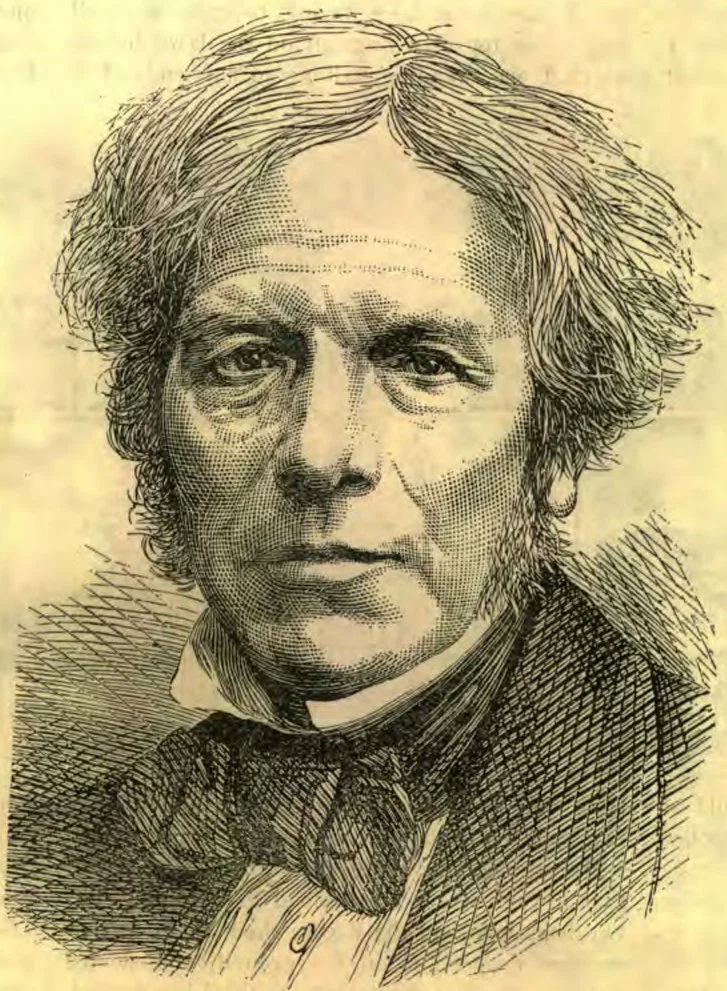
One beautiful day last year, while walking in the great Highgate Cemetery, London, I chanced to see one of the plainest of headstones with this inscription: “Michael Faraday, Born 22d September, 1791, Died 25th August, 1867.” I had read considerable about Michael Faraday as a man of science, and now, when standing by the side of his grave, my reflections led me to review his life, especially its early part, to see from what grew so eminent a character as his.
The conclusion drawn was that the future of every young person is in his own hands. That is to say, it is in the power of every one starting out in life to mold his own future to a large extent, since this is mostly controlled by the habits formed in childhood and youth. Scarcely any eminent character, of either sacred or profane history, has been endowed by nature with apparent advantages over his contemporaries. Whatever developments appeared in them were the result of cultivation in those directions.
The career of Michael Faraday was no exception to this rule. His father had been a journeyman blacksmith of Clapham village, in Yorkshire, but removed to London in 1791, just before the birth of the subject of this sketch. The family means were quite limited, so much so that when Michael was five years of age, they occupied a room over a coach house. At the age of nine, the boy was allowed but one loaf of coarse bread for each week’s rations.
When thirteen years old, the age when boys go out to service in England, young Faraday was employed for “one year on trial,” as errand boy for a bookseller named Riebau. His duty was to distribute, and gather up again, the papers that his master loaned to customers. At the end of the trial year Michael was apprenticed to his old master to learn the trade of bookbinder and stationer. In England it is customary for parents, when thus binding out a boy to a trade, to pay quite a sum for the privilege. But in young Faraday’s indenture papers was written this clause: “In consideration of his faithful service, no premium is given.”
During his apprenticeship the boy read such works as Marcet’s “Conversations in Chemistry,” and the electrical treatise in the “Encyclopedia Britannica.” “On the Mind,” by Watts, was another work which he said was the first reading that made him really “think.” Along with these he read Sturm’s “Reflections on the Works of God,” and others of a similar character, so that the science he learned was not an unbalanced one.
At the close of his seven years’ apprenticeship, young Faraday engaged himself to a Mr. De la Roche, as a journeyman bookbinder. But this business was not to his liking after all; and although his employer made him flattering offers to remain with him in business, he said he could not do so. Having attended a few of Sir Humphry Davy’s lectures at the Royal Institution, he wrote to that noted scientist, asking for employment under him. In due time he received a note from Sir Humphry, asking him to call on him the following day. As the result of this interview, he was given a place as assistant in the laboratory, at six dollars a week, and two lodging rooms in the garret of the institution.
MICHAEL FARADAY
MICHAEL FARADAY
So pleased was Sir Humphry with his young protege that soon after, when he was to tour the Continent in the interest of science, he chose Faraday for his traveling companion. Thus by his faithfulness was the young man being constantly rewarded with opportunities for advancement, until he rose to the topmost rung of his profession. He not only in time became president of the Royal Institution, but was chosen as lecturer in chemistry at the Royal Academy at Woolwich.
During the last forty years of his life this wonderful man was honored by all, from the highest to the lowest. So numerous indeed were his appointments to high places, that a continental professor is said to have addressed him thus in a letter: “Professor Michael Faraday, Member of all the Learned Societies of Europe.” All his honors came, not because nature favored him above others, but because of the sterling qualities he possessed. These, too, were attained by a stubborn fight on the right side of principle. His niece, who was intimately acquainted with him, said that in him “a most fiery passion was kept under by the most perfect master.” Not more than twice in all the years she knew him, could she remember that he let his passion get the better of him, and these occasions were each but for a moment.
With all his accomplishments, Michael Faraday was a deeply religious man, and found time not only to attend the general meetings of the Sandemanian church, in Paul’s Alley, of which he was a member, but also to minister to the congregation quite regularly from the sacred desk. His was indeed a busy life, one that was overworked, so that at threescore and ten his memory had failed, and his bodily powers had become very weak.
Near the close of his life, Faraday left the Royal Institution, and removed to a house at Hampton Court, which was placed at his disposal by Queen Victoria. Here he quietly passed away, in his study chair.
“Such lives are precious; not so much for all Of wider insight won where they have striven, As for the small still voice with which they call Along the beamy way from earth to heaven.”
J. O. CORLISS.

Faraday’s Lost Cup

A MINISTER once, in replying to the charge of credulity made by an objector against those who believe that God will raise the dead from their graves, gave the following beautiful illustration:—
A workman of Faraday, the celebrated chemist, one day by accident knocked a beautiful silver cup into a jar of strong acid. In a little while it disappeared, being dissolved in the acid as sugar is in water, and so seemed utterly lost, and the question came up: “Could it ever be found again?” One said it could, but another replied that, being dissolved and held in solution by the acid, there was no possibility of recovering it. But the great chemist, standing by, put some chemical mixture into the jar, and in a little while every particle of the silver was precipitated to the bottom, and he took it out, now a shapeless mass, and sent it to a silversmith, and the cup was soon restored to the same size and shape as before.
If Faraday could so easily precipitate that silver, and restore its scattered and invisible particles into the cup they had before formed, how easily can God restore our sleeping and scattered dust, and change our decayed bodies into the likeness of the glorious body of Christ!—Canadian Churchman.

If I Were a Boy Again

It is so many years since I was a boy, and I have seen so much of the world in those years, that my opinion ought to be of some value. The wrinkles are beginning to show in my face, but I do not think that there are any on my heart, because I still feel young, and I have so much sympathy with and for boys.
It is because I am so fond of boys that I would like to say a few things to them in regard to the things I would like to do if I were a boy again. Of course, I know that it is true that “boys will be boys” in many respects, and I am glad of it.
Every boy has a right to the joyfulness, the merriment, the buoyancy, and the freedom from care that belong to boyhood. Every boy has a right to be happy, but no boy has a right to be happy at the cost of the peace of others. We older ones have rights that youth ought to respect, and that you can respect without curtailing your own happiness.
If I were a boy again, and I knew all that I know to-day, I would try to be more mindful of the rights and the happiness of others. I would not insist on always having my own way, no matter how much inconvenience and real trouble it gave my family and friends. I think that I would have an occasional little conference with myself, and I would say in that conference:—
“Now, see here, boy, you have no right to make a nuisance of yourself for the gratification of your own pleasure. You have no right to create pandemonium wherever you are, simply because you want to ‘let off steam.’ Other people have a right to peace and quietness in the house, and you are bound by all the laws of kindness and courtesy to respect that right, and you should be careful not to annoy others by uncontrolled boisterousness or rudeness.”
If I were a boy again, I would set more value on personal tidiness. I knew not that my carelessness in this respect—grimy hands and uncombed hair—was a great annoyance to my family and friends. I know that a boy rises in the esteem of people when he is neat and tidy in personal appearance, and that a really untidy boy repels those of refined taste. God, too, requires cleanliness. If I were a boy again, I would make a very free use of those two cheap and abundant articles—soap and water.
If I were a boy again, I would try not to think that I had a right to the best of everything on the table, the best chair in the house, the lion’s share of everything, and I would try to have more respect and consideration for my elders than some boys of whom I know. If there is anything in the world that makes friends for a boy, it is real unselfishness and real kindness and courtesy to those much older than himself. When I see a boy rise and lift his hat and give his seat to a lady or an old gentleman in a street-car, or when I see him ready and eager to render some service to ladies or to the aged, it warms my heart toward him, and I know that he has the instincts of a real gentleman. And when I see a boy absolutely unselfish—only the Christian boy can be—in his home and among his mates, I know that I see a boy who can not fail to have the sympathy and help of others as he enters upon his life-work, and this is of great worth to any young man in any work.
If I were a boy again, I would not reserve all of my smiles and merriment and courtesy for others, and be sullen and rude and “cross as a bear” in my own home. I have known some boys of that type, and I can not help thinking that they are humbugs, for they often receive credit for being “such nice boys” when they are not agreeable at all to those to whom they ought really to be most kind and courteous. The boy who snaps and snarls at his mother, and is sweet and smiling to the mothers and sisters of other boys, is really deceptive.
If I were a boy again, I would be a regular attendant at church and Sabbath-school; for by doing so I would not only be honoring my Creator, but I would be saved from many temptations that come to the street lounger.
If I were a boy again, I would cultivate a spirit of true patriotism, and I would honor my country and my flag. I would know all that the beautiful red, white, and blue emblem stands for, and I would do all that I could to add to the glory and honor of my native land. One day not long ago I saw some boys trying to raise a small flag to the top of a flagstaff on the lawn before which I was standing, talking to a friend. The boys were having some difficulty in hoisting the flag, and while they were trying to make it rise, a fire-engine came along with a rattle and clatter that always sets a boy’s blood to tingling. The two boys who had the flag in their hands at that moment dropped it on the ground, and started to follow the fire-engine, but the third boy tarried, and was folding up the flag when one of the boys looked back over his shoulder, and called out: “Come along, Ted! You’ll miss seeing the fire!”
“I’d miss a dozen fires before I’d go off and leave my country’s flag in the dirt,” replied Ted, and I felt like saying: “Good for you, my boy! you have the spirit of true patriotism!”
If I were a boy again, I would spend no time at all in what some persons call “loafing.” And I would keep off the street when it was unnecessary for me to be there. I would shun tobacco and rum because it has been very clearly demonstrated that they are bad for any one, and, that rum in particular is at the bottom of most of the evil and sorrow in the world. If I were a boy again, I would make almost any personal sacrifice in order to secure a good education, not only because an education adds immensely to the pleasure of life, but because it adds to one’s usefulness, and it is imperative to the highest degree of success.—J. L. Harbour, in The American Boy.

Do It Yourself, My Boy

Why do you ask the teacher or some classmate to solve that hard problem? Do it yourself. You might as well let some one else eat your dinner as work your problems for you.
It is in studying as in eating; he that does it gets the benefit, not he that sees it done. In almost any school I would give more for what the teacher learns than for what the best pupil learns, simply because the teacher is compelled to solve all the hard problems and answer the difficult questions for the lazy boys.
Do not ask the teacher to parse all the difficult words, or to assist you in the performance of any of your duties. Do it yourself. Do not ask for even a hint from anybody. Try again.
Every trial increases your ability, and you will finally succeed by dint of the very wisdom and strength gained in this effort, even if at first the problem is far beyond your skill. It is the study and not the answer that really rewards your pains.
Look at that boy who has succeeded, after six hours, perhaps, of hard study. How his eye is lit up with a proud joy as he marches to his class!
He recites like a conqueror, and well he may. His poor, weak schoolmate, who gave up that same problem after the first faint trial, now looks upon him, with something of wonder, as a superior. The problem lies there,—a great gulf between those boys who stood, yesterday, side by side. They will never stand together as equals again.
The boy that did it for himself has taken a stride upward, and, what is better still, gained strength for greater ones. The boy who waited to see others do it has lost both strength and courage, and is already looking for some excuse to give up both school and study forever.—Success.

ETHEL PAXSON

Gentleness

GENTLENESS is one of the most admirable features of character. It has a far greater influence on the actions of those with whom one comes in contact than any other persuasive power. The effect of gentleness is very perceptible, even upon dumb animals, but much more so upon human beings.
A reprimand administered with tact, kindness, and above all, with gentleness, will be far more effective than one carrying with it fierce threats and commands. As the sunbeams so often accomplish what the winds vainly endeavor to do, so will a gentle and persuasive manner influence a fellow being for good where more forcible arguments fail.
Gentleness is like the silent influence of light which gives color to all nature. It is more powerful than loudness or force, and far more fruitful. It pushes its way quietly and persistently, like the tiniest daffodil in spring, which raises the earth and thrusts it aside by the simple persistency of growth.
A harsh, rough manner is often the greatest obstacle in the way of the accomplishment of one’s desires, while the same argument, hidden in the guise of a gentle voice and manner, just as often carries conviction with it. How true, then, is the quotation by Francis de Sales, “Nothing is so strong as gentleness, and nothing so gentle as real strength.”

ETHEL PAXSON

Childhood Under the Unseen Hand

“Upon our childhood rests the glistening cloud Of His sweet benison; the unseen Hand Holds up our steppings in that way of years Which leads through life to the eternal land.”

The Trap-Door Spider

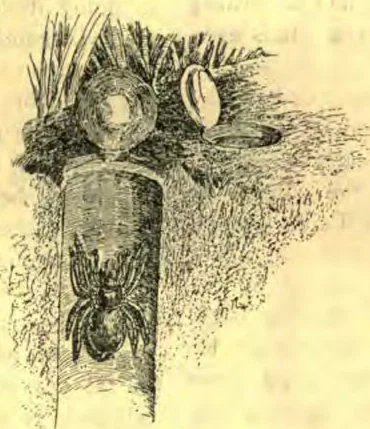
THERE are many kinds of spiders, as garden spiders, water spiders, crab spiders. The one in our illustration is named the trap-door spider, and a very clever spider he is. That you will see when you read how he makes his house.
He selects for his site a place bare of grass, sloping in such a manner as to carry off the water, and of a firm soil, without rocks or small stones. He then digs a hole from one to two feet in depth, just large enough to allow him to pass in and out with ease. He lines it with silk tapestry glued to the walls.
Having finished the inside, he begins with the door. He takes a number of layers of earth, properly kneaded, and binds them together with silk. On the outer side it is flat and rough, corresponding to the earth around the entrance, for the purpose of concealment. On the inside it is round, and covered with a web of fine silk. The door is now fastened to the upper side of the entrance with a hinge of silk.
Having finished his house, he takes up his abode and dwells in comfort. When he is at home, and the door is forcibly opened, he pulls it strongly inward; and even when half opened, often snatches it from the hand. But when he is foiled in this, he retreats to the bottom of the nest as the last resort.—Selected.

The Manufacture of Cocoa

There are many brands of cocoa on the market, with equal claims to superiority. This article is not for the purpose of discussing these claims, but to describe the process of cocoa manufacture by one of the largest and most popular cocoa firms in the world.
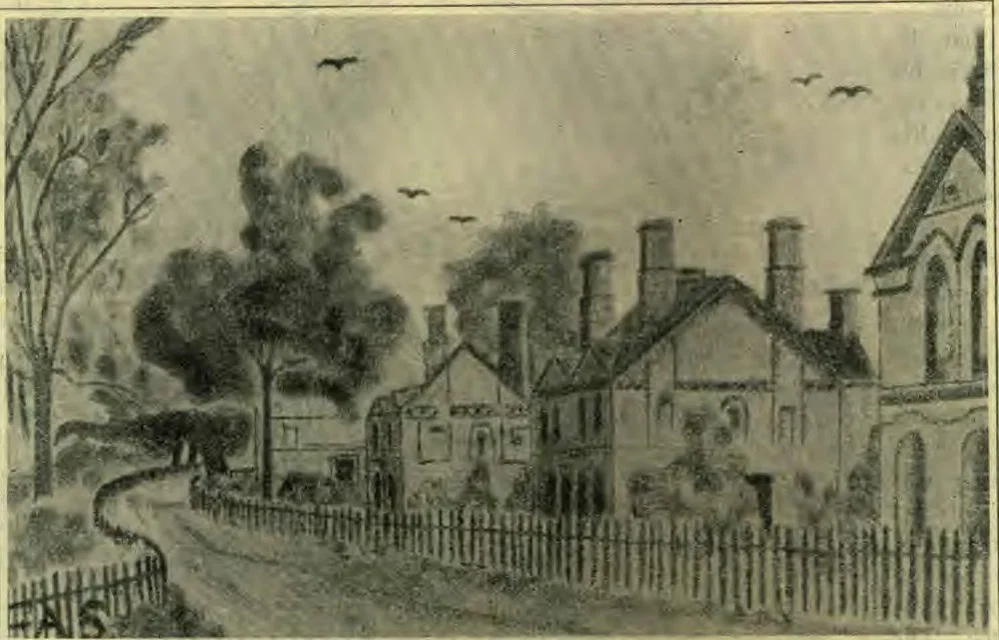
The illustration on page two gives an accurate view of a country lane, in Bourneville, England, with a row of cottages occupied by prominent work-people engaged in the factory of Messrs. Cadbury, who began the business of cocoa manufacture there a little more than forty years ago. They started in business with less than twenty employees, but now have nearly two thousand, including men, boys, and girls.
TRAP-DOOR SPIDER AND ITS BURROW
This great increase of help shows the vastness of proportions the business has at last assumed. The productions of this factory comprise cocoa essence and sweet chocolate. The cocoa beans, or nuts, arrive at the factory in sacks weighing anywhere from one hundred to two hundred pounds, and are graded into sizes by being passed over sieves, slightly inclined. Being thus freed from foreign matter, the nuts are carried by machinery and deposited in the three roasting cylinders, each of which is capable of roasting a ton at once.
That is so important a process that only the most experienced workmen attend to it. Almost unerring judgment is necessary to determine the precise period when the nuts are properly roasted to give the desired richness of flavor which the commercial world demands. A slight miscalculation in time would likely spoil a large quantity of the material, and so entail great loss to the proprietors; hence the necessity of great care in this part of the work.
Having been roasted, the nuts are spread thinly on trays, for cooling, when they are ready to be “broken down.” This is to pass them through a machine which cracks them, preparatory to separating the kernel from the shell by a powerful winnowing machine. The dark kernels thus separated are called “cocoa nibs.” The shells are put on the market to be used in making a weak, though palatable drink, faintly resembling the cocoa.
The nibs are ground between granite millstones, and reduced to a creamy fluid. This is again ground until much of the oil separates from the body, which leaves it in the form of a thick paste. From this substance is taken cocoa butter by a special process, which leaves that which remains quite dry, when it is ground into a very fine powder. This is the cocoa essence of commerce, so much sought for as a table drink.
To produce the sweet chocolate, white sugar is mixed in certain proportions with pure cocoa. This is kneaded into a thick dough by appropriate machinery, and is then cut and mixed by the revolving motions of knives. It is then ready to be molded into chocolate cakes, and also made into chocolate creams, so well known to most young persons.
One great bane of cocoa and chocolate manufacture is the adulterations to which they are liable, for trade advantages and other reasons. To reduce the great amount of fat contained in cocoa, there is added arrowroot, sago, potato starch, and such substances. These are not so objectionable if not used extravagantly; but frequently alkali, in the form of soda, or potash, or some metallic substance, like magnesia, is added in order to deepen its color, and make it appear of greater strength. Such adulteration is simply villainous.
J. O. CORLISS.

The Mysterious Sounds of Nature

ECHOES are frequently mentioned that repeat the sound six or seven times. Such an echo is said by Pliny to have been at a portico in Olympia; another echo, described by Gassendi, repeated a verse of the “Eneid” eight times. Addison heard in Italy a pistol-shot echoed fifteen times. An echo in the county of Argyll repeats the sound eight times after equal pauses, but with diminishing force. These phenomena are favored by the neighborhood of rocks, caves, and bodies of water. Pierre de Castellane, a French officer who served in Algiers, relates that he heard an echo repeated a thousand times on the mountain-road to Bel-Abbes; it seemed to pass from one mountain to another, and to resound from side to side. Admiral Wrangell, in his work on Siberia, tells of an echo at Teheki, near Kirensk, on the Lena, where a pistol-shot is repeated more than a hundred times among the high rocks, and seems like a volley of musketry, but of the force of a cannon-shot.—Scientific Monthly.

A Mosquito that Does Not Bite

If we must have mosquitoes at all, people will regret that the new species of these insects which Dr. William L. Underwood has discovered is a native of the Maine woods instead of more populous parts of the country. For this mosquito does not bite, although it is so large that if it were given to biting, it would be a terror; and moreover its larvae feed eagerly upon the larvae of other species of mosquitoes. For this reason experiments are being made to determine if the new mosquito will thrive in the climate of southern New England. It has received the name of Eucorethra Underwoodi. Its manner of disposing of the larvae of other mosquitoes is calculated to make sufferers from recent mosquito bites gleeful. “The victim is caught,” says Dr. Underwood, “shaken violently a few times, and swallowed!”—Youth’s Companion.

Harvest-Time

AUTUMN'S here, the air is balmy, Softly fall the leaves all day. Fields and forests take on colors Which no artist can portray.
Birds are singing still in tree tops, Bees are busy as before, And the squirrel on the branches Gathers nuts for winter store.
Men have gathered golden harvests, Bounteous gifts from God above, Who provides for all his creatures, With an everlasting love.
Shall we then accept these blessings Silently without a word? And no sound of thanks or praises From grateful lips be heard?
Nay, to God be all the praises, How could we thank him more Than by bringing back to him Gifts to Jesus for the poor?
And in this we gain a blessing As recorded in his Word; For who helps a needy brother He but lendeth to the Lord.
As we bring these little offerings, May our eyes look back to see That one gift, above all others, Of our Lord on Calvary.
Prayerfully we're looking upward, Pondering o'er his precious Word; For up yonder are our mansions, Purchased by his precious blood.
Soon we'll be where flowers ne'er wither, Harps will ring with joyful tone When we gather over yonder, In our bright, glad harvest-home.
ESTER GARNER.

MINNIE ROSILLA STEVENS

Leave-Taking

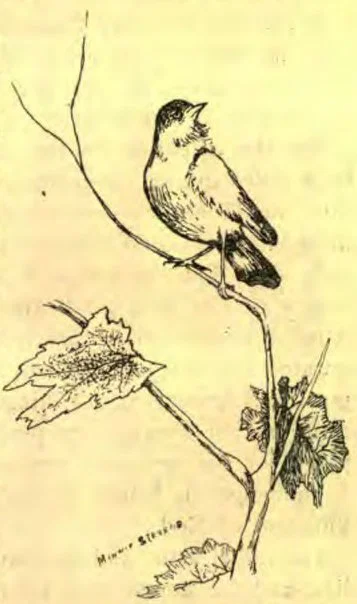
I PERCH upon this high, bare twig, And watch the chill wind thickly fling The dry leaves down the forest aisles, Where I've been wont to hide and sing; My covert is in ruins now, Its fragments flutter all around; My song can find no hiding-place, And taught by fear, has ceased to sound.
A blue-winged brother, braver souled, A shrill remonstrance o'er the scene, With quick, impatient motions, throws, Where golden willows arch the stream: But undisturbed, the azure sky And golden sun gaze calmly down, While like an echo, blue and gold, The tree and bird gaze back to frown.
There seems no more a place for me; My kindred, now, are seldom seen, Or are but sorry company, So scant their speech, so dull their mien: O, for a full-leaved summer land, Just right for singing, clear and high, Or for a flit with falling leaves, Into that warm, bright southern sky!

MINNIE ROSILLA STEVENS

THE WEEKLY STUDY

The Council at Jerusalem

OPENING EXERCISES.
SCRIPTURE FOR STUDY: Acts 15:5-35; Gal. 2:11-14.
REFERENCE STUDY: “Sketches from the Life of Paul,” pages 62-72.
HISTORICAL STUDY: Give a brief history of Antioch and the founding of the church there.
OUTLINE OF TOPICS:—
Subject before council.
Chairman.
Speakers.
Decision.
Judas and Silas sent to Antioch.
Letter written.
Meeting at Antioch.
Result.
Paul and Barnabas labor in Antioch.
Peter dissembled.
Rebuked by Paul.

Notes

All quotations in these studies, not otherwise accredited, are from “Sketches from the Life of Paul,” by Mrs. E. G. White.
The technical point before the council was that of circumcision. The vital principle underlying it was whether a man was saved by works—the principle on which the papacy stands—or salvation by faith in Christ, the very essence of the gospel.
“Peter reasoned that the Holy Ghost had decided the matter by descending with equal power upon the uncircumcised Gentiles and the circumcised Jews.”
“This yoke was not the law of ten commandments, as those who oppose the binding claims of the law assert; but Peter referred to the law of ceremonies, which was made null and void by the crucifixion of Christ.”
“James presided at the council. . . . In this instance we have a refutation of the doctrine held by the Roman Catholic Church—that Peter was the head of the church. Those who, as popes, have claimed to be his successors, have no foundation for their pretensions.”
“The council which decided this case was composed of the founders of the Jewish and Gentile Christian churches. Elders from Jerusalem and deputies from Antioch were present; and the most influential churches were represented. . . . The entire body of Christians was not called to vote upon the question. The apostles and elders—men of influence and judgment—framed and issued the decree, which was thereupon generally accepted by the Christian churches.”
“All were not pleased, however, with this decision; there was a faction of false brethren who assumed to engage in a work on their own responsibility. They indulged in murmuring and fault-finding, proposing new plans, and seeking to pull down the work of the experienced men whom God had ordained to teach the doctrine of Christ. The church has had such obstacles to meet from the first, and will ever have them to the close of time.”
The beloved disciple John was present at this council (Gal. 2:9), but seems to have been silent. But that he was in full harmony with its decision is shown by his giving to Paul and Barnabas the hand of fellowship. We have no further account of him in the Bible till we find him on lonely Patmos. This is the only recorded instance where Paul and John ever met.
Judas and Silas were possessed of the “spirit of prophecy.” In addition to the written decision of the council, these prophets of the Lord were sent to give counsel to the brethren affected by this heresy. The brethren were “confirmed” with their words. Note the important place which the spirit of prophecy had in settling the threatened division in the church. It is even so now.
Note the wording of the decision rendered by the council: “For it seemed good to the Holy Ghost and to us”—the Holy Ghost first.
During the interval between the council at Jerusalem and the beginning of Paul’s second missionary journey, Peter visited Antioch, where occurred the painful experience caused by the double part acted by Peter. At first he overcame his natural prejudices, and sat at the table with Gentile converts. But when some Jews came from Jerusalem who did not approve this, he changed his deportment toward these converts. Others followed his example, even Barnabas.
Paul, with his usual boldness, withstood him to his face. That this rebuke did not alienate Paul and Peter is shown by Peter’s speaking of Paul, at a later date, as “our beloved brother.”
“Peter saw the error into which he had fallen, and immediately set about repairing it as fast as possible. God, who knoweth the end from the beginning, permitted Peter to exhibit this weakness of character, in order that he might see that there was nothing in himself whereof he might boast. God also saw that in time to come some would be so deluded as to claim for Peter and his pretended successors exalted prerogatives which belong only to God; and this history of the apostle’s weakness was to remain as a proof of his human fallibility, and of the fact that he stood in no way above the level of the other apostles.” G. B. T.

An Opportunity for Young People

THERE is a great political campaign in progress in this country. Vigorous efforts are being made to influence voters to cast their ballots for rival candidates. In country schoolhouses, town halls, and city auditoriums, the national issues are discussed. Special trains are employed, and noted statesmen and those who have great power of oratory are hurried through the country, speaking to great audiences. Thousands of dollars pour into the campaign funds of the great parties, and the political elements of the country are astir. As a result, men are taking their stand on one side or the other.
But the attention of the people of God has been called to another campaign at this time, and this should absorb their thoughts and awaken their interests as no earthly campaign could possibly do. This campaign is one in which the angels of God and all heaven are interested,—it is “a mighty missionary campaign to be inaugurated this fall, which shall know no cessation until this gospel of the kingdom is carried to every nation, tongue, and people.” It is a campaign for the rescue of the souls of men. It is a campaign in behalf of the principles of the kingdom of God.
Heaven is astir, and the Saviour who gave his life, and the angels who minister, are watching with intense interest to see whether God’s professed people will mightily bestir themselves. “Woe unto them that are at ease in Zion.” This great movement will determine who of God’s people are willing to unite with Jesus in the salvation of the lost. And not only the salvation of others, but our own salvation depends upon it.
Here is an opportunity for our young people to work. “Young men and young women, can not you form companies, and, as soldiers of Christ, enlist in the work, putting all your tact and skill and talent into the Master’s service, that you may save souls from ruin?” First of all, see that every one of our people where you live has an opportunity to subscribe for the REVIEW, which will contain full information in regard to the campaign. To do this will be to revive the work of God in many hearts, quicken the spiritual life of some who are ready to die, and in doing it your own soul will be blessed, and you will gain an experience which will give you confidence to go to others not of our faith. Do this work at once.
Then take up the third angel’s message series of the Signs and the special numbers of other papers to be issued. If there were those in danger of their lives, and you could rescue them by a warning cry, you would not be afraid of your own voice nor be too timid to speak. God will help you to lay aside your fearfulness and warn your neighbors and friends of the coming of the day of God. And your very earnestness will help to convince them of the truth.
Having gained an experience with periodicals and tracts, you will be prepared to take up the books recommended for the campaign,—books which are full of the message of salvation. And let us pray that this campaign shall not end until the work is done.
I believe that this movement will bring new life to hundreds of our young people. “Already many hearts are responding to the call of the Master Worker, and their numbers will increase.”
—“Education.” M. E. KERN.

Reading for the Bible-Text Band

Love of God—Lesson II
1. Does God love the world?
“For God so loved the world, that he gave his only begotten Son, that whosoever believeth in him should not perish, but have everlasting life.” John 3: 16.
2. Which loved first, the people or God?
“Herein is love, not that we loved God, but that he loved us, and sent his Son to be the propitiation for our sins.” I John 4: 10.
3. Why did he send his Son?
“For God sent not his Son into the world to condemn the world; but that the world through him might be saved.” John 3: 17.
4. Does God love sinners?
“But God commendeth his love toward us, in that, while we were yet sinners, Christ died for us.” Rom. 5: 8.
5. Why do we love God?
“We love him, because he first loved us.” I John 4: 19.
6. What does he want us to become?
“Behold, what manner of love the Father hath bestowed upon us, that we should be called the sons of God: therefore the world knoweth us not, because it knew him not. Beloved, now are we the sons of God, and it doth not yet appear what we shall be: but we know that, when he shall appear, we shall be like him; for we shall see him as he is.” I John 3: 1, 2.
7. If we accept his love, where shall we finally dwell?
“In my Father’s house are many mansions: if it were not so, I would have told you. I go to prepare a place for you. And if I go and prepare a place for you, I will come again, and receive you unto myself; that where I am, there ye may be also.” John 14: 2, 3.
EMMA S. NEWCOMER.

Small Service Is True Service

SMALL service is true service while it lasts: Of humblest friends, scorn not one: The daisy, by the shadow that it casts, Protects the lingering dew-drop from the sun. — Wordsworth.
Continue reading: Jack's Fidelity