Your ShelfYour Projects

Signs of the Times, Vol. 30, No. 5.

THE HERITAGE OF DISOBEDIENCE

Signs of the Times

Feb 3, 1904

Pacific Press Publishing Company · Oakland, California · Feb 3, 1904

THE HERITAGE OF DISOBEDIENCE.
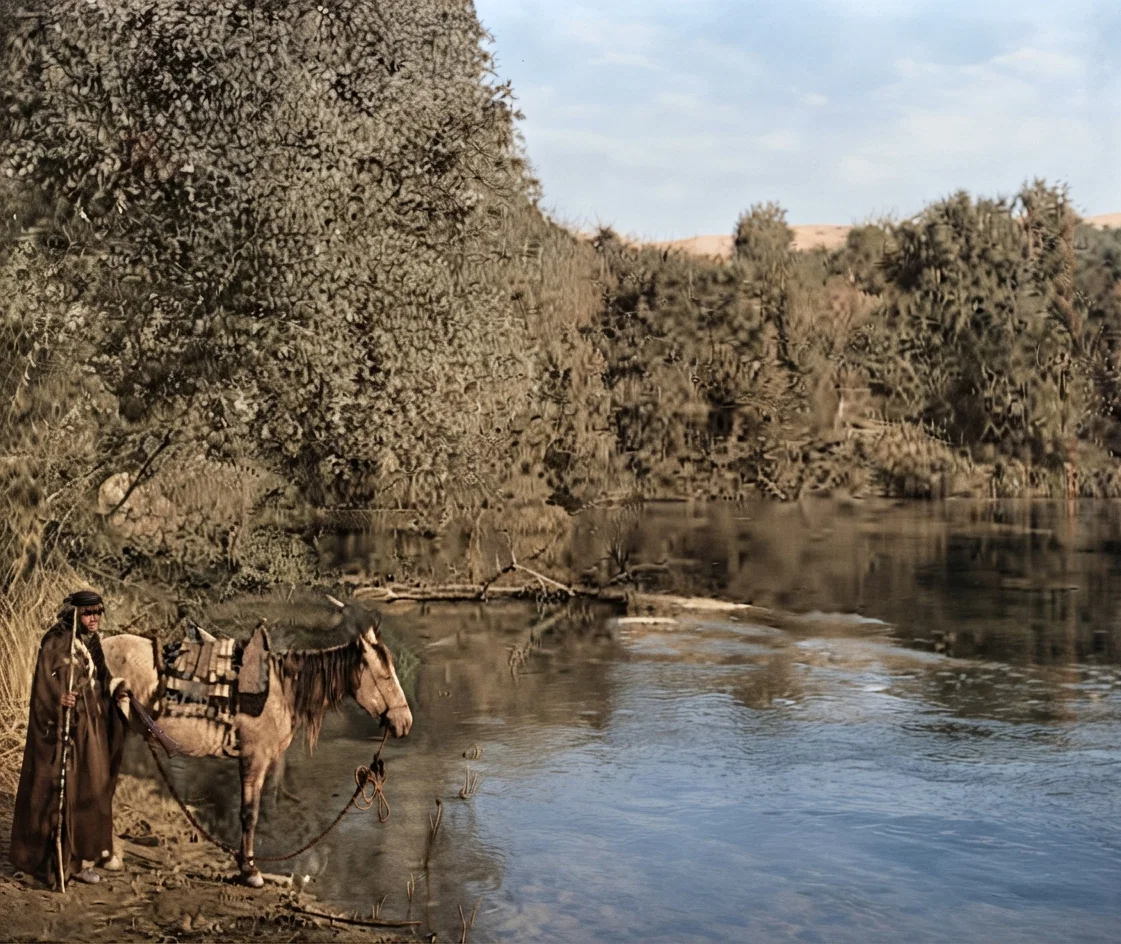
MOHAMMED'S perversion of the Gospel has built its temple where once stood the magnificent temple of Jehovah. Where the priests of Israel offered sacrifices morning and evening, the muezzin's call to the worship of Allah rings out from lofty minaret. Where Jesus, the anointed of God, the Prince of Peace, walked and talked, healing the people and planting the seeds of the everlasting Gospel, Mohammed, with his doctrine of fire and sword, walks at will to-day in the person of his followers as the one and only prophet of the Most High. Where John, the forerunner of the Messiah, baptized the Lamb of God, the son of Ishmael to-day, with weapon in hand, with his hand against every man and every man's hand against him, stops to rest and water his jaded steed. O, what lessons the River Jordan holds for the people of this world! Mohammed has the promised inheritance of Isaac, the child of promise. Its sacred river is his; its city is in his possession; the hills of the Holy Land are no longer in the hands of those whose poets made them immortal in song and story. The followers and defenders of Islam stand guard over the promised inheritance of the children of Isaac, the promised inheritors of the world. They to whom nothing was given have all; they to whom all was promised have nothing, and are strangers and sojourners in lands that give them scant welcome.
WHAT is the solution of this enigma, this seeming perversion of purpose, this apparent overthrow of God's design? It is found in Israel's attitude toward the commands of God. Had they obeyed Him, heeded His precepts, honored His law, walked in His ways, Israel would have been established in Palestine, and would have remained in possession of the land until Messiah came to usher them into that greater inheritance—the whole purified, rejuvenated earth.
AT the close of Israel's forty year's wandering in the wilderness, the people, now under the leadership of Joshua, came to the bank of the River Jordan, ready to cross over into the land of promise. Because of their murmurings and their unwillingness to walk in the light of the commands of God, all who had come to the estate of manhood at the time of leaving Egypt had died in the wilderness. Even Moses found a grave outside the promised land because of an error committed on account of the stubbornness of the people. But now only the Jordan separates between the hosts of their descendants and the land that was promised them. Still there is something yet remaining to be done before the Lord can permit them to set foot in the land He had promised them. It had been many years since the law of God had been given in thunder tones through the fire and smoke of Sinai. The greater part of the present host had not witnessed that awe-inspiring demonstration of the importance of God's great law. The millions of Israel must again be reminded of the fact that the law contained in the ark, which was borne before them was still the law of Jehovah, and must still have first place in their consideration, that they were still amenable to all its precepts; that when it went before them and they followed as directed, every obstacle was removed.
A Son of Ishmael by the River Jordan.
JORDAN was now overflowing all its banks, and the problem of transporting all Israel's host across the swollen river was a prodigious one for human powers; but the Lord had a way of accomplishing the undertaking. Joshua was instructed to have the priests take up the ark containing the law of God, and go before the people down into the river. Here is the Lord's own assurance of the opening of a way into that land of rest: "And it shall come to pass, as soon as the soles of the feet of the priests that bear the ark of the Lord, the Lord of all the earth, shall rest in the waters of Jordan, that the waters of Jordan shall be cut off from the waters that come down from above; and they shall stand upon an heap." Joshua 3:13. Then the priests were to advance with the ark into the midst of the river bed and stand there with it, as a barrier against the heaped-up waters of the Jordan, while the people crossed to the other side. Twelve stones were taken from the river to be set up on dry land as a memorial of what God had done for them that day, that their children might have ever before them something to remind them of how God had led and provided for His people. A similar memorial was set up by Joshua in the midst of the river, where the priests stood with the ark, while the host was going over. When this act had been accomplished, the priests, with the ark, came up out of the river, and Jordan went on its way again, unhindered as of old. As long as the ark, representing the throne of God, and containing the unchanging law of God, remained in the bed of Jordan, that river must cease to flow. That law and ark, representing God's throne and government, can not be overwhelmed by any power of earth, and the people following that law are bound to triumph.
BUT the Lord cautioned His people in reference to that ark and its contents before the move was made that day to cross the Jordan. They were to follow the ark at a certain specified distance, "that ye may know the way by which ye must go; for ye have not passed this way heretofore." Joshua 3:4. That admonition was applicable to Israel in all their course from that day on. That day's work was a success, because they obeyed the Lord's directions. Their campaign against Jericho, immediately after, was also a success for the same reason, and the ark with the law had a leading part in that work. But just as soon as they began to follow their own ways and devices they found trouble in abundance. They seem to have forgotten that they had not passed that way before. Moses, before his death, warned them again and again that if they refused to keep and do the commandments of the Lord, they would be destroyed like the heathen nations whom they dispossessed; they would not continue to inhabit the land into which they were going. The Lord told Moses that if the people forsook Him, and broke His covenant, He would forsake them and hide His face from them till, as a nation, they would be devoured. On the other hand, if they would do His commandments, He would set them "on high above all nations of the earth," and make them "the head and not the tail." See Deuteronomy 28.
GOD had a wonderful purpose in view for the people of His choice, and all who were willing to come under the rule of His government. The only thing that stood between them and the fulfilment of all that God purposed concerning them was their unwillingness to obey His law. Because they would not come under the beneficent rule of His government, He was compelled to leave them to become the plaything of the tempests of tribal strifes and the ambitions of other nations. In place of being a light to all the nations around, their refusal to keep the law put out their light, blotted out their inheritance, and scattered them like the "chaff of the summer threshing-floor" into every corner of the earth, till their very name has become a byword. Mohammed on the Jordan, with his temple of worship on Zion's hill, witnesses to Israel's disloyalty to God, and, through that disloyalty, the complete frustration of the glorious purpose God had in view for them as a nation. They would have been the greatest nation in the world—God so declared it, if they had kept His law. They would not keep it, and now they are nothing. That law and the blessing of God upon their keeping of it would have made them more than even their brightest hopes could ever picture. What a contrast, and what a lesson for this generation! Every calamity that overtook them as a result of their disobedience was faithfully pointed out to them before ever they crossed into Canaan. The twenty-eighth chapter of Deuteronomy is a faithful presentation of the end to which the nation would come if they turned away from God and His law. They came to that end, and their history is written as an admonition and warning for the people of this very age, this generation which is to witness the entering in of the spiritual Israel into the real land of rest. The law went before ancient Israel, and made a way through every obstruction. It will do the same in this generation for the faithful and triumphant children of God. His orders are: "Bind up the testimony, seal the law among My disciples" (Isa. 8:16); and He says of the redeemed: "Here are they that keep the commandments of God, and the faith of Jesus." Rev. 14:12. The victory is assured, and that inheritance will not be taken by another.

LIGHT.

BY AUGUSTA W. HEALD.
JESUS was the Light of the world. He manifested the Father, and “whatsoever doth make manifest is light.” Eph. 5:13.
But, said Jesus to the disciples, “Ye are the light of the world.” Matt. 5:14. As the light of Christ shines into the hearts of His followers, so must that light be reflected to those that are in darkness. This principle is beautifully illustrated in the natural world. The moon and the planets are opaque bodies like our earth. They shine with a borrowed lustre, a steady radiance borrowed from the sun. Their softened and cheering rays delight our senses, and enliven the darkness of night. As the moon and the planets catch the light from the great center of the solar system, and reflect it to other worlds, so does the humble follower of Christ catch the divine light, and reflect it to others. Are we light-bearers to the world?—We may be; it is our privilege. How shall this be? What is required on our part? We are to become familiar with the character and attributes of God, as revealed in His written Word and in the works of creation. “We, . . . beholding as in a glass [mirror] the glory of the Lord, are changed into the same image from glory to glory.” 2 Cor. 3:18.
We may not be aware of this change in ourselves, but it is promised to us, on conditions, and others will not fail to recognize the Christ-likeness, whenever it appears. The Saviour said, “I have manifested Thy name unto the men which Thou gavest Me out of the world.” John 17:6. “I in them, and Thou in Me.” “And the glory which Thou gavest Me I have given them.”
Thus does the Christian become “the light of the world.” Christ manifests the Father to us, that we may manifest Christ to the world.
What a blessed privilege is offered to us!—to be a light-bearer, with power to dispel, in some measure, the darkness of sin and sorrow which envelopes this fallen world as with a gloomy pall. We may well put forth our utmost efforts to realize this privilege. It is by beholding that we are changed, and this results from study of the Word and communion with God. “Wherefore He saith, Awake thou that sleepest, and arise from the dead, and Christ shall give thee light.” Eph. 5:14.

HOW TO GAIN SUCCESS IN CHRIST'S SERVICE.

BY MRS. E. G. WHITE.
IT is not learned, eloquent workers that are needed now, but humble, Christlike men and women, who have learned from Jesus of Nazareth to be meek and lowly, and who, trusting in His strength, will go forth into the highways and hedges to give the invitation, "Come; for all things are now ready."
The burden that we bear for Christ's sake, the willingness of our service, the completeness of our surrender,—this is the measure of our love for Him, and of our success in service.
Many Christians are working at cross purposes with God. They tell us that they are waiting for some great work to come to them. They neglect the daily duties of life. These seem to them to be uninteresting and unimportant. They long restlessly for a large place. Day by day they lose opportunities to show their faithfulness to God. While waiting for some great work, their life passes away.
Do not fail to discharge your daily duties with the strictest fidelity. In the plan that God has for every Christian, there are no non-essentials. There are lessons for each one to learn in the daily experience. Be patient, and perform faithfully the work given you, however humble it be. Go about your work calmly, relying upon God for strength. Look not anxiously into the morrow. To-day employ your time to the very best account. To-day let your light shine for Christ, even in the performance of little duties. To-morrow again present yourself to Jesus as one ready to do any work, be it ever so humble. The faithful performance of to-day's duties will prepare you to take hold of to-morrow's work with fresh courage, saying, "Hitherto hath the Lord helped me." Ever stand as minute men before God. Let the prayer of your heart be, "Lord, what wilt thou have me to do? Imbue me with Thy Spirit; strengthen me for Thy work." Thus you will grow up to the full stature of men and women in Christ. In order to do successful work for the Lord, we must be willing to do and to suffer cheerfully for His sake. Selfishness is death. No organ of the body could live, should it confine its service to itself. The heart, failing to send its life-blood to the hand and the head, would quickly lose its power. We are members one of another, and the soul that refuses to impart will perish.
Christ came to this earth "as He that serveth." The angels are "ministering spirits, sent forth to minister for them who shall be heirs of salvation." The same law of service is written upon all things in nature. The birds of the air, the beasts of the field, the trees of the forest, the leaves, the grass, and the flowers, the sun in the heavens, and the stars of light,—all have their ministry. Lake and ocean, river and water-spring,—each takes to give.
Much prayer is necessary to successful effort. Prayer brings power. Prayer has "subdued kingdoms, wrought righteousness, obtained promises, stopped the mouths of lions, quenched the violence of fire, . . . turned to flight the armies of the aliens."
Prayer is the breath of the soul. Jesus lived in dependence upon God and communion with Him. To the secret place of the Most High, under the shadow of the Almighty, men now and then repair; they abide for a season, and the result is manifest in noble deeds; then their faith fails, the communion is interrupted, and the life-work marred. But the life of Jesus was a life of constant trust, sustained by continual communion; and His service for heaven and earth was without failure or faltering.
Many, even in their seasons of devotion, fail of receiving the blessing of real communion with God. They are in too great haste.
With hurried steps they press through the circle of Christ’s loving presence, pausing perhaps a moment within the sacred precincts, but not waiting for counsel. They have no time to remain with the divine Teacher. With their burdens they return to their work.
These workers can never attain the highest success until they learn the secret of strength. They must give themselves time to think, to pray, to wait upon God for a renewal of physical, mental, and spiritual power. They need the uplifting of His Spirit. Receiving this, they will be quickened by fresh life. The wearied frame and tired brain will be refreshed, the burdened heart will be rested.
The Christian worker must study the Word of God. How many are surprised into the commission of sin because of a failure to study the Scriptures. They were off their guard, and Satan found them an easy prey. The psalmist declares, "Thy word have I hid in mine heart, that I might not sin against Thee." And in Paul’s letter to Timothy we read, "All scripture is given by inspiration of God, and is profitable for doctrine, for reproof, for correction, for instruction in righteousness; that the man of God may be perfect, thoroughly furnished unto all good works."
The life of God, that gives life to the world, is in His word. It was by His word that Jesus healed disease and cast out demons. And by His word He stilled the sea and raised the dead; and the people bore witness that His word was with power. He spoke the word of God, as He had spoken it to all the Old Testament. The whole Bible is a manifestation of Christ. It is our only source of power.
As our physical life is sustained by food, so our spiritual life is sustained by the Word of God. And every soul is to receive life from God’s Word for himself. As we must eat for ourselves in order to receive nourishment, so we must receive the Word for ourselves. Yes, the Word of God is the bread of life. Those who receive and assimilate this Word, making it a part of every action, of every attribute of character, will grow strong in the strength of God. It gives immortal vigor to the soul, perfecting the experience, and bringing joys that will abide forever.

PERMANENCE.

BY M. B. CLARKE.
"Jesus Christ the same yesterday, and to-day, and forever."
MEN seek for permanence. Of old They builded cities high With towers and palaces whose tops They thought should reach the sky. Thus Babylon and Carthage grew, And banners gay unfurled, And Rome upon her seven hills Sat mistress of the world.
Ruin and desolation dwell Where these proud cities reigned, No stone remains to mark the spot, By sun-god towers profaned. The kings who builded or destroyed Left but an empty name, On history's page few care to read, Yet such is earthly fame.
Love guards its own with jealous care, By vigil and by tear, But helpless, sits with folded hands Beside the flower-strewn bier. Not wealth, nor fame, nor even love, True permanence may claim On earth, to each the touch of time Brings change and loss the same.
On the dark record of the past A single name appears, One life whose stainless purity Dispels our doubts and fears, Jesus, the Christ, enduring name, All other names before, To-day and yesterday the same, The same forevermore.
Through Him unbounded wealth we gain, Through Him undying fame, For He, the Lord of heaven and earth, Has called us by His name. Through Him immortal life is ours, From sin and death set free, And Love through Him its own may keep To all eternity.

A CHANGE OF GOVERNMENT NECESSITATES A CHANGE OF THE SEAL.

BY CHARLES T. EVERSON.
In order to make a law valid it must be stamped with a governmental seal; and, consequently, when a law has not been sealed, or has been deprived of its seal, it is null and void. Therefore, when the psalmist said (Ps. 119: 126) "They have made void Thy law," he evidently referred to a time when the law of God would be deprived of its seal.
But what is the seal of God’s law, and why should any one wish to deprive it of its seal? In order to determine what is the seal of God’s law let us notice for a moment what constitutes a seal in any law. When, for example, a law is made here in Italy, it is stamped with the king’s seal, which reads thus: "Victor Emanuel III., King of Italy." We note here that the seal gives, firstly, the name of the ruler; then the basis of his authority; and, lastly, the extent of his dominion. We would, therefore, expect to find in the seal of any law these three characteristics, namely, the name, the reason for his authority to command, and the extent of the dominion of the person named in the seal. If we look over the law of God with the idea of finding its seal measured by these characteristics, we find it in the Fourth Commandment. Not one of the other commandments of the Decalogue would distinguish our God from other gods. But the Fourth Commandment quickly disposes of all false gods. For Buddha, Confucius, the sun, and all other gods that are worshiped, must be recognized as created, and consequently inferior to the God of the Fourth Commandment, who made all things, including these named. And in this Fourth Commandment we find the characteristics that comprise the seal of the law. This commandment gives the name of the Author of this law as Jehovah, the basis of His authority as the Creator of all things, and the extent of His dominion as the heavens and the earth. It is evident, therefore, that in the Sabbath Commandment we have the seal of God, for in it are given the characteristics that comprise a seal.
But we noticed from the text referred to in the Psalms that the law has been made void, and the natural conclusion is that it has been deprived of its seal for the purpose of making it void. That this conclusion is correct is seen from Isa. 8:16, which says, "Seal the law among My disciples." The Lord would not ask us to seal the law, if it were already sealed. True, it was sealed at one time, but it has been made void by being deprived of its seal. And now God commands us to seal it again just before His coming, as the verse following the one quoted speaks of the coming of the Lord. Of course, in reality, the law has never lost its seal; for it is deposited in heaven, where it can not be trifled with by men. But to the appearance and practises of men, it has lost its seal. Therefore the command, "Seal the law among My disciples." It is sealed in heaven, and now let it be so among His disciples.
But who dared to attempt to tear away the seal from God’s law on earth?—He it was, "who opposeth and exalteth himself above all that is called God, or that is worshiped; so that he as God sitteth in the temple of God, showing himself that he is God." We well know that this Scripture refers to the Papacy. But why should the Papacy attack especially the Fourth Commandment of the Decalogue? For it is well known that the Papacy claims, and history substantiates her claim, that the Catholic Church has substituted the observance of the first day, Sunday, for the seventh day of the week, Saturday. The reason why the Papacy attacked the Fourth Commandment is very plain. The power that tried to take the place of God, sitting in the temple as God, would, in the very nature of the case, be under necessity to attack the Fourth Commandment, and could not do otherwise.
If a power came into Italy and conquered the country, would this new government continue to stamp its laws with the seal that reads, "Victor Emanuel, III., King of Italy?"—Most certainly it would not. The very first change that would be necessary would be to destroy the old seal and make a new one. So also, when the Papacy tried to take the place of God’s government, it was first necessary for it to take away God’s seal, the Sabbath, and put in its stead its own seal, Sunday. And Sunday the Catholic Church claims as the sign of its power. We will recall that one of the first things that the Papacy did when it came into power, was to take away the Sabbath, and substitute for it Sunday.
Now God says that His law has been made void, and we see that this has come about by the law being deprived of its seal. Is it not time, therefore, that we seal the law again, especially among God’s disciples? If you are a disciple of Christ, then you ought to be sealed with God’s seal, which is the Sabbath.
Rome, Italy.

KEEPING THE FAITH.

BLESSED is the man who keeps the faith. There is not in all the world a finer sight than the home where a man keeps his courage and his honor through youth and manhood and age, bearing all burdens in hope because of the trust that centers in him. The wife will not let him reproach himself for any of the failures he is conscious of, for she knows that he has won the real victories of life. His children defend his name against all attacks; for they know that he has kept his honor where other men have surrendered; and for such successes as he has achieved they are all proud, glad, jubilant, for the prize has been honestly earned. If the world applauds, they are delighted, for the best of them like recognition. If the world withholds its praise, and the neighbors think of the man as a failure, the people who believe in him are sometimes amusingly aggressive in their resentment. The worker himself takes it all quietly, and has his hours of misgiving, but the unwavering faith of those who love him is his strength.
What a different world it would be if we all believed in one another as long as we could! How many weak ones would be kept on the main traveled road if they had such support, instead of the doubts and suspicions that tend to draw them aside! If a man seems to falter in a difficult task, and is almost ready to give it up for something easier, why not give him a bit of praise, even if it be not altogether warranted? “Go ahead; you are doing finely, and we are all banking on you.” With all our fine phrases about the brotherhood of man, how often do most of us go out of our way to show a struggling brother what the family expects of him?—Christendom.
Continue reading: History of Government