Once upon a time, as story tellers say, we brought home a flock of ten doves, and built a cote for them near the roof at the back of the house. To make them grow tame, and become used to their new quarters, we kept them shut in for a few weeks.
One day we opened the door, and let them all out into the warm spring sunshine, except two little bits of ones who were too weak to go abroad. But alas! their parents never returned. A bad boy with a gun, seeing such a mark for his skill, shot into the flock, and they scattered far and wide.
We went up to the dove cote the next day, and found only one little baby dove left. His mate had been trampled to death by the old ones in their haste to leave their home. He was brought down, and we named him Billy. For a time he was fed with bread and milk, but that was soon changed to the finest of wheat and corn; till from an ungainly little green bird with one pin-feather, he grew to be a plump, pretty white pigeon, that would fly to our shoulders and rub his bill over our faces to show his love for us. He came quickly when his name was called. We were really fond of Billy, and classed him as one of the family.
At the same time we had a handsome gray cat named Tommy. He was born in our house, and was so well trained and civilized that he would peacefully sleep in the rocking chair with the rat terrier dog. When he felt uncommonly pleasant, he would wash Jip's face and neck for him.
But the dove flying around the room was always a great trial to Tommy's self-command. Sometimes when watching him, he would lash his tail, and his eyes would become green and shining. But when we spoke to him sharply, he would slink away, and act as if eating Billy was the farthest thing from his thoughts.
I am sure now that it was done simply to quiet our fears at the time; for one day after we had missed the dove for nearly a week, we looked under the doorsteps, and there we found a pair of soiled white wings. This was all that was left of our pretty white pigeon.
After awhile, we moved from the house, and as we could not well take the cat on so long a journey, we left him. He never made friends with the new family, and we were told that he acted homesick for us and for his old playfellow, the dog. He wandered around the yard, refusing food when offered to him; and at last he went under the steps and died, where we found the remains of the dove.
Poor Tommy! though he ate up our pet dove, there is always a sore feeling in my heart when I think of his grief at our forsaking him, and of his sad end.
L. E. ORTON.
BE COURTEOUS.
“I treat him as well as he treats me,” said Hal. His mother had just reproached him because he did not attempt to amuse or entertain a boy friend who had gone home.
“I often go in there, and he don’t notice me,” said Hal, again.
“Do you enjoy that?”
“Oh, I don’t mind; I don’t stay long.”
“I should call myself a very selfish person if friends came to see me, and I paid no attention to them.”
“Well, that’s different; you’re grown up.”
“Then you really think that politeness and courtesy are not needed among boys?”
Hal, thus pressed, said he didn’t exactly mean that; but his father, who had listened, now spoke:—
“A boy or man who measures his treatment of others by their treatment of him has no character of his own. He will never be kind or generous or Christian. If he is ever to be a gentleman, he will be so in spite of the boorishness of others. If he is to be noble, no other boy’s meanness will change his nature.”
And very earnestly the father added:— “Remember this, my boy. You lower your own self every time you are guilty of an unworthy action because some one else is. Be true to your best self, and no boy can drag you down.”—Well-Spring.
Letter Budget.
By Editor
We begin our Budget with a letter from one who, we hope, will get others to join her school. It is from ADA WILLISTON, a little girl twelve years old, living in Genesee Co., Mich. With her parents she has kept the Sabbath fifteen months. She says: “I go to day school and Sabbath-school. We have fifteen members in our Sabbath-school. I love to read the Budget. I am trying to keep all of God’s commandments.”
We have a letter from Muskegon Co., Mich., written by ADA A. DRUMM. She says: “I am thirteen years old. I keep the Sabbath with my mother. I have three brothers older than myself. I do not go to Sabbath-school only once in a great while, for the church is four miles from here. I pay one-tenth of all the money I have to the Lord. I am trying to live a true Christian life, and to set a good example before my younger school-mates and associates; and I want you to pray that I may meet the INSTRUCTOR family and my little brother and sister who died, in the new earth.”
The Lord is pleased with children who give him the honest tithe, and he writes their names in his Book of Remembrance.
JAMIE PEARCE sends a letter from Ballarat, Australia. He writes: “I take the INSTRUCTOR, and think it is very interesting and instructive. I attend Sabbath-school, and study in Book No. 1. I am ten years old, and have no brothers or sisters. I would like to know what George Peavy means when he says he waters the mule and the chickens. My grandmother, who is eighty-two years old, was baptized last Sunday afternoon, with four others, by Eld. Israel. There are about twenty-seven in our church.”
George Peavy does not mean that he gives the mule and chickens a bath, but that he takes water for them to drink. The little folks will want to know what Jamie says when telling that he has given drink to the animals?
Eld. M. C. Israel wrote from Ballarat at the same time, with Jamie Pearce, stating that they have a very interesting Sabbath-school at that place, consisting of forty members. He says that “at first the grown people thought it was a novel idea for them to attend Sabbath-school, but they soon got as thoroughly interested in it as they think the children ought to be, and would as soon think of giving up the meetings as the school.” The next letter, also, came with Jamie’s.
WM. CHANDLER writes from Melbourne, Australia. He says: “I am eight years old. I want to be a good boy. I keep the Sabbath with my little sister and brother. I want my father, and my four big brothers, and my big sister Mary, too, to keep the Sabbath and live forever with Jesus in the new earth.”
Can you not, Willie, be a little missionary to bring those dear family friends to the truth, and thus get some stars in your crown? We are glad to know there are so many in that far-away mission who are interested in the INSTRUCTOR. The Lord has many people in other parts of the earth to whom we must get the truth, so there is missionary work for us all.
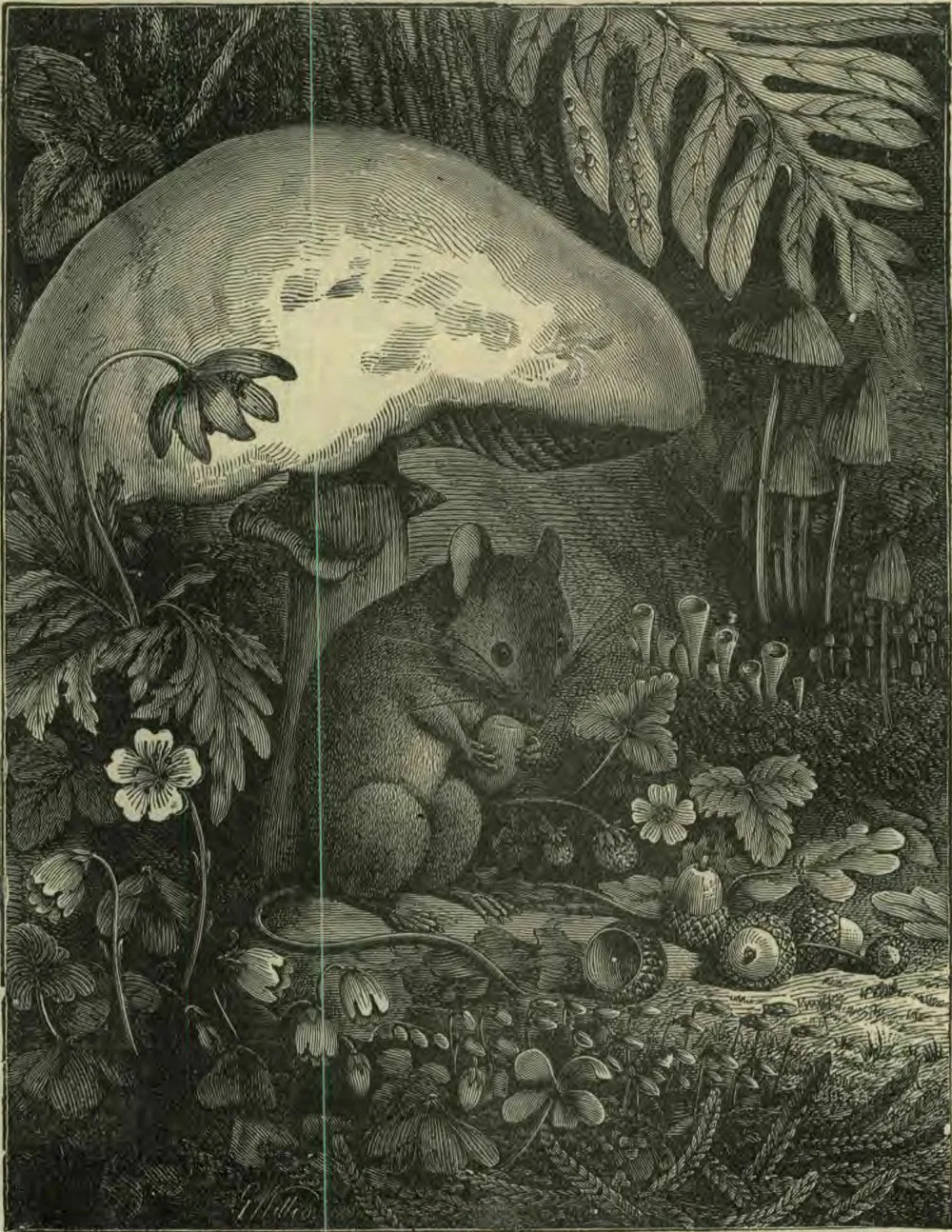
FORTUNES OF A MOUSE.
A LITTLE mouse without a house
Roamed across the field
Until he found a spot of ground
That plenty seemed to yield.
He stopped and stayed beneath the shade
Of fungus broad and brown,
Where close before his cottage door
The acorn tumbled down.
“’Tis here,” he said, “I’ll live and wed,
And be a prince indeed,
I never more, as heretofore,
Will feel the sting of need.”
But in the morn, as shepherd’s horn
Did blow the dawning call,
He looked around, and then he found
He had no home at all.
DOING THESE THINGS.
“WHAT is the use of being in the world unless you are somebody?” said a boy to a friend.
“Sure enough, and I mean to be,” answered the other. “I began this very day. I mean to be somebody.”
Ashton looked George in the face. “Began to-day? What do you mean to be?”
“A Christian boy, by God’s help, and so grow to be a Christian man,” said George. “I believe that is the greatest somebody for us to be.”
George is right. There is no higher manhood; and it is in the power of every boy to reach that. Every boy cannot be rich; every boy cannot be a king; every boy cannot be a lord; but God asks you all to Christian manhood.