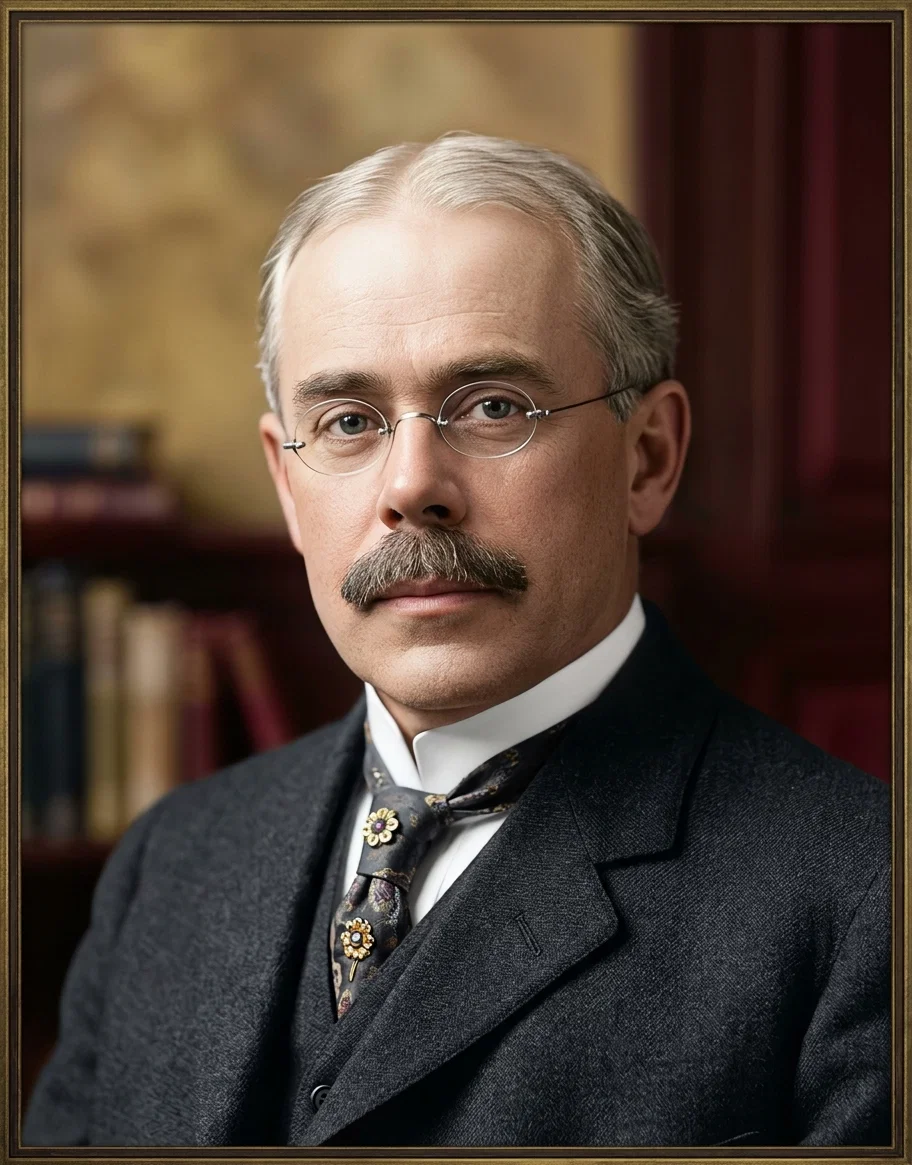
Dr. Shailer Mathews, newly elected president of the Federal Council of Churches, Convention of 1912
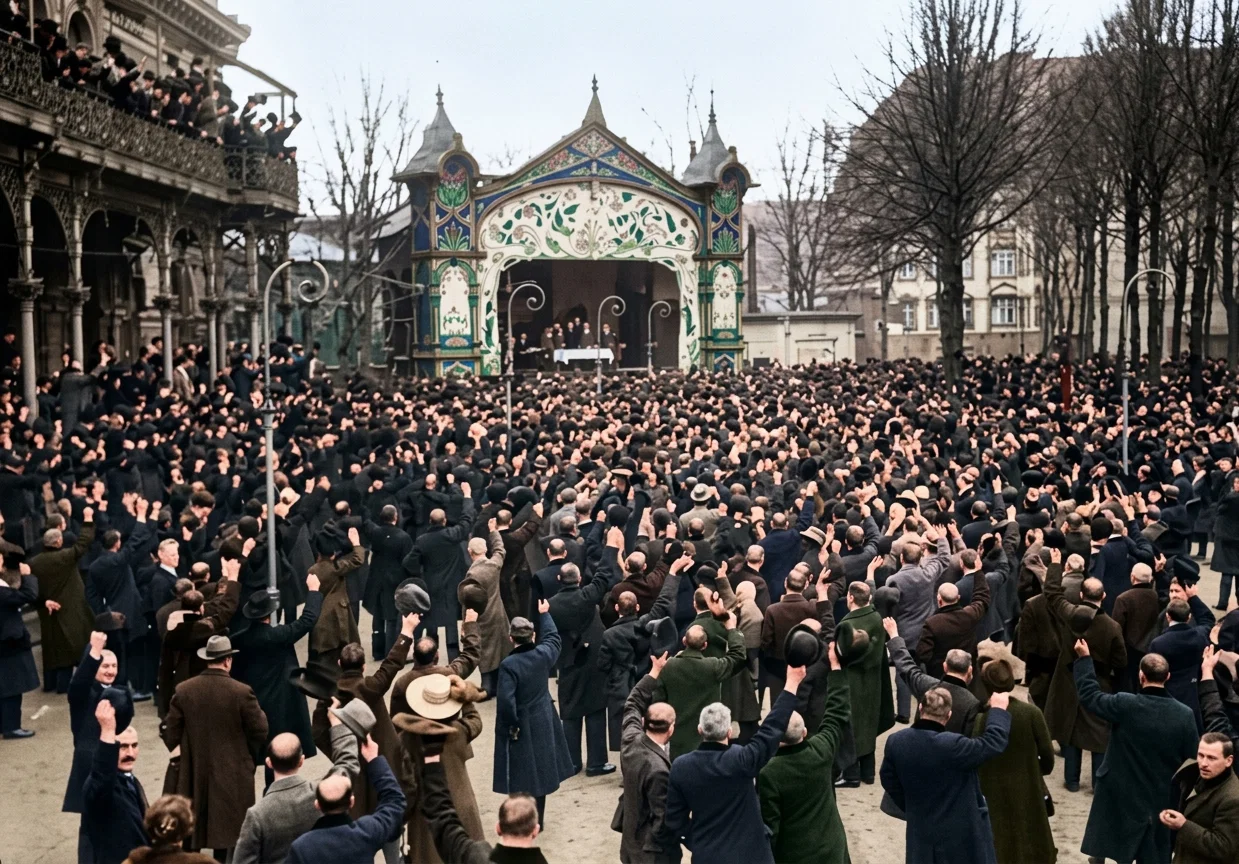
“Hotel La Salle,” Chicago, where many of the important meetings were held
Dr. Chas. S. Macfarland, secretary of the Federal Council of Churches, Convention of 1912
Dr. Peter Ainslee, who presented a report on Sunday Observance, Convention of 1912
The second quadrennial meeting of the Federal Council of the Churches of Christ in America convened in the city of Chicago, December 4-9, 1912. There were delegates in attendance from all sections of the United States and the Dominion of Canada. The sessions of the council were held chiefly in the La Salle Hotel, one of the most popular hotels in the city. One could but contrast the grand and gorgeous entertainment with which the distinguished delegates of the council were greeted, with the humble and self-sacrificing experiences through which Jesus and His disciples passed. The council was not largely attended by the citizens of Chicago, with the exception of the evening services, which were held in the prominent halls and theaters in the city.
One of the items of business which was of chief importance to the council was the election of officers for another quadrennial period. The Rev. Bishop E. R. Hendrix, D.D., LL.D., who has served as the president of the council for the past quadrennial period, was succeeded by Dean Shailer Mathews, of Chicago, whose election was received with great enthusiasm by the delegates. His inaugural address in which he clearly outlined the principles for which the council stands, was well received. The progress of this movement during the past quadrennial period, is very aptly expressed in an editorial which appeared in the Chicago “Evening Post,” December 7, which in speaking of the efforts of this great council toward the idea of coöperation says, “The length of the step they have taken is not very great.”
In listening to the addresses and discussions of the various phases of the work of the council, one could not but observe how each speaker sought to assure the delegates of the council of the unity which they claim to possess regardless of the different beliefs concerning some of the great fundamental doctrines of Protestantism. The frequent assurance that they were united in the work of coöperation, regardless of the denominational differences, was in itself a suggestion that the unity of coöperation was not as perfect as it might be. Imagine a husband and wife constantly assuring each other that they were united as one in marriage, and therefore are coöperating in the battle of life. The fact of such an assurance in words from either, would be at least a suggestion that would generate doubts as to the felicity of the union that they profess to be enjoying.
True unity depends upon faith in the unchanging and infallible Word of God. Without any desire to be captious, all who are acquainted with the utterances of some of the distinguished members of the Federal Council of the Churches of Christ in America, must know that skepticism and disbelief in the Word of God prevail to an alarming extent.
I herewith quote some utterances which were recently made by Bishop William F. McDowell, dean of the bishops of the Methodist Episcopal Church, who declared at a conference of that body in Evanston, Illinois, “that under the light of modern research many of the Bible stories need no longer be taken as literal.” He further declared that “he would not undertake to entertain the patriarch Jacob before he locked up the family silverware and retained an attorney to see that the ancient saint did not take too great an advantage of him.”
Dr. Charles M. Stuart, president of the Garret Biblical Institute, on the same occasion said, “Criticism has changed public opinion about many matters—once deemed primary, now seem to be of subsidiary importance.” He said: “It is not now thought to be necessary to one’s salvation that he shall believe the world to have been created in six days of twenty-four hours each, or that woman was created from the rib of man, or that the Deluge was universal, or that the waters of the Red Sea separated at the word of Moses. One may still have fellowship with God, and surmise that the Pentateuch was not written by Moses, that the Levitical legislation was post-exilian, that the book of Isaiah is of composite authorship, that the book of Daniel is a story to illustrate how God keeps watch over His own, that the book of Job is a dramatic putting of the problem of evil in the world, and that Jonah is an allegory setting forth the universality of God’s love.” He went on saying: “We may even go further than that. We may admit that the Bible, as we have it, is a book derived from secondary sources; that the autographs of the evangelists and apostles have been irrevocably lost, that there are omissions and interpolations, glosses and misreadings numerous enough to be discouraging, that genealogies and chronologies are hopelessly confused, and that there are discrepancies of statement about matters of fact which are not to be reconciled.”11
The great corner-stone of Protestantism, when it was launched in the sixteenth century, was the Bible and the Bible alone. A rejection of the Word of God must inevitably result in a departure from Protestantism; and this is precisely one of the fruits which was borne at the recent quadrennial Council of the Federal Churches of Christ in America. A resolution was unanimously adopted by the council to strike out the word “Protestant” from their literature, and substitute the word “Believer” in its place. This sort of action is the logical result of an organization that is seeking for a unity which is not in accord with the Word of God. They regard as non-essentials many of the great fundamental doctrines of the Bible, in order that some sort of resemblance of unity may exist. Protestantism was conceived when there was burning in the souls of men a great undying love for the unadulterated truth. Tradition and the enforcing of the same upon the conscience of man by civil magistrates, held sway so long that the only alternative left was that of protesting by those noble Reformers.
The resolution to eliminate the word “Protestant” from the literature of the Federal Council of the Churches of Christ in America, is a long step in the direction of paving the way for the Roman Catholic Church, at not a far distant date, to constitute a large part of this federal movement. In this connection, it will be interesting to note the significant words of Cardinal Gibbons, who is recognized as the greatest Catholic in the United States, in a recent magazine article in which he expressed his faith in the ultimate union of all Christendom. He also stated that “dissension is the chief cause of persecution” and that “it delays the complete triumph of Christianity over the heart and souls of men. The federation of churches, as we have it in many places, is a long step in the right direction for a more compact wall in Christendom.”
The sentiment voiced in the foregoing words of the cardinal would seem to breathe forth a spirit of Christian unity, but in the light of other claims of his church, the Catholic idea of Christian unity should be carefully weighed. The cardinal has well said that the dissensions have been the chief cause of persecution. He might have voiced it in another way, which would have truly expressed the idea of the Catholic Church more clearly, and that is, that the great persecutions of the past might not have existed if no one had dissented from the teachings of the Roman Catholic Church. It will also be understood, as this program is carried out, what significance there is to the cardinal’s statement that the churches have taken a long step in the right direction for a more compact wall in Christendom. The step which the climax of the church movement will ultimately reach, will be for the so-called Protestant churches of Christ in America to unite with the mother, or “Roman Catholic Church.”
The following words from an authoritative work entitled “The Full Catechism of the Catholic Religion” make it clearly certain that there will be no compromise on the part of the Catholic Church, when she ultimately assumes the leadership of the great inter-church federation movement. On page 45, this work says:
“Every one is obliged under pain of eternal damnation, to become a member of the Catholic Church, to believe her doctrine, to use her means of grace, and to submit to her authority. Hence, the Catholic Church is justly called the only saving church. To despise her is to despise Christ; namely, His doctrine, His means of grace, and His power; to separate from her is the same as to separate from Christ, and to forfeit eternal salvation. . . . Whosoever is separated from the Catholic Church, however commendable in his own opinion his life may be, he shall for this very reason, that he is at the same time separated from the unity of Christ, not see life, but the wrath of God abideth on him.”
Photo by Paul Thompson
In the face of these arrogant claims, what other place could this church occupy, if united in this movement, than the leadership of the Federal Council of the Churches of Christ in America.
Another resolution which was adopted by the Federal Council of the Churches of Christ in America, was to provide that the public schools should be closed for half a day each week, so that the churches may have an opportunity to impart to the students a religious education; and where public sentiment does not warrant such a closing, the duty of the churches is to see that the pupils have at least one hour’s instruction after school. Should such a plan as this become effective, what reasonable protest could be made against the public funds being appropriated to the Roman Catholic Church, for the support of their parochial schools? The moment that this government should ever enter upon a program to have religious instruction become a part of the public school system, just so soon the people of this country will be plunged into endless controversies and difficulties, which is the inevitable fruit when there is the union between civil and religious matters. U. S. Grant wisely said: “Leave the matter of religion to the family altar, the church, and the private school supported by private contribution. Keep the state and church forever separated.”
Perhaps one of the most important things for which the council stands, is that of compulsory Sunday observance. This was again emphasized during their present council, and is crystallized in the following resolutions:
1. That all Christians shall seek to do their utmost in the observance of this day by themselves abstaining from anything that savors of desecration, such as sports, travel, and buying, and urge upon the government and employers the need of rest for the laboring man. This day has been taken from him, and the church can in no better way prove its interest in him than untiringly seeking to restore to the laboring man his day of rest.
2. That we earnestly urge coöperation with all associations looking to the observance of the Lord’s day and also urge, if not a union, a close coöperation of all associations working to this end.
3. That we heartily endorse a half holiday of one of the six days of the week, preferably Saturday as tending to give better observance to Sunday.
4. That all ministers be requested to preach on this subject on the last Sunday in March. Last year 20,000 sermons were preached alone in England on Lord’s Day Sunday relative to the observance of this day.
5. That we earnestly recommend to state and local Federations of Churches the importance of not only guarding against the repeal or weakening of the laws we now have providing for Sunday rest, but of placing on our statute-books laws securing one day in seven as a rest day for all classes of working men and the securing to every community a more complete protection against all Sunday practices that tend to demoralize society or weaken the forces that make for virtue and righteousness. As a means to this end we heartily coöperate with the Social Service Commission of the Council in its nation-wide campaign for One Day in Seven for the workers.
The fifth resolution unmistakably outlines the council’s policy on the question of Sunday legislation in recommending the importance to the state and local federations of churches to not only guard against the repeal or weakening the laws we now have providing for Sunday rest, but that of securing other laws in behalf of the Sunday institution.
Undoubtedly, the feature that received the most attention during this council was that relating to the church and social service. Their new declaration of faith is a strong contrast to the old style declarations of their creed. The president of the council stated that he thought it read very similar to the platform of the Progressive Party; and the Rev. Walter Rauschenbusch, of Rochester, New York, said of their new declaration of faith, that if the inner truth were known, both the Progressive political platform and their declarations of faith were the outgrowth of the same influence working in the hearts of the people. He further added that when political parties of great corporations themselves have taken up social service problems, it is high time for the church to do so. It is very evident in the last analysis that this movement will assume the character of a gigantic church trust.
One of the prominent delegates at the organization of this movement in New York City, in November, 1905, said:
“I trust that one of the practical results of this conference will be the organization of a force that lawbreakers and lawmakers will respect and heed, when great questions of morals are involved. Our gospel is the fulfillment of the law. It is our profession in the name of our Supreme King and seeking the good of mankind to ask rulers to respect the code of our kingdom. Rulers may ignore sects, but they will respect the church. This federation will compel an audience, and it will speak with power if it will put aside its differences and make its agreements its arguments.”
In view of this unchristian and un-American movement, it is high time that every true Protestant should not fail in giving the trumpet a certain sound, by warning the people of the dangers that threaten both the church and the state.
K. C. RUSSELL.
German Protest Over Humorous Poem
A statement has been made that the Turks were trained by German army officers, and their utter defeat has made the Germans feel very sore. What has added to their discomfort has been a humorous poem by an American captain, and this, like the poem written a few years ago, “Gott and Me,” has been made the subject of an official protest from Germany, as an “impertinence.” It takes so very little to stir nations nowadays.
The Evils of Child Labor
By Editor
There is mighty effort put forth at the present time by friends of the children to stop child labor, and we wish to say that on the whole they have our deepest sympathy. Doubtless there are cases where the law is drawn too strictly, where it would be better for children of twelve or thirteen years of age to be at work rather than on the street; but when conditions exist as they have been shown to exist in some places, of little children of four or five years of age who were working in factories long hours with their parents, certainly something ought to be done. Many times they work without any supervision at all. Those investigating these conditions have found that many of the goods made, were made by those who have tuberculosis, and this is especially true where the work is done at home. For instance, one lady who was investigating found two boys carrying big bundles of knee pants, which the family had been finishing in their home. She stopped and asked them why they were not in school, and they replied, “’Cause we’re quarantined with scarlet fever,” and further inquiry brought out the fact that the patient was one of the two boys. The inspector had visited the home, but the clothing had been removed to a neighbor’s flat until he had gone away. Hand-made cigarettes were moistened by the tongue, and children and grown-ups told of cracking nuts with their teeth and removing the nut-meats from the shells with a hairpin. It is said except in the one industry, women’s ready-made muslin underwear, there is no way in which consumers can be informed and protect themselves from possible infection. Taking into consideration the lives of the children themselves, and the dangers to the wearers, there ought to be a nation-wide statute made effective in all states, against child labor; but with this there ought to come compensation sufficient so that parents could support their children.
In the Balkans
THE conference in London between the Balkan allies and Germany, is at this writing in its most exciting stage, that of demands, refusals, concessions, procrastinations, consultations, threats. The first contention of the allies, it is reported, is that Turkey should yield all territory except the bare peninsula on which Constantinople is situated. The Porte demands Adrianople, her most ancient possession in Europe, and it is thought that she may be permitted to retain that city if she will destroy her fortifications. In the meantime, war is proceeding between Turkey and Greece, and Turkey and Montenegro. Reports of success on the part of the Greeks and of defeat on the part of the Turks are given, but there have been no decisive battles fought recently.
One of the serious difficulties which seems to be menacing the peace delegates at the present time, is the fact that Austria does not demobilize her forces. It is not known how to interpret this action on her part. Montenegro fears that Austria will be demanding of her certain territory now held by the little kingdom. Austria feels it necessary to fortify her possessions on the Adriatic Sea, and also will demand that Scutari be a part of the new Albanian state. But Montenegro does not propose to yield any territory that she has, and more especially Mount Lowchen, which commands Austrian strongholds on the Adriatic. The Montenegro ambassador declares that in order for Vienna to secure that, she would have to wipe out every soul in Montenegro.
Still, the general reports are that the case is hopeful, and it is believed that peace will be arrived at on some terms sooner or later. However, at the present time it is uncertain. The great “powers” have not yet spoken, and they may have something to say which will help to calm the troubled waters.
Her Hold on the Nations
“Is ROME losing her hold on the nations?” This is a question which is asked by the Rome correspondent of the Western Watchman, in its issue of December 5. After referring to a phrase which had been used by the archbishop of St. Louis, “Making America Catholic,” the correspondent goes on to say that “We will not confine ourselves to such a small part of the pope’s dominions as Southern Italy. Let us take the whole world, and examine cold, steel facts to see to what side the world is leaning. Is it declining from the side of the ‘old man of the Vatican?’” Then, after quoting from the London Telegraph, of August 21, 1899, regarding the tremendous power of the pope in the world, the correspondent says, “But we do not need the platitudes of a Protestant newspaper to convince ourselves that the Catholic Church, and with it the Papacy, is gaining yearly in strength.” He then tells us that “the masses in Italy are Catholic to the core,” so also in Spain. “Conversions in England average 3,000 a year.” Roman Catholicism is increasing in Germany, while the Protestant denominations are decreasing. France is returning; Poland, Ireland, and Belgium are loyal.
Under the Russian flag, the church is making steady progress. In one week, 200,000 Orthodox Catholics embraced the papal banner, on the proclamation of the ukase giving liberty of conscience.
The Catholic Church has 1,350,000 subjects in China, and the annual increase reaches 74,000, and this the correspondent contrasts with the Protestant membership, with its 5,000 European and American missionaries, and 12,000 native assistants, which amounts, all told, to 280,000; “and so, he declares, I might go on giving instances of the growing sway of the vicar of Christ, in every other country where self-sacrificing missionaries are laboring.”
The same thought is echoed in the sermon in the same paper, by the editor, Dr. D. S. Phelan: “Is it not something to be proud of, that we belong to a dynasty that has survived all the political wrecks of the last two thousand years? Is it not something, that we belong to a great institution that to-day is acknowledged supreme, above everything that this world respects in the spiritual and moral order? Is it not something, that we belong to a church that has survived all the vicissitudes of time, and to-day is universally praised and respected?”
But it is well for our readers to remember that numbers, enforced unity, the applause and praise of the world, do not count with God. Truth is more than tradition; godliness is more than earthly glory; and living connection with Christ is better than any membership in any organization, however old or holy it may be. It is predicted in Holy Writ, that mystic, modern Babylon shall make all the nations drunken.
Photo by Paul Thompson
The World's Great Need
AN editorial in the San Jose Mercury not long ago, touched the real point of reform when it declared: “The great need is moral training. We used to get it in the home and in the school and the church, but they seem all to have gone into the business of making money, and have no time to bother with such trifles as moral characters; and the results are not pleasant to contemplate. With all the improved conditions, the human goods we are turning out are not up to the mark of a half-century ago, physically, or intellectually, or spiritually, or morally.”
It declares “that what the world needs to-day is not laws, nor courts, nor technical education,” so much as “the one product which the church alone can furnish, when it is onto its job,—men of moral backbone, who can stand on their own feet as Jesus did, when tempted, and say, and mean it, too, ‘Get thee behind me, Satan.’ Make it easy to do right, and men will not do it, just because it is easy; but make a man want to do right, and nothing can hold him back from the doing of it.” “Build laws of laws” about evil men, and “they will grin at you over them. In proportion as the hearts of men are right, do they need less laws. The only cure for outside dishonesty is truth in the inward parts.”
And this is true. But what can you do when the church has lost its standard—the Ten Commandments, the moral law of God—and has lost its remedy—the creative power of God in the gospel of Jesus Christ? Not until these things are restored in the church by the consent and faith-grasp of the church itself, can we hope for creations of moral character among men.
North Dakota Country Life Conference
North Dakota is endeavoring to do missionary work for its boys and girls, in what is called its Country Life Conference, for the country boy and the country girl. It is an extension service in connection with their agricultural college. This year it was held the week of December 17-20. Among the subjects discussed were, “The Country School as a Social Center,” “The Country Church as a Community Builder,” “The Country Home,” and “Recreation.” These certainly are live subjects, and all, properly conducted, must have a strong uplifting influence on the community.
Rules for Shopgirls’ Dress
A report from London says that shopkeepers have at last selected a set of rules for girls in their employ. They have been working on this for some time, hoping that the initial steps might come from the girls themselves. This, however, has been agreed upon: All blouses must close to the throat, and must not have any lace on the throat front. No large bows are to be worn on shoes, and no open-work hose must be worn. Girls must wear dark coats, and skirts of serge. No tightness will be allowed in skirts, and no display of the ankles. Modesty is demanded, and a breach of these rules means dismissal.
The Balkan War and the Money Trust
It is reported that Dr. David Starr Jordan, in a recent lecture, declared that the Balkan war was due particularly to the money trust; and doubtless that has more or less to do with it.