Your ShelfYour Projects

Signs of the Times, Vol. 40, No. 36.

Question Corner
Earlier text: Question Corner

“Not Under the Law, but Under Grace”

THERE are two classes of people in the world, the righteous and the wicked, or those who believe and those who disbelieve, those who serve God and those who serve Him not. Mal. 3:18. Note the contrast between the two classes in the light of God’s word:
THE RIGHTEOUS THE WICKED
Sin does not have dominion over them; for they are “not under the law, but under grace.” Rom. 6:14. Sin has dominion over them, and they are “under the law,” and not under grace. Rom. 6:14.
They are led of the Spirit of God, and are not under the law (Gal. 5:18), and are the sons of God. Rom. 8:14. They are not led of the Spirit of God, and are under the law (Gal. 5:18); they are children of disobedience. Eph. 2:1, 2; Col. 3:6.
There is no condemnation to them who are in Christ Jesus, who walk not after the flesh, but after the Spirit. Rom. 8:1. They are under condemnation who are not in Christ Jesus, are walking after the flesh, and not after the Spirit. Rom. 8:1.
They are bringing forth the fruit of the Spirit; against such there is no law. Gal. 5:22, 23. These are bringing forth the works of the flesh, and can not inherit the kingdom of God. Gal. 5:19-21.
They are free from sin, are become servants of righteousness (Rom. 6:18), and servants of God; and the end everlasting life. Rom. 6:22. These are the servants of sin, and are free from righteousness (Rom. 6:20, 16; John 8:34), and will receive the wages of sin, which is death. Rom. 6:23.
The righteousness of the law is fulfilled in them, who walk not after the flesh, but after the Spirit. Rom. 8:4; 2:13. These are carnally minded, are at enmity against God, not subject to the law of God, and can not please God. Rom. 8:6-9.
They are at peace with God. Rom. 5:1. “There is no peace, saith my God, to the wicked.” Isa. 57:21.
The law is not made for them. 1 Tim. 1:9, first part. The law is made for them (1 Tim. 1:9, 10), and whatsoever the law saith, it saith to them. Rom. 3:19, 20.
Faith has come to them; they are not under a schoolmaster (Gal. 3:25), or the law. Faith has not come to them, and they are under a schoolmaster, or under the law. Gal. 3:23, 25.
They have been reconciled to God through the death of His Son, and will be saved by His life. Rom. 5:8-10; 2 Cor. 5:17-20. They only are under the law who are out of harmony with it, or transgressing it. 1 John 3:4; James 2:9-12.
A description of a Christian will be found in Eph. 4:20-32; Gal. 5:16; Rom. 3:31; those who are walking in all the commandments of God blameless. Ps. 119:1-3; 1 Cor. 1:8; Phil. 2:15. Those out of Christ are walking contrary to God’s commandments, and must feel the weight of its penalties. Phil. 3:18, 19; James 1:15; Rom. 6:23.
C. F. CAMPBELL.

The Purpose of Foreign Missions

DR. JOSIAH STRONG asks: “What are the churches for but to make missionaries? What is education for but to train them? What is commerce for but to carry them? What is money for but to send them? What is life for but to fulfil the purpose of foreign missions, enthroning Jesus Christ in the hearts of men?”

Repentance Means Stopping

“REPENTANCE is being sorry enough to stop.”

Jesus and the Law

What Was Confirmed by the Saviour?

By W. E. Gillis
THIS question would never have arisen but for a misapprehension of the Saviour’s mission, and a determined effort on the part of His enemy, Satan, to vitiate that mission by all means. Therefore to avoid needless argument, and if possible, to remove cause for further ignorance on the subject, we will endeavor briefly to lay before the reader the real situation.
In the first place, the question arises, “Why is a Saviour required?” and it is satisfactorily answered by the following quotations from the Sacred Scriptures:
“Whosoever committeth sin transgresseth also the law: for sin is the transgression of the law.” 1 John 3:4.
“For the wages of sin is death.” Rom. 6:23.
“Who will have all men to be saved, and to come unto the knowledge of the truth. [‘Thy law is the truth.’ Ps. 119:142.] For there is one God, and one Mediator between God and men, the Man Christ Jesus; who gave Himself a ransom for all, to be testified in due time.” 1 Tim. 2:4-6.
“All we like sheep have gone astray; we have turned every one to his own way; and Jehovah hath laid on Him the iniquity of us all.” Isa. 53:6.
Sin being the transgression of the law, the sinner must be cognizant of the requirements of this law in order to obey it intelligently; “for whosoever shall keep the whole law, and yet offend in one point, he is guilty of all.”
At creation, man was perfectly familiar with these statutes of heaven; for the Lord said that man was created perfect (Eccl. 7:29), and “sin is not imputed where there is no law.” Rom. 5:13. But at the time of the giving of the law at Sinai, as recorded in Exodus 20, man had wandered so far from God that it was necessary to write the law upon tables of stone, and undertake an extensive system of symbolical education, in order to bring him back to a just appreciation of its sacredness and what true obedience to its precepts meant.
The law written in stone was “the form of knowledge and of the truth in the law.” Rom. 2:20. But God’s ideal of the law is expressed by the psalmist when he declares, “Thy law is the truth.” Ps. 119:142. It was necessary that Christ, the living law, who Himself could say, “I am the truth” (John 14:6), should be manifested to the people. “The law [the form] was given by Moses, but grace and truth [the living reality] came by Jesus Christ.” John 1:17. And this real law must be enshrined in the hearts of the people until they can say with Paul, “I live; yet not I, but Christ liveth in me.” Gal. 2:20. The new covenant provides for this very thing, the Scripture admonishing us (Phil. 2:5), “Let this mind be in you, which was also in Christ Jesus;” and assuring us, “So then with the mind I myself serve the law of God.” Rom. 7:25.
The transgression of God’s law brought in death. “The soul that sinneth, it shall die.” Eze. 18:4. The consummation of Christ’s mediatorial work results in there being “no more death.” Rev. 21:4. So the only conclusion we can come to in the matter is that His sacrifice and priesthood abolish the carnal mind (Rom. 8:7; Eph. 2:14-16), having slain it, nailing it to the cross, with all its dogmas and creeds (Col. 2:14), and in fact bring man back to perfect obedience to the law of God (Heb. 10:10). The law is not changed, but we are.
The offerings of the ceremonial law never made a man perfect (Heb. 7:19; 10:1), and of course did not find favor with God (Isa. 1:10-20; 1 Sam. 15:22), only in so far as they were efficacious as an object-lesson shadowing forth Christ. The incarnation of Christ provided the one thing that did find favor with God. “Lo, I come . . . to do Thy will, O God.” Heb. 10:7. What is the will of God?—The law of God—the Ten Commandments. See Rom. 2:17, 18. So we find in Heb. 10:9 that the operation of the ceremonial law, which spoke only of death, even to the death of the only-begotten of the Father, was limited to the coming of the Messiah, who should by His life and death establish the Ten Commandments. By doing this (verse 14), He perfects forever those who are sanctified. (“Sanctify them through Thy truth: Thy word is truth.” John 17:17. “Thy law is the truth.” Ps. 119:142.) And the Holy Spirit, bearing witness to this work (Heb. 10:15), says that this sanctifying—making holy—process is the accomplishing of the new covenant promise of having the law of God engraved by the Holy Spirit in the hearts and minds of His people.
Much more that is equally convincing might be written on this subject; but suffice it to say that “God’s work is the same in all time, altho there are different degrees of development, and different manifestations of His power to meet the wants of men in the different ages. Beginning with the first gospel promise [Gen. 3:15], and coming down through the patriarchal and Jewish ages, and even to the present time, there has been a gradual unfolding of the purposes of God in the plan of redemption.
“The Saviour typified in the rites and ceremonies of the Jewish law is the very same that is revealed in the gospel. The clouds that enveloped His divine form have rolled back, the mists and shades have disappeared, and Jesus, the world’s Redeemer, stands revealed. He who proclaimed the law from Sinai, and delivered to Moses the precepts of the ritual law, is the same that spoke the Sermon on the Mount. The great principles of love to God, which He set forth as the foundation of the law and the prophets, are only a reiteration of what He had spoken through Moses to the Hebrew people: ‘Hear, O Israel: The Lord our God is one Lord; and thou shalt love the Lord thy God with all thine heart, and with all thy soul, and with all thy might.’ ‘Thou shalt love thy neighbor as thyself.’ Deut. 6:4, 5; Lev. 19:18.”
“The Teacher is the same in both dispensations. God’s claims are the same. The principles of His government are the same. For all proceed from Him ‘with whom is no variableness, neither shadow of turning.’ James 1:17.”
“The conditions of eternal life under grace are just what they were in Eden,—perfect righteousness, harmony with God, perfect conformity to the principles of His law. The standard of character presented in the Old Testament is the same that is presented in the New Testament. This standard is not one to which we can not attain. In every command or injunction that God gives, there is a promise, the most positive, underlying the command. God has made provision that we may become like unto Him, and He will accomplish this for all who do not interpose a perverse will, and thus frustrate His grace. God does not employ compulsory measures; love is the agent which He uses to expel sin from the human heart.”
As saith the Scripture: “The Lord hath appeared of old unto me, saying, Yea, I have loved thee with an everlasting love: therefore with loving-kindness have I drawn thee.” Jer. 31:3.
Shanghai, China.

Sabbath-Keeping a Sign of Sanctification

By Hart Hall
SANCTIFICATION is the work of a lifetime, hence it should commence at once in our experience, and continue day by day. That there are deeper degrees and greater callings in this consecrated life, goes without saying.
To many, the word “sanctification” is a mystery; and there is an intangible something in the expression, suggesting an experience that has never been theirs. It suggests a close intimacy with God.
Such, in fact, sanctification is; but the word is not hard to understand, and the experience should be as readily gained.
First it suggests an isolation or separation for a holy use or purpose. Such was the ordination of the two great pioneer apostles when the Holy Spirit said, “Separate Me Barnabas and Saul for the work whereunto I have called them.” “And when they had fasted and prayed, and laid their hands on them, they sent them away.” Acts 13:2, 3.
“Sanctify unto Me all the first-born: . . . it is Mine,” said the Lord to Moses. Ex. 13:1, 2. It was a transaction of transfer which He ratified many times in a miraculous manner through human instrumentality.
The Lord said, “Go unto the people, and sanctify them to-day and to-morrow.” Ex. 19:10. “And Moses went down from the mount unto the people, and sanctified the people.” Verse 14.
Such was the service of Hannah when she gave her child to the Lord. 1 Sam. 1:24.
Inanimate objects were thus set apart or sanctified. “Moses said unto the Lord, The people can not come up to Mount Sinai; for Thou charged us, saying, Set bounds about the mount, and sanctify it.” Ex. 19:23.
The vessels and furniture of the temple were thus sanctified. Ex. 29:37, 43, 44.
The act of sanctification might be performed by the people themselves. We read, “And the Lord said, . . . Let the priests also, which come near to the Lord, sanctify themselves.” Ex. 19:21, 22. Jesus said, “For their sakes I sanctify Myself.” John 17:19.
Then again, this setting apart is God’s action. We read in Jer. 1:5 that the Lord said, “I sanctified thee, and I ordained thee a prophet unto the nations.” Again in Lev. 21:8, “He shall be holy unto thee: for I the Lord, which sanctify you, am holy.” The Lord’s holiness alone sanctifies the thing consecrated.
Thus it appears that this work of separation from the world is performed by the Lord in conjunction with human choice.
Let us see by what agency the work is accomplished. Said the apostle, “For this is the will of God, even your sanctification.” 1 Thess. 4:3. With this text in mind, let us read the prophetic announcement of the Messiah prior to His first advent: “I delight to do Thy will, O My God: yea, Thy law is within My heart.” Ps. 40:8.
Here the law of God in the heart is plainly stated to be synonymous with sanctification.
That there could be no other conclusion to this text is certain; for we read in Ps. 37:30, 31 of the sanctified man: “The mouth of the righteous speaketh wisdom, and his tongue talketh of judgment. The law of his God is in his heart: none of his steps shall slide.”
This truth is further taught by the words of the Saviour, “Sanctify them through Thy truth: Thy word is truth.” John 17:17. Now read Ps. 119:142: “Thy righteousness is an everlasting righteousness, and Thy law is the truth.”
In plain words, sanctification is accomplished through God’s word operating in us; all of which word is an exegesis of His holy law. And there is nothing that will separate a man or woman from the world quicker than a determination to keep the law of God.
We find, then, the Lord accomplishes, in conjunction with our efforts and with our consent, a separation or sanctification through keeping His law; and Sabbath-keeping is a sign or proof of this work. “Verily My Sabbaths ye shall keep: for it is a sign between Me and you throughout your generations; that ye may know that I am the Lord that doth sanctify you.” Ex. 31:13.
Sabbath-keeping has been the test of the ages in regard to keeping God’s law. It is the test to-day.

V. The Sabbath Day — After the Sermon

By Violet Miriam Beck
How sweet is the midday air! The waving trees by the road bow fair! Jesus hath come, and with kind control, Hath rested the soul. The heart may forget Its fret. It is Sabbath day!
The long hours of the afternoon Pass too soon. I will go a while apart And commune with mine own heart. By the line of poplars, tall and free, Is the little family cemetery, Where grandfather lies, And the babies who never opened their eyes, And the gentle one, patient and fair, With mild blue eyes and snow-white hair. This is where Aunt Nettie lies, “Quietly awaiting the resurrection, When our loved one shall come forth To receive the crown of glory, Awaiting her on that glad morning.”
Here is the lamb of stone Which the children claim their own. They do not know Of the lad who lies below. They pat its back and smooth white head. They do not remember the others who lie here dead.
What can the living know of death? To breathe no more the warm, sweet breath Of the spring day; No more to say, “The light is fair And golden where Its gleam rests on the stream.” No more to look above, and say, “The sky is blue, And a bird cleaves its clearness through.” No more to say: “The sunbeams slant from the west, On the poplars quivering leaf by leaf. Know they aught of sorrow and grief? Soon will come pleasant night, With its rest And its relief.”
Yes, night has come to these, Lying in their beds under the trees; Sweet night, where there is no more pain, No more pain! And Jesus will come again. Yes, Jesus will come again. After the long, long rest of the night, There will come the morning light, And loved ones will know each other again.

All Is Well

By J. A. L. Derby
And all is well, tho' faith and form Be sundered in the night of fear. Well roars the storm to those that hear A deeper voice across the storm. — Tennyson.
Yea, all is well, tho' every hope Seem shattered in the night of fear; Tho' o'er the storm no voice we hear, And darkly in the gale we grope.
And all is well the time and tide Seem hurled by sightless fate along; The God seems only with the strong, To rudely thrust the weak aside.
And where the moldering ashes tell How wrought the fagot without ruth, To quench in man the light of truth, We still may murmur, “All is well.”
Tho' no blest hand extended quell The reckless play of aimless chance, Which levels with its mortal lance Both good and bad, yet all is well.
Shall God be blamed that millions swell The roll of those who fall in night, Who gladly would have owned the light? I scarcely know. Yet all is well.
If I profess that every mote Is guided by direct command; Alike by Heaven's present hand The lambkin strays 'mid thorns remote, The tower of Siloam fell,— Do I not make a god of chance, And raise a shrine to circumstance? And were it thus, would it be well?
But 'tis not so; for tho His word Runs all the realm of nature through, And holds her myriad action true In terms of law wherever heard, Yet every human will may bend Her forces in a thousand ways, The schoolboy with the lightning plays, The sternest elements we rend.
If, then, I brew with careless hand The deadly bane of cyanide, If ignorance or folly guide When reason only should command, Must Heaven then stand sentinel To thwart the course of final law, And teach the race there is no flaw In heedlessness? Would that be well?
And if He gave us reason's aid To learn His ways and find their use, Could He well sanction its abuse, And teach 'twere better disobeyed?
I hold not thus. The more I dwell In thought upon the mighty plan, Its meaning and its use for man, The more I feel that all is well.

A Message of Reconciliation

“Now then we are ambassadors for Christ, as the God did beseech you by us: we pray you in Christ’s stead, be ye reconciled to God.” 2 Cor. 5:20.
Friend, if the Lord should come to you to-day, In His own person, from His throne in heaven, And at your door some earnest plea should lay, Would any heed to His request be given?
Should He the places show where spear and nail Pierced His dear form when on the cross for thee, The crown of thorns, the bruised face, wan and pale, The bloody terror of Gethsemane,
And say, “For thee I bore this heavy load, To cleanse thy sin came down to bleed and die; And will you now be reconciled to God?” Could you that tender, pitying voice deny?
Couldst thou from that blest offer turn away, To be from sin made free, now so defiled? O, wouldst thou not in deep contrition say, “Yea, Lord, I will to God be reconciled”?
But Christ is here—not seen by mortal eyes— In His ambassadors who bear His word, To you they bring a message from the skies, And plead with you in place of Christ the Lord.
As tho Himself, God did beseech you now, To be no longer by your sin beguiled, As if Christ asked you to Himself to bow— Friend, will you not to God be reconciled? —Uriah Smith.

The Master's Query

By W. R. Patterson
A sheep is missing from the fold— I count them one by one; And over mountains bleak and cold, It wanders e'er alone. How sad the breeze-borne cries that come From canon dark and deep! Shepherd is there never a one, To seek My wand'ring sheep?
A tempest gathers in the sky, And thick the shadows fall, While sounds anon a plaintive cry, A sad and bitter call. Hast thou sought with tenderest care Each burdened soul of Mine, And hushed the sigh, and dried the tear, And made his sorrow thine?
Not with charms of sounding creed, Nor glittering show or boast: 'Tis more to feel the world's sad need— Enough to seek the lost. Out in the world's highways of sin, Wretched, hungry, and cold, My children cry. Go bring them in, There's room within My fold.

Are You Ready for the Judgment-Day?

By Pauline Alney-Anderson
“For we shall all stand before the judgment-seat of Christ.” Rom. 14:10.
When the Book of Life is opened, And the Judge shall scan with care All the pages of its record, Will He find our poor names there? Will our sins have all been pardoned, Every stain be washed away? Will He find us ready, waiting, On the last great judgment-day?

CHORUS

Are you ready for the judgment-day to come? Are you ready for the judgment-day to come? Are your robes all spotless white, And your lamps all burning bright? Are you ready for the judgment-day?
O, the awful, solemn moment When before the Judge we stand! Will we be accounted worthy Of a place at His right hand? Or will we, when life is over, And probation passed for ay, Find that we are weighed and wanting, On the last great judgment-day?
Let us, then, be up and doing, Send the tidings far and near That the day dawn is approaching And the Judge will soon appear. When His trumpet shakes the heavens, And the earth shall pass away, May we find in Him a refuge On the last great judgment-day?

CHORUS

O, be ready, for the judgment-day is near! O, be ready, for the judgment-day is near! Keep your robes all spotless white, And your lamps all burning bright, Waiting, ready, for the judgment-day.

Kind Words

By Mrs. M. C. Sellers
Bear one another's burdens While passing on your way, If it's nothing but a kind word You can think to stop and say,
Kind words are like the dewdrops, And cool, refreshing showers, Or like the blessed sunshine, And sweetly perfumed flowers;
A sympathizing feeling That's born within the soul, To share the heavy burdens, And the tears beyond control,
Of a weary one, still striving, And pressing on alone. Beneath some heavy burdens You never may have known.

His Plan

By Ernest A. Dunn
God has my life planned in His best way, He holds in His hand each passing day; What that plan is I do not know. Enough for me, God planned it so.

The Everlasting Gospel

1. What is the Gospel?
“For I am not ashamed of the gospel of Christ: for it is the power of God unto salvation to every one that believeth; to the Jew first, and also to the Greek.” Rom. 1:16.
2. What is revealed in the gospel?
“For therein is the righteousness of God revealed from faith to faith: as it is written, The just shall live by faith.” Rom. 1:17.
3. The gospel being the power of God unto salvation, from what does it save?
“And thou shalt call His name Jesus: for He shall save His people from their sins.” Matt. 1:21.
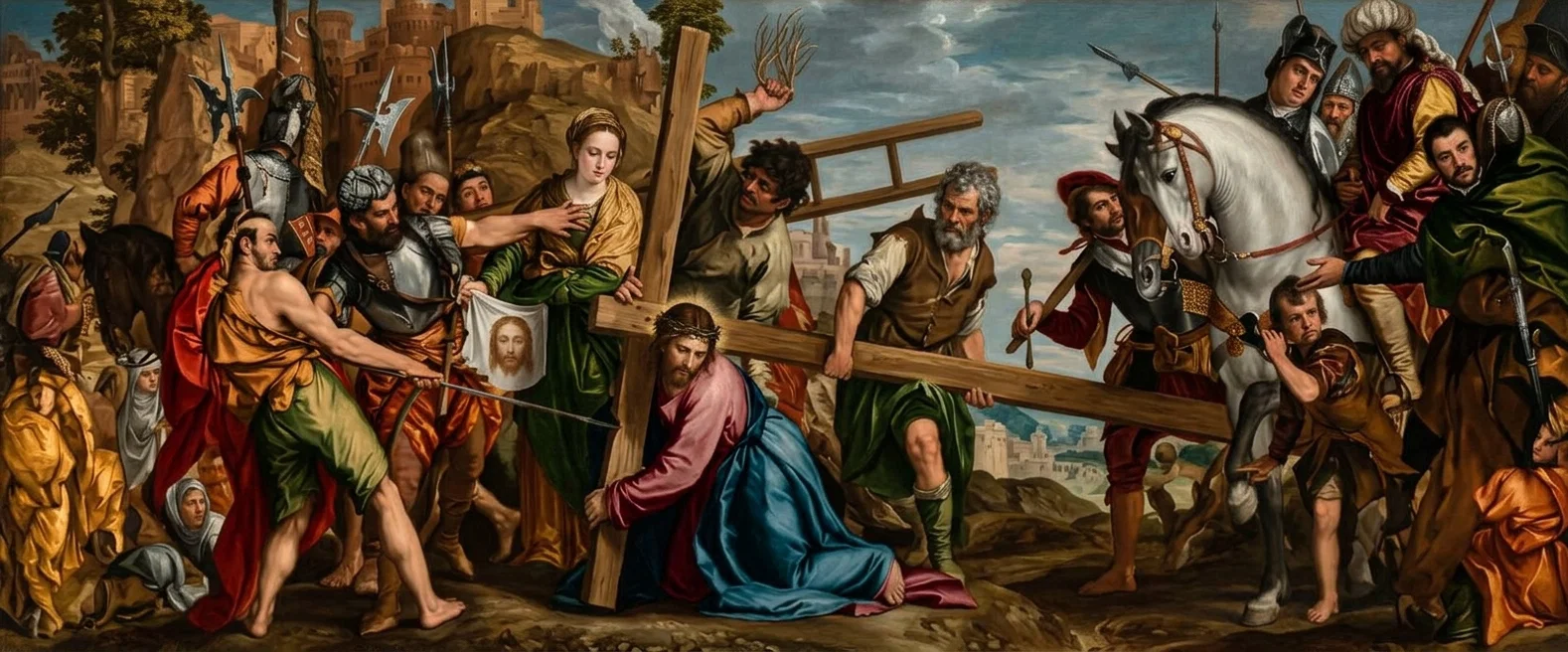
ON THE WAY TO CALVARY Veronese
NOTE.— From the foregoing texts, it will be observed that the gospel is the “power of God.” The success of the gospel, then, rests upon God and His power, and not upon any human strength or human devisings. And not only is the gospel the power of God, but it is “the power of God unto salvation.” And it brings this salvation to every one who believes. The gospel is for the purpose of saving from sin, or wrong-doing; and the apostle shows how it can thus save from wrong-doing, by saying, “For [that is, because, or for the reason that] therein is the righteousness of God revealed.” The gospel, then, saves from sin by revealing or bringing into the individual the righteousness of God to supplant the man’s sinfulness. And this transformation is accomplished through faith, for God’s righteousness is revealed “from faith to faith.”
4. How is this righteousness of God, which is perfect right-doing, made to enter the life of the sinner and take the place of the sins he has committed?
“But now the righteousness of God without the law is manifested, being witnessed by the law and the prophets; even the righteousness of God which is by faith of Jesus Christ unto all and upon all them that believe: for there is no difference: for all have sinned, and come short of the glory of God; being justified freely by His grace through the redemption that is in Christ Jesus: whom God hath set-forth to be a propitiation through faith in His blood, to declare His righteousness for the remission of sins that are past, through the forbearance of God; to declare, I say, at this time His righteousness: that He might be just, and the justifier of him which believeth in Jesus.” Rom. 3:21-26.
NOTE.— Man sinned, and thus placed himself where he could not do right, neither could he get back to the place where he could perform right acts. He had hopelessly fallen. Then our heavenly Father and His Son Jesus Christ step in and rescue fallen man by offering the perfect “righteousness of God.” And this righteousness is given to the individual “by faith.” Note also that this faith is the “faith of Jesus Christ.” Then our Father offers us His righteousness, and with it He also offers us the “faith of Jesus Christ,” His Son. Thus it is seen, from the verses just quoted, that both the righteousness and the faith are of divine origin, and are direct divine gifts. Therefore they must be acceptable to God, for He Himself has given them for the very purpose of our salvation. The apostle states that Christ is set forth to “declare His righteousness for the remission of sins that are past.” Then he repeats and emphasizes that God “declares” this righteousness in the place of the past life of sin. That is to say, all our past life of sin is taken away from us by the power and willingness that the Lord has to “declare” in the place of that sin the righteousness of His own life. And from the moment that the sinner accepts this great gift of righteousness from the hand of the Lord, he is no longer to look at his past life of sin to grieve over it, but he is to thank the Lord every day and continually that his life of sin is gone and he has in its stead the perfect life of Christ. Christ lived a perfect life from infancy to His death, and He lived that life for us. He lived that life of righteousness so that we could accept it by faith, and so that we could thank the Lord all the time that the sinful life that we have lived has been exchanged for the perfect life that our Saviour has lived for us.
5. Having accepted the righteousness and faith that come from God, whom are we then constantly to behold?
“We all, with open face beholding as in a glass the glory of the Lord, are changed into the same image from glory to glory, even as by the Spirit of the Lord.” 2 Cor. 3:18.
“Looking unto Jesus the author and finisher of our faith; who for the joy that was set before Him endured the cross, despising the shame, and is set down at the right hand of the throne of God.” Heb. 12:2.
6. What is the extent of the power that attends the gospel in this transformation from sin to righteousness?
“And Jesus came and spake unto them, saying, All power is given unto Me in heaven and in earth. Go ye therefore, and teach all nations, baptizing them in the name of the Father, and of the Son, and of the Holy Ghost: teaching them to observe all things whatsoever I have commanded you: and, lo, I am with you alway, even unto the end of the world.” Matt. 28:18-20.
NOTE.— All power that is in heaven and in earth is given to our Saviour for His work of redeeming men. And He commands His followers to go in this power, for He says that He is with them always. He is ever at their side. He never leaves them for a moment. And all this mighty power that centers in Him is exercised in and for the one who accepts Christ and thus permits the Master to walk with him “alway.”
7. How many may have the privilege of receiving this gospel of righteousness and salvation?
“For God so loved the world, that He gave His only-begotten Son, that whosoever believeth in Him should not perish, but have everlasting life.” John 3:16.
“And the Spirit and the bride say, Come. And let him that heareth say, Come. And let him that is athirst come. And whosoever will, let him take the water of life freely.” Rev. 22:17.
8. How is the law of God related to the salvation given in the gospel?
“For by the law is the knowledge of sin.” Rom. 3:20.
“What shall we say then? Is the law sin? God forbid. Nay, I had not known sin, but by the law: for I had not known lust, except the law had said, Thou shalt not covet.” Rom. 7:7.
NOTE.— It is perfectly clear, from the foregoing texts, that the sinner can see nothing but his sins in the light of the law of God. The law which is the expression of the righteousness of God shows to the sinner the evil of his course.
9. What is the penalty for sin?
“For the wages of sin is death; but the gift of God is eternal life through Jesus Christ our Lord.” Rom. 6:23.
“When lust hath conceived, it bringeth forth sin: and sin, when it is finished, bringeth forth death.” James 1:15.
10. Then what is the view that the sinner has of the law?
“The commandment, which was ordained to life, I found to be unto death.” Rom. 7:10.
11. What may be accomplished for the sinner who sees himself as he really is—who has a view of his life in the light of the law of God?
“For the law of the Spirit of life in Christ Jesus hath made me free from the law of sin and death. For what the law could not do, in that it was weak through the flesh, God sending His own Son in the likeness of sinful flesh, and for sin, condemned sin in the flesh: that the righteousness of the law might be fulfilled in us, who walk not after the flesh, but after the Spirit.” Rom. 8:2-4.
NOTE.— Study the foregoing texts carefully, and you will see that from the sinner’s standpoint God’s holy law is a “law of sin and death.” It is the law that shows him his sin, and unrepented sin brings sure condemnation and death. But as soon as the sinner turns from his evil course, then that same law becomes the law of life in Christ Jesus. Each commandment becomes an enabling act. Each precept is transformed into a blessed promise.
12. Then what kind of mind only is opposed to the law of God?
“The carnal mind is enmity against God: for it is not subject to the law of God, neither indeed can be.” Rom. 8:7.

The Relation of the Law to the Gospel

From Posthumous Sermons of Thomas Chalmers
If there be one character of the law of God more distinct and more declared than another, it is the resolute, the unbending assertion which it makes of its own authority, and in virtue of which it will stoop to no compromise with human disobedience. There is in this respect a high state and sovereignty in the divine government, from which it is impossible that it ever can descend.—Page 12.
We never can, by our most strenuous observation of the law, arrive at a juridical or a forensic right to heaven. But it is just by our observation of the law, as a law of piety, and purity, and equity, and kindness, that we arrive at that personal righteousness which makes us meet for heaven’s exercises and heaven’s joys—the exercises of a morality that is then faultless, the joys of a then complete and unsullied virtue.—Page 125.
Greatly do they mistake the whole design and economy of the gospel, who think that it brings any exemption from the services of righteousness along with it. There is, in truth, a busier and a more abundant service than before; and the only distinction is, that, whereas under the one dispensation you served in the oldness of the letter, under the other dispensation you serve in the newness of the spirit. The obedience now is of a more refined, and pure, and exalted character than ever was obedience then. It is obedience altogether divested of that mercenary character which never ceases to adhere to it so long as, viewed legally, it is regarded but as the term of a bargain. Instead of a constrained stipulation, it becomes a spontaneous offering of love and of loyalty; and, proceeding as it does from the new taste and a desire of a heart now emancipated from the bondage and the terror of a felt condemnation, it is as unlike to what it formerly was as the obedience of a seraph is unlike to that of a slave. And be assured that, unless this new obedience is entered on, you have no part nor interest in the gospel of Jesus Christ.—Page 126.

Is Sunday the Lord’s Day?

By T. Godfrey
I WAS in the Spirit on the Lord’s day, and heard behind me a great voice, as of a trumpet.” Rev. 1:10. It is quite evident, from the above declaration, that there is a day designated by the Scriptures as “the Lord’s day.” John declares that he was in vision upon that day, and received a revelation from Jesus Christ, to be delivered to the seven churches.
John wrote the book of Revelation in the year 96 A.D., while in exile upon the Isle of Patmos, or about sixty-five years after the resurrection and ascension of Jesus Christ.
Up to this date, we find no record of any controversy among the professed people of God over the question of which day was “the Lord’s day.” But in these last days, we find much contention and great confusion over that question. Many believe and contend that the first day of the week, commonly called Sunday, is the Lord’s day, and that it is obligatory upon all Christians in this dispensation.
But what Bible evidence have we for the observance of the first day of the week?—None whatever. The first day of the week is mentioned just eight times in the New Testament, as follows: Matt. 28:1; Mark 16:2, 9; Luke 24:1; John 20:1, 19; Acts 20:7; 1 Cor. 16:2. In the eight texts above cited, there is not one single instance in which the first day of the week is mentioned as “the Lord’s day,” or “the Sabbath day,” or “a holy day.” There is no record of its being blessed, sanctified, and commanded to be kept holy. Therefore the first day of the week does not exist as a Christian institution, and is not obligatory upon Christians in this dispensation. It is truly the “wild solar-holiday of all pagan times.” See Eze. 8:16.
There are others who believe and contend that the seventh day, commonly called Saturday, is the Lord’s day, and that it is obligatory upon all men for all time. But what Bible evidence have we that the seventh day is the Lord’s day?—We have for it a superabundance of testimony. In the Old Testament, the weekly Sabbath is mentioned seventy-seven times. In the New Testament, the weekly Sabbath is mentioned fifty-nine times. And in every instance it is called the Sabbath. The Sabbath was made, blessed, and sanctified at creation. God worked six days, and on the seventh day He rested. Then He blessed and sanctified the seventh day. Gen. 2:2, 3. And in Ex. 20:8-11 He commanded it to be kept holy. In this connection it is called “the Sabbath of the Lord thy God.” In Isa. 58:13, the Lord calls it “My holy day.” In the second chapter of Mark, Jesus says the Sabbath was made for man, and that He, the Son of Man, is Lord of the Sabbath day. Verses 27, 28. Thus the seventh-day Sabbath, according to Scripture, is the Lord’s day, and it is obligatory upon us in this dispensation.
Western, Washington.

Women’s Mission Work in India

I HAVE been in India twenty years, and if I had twenty lives to live I would give them all for India. There is no work which God has given to woman which exceeds in beauty and grandeur the work which is to be done by women, for the women of India.—Mrs. J. C. Archibald.

The Power of Right Character

A MAN who lives right and is right, has more power in his silence than another has by his words. Character is like bells that ring out sweet music, and that, when touched, accidentally even, respond with sweet music.— Phillips Brooks.
Plockhorst
Plockhorst

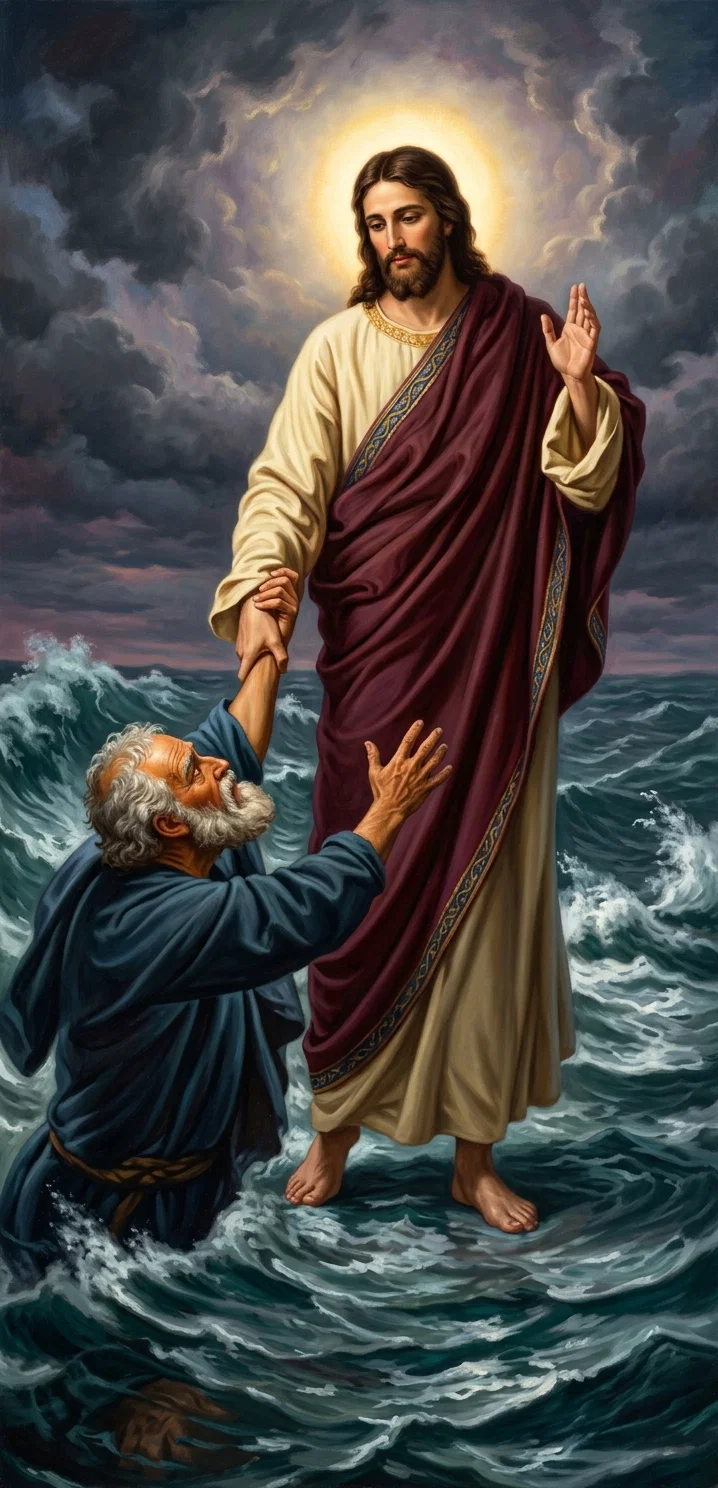
ABLE TO SAVE

“We have heard a joyful sound,— Jesus saves! Jesus saves! Spread the gladness all around,— Jesus saves! Jesus saves!”
Continue reading: Our London Letter