OUR study of last week extended as far as verse 33. In that study we learned that it mattered mightily whether we trusted to the material thing seen, or the power behind it. Israel of old saw only the manna and Moses, and finally rejected both. Moses and Joshua and Caleb saw beyond the manna to the creative power of God, and grasped God's life in His Word. In fact, God gave the manna that Israel might know that man does not live by bread alone, but "by every word that proceedeth out of the mouth of the Lord doth man live." Deut. 8:3. And our Lord demonstrated its truth in His own experience. Matt. 4:4. The same thought is echoed in the inspired songs of the Lord: "Concerning the works of men, by the Word of Thy lips I have kept me from the paths of the destroyer." Ps. 17:4. "Thy Word have I hid in mine heart, that I might not sin against Thee." Ps. 119:11. There are many other passages that speak of its power. Christ Jesus our Lord is that Word Incarnate; and he who by faith embraces Him receives the Word of life inwrought in character, in human flesh and blood.
What therefore did He affirm?
"For the bread of God is He which cometh down from heaven, and giveth life unto the world." Verse 33.
What did He reply to their plea for that material bread?
"Then said they unto Him, Lord, evermore give us this bread. And Jesus said unto them, I am the bread of life: he that cometh to Me shall never hunger; and he that believeth on Me shall never thirst. But I said unto you, That ye also have seen Me, and believe not." Verses 34-36.
What assurance did He give to believers?
"All that the Father giveth Me shall come to Me; and him that cometh to Me I will in no wise cast out. For I came down from heaven, not to do Mine own will, but the will of Him that sent Me. And this is the Father's will which hath sent Me, that of all which He hath given Me I should lose nothing, but should raise it up again at the last day. And this is the will of Him that sent Me, that every one which seeth the Son, and believeth on Him, may have everlasting life: and I will raise him up at the last day." Verses 37-40.
God's will, His holy law, His eternal Word, was wrought in Christ, in order that He might ingraft that Word in others' lives and so save them. James 1:18, 21; John 15:3. Those who come into harmony with Him through that Word, in that Word find life.
After answering the murmuring of the Jews, who saw only the visible, material (verses 41-46), what emphatic statements did He make?
"Verily, verily, I say unto you, He that believeth on Me hath everlasting life. I am that bread of life. Your fathers did eat manna in the wilderness, and are dead. This is the bread which cometh down from heaven, that a man may eat thereof, and not die. I am the living bread which came down from heaven: if any man eat of this bread, he shall live forever: and the bread that I will give is My flesh, which I will give for the life of the world." Verses 47-51.
God's Word is food, bread, as we have before learned. Deut. 8:3; Matt. 4:4. It is an ancient, eternal truth. "Thy words were found, and I did eat them; and Thy Word was unto me the joy and rejoicing of mine heart." Jer. 15:16. "I have esteemed the words of His mouth more than my necessary food." Job 23:12. God's Word is His bread for His children. In it is all the potency of God, creative, regenerating, healing, keeping. But men would not have it so. They obscured it by falsehood and perverted it by tradition. Then in "the fulness of time" God sent forth His Son, in whose character was wrought out the Word. "The Word was made flesh, and dwelt among us." John 1:14. He was the Incarnate Word, the Infleshed Word. The Word which He had given through all the ages was personified in Him, that man might know what it meant. Whosoever, therefore, partook of that Word, partook of His flesh; for they could only receive it through Him. The fathers ate manna and died; they saw no more than the material bread. He who feeds at all upon Jesus, must partake of His life.
How strongly did He repeat the great truth?
"The Jews therefore strove among themselves, saying, How can this man give us His flesh to eat? Then Jesus said unto them, Verily, verily, I say unto you, Except ye eat the flesh of the Son of Man, and drink His blood, ye have no life in you. Whoso eateth My flesh, and drinketh My blood, hath eternal life; and I will raise him up at the last day. For My flesh is meat indeed, and My blood is drink indeed. He that eateth My flesh, and drinketh My blood, dwelleth in Me, and I in him. As the living Father hath sent Me, and I live by the Father; so he that eateth Me, even he shall live by Me. This is that bread which came down from heaven: not as your fathers did eat manna, and are dead: he that eateth of this bread shall live forever." Verses 52-58.
Even His disciples were blind to His meaning. They saw only the man Christ Jesus. They did not see back of Him the divine and complete Saviour. They stumbled over what they ought to have understood. They could not understand that the Master had come from heaven, or that He would return there.
How plainly does our Lord teach that it is not the gross material which would save, but the Word of God?
"It is the Spirit that quickeneth; the flesh profiteth nothing: the words that I speak unto you, they are spirit, and they are life. But there are some of you that believe not. For Jesus knew from the beginning who they were that believed not, and who should betray Him." Verses 63, 64.
When disciples were leaving our Lord, what clearly shows that Peter grasped the thought of the living Word?
"Then Simon Peter answered Him, Lord, to whom shall we go? Thou hast the words of eternal life. And we believe and are sure that Thou art that Christ, the Son of the living God." Verses 68, 69.
Will we grasp the great truth of the power of God's Word, of the importance of that Word, of the life of that Word,—ever emphasized by prophet and apostle, emphasized and personified by Jesus our Lord? He was that Word in character. In His flesh sin was dethroned, and the living Word reigned. That flesh, His body, lived that Word for us, was broken and crucified for us, in order that the same Word through Him might prevail in us. Thousands have made of the Lord's Supper a fetish, seeing naught beyond the material wafer, and have gone on in sin and folly and selfishness to the end of a triumphless life. Others, with scarce opportunity for a lifetime to partake of the simple ceremony to be observed "in remembrance" of the Incarnate Word (Luke 22:19), do feed daily upon the Word of truth, and live the victorious life, by the Christ-ingrafted Word. For by that Word we are begotten (1 Peter 1:23); by that Word are we cleansed (John 15:3; Eph. 5:26); by that Word we are built up by its effectual working in us through faith (Acts 20:32; 1 Thess. 2:13); that Word through faith in Christ makes wise to salvation, and completely furnishes the man of God "unto all good works" (2 Tim. 3:15-17). That "Word is truth," by which we are crucified through Him (John 17:17-19), belief in which and love of which are necessary to salvation (2 Thess. 2:10-13).
What shall we say more?—"Desire the sincere milk of the Word, that ye may grow thereby." 1 Peter 2:2. Let the Spirit of Christ translate it into character like His, in denial of all that is unlike Him, all that is forbidden by that Word; in implicit, loving obedience to all its injunctions. So shall you feed upon Christ its Giver, and find that Word (for it all came through Him) spirit and life; and the eucharist to you will be a glad remembrance of all that He suffered to bring you to God, while you look beyond to the living Word and His glorious coming.
Near at Hand
TO VERY many who pray, God seems far off. They do not know whether He hears them or not. They do not hear His voice. That is not the way to pray to God. What is the difference between praying to a god that has ears, but hears not, and has eyes, but sees not, and a mouth, but speaks not, and praying to the true God and not knowing whether He sees or hears or speaks? God is not a long way off. He is "not far from every one of us," said the apostle, speaking to heathen men; "for in Him we live, and move, and have our being; as certain also of your own poets have said, For we are also His offspring."
Christ’s Second Coming
The second coming of our Lord is not the outpouring of the Holy Spirit. True, His presence is brought to us by His Spirit, but the Holy Spirit is not His personal coming. The words of Jesus make this clear: "Nevertheless I tell you the truth; It is expedient for you that I go away: for if I go not away, the Comforter will not come unto you; but if I depart, I will send Him unto you." John 16:7. No; Christ's second coming is a personal, literal, visible coming. Do you not wish to see Him?
The Love of the Truth
THE theory of the truth will not save men; the knowledge of God's will will not keep men from sin. There must be a "love of the truth." It is our affection for a thing which molds our lives like it. It is an overruling, controlling love for God as seen in His Word, and that Word as seen in the character of Christ, which will make us like Christ. Such love keeps all of God's commandments, and counts them not burdensome.
Our London Letter
By Editor
From Our Own Correspondent
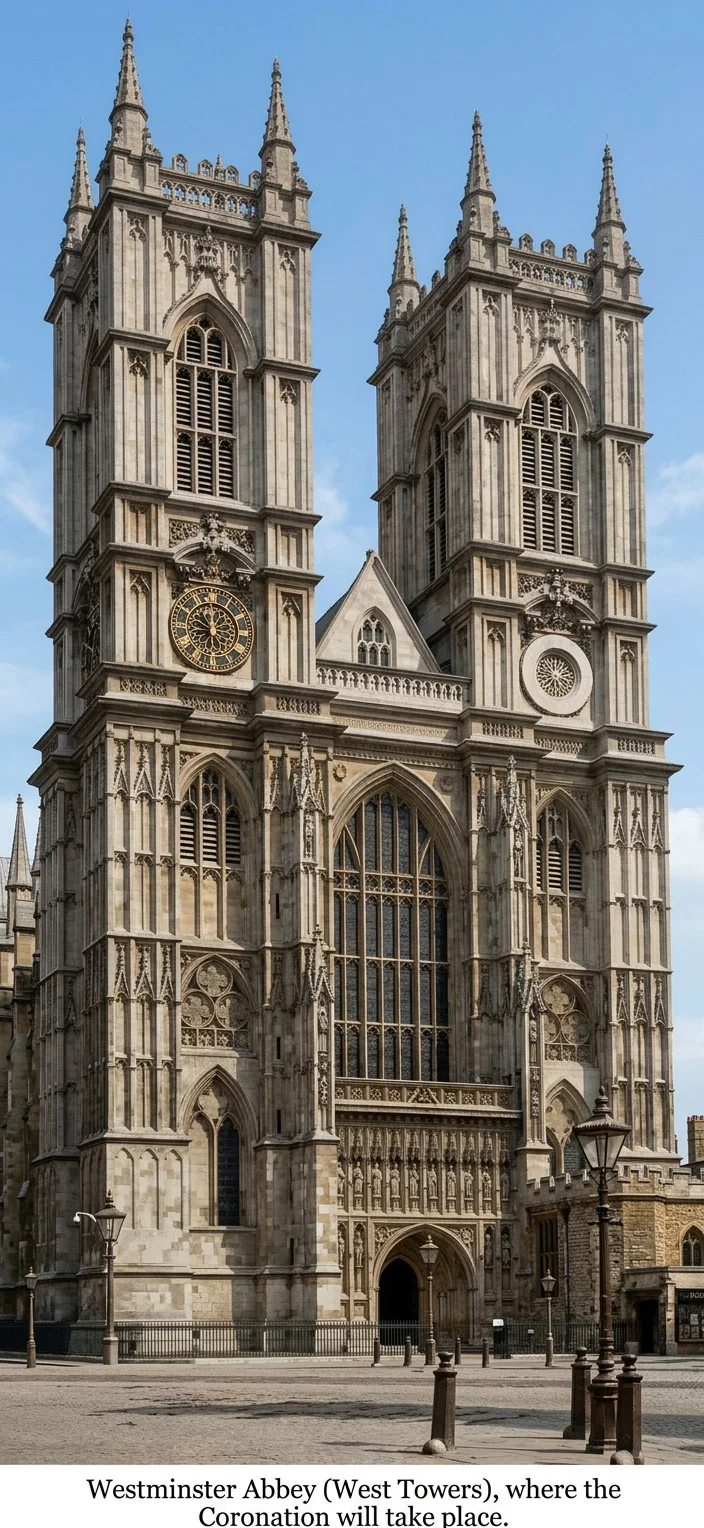
ENGLAND is all astir over the approaching coronation. Guests are arriving from all parts of the empire; banks of seats are erected along the route which will be followed by the royal processions; huge exhibitions and entertainments are organized to take advantage of the crowds that are expected to flock to London; and plans for bonfires and all kinds of local jubilations are in full swing. If the weather is favorable, festivities on a grand scale will be carried on this summer.
Circumstances are combining to put the people in high spirits. Trade has been excellent of recent months, and money is plentiful; the naval scare has died down; the political situation seems easier; and the talk of everlasting peace between England and the United States has created an atmosphere of optimism and good-will. The coronation could hardly take place under happier auspices. The King and Queen are popular, and the impression is deepening that they both have sincerely at heart the well-being of their people.
There is no doubt that the position of the royal family in England is much more secure to-day than it was a few years ago. In the latter part of the reign of Queen Victoria there was a powerful sentiment in favor of a republican form of government; but this entirely disappeared before the tactful, genial personality of the late King Edward. He became a commanding figure in English and European life, and his son succeeds to a stable and influential throne. It may be that England has been as near to republicanism as she will ever be. The people love the splendor and pomp associated with royalty, and a brilliant coronation will go far in deepening the loyalty of the multitude.
Their Majesties George V and Mary, Rulers of the United Kingdom of Great Britain and Ireland
Restricting the House of Lords
The bill for restricting the veto of the House of Lords has passed through the House of Commons with less of opposition and delay than was expected. Now it has to go up for acceptance or rejection to the House of Lords, which body will not finish with it before the coronation. The prime minister, however, has stated explicitly that the bill as it stands will become law, and every one understands this assurance to mean that the King will create all the peers necessary to force the measure through the House of Lords, if that extreme step has to be taken. There is a general feeling, however, that the lords will not fight to the death. They may postpone their surrender, but they are expected to make it sooner or later. Possibly they will reserve themselves for the struggle yet to come when the government produces its bill for the reform of the Upper House. Mr. Asquith has undertaken to proceed with legislation to this end as soon as possible, altho his supporters among the Labor party protest that there is no need whatever of a second chamber, that the cause of progress would move along faster without one.
The Well-Known Crystal Palace near London
The principal weapon made use of by the Conservatives against the veto bill was the accusation that advantage would be taken of it by the Liberals to rush through a program of Irish Home Rule, to which the country had never given its consent. The Liberals met this charge boldly, acknowledging that they regarded the veto bill as a means to an end, a machine for use. They declared that one of the first pieces of work the machine would be called upon to perform would be the legislating into existence of a Parliament for dealing with Ireland's local affairs, and they proved from the utterances of themselves and their opponents that this issue had been placed fairly before the country. We may expect, therefore, that ere long Ireland will enjoy the boon of self-government she has been craving so many years. English political life will seem a new thing entirely when it is no longer embittered by the struggle carried on by the Nationalists of Ireland for what they conceive to be rights unjustly and tyrannically withheld.
Disestablishment in Wales
The Welsh members have also been promised that the alien Church of England shall soon be disestablished in their principality; and as soon as the necessary time can be found, a new education bill will also be brought in to remedy the inequalities of the present system. To-day passive resisters are still going to prison rather than pay the education rate. These Non-conformist protesters consider it a grievous wrong that the public money should be taken to support schools that are not under public control, but are managed by the Church of England, and made use of for the teaching of Church of England doctrines.
Insuring Working Men Against Loss of Employment
Meanwhile the present government is already offering to the House of Commons another substantial instalment of reform in the shape of a bill for insuring the working classes against sickness and unemployment. This measure has received a warm welcome from all quarters, friend and foe alike. The details have yet to be made known in their entirety, but if the plan does what Mr. Lloyd George, the chancellor of the exchequer, hopes to accomplish by it, it will go a long way toward helping the toilers over their frequent periods of disablement, whether caused by sickness or by falling off in trade. Mr. Lloyd George knows something of what it means to be incapacitated by sickness, for he has been absent from the House of Commons for months, owing to a breakdown in health, and he has devoted his comparative leisure to working out the details of this bill. The chancellor is certainly proving himself a very zealous and able advocate of the cause of the poor. They already owe him and his colleagues of the Liberal party their old age pensions, and the present measure will confer no less signal benefits on the laboring classes during the working portion of their lives. Whether these social reforms will work for good or evil in the long run remains to be seen.11
Westminster Abbey (West Towers), where the Coronation will take place
Significant Facts from Scotland
The recent census, altho its figures are only partially known, has brought to light some startling facts. It appears that the rural population of Scotland is rapidly disappearing, not so much by absorption into the cities as by emigration. It is easy to see that the strength and wealth of any country consists in a vital measure in the possession of a sturdy race of people such as can be found only on the land; but in Scotland this reserve of national strength is rapidly disappearing, and the revelation of the fact has produced wide-spread alarm. The House of Lords is severely blamed for the situation, because it rejected some years ago a Scottish land bill designed to facilitate the acquirement of land by small farmers. Instead of meekly accepting the rebuff, and allowing themselves to be crowded more and more off the land by deer forests and game preserves, Scottish farmers have simply left the country for other lands, where fewer obstacles are placed in the way of an independent existence. Ten years ago the number of emigrants from Scotland was 8,869, last year it was 33,366, and in one intervening year it was 44,180 — a serious drain when it is remembered that the population of Scotland does not reach five millions. One writer points the moral in saying: "Our measures of social reform and land reform, so far from being rash and premature, have, on the contrary, been much too long delayed."
Tercentenary of Authorized Version
One of the most interesting events of recent months was the celebration of the tercentenary of our Authorized Version. Many flattering things were said on this occasion about the Scriptures and their powerful influence upon the fortunes of the English-speaking people; but it was also lamented, by men who knew the facts, that the habit of private Bible study had largely fallen into decay. An appeal was made to the nation by the archbishop of Canterbury that it should signalize the three hundredth anniversary of the translation by a return to the old practise. While the pulpits, however, are filled with critics of the Scriptures, people are not likely to be drawn back to daily Bible reading. So far as statistics show, the cause of religion is steadily declining in this country. All the main divisions of the free churches register a decline in membership, while the large missionary societies also show serious deficits in their balance-sheets, and this notwithstanding the impetus given to missionary effort by last year's world conference in Edinburgh. The churches are also sending up a lamentation over the serious falling off in Sunday observance. This has not been at so low an ebb for many years. In a number of towns consent has been given by the local authorities that picture theaters be opened on Sundays, and this action is based on the ground that they provide a strong counter-attraction to the saloons, which are open on that day.
A Bill Favoring Sunday Trading
There is just now before the House of Commons a bill dealing to some extent with Sunday trading. It permits this in a number of cases where the practise has become established, but seeks to prevent any extension. Jews who have closed their shops on the Sabbath are permitted to open them until two o'clock on Sundays; and newspapers, tobacco, alcoholic liquors, refreshments, bread, milk, and cycle and motor accessories, may also be sold on Sundays. The churches are very dissatisfied with the bill, which, they complain, will perpetuate Sunday trading on a large scale instead of abolishing it. But the home secretary, Mr. Winston Churchill, who has charge of the measure, declines to interfere with the Sunday businesses that have been, through the inaction of the authorities, permitted to grow into being, or with the Sunday markets that meet the needs of the poorest classes. Mr. Churchill seems to have, like some of his colleagues, a considerable degree of sympathy for the poor. He will not sacrifice their little interests to the clamors of would-be religious reformers.
The Peace Movement
The peace movement about which we are now hearing so much affords a pleasant change from the outcry against dangerous rivals on the continent; but notwithstanding all the talk of peace, the manufacture of Dreadnoughts goes on unchecked, and A. J. Balfour, M.P., has warned us that the signing of an arbitration treaty with the States must not be expected to produce any results for the present in the shape of a reduction of armaments. Germany looks on with cynical worldly wisdom at the peace movement, and prefers to put her faith in steel and gunpowder rather than in treaties; in which, however they may talk about a more excellent way, the other countries seem at heart to think she is right, judging by their unremitting preparations.
W. T. Bartlett.
— ★ ★ —
No Apologies to Make
THE Gospel Messenger, and other religious papers as well, complain that the United States Government is in league with the brewer in commercial circles abroad. The Messenger says:
But what an example to set before other nations! The faithful foreign missionary struggles in vain against the vile drink traffic, when the foremost Christian nation openly espouses and promotes the manufacture and sale of that which "steals away man's brains" and leaves him poor indeed.
It would be a wonderful blessing to the cause of Christ if missionaries would learn, (1) that there is no such thing as a "Christian nation;" (2) that they do not, or ought not even to suppose that they do, hold their credentials from the nation or government of whom they happened to be a citizen when sent as a missionary; (3) that therefore they have no apologies to make for the misdoings of any people or government; (4) they are ambassadors of the divine government to sinners, and their work is to "preach the Gospel," preach the Word, and so reconcile souls to God through Christ.
— ★ ★ —
Startling Losses from Evil Things
THORO investigation of the causes that led to the recent conflagration in a New York factory by which nearly 150 girls lost their lives, seems to indicate that a lighted cigar, carelessly thrown among inflammable material, was to blame for the start of the deplorable affair. Now it is reported that the Bangor, Maine, fire, with its loss of some $6,000,000, was started by a cigarette stub, thrown into some hay in a room where men were playing poker on a Sunday afternoon. There would seem to be abundant reason why smoking should be entirely prohibited in places where human life is thereby imperiled; but, candidly speaking, is there a single good reason why any one should engage in a practise so manifestly injurious to his own health, and of so great a danger to his fellow men?
— The Gospel Messenger.
— ★ ★ —
— ★ ★ —
City Water, Portugal, and Woodpeckers
The immensity of the great city of New York can be better appreciated by a consideration of what it means to supply the city with water. The water system, which brings its supply from the Catskills to the city, is 121 miles. The city tunnel is from 11 to 15 feet in diameter, and is bored through solid rock at a depth of from 77 to 700 feet below the surface. It is 18 miles in length, and will be when completed the longest rock tunnel in existence. Its estimated cost is $18,000,000, and it will take four years to finish it. Would that men were as eager to supply the people of that city with the water of life!
Little Portugal, we are told, has bargained for a navy and fortifications demanding an expenditure of $150,000,000. Her president makes the proposition to do away with ambassadorships, diplomatic corps, foreign ministers, etc. Portugal has no concern with international politics, and financial questions can be attended to by courts and consuls. Extraordinary matters may be met by plenipotentiaries appointed for the purpose. This would save great expense and a lot of red tape.
Secretary of Agriculture Wilson says that the woodpecker is one of the greatest conservators of trees, "the greatest single aid man has in the conservation of lumber." It is estimated that insects destroy $100,000,000 worth of timber each year, and their greatest foes are the forty-five species of woodpeckers. In the examination of 3,450 stomachs of the birds, it was found that their food consists principally of the bodies and eggs of tree bugs and worms.
A German paper, "Kladderadatsch," of Berlin, has a striking cartoon entitled "John and Jonathan." Two typical figures representing England and America are sitting on two battle-ships over the bow of each of which projects a huge gun. These twin ships are hauled through the water by a little baby-faced cupid, entitled "Peace," swimming bravely, and supported by a life-buoy. And that is about the comparative size of the peace and war movements.
In 1901 Frank J. Gould, youngest son of the late Jay Gould, did not own a railway-car or spike in all Virginia. Now he practically controls, it is said, every traction line and every power franchise in the State, from the Potomac to the James and from Chesapeake Bay to the crest of the Blue Ridge. And this he declares is but the beginning. He is but thirty years old, and is worth nearly that number of millions.
The "Western Watchman" chides some of its Eastern Catholic contemporaries for joining forces with the "Puritans" in a demand to have Sunday baseball stopped. Editor Phelan thinks that Sunday baseball "is the climax" in the political and social institutions of the country for "moral improvement among our boys."
Thirteen Episcopal clergymen took a ride with the fire chief in an auto fire-apparatus which was being demonstrated in Ross Valley, near San Francisco, June 5. The result was one death, four seriously injured, and six so badly shaken up that they fainted.
Socialism furnishes fairly good diagnoses of the ills of society, but she will fail in all her proposed remedies. The ills are inherent in the carnal, or fleshly, mind, and no remedy possessed by humanity can regenerate the heart.
Mr. John W. Gates, the noted millionaire, declares that a profit of ten to fifteen per cent is made on the manufacture of common wire, and fifty per cent on woven wire.
One of the latest inventions for war is said to be a dirigible fog, which can be moved or transported and used to cover an object from the sight of the enemy.
The United States Steel Trust is one of the next big concerns with which the Government will deal under the Sherman act.
Letters to a Daughter
By By a Mother
III. Simplicity and Appropriateness
My DEAR DAUGHTER,—
I note what you say about your apartment, your fare at table, the uniform required, etc.
Through it all I see that the wise founder of that remarkable school has an appreciation of the values of the simple life. I am grateful that these do not seem to be received by you with disfavor. I quite approve of the restrictions placed upon your room decorations. You may think this at least is no one's business but your own, since you alone occupy the room. This is true in a way. Yet you are there to be trained; and that upon which you choose to rest your eyes during moments of relaxation, as truly enters into your education, as that to which you give your most studied attention. You know the Great Teacher said, "By beholding we become changed."
Simplicity in your surroundings makes for simplicity of heart and purpose. Sometime you will be very grateful for this schooling in the development of a classical taste. There will never be a better time to develop it than now. Soon the promiscuous distribution of bric-à-brac or wall pictures in undue profusion will be distasteful to you. Do you remember how quickly you formed an aversion for "rag time" when you were allowed to play classical music only? The Father has made it easy for us to rise if we only will. It seems to me that this principle should pervade your whole life,—your dress, your manners, your habits of eating and drinking, indeed the whole régime of living. If you will let it, you will find much strength and peace added to your own inner life, and a far greater and purer influence over others.
In after years, when you have gained a broader view-point, you will be very grateful for this feature of your training. Dress, speech, manners, are telltale guide-posts to character. Fix these up with all the cunning of a high-grade finishing-school equipment, and the truth will out in spite of you. They speak for sincere and solid worth or the opposite.
Remember, dear, to seem to be just what you are is the highest art in manners. If you ever remain the simple-hearted, sincere girl mother is proud to think of you, you will never feel the need of studying the latest productions on society etiquette. You will never have to fumble around in your brain for the proper words to say; for the simple language of a simple, sincere heart will involuntarily express itself. Your sincerity will captivate the noblest, the souls worth knowing. Beside you the artificial city lass in latest toggery, painted face, studied manners, cheap thought elegantly expressed, will have no place.
Your simple, well-cooked table fare and your regular hours for sleeping assure me of your continued good health. In these few years of training your habits in this respect will have become established. Thus will you be prepared with vigorous strength for the strenuous life that awaits you, and many will be benefited thereby.
I note what you say about the rules concerning your appearance on the street, which are quite right, my dear. It is certainly very inappropriate to appear on the street in your uniform. Of course it is awkward to carry a suit case when going to do hourly nursing, for it is as necessary for you to be in uniform then as that you should not be on the street.
I will make and send you at once a long light-weight coat, or rather you may select and buy one for yourself.
Yes, dear, I think your plain white silk mull will be just the thing to wear to your banquets. How thoughtful of those noble women to give you these occasions! It will be a splendid experience for you, because everything will be conducted in just the best way. You will no doubt see many there in striking evening costumes, but you will also see some in very plain dresses. Study their faces and make their acquaintance if you can. They are the people you want to know.
It was my privilege a short time since, to attend a banquet given a gentleman of note. The entire senior class of Mills College girls was present. They sat together at one table. I never saw a more pleasing sight. Every one was appropriately dressed. One with auburn hair wore a pale sea-green dress with a single bunch of violets. Another with moderate coloring wore white trimmed in pale pink. Another with very high coloring wore pure white. There was not one with unduly exposed neck and arms. It was noticeable that not one wore any artificial hair or head decorations, not even a roll or a false puff. I am sure there was not one powdered face. To any right-minded person in attendance the picture must have spoken volumes for the school.
My mother used to quote to me the saying, "O consistency, thou art a jewel!" This is a good safeguard to carry about with you.
Study to know the fitness of things. To some this knowledge comes as a gift, others must learn it. A few suggestions will be helpful:
Never try to appear what you are not.
Never assume to know what you do not.
Never be ashamed to dress and act in keeping with the position that for the time being it is necessary you should occupy.
Learn to know and keep your place. You will in no way be belittled by it, tho that place for the time being be very obscure.
Do not feel abashed, when found in low estate, by the high and noble. The truly wise will think none the less of you, possibly more.
Never appear anywhere, even in your most private apartments, with unkept hair or untidy dress, and you will never have occasion to be mortified at your appearance, whoever sees you.
Never do anything to be ashamed of, and you will never be ashamed.
Let your street dress be always quiet and well kept. Any style or mode of dress calculated to fix attention, is unbecoming a modest girl.
Apologize only when apology is due, never to cover a neglect. Emerson says: "If you visit your friend, why need you apologize for not having visited him, and waste his time and deface your own act? Visit him now. Let him feel that the highest love has come to see him, in thee its lowest organ. Or why need you torment yourself and friend by secret self-reproaches that you have not assisted him or complimented him with gifts and salutations heretofore? Be a gift and a benediction. Shine with real light, and not the borrowed reflections of gifts. Common men are apologies for men; they bow the head, they excuse themselves with prolix reasons, they accumulate appearances, because the substance is not."
Never speak of your own trials except to your most intimate friends.
Be careful about interrupting others. Avoid doing anything that will annoy others in any way. In your profession you have special need to study your relations to others from this point of view.
Cultivate a quiet manner of speech, a pleasing voice.
Study to bring cheer, but avoid lightness.
Learn to open and close doors softly.
Avoid familiarity except with bosom friends of long standing.
Learn to use the language of flowers in giving expressions of sympathy to those in affliction. Many times these silent messages are more helpful than any words we may frame.
Above all things be loyal.
Simplicity of heart supplemented by deep, sincere love of God and man, are the prime requisites. And their natural expression will meet the needs of the hour. There is a hymn we sing, the author of which must have had a genuine experience in God's ways:
At first I prayed for light;
Could I but see the way,
How gladly, swiftly would I walk
To everlasting day!
And next I prayed for strength,
That I might tread the road
With firm, unfaltering feet, and win
The heaven's serene abode.
And then I asked for faith;
Could I but trust my God,
I'd live unfolded in His peace,
Tho foes were all abroad.
But now I pray for love,
Deep love to God and man;
A living love that will not fail,
However dark His plan.
And light and strength and faith
Are opening everywhere!
God waited patiently until
I prayed the larger prayer.