Review and Herald Publishing Assn. · Washington D.C. · Mar 26, 1918
The Foe Behind the Lines
By E. F. Collier
E. F. COLLIER
YES, I'm glad to be a soldier
When the cause is true and right,
And to wade through shell-hole shambles
To the thickest of the fight;
But the enemy before me
Isn't quite so bad, I find,
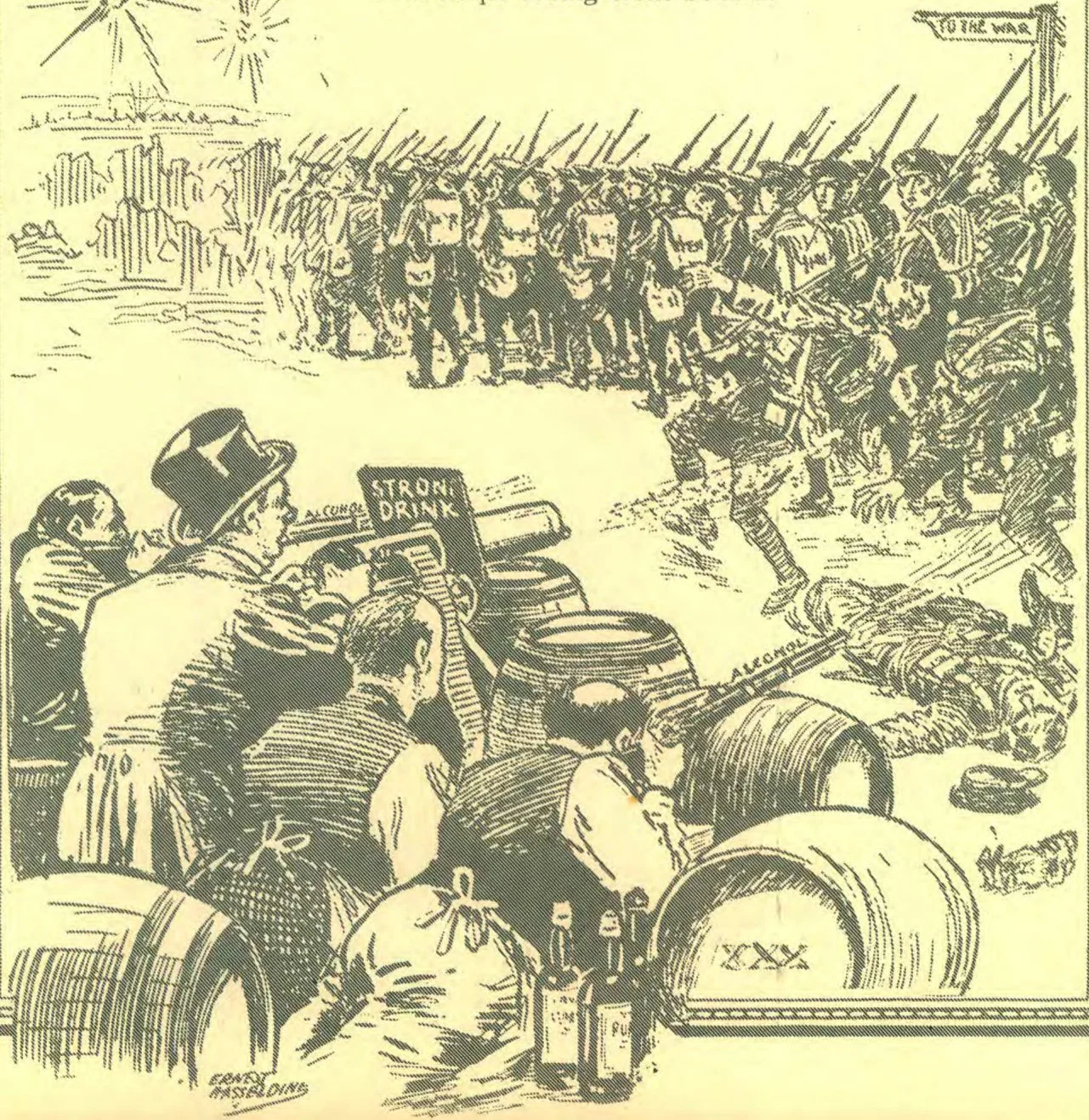
As the sneaking, sniping traitor
Who keeps shooting from behind.
When I see a comrade staggering
Through the trench's slime and ooze,
With his throne of manhood toppling,
And his vision dimmed with booze,
I should rather see him treading
On the foeman's deadly mines,
For the dastard now that's got him
Is the foe behind the lines.
When the famished Belgian urchins
Fall and die for want of bread,
And the stifled cries of hunger
Rise from homes of festering dead,
While a half-a-hundred million
Bags of grain the brewers find—
Oh, I curse the heartless felon
Who keeps killing from behind.
The Herod of America
By Barton R. Pogue
Barton R. Pogue
The following article by Mr. Pogue, of Taylor University, Indiana, won first prize, seventy-five dollars, at the intercollegiate oratorical contest given under the auspices of the Intercollegiate Prohibition Association in connection with the Anti-Saloon League Convention at Washington, D. C., Dec. 12-17, 1917.
In an epoch of moral advancement we have witnessed the reconstruction of American thought and purpose. Within a single generation we have seen humanity lifted on a mighty wave of righteousness and reform; and in this hour of the world's supreme sacrifice many new forces have caught the spirit of redemption for the human race. But in the stress of this world struggle we must not forget that in some issues the rule of America is still the rule of Gold.
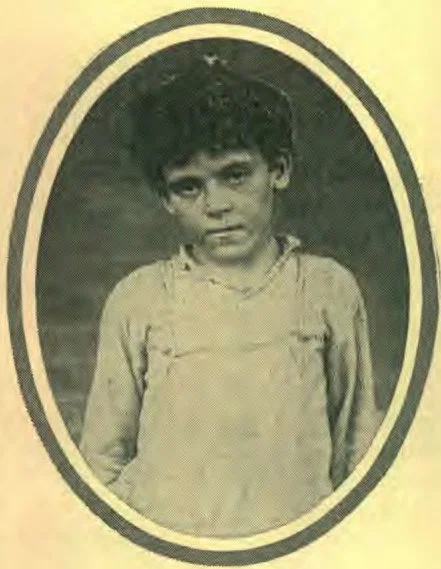
This fact is undeniably substantiated by the ruthless sacrifice which Corporate Greed is making of the nation's lifeblood, our “Golden Boys and Girls.” Into the grist hopper of our seething industry, into the roar of factory, the rattle of coal breaker, whir of cotton mill, and tumult of city streets, monopoly has drawn this precious seed wheat of the next generation. Two millions of tomorrow's citizens, fathers and mothers to be, move daily at the command of this Pharaoh of finance who compels them to make bricks without straw. Is not this slavery? And can we expect that a practice which engenders illiteracy and industrial inefficiency, which breeds disease and low standards of living, which minimizes wage, creates long hours, mothers crime, blasts hope, and destroys souls, shall add to our assets as a nation of prosperity and plenty? Thoughtless America has made a gigantic loan of her priceless boys and girls; and the society of tomorrow must compute the compound interest of illiteracy, ill health, and degeneracy which will come to her across the money-worn counters of industry.
This picture of the future has powerfully stirred the reformers of our age. Our citizens have discovered the crimson in their cotton; they have awakened to the fact that hosts of precious souls are becoming little slaves of the lamp and loom. Agitation has followed this vision; and on the first day of September, nineteen hundred sixteen, our Congressmen, animated by the demands of a national conscience, enacted a stringent child-labor law, which reformers said would be of unending benefit to the child life of America.
At the Factory Wheel
Consider, however, the effect of such a law. Children are not born into the world to take upon themselves the burdens of toil so early in life. The natural impulse of child life is to play, not work. Why then, when employers pay such a ridiculously low wage, do our young boys leave the playground2of youth for the dangers and evil companionship of the street and the factory? Why do girls with the instinct of motherhood in their hearts leave their blue-eyed dolls to toil amid the flying lint and whirring wheels of the cotton mills? Do the shop, the factory, the glass-house, and the coal breakers furnish more attraction than the home, the school, and the playground? Human nature answers, No. The child of tender years does not love the mill better than pleasure and education; but an unseen force, a power irresistible, goads these trembling, weak-kneed, pinched, and white-faced children into the grinding mills of industry. What is this force, we ask? Judge Ben Lindsey, Owen R. Lovejoy, and a score of other leading social workers unite in assigning involuntary poverty as the fundamental cause of this evil.
But if poverty is the cause of child labor, what are the causes of poverty? Ralph H. Crowley, visiting physician to the Bradford Union Hospital of England, shows by his investigations that pauperism is due to a number of causes, among which are old age, inability to find work, the destitution of women, and immorality. In each instance the figures when added together account for 49.5 per cent of England's poverty. When we look about for the other 50 per cent we have not far to seek. Outtrebling any one of these causes, totaling more than all of them together, is a cause which is so destructive that Lloyd-George placed it on a plane of equality with the strategy, strength, and destructiveness of Europe's central powers. That cause is drink; and to drink, England ascribes 50.5 per cent of her poverty, the alleviation of which requires the enormous sum of $60,000,000 a year.
Rum's Talon-like Fingers Crush Homes
Nor does the verdict of America differ from this European pronouncement. A straw vote of nearly twenty thousand destitute men, taken by a charity organization on the streets of New York City, shows that 60 per cent of these fellows ascribe their poverty to intemperance. The Committee of Fifty in its report for 1889 declares that as a nation our rate of poverty, due to drink, runs from 30 to 60 per cent, and that 45 per cent of all child burdens are traceable to intemperance. Owen R. Lovejoy, of the National Child-labor Committee, speaks more emphatically, declaring that 50 per cent of the child labor in America is due to drink.
It is the power of rum, then, with its bony hand and talon-like fingers, that reaches down into thousands of homes, takes the last morsel of food from the family board, extinguishes the fire on the hearth, denudes the babes of comfortable clothing, and leaves want, sickness, and despair in its wake. It is rum more than any other force that has made the home a place of squalor, cursing, and low morals. It is the rum-produced phantom of penury which has struck terror into the very soul of sinking humanity and has sent the tiny representatives of the home scurrying away like frightened sheep to find a shelter in the rattle and roar of industry, to die of toil rather than suffer the pangs of starvation.
With these facts before us we are forced to admit that child labor is not a separate evil, not a cause but an effect; and that to correct the wrong we must not legislate against the child, the victim of the evil, but against its principal cause—the licensed liquor traffic.
What, then, can we say of the child-labor legislation of 1916? This, and this only: that we as a nation, although moved by humanitarian impulses for the relief of our boys and girls, have virtually said to these little toilers: “You shall not work. Get yourselves back to the suffering and shame of your tenement houses, where your fathers are steeped in rum, and where drunken brawls are the rule, and woe is your daily bread.” Instead of gaining the small amount of comfort they have hitherto had, these children must now go forth to the worst of want, to end their days in the streets, in gambling joints, bawdy houses, and brothels. We have tried to remedy an effect; but the legalized outlaw of sin and desperation continues to force from the lips of a million little wanderers a wail of blasted hopes and undying despair. The cry of the children of today is: “When you raised the mailed fist of law to smite the foe of childhood, you struck a blow at innocence in its misery; but to the cause of the misery, the curse of rum, you continue to make a profound bow.”
America Chains the Lamb but Frees the Lion
Could any worse accusation be brought against the people of America than this? You have chained the lamb, but the roaring lion of vice and crime you have let loose upon the citizens of our land. Patriots of America, lovers of native land and of justice, shall we not band ourselves together, and under God make a solemn vow, never again to take a hand in legislation which militates against the innocent and lets the guilty go free? Rather let us thunder at senate doors and cry aloud in public forum and demand the submission and ratification of the amendment to the Federal Constitution, which shall vanquish rum, the destroyer that out-Herods Herod, and signal for true child liberty all over this just land of ours.
Would we take such an oath and toil as those who have no hope?—Not if the gathering thunderclouds of liquor reform have any significance. For under the shadow of a stupendous world-conflict the thought-life of America has been strangely solemnized, and today we are joining with others in an international agreement that sobriety, like all righteousness, exalteth a nation. In the white light of suffering, struggle, and turmoil we are beginning to understand how prohibition will not only conserve our food supply, our man and brain power, but will make it possible for a sober America to vindicate the cause of world democracy, and lead the nations in paths of righteousness and peace. This vision of duty and opportunity has gripped the soul of our countrymen, and today from North, South, East, and West reverberates the tramp, tramp, tramp of temperance armies, State by State wheeling into rank and gathering on parade; while far away, yet clear and strong, a bugle blows a call to charge,—a charge which shall vanquish this modern Herod of the nations, rehabilitate the home, give the school its full quota of laughing children, and save a nation from disgrace. For on that day we shall have won the fight for prohibition, child freedom, and right living in America.
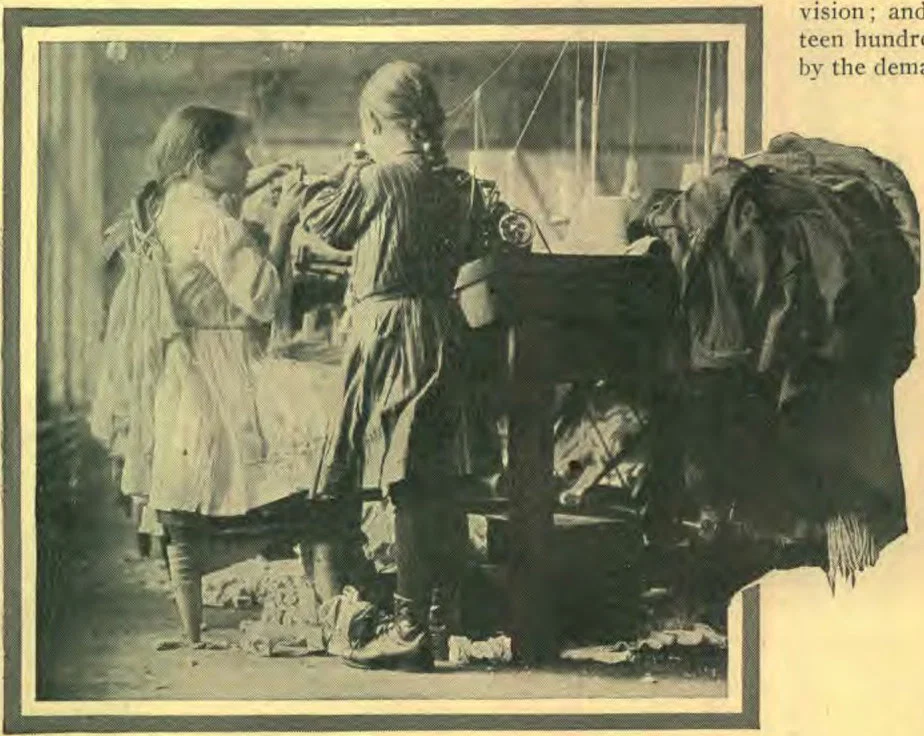
Why Girls Leave Dolls for Cotton Mills
“Why do girls with the instinct of motherhood in their hearts leave their blue-eyed dolls to toil amid the flying lint and whirring wheels of the cotton mills?”
Children Robbed of Their Rights
Taken Out of School
ACCORDING to W. H. Anderson, of New York, the liquor traffic takes “46,000 children every year out of the three highest grammar grades of the New York schools. It takes 40,000 young people every year out of the high schools of the State. Of 1,387,000 of school population, 316,000 are below the standard of intelligence because of the liquor traffic. Of these, 117,000 are absolute dullards. On an average, every day 185 boys in New York begin to drink. As a result, ten boys a day are sent to the penitentiaries and State prisons, and 100 boys a day are committed to jails. Every day an average of four to five girls in New York State begin a life of shame because of the liquor traffic.”
Degenerate and Misshapen
Ex-Governor Hanly of Indiana gives a pathetic picture of the wrongs suffered by a thousand of Indiana’s children,—wrongs suffered by thousands of little ones in every State where the licensed liquor traffic exists. He says:3
Children Robbed of Their Rights
(Concluded from page 2)
“I do not guess: I know! Sometimes I wish I did not know. Let me illustrate something of what I know. In my State tonight there are more than a thousand children in the custodial, correctional care of the commonwealth, under sixteen years of age—some of them only six. They ought to be in mothers’ arms this hour. Instead they are in the correctional care of the State, clothed and housed and fed at public expense; deprived of a mother’s love, denied a father’s care.
“I visited them many times as governor, looked into their faces, and read in lackluster eye, in degenerate countenance, in deformed, misshapen bodies, in crooked, twisted limbs, the irrefragable proof of the pitiful fact that they, these thousand children, are atoning for some one else’s sin—paying the price of another’s wrong. Paying the price? Aye, paying every day and every hour, and will continue to pay while God lets them live!
“They never had a chance! They never knew a square deal! For the records show that more than six hundred fifty of them have, or had, drunken fathers or drunken mothers or—God pity them—both drunken fathers and drunken mothers. Wronged in the moment of their conception! Wronged in their mothers’ wombs! Disinherited at their birth! Their destiny fixed from the beginning—a State institution, hospital, reformatory, prison, the electric chair, or the gallows! What an indictment of twentieth-century civilization it all is! I never left the presence of these children that the soul of me did not cry out, that a great, free, powerful people ought not to license and legalize a thing that so wrongs the childhood they beget.
“It cannot be that the cry of these defective little ones shall go much longer unheard by the manhood and womanhood of this nation. No, it must needs be that soon, in some luminous moment, the fatherhood and the motherhood of the land shall find itself, and in their power and indignation drive from the confines of the Republic this thing that so grievously wounds the childhood of the Republic.”
It is time to reverse the wrongs of centuries. National prohibition will do it.
Democracy’s Deadliest Enemy
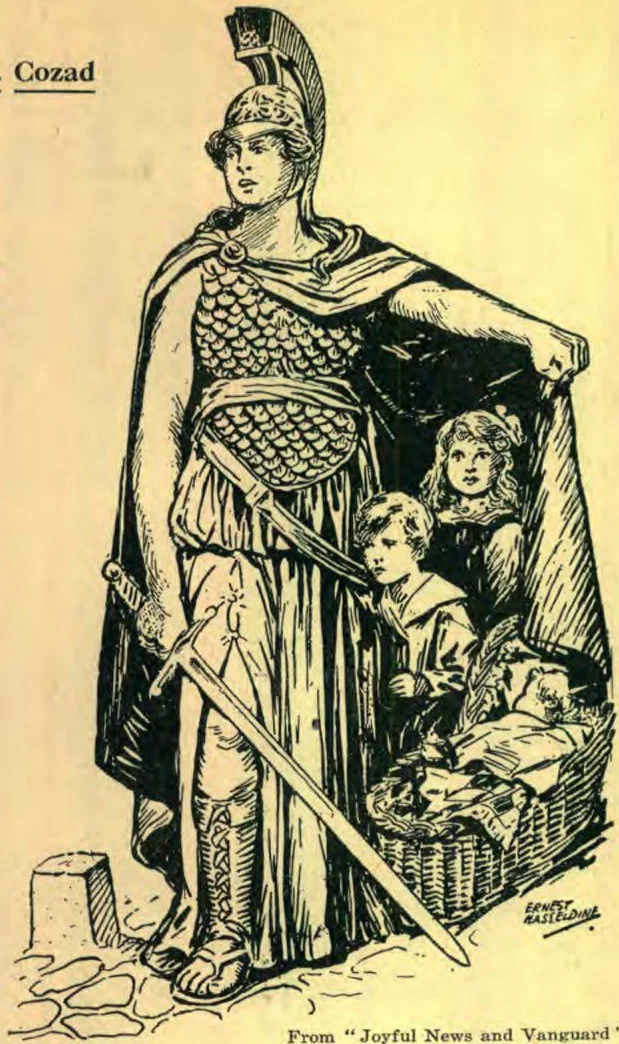
By Simeon H. Cozad
Simeon H. Cozad
The following article by Mr. Cozad, of Boston University, Boston, Massachusetts, won second prize at the intercollegiate oratorical contest, given under the auspices of the Intercollegiate Prohibition Association, in connection with the Anti-Saloon League Convention, at Washington, D. C., Dec. 12–17, 1917.
From “Joyful News and Vanguard”
In taking her stand as defender of the inalienable rights of mankind, America has set for herself a stupendous task. No longer can she live unto herself alone. She has taken upon herself the watchman’s responsibility. She has become her brother’s keeper. She has appointed herself the guardian of the most sacred heritage of the race. The enemy of democracy from this time on is to be America’s enemy. She has committed herself to the immutable business of defending it—even to her last dollar and her last man.
There are other enemies of democracy besides the one which causes such grave concern across the sea. The question is often asked these days as to just what place the fight for prohibition has in the face of the present world conflict. To answer this question we need to go somewhat into the meaning of democracy.
A Democracy Is a Government
in which the supreme power is lodged in the hands of the people. It is a government “of the people, for the people, and by the people.” But democracy is a great deal more. From the simple viewpoint of a self-governing people, democracy may be good or it may be bad. It may be worth fighting for or it may not be worth fighting for. It is only when we idealize democracy that it has for us a truly significant meaning. There is no more sacred word in our language than the word “wife.” But couple to it the word “harlot,” and it loses its sacredness. There is no word more beautiful in its meaning than the word “mother.” But when the mother is mother to a bastard, the word loses its beauty. The home as an institution compels our admiration and respect. But let the home be divided by disloyalty and besmirched by dissipation, and we no longer look upon it with reverence. We say, “My country,” and we are stirred deeply as we say it. But we are stirred only because back of the words are ideals and principles that are worthy of our loyalty and for which we dare to take a stand. “Democracy” is a word that grips our souls with tremendous power, but only because we have idealized it by grouping around it such words as “intelligence,” “decency,” “self-control,” and “justice.” Rob democracy of this, and it is no longer a thing over which to spill human blood. It is to save to democracy this ideal element that we battle to make our nation dry.
It is upon this ideal element in democracy that its very life depends. The perpetuation of democracy is dependent upon two things: First, an unhampered opportunity for development and self-expression; and second, a virile, intelligent, and moral citizenship. The enemy of either is an enemy of democracy.
Both of these basic principles are being assailed today. We are sending our armies across the Atlantic to throttle the enemy who has reared himself against the first great requisite of democracy. What are we going to do about the enemy who arrays himself with equal arrogance against the second of these requisites?
Who Is This Enemy That Musters His Forces
against the virility, intelligence, and morality of our citizenship? Ignorance is his name, but it is more than ignorance. Vice is his name, but it is more than vice. Godlessness is his name, but it is more than godlessness. Alcohol is his name, Legion, for in him the evil spirits of ignorance, vice, and godlessness dwell.
The deadliest enemy of a nation is not always the enemy she meets upon the field of battle. It is not the German armies that we fear in this titanic conflict. We can match them man for man and gun for gun. It is the insidious intrigue of the German government that constitutes our greatest menace. It is Germany working underneath the surface. It is Germany perpetrating her diabolical schemes behind our line of battle.
It is the intrigue of the liquor traffic that endangers our national life. It is the liquor traffic working beneath the surface. It is the liquor traffic undermining the very foundation of our Government. It is the liquor traffic fixing itself upon the soul of the nation.
The worst enemy of this nation lies not without its borders, but within. The nation whose heartbeat warms the soulless body of a mighty octopus, licensing that dread monster to fix its blood-sapping tentacles on every part of its being, is in graver danger of being humbled than the nation whose political enemies muster on its borders.
The Greatest Enemy of This Country Fights
not with sword and shell, but with the inoculated germs of degeneracy. It pours its broadsides, not at the hearts of men, but at their passions. It does not drive from trench to trench, but lures from bar to brothel and from brothel to bar. It does not charge across the open, but follows in the wake of the poisonous gases of insanity. It cannot be stopped with machine gun or bayonet; it cannot be driven from its position by the bursting of the forty-two centimeter shell; its fortifications cannot be razed to the ground by the pounding of the mightiest howitzer; but its ranks can and will be broken only as men rise in their civic might and say by their vote that this thing shall be no more.
We must rally our forces against this insidious intriguer behind our lines corrupting our citizenship, as well as against the nation we meet upon the field of battle. To wage warfare against the liquor traffic is to stand shoulder to shoulder with the men who bear arms across the sea. It is one and the same warfare in which our nation is engaged. It, too, is a battle for democracy.
Our success abroad in the battle for democracy will be conditioned by the kind of democracy we have at home. Not only is the world to be made safe for democracy, but4America’s own soul of democracy is to be saved. The one hope of a democratic world is a democratic America. To safeguard democracy for the world means for us first
The Safeguarding of Democracy for the Nation
My appeal to you is that you put yourself back of this great battle for a truer democracy. The traffic in intoxicating liquor is wrong. It is wrong from the viewpoint of the physical and the mental; wrong from the viewpoint of the moral and the religious; wrong from the viewpoint of education; wrong from the viewpoint of economics. How long shall this thing remain to stain our national life? Let the nation’s flag be insulted and you would rise to a man in righteous indignation. Let mother, sister, wife, or sweetheart be in danger and you would not hold life itself to be too dear a price to pay for her protection. Here is this thing that throws your loved ones liable to open insult; here is this thing that stains with lawlessness the royal colors of your flag; here is this thing that will cause more reverses for your army than the weapons and daring of your enemy; here is this thing that puts “the fire of degeneracy” into your children’s blood; that puts the “frenzy of insanity” into your brother’s brain; that puts the “rack of palsy” into your father’s hand. How long, American citizen, how long?
The hour for the overthrow of democracy’s deadliest enemy is at hand. The time has come to strike a crushing blow. Then, comrades of this great hope, strike. Strike at the flowing bowl.
“Strike—till the last armed foe expires;
Strike—for your altars and your fires;
Strike—for the green graves of your sires;
God—and your native land!”
The World Wants Ships
We want ships—ships for transporting men and munitions. The world wants ships—ships to carry food to hungry Europe. Yet in one week there passed Madeira, ships bearing to the natives of Africa:
28,000 Cases of whisky.
30,000 Cases of brandy.
30,000 Cases of Old Tom.
36,000 Barrels of rum.
800,000 Demijohns of rum.
25,000 Bottles of rum.
15,000 Barrels of absinth.
900,000 Cases of gin.
Forty-five per cent of this liquor is said to have come from one United States port. From this same port in 1915 there were shipped 1,402,580 gallons of rum.
It is not probable that Madeira’s procession is duplicated every week, but there have been many such weeks. President Wilson’s war order of last August forbidding the manufacture, exportation, and importation of distilled spirits did much toward cutting off the supply of intoxicants to Africa; and it saved grain and ships for the nation’s war use. If this action is made the permanent policy of our Government, great will be the joy of both missionary and native. The brewers, however, will be quick to take advantage of this open market unless a similar exportation act is made to apply to fermented liquors.
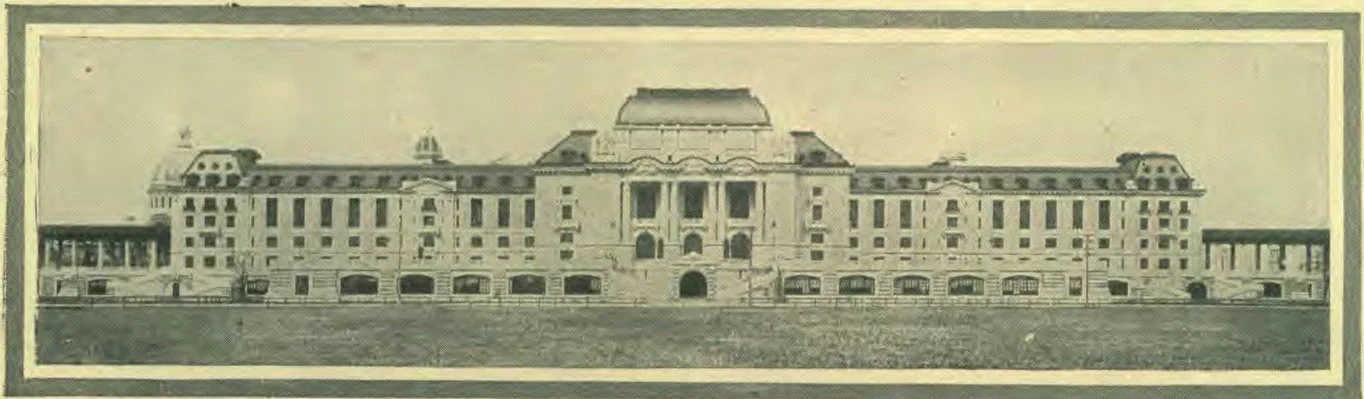
A view of the United States Naval Academy, Annapolis, Maryland, is given below.
Our Government has a duty to perform for the African people. It demands democracy for the world; why should it not demand with equal insistence sobriety for the world, at least so far as itself is concerned, by prohibiting forever the shipping of all intoxicants from this country to Africa or other lands? It must do it.
“If You Don’t, Some One Else Will”
By C. P. Bollman
THE argument sometimes made in the interests of the liquor traffic that the people will have intoxicants, and that if the saloons do not supply them others will do so, finds a parallel in the defense of pocket picking made by one of the characters in “Oliver Twist:”
“If you don’t take pocket handkerchers and watches, some other cove will; so that the coves that lose ’em will be all the worse, and you’ll be all the worse too, and nobody half a ha’p’orth the better, except the chaps wot gets them—and you’ve just as good a right to them as they have.”
Such reasoning is just as valid in the one case as in the other; which, however, is to say that it is valid in neither. No man has a right to prey upon his fellows because if he does not some one else may.
C. P. BOLLMAN.
“Whatsoever a Man Soweth”
By Clyde Lowry
ONE sunny Southern California morning, on my way to the office, I asked a newsboy a question. His answer was terse, forceful, and full of meaning.
“Where is the old gentleman who has been selling papers on this corner?”
“Aw! You know where he is.”
“No, I don’t.”
“You know what he did—don’t you?”
“I can’t say that I do.”
“Well, I’ll tell you. Every time he got a nickel for a paper he went over there to the saloon and spent it. Now do you know where he is?”
I knew.
CLYDE LOWRY.
View of the United States Naval Academy, Annapolis
A view of the United States Naval Academy, Annapolis, Maryland, is given below.