Your ShelfYour Projects

Signs of the Times, Vol. 31, No. 42.

HAVE YOU ORDERED SPECIAL "SIGNS"?

Signs of the Times

Oct 18, 1905

Pacific Press Publishing Company · Mountain View, California · Oct 18, 1905

HAVE YOU ORDERED SPECIAL "SIGNS"?
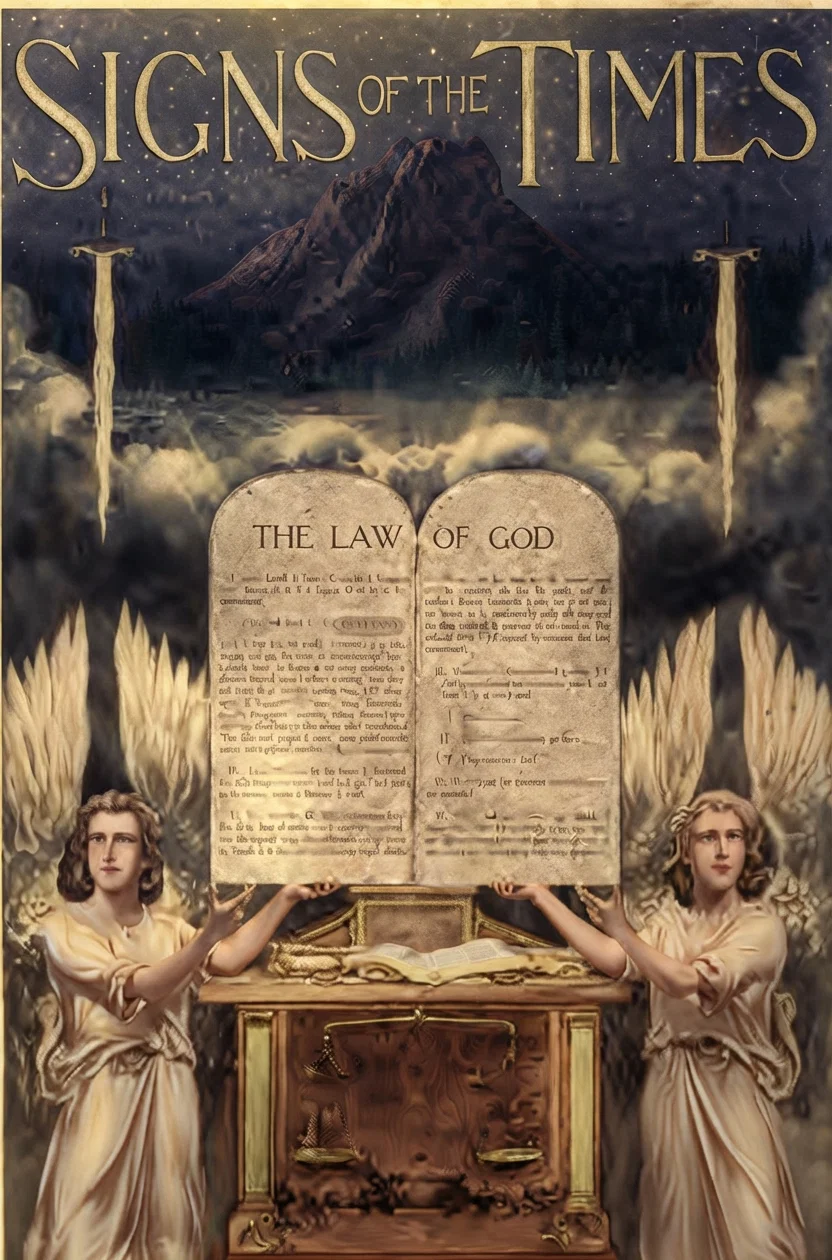
Have you ordered as many sets of the Special-Message SIGNS OF THE TIMES as you can use?
Have you thought of the fact that this series really epitomizes the Third Angel's Message which is now due to the world?
Have you noticed our plan to use as a cover design for each paper an original engraving appropriate to the matter contained in the paper?
Have you thought about trying to secure subscriptions for the series at 20 cents each, and have the papers mailed direct to the individuals, or deliver them yourself?
Have you thought of using those little inexpensive, truth-filled Signs of the Times Leaflets in your work for the paper? You will find them very helpful indeed in interesting strangers.
That you may remember the prices of these Special SIGNS we give them once more.
1 to 4 sets to one or more addresses . . . . . . . . . Per set $0.20 5 or more sets to single addresses . . . . . . . . . . . . . " .15 25 to 500 sets to one address . . . . . . . . . . . . . . . . . " .10 500 and upward . . . . . . . . . . . . . . . . . . . . . . . . . . . " .09
You can address your State Tract Society or Publishing House in your vicinity, or the SIGNS OF THE TIMES, Mountain View, Cal.

Attractive Books

For Home Selling

Particular attention has been given, of late, to the preparation and publication of an attractive line of easy-selling books for our home workers. The term, home workers, applies to a large class whose home duties will not admit of them leaving home for any great length of time, but who can spend a few days or a week from time to time, introducing easy-selling books, and other good home reading to their neighbors.
We feel sure that the Great Home Family have as much interest in the message, and are just as willing to work for its advancement, when they have opportunity, as those who are so situated that they can give their entire time. To help you improve the opportunities in the best way, and to make your work as easy as possible, this class of attractive, illustrated books has been provided, which sell very readily without much studied effort.
The General Conference Publication Committee recognize the importance of this line of work, and recommend it as one of the prominent features of the Fall Campaign, in the following words:
We look with favor upon the plan of setting aside certain small, easy-selling books for the use of those who wish to canvass in their own neighborhoods.
Notice particularly this fine list of books selected:
Things Foretold, - - - - board covers, Price 50 cents. Glorious Appearing, - - - - board, 25 cents; cloth, 40 “ Making Home Happy, - - - - paper, 25 cents; cloth, 50 “ Our Little Folks Bible Nature, - - - - board, 25 cents; cloth, 40 “ Uncle Ben's Cobblestones, - - - - board covers, 75 “ Education, - - - - - beautifully bound in cloth, $1.25 The Vegetarian Cook Book, - - - - bound in cloth, 75 cents. Steps to Christ, - - - - paper, 25 cents; cloth, 50 “ Thoughts from the Mount of Blessing, - - - bound in cloth, 60 “ Power for Witnessing, - - - - paper, 25 cents; cloth, 75 “ Thoughts on Daniel, - - - - - paper covers, 25 “ Thoughts on Revelation, - - - - - paper covers, 25 “ The Great Nations of To-day, - - - - paper covers, 25 “ Story of Joseph, - - - - - board covers, 25 “ Christ's Object Lessons, - - - - - bound in cloth, $1.25 The Ministry of Healing, - - - - - bound in cloth, post-paid, $1.65

The Commission

On the line of books above mentioned, a commission of 40% on the retail price is given the seller, with the exception of the last three books, the profits on which go to various missionary enterprises.

How to Begin Work

It is not necessary to consult the State Agent, nor to make an extended study of these works before commencing work. Simply make arrangements with your church officers for the territory, and with the librarian for securing the books desired, and go to work at once.

Our Descriptive Booklet

The Pacific Press has recently issued a small descriptive booklet, entitled "Home Worker's List," which describes in detail this line of Forty Per Cent Books, and the plans for selling, as well as outlining other important lines of missionary effort. If any of our readers have not yet received a copy, we shall be glad to send one free, on application.

"WEIGHED AND WANTING."

A Visible Object-Lesson of the Invisible.
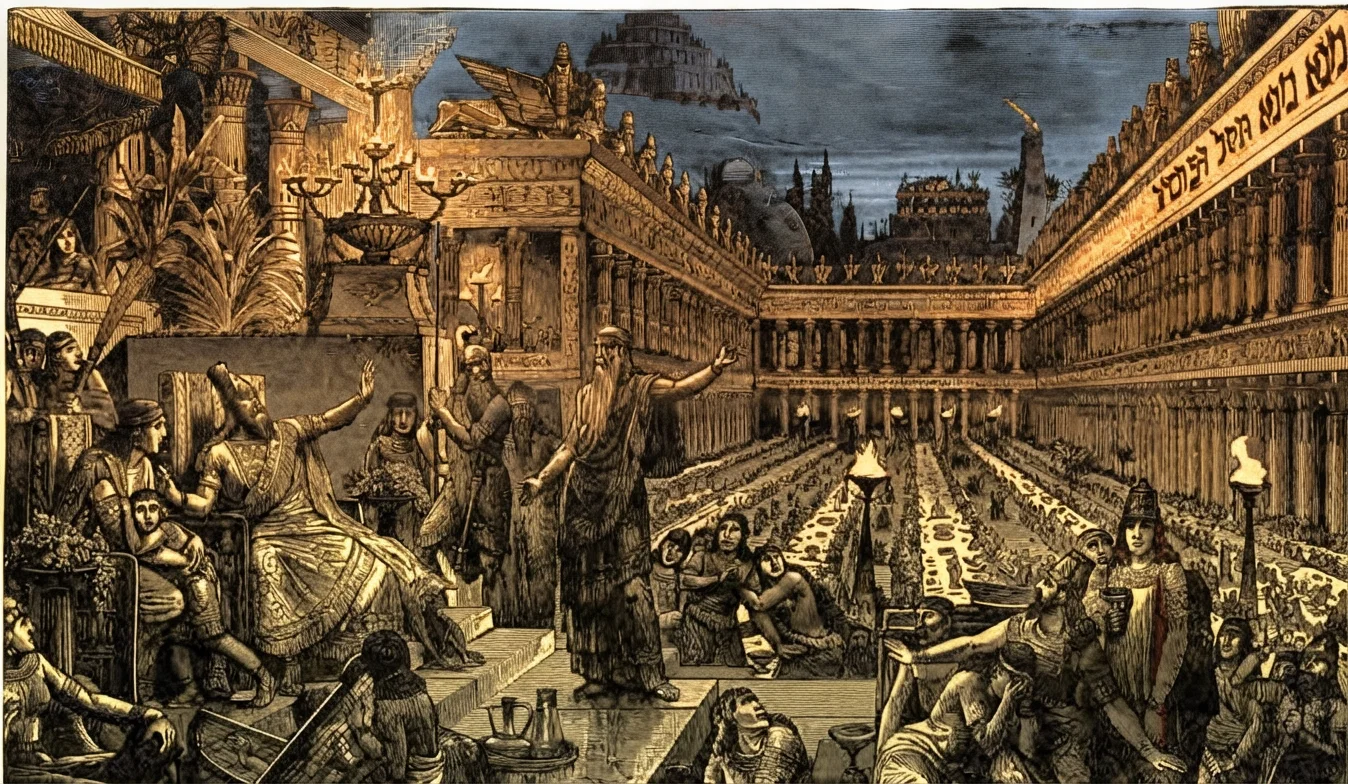
BELSHAZZAR.
BELSHAZZAR.
GOD is one and unchangeable. His law, ever the same, is the reflection of His own character. As spoken amid the awful glories of Sinai, it prohibits every sin. To him who accepts it in the faith and love of Christ Jesus, each prohibition becomes an enabling act, full of power to work out the righteousness which the law demands.
AT different times God has visited summary, manifest punishment upon the transgressors of that law. He has done this that men may know that He abhors sin, and that just as surely as that sin was met in punishment, so surely every sin will be. God is ever the same in justice as well as mercy. Yet, "because sentence against an evil work is not executed speedily, therefore the heart of the sons of men is fully set in them to do evil. Tho a sinner do evil a hundred times, and prolong his days, yet surely I know that it shall be well with them that fear God, that fear before Him; but it shall not be well with the wicked." Eccl. 8:11-13.

BELSHAZZAR

Belshazzar is king! Belshazzar is lord! And a thousand dark nobles all bend Fruits glisten, flowers blossom, meats- Of the wine that man loveth runs redd- Wild dancers are there, and a riot of And the beauty that maddens the pass- And the crowds all shout, till the vast "All praise to Belshazzar, Belshazzar "Bring forth!" cries the monarch, "the Which my father tore down from the Bring forth, and we'll drink, while the To the gods of bright silver, of gold,
THE apostle Paul puts in other words the same great truth: "Be not deceived; God is not mocked; for whatsoever a man soweth, that shall he also reap. For he that soweth unto his own flesh shall of the flesh reap corruption; but he that soweth unto the Spirit shall of the Spirit reap eternal life." Gal. 6:7, 8. This is as true in the field of character as in the field of grain. Wild oats sown will reap a harvest of wild oats. Cockle sown will bring forth cockle; wheat will produce wheat. Sow the evil thought in the heart and it will produce an evil act. Sow evil acts and the product is an evil habit. Continue the habit, and it will gather fellows to itself, and form a character for destruction.
BELSHAZZAR of old was the grandson of Nebuchadnezzar, a king who had learned through chastisement and humility that God ruled in the kingdom of men, and that his homage as a man and king was due to God. (See Daniel 5.) He had recorded the greatest of these lessons in history; he had sent it forth in a royal proclamation. Daniel 4. Every king of Babylon ought to have been familiar with Nebuchadnezzar's experience, and to have profited thereby.
BELSHAZZAR came to the throne in his youth. His father, Nabonadius, wished to devote his time to temple-building, and worship of the gods. Belshazzar was given the civil reins of power. He did wickedly. He forgot God's teaching and power. He ate and drank and lived, not to do good, but to please himself. Daniel had been set aside as prime-minister; in his place were evil advisers. The king thought: The city wall is strong, the moat is deep, Babylon is well provisioned for years, and our soldiers are brave; why take thought of coming doom? He would feast to his own gods and hold high revel in Babylon's glory. He was young; why should he be burdened with care tho the Medes were at the gates of Babylon. He would have a good time.
AND therefore he "made a great feast to a thousand of his lords, and drank wine before the thousand." Intoxicated with the wine, he dares to do what Nebuchadnezzar in his haughtiest pride had never presumed to do; he commands that the sacred vessels of gold and silver from Jehovah's temple shall be used by his lords, his wives, his concubines, in the drunken revelry. They were brought, and the revellers drank wine in them, and "praised the gods of gold, and of silver, of brass, of iron, of wood, and of stone."
BUT while they defied God in their mad mirth, a living, shining hand was seen writing in letters, which burned into the heart of the intoxicated king, upon the plaster of the wall where the light from the magnificent chandelier fell full upon it. The king was sobered in an instant. Great rewards were offered to those who could read the supernatural writing. But the wise men could not read the words, tho the frightened king called on them vehemently to know their meaning. The queen dowager is called, and she recalls the forgotten and aged Daniel. The old prophet is brought. He spurns the reward of the king. He refers to God's lesson to Nebuchadnezzar, and how the king learned the lesson. This he contrasts with the course of Belshazzar, who has sinned in the face of all the light. Then he reads the writing— "MENE, MENE, TEKEL, UPHARSIN." Numbered, Numbered, Weighed, Divided. They mean, said the prophet, as he addressed the terrified king: "God hath numbered thy kingdom, and brought it to an end." "Thou art weighed in the balances, and art found wanting." "Thy kingdom is divided, and given to the Medes and Persians." And "in that night," runs the record, "Belshazzar the Chaldean king was slain; and Darius the Mede received the kingdom."
GOD'S long-deferred sentence at last met fulfilment. Babylon and Belshazzar came to the reaping time, and the crop was of their own sowing. Nations to-day, like Babylon of old, are sowing oppression, tyranny, fraud, licentiousness, injustice. They may not see the hand on the wall, but they are writing it in their own moral fiber, and sooner or later the number of their days will be filled up, and they, found weighed in the impartial scales of divine justice, will be found wanting. Young men are sowing to lust, to licentiousness, to greed, to pleasure, to selfishness. They will reap what they have sown. They can not continue and escape the consequences. They may call lust love, but it is lust still, and its crop will be corruption, degradation, and death. O soul, turn and 'sow to righteousness' before it is forever too late. God would change your feasts of selfish pleasure into holy, effectual prayer and benisons of praise to Him.

The Key to Liberty.

It is said of Thomas Jefferson that while he took just pride in being styled the author of the Declaration of Independence, he was still prouder of the fact that he was the author of the Virginia statute of religious freedom. It was this memory that he desired to have inscribed on his tombstone. It was a protest against religious proscription that inspired Mr. Jefferson's statesmanship. The key to all civil liberty is religious liberty. The former can not exist where the latter is not recognized. Christ said to the people, "If the Son shall make you free, ye shall be free indeed." In the new earth the regeneratedrace will enjoy the full measure of civil and religious liberty as the result of the freedom from sin acquired through the sacrifice of the Son of God. Yet Christ never made any direct effort for the political freedom of the people. Religious intolerance and political tyranny are twin evils growing out of sin. They are chosen instrumentalities by which men are influenced to destroy one another. Given, a race without sin, and all manner of thralldom vanishes. "Where the Spirit of the Lord is, there is liberty."

A "DANGEROUS HERESY."

SAYS a writer in one of our exchanges:
"The annihilation of the wicked, is one of the most dangerous heresies of the last days. The advocates of the annihilation theory will admit the eternal existence of the righteous, but stoutly deny the other. The same word is used to express the eternal existence of the wicked, as in the following. 'These shall go away into eternal [R. V.] punishment, but the righteous into life eternal.' Matt. 25:46."
No, friend; you are mistaken. Nowhere is the word "eternal" used "to express the eternal existence of the wicked;" but to express the character of their punishment, a completed thing. What that punishment (not punishing) is, let the Bible itself speak: "Who shall be punished with everlasting destruction from the presence of the Lord, and the glory of His power." 2 Thess. 1:9. The American Revised Version reads: "Who shall suffer punishment, even eternal destruction, from the face of the Lord and from the glory of His might." Again: "For the wages of sin is death; but the gift of God is eternal life through Jesus Christ our Lord." Rom. 6:23. What is the punishment—the wages?—Death, destruction. Of what are these the opposite?—Life. What kind of life is it?—Eternal life, it will never end. What kind of punishment, of destruction, of death, is it?—Eternal, everlasting. It will never cease to be death; it is not existence, nor can it ever be.
As proof of the eternal existence of the wicked, this writer quotes Jude 7: "Suffering the vengeance of eternal fire."
Who is suffering the vengeance of eternal fire?—"Sodom and Gomorrah, and the cities about them." For what are these cities set forth?—"As an example." Where are these cities now?—Burned up. Read Genesis 19. The Dead Sea now covers the plain where they stood. Read 2 Peter 2:4-6 as the divine parallel, the inspired commentary on the meaning of Jude: "God . . . turning the cities of Sodom and Gomorrah into ashes, condemned them with an overthrow, having made them an example unto those that should live ungodly."
The vengeance of eternal fire was death, extinction of being, and so long as the wicked are in that condition (and that will be forever) they are under that vengeance, the death is eternal.
And so all scriptures, perverted as they have been by error, can be explained in perfect harmony with the words "the wages of sin is death."
Nay, the Bible does not teach the ever-burning hell. The doctrine is horrible and revolting. It never converted a soul. It never won a soul to God. It has driven some into Universalism, some into Catholicism, some into infidelity. The idea that the just, the infinite, the omnipotent God should take a creature perverted, and cause him to suffer endless years for the deeds done in the few years of earth-life of sin!! We would not believe it of the Czar of Russia nor the Sultan of Turkey. We can not believe it of our God. If men had not read into the Bible these pagan ideas of the immortal soul, they would never charge God with such horrible cruelty. "A God, right and just is He." (Send four cents to this office and obtain the tract "Tormented Forever and Ever.") Sometime God will have a clean universe, in which is neither sin nor sinners, nor death. Rev. 21:1-5. It is God's love, not hate, which wins the soul to God and righteousness.

AN EVIDENCE OF THE CONSUMMATION.

WITH the speed of the lightning the doctrines of error and doubt and infidelity are heralded to-day. Let some prominent man bring a railing accusation against the Word of God, or propound some new error in reference thereto, and the telegraph instruments are clicking it over the land and under the sea before it is a day old. Satan seems anxiously waiting to hang a garland of fame upon the neck of every person who will heap reproach upon the Word of God.
Christ taught that there would come a time when faith would be scarce upon the earth; when the word and work of God would be assailed with doubts upon every hand. That time has come—but that time was to be the time of the end, the time when the coming of the Son of Man would be due. The pulpits of the land are overflowing with skepticism; and when the pulpit is inoculated there is bound to be contagion in the pews.
God designed that His Word should be the man of our counsel; but more and more it is coming to be a guide upon which the chosen leaders of the people are casting aspersions and discredit—all contributing to the one end of destroying faith in the great truths of salvation. It is the enemy's work of befogging the channel that the ships of our souls may founder upon the rocks. It matters not what this policy may be called; the work it does is just as ruinous under a high-sounding title as it would be under a name that would call it what it is in truth.
Christ is Himself called the Word; but if He were here in person, He could do nothing for that soul who constantly challenged His statements and His work at every turn, and sought to make each declaration of His a fallacy. If Christ is the Way, the Truth, and the Life, then His words are truth, carrying the truth only. We can not discount His words without discounting Him. If we declare that the Bible is not the truth, we bring a terrible charge against Him by whose inspiration holy men of God penned its sacred teachings.
The whole is equal to the sum of all its parts. If Christ is the truth, then every word He ever uttered is truth. If His words are part true and part false, He can not be the truth. The spring of truth does not send forth both sweet water and bitter.
As we could not be considered worthy members of the household of Christ while we were continually challenging His own truthfulness, neither can we be while we are continually challenging the truth of the Word of God. The angels of God saw the full fruitage of the work of error when Christ expired on the cross of Calvary. There could no longer be in their minds any question of the fruit of doubting the word of God. It is now incumbent upon man to take his stand with the angels of God. As long as Satan lives, he will continue to challenge the Word and works of God, and will cast discredit upon truth and righteousness; and we are his assistants, espousers of his cause, when we join in the promulgation of the dogmas of doubt.
But it must be a cause of amazement, even to the teachers of doubt, to see with what avidity the distributors of the daily news gather up and distribute to the ends of the earth every item of doubt and infidelity that is tossed to them. The exponent of Bible truth will scarcely get a hearing in his own local paper; while the fulminations of doubt are heralded around the world. Satan is using, and will continue to use, every agency afforded by the inventive genius of the age to disseminate darkness and infidelity; and the teaching of these doctrines from the pulpits is increasing and accelerating the speed of his conquests in this direction.
In every crisis that has come to this world God has had a remnant that would stand true to Him no matter how threatening their environments. He will have a remnant in the close of this age. They will stand with unwavering faith in the midst of the severest trials. They will bear the brunt of ridicule; they will receive the sentence of death; and while the world is looking upon them in derision, God is saying of them, "Here is the patience of the saints, they that keep the commandments of God, and the faith of Jesus." Rev. 14:12. It will be a most trying experience; but it will be a glorious experience to stand with that company and receive the approbation of God and angels. The advancing work of the enemy in the teachings of doubt is but one of the many evidences that the consummation of the Christian's hope is near at hand.

WORK AND HAPPINESS.

THE man who really enjoys his work, who gets pleasure and happiness out of it, never needs to engage in mere play for the benefit of his health. He may be better for a change of work by way of diversion, but if his labor be useful labor, and not indulged in intemperately, the happiness of it will keep him in health.
A really bright young woman, and one who enjoys good health, recently remarked, "I like to do whatever I have to do." And John B. Gough once said that of two always-happy men he had known, one was a paper-ruler, who said to him: "When I have a fine lot of paper to rule, and my machine works well, I am perfectly happy."
Speaking of the man who is happy at his work, the Sunday-School Times says: "That man has got beyond his boyhood into his manhood. He does not need the useless, half-animal activities of the playground to make him healthy and his life endurable. He finds his satisfaction in useful work, which ministers to the needs of the world. And all wise men have learned to look to their work for their health and happiness, as boys look to their play."
The service of the Lord ought to be healthful. It is with astonishment that the Lord asks: "Is there no balm in Gilead; is there no physician there? why then is not the health of the daughter of My people recovered?" Jer. 8:22. To which it is pertinent to add this counsel of the inspired Word: "My son, attend to My words; incline thine ear unto My sayings. Let them not depart from thine eyes; keep them in the midst of thine heart. For they are life unto those that find them, and health to all their flesh." Prov. 4:20-22. G.

HOW THINGS ARE MADE SACRED.

To set up as sacred, and hold as sacred, anything that God has not made sacred by special action, is idolatry. For man to assume the power and prerogative of imparting sacredness to any thing or any institution, is to assume the prerogative of God, and is therefore blasphemous. It is common to hear that such a day or such a thing is made sacred because of its association with some act or some occurrence; but such ascription of sacredness is sheer assumption.
Neither custom nor human decree nor oft recurrence can add sacredness to the character of anything. Nothing but the direct Word of God can impart sanctity to any person or thing, or to any institution. The seventh day was not made sacred because God rested on it from His work of creation until He so ordained. The fact of His resting on the seventh day would not of itself make that day holy any more than His working on the other six days would make them holy. It was God's decree that the seventh day should be holy that made it holy. He made it holy not by resting upon it, but He so decreed because He had rested on that day; it was not any more holy than any other day until after God had so declared it, and He did not so declare until after He had rested on the day. The first seventh day was not a sacred day.
"God blessed the seventh day, and sanctified it; because that in it He had rested from all His work which God created and made." Gen. 2:3. "In six days the Lord made heaven and earth, the sea, and all that in them is, and rested the seventh day; wherefore the Lord blessed the Sabbath day, and hallowed it." Ex. 20:11. God gave Moses directions as to what he should do to the sanctuary, after it was completed, and added, "It shall be holy." Chapter 40:9, 10. Moses might have spent his lifetime pouring oil on the tabernacle and its appurtenances, and it never would have been holy without the declaration of the Lord that it should be holy.
People assume that the first day of the week is holy because Christ rose from the dead on that day; that it is sacred because of the long custom of observing the day as a holiday. But there lacks the one essential thing to make the day holy, or sacred; there has been no divine decree to that effect. Christ's rising from the dead on a certain day would not make it a sacred day any more than His being born on a certain day, or being baptized, or being crucified, on certain days would make those days sacred. Nothing that He would do as a merely physical act would make the day holy without His decree to that effect.
The assumed sacredness of Sunday, and other so-called church holy days, has only the fallible decrees of fallible men as authority for the claim of sacredness. And neither by custom nor by human decree can anything be made sacred. To regard any institution of man as sacred is idolatry. Man may make a holiday, but he can not make a holy day. Nor has he any right to enforce the observance of any day upon his fellow man. G.

The Fate of the Impenitent Dead

Now.—Consigning wicked men to heaven when they die, by some perverted idea of God's mercy, is the veriest absurdity. It may ease the minds of their friends temporarily, and it may hold out a false hope to ease the consciences of their kind. But it can do no good to the one who has died impenitent. Nor can any number of prayers or any amount of money or other sacrifice avail after the heart has ceased to beat. No sinful man could live a second in the immediate presence of God; and the dead have passed the probationary time when pardon is available. The dead can not exercise faith in Christ (Eccl. 9:5, 6), and there is no other means of making peace with God. Acts 4:12; Rom. 5:1; 1 John 5:11, 12. Nor would it make the impenitent man any better to place him in heaven, even if he could exist there. "Let favor be showed to the wicked, yet will he not learn righteousness; in the land of uprightness will he deal unjustly, and will not behold the majesty of the Lord."
Adam fell while surrounded by heavenly companions, and having personal acquaintance with the Creator. Judas was the trusted companion of the perfect One, with the grandest opportunity ever offered to man for learning to do right. Yet he betrayed his Saviour. If men will not accept the salvation of Christ here, their opportunity is gone forever. "Now is the accepted time; behold, now is the day of salvation." 2 Cor. 6:2. G.

Question Corner

FROM time to time under this head, we will answer pertinent questions, the answers to which we believe will be generally helpful to our readers. Some questions we can not answer here. They are of special interest only to the person who asks them. We will not answer what seem to be mere quibbles or cavils. We do not propose, for instance, to explain, more than once a year, where Cain got his wife. In all cases we must have the name of the questioner. We may wish to write them. To the questions we sign only the initials, or another term, if preferred by the questioner. But we have neither time nor space to bother with unsigned letters or questions. One more thought: "Foolish and unlearned questions avoid."

1728.—The Sixth and Seventh "Books of Moses."

Will you kindly give information concerning the sixth and seventh "Books of Moses"? P. C. W.
Only this, they are compositions with which Moses had no more to do than he had with the Book of Mormon. They are crude forgeries, of no authority whatsoever.

1729.—Mammon of Unrighteousness.

Please explain Luke 16:8, 9, 11. (1) Why should we make to ourselves "friends of the mammon [riches] of unrighteousness"? (2) Why did the lord commend the unjust steward? K.
1. Read as in the American Revised Version: "And I say unto you, Make to yourselves friends by means of the mammon of unrighteousness; that, when it shall fail, they [the friends, the powers of heaven] may receive you into the eternal tabernacles." That is, lay up treasure in heaven. It is not the riches that are unrighteous, but the riches are worshiped by the unrighteous. Christians ought to make a better use of them.
2. The lord of the unjust steward [not Christ], commended the steward for his foresight and prudence in providing for the future, not for his dishonesty. How much more ought Christians to take true and just means to provide for the future!

1730.—Who is the Rock? Matt. 16:18; Deut. 32:18.

Will you please explain who the rock is in Matt. 16:18; and Deut. 32:18? T. W. L.
The best interpreter of the Word is the Word. Jesus was talking to Peter. Whom did Peter think that foundation rock or stone to be?—Listen: "To whom [the Lord] coming, a living stone, . . . ye also, as living stones, are built up a spiritual house. . . . Because it is contained in scripture [Isa. 28:16], Behold, I lay in Zion a chief Corner Stone, elect, precious; and he that believeth on Him shall not be put to shame. For you therefore that believe is the preciousness; but for such as disbelieve, the Stone which the builders rejected, the same was made the head of the corner [Ps. 118:22]; and a Stone of stumbling, and a Rock of offense [Isa. 8:14]; for they stumble at the Word, being disobedient." 1 Peter 2:4-8. There can be no question over this. Peter and Isaiah and Jesus unite in applying all these terms to our Lord; He is the Rock, the foundation Stone. Matt. 21:42. Whom did Paul, speaking by the same Spirit, declare the Rock to be?—"For other foundation can no man lay than that which is laid, which is Jesus Christ." 1 Cor. 3:11. It does not seem to us that there can be any question over Deut. 32:18. The Rock of the first part of the verse is the same as God of the last part. Israel were unmindful of the Rock. Read also verses 4, 15, 30, 31. See also 2 Sam. 22:2, 32; 23:3; Ps. 18:2, 31; 1 Cor. 10:4; Eph. 2:20 and many other passages. Christ is the Rock [petra]; Peter was one of the stones [petros] builded upon that Rock. To make Peter the Rock is to preach another gospel.

CHURCH AND STATE.

A SIGNIFICANT picture with a significant title representing a significant occurrence appeared upon the first page of Collier's Weekly of August 26. The picture showed President Roosevelt sitting upon a platform before a speakers' table, with Cardinal Gibbons sitting beside him at the right and John Mitchell, president of the United Mine Workers of America, at the left. The title was, "Church, State, and Labor at Wilkesbarre." The occasion was the address of the President at the great joint meeting of the Mine Workers and the Catholic Total Abstinence Union at Wilkesbarre, Pa., on August 10.
The significance lies in the fact that there was represented what seems to be a developing triumvirate in this country which may yet unitedly dominate the nation—the Roman Catholic Church, organized labor, and a political power which, for political advantage, is ready to ally itself with these forces. The Roman Church certainly is becoming influential in this country from the political standpoint, and organized labor grows more and more powerful through political concessions. That the highest representatives of political authority deem it expedient to cultivate cordial relations with these two forces is evidenced by the occurrence noted and its attendant circumstances, as well as by other and more important things that could be cited.
The President made a special trip to address and be the guest of the Roman Catholics and the organized miners on this occasion, and that, too, at a time when he was occupied with important affairs. This fact was not overlooked by the wily representative of "the church." At the opening of a short address Cardinal Gibbons expressed the assurance that his hearers were "profoundly grateful to the President of the United States for his presence on this auspicious occasion," and said to them: "Your gratitude is emphasized by the consideration that his visit to you is made at a time when he is engrossed by the cares of state, and has grave foreign relations to engage his attention."
As the time approached for this demonstration at Wilkesbarre the question arose as to whether it was the organized laborers or the organized Catholics that the President was to honor by his visit. Considering the fact that the president of the miners' organization and a large proportion of its membership are Catholics, it would seem that the honor was for organized Catholicism, however appearances might be. The part of the Catholic organization in the matter got into the background and the press reports conveyed the impression that it was an organized miners' affair, and this was strengthened by the information that Mr. Mitchell would preside and be "chairman of the day."
The situation led to a statement in the press a few days before the affair came off, from a member of the committee of arrangements, which brought out some interesting inside history of the matter, and showed that the affair had a strictly Roman Catholic origin. It was brought about through the efforts of a Roman Catholic priest who is an officer of the Catholic Total Abstinence Union, and became an organized-labor, as well as Roman Catholic, affair because it required the union of the two to influence the President to be present. The chief worker in bringing the President and arranging the celebration was Father J. J. Curran, of Wilkesbarre. Originally, accompanied by a Congressman, Father Curran went to Washington to see the President about coming to the convention of the Catholic Total Abstinence Union.
"At that time," says Collier's, "the President gave the gentlemen no encouragement at all, but did not say that he would not come. Some time later a letter was received stating that the President would be unable to accept the invitation extended to him. Father Curran then realized that some powerful influence would have to be brought to bear upon the head of the nation if he was to be gotten to the convention at all. Father Curran had made up his mind that if anything could be done, he would do it, and so he hit upon the plan of asking John Mitchell to use his influence with the President, and the result was that the latter accepted the invitation to come as the guest of the Catholic Total Abstinence Union and of the United Mine Workers."
It was then proposed, doubtless in pursuance of the original purpose, which was of course to have the President honor the Catholics as much as possible, "that two separate and distinct meetings be held, one for the miners and the other for the Catholic Total Abstinence Union, and it was the intention to erect two platforms and make the reception of the President individual," but "this plan was done away with by the President himself, who decided that he would make but one address."
It is to be hoped that the President's action was due to the feeling that there are limits to which a President of the United States should go in complying even with the desires of Roman Catholics and in being used for their glorification. At all events it seems that the "powerful influence" of the united invitation of Roman Catholicism and organized labor to go to Wilkesbarre was sufficient to cause the President to change his determination not to go.
The significance of this is that it may be typical of, and an incipient manifestation of, something which may develop into a grave menace to the nation. And that menace is the "powerful influence" of combined Romanism and organized labor—or other special confederacies—"brought to bear upon the head of the nation," and yielded to, in pursuance of favor which will mean oppression and evil to the nation.
Continue reading: A LOOK BENEATH THE SURFACE