Your ShelfYour Projects

Signs of the Times, Vol. 31, No. 42.

HAVE YOU ORDERED SPECIAL "SIGNS"?
Earlier text: HOLY AND WITHOUT BLAME

PHYSICAL EFFECTS OF IMPROPER DRESS.

BY MRS. E. G. WHITE.
WOMEN are subject to serious maladies, and their sufferings are greatly increased by their manner of dress. Instead of preserving their health for the trying emergencies that are sure to come, they, by their wrong habits, too often sacrifice not only health, but life, and leave to their children a legacy of wo, in a ruined constitution, perverted habits, and false ideas of life.
One of fashion's wasteful and mischievous devices is the skirt that sweeps the ground. Uncleanly, uncomfortable, inconvenient, unhealthful,—all this and more is true of the trailing skirt.
It is extravagant, both because of the superfluous material required, and because of the needless wear on account of its length. And whoever has seen a woman in a trailing skirt, with hands filled with parcels, attempt to go up or down stairs, to enter a railway train, to walk through a crowd, to walk through the rain, or on a muddy road, needs no other proof of its inconvenience and discomfort.
Its weight makes it unhealthful. Besides, as it gathers dampness from the dew, the rain, or the snow, it chills the ankles, which are often insufficiently clad, and thus causes colds or more serious illness.
Even worse is its uncleanness. Dragging through the filth of the street, it is a collector of poisonous, deadly germs. Many a death from diphtheria, tuberculosis, or other contagious diseases, has been caused by the germs brought on a trailing skirt into the home.
Another serious evil is the wearing of skirts so that their weight must be sustained by the hips. This heavy weight, pressing upon the internal organs, drags them downward, and causes weakness of the stomach, and a feeling of lassitude, inclining the wearer to stoop, which further cramps the lungs, making correct breathing more difficult.
Of late years the dangers resulting from compression of the waist have been so fully discussed that few can be ignorant in regard to them; yet so great is the power of fashion that the evil continues. By this practise women and young girls are doing themselves untold harm. It is essential to health that the chest have room to expand to its fullest extent, so that the lungs may be enabled to take full inspirations. Compression, by making it impossible to take a full breath, leads to the injurious habit of breathing with a part of the lungs only. When the lungs are restricted, the quantity of oxygen received into them is lessened. The blood is not properly vitalized, and the waste, poisonous matter which should be thrown off through the lungs is retained. In addition to this, the circulation is hindered; and the internal organs, cramped and crowded out of place, can not perform their work properly.
Tight lacing does not improve the form. One of the chief elements in physical beauty is symmetry, the harmonious proportion of parts. And the correct model for physical development is to be found, not in the lay-figures displayed by French modistes, but in the human form as developed according to the laws of God in nature. God is the Author of all beauty, and only as we conform to His ideal shall we approach the standard of true beauty.

EDUCATION IN THE HOME. NO. 23.

BY MRS. L. D. AVERY-STUTTLE.
"THERE is one text I would like to study with you, if you have no objection," suggested Mr. Gray, "but I don't know exactly where to look for it,—but something is said about the spirit going to God;—now, what is the spirit?"
"Yes, Mr. Hartman, what is the spirit?" asked Mrs. Wilbur. "What is the spirit?" she repeated eagerly.
"First, let us read the text of scripture mentioned by Mr. Gray. Walter, will you please turn to Eccl. 12:7, and read?"
" 'Then shall the dust return to the earth as it was; and the spirit shall return unto God who gave it.' "
"Now, Mrs. Wilbur asks, What is the spirit? We are sometimes assured that, when our friends die, they are not in their graves, but that THEY are in heaven. Let me read Eccl. 9:10: 'For there is no work, nor device, nor knowledge, nor wisdom, in the grave, whither THOU goest.' So that makes it certain that we lie in the grave when death comes, instead of going at once to heaven, and that then we are utterly unconscious. So that whatever it is which returns to God, it can have neither wisdom nor knowledge! hence knowing positively nothing whatever, it must be unconscious after the death of the man."
"Perhaps you believe that the spirit is merely the breath, do you?" queried Mrs. Gray.
"I will read Job 12:9, 10: 'The hand of the Lord hath wrought this; in whose hand is the soul [margin, 'life'] of every living thing, and the breath of all mankind.' Again, please turn to Ps. 146:4, Elsie, will you read?"
" 'His breath goeth forth, he returneth to his earth; in that very day his thoughts perish.' "
"Perhaps, then," said Brother Hartman, "it is the breath (the life) of man, which goeth forth and returns to God who gave it. This view harmonizes completely with the Scriptures. Now, when the spirit is separated from the body, what occurs? Billy Black, what happens then?"
"We die, sir," replied Billy, with great emphasis.
"What else, then, besides spirit does Inspiration name the thing that God takes at death? Mrs. Wilbur, please read Ps. 104:29."
" 'Thou takest away their breath, they die, and return to their dust.' "
"Then that which returns to the Almighty is that which He gave,—the spirit of life, or the breath of life,—no more conscious than before it entered the human body. Further: When the spirit is separated from the body, and death occurs, what does Inspiration say is the condition of the mental faculties? Josie, please read Eccl. 9:5, first clause."
" 'For the living know that they shall die; but the dead know not anything.' "
"So it must take the combination of spirit and body to be conscious; and even then, under certain conditions, such as deep sleep, or when under the influence of deadening drugs, man becomes unconscious. Is this true, Mr. Jones?"
"It certainly must be."
"Then it must logically follow that, when this combination no longer exists, there is utter unconsciousness. Josie, is it possible for a dead man to love any body or anything?"
"Humph! that's a queer question," interrupted Billy.
"Why is it a queer question, my lad? if people are conscious after death, they can surely love, and hate, and envy just as much as ever; don't you agree with me, Miss Josie?"
"I suppose they could, Mr. Hartman," replied Josie, glancing at her mother, who appeared deeply absorbed in thought. "I suppose so—only—it does not seem to me that they do. It isn't reasonable, is it?"
"You are right, entirely so; but please read a little further, for I assure you God has not left us in the dark on this most absorbing question. Will Mr. Wilbur read Eccl. 9:4-7."
" 'For to him that is joined to all the living there is hope; for a living dog is better than a dead lion. For the living know that they shall die; but the dead know not anything, neither have they any more a reward; for the memory of them is forgotten. Also their love, and their hatred, and their envy, is now perished; neither have they any more a portion forever in anything that is done under the sun.' "
"Now I must ask, Is this plain to you? Mrs. Wilbur, have we made it plain?"
"I am surprised, Mr. Hartman; I thought I knew the Bible a little myself,—but—"
"Well," said Mrs. Jones, "I feel the same way. Really I had no idea there was anything of this sort in the whole Book."
"There is much in the blessed Volume for all of us," said grandma; "it is like a mine of gold or hidden diamonds; but we must search for the gems of truth as for hid treasure."
"You won't forget to ask some one to read that text where the word 'immortal' is used, will you, father?" asked Elsie.
"Thank you, daughter; I had quite forgotten it. The word immortal is used but once in the Bible, and so it is very interesting in this connection to note that it is not applied even to the mighty angels—much less to poor, mortal man. Will grandma read the text? 1 Tim. 1:17."
"Yes," repeated grandma, "the term immortal is only applied to the great Jehovah—the Creator of all things: 'Now unto the King, eternal, immortal, invisible, the only wise God, be honor and glory forever and ever. Amen.' "
"I had supposed," said Mrs. Gray, "that this word was used very frequently in the Bible."
"Only once; and the word 'immortality' is used but four times; and in not a single instance is it applied to the soul or the spirit of man."
"Let us find these four texts," proposed Mrs. Gray, "and read them."
"Certainly; it will be very profitable. Mattie, can you tell us where one of these texts may be found? What? you have forgotten? John can tell us, I think, can't you, my son?"
"Romans 2:7 is one text, father. Let Walter read it, please;" and the lad read slowly and thoughtfully:
" 'To them who by patient continuance in well doing seek for glory and honor and immortality, eternal life.' "
"Well, Walter, if you already have anything, would it not be very foolish to expect you to seek for it?"
"In other words," interrupted John, "if your soul was naturally immortal, do you think this expression would occur in God's Book?"
(To be Continued.)

I KNOW.

I KNOW thy sorrow, child; I know it well; Thou need'st not try with broken voice to tell— Just let Me lay thy head here on My breast; And find here sweetest comfort, perfect rest! Thou need'st not bear the burden, child, thyself; I yearn to take it all upon Myself! Then trust it all to Me, to-day—to-morrow— Yes, e'en forever; for I know thy sorrow.
Long years I planned it all for thee, Prepared it that thou mightest find need of Me. Without it, child, thou would'st not come to find This place of comfort in this love of Mine. Had'st thou no cross like this for Me to bear, Thou would'st not feel the need of My strong care; But in thy weakness thou did'st come to Me; And thus, through this My plan, I have won thee.
I know thy sorrow and I love thee more, Because for such as thee I came and bore The wrong, the shame, the pain of Calvary, That I might comfort give to such as thee. So, resting here, my child, thy hand in Mine, Thy sorrow to My care to-day resign; Dread not that some new care will come to-morrow— What does it matter—I know all thy sorrow.
And I will gladly take it all for thee, If only thou wilt trust it all to Me. Thou need'st not stir, but in My love lie still, And learn the sweetness of the Father's will. That will was only planned for the best; So, knowing this, lie still and sweetly rest— Trust Me. The future shall not bring to thee But that will bring thee closer still to Me.
—Selected.

"HOW GOOD TO TRUST HIM."

How grateful I am for the light of this Message in all its bearings, and the blessings it has brought to me, not only the prolonging of life; but health, peace, and happiness have followed me all these forty years.
Like Enoch of old I am learning what it is to walk and talk with the great I Am, and can testify that without Him I can of myself do nothing. How good to trust Him and have His blessing. Let us take all He offers. H. E. SAWYER-HOPKINS. National City, Cal.

THE LINE FENCE.

A GOOD lawyer learns many lessons in the school of human nature; and thus it was that Lawyer Hackett did not fear to purchase the tract of land that had been "lawed over" for years.
Some of the people wondered why he wanted to get hold of property with such an incubus of uncertainty upon it. Others thought that perhaps he wanted some legal knitting work, and would pitch in red-hot to fight that line fence question on his own hook.
That's what the owner of the adjoining land thought. So he braced himself for trouble when he saw Hackett coming across the fields one day.
Said Hackett, "What's your claim here, anyway, as to this fence?"
"I insist," replied his neighbor, "that your fence is over on my land two feet at one end and one foot at least at the other end."
"Well," replied Hackett, "you go ahead just as quick as you can and set your fence over. At the end where you say I encroach on you two feet set the fence on my land four feet. At the other end push it on my land two feet."
"But," persisted the neighbor, "that's twice what I claim."
"I don't care about that," said Hackett. "There's been fight enough over this land. I want you to take enough so that you are perfectly satisfied, and then we can get along pleasantly. Go ahead and help yourself."
The man paused abashed. He had been ready to commence the old struggle, tooth and nail, but this move of the new neighbor stunned him. Yet he wasn't to be outdone in generosity. He looked at Hackett.
"Squire," said he, "that fence ain't going to be moved an inch. I don't want the land. There wa'n't nothing in the fight anyway but the principle of the thing."—Christian Observer.

OUR EXPERIENCE MEETING

"Then they that feared the Lord spake often one to another; and the Lord harkened, and heard it, and a book of remembrance was written before Him for them that feared the Lord, and that thought upon His name." Mal. 3:16.

THE USE OF TOBACCO.

BY SADIE CRAWFORD.
IT is true that the habit of tobacco-using is fast becoming more prevalent every day. It seems sad to see men and women that really have not the necessaries of life, contaminating their system with the filthy weed.
I went to call on a lady the other day, who is, you might say, a cigaret fiend. They are very poor people, and have a hard way of making a living. We were talking of hard times when she made this remark to me: "If I had only one dollar in the house and was out of flour and tobacco both, I would get tobacco." What a statement for a woman with a large family to make! Why is it that men and women can not see that they are robbing their families of what they must have to sustain life? Not only that, but they fill their system so full of poison that they have not the natural use of their minds.
One may say, I don't smoke, and chewing has no effect upon the mind. But it does; it is an impossibility to take poison into your mouth and not get it into your blood. When once in your blood, it goes direct to the brain and the heart. Then what follows?—A life of slavery.
Even if those that use it do not perceptibly suffer from it, they often become responsible for the ill-health of some person who does not use it, because of the fumes that escape from their breath or even their body and clothing. Besides this, one can not walk through the halls of a hotel, in the parlor, in the depot waiting-room, or on the sidewalks, but they catch the nauseating fumes of tobacco.
I have seen men, tho they may have been raised to have the greatest respect for ladies, walking with a lady and puffing the smoke of a cigar, cigaret, or pipe into her face, without regard to its offensiveness to her. We can only account for this by the belief that their mind has become so clouded and benumbed from the constant use of tobacco that they think more of their own enjoyment than of the comfort of their associates.
Satan knows that in the matter of appetite is his greatest temptation. He tempted Eve to eat the fruit God had forbidden; he tried to tempt Christ in the same way, in the wilderness. Satan sees now that he has but a short time in which to work; he knows that men and women are weak in controlling their appetite; and that they will spend their last cent to satisfy it. So there is where he will work the hardest. But there are none that can not give it up if they will rely wholly upon the arm of God's strength for help. He will never refuse to help; He is an ever-present help in time of trouble. He says: "Tho your sins be as scarlet, they shall be as white as snow; tho they be red like crimson, they shall be as wool;" also, "Purge me with hyssop, and I shall be clean."
Estancia, N. M.

MY SAVIOUR.

"I WAS bruised, but Jesus healed me; Faint was I by many a fall; Sight was gone, and fears possessed me, But He saved me from them all." FLORENCE MARTIN. Dundee, Kinross, P. E. Island.

"TRUST MORE, YIELD MORE, PRAY MORE."

Dear Brethren and Sisters: Jesus is strong to deliver, mighty to save. I wish to witness to His power. Since coming here, after obeying James 5:14, 15, He restored my hearing to me, and He has taught me to trust more, to yield more, to pray more. Let us then let Him have His way with us, and then shall we know if we follow on. E. Levy.

REJOICE TO BE WITH HIS PEOPLE.

I WAS converted at the age of eleven, am now eighty-two. Through all those years of storm and conflict the Lord has stood by me. Ten years ago I was convinced that the seventh-day Sabbath of Jehovah is still binding on His people, and I rejoice to be numbered with those who honor God by keeping His commandments.
Mrs. John Martin.
Dundee, Kinross, P. E. Island.

"A FULL SALVATION," "A WHOLE BIBLE."

I HAVE been a Methodist for over sixty-two years. My life has been one of many events. I am now seventy-six years old, and can say by looking back over it that the Lord has been very gracious to me. I have received much, and given as I was led of Him, according to the light I had. Have been walking in Beulah Land for over thirty-eight years. Of late have been advanced into the light of the Revelations. Mrs. Lawson (my friend) brought me a book entitled "Early Writings of Mrs. E. G. White," which I finished reading on my birthday, June 17, 1905.
I did not accept her teaching at once, but waited on God for direction. I was deeply impressed, and was in continual prayer and meditation until 4:40 P.M. June 19. As I sat sewing and thinking, my thought settled on Rev. 14:12. "Here is the patience of the saints; here are they that keep the commandments of God, and the faith of Jesus."
Praise the Lord how the light shone on that text and the scene depicted in that verse. I at once knew He (the great Teacher) was present and was teaching me. O, how happy I was after I had asked His forgiveness for my ignorance in keeping the wrong day for the Sabbath. I readily obtained pardon, and now my light is as the light on "the path of the just" "that shineth more and more unto the perfect day." O, how I do praise the Lord for such a free and full salvation, which takes in the whole Bible from Genesis to Revelation. Pray for me that I may be a consistent Bible Christian, and let my "light so shine before men" that they may see my good works, and glorify our Father which is in heaven. Your sister in Christ,
SARAH B. CASTERLINE.

OUR BURDEN-BEARER.

ONE brother writes from New York, inclosing the following good old poem as his testimony, and responds, "Glory to our Burden-bearer."

My Burden.

"God laid upon my back a grievous load,— A heavy cross to bear along the road. I staggered on, and lo! one weary day, A mighty lion sprang upon the way. I prayed to God, and swift at His command The cross became a weapon in my hand. It slew my raging enemy, and then Became a cross upon my back again. "I faltered many a league until at length Groaning, I fell, and had no further strength. 'O God,' I cried, 'I am so weak, and lame!' Then straight my cross a wingéd staff became. It swept me on till I regained the loss, And leaped upon my back again a cross. "I reached a desert. O'er the burning track I persevered, the cross upon my back. No shade was there, and in the cruel sun I sank at last, and thought my days were done. But lo, the Lord works many a blest surprise; The cross became a tree before my eyes! "I slept. I woke to feel the strength of ten; I found the cross upon my back again. And thus, through all my days from that to this, The cross, my burden, has become my bliss; Nor ever shall I lay the burden down, For God some day will make the cross a crown." L. C. BECKWITH. Matteawan, N. Y.

KEPT BY THE ROCK.

I FEEL that I must avail myself of the opportunity to take part in the monthly experience meeting, as I have been isolated from such privileges for nearly two years; but I can praise His holy name for not being isolated from Him, for I have drunk long, deep draughts from the Rock of Salvation that has kept me in hours of trials and temptation. My faith is stronger in the Saviour than ever before, and points me always to the Lamb of God that taketh away the sin of the world. It is my earnest desire to keep my eyes fixed upon Him constantly, so that I will not see the turbulent waters 'round about me. I ask an interest in the prayers of all God's children. Your sister in Christ. NELLIE A. BARNES.
Hotchkiss, Colo.

SECOND ISSUE READY.

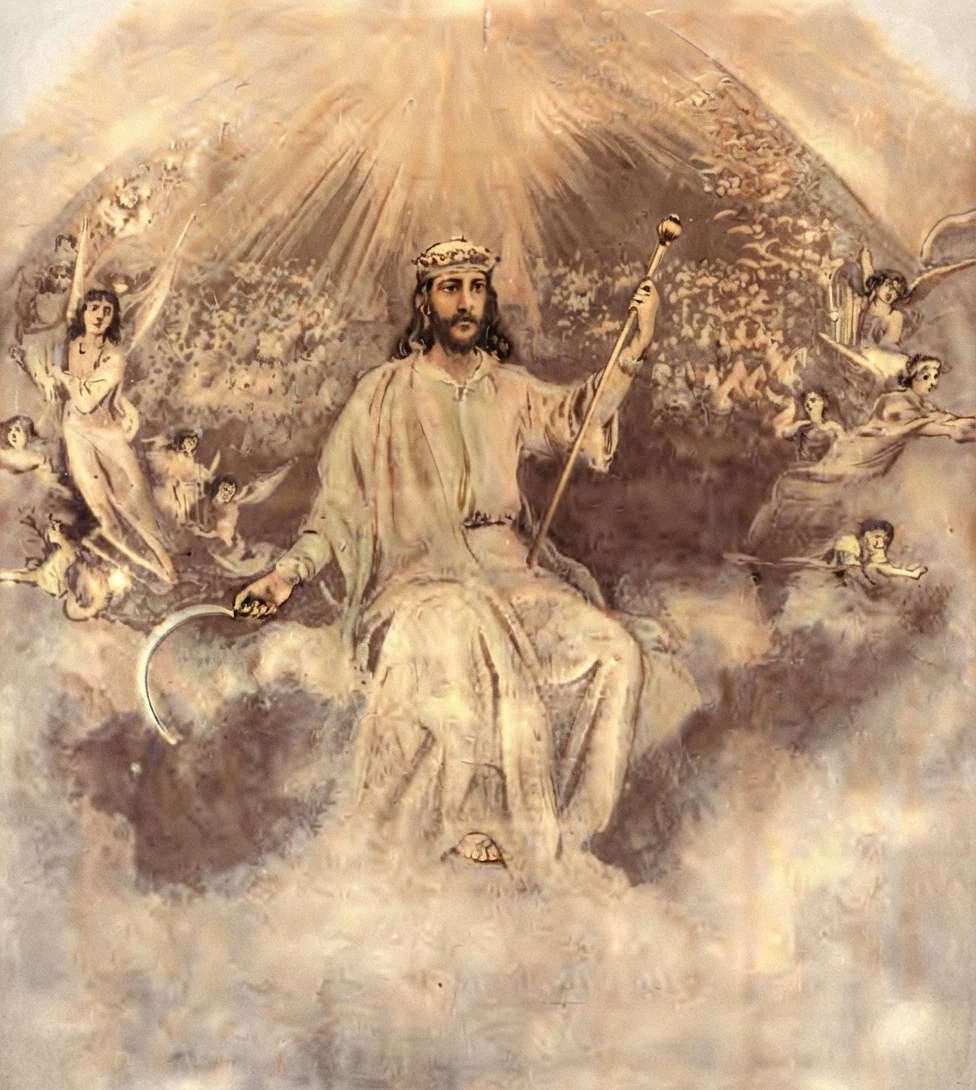
Our first Special-Message number is out. Those who have seen its illustrations and read its articles think it is fine. Besides the first full-page cover engraving on prophetic symbolism, there are ten other engravings prepared for this special number alone, besides three others of interest. There are three excellent original poems. There are eleven articles on the great Message. The Missions department and Home department are both excellent. Why not give it a large circulation?
By the time this paper reaches our readers the second number of the Specials will be on the press. The articles in that number are as follows:
The Gospel in Type, by Prof. J. A. L. Derby. The Sanctuary and Its Lessons, by Mrs. S. N. Haskell. The Priesthood in Type and Antitype, by E. J. Hibbard. Before the Supreme Court, by F. C. Gilbert, an article on the great day of atonement. A Wonderful Book, a study of the Seven Seals of Revelation 6 and 7. The Closing Work of Our High Priest, by W. N. Glenn. The Great Apostate Powers of Revelation 12 and 13, by Alonzo T. Jones. Signs in the Heavens, by Prof. G. W. Rine. A Message of Preparation, by L. A. Phippeny. The Only Power That Can Save, by Mrs. E. G. White.
This is even a better number than the first number, and the illustrations are equal in every respect to those in the first issue. Now is the time to order. Sell them in sets, or take subscriptions for them in sets. In single sets, price 20 cents. If you wish to sell them in quantity and do not find your information in this paper, write us.

Preaching of the Law.

He who truly preaches the Gospel must give the law its proper place. Dr. Adam Clark remarked, "He who preaches the Gospel without the law at the best but slightly heals the hurt of the daughter of My people."
Dr. A. Lincoln Moore, Baptist preacher of New York City, in a recent sermon from the text "Thou shalt not steal," said truly: "This age is one of new things. Old-fashioned honesty is becoming supplanted by a new-fashioned dishonesty, and untruth is becoming preferred to business probity. In speaking of crime and sin one must use plain speech. If we always called stealing stealing, and a thief a thief, there would be less stealing and fewer thieves. If an office boy should steal some hundreds of dollars from the corporation that employs him, he would be called a thief and sent to jail. If the president of that corporation takes some hundreds of thousands or millions of dollars of its funds, he is likely to be called a Napoleon of Finance, and men will not be lacking as apologists for his actions." And then the preacher applies his remarks to one of the great insurance presidents so prominent before the nation just now. Occasionally we have outbursts of this kind from the pulpit, which are good; the trouble is that they are merely outbursts, provoked so to speak by some enormous wave of crime, and the words fall powerless because whenever ministers appeal to the law, frequently their practise is condemned by some of its precepts. They are "partial in the law." When asked concerning the Fourth Commandment, which is agitated world-wide, so many times we are told that that precept of God is not binding, and yet men of common sense or common logic will conclude that if one commandment of that law is obligatory as such, every other command is as truly so, so that he who persistently, continually, and knowingly transgresses the Fourth Commandment, becomes a partaker with those who transgress the sixth or the seventh, and even thus speaks inspiration: "What hast thou to do to declare My statutes, and that thou hast taken My covenant in thy mouth, seeing that thou hatest instruction, and castest My words behind thee? When thou sawest a thief, thou consentedst with him, and hast been partaker with adulterers. . . . These things hast thou done and I kept silence; thou thoughtest that I was altogether such an one as thyself, but I will reprove thee and set them in order before thine eyes." We are not by this accusing Dr. Moore of any of these things, for we do not know him at all. But we do know that there are thousands who are placing themselves in just such a position as that. What wonder that "the law is slacked," and that iniquity is increasing.

Vatican Press Agency

Vatican Press Agency.—And now we are told in a news despatch from Rome that Cardinal Rampolla's plan of a Vatican press agency is soon to be realized. The annual subsidies to Catholic papers is to be cut off, and it is said that all will have to submit sooner or later. These papers have many times in either news or comment stated papal matters incorrectly, and it has been an annoyance and a trouble to the pope. Now he proposes to establish a press agency, so that all Catholic papers, at least, will not consider as genuine any item of news which is not received direct from the Vatican information office.
Others think that it will be a failure, however, and that newspaper correspondents will obtain information before the Vatican authorities desire their secrets to be given to the world. However, it will not make so much difference in this country, as most of the great newspapers are under Catholic control already, or at least are not antagonistic to Roman Catholicism.

More Important.

A scientist, Dr. W. J. McGee, claims to have located the spot where cyclones and tornadoes originate, and this is in the Gulf of California. A vapor rises from there, sweeps eastward; and strikes an atmosphere under different conditions in crossing the American desert, and trouble ensues. But this information will not stop them. How to do that would be more important. Vastly more important still would it be if man would discover, by the aid of the Spirit of God, the breeding place of the human cyclones of passion and sin, and then learn how to stop these through the power of God and the co-operation of the human.

The Sunday-Law Conscience

It is a strange conscience that feels it a hardship to do right unless everybody else is compelled to do right, also. But the Sunday-law conscience is largely based on this principle. The Minneapolis, Minn., Retail Grocers' Association is very solicitous about compelling all the smaller stores to close on the "sabbath," because they take away trade from the larger stores whose proprietors want to close. There is nothing in the world that displays more selfishness and more intolerance than is shown in the matter of enforced Sunday observance. The Christian conscience has no desire to see others compelled to follow its dictates, nor does it falter lest others may profit by its sacrifice.

Geology and Evolution

"Geology and Evolution."—We published part of a series of articles the first of the present year by Professor Price, on the above subject. The last article was printed in our issue of April 12. Sometime after this we received five other articles, giving a historical sketch of these "sciences," which, for the first time, we have found space to publish. We begin them in this issue. We believe our scientific readers and students will enjoy reading them. These will complete the series.

The Spiritual Israel

That the "Israel of God" is not the literal, or natural, seed of Jacob, is shown by the Epistle of James. It is addressed "to the twelve tribes which are scattered abroad," yet there is not a single reference to the literal tribes, or natural Israel, in the whole epistle. It is a letter to the church at large—"scattered abroad"—especially applicable to the church in the last days, and therefore most fitting counsel for us of to-day. "For in Christ Jesus neither circumcision availeth anything, nor uncircumcision, but a new creature. And as many as walk according to this rule, peace be on them, and mercy, and upon the Israel of God." Gal. 6:15, 16. The psalmist says, "As for such as turn aside unto their crooked ways, the Lord shall lead them forth with the workers of iniquity; but peace shall be upon Israel." Ps. 125:5. And this peace comes only through faith in the Lord Jesus Christ. Rom. 5:1. Therefore it is only for the spiritual Israel, those who are in new covenant relation to God.

Give the Devil His Due

"Give the devil his due" is a very common plea with people who claim to be solicitous for fair play in the world. But it is not necessary that men should espouse the cause of the adversary through any fear that he will not get what is due him. He is, and for thousands of years has been, getting much more than he is entitled to, and the time is sure to come when he will get his exact due. See Revelation 20. The judgments of the Lord are "true and righteous." Rev. 16:7; 19:1, 2.

National Federation of Churches

National Federation of Churches.—In November there will be held in Carnegie Hall, New York City, a meeting for the National Federation of Churches and Christian workers. This effort will not be for a creedal basis, but for co-operation in the matters of Mormonism, marriage and divorce, the social evil, sabbath desecration, capital and labor, moral and religious training of the young, etc. The effort will be to reduce to a minimum all differences, and magnify agreements. We shall endeavor to set before our readers the work of this important meeting.

Missionaries to South America

God-speed to two strong young men, missionaries to South America, who made us a brief call October 5, sailing October 14. F. L. Perry is from South Dakota, and enters the mission field of Peru; G. W. Casebeer is from Idaho, and will work for the Master in Ecuador. May God go with them as they enter these hard fields, gird them with strength and wisdom, and give each one a harvest of souls.

You have reached the end of this edition.

Signs of the Times · Oct 18, 1905