—The twentieth anniversary of the coronation of Pope Leo XIII. was celebrated in the throne room at the Vatican on March 2.
—Señor Campos Salles has been elected president of Brazil by a large majority. Señor Rosa Silva was elected vice-president. There was no disorder.
—Severe weather is reported from Northern Persia. More than one hundred persons have perished in snow drifts on the high road between Resht and Teheran.
—Turkey is now considering the possibilities of war with Russia over the backing which Russia is supposed to be giving Bulgaria. An extraordinary ministerial council has been summoned at Constantinople.
—On February 26 two would-be assassins attempted to take the life of King George of Greece. Nine shots were fired at him at close range, but all went wide of their intended mark. Both the assailants have been arrested.
—Germany has two more grievances to settle with China. A German missionary has been robbed and severely beaten in Kwangtung province, and a German sentry was nearly beheaded by an enraged Chinaman at Kaiouchau recently.
—The greatest anxiety in Havana at the present time seems to be over the threatened uprising of the volunteers against the captain-general and his council. The cause of the trouble is over the decision of Blanco to disarm the volunteers.
—It is reported from Cuba that the Spanish have suffered a disastrous defeat at the hands of General Garcia at Holguin. The battle lasted five days, and it is estimated that nearly one thousand were killed and wounded in the engagement.
—The British steamer Legislator, which sailed from Liverpool for Colon on February 3, took fire at sea and became a total loss. Six of her crew perished in the disaster, and the remainder were rescued and brought to Boston by the steamer Flower Gate.
—A succession of severe earthquakes has occurred on the island of Montserrat, in the West Indies, lasting from the 15th to the 20th of February. The entire population of the island has been thrown into consternation, and much distress prevails in consequence.
—A correspondent of the London Times states that there is appalling scarcity of food in many provinces of Spain, and that the price of wheat is unprecedentedly high. Bread riots are of daily occurrence at Salamanca, and it is feared that martial law will be proclaimed.
—The condition of affairs between Nicaragua and Costa Rica continues to grow more serious, and is arousing considerable apprehension in official circles. It is said to threaten to involve not only those two countries in war, but also to draw all the Central American republics into armed conflict.
—The German Reichstag has adopted a portion of Emperor William’s naval bill, thereby providing for a considerable increase in the navy, which will have one flag-ship, eighteen large battle-ships, twelve large cruisers, thirty small cruisers, and a large number of ironclads, torpedo-boats, gunboats, etc.
—Haiti had barely paid Germany’s damage claim at the point of German guns, when Italy brought forward a claim for damages to certain of her subjects. These damages have barely been paid when France presents a claim for damages to certain of her citizens for the alleged violation of treaty rights.
—A despatch from Singapore states that the French gunboat Lion will sail for Hai-Nan on March 10, taking troops for occupation. It is also reported that a company of French marines have landed in Southern China, 240 miles southwest of Hongkong, and informed the Chinese that they intend to erect buildings.
—Foreign newspaper correspondents in Paris who reported the progress of the Zola trial have been warned that it is advisable for them to leave France. A chaplain who congratulated Zola has been placed on the unattached list; the professor of the Polytechnic School has been retired for indorsing Zola’s action; and Colonel Picquart, who testified in Zola’s defense, has been cashiered.
—Recent reports from Algeria indicate that the anti-Jewish riots there during the latter part of January were of a much more serious and disgraceful nature than the reports at first intimated. Large numbers of Jewish stores were burned to the ground, men and women were killed and maltreated in the streets of Algiers, and the police and military were powerless to render adequate protection to the Hebrews.
—The English Society for Promoting Christian Knowledge, celebrates its two-hundredth anniversary this year, having been founded March 8, 1698. It was the first society, it is said, to care for the religious education of the poor, the first to send missionaries to India, the first to circulate wholesome literature at home and abroad, and the first to undertake the translation of the Bible and prayer-book into foreign languages.
—The Government of Spain is casting about to devise some way of raising the necessary money to enable her to increase her navy from ships now completed and offered for sale. The import and export monopoly on mineral oils will be sold at auction for this purpose on March 28. It is reported that she has already raised sufficient money to purchase the three Chilian war vessels which have been on sale in England for a year past.
DOMESTIC
—By the burning of a tenement house in Charleston, S. C., on February 26, nine of the inmates lost their lives.
—It has been decided to hold the next World’s Sunday-school Convention in London, England, July 11–15, 1898.
—The Supreme Court of Georgia has wiped out the prohibition laws of that State, thus throwing down the bars to the liquor men.
—During the present month a general council of all the various temperance organizations of the State of Washington will be held in Seattle.
—The Spanish cruiser Vizcaya, which recently paid a visit to New York, arrived in Havana on the morning of March 1, and was received with enthusiastic demonstrations.
—Simultaneously bills have been introduced in the Legislatures of New York and Iowa, making it a misdemeanor to “treat” any person to liquor in any saloon, barroom, or club-room.
—The resolution recently introduced in Congress, appropriating a sum of money for the erection of a memorial tablet in the Capitol to commemorate the loss of the Maine and the death of those who went down with her, was passed by the Senate on March 1. The tablet will bear the names of all who lost their lives in that memorable disaster.14
—The lumber bark Canada and the steamer Cottage City have been wrecked within the past week upon the coast of Southeastern Alaska.
—The excess of the government’s receipts over expenditures for the month of February amount to $1,845,358, the first surplus which this month has shown for a number of years.
—The U. S. cruiser Montgomery and the gunboat Nashville have been commissioned to proceed to the ports of Matanzas and Segua la Grande, in northern Cuba, with provisions for the starving reconcentrados.
—A contract was entered into at Washington, on March 1, between the War Department and the representatives of three steel companies for $1,000,000 worth of projectiles to be delivered as soon as possible.
—By an explosion in the Hall Chemical Laboratory at Kalamazoo, Mich., on February 26, ten persons are known to have lost their lives. It is believed that others also who are among the missing were killed.
—The special train conveying the recently imported reindeer, left Jersey City for Seattle, Wash., on the night of March 1. The train consisted of fifteen cars. There were 113 persons in the party, and 529 reindeer.
—The large loss of life in the big fire at Pittsburg, Penn., on February 9, is attributed to an explosion of whisky. Twelve bodies were recovered, but it was supposed that a number perished whose remains were never found.
—General William Booth, founder of the Salvation Army, recently visited the cities of Oakland and San Francisco. At Oakland he was welcomed by the mayor in the name of the city and received with marked courtesy—an incident which shows how the Army has grown in public favor in a few short years.
—The Women’s Temple trustees of Chicago have made an appeal to the general public for assistance in raising the debt which hangs over the W. C. T. U. building of that city. After the liquidation of the debt the building will be named the “Willard Temple,” as a monument to Miss Frances E. Willard.
—Dr. Jennie Taylor Gordon, of Mechanicsburg, Penn., niece of Bishop William Taylor, a missionary for several years in West Africa, died at her post at Malange, in Angola, on December 29, after four years of faithful medical missionary work in that field.
—A resolution was introduced in the House of Representatives on February 28 authorizing the appropriation of $20,000,000 to be available for the purchase of war vessels of the various classes now in use in the navies of the world. The resolution has not yet been acted upon.
—The last rites over the body of Miss Frances E. Willard, late president of the World’s W. C. T. U., were performed at Evanston, Illinois, on Thursday, February 24. The city was in mourning, schools and business houses closed, and flags put at half mast out of respect for the dead leader.
—Reports from Alaska state that an epidemic of cerebro-spinal meningitis has broken out at Skaguay, and that many deaths occur daily from this peculiar disease. These advices also state that many of the miners who have attempted to go in over the passes lately have frozen to death on the trails.
—The War Department has decided to abandon its Klondike relief expedition, because the conclusion has been reached that no necessity now exists for it. The Secretary has asked permission to dispose of the supplies intended for that purpose, and also of the train-load of reindeer now in transit.
—The twenty-ninth annual report of the Board of Indian Commissioners has been submitted to Secretary Bliss. The report states that in the general condition of the Indians no important changes have occurred, but that there is evidence of steady progress in industrial pursuits and in education.
—Thomas A. Edison, the famous electrician, has discovered a process for the extraction of gold from ore without the use of water. His engineers are now in New Mexico for the purpose of developing extensive mines which it has not been possible to operate heretofore on account of the lack of water. The discovery is regarded as a very important one by those interested in quartz mining.
—Members of the Jewish congregations of San Francisco, Cal., have organized a society to be known as “Helpers of Zion,” the object of which is to encourage and financially aid the colonization of Palestine by those Jews who have been unable to assimilate with the inhabitants of countries to which they have emigrated.
—The U. S. monitor Terror arrived in New York harbor, from Hampton Roads, on the morning of February 28. It is expected that the Navy Department will keep her there on account of the fears recently aroused by the presence of the Vizcaya in the harbor of that city, while no American war vessels were in the vicinity.
—The decision of the attorney-general of Missouri against the reading of the Bible in the public schools has started a movement in opposition to his decision. The leaders of this movement will demand that a few verses of the Bible be read in the public schools every day, and that each school child be taught at least the Ten Commandments.
—The court of inquiry appointed to investigate the cause of the Maine disaster has finished its work at Key West and it is expected to resume its work at Havana. Rumors of various degrees of plausibility are in the air in regard to the cause of the wreck, but no official report of findings has yet been given the public. A self-appointed commission of five representatives and senators has sailed for Cuba in a private yacht to investigate conditions in the stricken island. Active preparation for emergencies at the various points of probable attack, in case of war, continue unabated, and large shipments have been made of ammunition and projectiles to the fortifications along the Atlantic Coast, while gun emplacements are being hurried to completion, and gun factories are reported to be working night and day. It is believed, even by the conservative, that the administration is preparing for war.
SUNDAY REST BILL FOR THE DISTRICT OF COLUMBIA.
By L. A. P.
(From our special correspondent.)*
WASHINGTON, D. C., Feb. 25, 1898.
To-day at ten o’clock a hearing was granted the promoters and opposers of H. R. Bill 1075 before the sub-committee (Mr. Shannon, N. Y., chairman) of the House Committee on the District of Columbia. This bill was first introduced by Mr. Harmer on March 19, 1897, and has been in the hands of the district commissioners and the sub-committee since that date. The bill in its present form is a revision of a measure submitted some two years ago, but which as then worded was not agreed upon by the commissioners. Following is the bill in full:—
A BILL.
(To further protect the first day of the week as a day of rest in the District of Columbia.)*
Be it enacted by the Senate and House of Representatives of the United States of America in Congress assembled, that it shall not be lawful for any person to keep open any place of business or maintain a stand for the sale of any article or articles of profit during Sunday, excepting vendors of books or newspapers, and apothecaries for the dispensing of medicines, and undertakers for the purpose of providing for the dead, or others for the purposes of charity or necessity; nor shall any public playing of football or baseball or any other kind of playing, sports, pastimes, or diversions, disturbing the peace and quiet of the day, be practised by any person or persons within the District of Columbia on Sunday; nor shall any building operations or work upon railroad construction be lawful upon said day; and for any violation of this Act the person offending shall, for each offense, be liable to a fine of not less than five dollars nor more than fifty dollars, and in the case of corporations there shall be a like fine for every person employed in violation of this act laid upon the corporation offending.
SEC. 2. That it shall be a sufficient defense to a prosecution for labor on the first day of the week that the defendant uniformly keeps another day of the week as a day of rest, and that the labor complained of was done in such a manner as not to interrupt or disturb other persons in observing the first day of the week as a day of rest. This act shall not be construed to prevent the sale of refreshments other than malt or spirituous liquors, or to prevent the sale of malt and spirituous liquors as now provided for by law, or tobacco, cigars, railroad and steamboat tickets, or the collection and delivery of baggage.
Leading speakers favoring the measure and pushing it were Dr. Crafts, representing the Reform Bureau, and Mr. Wm. A. Gordon, attorney in the city of Washington, and member of the Churchman’s League. Other members of the league were present, as were also several ladies, friends of the bill.
Speakers against the bill were Gen. Wm. Birney, of Washington; Prof. H. C. Kirk, president of the Secular League of the city of Washington; Dr. W. A. Croffut, vice-president of the Secular League of New Jersey; Dr. George B. Wheeler, representative of the International Religious Liberty Association, and Dr. A. H. Lewis, secretary of the American Sabbath Tract Society, and editor of the Evangel and Sabbath Outlook (Seventh-day Baptist), of Plainfield, N. J. One hour and fifty minutes was given to hearing arguments, the time being divided equally between the two sides.
It was asserted by the promoters that in effect this bill contemplates no new departure in legislation respecting Sunday laws, for the reason that for more than twenty years prior to 1886 there had existed a Sunday law for the district. At that late date it was discovered, during a test case, that the law supposed to have been enacted properly in 1864 had inadvertently not received the signature of the mayor, hence was invalid. Changes in the manner of providing for city regulations have placed these regulations in this particular in the hands of Congress, which is now asked merely to mend the breach; hence the claim of no new departure. In further proof of this point, it was stated that that body has already passed four acts of a similar nature for the district, and three outside. The World’s Fair Sunday closing by Congress in 1893 was cited, as were also recent decisions of the Supreme Court of the United States in matters involving religious questions. It was stated that the present bill had been carefully prepared by the framers in consultation with the commissioners, and greatly modified in its demands from the former bill. Mr. Crafts, contrasting it with Sunday laws existing elsewhere, ranked it as the very mildest measure that had yet been proposed, and stated that in the remodeling it had been “toned down to a very modest compromise.”
This speaker, voicing the chief arguments for the affirmative, asked for the passage of the bill on a “broad humanitarian basis,” for the protection of laboring classes, merchants, the family, etc. Mr. Gordon urged the point of disturbance produced by the conduct of business and games on Sunday, and while disavowing any purpose whatever to restrict the liberties of any one, believed that the first day of the week should be set apart as a day of rest because it is observed as such by the vast majority of the people of this country. The leading speaker for the bill, anticipating that its opposers might refer to the United States Constitution and to former adverse decisions by Congress in regard to legislating upon matters religious, informed the committee that while such decisions may have been arrived at in the past, they must now be considered antiquated in view of recent acts and decisions. He held that the last acts of Congress favoring Sunday legislation should now govern the committee in reporting this measure.
The opposers of the bill, however, discovered far more in it than was brought to view by its promoters. While the friends of the bill gave verbal assurance that certain businesses and pastimes were not included in its prohibitions, it was shown that the clauses, “any place of business,” and “any other kind of playing, sports,” etc., could be and probably would be construed in the broad sense of the language used, and that all extenuations would have to be decided in court. As several exceptions and exemptions rest upon the point of non-disturbance of other persons by presumable offenders, it was urged by Mr. Wheeler that a wide door for abuses was opened in these clauses. A number of instances were cited showing how narrow-minded and avaricious parties had taken advantage of this particular feature in cases of arrest under Sunday laws in other States. They had sworn to being disturbed, whereas the examination revealed that the disturbance was purely mental. It was suggested that a discrimination would have to be made between religious and secular noises. This gentleman, speaking of Seventh-day Adventists, who hold their services on Saturday, stated that they were never disturbed in their worship of the Almighty by the noise of business around them. It was shown that the laws at present protect all religious services from physical disturbance, and that experience thus far has demonstrated that cases of mental disturbance arise solely from the failure of one portion of a community to conform to the ideas of another portion in matters theological.
Details of the bill were, however, rapidly passed by the gentlemen opposed to it, while fundamental principles involved were made prominent. Reference was made by nearly all speakers to the openly and oft-declared object of the gentlemen pushing the bill,—to secure by Congress national legislation concerning Sunday laws, and the placing of the name of the Deity in the Constitution. Repeated and persistent attempts have been made in this direction, and the individuals behind them are the same that are behind this bill. Extracts from Mr. Crafts’ published statements were read to the committee, to the effect that all Sunday laws, whatever be their declared object, must rest primarily on a religious foundation. A telling point, evidently, and one keenly appreciated, apparently, by the committee, was here made, that the Government of the United States is asked to legislate a rest day on the first day of the week, imposing fines and penalties which in spite of exemptions must bring annoyance, not to mention injustice, upon a minority who have conscience rights equally with the majority, while God Almighty Himself worked on the first day of the week and rested on the seventh day, our Saturday, commanded all mankind to do likewise, and has never altered that obligation.
Sunday Rest Bill.
(Continued from page 16.)
The opposition appeared to be perfectly familiar with the primary aims of the promoters of the bill, and endeavored to impress the committee with the inconsistency of all civil legislation in religious affairs. It was represented that this present bill, while apparently simple in its propositions, is an entering wedge and is therefore misleading, contemplating something entirely beyond itself.
A specially forcible argument was made by Dr. Lewis, who, speaking for Seventh-day Baptists, Seventh-day Adventists, and all lovers of justice and equal religious rights, based his opposition to this and all other Sunday laws or all acts by civil governments in religious affairs, on the broad principles of absolute separation of the Church and the State, for the welfare of every individual. Upon this platform he did not ask for nor want exemption clauses, for all men are equal before the God of heaven in the matters involved, and into this domain may no man nor nation rightfully enter as controllers. The Lord of heaven, he affirmed, is able to care for Christianity and the Sabbath without outside help. If He is not, let them fall. In Him he placed his entire confidence, who is able to adjudicate all matters.
The bill is now in the hands of the sub-committee for further action. L. A. P.
What Others Say
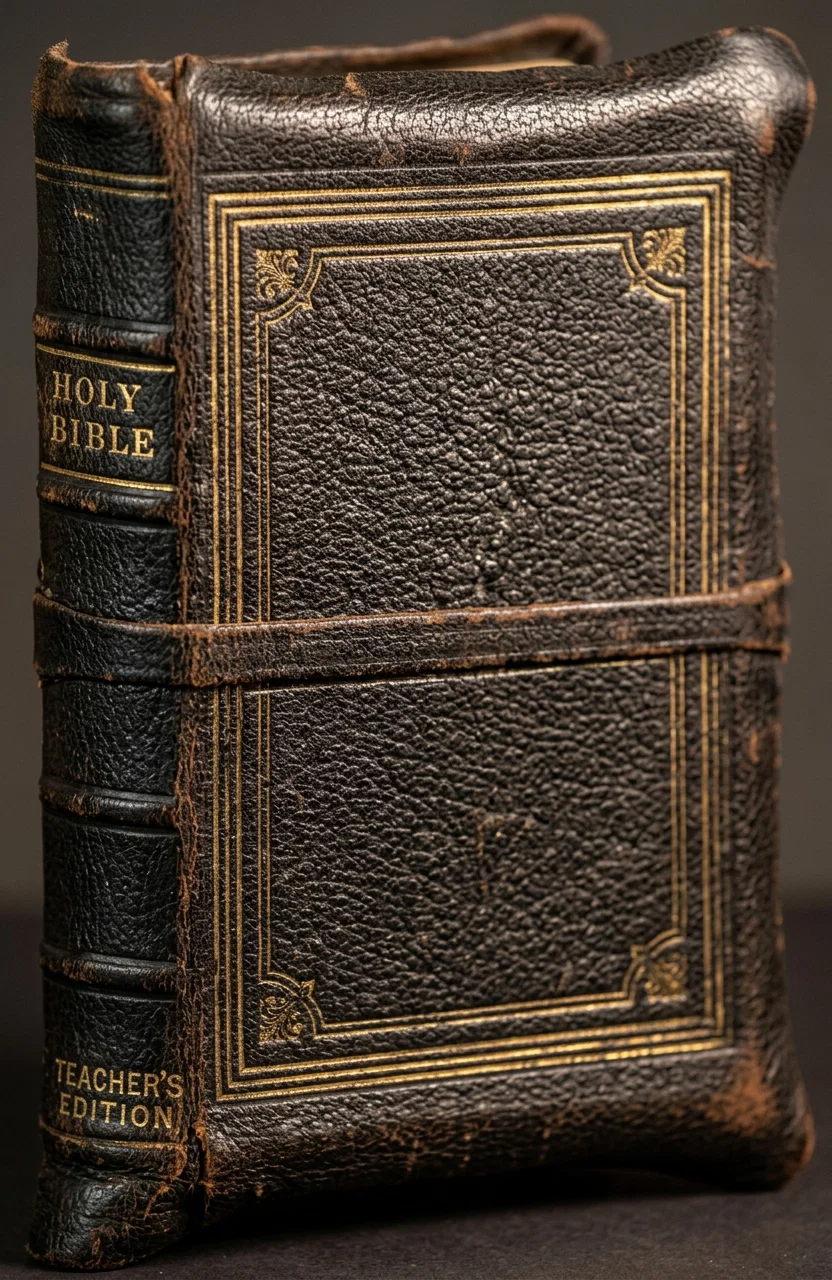
ABOUT OUR NEW PREMIUM BIBLE
Should influence you to secure one
JUST THINK OF IT
The SIGNS for one year
The BIBLE, printed in minion type, handsomely and substantially bound, with Valuable Helps to the study of the Bible, amounting to over 832 pages 650 pages
More than 350 Fine Illustrations, scattered throughout the Helps.
Proper Names
Diacritically Marked for their pronunciation and meaning.
10,000 References to the Revised Version given, showing at a glance all the principal changes of the Revised Version, placed side by side with the passages according to the Common and Authorized Version.
Combined Bible Concordance in one alphabetical list, Concordance, Subject Index and Dictionary of Proper Names.
Maps, and many other valuable features.
WHAT THEY SAY
“When I subscribed for the SIGNS I took your premium Bible with it. I wish to say that both have been very satisfactory.” Nellie M. Guthrie.
“Enclosed find 25 cents in payment for having Mrs. Jennie Barrows’ name placed on the Bible. She is very much pleased with the Bible; so are all who have seen it.” Mrs. H. W. Barrows.
“Have received the Bible and it gives entire satisfaction.” Mrs. G. W. Davis.
“Have received the Bibles and am well pleased with them. I should like very much to continue the work but there are circumstances which prevent.” Dollie Warren.
“I received the Premium Bible, and am very much pleased with it. Thanking you for your grand offer, I remain sincerely yours,” Mrs. Gunderman.
“I called at the express office and found the Bible all right. I am more than pleased with it. I did not expect it to be so nice.” Mrs. M. E. McBroom.
This Splendid Bible and One Subscription to the “Signs” for one year, only $3.00
For $7.00 and Seven New Names the Bible is sent Free, post-paid
Address Signs of the Times, Oakland, California
Story of Redemption
By William Covert
By WILLIAM COVERT
Ready March 10
SPECIMEN OF BLACK AND WHITE WORK USED IN THE STORY OF REDEMPTION.
THE object of this our latest book is to save souls. It assures the sinner that the plan of redemption is for him, and encourages the Christian by presenting many of God’s promises in a new and beautiful way. It traces the plan of redemption from Eden lost to Eden restored, and makes clear the fact that Christ is “the Lamb slain from the foundation of the world.”
One chapter is entitled “Righteousness through Christ,” and so carefully is the wonderful truth explained that it seems impossible for the honest reader to misunderstand it. The whole story is told in an easy, interesting manner, that invites the closest attention.
The illustrations have been under the supervision of a competent New York art director, whose object has been to illustrate the work in a way that will impress the truths of the text upon the mind and heart. The utmost care has been taken in the printing and binding, that they also may assist in setting forth the Gospel.
The book contains 237 octavo pages, exclusive of four full-page three-color engravings. It is bound in:
Fine cloth, with emblematical cover design, colored edges — $1 00
Fine cloth, with emblematical cover design, aluminum title, gold edges — 1 25
Canvassing outfit, postpaid — 60
ADVANCE SHEETS WERE RECENTLY SENT TO OUR STATE CANVASSING AGENTS, AND THEY SAY . . . . .
It Will Do Good “I will be glad to see the book, and am sure it will be a work that will sell well, and do a great deal of good.”
An Attractive Book “I think it will prove to be a good-selling book, as the type is so good, and the illustrations make it very attractive.”
An Original Book “I am sure the book will be good, and will be one that can be sold, as the price is within the reach of most people, and it is a book that has not been in the field before.”
“Fills the Bill” “From what I can glean it seems to me that this book comes nearer ‘filling the bill,’ in the south, at least, than any book we have had yet. It is cheap, and can be bought by the working class, and is well illustrated. Illustrations go a long way with us.”
Has Wanted It for Two Years “I am glad that Elder Covert’s book is about to be published. I read some of the manuscript about two years ago, and have been anxious to have it come out ever since.”
An Excellent Book “It seems to me it will be an excellent book, and no doubt a good seller.”
For terms and territory, address your State Tract Society, or the Publishers,
PACIFIC PRESS PUBLISHING CO.
39 BOND STREET, NEW YORK CITY; OAKLAND, CAL.; 18 WEST 5TH STREET, KANSAS CITY, MO.
To Contributors.
By Editor
The Signs of the Times is a purely missionary enterprise. For this reason it has felt free to ask for contributions from its friends. It pays nothing for contributions, either prose or poetry, unless solicited by the editor, and then the fact is stated when the articles are asked for. This is a plan rarely followed, but sometimes deemed expedient.
Articles Desired.—Those which set forth in the Spirit of Christ the great saving truths of God, short and to the point. It is better to treat one important truth clearly, in a short article, than many points vaguely in a long one. We desire no caustic, critical productions, which might minister to personal pride or pleasure, but can not save souls.
How Prepared.—Write plainly, with typewriter or ink, with wide space between the lines, to freely admit of editing, writing of subheads, etc. Write on one side of the sheet only. Sign the name to the manuscript, as it becomes oftentimes separated from accompanying letter. Anonymous contributions are not used, whatever their merit. If the writer does not wish his name to appear, let him furnish a pseudonym for the public. But we wish the name.
Manuscript Returned.—We will return all unused manuscript desired if stamp and directions are inclosed. We are forced sometimes to return good manuscript mainly for three reasons: (a) Sometimes the articles are too long; (b) sometimes we have a number on the same subject; (c) sometimes our plans are such that an article can not be used till it is out of date. We therefore hope that no offense will be taken by those who have freely contributed their best thought if their productions are returned. When we receive so much matter, we can not use all.
A CARD.
To ALL interested in carrying the Gospel of Jesus Christ to the inhabitants of other lands, and who desire to assist in supporting missionaries already there and others who may engage in the work, the opportunity is given to make an offering to the Foreign Mission Board of the Seventh-day Adventist denomination. Such donations should be sent to W. H. Edwards, the Treasurer of the Board, 1730 North Fifteenth Street, Philadelphia, Penn.
FACTS FOR THE TIMES.
Containing historical extract, facts, candid admissions from authors, ancient and modern. A Book for the Times. Revised 1893. A compilation of facts that are astounding, by students of biblical and historical research. 340 pages, wine-colored cloth binding. Price, 75 cts., postpaid. Pacific Press Pub. Co., Oakland, California.
AN ACKNOWLEDGMENT.
By Editor
We wish to thank our many friends for the interest manifested in the circulation of the following tracts. We confidently look for this interest to grow apace as the spirit of war becomes more intense.
“Christian” Demand for War, Bible Students’ Library, No. 151. Price, 1 cent. Is in its second edition.
“The Alarm of War,” Bible Students’ Library, No. 152. Price, 2 cents. The orders already in hand for this number cover three large editions.
Both of these tracts are excellent, and especially applicable to these stirring times. PUBLISHERS.
20,000 COPIES.
ONE of our enterprising State tract societies has just wired us an order for the above number of “Alarm of War.” We trust every copy will find an interested reader.
TEACHING TRUTH
By Mary Wood Allen
By Mary Wood Allen, M. D.
National Lecturer W. C. T. U.
A little brochure brimful of helpful suggestions to parents who wish to teach their children the truth in regard to the mystery of life.
Price, 25c.
PACIFIC PRESS PUB. CO.
Oakland, Cal.
WORKS BY G. K. OWEN.
Perils and Possibilities (cloth binding) $1 00
Vocal Power (cloth binding) 75
Science of Memory (tagboard binding) 25
Science and Art of Bible Readings 20
Liberty Measured by the Golden Rule, per 100 50
Address, California Tract Society, 1059 Castro Street, Oakland, Cal.
Extracts from testimonials to "Perils and Possibilities." No one can open the book without finding something instructive and interesting. The work is well worth the small price paid for it. Medical Missionary.
We all agree that "Perils and Possibilities" is an excellent book and worthy of a very large circulation. I. F. SEGNER & CO., Book Publishers, Burlington, Iowa.
I can heartily recommend it. N. E. WILSON, Professor in Nevada State University.
I find therein much food for thought. JOHN E. BRAY, Principal High School, Reno, Nev.
The works of G. K. Owen contain much that is useful, original, and interesting. M. R. AVERILL, Principal Virginia High School, Nevada.
I wish to commend Mr. Owen's "Science of Memory" as a natural method. J. E. CHURCH, Professor in Nevada State University.
SABBATH SCHOOL Maps
4 A. Lands of the Bible, especially the travels of St. Paul, 52x71 inches $5 00
4 B. Same as above, reduced to one-half size 3 00
4 C. Same as above, but reduced to 36x26 inches 1 00
Pacific Press Pub. Co., Oakland, Cal.
39 Bond St., New York City. 14 to 18 West Fifth St., Kansas City, Mo.