The Youth’s Instructor, Vol. 65, No. 4.

Elijah’s Ravens Still Flying
Earlier text: For the Finding-Out Club

Psalm of Adoration

(Texts for February 4-10)
THE beautiful exclamation at the beginning and at the end of the eighth psalm incloses it “as a jewel in a setting;” and it is a jewel—a veritable treasure house. The whole psalm seems to be an outburst of strong feeling, as if long, silent thinking about God and his dealing with man finally overflowed in speech. It must have been the nightly sky into which the psalmist gazed, for somehow it is more overwhelming than the blue canopy of day. Truly, as one has said, “light conceals and darkness unveils the solemn glories.” After you have read some of the psalmist’s thoughts after him, will you not go out and try to read God’s message to you in the starry heavens?
But while the psalmist mentions the heavens, they are not his theme; he speaks of man and his noble trust, but these are not his theme. The uppermost thought in his mind seems to have been the name of the Lord and the Lord’s miraculous dealings with man. The world is only a speck in God’s great universe, and man only an atom on it; the brief life of man is but a hairbreadth compared with those of the “shining ancients” of the starry heavens. And still—wonder of wonders!—out of such frail material as the speech of his children he builds a tower of strength. From the weakest material he builds his strongest fortress. Yes, God makes the life of a true Christian the clearest and mightiest revelation of his love and power—mightier than the arguments of the eternal heavens. No other power can still the restless enemy of truth as quickly as can the daily life of the true Christian.
How very great God is to be able to use man—poor, insignificant man—as the best medium for interpreting his love and power! What condescending love to make man the ruler of the earth! This psalm is a masterpiece. Nothing mars its beauty. The artist pictures the divine plan for man; he does not darken the ideal man with the shadow of the fall; and doubtless this is why many consider this eighth psalm a prophecy of Christ. This it may be, but it is also a picture of God’s plan for man.
Again the writer of this beautiful psalm seems to be lost in contemplation; and as he glides out on thoughts too deep for words, he exclaims, as he did at the beginning, “O Lord our Lord, how excellent is thy name in all the earth!”
PRAYER.—O Lord, my God, my King, help me to adore thee. Help me to exalt thee on the throne of my heart. Help me to meditate on thy greatness and thy love. Help me not to descend to low things. Banish from me the spirit of criticism. Help me to repress every unkind thought toward thy children, whom thou dost love with an everlasting love. Amen.
M. E.

The Bible Year

Senior Assignment

January 28: Exodus 32, 33. Idolatry; punishment.
January 29: Exodus 34 to 36. Commandments rewritten; willing service.
January 30: Exodus 37, 38. Furniture of the tabernacle.
January 31: Exodus 39, 40. The tabernacle finished and dedicated.
February 1: Leviticus 1 to 4. Offerings.
February 2: Leviticus 5 to 7. Trespass offerings.
February 3: Leviticus 8 to 10. Consecration; desecration.
February 4: Leviticus 11, 12. Clean and unclean.
February 5: Leviticus 13, 14. Leprosy.
February 6: Leviticus 15, 16. Ceremonial purification; day of atonement.
February 7: Leviticus 17 to 19. Instruction; warnings; laws.
February 8: Leviticus 20 to 22. Various laws.
February 9: Leviticus 23 to 25. The Sabbath; blasphemy; year of jubilee.
February 10: Leviticus 26, 27. Warnings and promises.
For notes on this assignment, see the Reviews for January 25 and February 1.

Junior Assignment

January 28: Genesis 46: 1-7, 28-34. Jacob goes to Egypt.
January 29: Genesis 47. The land of Goshen.
January 30: Genesis 48, 49. The death of Jacob.
January 31: Genesis 50. The burial of Jacob; death of Joseph.
February 1: Exodus 1, 2. Early life of Moses.
February 2: Exodus 3; 4: 1-17, 27-31. Moses called to deliver Israel.
February 3: Exodus 5. Dark days for Israel.
February 4: Exodus 7. The plagues begin.
February 5: Exodus 8. Frogs; lice; flies.
February 6: Exodus 9. Murrain; boils; hail.
February 7: Exodus 10, 11. Locusts and darkness.
February 8: Exodus 12. The first Passover.
February 9: Exodus 13: 17-22; 14. The path through the sea.
February 10: Exodus 15. A song of triumph.

Exodus

Exodus means going out. It tells the story of the departure of Israel from Egypt, their journey to Sinai, and their sojourn there. The book can be summed up in these words in the nineteenth chapter:—
“Ye have seen what I did unto the Egyptians, and how I bare you on eagles’ wings, and brought you unto myself. Now therefore, if ye will obey my voice indeed, and keep my covenant, then ye shall be a peculiar treasure unto me above all people: for all the earth is mine: and ye shall be unto me a kingdom of priests, and a holy nation. These are the words which thou shalt speak unto the children of Israel.”
The great thing in this book is, of course, the giving of the ten commandments on Mt. Sinai. Indeed, as some one has truly said, this is the greatest event between creation and Calvary.

A Man Who was Called to a Great Work

There is a statue of one of America’s great men in Washington City, which has carved on the four sides of the pedestal, “Patriot,” “Philanthropist,” “Philosopher,” and “Printer.” I suppose many know from these words who he was. The hero of the book of Exodus was a greater man than Benjamin Franklin, or any other American. There are many who believe that Moses “became the greatest man among mere men in the whole history of the world.” He was a great national hero, leader, author, lawgiver, and prophet. He was called to one of the greatest tasks ever given to mortal man, and he was given responsibilities and privileges which no other man has ever had. It was his acceptance of the call, and his dependence upon God, that made him great.
The story of Moses is wonderful all the way through. He was condemned to be killed before he was born, but was saved by the faith and wise planning of his mother. He was rocked in a cradle boat in the great river Nile, reared until he was twelve by his own mother as a paid nurse, and adopted by the daughter of a king. While his people were having a hard time, he was having a good time, and receiving the best education which the greatest nation in the world could give.
When he came to be a man, however, like every young man he made choices which determined his future. He “refused to be called the son of Pharaoh’s daughter; choosing rather to share ill treatment with the people of God, than to enjoy the pleasures of sin for a season; accounting the reproach of Christ greater riches than the treasures of Egypt.” Heb. 11: 24-26. He had heard the call of God and accepted it.
He made a great mistake, though, in the method he took to do God’s work, and he found himself a lonely wanderer in a desert land. Before he was really ready for his life work, he had to take a course in another school. How long was this course? In that lonely wild his gallantry brought him into the good graces of a good man, who furnished him a home and gave him his daughter for a wife.
Then came his remarkable call at the burning bush, the wonders in Egypt, the wonderful crossing of the Red Sea at the head of a nation of two million people who had decided to move, the wonderful supplying of water in a desert, and, perhaps the greatest wonder of human history except the birth of Jesus, the giving of the law on Sinai.
Then Moses became the builder of a building of which God was the architect. And through him was given the greatest system of laws the world has ever known. He also became a great judge. He was the meekest man that ever lived, and he loved his people so much that he asked the Lord to blot his name out of the book of life if their sin could not be forgiven.
Then came the many years (how many?) of patient and trying leadership in the wilderness, to go to a land which could have been reached in eleven days, except for rebellion and unbelief.
Wonderful as was his life, his death was no less so. Buried by the angels, his grave is unknown. But it does not matter; he does not occupy it. As Moses walks the streets of the New Jerusalem and drinks of the river of life which flows out from the throne, do you suppose he is ever sorry for the choice he made? M. E. K.

Missionary Volunteer Society Programs for Weeks Ending February 3 and 10

THE programs for this date, with notes, illustrations, and other helpful material, will be found in the Church Officers’ Gazette for February.

V — Paul at Thessalonica and Berea

(February 3)
LESSON SCRIPTURE: Acts 17:1-15.
MEMORY VERSE: “They received the word with all readiness of mind, and searched the Scriptures daily.” Acts 17:11.

Questions

1. Through what towns did Paul pass after leaving Philippi? To what city did the missionaries then come? What did they find there? Acts 17:1. Note 1.
2. What was Paul’s custom? How many Sabbaths did he speak to the Jews? Out of what did he reason with them? Verse 2. Note 2.
3. What did he teach? Verse 3. Note 3.
4. What was the result of his labors? Verse 4.
5. What led the Jews to oppose Paul? Whom did they use to carry out their plan? What did these base fellows do? Verse 5. Note 4.
6. When the mob could not find Paul and Silas, what did they do? What accusation did they make? What did they say this was contrary to? Verses 6, 7. Note 5.
7. How did the rulers and people feel when they heard these things? Verse 8.
8. How did Jason and others gain their liberty? Verse 9.
9. What did the brethren immediately do? To what place did Paul and Silas go? Verse 10.
10. What difference was found between the people of Thessalonica and Berea? What did the Bereans do every day? How may we become “noble” like them? What was their purpose in studying the Scriptures? Verse 11. Note 6.
11. What was the result of their study? Who are especially mentioned? Verse 12.
12. What did the Jews of Thessalonica do to stop the work of the missionaries? Verse 13.
13. What did the brethren then do? Who remained at Berea? Verse 14.
14. To what place did Paul go? What message did he send to Silas and Timothy? Verse 15.

Notes

1. Paul, Silas, and Timothy traveled southwest from Philippi on the great military road which led to Rome. Amphipolis was thirty-three miles distant, near the seashore. Apollonia was thirty miles farther. Thessalonica was thirty-seven miles still farther, making a journey of about one hundred miles. At one time Thessalonica was called Therma, which means Hot Springs. It was a great city, and is known today as Saloniki, and has about 100,000 inhabitants.
2. Paul afterward wrote to the church at Thessalonica that while he was with them he ate no man’s bread for nothing. While preaching he worked night and day to support himself and those with him. The Philippian church sent him help twice while there. We remember that Lydia was a merchant, that the jailer was employed by the city, and no doubt these appreciated the gospel so much that they sent support to their beloved teacher who brought them to Christ. One reason Paul worked so diligently in Thessalonica was that he might be an example to the new converts there. In his letter to the church he wrote that he had learned that some would not work, and that they were tattlers, going about from house to house. He exhorted such to “eat their own bread,” and if any would not do this to “note that man, and have no company with him, that he may be ashamed.”
3. Paul taught by giving Bible readings more than by preaching. He pointed out the riches of the Scriptures, and set the facts of Jesus’ life and death and resurrection beside the prophecies concerning him. It was like placing a person by his photograph, and showing the exact likeness. His most effective preaching was given in his own life.
4. The Jews were not well thought of in Rome, because they had raised an insurrection there. In their treatment of Paul they sought to gain favor with the government, and to reproach the Christians.
5. The Jews tried to charge Paul with treason, and setting up another kingdom of which Jesus was king. They failed to understand that the Christians did not mean an earthly kingdom.
6. Are you a Thessalonian or a Berean? There is no way so effectual to become acquainted with the Bible as to study it every day. The Sabbath school lessons give an opportunity for this which we should not neglect to improve. We should also read the Bible from the first chapter to the last, and commit texts to memory while we are young. There are but few children who have read the Bible through. We find the best stories, the best companions, and the purest pleasure when we read the Bible.

VI — Paul at Athens

(February 10)
LESSON SCRIPTURE: Acts 17:16-34.
MEMORY VERSE: “He giveth to all life, and breath, and all things.” Acts 17:25.

Questions

1. While Paul waited at Athens, what stirred his spirit? Acts 17:16. Note 1.
2. Where did he begin his labors in the city? In what other place did he preach? Verse 17.
3. What philosophers did he meet? What question did they ask? What did others say? What did he seem to be to them? Why did they think this? Verse 18. Note 2.
4. To what place did these philosophers take Paul? What request did they make of him? Verse 19. Note 3.
5. What did they say further? How did the Athenians spend their time? Verses 20, 21.
6. What did Paul first say in reply? Verse 22. Note 4.
7. What inscription had he noticed? What use did he make of it? Verse 23. Note 5.
8. Who was the God they knew not? Of what is he Lord? Where does he not dwell? Verse 24. With whom does he dwell? Isa. 57:15.
9. Why does he need nothing we can give? Acts 17:25.
10. How did Paul speak of the brotherhood of man? What has God determined? Verse 26.
11. What should this lead all to do? What is said of our Father’s nearness to us? Verse 27.
12. How dependent are we upon God? What quotation did Paul give from a Grecian poet? Verse 28.
13. Why can no idol be a god? Verse 29. Note 6.
14. What did Paul say of this time of ignorance? But what are all now commanded to do? Verse 30. Note 7.
15. What is one reason why all should repent? What assurance is given to all? Verse 31.
16. As soon as Paul spoke of the resurrection, what did some do? What did others say? Do we know that they ever had another chance? Verse 32.
17. What did Paul do after giving this address? Name some who believed. Verses 33, 34.

Questions for Diligent Students

1. What connection does Ps. 115:1-8 have with this lesson?
2. What does the Bible teach about a “day of judgment”?

Notes

1. “At the time of Nero, Athens contained over three thousand public statues, besides a countless number of lesser images within the walls of private houses. Of this number the great majority were statues of gods, demigods, or heroes. In one street there stood before every house a square pillar carrying upon it a bust of the god Hermes. Every gateway and porch carried its protecting god. Every street, every square, . . . had its sanctuaries, and a Roman poet bitterly remarked that it was easier in Athens to find gods than men.”—St. Paul in Greece, G. S. Davies.
2. The Epicurean philosophers taught that pleasure was the chief object of life, and their chief joy was to indulge the senses and appetite.
The Stoics expressed a disregard for pleasure or pain, claimed that man’s supreme good was attained in living virtuously, and in harmony with nature and reason. A man thus living was considered perfect.
3. On the hill of Areopagus the greatest court trials were held. It was called Mars’ Hill, and was the highest court in Athens, and was regarded with great reverence. A temple of the god stood on the hill. Paul was not brought here for trial, but, it seems, to satisfy the curiosity of the people.
4. It is said that the word “superstitious” does not convey Paul’s real meaning. A correct translation of the word gives his meaning to be that the Greeks of Athens were more religious, more zealous in worship, than the Greeks of other cities.
5. Paul showed great wisdom in his address to the Athenians. Socrates had been put to death for setting forth strange gods, but Paul brought to their attention One whom they professed to worship, and of whom as yet they were ignorant.
6. Children take the form and features of their parents. So Paul argued that if we are the children of God it is plainly to be seen he is not made of gold, silver, or marble, which men had given different shapes unlike human beings. We have life and other faculties no heathen god possesses.
7. God does not wink at ignorance only in the sense that he overlooks it. He is so merciful that he bears with the sins of men while seeking to bring them the light which would turn them from their sins.

The Lilies — Matt. 6: 28, 29

What gives the peculiar point to this object lesson from the lips of Jesus is that he not only made the illustration, but made the lilies. It is like an inventor describing his own machine. He made the lilies, and he made us, both on the same broad principle. Both together, man and flower, he planted deep in the providence of God; but as men are dull at studying themselves, he points to this companion phenomenon to teach us how to live a free and natural life, a life which God will unfold for us, without our anxiety, as he unfolds the flower. For Christ’s words are not a general appeal to consider nature. Men are not to consider the lilies simply to admire their beauty, to dream over the delicate strength and grace of stem and leaf. The point they were to consider was how they grew—how without anxiety or care the flower woke into loveliness, how without weaving these leaves were woven, how without toiling these complex tissues spun themselves, and how without any effort or friction the whole slowly came ready-made from the loom of God in its more than Solomon-like glory.—Henry Drummond.

Life's Rainbow

THERE'S a rainbow in your sky that the storm clouds cannot hide; It is shining always, never fear. Then why waste time to chide And murmur at God's providence because you cannot see The bow of promise in the clouds, or grasp its mystery? The sun could never tint the clouds unless the falling rain Had furnished sparkling diamond drops to glint the gold again. And only when the falling tears have washed away the dust Of selfish cares and pleasure's lure that know not faith nor trust, Then sunshine gleams of love will change your lowering clouds of gray, And promised bow of blessings fair, drive gloomy fear away.
RUTH LEE OLSON.

Divers Faults

A GENTLEMAN'S timepieces were once out of order. When they were examined, it was found that in one of them the mainspring was injured; the glass which protected the dial plate of another was broken; while the machinery of the third had got damp and rusty, although the parts were all there. So the lack of holiness, in some cases, arises from the want of heart to love God; another man has not the glass of watchfulness in his conduct; another has got rusty with backsliding from God, and the sense of guilt so clogs the wheels of his machinery that they must be well brushed with rebuke and correction, and oiled afresh with the divine influence, before they will ever go well again.—Selected.

Fooling God

CARL SHURTZ, in his biography, tells how the plundering Cossacks, when coming into Germany, upon Napoleon’s defeat, would cover the eyes of the crucifix on the wall when planning any special mischief, “so that the good Lord might not see the sin they were about to commit.”
How strange that men could be so foolish! And how base must have been their conception of God to think that he may be deceived by such crude means! And yet in our own times the world is full of men who think that they can fool God. They are gilding sin and calling it goodness; they are winking at evils which they might prevent, and excusing themselves by saying that others are doing likewise. And because the sentence against their evil work is not executed speedily by God, they go on with their base course, becoming more bold in sin. EDMUND JAEGER.

Making Better Landladies

A Landladies’ Club has been formed in Philadelphia. Attendance is compulsory. The object of the club is less the profit of the landladies than the benefit of the boarders. The constitution and by-laws are in spirit something like this:—
  1. Landladies must not sweep the dust under the beds, but must take it up accurately in a dustpan.
  2. Landladies must not serve hash. The Sunday roast may be reincarnated in a Monday Mulligan. Tuesday Spanish, Wednesday ragout, Thursday meat pie, Friday mock fish balls, and Saturday dumplings. But no hash.
  3. The lady boarder should be allowed to wash her lingerie with frankness and honor, instead of choking the wash basin with its lint in the darkness of the night and drying it on the radiator, whence it arises in the morning in a damp and gilded state.
  4. The lady boarder and her young man need not occupy the doorway nor the corner lamp-post, but may sit in state in the best parlor.
This revolutionary step was not voluntary on the part of the landladies, according to the Boston Transcript but was induced by social servitors with an eye to loftier morals in poorly paid girls, through better pie in the boarding house. Says the Transcript:—
“Philadelphia, the ‘city of homes,’ has more boarding and lodging houses in proportion to its population than New York, where, in the opinion of Philadelphia, nobody has a home.”
Therefore the Bureau of Boarding Houses for Girls and other organizations decided to look into home conditions for girls on small salaries. Far from trying to abolish the old-fashioned boarding house, they prefer it to the “lodgings only,” which they find altogether undesirable when accommodations are cheap enough for girls on small salaries. But they insist that the proprietors of old-fashioned boarding houses join the Landladies’ Club, to meet once a month under the auspices of the bureau. If a landlady refuses, she is placed on the black list. If she consents, she agrees to an inspection of her place with a view to cleanliness, adequate bathing facilities, good food, and a parlor where girls can entertain their men friends. She is, in return, given a course in dietetics, so that she may have the benefit of the most modern ideas on how to get around the high cost of living.—Every Week.
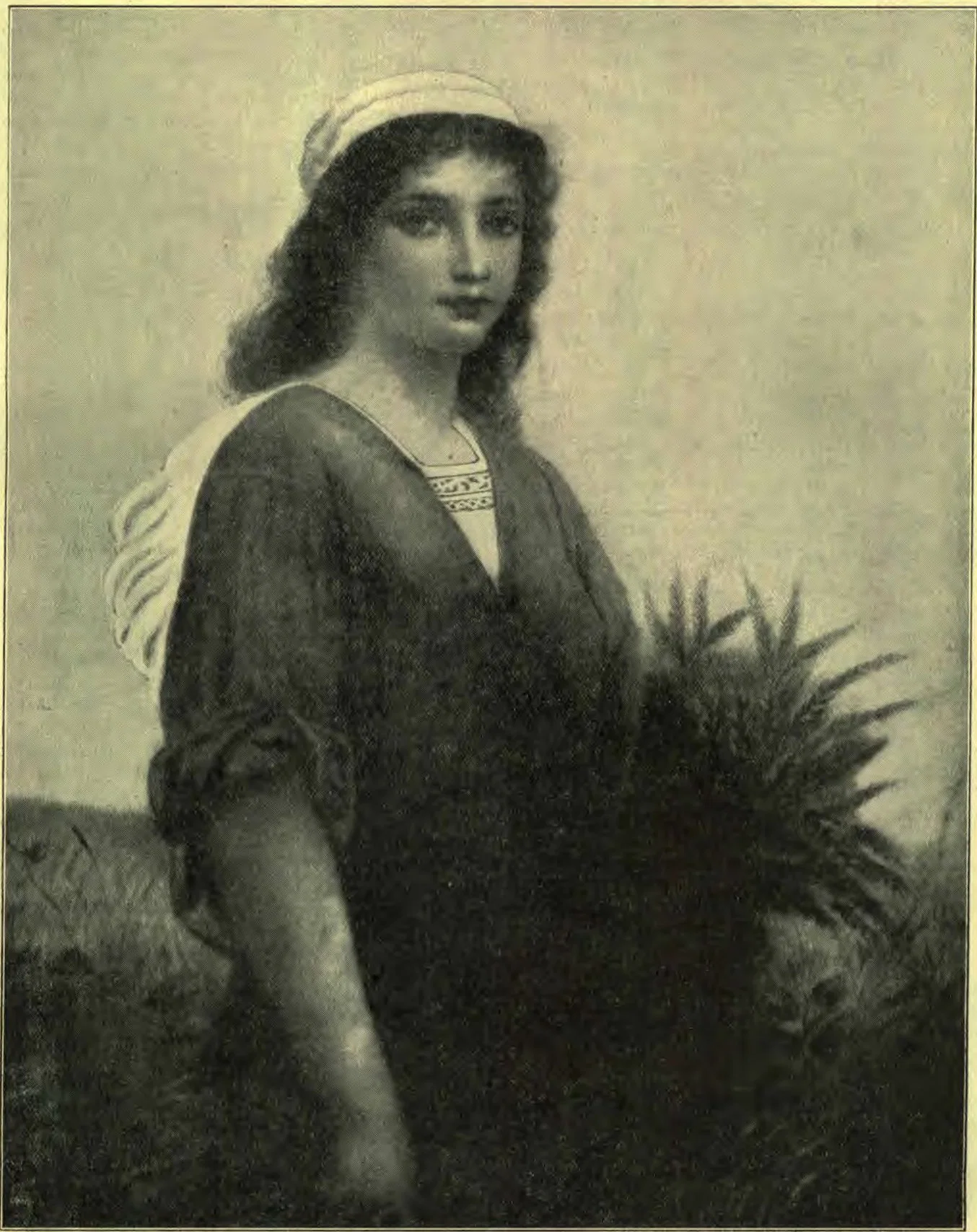
RUTH. THE GLEANER
RUTH. THE GLEANER
THE EARLY MORNING OFTEN FOUND JESUS IN SOME SECLUDED PLACE, MEDITATING, SEARCHING THE SCRIPTURES, OR IN PRAYER.

You have reached the end of this edition.

The Youth’s Instructor · Jan 23, 1917