Your ShelfYour Projects

Signs of the Times, Vol. 25, No. 13.

Healthful
Earlier text: THE FRENCH POSSESSIONS OF POLYNESIA

"CAST THY BREAD UPON THE WATERS."

"Cast thy bread upon the waters, Ye who have but scant supply; Angel eyes will watch above it; You will find it by and by."
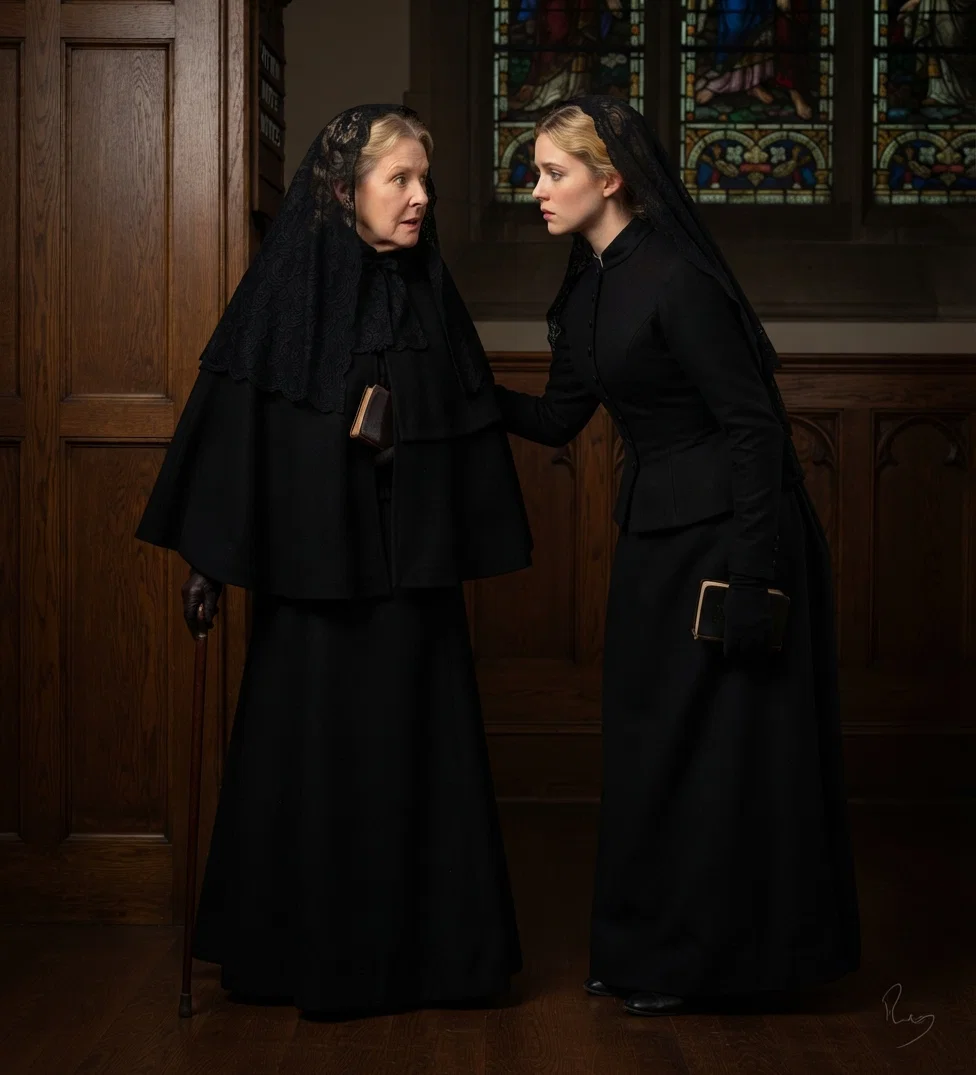
MRS. PARSONS stepped into the church on the avenue for the first time. She had lately moved into the neighborhood, and it was with a feeling of dread she entered the strange church. She had been accustomed to the little humble mission church, where the people were in circumstances as humble as herself, and where she knew every one,—their trials, joys, and sorrows.
“You are a stranger here too, are you not?”
This morning she missed their looks of greeting, and a sense of loneliness crept over her as she sat in the cushioned pew, and felt the indifferent or inquisitive glances that fell upon her.
She was not dressed as most of the people were here, and the organ, and the singing, and the perfume, and the high stained windows, all seemed very grand and different from what she was used to. Somehow she felt out of place, and the blood tingled in her cheeks as if she was doing something wrong to sit here in this grand place.
But after the music ended, in which she did not catch a word of the song, the minister prayed. There was a soft rustling, as of moving garments and bowing heads; but Mrs. Parsons had always been used to kneeling, and so she arose and knelt before the divine Presence. It was then that she forgot all about the grand place and the grand people. She was before Heaven, before God, and learning of the divine Master. The external, that men look upon, was swept away, and she realized that here were human hearts, full of need, so much the more if they did not realize it. Her prayer grew fervent and unselfish. She seemed a child without fear; for love casteth out fear; she reached up to greet her heavenly Father, and prayed that the dew of His love might distil upon the congregation, and that, if there was one lonely, humble soul to whom He could send her, to send her, and make her a blessing. Her heart had lost its fear, and her soul loved all.
When the prayer was over, Mrs. Parsons arose, strangely uplifted in heart. There was a smile on her lips, altho tears were in her eyes, and every word of the sermon fell as seed on good ground. The pastor preached from the beautiful text, "Cast thy bread upon the waters; for thou shalt find it after many days."
Mrs. Parsons' heart glowed. Was there a place for her to cast her bread? She had not a whole loaf—she had only a few crumbs. She knew how the hungry birds pecked at her humble window for her few morning crumbs. Were there souls that God would commission her to spread her bounty before?
When the service was over, and the congregation began to file out, a sense of discouragement fell over her. The people swept by, looking so self-satisfied, so haughty, and she was so humble, so little, so poor; she had nothing to give to these; they wanted nothing. The smile began to fade from her face. The people hurried past her without a glance, and she timidly shrank back, that they might pass.
As she stood waiting, her eyes fell on a little woman as plainly dressed as herself, who seemed to stand back with the same embarrassment. She appeared like a stranger, for no one spoke to her.
"There," she said to herself, "if the Lord gives me a chance, I will speak to that poor, humble soul. Maybe she is one of the Lord's own."
Sure enough, as the crowd passed, she was brought close to the woman, and their eyes met. Mrs. Parsons' smile was cordially returned, and their hands clasped.
"You are a stranger here too, are you not?" said Mrs. Parsons.
"Well, hardly," said the lady. "I've been here for several weeks, but there are few who know me. How kind it was of you to speak to me; for I am very lonely!" The tears came to her eyes.
"Bless your dear heart!" said Mrs. Parsons. "Do you live near by?"
"I live several blocks from the church," said the lady. "How I should like to hear the afternoon service; but I shall hardly be able to walk back again!"
Mrs. Parsons looked her all over again. Yes, she certainly was not a rich woman, and would understand her meager store at home. The light flashed into her face.
"I've only crumbs," she said, "but they are the Lord's. They are all He has given me; but I am willing to share them. Could you not come home with me and take lunch? I have not much to offer; but we might both return to service this afternoon together. I live right near by."
"How kind of you!" said the lady. "I don't know but I can. There is no one to call me home to-day."
And so it happened that Mrs. Walters and Mrs. Parsons became acquainted. What a delightful visit they had together, talking of the Lord's dealings with them, of the coming of His kingdom, and the work to be done! Mrs. Walters said that she felt her soul had been refreshed.
The humble repast was taken with joy and thanksgiving, and it was humble indeed,—just bread, butter, and sauce.
"Do you know," said Mrs. Walters, "I believe the great need among Christian people to-day is love. I remember how the early Methodists used to love each other. Why, we could scarcely break up after meeting, and there was the greatest freedom in our social services. We used to sing and weep together; but a cold formality now seems to keep souls apart."
"Yes, I have noticed it," said Mrs. Parsons; "I have felt it; but we must just learn of Jesus, and individually do as He did."
"I've been so impressed lately with the text, 'Inasmuch as ye have done it unto one of the least of these My brethren, ye have done it unto Me.' Wonderful, wonderful, precious thought! Who wouldn't do it for Him if He were here?'
'Yes; but He is here in every soul. The least is His. How the thought glorifies our humblest services; and to think in the judgment it will not be asked what great deed we have done for the world, but how we have treated the very least one!'
Mrs. Parsons and Mrs. Walters then related incidents of service where great blessings had come to them by what they had done in the name of Christ, for the least and the lowest, and parted the best of friends, after the afternoon service.
Mrs. Parsons was hindered from visiting Mrs. Walters, tho she had received many an urgent invitation. Mrs. Walters often dropped in after morning services, and never came empty-handed, for she knew that Mrs. Parsons, tho rich in faith, was poor in this world's goods.
They were both widows. Mrs. Walters, however, had only herself to look after, while Mrs. Parsons had five small children. How hard it was to make both ends meet; but somehow the Lord always provided in times of extremity!
Mrs. Walters made Mrs. Parsons promise that if ever she was hard pressed she would come and talk it over with her. The time came when poverty pinched harder than ever. Tessie, her youngest child, had been sick, and Mrs. Parsons had been hindered from doing the usual stint of work. The rent was not only due, but coal and flour were both gone.
'What shall I do?' said Mrs. Parsons. Then she remembered the promise she had made, and said: 'I'll run over to Mrs. Walters. Perhaps she'll be able to think of some way to manage.'
But Mrs. Parsons was not prepared for what awaited her. Mrs. Walters met her in an elegantly-furnished parlor, that betokened wealth and taste.
'You dear soul,' she cried gladly, 'so you have come at last; and I know something urgent has sent you over.'
'Yes, but you do not live here, do you?'
'Indeed I do. Lay off your things, and stay to dinner with me.'
'O Mrs. Walters, I always thought you were just a poor woman like myself! Whatever could you have thought of my audacity in inviting you to my humble home?'
'Audacity! That's a wrong word. I thought of your Christlikeness in doing it, and knew it would be counted as done to the least of His little ones. But, Mrs. Parsons, I see care and trouble in your face; now tell me all about it.'
Mrs. Parsons told her timidly of the straits in which she found herself.
'This is just the opportunity I've been waiting for. Now, beloved, I have a fund put away for you. Don't say a word of thanks to me; rather let me thank God for the privilege of doing unto others as others have done unto me, and to have it counted as done unto Him.'
Mrs. Walters pressed fifty dollars into her friend's hand. 'It's all yours,' she said gladly.
Mrs. Parsons was almost overcome, and looked wonderingly at the money, saying in her bewilderment, 'Mine? mine? how is it mine?'
'Ah, Mrs. Parsons, do you not remember the text the minister preached from the first Sunday I met you? It was, 'Cast thy bread upon the waters; for thou shalt find it after many days.' This is the smallest part of the return of the good deed of love you did me. Angels some day will gem your crown with stars, and Jesus will say to you, 'As ye have done it unto one of the least of these My brethren, ye have done it unto Me.'"
'What returns He gives! Praise His name!' said Mrs. Parsons. 'And if my return is so much, what will yours be?'
'He knows,' smiled Mrs. Walters. 'No reward can be sweeter than the peace and joy I feel within, knowing that you, dear friend, are lifted out of your perplexity, and that some of the bread you have cast upon the waters is beginning to return to you, after many days. Come, now, let us go down to dinner.'
FRANCES E. BOLTON.

THE GOSPEL IN RATIONAL REMEDIES.

IN recent years methods of treatment have been popular wherein merely the symptoms of disease are smothered, and yet these symptoms are sentinels that would warn us of what is coming. The patient calls upon the doctor, and asks him for treatment, and after it has been given him, he is asked if he feels better, and he says he is better. But likely he is no better, possibly his condition is really worse, but the treatment of the symptoms is continued without an effort to remove the cause.
I believe God wants to impart to us the true principles upon which He desires the sick to be treated. We are to work in harmony with nature, and as we furnish the patient proper diet, pure food and water, proper ventilation, etc., it becomes a divine ministration, for God's life-giving power is in it. As we endeavor to bring to the patient pure air, we are bringing to him a part of God's power. As we learn how to apply these simple physiological remedies, we are simply learning to work in harmony with God. And in doing these things as He wants us to do them, we can consistently at every step mingle our prayers with our work, for God's effort to save the human being.
We may begin to speak softly to the sinner, to whisper to him, "Turn ye, turn ye, for why will ye die?" and then begin to point out the right way and ask him to walk in it. The sick one realizes that his eye was at first too dim to see the signal, and his ear too dull to hear the still, small voice, and therefore God had to speak louder through the disease, and thus lets him reap the result of his works—not as an arbitrary punishment, but as a warning. As he goes farther and farther into sin, He speaks to him through the avenues of pain, in a voice that is louder and more distinct than could be spoken to him verbally, or in any other way, and then he begins to recognize God. Just at that moment when his heart is oppressed and his body bruised and crushed, we can win him back to God and right. As you see the color coming to his cheek again, and as gratitude begins to spring up in his heart, tell him this was the chastening of a loving Father, who would gladly have spared it all. Mingle true principles with all this, which will lift him up, and not only him but all in the whole community who will heed it, and then he sees an opportunity to become a missionary to others as well. The true laying on of hands, the true anointing with oil, may be put in our hands, but we must have with us in our ministry the Spirit of God, the great restoring agent, for "it is God that healeth all our diseases."
If a man ever gets well it is because God restores him. God's life is in every man. Even now we may recognize the fact that every human being that we see, every manifestation of life that we see taking place about us, is simply God at work—yea, even in disease. But that energy, that vitality, that should be used in building us up into healthy and happy men and women, has now been diverted into improper channels because of wrong habits. It is our work in treating disease to study what God is trying to do in the human body, and then co-operate with Him. That is true service; that is true prayer; that is service prayer, and should be mingled with all verbal prayer.
DAVID PAULSON, M. D.

THE POWER OF A SMILE.

A YOUNG man was once confined in a darkened chamber by a long and painful illness. The inmates of the house were distant relatives, and seemed to think that they were doing their whole duty toward the friendless youth by allowing him to remain there. They seldom went into his room, and his attendant was a sad-faced old woman, who never smiled.
The young man became despondent, and resolved to commit suicide. While he was writing a note telling his reasons for ending his life, a knock was heard upon the door, and a sweet-faced lady entered. She was a neighbor, and, hearing of his illness, had sought him out.
She smiled so sweetly that even before she spoke the young man gave up the idea of the crime which he had contemplated. She spoke a few encouraging words to him, and when she placed her soft hand upon his hot forehead in a motherly way, he broke down and sobbed like a child. She smiled again, and knelt in silent prayer by his bedside, with the sweet love token by which God spoke to him still glowing upon her bright, womanly face.
In that holy silence all his bitterness of soul left him, and there came an intense desire to seek and find Christ. The repentant one felt the presence of God's Spirit, and ere the smile faded from the face of the Christian woman, the loving Saviour had entered the open door of the seeking soul. In a week's time the young man left the dim chamber of pain and went out into the great world to do the Master's work.—American Messenger.

BEST WAY TO STOP CHOKING.

WHEN children get choked in eating or at play, the customary manner of relieving them is to slap them sharply on the back. This often sets the obstruction free, so that it can be swallowed. A medical authority says that a much better plan is to raise the left hand of the child as high as possible, and the relief comes much more rapidly.

Faith Is the Victory

"This is the victory that overcometh the world, even our faith." 1 John 5:4. Our faith is the victory. And he who has faith has victory. He does not have a partial victory, but he has "the victory that overcometh the world." That takes in everything against which we have to contend. And note that faith is the victory that overcometh. The overcoming is in the present tense. It is not a victory that has overcome the world or that at some future time will overcome the world, but that which overcometh the world now, right this day. We can not overcome the world in the past, for the past is gone forever. Neither can we overcome in the future, for the future is always ahead of us. To-morrow is always a day in advance.
That which we call to-morrow when it arrives is no longer to-morrow but to-day. "Behold, now is the accepted time; behold, now is the day of salvation." Put off your salvation and victory over sin until to-morrow and you will never be an overcomer. Attend to this work to-day and you are all right. Many professors lead a lame Christian life all the time because they do not get the decided victory over sin to-day. They are always going to lay aside this besetment and that bad habit, but they keep saying they will do it sometime in the to-morrows. But the to-morrows never come, and Satan is thus allowed to cheat them out of the blessed victories that God has for us to-day.

The Conditions of Salvation

Do not confuse the conditions of salvation. God has made them very simple. "With Him is the fountain of life." His life flows out to all the universe, through the channel of His holy law. It is "the law of the Spirit of life in Christ Jesus." Now if we are in perfect harmony with God's law, we shall receive of God's life. We shall live in the channel of life. We shall be borne upon the bosom of the river of life. We shall eat and drink of His life, and we shall place to the parched lips of the thirsty, dying souls the water of life.
"And the Lord shall guide thee continually, and satisfy thy soul in dry places, and make strong thy bones; and thou shalt be like a watered garden, and like a spring of water [from which the thirsty may drink], whose waters fail not." Isa. 58:11, R.V. It will all come, if we yield ourselves to God, and let Him work. That is simple, isn't it? Then do it.

Church-Made Festivals

Church-Made Festivals.—It is a peculiar fact that all the church-made festivals or days of special observance are an imitation of noted heathen festivals. They all originated (as church occasions) in deference to customs that were popular when Christianity was made universal by law, and these compromises made it easy for pagan adherents to accept Christianity. The final settlement of Christmas on December 25 was practically an ovation to pagan custom. After being celebrated at various seasons of the year, it was finally fixed to correspond with the heathen winter holidays (Saturnalia, Juvenalia, Brumalia), and the pagan customs were brought over into it. So with the Easter holiday; it was patterned after the Teutonic goddess of spring, Ostera or Eastre. So with the Sunday as a religious institution; it was the day dedicated to the sun in heathen worship, and as a compromise with the heathen, when they were made Christians by law, it was given a place in the church instead of the seventh day, which God had "sanctified" and "blessed" as His memorial. All these church days were adopted from the heathen calendar of festivals in order the more easily to wean them over to the profession of Christianity. It was all done on the principle so often urged in our own time, that "it is the business of civil government to make it easy to do right."

Support the Bible Society

We are indebted to the American Bible Society for the cuts used this week in our Outlook department, page 10. The American Bible Society in this country, and its sister institution, the British and Foreign Bible Society in England, are two institutions that deserve the support of Christian people everywhere. The address of the American Bible Society is Bible House, New York. William Foulke is the treasurer. Any one wishing to devote funds to the work of scattering the simple Word of God, without any note or comment, among all the peoples of earth, should send their gifts to Mr. Foulke at the above address. And we hope that thousands of our SIGNS readers will give of their means to help this very worthy enterprise. Just now money is needed to send Bibles to the Philippines, Porto Rico, and Cuba, in particular, and to all the heathen world, in general. Every one who has a knowledge of what the Bible does for those who receive it should esteem it a privilege to help in this good work.

WORTHY SOCIETIES.

THE Bible Societies that have been formed within this century are indeed a marvel—not because of the mere fact that such societies have been organized, but because of the great work that has been accomplished by them. What will result from the nearly 300,000,000 Bibles or portions of the same that have been scattered during this century in nearly 400 languages and dialects, only eternity can reveal.
No other book has taken such a hold upon the people as the Bible. No other book has ever had anything like such a wide circulation. And in no age of the world has the Bible been so extensively circulated as during this century.
These multiplied millions of copies of the Book of God that are being sent into all the world will bear their fruit. There are some who will read them, and by reading them their faith will lay hold upon God, and they will be garnered as the jewels of His grace. "For as the rain cometh down, and the snow from heaven, and returneth not thither, but watereth the earth, and maketh it bring forth and bud, that it may give seed to the sower, and bread to the eater; so shall My Word be that goeth forth out of My mouth; it shall not return unto Me void, but it shall accomplish that which I please, and it shall prosper in the thing whereto I sent it." Isa. 55: 10, 11.
Since God's Word by His own authority and decree is not to return unto Him void, but is to accomplish that whereunto He has sent it, can you see any connection between this unprecedented circulation of the Bible in this century and the Saviour's statement that "this Gospel of the kingdom shall be preached in all the world for a witness unto all nations; and then shall the end come"?
The evidence of the soon coming of Christ is contained in the Word, as are also the warnings against the evils and deceptions in this time, as well as the "exceeding great and precious promises" that enable us always to triumph in God. And the Lord by His providence is placing that Word within the reach of all. None need be lost; none need be deceived. The Word of God is given freely and fully to enlighten all and show them the way of salvation.

The Great Resurrection Day

As the centuries have come and gone, men have talked about the resurrection, they have written about it, and sang about it. But the momentous fact now presents itself to us that the great day is at hand. It can be but a very short time till the voice of the Son of God will wake the dead. How glorious it is to know that this is so!

Prophetic Signs in Nature

The winter that is just past has been very remarkable for the severity and freaks of its weather. Great storms have raged all through the East, and the devastating tornadoes and earthquakes are now doing their work. Did you know that these things are a matter of prophecy? And did you know that what we have had so far is as nothing when compared with what lies just before us? We have entered the time when the earth will soon be broken down by the great upheavals of nature, preparatory to its great and final day of burning.

The Resurrection Number

The resurrection number of THE SIGNS OF THE TIMES that we promised to issue about Easter is presented to our readers this week. All of the articles, with some minor exceptions, and the leading illustrations, were specially prepared for this number of the paper. Every one of them is particularly good, and will be a great help to all who will read and study them. There could be no more important theme just now than the resurrection; for the all-absorbing thought should be fixed in every mind that the great resurrection day is right at hand. The evidence upon this point is so complete and abundant that there can be no mistaking it. It is a divinely positive certainty.

CONTAINED IN THIS NUMBER.

Poetry. Watching, C. F. LADD . . . . . 2 Christ Is Risen, C. M. SNOW . . . . . 5 The Penitent's Cry, EMMA L. PARDON . . . . . 11 His Love, ASA SMITH . . . . . 14
General. Christ Our Passover, PERCY T. MAGAN . . . . . 2 A Risen Saviour, L. A. HOOFES . . . . . 3 The Power of the Resurrection, FRANCIS M. WILCOX . . . . . 3 Withered Christians . . . . . 4 No Resurrection, No Salvation, W. N. G . . . . . 5 Life and Immortality, L. A. PHIPPENY . . . . . 6 Crimes; Sins, G. W. COPLEY . . . . . 7
Editorial. The Memorial of His Resurrection . . . . . 8 The Resurrection Day Imminent . . . . . 8 The Evidence of the Resurrection . . . . . 9
Outlook.—The Gospel and the End . . . . . 10
Missions.—The French Possessions of Polynesia, E. C. CHAPMAN—How the Bible Was Spread in Russia . . . . 11, 12
International Sabbath-school and Sunday-school Lessons. . . . . . 13
The Home.—" Cast Thy Bread upon the Waters," FRANCES E. BOLTON—The Gospel in Rational Remedies, DAVID PAULSON, M.D.—The Power of a Smile . . . . 14, 15

Guarding Against Last-Day Deceptions

Speaking of the last days, the Master says, "There shall arise false Christs, and false prophets, and shall show great signs and wonders; insomuch that, if it were possible, they shall deceive the very elect." Matt. 24:24. Any great sign or wonder that we may see is not in itself an evidence that it is from God, the Source of all good. There is just one thing that will enable us to detect these "false Christs and false prophets," and be sure that their "great signs and wonders" are wrought by the evil power to deceive us. That one thing is the Word of God. Not the Bible in our home or carried in the pocket and unread and unheeded, but the Living Word of the living God brought daily into our minds by a continual study of His Book. And one who studies the Bible closely and believes what it says will always have the Light with him that will shield him from every one of the great deceptions. All others will be carried away by the many delusions prepared of Satan for these last days.

LOOK AND LIVE.

Not through controversy and discussion is the soul enlightened. We must look and live. Nicodemus received the lesson, and carried it with him. He searched the Scriptures in a new way, not for the discussion of a new theory, but in order to receive life for the soul. He began to see the kingdom of heaven as he submitted himself to the leading of the Holy Spirit.
There are thousands to-day who need to learn the same truth that was taught to Nicodemus by the uplifted serpent. They depend on their obedience to the law of God to commend them to his favor. When they are bidden to look to Jesus, and believe that He saves them solely through His grace, they exclaim, "How can these things be?"
Like Nicodemus, we must be willing to enter into life in the same way as the chief of sinners. Than Christ, "there is none other name under heaven given among men, whereby we must be saved." Acts 4:12. Through faith we receive the grace of God; but faith is not our saviour. It earns nothing. It is the hand by which we lay hold upon Christ, and appropriate His merits, the remedy for sin. And we can not even repent without the aid of the Spirit of God. The Scripture says of Christ, "Him hath God exalted with His right hand to be a Prince and a Saviour, for to give repentance to Israel, and forgiveness of sins." Acts 5:31. Repentance comes from Christ as truly as does pardon."—Mrs. E. G. White, in Desire of Ages.

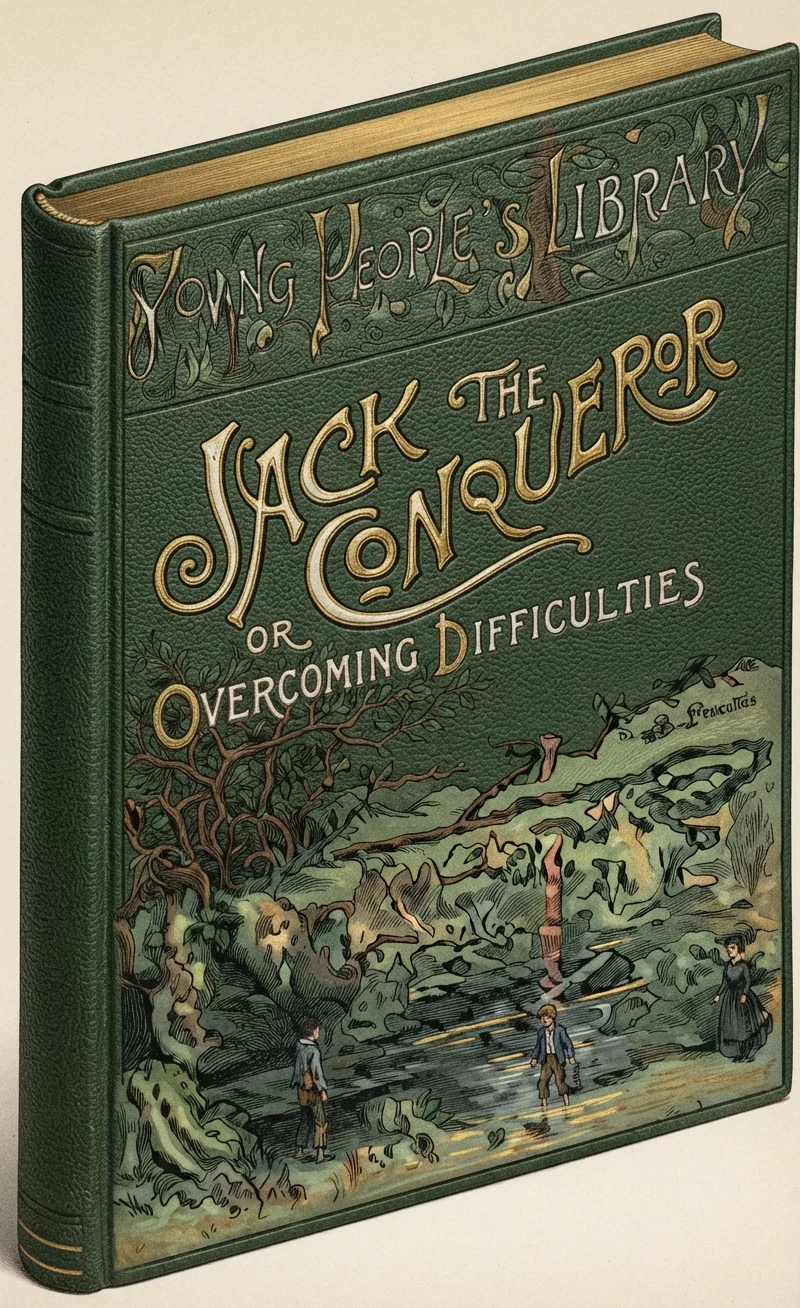
Jack the Conqueror

The story of ten-year-old poverty-stricken Jack Harold. His father and mother were dead, his aunt would not allow him to attend school, and yet he rose above these difficulties, and became an honored man. A capital story for boys.

Illustrated Books for Sale

EACH OF THE ABOVE BOOKS IS ILLUSTRATED AND CONTAINS ABOUT 160 PAGES CLOTH, 60c EACH, OR 12 FOR $6.00; PAPER COVERS, 25c EACH
PACIFIC PRESS PUBLISHING COMPANY OAKLAND, CAL. 39 Bond Street, New York City 18 West Fifth Street, Kansas City, Mo.

An Artistic Booklet

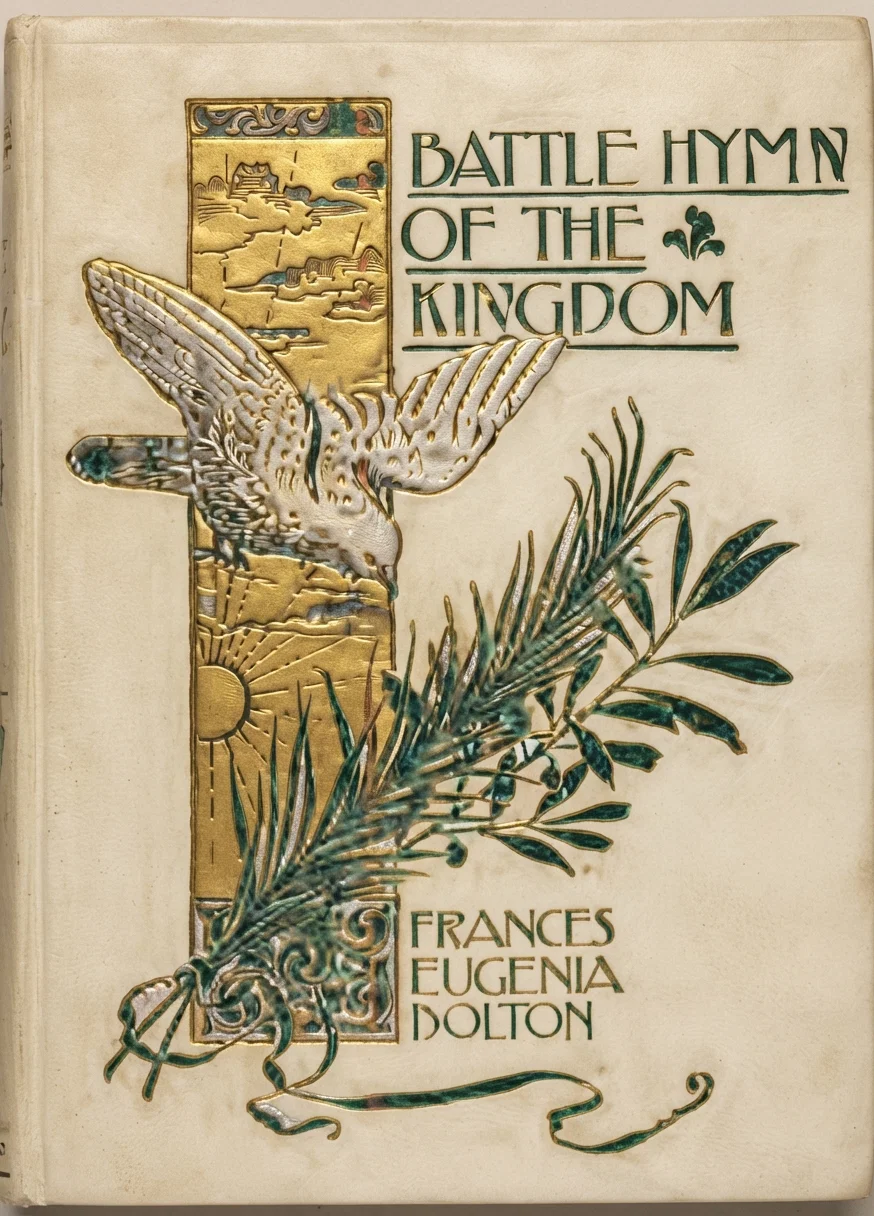
"Battle Hymn of the Kingdom" is an illustrated poem, written by Miss Francis E. Bolton. The poem is a very beautiful one, while the fifteen original engravings are of extraordinary strength and merit. The cover design is worked in green, silver and gold, and is very attractive.
Art Vellum, gilt top, 50c. Leatherette, 25c.

Gift Volumes

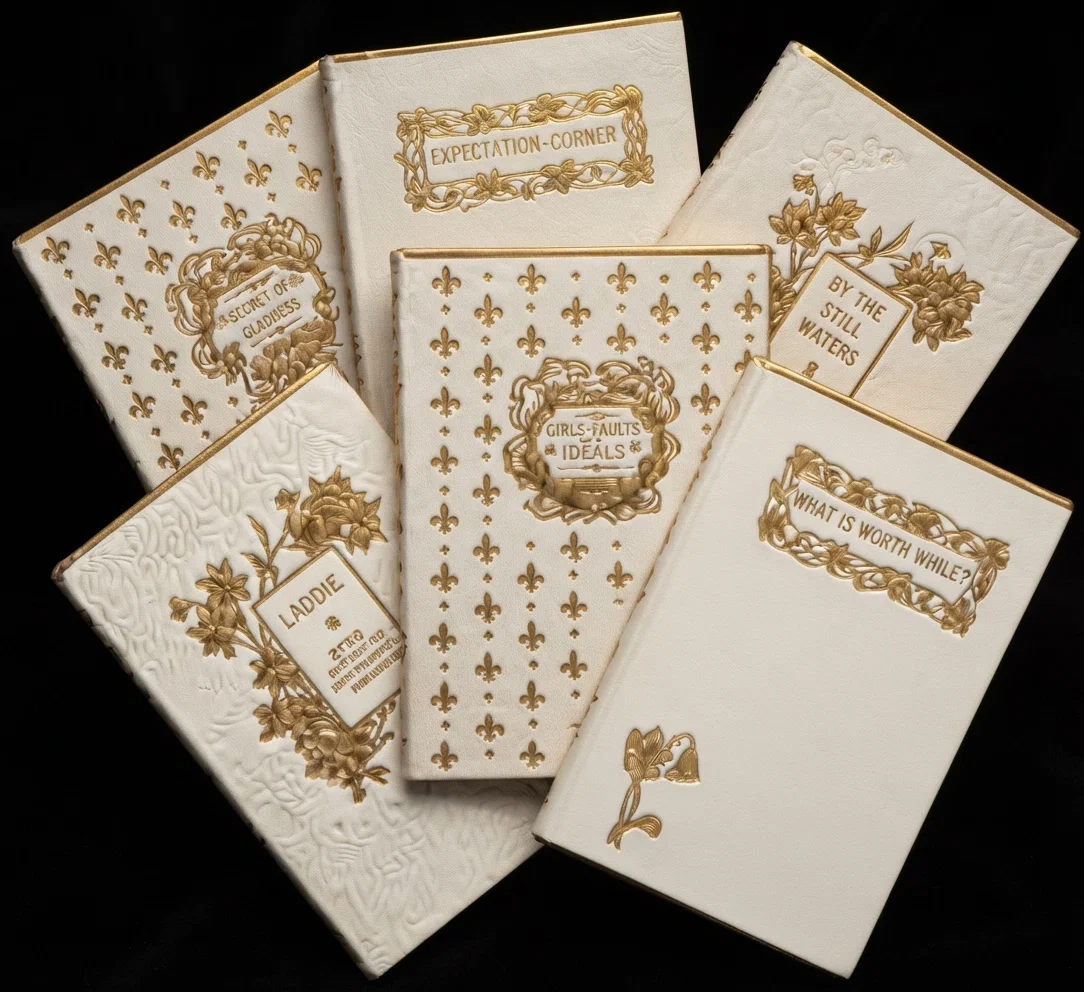
The following little volumes are bound in white and gold, and are especially intended for those desiring inexpensive books of real worth for gifts. 35c each or six for $1.80.
Secret of Gladness By the Still Waters The Christ-Filled Life What Is Worth While Girls, Faults and Ideals Young Men, Faults and Ideals

Missionary Biographies

A profitable series of missionary books for the young people and the home. Price 75c per volume.
Griffith John, founder of the Hankow mission in Central China Robert Moffat, the missionary hero of Kuruman James Chalmers, missionary and explorer of Rarotonga and New Guinea William Carey, the shoemaker who became a missionary Bishop Patteson, the martyr of Melanesia Samuel Crowther, the slave boy who became Bishop of the Niger Thomas J. Comber, missionary pioneer to the Kongo Missionary Ladies to Foreign Lands John Williams, the martyr missionary to Polynesia David Brainerd, the apostle to the North American Indians David Livingstone, the light of Africa

STORIES, BIOGRAPHIES, AND TRAVEL

Left with a Trust
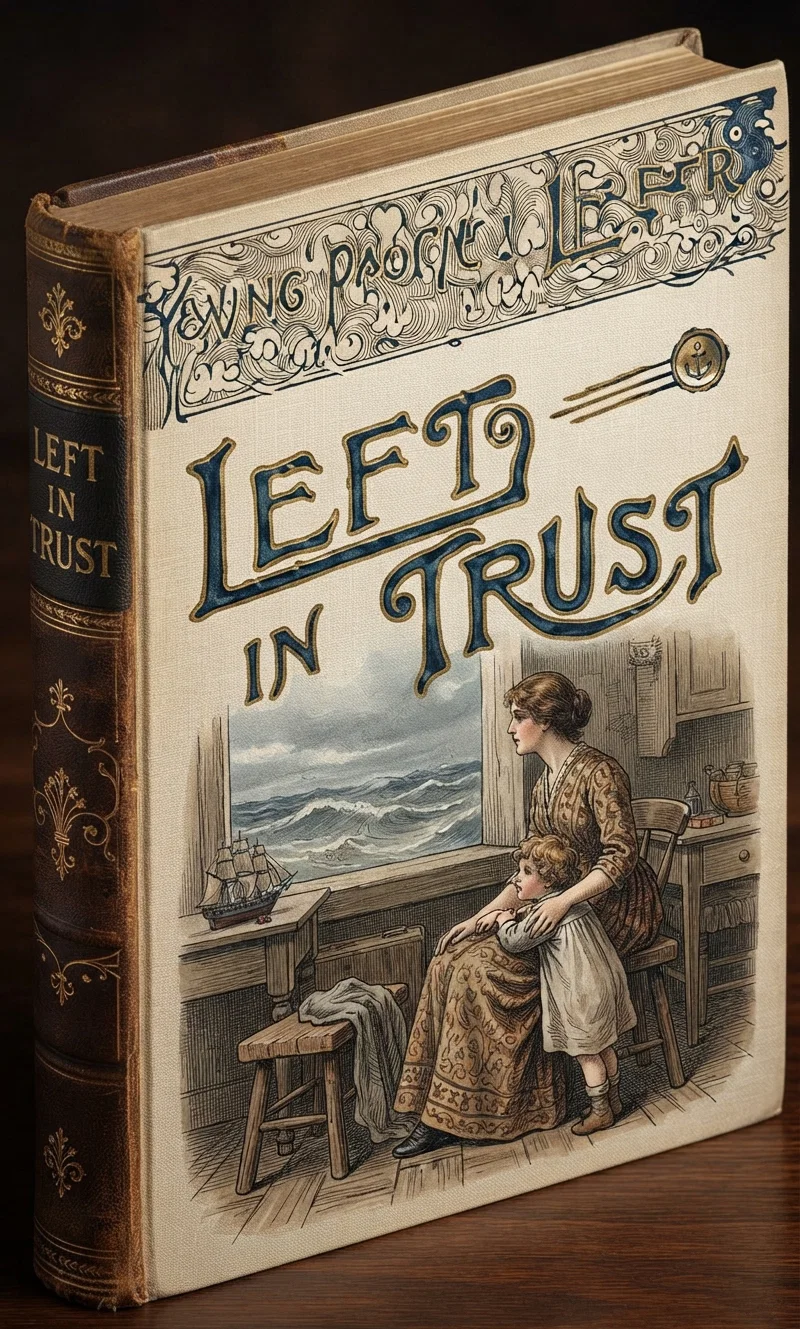
Contains two good stories. The first is the struggles of a family, the head of which having gone, according to Baby Phil, "Away 'cross the big sea, and perhaps he'd tumble out of the ship and get drowned."

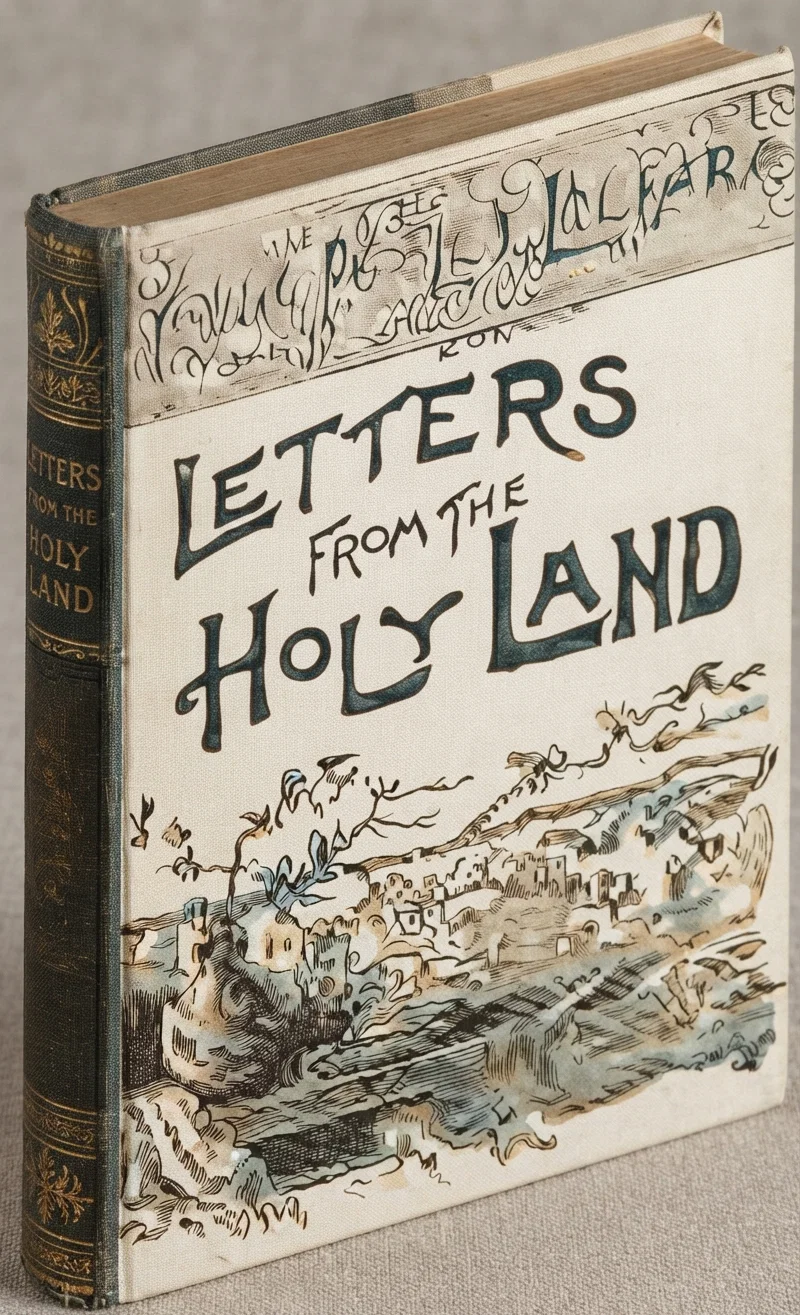
Letters from the Holy Land

An instructive series of illustrated letters from a traveler in Palestine to his children at home. A volume well calculated to interest children in Bible scenes.
Continue reading: Fiji and Samoa