Your ShelfYour Projects

Review and Herald, Vol. 82, No. 28.

The Garden of Gethsemane
Earlier text: The Garden of Gethsemane

The Inspiration of the Scriptures

In these days when “Higher Criticism” and “Rationalism” are seeking to eliminate practically all supernaturalism from Christianity it is helpful to read a sound and convincing plea for the old-time belief in the Bible as in a special sense the book of God. The following masterly statement of the truth was written by Dr. Adolph Saphir, himself a converted Hebrew, whose intimate acquaintance with the chosen nation, combined with a fervent Christian experience, has given great force to his utterances concerning both the written and the incarnate Word of God. Dr. Saphir says:—
The whole history of Israel is a golden history, if we may so say—a Holy Ghost history. It differs from every other history. This nation God formed for himself; and in all the events, institutions, and great men of this people, God in a special manner revealed himself and the truths of his kingdom. And this because the eternal Word, the Saviour of sinners, the King of the Jews, the Head of the church, the Heir of all things, who is the upholder and end of all ages, Jesus himself, is organically and inseparably connected with this chosen nation; he is of the seed of David, of the seed of Abraham.
Now such being the character of the history, was the record of this history (or the Scripture) the work of man, depending on the capacity and grasp of human intellect, the faithfulness of human memory, on man’s wisdom and design? Is not the casket also golden which contains the invaluable jewel? If the spirit and substance were God-given, has he not also clothed it with a body prepared and perfected by his own omnipotent and all-wise hand? We believe that Scripture is given by inspiration of God. We do not believe it possible that this book, world-wide and eternal in its character, could have been written by holy men unless they were moved by the Spirit, who searcheth the deep things of God, and guided by him who was, and is, and is to come. We believe Scripture to be inspired. And our faith in the inspiration of Scripture has its basis and root in our faith in God himself. It is because we have experienced the divine power of the truth Scripture contains, and because in the reading of Scripture we have heard the voice of God; it is because God speaks to us in this written Word, that we believe it is God’s. This faith is a conviction, an inward beholding and seeing, a knowledge which far transcends in light and strength, in certainty and firmness, all human evidence and argument. We can not communicate this faith to our neighbor; for faith is the gift of God, and “they shall be all [and each] taught of God;” we can only testify of it and give a reason, a connected statement of the knowledge that is in us. But on no lower ground can we build our assertion, that Scripture is God-inspired; not on the testimony of the church, not on the evidences (valuable as they are) of the historic faithfulness of the record, the fulfilment of prophecy, the effects of the sublime teaching on human minds, etc. The inspiration of Scripture is an object of faith; and faith can rest only on the word of God, the testimony of the Spirit to the soul.
When we are asked, Is this inspiration verbal? or does it refer only to the divinely revealed truths and promises? it is not necessary for us to enter into distinctions which Scripture itself does not make. We need no adjective to qualify the substantive, inspiration. It is impossible for us to form a theory of inspiration. Even of that influence of the Spirit of which we possess personal experience in our own conversion and daily renewal, it would be impossible for us to frame a theory; for the work of the Spirit is mysterious. We can not trace the beginning or end of his path (John 3:8); his intercession is “with groanings which can not be uttered” (Rom. 8:26); we can not explain his indwelling in the heart; and as his love is infinitely tender, entering into our deepest and most individual peculiarity and need, so is it impossible for us to analyze his constant vivifying influence, guidance, and rule. If it is thus with the work of the Spirit, of which we have experience, why should we attempt to form a theory of inspiration of which none of us has experience? Most probably the prophets themselves could not explain and analyze the operation of the holy and infinite Spirit upon and within their spirit, and could give no other reply to our inquiry than the statement which Scripture contains: the Spirit of the Lord came upon them; they spake not of themselves, but as they were moved by the Holy Ghost.
The inseparable connection between thought and word, between the substance and spirit and the form and expression, is obvious. The Holy Spirit, God who reveals truth and spiritual reality to holy men, moves them also in speaking; influencing also the words, so that they are correct and adequate expressions: the spoken and written word is an adequate manifestation of the word inwardly revealed. To separate thought and word, spirit and embodiment, matter and manner, is at all times a very difficult and perilous thing; for not merely is the boundary line between the idea and the expression almost impossible to find, but the Spirit who animates the body which it has formed can be retained by us only in the word. Hence, as Martin Luther said against the rationalists of his day, “Christ did not say of his Spirit, but of his words, they are spirit and life.” Scripture is God’s word; it is his gift, and a revelation of himself. It is God’s word, the revelation of eternal and spiritual truth in a written record.
The language of Scripture accordingly is perfectly unique; it possesses an indescribable something which is not found in any (merely) human writings; the Spirit, who seeth all things in their depth and reality, and who knoweth the end from the beginning, speaks here in a way so profound and comprehensive that the wisdom and experience of all ages can not exhaust his meaning, and yet with such simplicity and definiteness that all childlike hearts find guidance and consolation in their daily path of duty and trial. The style of Scripture betokens its inspiration. Here is a depth, a solemnity, a heart-winning sweetness and familiarity, which we meet nowhere else. Here is the voice of One who speaketh with authority, and communicates to us out of an inexhaustible fulness what is profitable for us in our present condition. The Scripture is to other books as nature is to the works of art, as the ocean is to a lake; the Scripture sees all things from a great height, and breathes the atmosphere of eternity. In the best human books, in the loftiest poetry, in the most fervent and devout utterances of man, there is always something unreal, artificial, self-conscious; something morbid and necessarily ephemeral. Scripture is the only true, real, eternal book.

The Lesson of Giving

“LORD, teach us the lesson of giving, For this is the very next thing; Our love always ought to be showing What offerings and fruits it can bring.”
There are many who know not thy mercy, There are millions in darkness and woe; Our prayers and our gifts are all needed, And all can do something, we know.”

Lessons From the First Epistle of John***

Lessons From the First Epistle of John
“That which was from the beginning, which we have heard, which we have seen with our eyes, which we have looked upon, and our hands have handled, of the Word of life (for the life was manifested, and we have seen it, and bear witness, and show unto you that eternal life, which was with the Father, and was manifested unto us); that which we have seen and heard declare we unto you, that ye also may have fellowship with us: and truly our fellowship is with the Father, and with his Son Jesus Christ.”
There are those who are always seeking for something new. If they understood aright, they would realize that the newness that they need is that which comes from a daily growth in the knowledge of our Lord and Saviour Jesus Christ. Let us keep firm and unshaken our faith in the message that God has given us for these last days. The world is fast becoming as it was in the days of Noah. Christ declared that this would be the sign of the end,—men would be eating and drinking, planting and building, marrying and giving in marriage, until the day of the coming of the Son of man. His words mean far more than we have yet seen. Do not the events that have taken place show this?
“And truly our fellowship is with the Father, and with his Son Jesus Christ.” All through the Scriptures, the Father and the Son are spoken of as two distinct personages. You will hear men endeavoring to make the Son of God a nonentity. He and the Father are one, but they are two personages. Wrong sentiments regarding this are coming in, and we shall all have to meet them.
“And these things write we unto you, that your joy may be full.” If we would apply the precious truth of God to our own individual cases, we should find such blessing, such consolation, that we should be ashamed to murmur and complain. Some have educated their tongues to utter complaints, and thus they lose many precious blessings that come with the exercise of patience.
“This then is the message which we have heard of him, and declare unto you, that God is light, and in him is no darkness at all.” “God is light.” How are his disciples to declare it?—Not with their lips merely, but in their lives. They themselves are to be “the light of the world.” “Let your light so shine before men,” Christ said, “that they may see your good works, and glorify your Father which is in heaven.”
“If we say that we have fellowship with him, and walk in darkness, we lie, and do not the truth.” Every church-member is to walk worthily of the high calling to which he has been chosen, having gained a living experience in the things of God. There is no need for us always to be babes in religious things. We are to grow up to the full stature of men and women in Christ.
“If we walk in the light, as he is in the light, we have fellowship one with another, and the blood of Jesus Christ his Son cleanseth us from all sin. If we say that we have no sin, we deceive ourselves, and the truth is not in us.”
We may pray for sanctification, but whether or not we get it depends on whether we walk in the light, reflecting light to those around us. My brethren and sisters, the salvation of your souls depends on the course that you pursue. If you fail of gaining eternal life, it will be because you have failed to keep the commandments of God. From the Word of God there shines light sufficient to guide us along every step of the way to heaven, and those who lose the way will be without excuse.
“If we confess our sins, he is faithful and just to forgive us our sins, and to cleanse us from all unrighteousness. If we say that we have not sinned, we make him a liar, and his word is not in us.”
In this world we are exposed to the temptations of the enemy, and because we do not depend on God as we should, we are continually sinning. There are those who, when they make mistakes, stand out in stubbornness, saying that they have not sinned, and refusing to confess. Those who say, “I never confess,” will never see the kingdom of heaven unless they do confess. Read with the prayer of confession that Daniel offered. He was called a man greatly beloved by God, and yet he confessed that he as well as the people had sinned.
Those who make no acknowledgment of sin, those who refuse to confess because they think it would hurt their position and influence, will never be cleansed from unrighteousness unless they make a decided change in their attitude. We need the spirit of confession right here in this meeting. It would be surprising if none of those present had anything to confess. Brethren and sisters, will you not take the stumbling-blocks out of the way, and clear the King’s highway, that he may enter in among us? Then we shall see of the salvation of God, and the glory of the Lord will be revealed.
“My little children, these things write I unto you, that ye sin not. If any man sin, we have an advocate with the Father, Jesus Christ the righteous. And he is the propitiation for our sins: and not for ours only, but also for the sins of the whole world.” “As many as received him, to them gave he power to become the sons of God, even to them that believe on his name.” When we thus unite with Christ, we are gaining an experience that will be of more value to us than gold or silver or precious stones.
“And hereby we do know that we know him, if we keep his commandments. He that saith, I know him, and keepeth not his commandments, is a liar, and the truth is not in him. But whoso keepeth his word, in him verily is the love of God perfected: hereby know we that we are in him. He that saith he abideth in him ought himself also so to walk, even as he walked.”
We are to lift the cross, and follow the steps of Christ. Those who lift the cross will find that as they do this, the cross lifts them, giving them fortitude and courage, and pointing them to the Lamb of God, who taketh away the sin of the world.
“Brethren, I write no new commandment unto you, but an old commandment which ye had from the beginning. The old commandment is the word which ye have heard from the beginning. Again, a new commandment I write unto you, which thing is true in him and in you; because the darkness is past, and the true light now shineth.”
We can have something fresh to think of all the time. We have held communion with God as we have tried to understand the high privilege of being one with Christ. I am so thankful for the Word of God. I thank the Lord with heart and soul and voice. We have no need to be led astray. We have no need to seek for something new and strange from the lips of human beings. We have a science that is above all human science. Many will grasp false science, teaching it as truth. But we need not be led astray. God wants us to cherish the truth in the simplicity in which we have received it from Christ.
(To be concluded)

Jewels for My Crown

ELIZA H. MORTON
WHEN searching for God's jewels bright, Mid rubbish of the years, I often toil on bended knee, And wet the soil with tears: The gems are there though "in the rough," And some day they will shine, Perfected by a hand of love— The hand I feel on mine.
And so I'll work, and never think Of recompense or gain; 'Tis sweet to feel the impulse come, Though it is fraught with pain: 'Tis sweet to know the angels watch And have a care for me. The beauty of their shining wings At times I almost see.
The veil is thin that hides the face Of Jesus by my side; He gives me strength to labor on From morn till eventide. And by and by he'll take the gems He's polished with such care, And place them in a diadem— A crown for me to wear.
North Deering, Maine.

_Then I Knew_

J. N. LOUGHBOROUGH
KNEW what?—“Then I knew that this was the word of the Lord.” So said the prophet Jeremiah when a prediction which had been made through his testimony met its fulfilment. Of this we read, “Jeremiah said, The word of the Lord came unto me, saying, Behold, Hanameel the son of Shallum thine uncle shall come unto thee, saying, Buy thee my field that is in Anathoth: for the right of redemption is thine to buy it. So Hanameel mine uncle’s son came to me in the court of the prison according to the word of the Lord, and said unto me, Buy my field, I pray thee, that is in Anathoth, which is in the country of Benjamin: for the right of inheritance is thine, and the redemption is thine; buy it for thyself. Then I knew that this was the word of the Lord.” Jer. 32: 6-8.
This conclusion made by the prophet is in harmony with what the Lord had given as the proof of a true prophet. In another place Jeremiah said, “The prophet which prophesieth of peace, when the word of the prophet shall come to pass, then shall the prophet be known, that the Lord hath truly sent him.” Jer. 28: 9. Again, in the Lamentations of Jeremiah, we read, “Who is he that saith, and it cometh to pass, when the Lord commanded it not?” Lam. 3: 37.
The test of a true prophet given through Moses was, “If thou say in thine heart, How shall we know the word which the Lord hath not spoken? When a prophet speaketh in the name of the Lord, if the thing follow not, nor come to pass, that is the thing which the Lord hath not spoken, but the prophet hath spoken it presumptuously: thou shalt not be afraid of him.” Deut. 18: 21, 22.
If we apply these rules to the gift of prophecy, which for the last sixty years has been manifest through Mrs. E. G. White, we find that predictions made are most accurately fulfilled, and it is right for us also to say of this gift, Now I know that this is the word of the Lord. In the pamphlet, “Prophetic Gift in the Gospel Church,” and in the forthcoming book on “The Great Second Advent Movement,” there will be found a record of more than a score of definite predictions accurately fulfilled.
We wish here to call attention to some late occurrences of the same nature. On March 18 and 19, 1902, several leading brethren were called together in Los Angeles, Cal., to consider matters relative to sanitarium work in that city. The proposition was urged upon us to purchase a site near the corner of Hill and Third Streets. To secure this site, erect the necessary buildings, and furnish them for sanitarium work, would require an outlay of about one hundred and twenty thousand dollars, and this money would have to be hired.
A Testimony came to that meeting from Mrs. White, not to build a sanitarium in Los Angeles; while it might be right to rent buildings in the city for a restaurant and treatment rooms, the sanitarium should be out in the country, away from the noise and bustle of city life. It should be where the patients would be in contact with nature—fields, trees, and flowers. A caution was given against any hasty moves in paying large sums for a sanitarium. She went on to state what had been shown to her, that buildings and property suitable for our work, on which much money had been expended by those who had the money to spend, but who, by death or by other reason, had failed to carry out their plans, would be offered to us at very low figures, and some of these we ought to secure.
Let us now consider some things which have happened in line with this Testimony since 1902. The readers of the REVIEW are familiar with the special instruction which came from Mrs. White to the committee who were seeking a location for the Review and Herald, school buildings, and a sanitarium in the East, that they should “move carefully, and pray much,” and that “the Lord would guide them.” Again it was spoken in this particular case, that “property suitable for the work, and upon which much money had been expended, would be offered at low figures.” The result was the securing of the beautiful site in Takoma Park for six thousand dollars, about one tenth of the price at one time placed upon it.
At Glendale, eight miles from Los Angeles, our people are now carrying on the sanitarium work in a building just adapted to the work. This building is two blocks from the post-office. An electric street-car line from Los Angeles runs past the door. The house has seventy-five rooms, and cost, a few years ago, forty thousand dollars. The grounds connected with the building cost about six thousand dollars. Abundance of fine mountain water is piped to the grounds and building. Our people purchased this property in 1904 for twelve thousand five hundred dollars, about one fourth of its original cost.
At Paradise Valley, some six miles from San Diego, is a sanitarium in operation. Of this, we learn that about twenty years ago a lady physician, possessed of considerable wealth and enterprise, selected this commanding site for a sanitarium home, and expended fully sixty thousand dollars on the building and grounds. The building contains fifty rooms, and on the grounds purchased, near to the main building, is a six-room cottage and a good barn. There are twenty acres of land. The purchase price, including all the cost of transfer of title, was five thousand dollars, about one twelfth of the original cost of the property. This place was secured in January, 1904.
Several dry seasons had reduced the water-supply, and the property had greatly decreased in value. Some of our people objected to the purchase because of the failure of the irrigating system, and their doubt of getting an ample supply of water on the place. After Mrs. White saw the place, she was confident that it was one of the places which had been shown her in vision. From the first, she declared, “The difficulty about the water can be overcome.” The workmen began sinking a well upon the place. On Nov. 14, 1904, they struck such a flow of water that it rose fourteen feet in the well in one night. Of this success, Mrs. White, in an article in the REVIEW of March 16, 1905, said, “From the beginning [meaning beginning of negotiation for the property], I had felt the assurance that the Lord would open the way for our work to advance.”
In view of these facts, the question naturally arises, “How did Mrs. White know that such offers of property would be made?” Like Jeremiah, she made her statement from what the Lord had shown to her. We who see so clear a fulfilment of the word, do well to say, “Then I knew that this was the word of the Lord.” Happy is it, and happy will it be, for those who acknowledge the instruction the Lord is giving his people through his humble instrument. This is one of the Lord’s special agencies in this time, to draw the attention of his people to his Word, and so instruct them that they may escape the wiles of Satan, and be of those who shall be kept by the power of God, through faith unto salvation, so soon to be revealed in this last time.
Mountain View, Cal.

Plowed Under

T. E. BOWEN
Christ often drew from the common experiences of every-day life of the common people lessons of deep spiritual meaning. One day as he was teaching, he drew this lesson from the sowing of grain: “Except a corn of wheat fall into the ground and die, it abideth alone: but if it die, it bringeth forth much fruit.”
That the dying process is so hard for us, and so many are unwilling to pass through it, might be given as the cause for the small yield of fruit. The grain left unsown, abides alone. There can be no increase without an actual burial out of sight of the individual kernel of the grain, in the cold, unfeeling earth. It must die.
And thus it is in the Christian life. Christ died. That seed thus planted has yielded an abundant harvest. But the dying on that one day was not all there is to the dying of Christ. His was a constant yielding of himself, a continual self-sacrifice, a daily burial out of sight in the world's great need. He put himself under the furrow.
“With this truth Christ connects the lesson of self-sacrifice that all should learn. ‘He that loveth his life shall lose it; and he that hateth his life in this world shall keep it unto life eternal.’ All who would bring forth fruit as workers together with Christ, must first fall into the ground and die. The life must be cast into the furrow of the world's great need. Self-love, self-interest, must perish. And the law of self-sacrifice is the law of self-preservation. The husbandman preserves his grain by casting it away. So is human life. To give is to live. . . . The life spent on self is like the grain that is eaten. It disappears, but there is no increase. A man may gather all he can for self; he may live and think and plan for self; but his life passes away, and he has nothing.”—“Desire of Ages,” page 623.
God knows those who are his. They may be buried in the furrow of the world's need somewhere, out of sight, toiling for him, but his eye is upon them. They may even fall asleep under the furrow, at home or in far-off heathen lands, yet it will not be in vain. The harvest will be abundant. In that day of gathering just ahead, not only these, but the fruit resulting from their self-sacrificing lives will be gathered. “And they shall be mine, saith the Lord of hosts, in that day when I make up my jewels.”
Rome, N. Y.

Suggestions for Service

S. N. CURTISS
“For the Son of man is as a man taking a far journey, who left his house, and gave authority to his servants, and to every man his work.” Mark 13:34.
In God’s plan for the salvation of mankind, every one of “his servants” has some part to act. All mankind are called to do service for him, but not all recognize his claims. To his servants, therefore, as illustrated in the parable of the talents, he commits “his goods,” and these represent something to be put into use for him.
Through the gifts of the Holy Spirit, even the poorest and most ignorant, will possess the highest power in the universe.
Besides the gifts of the Holy Spirit, our talents include every gift and endowment, original or acquired, natural or spiritual—all these are talents, and for the use we make of them we must give an account to God.
As we become his and surrender all these to him, he returns them to us “purified and ennobled,” that they may be used in “blessing our fellow men.” One of the various kinds of missionary effort through which the Lord is endeavoring to reach mankind with the gospel of the kingdom, and by means of which he wishes to utilize every talent entrusted to his followers, is the circulation of publications.
This work ranks with that of the gospel ministry, and by means of it many who would not otherwise be reached are led to the study of the Scriptures.
To a large extent, the old-time zeal in sending out missionary papers by mail to lists of names, and following this up by personal letters, has died out. But this was a good work, and can still be carried on with most excellent results. This work can be done by those who can not leave home.
Some can take clubs of papers and successfully sell them on the streets, as well as in business houses and residences. This is being done in many of our large cities. Still others can afford to take clubs of papers to loan and give away, and to use for hospital and prison work.
Workers of experience are successful in taking regular yearly subscriptions for our periodicals. One brother has taken many such orders in so difficult a place as New York City.
A very important and effective work can be done by bringing to the attention of all classes the magazine Life and Health, which instructs in the true principles of healthful living.
Such is the wonderful wealth of our small literature that in it can be found a tract on some topic which will awaken interest in almost any one who cares for his soul’s salvation. The use of these by enclosing in letters, by loaning singly or in packages, by distributing in hospitals and prisons, and by means of racks in public places, is a most important way to sow the seeds of truth “by all waters.”
Our pamphlets and small books are valuable to loan and to sell to interested persons, and they cover a wide range of subjects.
Our large books have done a wonderful work in preparing the way for the “loud cry,” and to-day there is a call for one hundred to enlist where now there is one. Some serious problems are presented in this work in our large cities, but nothing is too hard for our God, and we believe much more will surely be accomplished by this means before the work is finished and the world warned. The giants of sin and the walled cities of difficulty call for “prevailers with God,” through whose faith the walls will be thrown down and victory come to the Gideon band.
The work which has been done with “Object Lessons” ought to have opened the way for thousands of our other publications to go into the same families. Our canvassers say it is not at all difficult to sell our large books to those who have read this book.
In some conferences, a record has been kept of the name and address of every person to whom a copy of “Object Lessons” has been sold. These persons are followed up by correspondence and by personal visits, with most encouraging results.
The circulation of our literature opens the way for Bible and cottage meetings. Some carry on Bible readings by mail, and the importance of this work which directs people’s minds to the Word of God, can not be overestimated. Many have ability for this work who do not realize it, and who fail to attempt it because they have not had the experience of others.
“He went about doing good” is the record of the model Missionary, and the first verse of Acts speaks of what Jesus “began both to do and teach.” First he did his Father’s will, then he taught the way of salvation. So we often teach by doing, and in this work of soul saving the life is one of the most powerful influences. His life in us should be “the light of men.”
As we study his life, we find that Christ was never too weary to help the needy, the distressed, or the sick, and a deaf ear was never turned to their cry for help.
The whole world is one great hospital filled with the sick in mind, body, and soul. How all this sin and suffering must appeal to the great heart of Infinite Love! and how it should appeal to us! To God’s people has been entrusted a most wonderful system of truth. The Lord intends that they shall be a living embodiment of these principles, so that he need not put upon them any of the diseases of Egypt, and that they may be able properly to instruct others how to live for this life and for the life to come.
These common-sense principles will appeal to the millionaire and the pauper, to the professor and the peasant, for each and all are victims of disease, and suffer as a result of wrong habits of life. Their confidence thus secured through bodily healing, think you they will not then listen with interest to the message of healing for the soul?
Do not imagine that a medical education or a diploma is necessary before any of this work can be entered upon. First study and learn, then practise and teach the principles, and you will find there is work for you to do with your nearest neighbor.
“What is your life?” says the apostle James. This should be a serious question for us to consider when we say that Christ is to come “in this generation.” Do we believe it? Are we preparing for it? Do all our business relations and dealings and our associations show our belief? Or do we in act say, “My Lord delayeth his coming”?
The influence for good of a soul truly converted to God, and who actually lives up to all his light, is a power that can not be gainsaid or resisted, and this is a most important element in true missionary work.
Washington, D. C.

The Proverbs and Daily Life

THE study of the prophetic Word must not supersede that of the Proverbs, nor must we search the latter merely to discover the traces of “higher doctrines” which may be found there. We must not overlook the homely and the little and the common. We must stoop to the petty moralities and courtesies and honesties of tamer life, not neglecting those parts of the Scriptures which treat of these, so vapid and obsolete, but bringing them to bear upon each step of our daily walk, and delighting in them as the wisdom of God only wise.—Dr. Bonar.

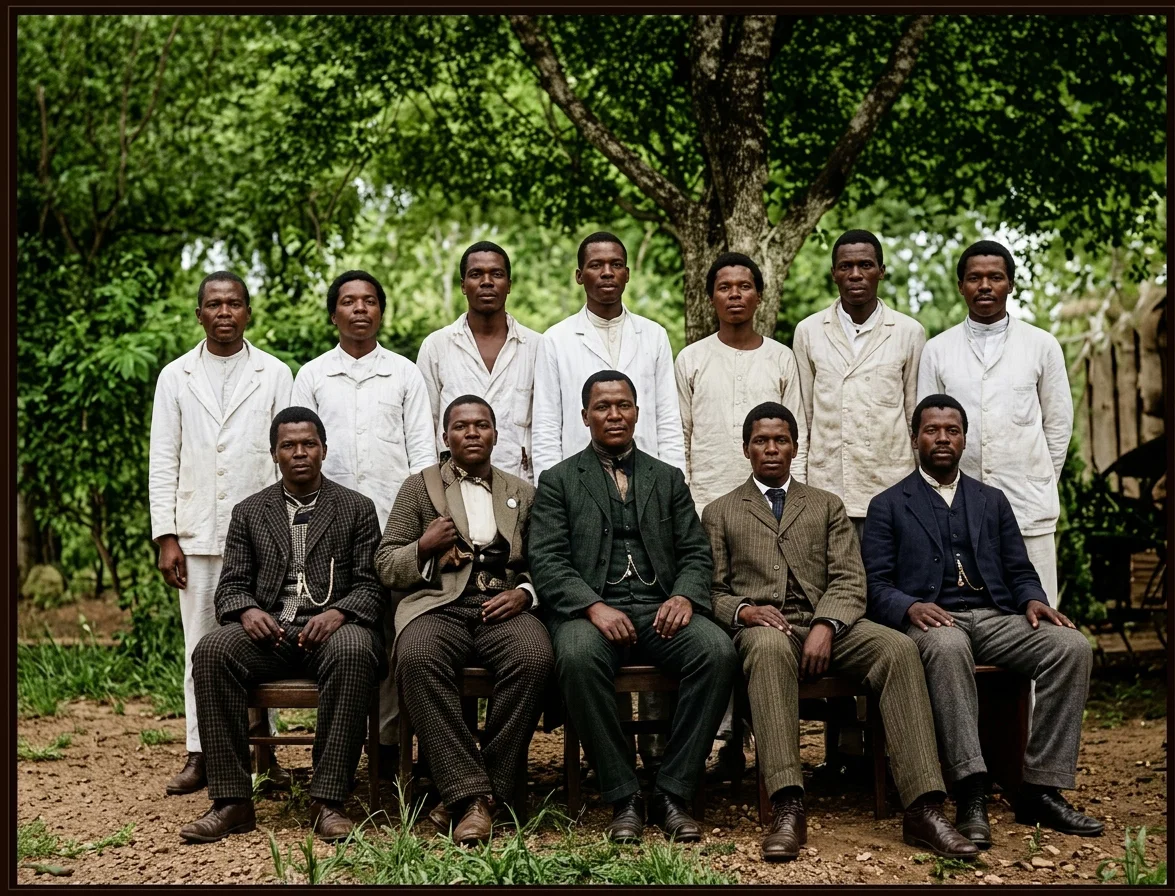
Our Bulawayo (B. C. A.) Mission

M. C. STURDEVANT
We will send you a brief report of our mission at Bulawayo, for three months, ending Dec. 31, 1904. But first we will say that we are feeling quite worn, having been on the mission farm for three years without a change or rest. At the invitation of the South African Union Conference Council, we have come here for a six-months' rest, and to attend the conference and camp-meeting to be held here. While we feel truly worn, our health otherwise is good. We do feel grateful to God for having given us such health and strength since coming here. I think I can truly say that none who have come to this station before us have had such strength and health as we have had. My wife has not had what could really be called a sick day. We praise God for this, and would walk humbly before him for all his love shown to us.
The labors of Sister Hyatt have also been a great help to us the past months. She has done good work. Also Brother Albert White has been with us three months, helping in the school and on the farm, and his labors were greatly appreciated by us, and enabled us to get in all the crops before leaving for our rest.
We have under cultivation this year at least one hundred and forty acres, one hundred being in mealies, sixteen in peanuts, four in Kaffir-bean, seven in myauti, ten in sweet potatoes, one in broom-corn, for trial, the rest in garden stuff, as beans, tomatoes, pumpkins, Irish potatoes, etc. Because of the drought this year, we have had to plant and replant the third time. This is the driest season we have had in the three since our coming here. But we plant in hope, expecting to reap. We were feeling quite heavy-hearted over the drought when we left the mission. But as we came along, traveling some thirteen hundred miles, we saw very little besides dead grass and barrenness. Stock is very poor, and many animals lay dead for want of food. It was dreadful to behold. I saw no farms that would compare with ours at the mission. For this we do thank God, and know as never before that he has protective care over us. We praise him.
Our stock has done only fairly well. Many of our goats and kids died with a disease called the “heart water,” owing largely to the lateness of green grass, I think. Our cattle have done better, suffering only from leanness.
We have done very little in the store, the natives bringing in only enough grain to keep the mission family in food, and there have been very few cash sales. So the finances of the mission have had a hard struggle. We have had to receive some help from the conference.
ELDER STURDEVANT'S HOME
Our school work has gone forward nicely. The children have taken hold in earnest, therefore they have improved fast. Because of the farm work, we put the school work almost entirely in the hands of Sister Hyatt and Brother White, teaching but two or three classes myself. Sister Hyatt has had the real oversight. Brother White, with the help of my wife and others, has had the care of the night-school.
For December 1, eleven of our young men began their school work out in the kraals—we call them out-stations. They could do very little the first month, owing to the fact that the children were wanted at home to dig, the rain not coming till this month. In other years most of the planting has been finished by December. Yet we hope for a good work to be done in our out-stations before the term closes. The boys certainly go out much better prepared than ever before.
The Sabbath-school work is onward. The attendance is good, and of a steady nature. Our meetings also seem to have about the same attendance, not crowds, but steady.
Our Sabbath afternoon kraal work in Bible readings has kept up its interest well, closing only because of the sending of our teachers to the out-stations, four of these still being kept up. While they were in progress, from two hundred to three hundred heard the Word every Sabbath who otherwise would not have heard it.
This gives a brief idea of what we are doing. And while we have not accomplished nearly what we would like to, we have done the best we could, we think. Our courage is good, and our only desire is the upbuilding of this people. We believe with all our hearts that the Saviour is soon coming, and we are glad for a part in helping swell the glad tidings. Dear ones at home, remember us in your prayers. We need your help in this way. The cheering reports from the home field always give us fresh courage. We are praying for the work at Washington.
NATIVE TEACHERS, MATABELELAND.
Cambridge, Cape Colony.

The Knowledge of Missions

“NOTHING is more needed now than a knowledge of missions. If we know, we shall feel and give and pray and go.”
Continue reading: GUY DAIL