The Youth’s Instructor, Vol. 66, No. 12.

Sole Survivor of Perry's 1854 Japan Expedition
Earlier text: A Good Reason

Service, Profit, and the Millionaire's Confession of Faith

If You Want to Know How Much You Ought to Get, Find Out How Much You Have to Give

A GREAT word has been added to the vocabulary of business in recent years.
It is being overworked, as all new words are. We shall doubtless become very tired of it, as we have become tired of “psychology” and “efficiency” and other overworked words.
But the idea the word represents has come to stay.
The word itself is service.
I was in the office of the general manager of a great corporation recently. The business he manages has departments in almost every large city. It is a business that has unquestionably been of enormous benefit to the people of America, and has — incidentally — made millions for its founder.
The general manager read me a letter from the “old man.” I obtained permission to copy four paragraphs.
Here they are. What do you think of them as the confession of faith of a millionaire?
“I can now honestly say that I have never worked at the business for profit as the main motive.
“My profits have been incidental, though absolutely necessary.
“I have always conducted my business solely for the purpose of what I considered ‘public service.’
“Had I conducted my business for the purpose of making profit, I might have made as much money as I have made, although I doubt it. I am sure that I would not have made any more. I am pretty sure that I would not have made a quarter as much.”
I know a man who has become rich by building and operating three great hotels.
I slept in one of his hotels the other night, and in the morning I dropped into my pocket a copy of his book of instructions to his employees. Here are some quotations from that book:
“A hotel has just one thing to sell.
“That one thing is service.
“The hotel that sells poor service is a poor hotel.
“The hotel that sells good service is a good hotel.
“It is the object of this hotel to sell its guests the very best service in the world.
“The service of a hotel is not a thing supplied by any single individual. It is not special attention to any one guest.
“Hotel service means the limit of courteous, efficient attention from each particular employee to each particular guest.
“This is the kind of service the guest pays for when he pays his bill — whether it is for $2 or $20 a day. It is the kind of service he is entitled to, and he need not and should not pay any more.”
It is interesting to note how, in the course of time, the practical men of the world finally come around to the point of view of the world’s dreamers.
Napoleon, the practical man, refused to see the dreamer Fulton, with his absurd claim that he could make a boat run against tide and wind.
But today all practical men pay tacit tribute to that dreamer.
For two thousand years practical men have looked with a superior sort of tolerance on the teachings of a certain Carpenter of Nazareth. What he said was very good, of course, but utterly impractical.
Yet the service idea, which is the big new idea in modern business, was first discovered and announced by that Carpenter: “Whosoever will be great among you, let him be your minister; and whosoever will be chief among you, let him be your servant.”
It is the one solid, practical rule for building a business or a business career.
If you want to know how far you will go in business, take account of stock: find out how much service you are equipped to perform.
If you want to figure what you are likely to get, first figure what you have to give.—Bruce Barton, in Every Week.

Spring is Coming!

The weather's fickle this time of year, But spring is coming, so never fear. The pussy willows know their time, The alders and maples fall in line, While the tender grass and arbutus low Are even now beginning to grow. Yes, spring is coming, will soon be here, So pass along this word of cheer. For spring's the pleasantest part of the year. True, summer and autumn both are fine And winter's a very jolly time; But as I look at such things today I'm glad that spring is coming this way.
C. P. Bollman.

A Good Suggestion

It has been suggested that the Bible pictures used on the first page of the INSTRUCTOR would make a desirable scrap book for Sabbath school and church school teachers. With this idea in mind the pictures are made large and of uniform size. Such a book can but prove an acceptable source of illustration to the Bible teacher.

The Sorrows of Genius

HOMER was a beggar. Spenser died in want.
Cervantes died in hunger.
Terence, the dramatist, was a slave.
Dryden lived in poverty and distress.
Sir Walter Raleigh was executed.
Butler lived a life of penury, and died poor.
Bacon lived a life of meanness and distress.
Plautus, the Roman comic poet, turned a mill.
Paul Borghese had fourteen trades, and yet starved with all.
Tasso, the Italian poet, was often distressed for five shillings.
Steele, the humorist, lived a life of perfect warfare with bailiffs.
Otway, the English dramatist, died prematurely, and through hunger.
Chatterton, the child of genius and misfortune, destroyed himself at eighteen.
Bentivoglio was refused admittance into a hospital he had himself erected.
Goldsmith’s “Vicar of Wakefield” was sold for a trifle to save him from the grip of the law.
Milton sold his copyright of “Paradise Lost” for $75, at three payments, and finished his life in obscurity.—Unidentified.
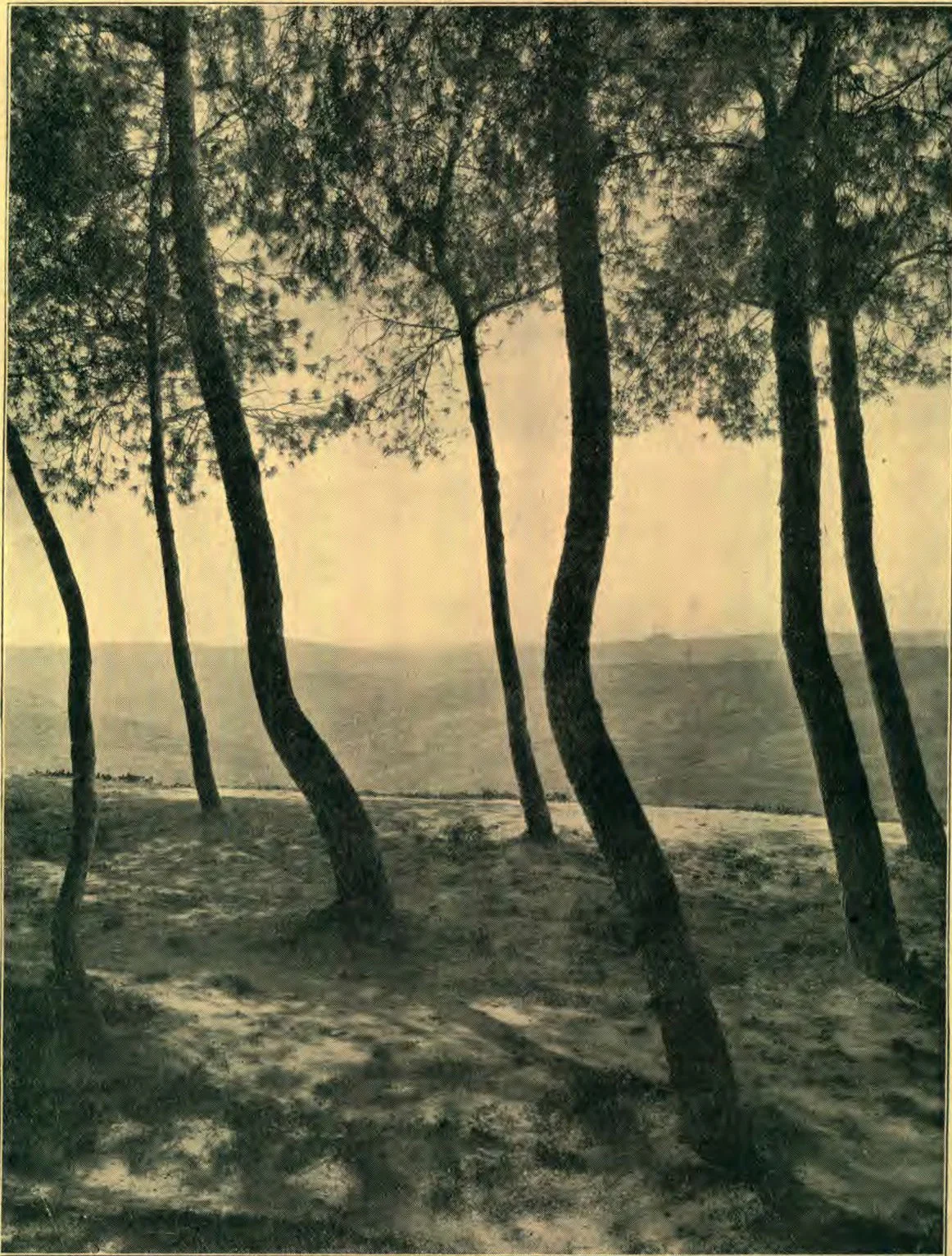
Photo by Press Illustrating Service, N. Y.
HILLS OF JUDEA FROM THE MOUNT OF OLIVES
“From the top of the rocks
I see him, and from the
hills I behold him.”
Numbers 23:9.
Photo by Press Illustrating Service, N. Y. HILLS OF JUDEA FROM THE MOUNT OF OLIVES “From the top of the rocks I see him, and from the hills I behold him.” Numbers 23:9.

You have reached the end of this edition.

The Youth’s Instructor · Mar 19, 1918