The Youth’s Instructor, Vol. 67, No. 12.

My Ideal Roommate
Earlier text: Some Out-of-door Games

Victory and Service

THIS is the first day of the new year, and it makes me feel very solemn when I think of the rapidity with which time is going. I so much want to make the most of my life and my opportunities for Christ. I realize that I have but a short time in which to work, and I have reached the place in my experience where I am anxious to fall in line and work—hard.
I have been a member of the church for some time, but I am far from satisfied with my past life. I have been in school until this year, and now that I am through, I wish to take an active part in some line of the work, which, I think, is necessary to a successful Christian life. I long to become acquainted and associated with people whose interest is wholly centered upon the work in which they are engaged for Christ.
I sometimes feel that I should like to go straight to Africa or China and get down to good hard work. I believe I should be happy—it seems as if I could have a much better experience. Could I but hear from his lips just what he wants me to do, that I might fulfil his purpose in me!
Perhaps you would be willing to offer me some suggestions that will help to keep one's mind upon the things of greatest importance, that will make one's Christian experience a real one—that I may be a Christian in heart as well as in name. Do you not think reading the Testimonies a good plan? And what is a systematic plan of Bible study? We have barely time to get ready if we do our very best all the time. I want to prepare my heart for the indwelling of the Spirit of Christ that my life may draw my friends to Christ and not away from him. S. D.
You desire a deeper Christian experience, you want to be a soul-winner, and you long for divine guidance. The Spirit of God has put these desires into your heart, and he will satisfy them. Jesus Christ himself wishes to take full possession of your life. He is your Saviour, Sanctifier, and Guide. “Behold, I stand at the door, and knock: if any man hear my voice, and open the door, I will come in to him, and will sup with him, and he with me.” Rev. 3:20.
We accept him, confess our sins, receive pardon, and enjoy his blessings; but how slow we are to allow him to take full possession! Paul had this experience. “Nevertheless I live; yet not I, but Christ liveth in me: and the life which I now live in the flesh I live by the faith of the Son of God, who loved me, and gave himself for me.” Gal. 2:20. Our hope of eternal salvation is to have Christ dwelling within. Col. 1:27.
This life of peace and victory comes through surrender. “Christ changes the heart. He abides in your heart by faith. You are to maintain this connection with Christ by faith and the continual surrender of your will to him; and so long as you do this, he will work in you to will and to do according to his good pleasure.”—“Steps to Christ, khaki edition, p. 62.”
The victorious life is a soul-winning life. “Now thanks be unto God who always leads us forth to triumph with the Anointed One, and who diffuses by us the fragrance of the knowledge of him in every place.” 2 Cor. 2:14, literal translation.
When Christ abides within, he will guide. “In all thy ways acknowledge him, and he shall direct thy paths.” Prov. 3:6. The first great requisite of guidance is surrender. “Those who decide to do nothing in any line that will displease God, will know, after presenting their case before him, just what course to pursue.”—“The Desire of Ages, p. 668.” Yes, when we are willing and anxious to do God's will, we shall know. We should, of course, make every possible effort to gather information that bears on the question. Then we should pray and wait patiently for the Lord, with no selfish motives to cloud our spiritual vision. We may expect that God's providences will be in harmony with decisions arrived at in this way. As one has said: “God's impressions within and his Word without are always corroborated by his providence around, and we should quietly wait until these three focus into one point.”
To have all this, you could do nothing better than what you suggest,—read the “Testimonies for the Church,” and enter upon a plan of systematic Bible study. Saturate your mind with the messages of God. Listen to his voice in his Word, and he will give you blessings beyond your expectations.
We are asking as many of our young people as can do so to read the Testimonies through in two years. This means about eight pages a day.
If you have read the Bible through, perhaps you would like to take up topical studies. The “Senior Standard of Attainment Manual” will help you. If you wish to study the life of Christ, use “New Testament History” as a guide. M. E. K.

Live for Something: A Poem on Purpose

“Live for something, have a purpose, And that purpose keep in view; Drifting like a helpless vessel, Thou canst ne’er to life be true; Half the wrecks that strew life’s ocean, If some star had been their guide, Might have long been riding safely,— But they drifted with the tide.”

Chopping Wood for a Widow as Christian Help Work

Is work that is done for members of the church considered Christian help work? Some of our boys have chopped wood for a widow in the church. Should that be reported as Christian help work? E. W.
That wood chopping was doubtless prompted by the Christian spirit of helpfulness, and was missionary work. Why should it not be reported? We sometimes get the idea that missionary work is only an effort to turn some one from sin; but missionary work is a service of love performed for those who are in need, be that need spiritual or physical. We are admonished to do good to all men, especially to those who are of the household of faith. Every true act of missionary service is prompted by love. We report the work we do for the encouragement of other young people, and that we may all know whether as Missionary Volunteers we are really following Christ in service.
Of course we should not think of reporting service rendered in our own family. That is our regular duty to ourselves, as it were. Neither would one report meals provided to friends invited to dine. But food given to those who are destitute should be reported. M. E. K.

Young People's Lesson

I — Our Hope of Salvation

(April 5)
GOLDEN TEXT: “Wherefore he is able also to save them to the uttermost that come unto God by him, seeing he ever liveth to make intercession for them.” Heb. 7: 25.
STUDY HELPS: “Steps to Christ,” chapter “The Sinner’s Need of Christ.”

Questions

1. How many kinds of righteousness are spoken of in the Bible? Rom. 10: 3.
2. To what is our own righteousness compared? Isa. 64: 6.
3. What will be the result of any effort on our part to cleanse the “filthy rags” of our own righteousness? Jer. 2: 22. Note 1.
4. How can we secure the beautiful garments of God’s righteousness? Jer. 23: 6. Note 2.
5. What prompted God to bring his righteousness to sinful man? John 3: 16; Rom. 5: 8.
6. What spirit did Jesus show in this provision for our salvation from sin? 1 John 10: 14, 15, 17, 18.
7. What had sin done for man? Isa. 59: 2.
8. What did the sacrifice on Calvary provide for the sinner? 1 John 4: 10. Note 3.
9. How has the sinner been ransomed, or released from sin? What was the ransom price paid? Matt. 20: 28. Note 4.
10. What becomes of the sinner’s sins when he accepts the ransom? Isa. 1: 18.
11. When the sinner accepts Christ, thus availing himself of the ransom provided for him, what change takes place in his attitude toward God? Rom. 5: 10. Note 5.
12. For what purpose was Christ raised from the dead? Rom. 4: 25. Note 6.
13. What besides the death and resurrection of Christ is necessary to save to the uttermost, to save us “evermore”? Rom. 8: 34; Heb. 7: 25, margin. Note 7.
14. What element in God’s character does this “redemption that is in Christ Jesus” vindicate? Rom. 3: 24-26. Note 8.

Notes

1. “Niter” is a name now meaning only potassium nitrate (KNO₃), but formerly applied also to several saline and sodium compounds, including washing soda, a well-known substance, which, added to water, greatly increases its cleansing power. The lesson is that even if it were possible to cleanse our garments of character, they would still be only rags. If our right-doings are but filthy rags, what must our wrong-doings—our unrighteousnesses—be like in God’s sight?
Some one has aptly said that we are living in God’s great washing and ironing day, for his glorious church is to be without “spot, or wrinkle.” Eph. 5: 27.
2. There is but one way to receive this change of raiment and that is by receiving Christ who is “our Righteousness.” When Joshua the high priest had his filthy garments removed (Zech. 3: 1-5), it was because the Lord rebuked Satan, and caused Joshua’s iniquity to pass from him. The “fair miter” is called in Eph. 6: 17 the helmet of salvation.
Christ’s righteousness on us as a robe will be Christ’s righteousness—his right-doing—in us as a life. This robe is an inner living robe of which the outer garment of light is but a symbol. It is the dress of the soul, as we sing:
“... His glorious righteousness, In which all-perfect heavenly dress My soul shall ever shine.”
Peter calls it that adorning of “the hidden man of the heart ... even the ornament of a meek and quiet spirit, which is in the sight of God of great price.” 1 Peter 3: 4.
It is this same white raiment that is referred to in 1 Samuel 16: 7: “The Lord seeth not as man seeth; for man looketh on the outward appearance, but the Lord looketh on the heart.”
“The Saviour said, ‘Except a man be born from above,’ unless he shall receive a new heart, new desires, purposes, and motives, leading to a new life, ‘he cannot see the kingdom of God.’”—Steps to Christ, pp. 20, 21.
3. Propitiation means atonement or an atoning sacrifice; that which conciliates. Conciliate means to draw or bring together; to unite.
Sin separates us from God; Jesus by his death spans the gulf made by sin and once more unites man to God. God so loved us, so grieved over our separation from him, that he sent his Son to bring us back to him, to be the at-one-ment, the “propitiation” for our sins.
“The mystic ladder of his [Jacob’s] dream represented Jesus, the only medium of communication between God and man.
“This is the same figure to which Christ referred in his conversation with Nathaniel, when he said, ‘Ye shall see heaven open, and the angels of God ascending and descending upon the Son of man.’ In the apostasy, man alienated himself from God; earth was cut off from heaven. Across the gulf that lay between, there could be no communion. But through Christ, earth is again linked with heaven. With his own merits, Christ has bridged the gulf which sin has made, so that the ministering angels can hold communion with man. Christ connects fallen man, in his weakness and helplessness, with the Source of infinite power.”—Steps to Christ, p. 23.
4. A ransom, according to Webster, is “payment for release from captivity; the money or price paid or demanded for redemption of a prisoner, or of property captured by an enemy.”
5. “Reconcile” has in it the same meaning as “conciliate” or “propitiate”—to unite; to bring together; to bring into favor.
6. Justification of sins that are past is the substitution of the righteous life of Christ for the sinful life of man. Justification after the sinner has accepted Christ is the righteous life of Christ in the Christian day by day, for it is impossible at any time for a fallen human being to do right through human effort. So Christ was raised from the dead that he might live in us and be our justification.
7. Christ’s death was a single act made necessary to establish the fact that God is just, and to release the sinner from Satan’s prison house. His life is a continuous act of intercession for us. Intercession means “interposition between parties at variance, with a view to reconciliation.” Jesus lives for the sole purpose, “ever liveth,” not only that we may be brought back, or reconciled, to God, but that we may be kept by his abiding presence “evermore.”
8. Webster defines the word “just” as “giving to every man his due; ... fair; impartial.” Before all the universe of God, Lucifer had said that God was not just, that he was partial to Jesus. Lucifer declared that God was unfair to him because he refused to give him, the highest angel in heaven, the honor that he thought was his due. By giving Jesus to die, God proved to the whole universe that he was just, impartial, fair. Jesus chose to take upon himself the sins of the world. But “the wages of sin is death.” Will God be partial, will he shield his own Son from the cruel, the undeserved death? Ah, no! Jesus was brought under death because having taken sinful nature, having identified himself with sinners, he with all sinners must receive the wages of sin, death, though he himself did no sin.
Thus he became “the justifier of him which believeth in Jesus.” “He hath made him to be sin for us, who knew no sin; that we might be made the righteousness of God in him.” 2 Cor. 5: 21.

I — Death of Eli; God's Care for the Ark

(April 5)
LESSON SCRIPTURE: 1 Sam. 4: 1-18; 5; 6; 7: 1-13.
MEMORY VERSE: “The Lord is a great God, and a great King above all gods.” Ps. 95: 3.
STUDY HELPS: “Patriarchs and Prophets,” pp. 583-593; “Bible Lessons,” McKibbin, Book Two, pp. 46-50.
“Fitting, fitting ever near thee, Sitting, sitting by thy side, Like your shadow all unweary Angel beings guard and guide.”

Questions

1. During the time when Samuel was the prophet of the Lord, what did the Israelites undertake without seeking counsel from God? 1 Sam. 4: 1. Note 1.
2. What was the result of going out to battle in this way? To what did the Israelites lay their defeat? What did they think the ark might have power to do? Verses 2, 3. Note 2.
3. Who came with the ark when it was brought? How was the ark received by the people? What effect did this have upon the Philistines? Verses 4-8. Note 3.
4. What appeal was made to the army of the Philistines? What were the results of the battle? Verses 9-11. Note 4.
5. How was the news of the battle taken to Eli? What effect did it have upon him? Verses 12-18.
6. Where were the Philistines permitted to take the ark? What befell Dagon the first night? What occurred the second night? 1 Sam. 5: 1-5.
7. What further experiences did the Philistines have in caring for the ark of God? Verses 6-12. Note 5.
8. After seven months what did the Philistines do? What plan did they have for getting rid of the ark? What did they seek to find out? 1 Sam. 6: 1, 2, 7-9.
9. What evidence was given that God was caring for the ark? Verses 10-12.
10. How was the ark received by the Israelites at Beth-shemesh? How did the Lord impress upon them the sacredness of the ark? Verses 13, 14, 19.
11. Where was the ark next taken? Verses 20, 21; 1 Sam. 7: 1, 2.
12. What did Samuel persuade the people to do? Verses 3, 4.
13. While the people were gathered to worship the Lord, what did the Philistines do? Verses 5-7.
14. What preparations did Israel make? Verses 8, 9.
15. What was the result of the battle? Verses 10-13.

Things to Think About

What caused the defeat of the Israelites in the first battle with the Philistines?
What gave them victory in the second battle?
What causes personal defeat in the battle with sin?
What brings victory into the life?

Notes

1. “This expedition was undertaken by the Israelites without counsel from God, without the concurrence of high priest or prophet.”—“Patriarchs and Prophets,” p. 583.
2. In the wilderness when the ark set forward, Moses prayed, “Rise up, Lord, and let thine enemies be scattered; and let them that hate thee flee before thee.” But Moses and the people well knew that it was not the ark containing the tables of the law that gave them success, but that it was God's appearing for them that defeated their enemies. The ark was but the symbol, the sign, the token of his presence.
3. “How could they expect it should bring a blessing when Hophni and Phineas were the men that carried it? It would have given too much countenance to their villainy if the ark had done any kindness to Israel while it was in the hands of those graceless priests.”—Matthew Henry.
The Philistines would have had reason to be afraid had the Israelites been true to God, but they did not know that Israel had forsaken the God of their fathers.
4. “The most terrifying calamity that could occur had befallen Israel. The ark of God had been captured, and was in the possession of the enemy. The glory had indeed departed from Israel when the symbol of the abiding presence and power of Jehovah was removed from the midst of them. With this sacred chest were associated the most wonderful revelations of God's truth and power. . . . But when they looked upon the ark, and did not associate it with God, nor honor his revealed will by obedience to his law, it could avail them little more than a common box. They looked to the ark as the idolatrous nations looked to their gods, as if it possessed in itself the elements of power and salvation.”—“Patriarchs and Prophets,” p. 584.
5. Emerods: “As to the nature of the disease not much can be inferred from 1 Samuel 5: 9. The Revised Version reads, ‘Tumors brake out upon them.’ That the disease was externally loathsome is evident from Deuteronomy 28: 27, where it is classed with the boil of Egypt, the scurvy, and the itch.”—Hastings' Bible Dictionary.

Early Predictions

The scientific thinking of the thirteenth and fourteenth centuries was not altogether contemptible. The scientific knowledge of the universities was made practical in many ways, and led to important discoveries and anticipations of what is most novel even in our own day.
It is well known now that Roger Bacon felt quite sure that man would sometime learn to control explosives and direct their energies into useful channels. He even ventured to say that “art can construct instruments of navigation, such that the largest vessels governed by a single man will traverse rivers and seas more rapidly than if they were filled with oarsmen. One may also make carriages which without aid of any animal will run with remarkable swiftness.” In these days of great steamships and automobiles, so modern sounding and startling are these statements that were we not able to trace them to their original sources we would think them to be the ideas of some late commentator. Bacon even went so far as to suggest that men would some day be able to fly.
EDMUND C. JAEGER.

Reputation Versus Character Before God

“REPUTATION is what men think we are. Character is what God sees we are.”

The Scold Is a Vulgarian

“THE scold is a vulgarian, be she at the washtub or upon the throne.”

When the Day is Done

WHEN the day is done and the reaping Has ended forevermore, Shall you wish you'd wrought less for the Master As you reckon your labors o'er? Shall you sigh for earth-pleasures denied you As you toiled for him early and late, Or rejoice in the “well done” recorded And the welcome you have at the gate?
When the day is done! Can you dream it? Forever our Jesus to see,— As one 'mong the chosen beloved To follow wherever he be? O let us at evening and morning Be zealous, courageous, and true, To work with a heart that is willing And anxious his bidding to do.
— Selected.

Missionary Volunteer Society

ALL up and down this land you'll find Societies of every kind: Christian associations, Worldly denominations, Y. M. C. A. and L. T. L., And many others I could tell. But the one that brings the greatest cheer Is the Missionary Volunteer.
It helps the missionary work, It teaches young folks not to shirk. There are things for you and me to do; There are interesting programs too. There is work for little children, Work for men and work for women. So let us work and help each year The Missionary Volunteer.
We have the best of Christian teachers, And oft we are addressed by preachers. Sometimes we hear from missionaries, And of the native where he tarries. There are the Reading Courses too, And we should read the Bible through. In all the meetings we should be A help to this society.
ERNEST J. FORCHER.

A Gift

THERE is a strange fascination attached to a parcel daintily wrapped and securely tied, reaching its rightful owner under the label so carefully addressed. Large or small, round or square, it is always welcome. And if perchance there appears on the outside the significant words: “Please do not open until—” O how tantalizing! And yet the very joy of anticipation increases until the glad moment of realization arrives.
Refusal to receive a gift of love, or carelessness and neglect in regard to it, is considered an unpardonable offense. Such conduct is almost beyond all suspicion of possibility. Instead, keenest disappointment is experienced should there be an oversight in remembrance, or a miscarriage in delivery. A soldier, referring to his experiences in army life as a “conscientious objector,” writes: “Packages containing food and delicacies, sent us from home at great expense of time, money, and sentiment, were viciously and wantonly destroyed, and their contents dumped into the garbage cans.” Punishment and abuse of a severe nature did not compare with the disappointment and grief experienced at being deprived of the gifts of love which were rightfully his.
To each member of the human family there has been sent a Gift of priceless value—an unfailing Source of rest, strength, peace, joy, companionship, counsel, healing balm for sorrow, and life everlasting. The gift is labeled “Whosoever,” which means you, and there are no restrictions as to its acceptance, only “now is the accepted time!” This priceless Gift has been delivered—Jesus, the gift from heaven. Have you accepted the Gift, and returned thanks to the Giver? Delay not to do so, lest you be found speechless at his soon appearing, without hope of escape, having neglected “so great salvation.”
GRACE D. MACE.

Sabbath School Lessons for Young People

FOR some time there has been a call for lessons for our young people. In response to this call the General Conference Sabbath School Department has provided a set of lessons which we feel assured our young people will greatly enjoy.
It has been remarked that these lessons are more difficult than the senior lessons; but this will only challenge our young people to earnest study.
We trust the Sabbath schools will quickly readjust their organization, so that these lessons will be used by all schools.

How George Learned to Drive Nails

“GEORGE, what do you mean to be when you are a man?” asked his uncle.
“I should like to be a carpenter,” replied George.
Some days later when the lad was visiting this same uncle, he was given a small piece of carpentry to perform. He set about the task with earnestness, not realizing that his uncle meant to give him his first lesson in his prospective life vocation.
George was using the old cut nail, which has now been almost displaced by the wire nail; and he took great pains to drive every nail in in a particular way, having somehow reasoned it out that this was the correct way to keep the board from splitting. But when his uncle inspected his work, he was informed that he was driving the nail exactly opposite to the correct way. He was then shown the proper way, and the reason for it given him.
This unexpected upsetting of his perfect confidence in his ability to drive a nail properly so impressed him that he never forgot the lesson, and found the incident to be of service to him in other relations of life.
F. D. C.

Faced the World with Nothing

To the ambitious boy, anxious to get ahead in the world and amount to something, Mr. Schwab’s life is an inspiration. He started out with nothing at all. He faced the world with empty hands. But within him were locked three glorious assets: A hunger for knowledge, the courage to study and strive as best he could, and the will to throw himself, heart and soul, into his work and to give his best to every task. He gave his all to the little job, and it led to a better; he gave his all to the better job, and it led to one even still better. Step by step he came up from the bottom, not through luck, not through favor. Charlie Schwab worked, and the world has given him a worker’s honor. “I have always felt,” Mr. Schwab said recently, “that the surest way to qualify for the job ahead is to work a little harder than any one else on the job one is holding down. To my mind, the best investment a young man starting out in business can possibly make is to give all his time, all his energy, to his work—just plain hard work.”—Boys’ Life.
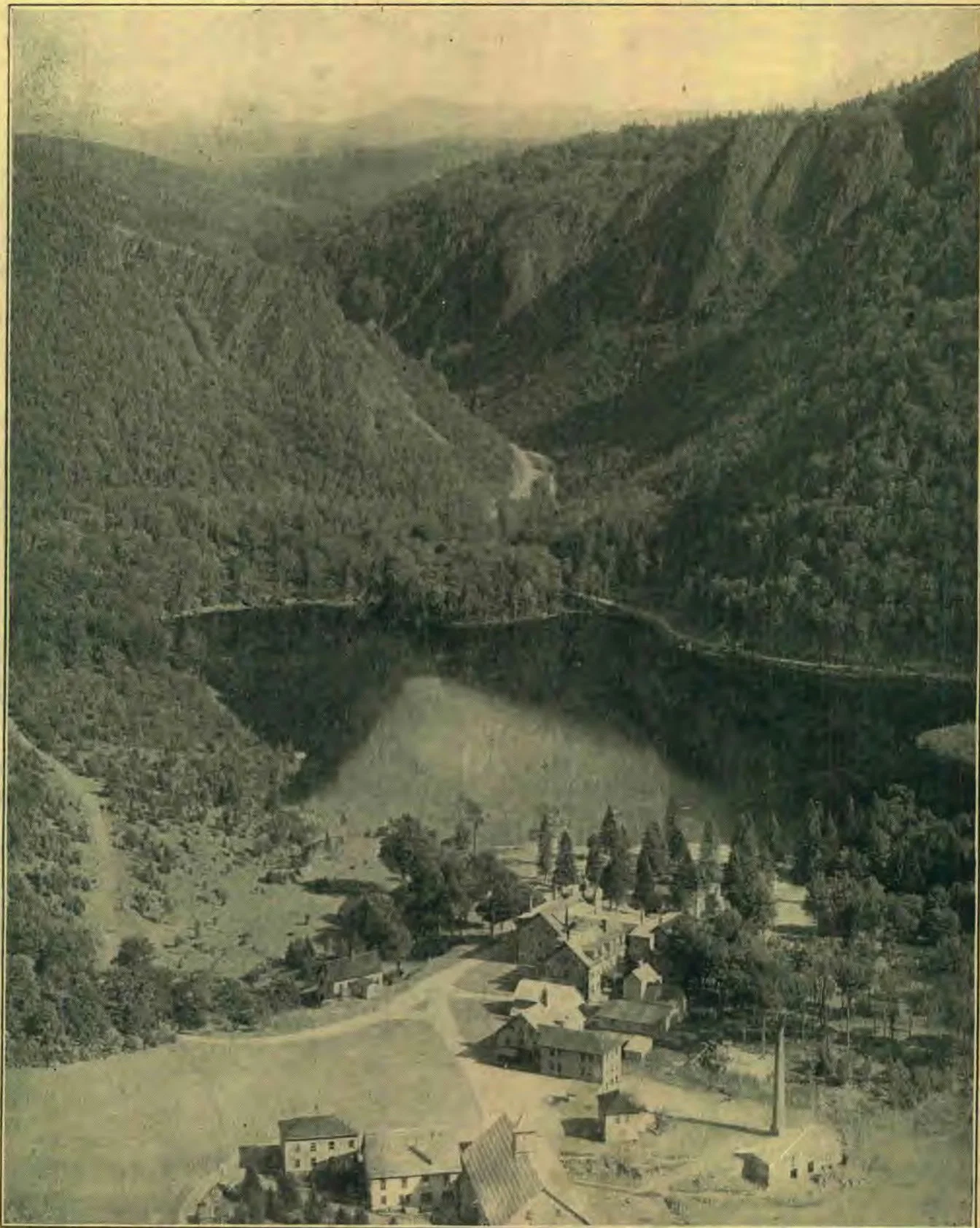
A SCENE IN THE WHITE MOUNTAINS OF NEW HAMPSHIRE

You have reached the end of this edition.

The Youth’s Instructor · Mar 25, 1919