Calendar Shortage, Soldiers' Knitting, and Wartime Finances
Page 2
The Youth’s Instructor
Feb 26, 1918
Review and Herald Publishing Assn. · Takoma Park Station, Washington, D. C. · Feb 26, 1918
Calendar Shortage, Soldiers' Knitting, and Wartime Finances
People are finding it difficult to obtain calendars. The high cost of white paper is said to be the chief reason for this shortage.
For a two-cent stamp the “Christian Herald” is giving to all who request one, a knitting book filled with instruction for knitting the garments needed by soldiers.
Our American soldiers in the various cantonments are being warmed by $1,500,000 worth of sweaters, socks, wool helmets, gloves, and wristlets, furnished through the American Red Cross.
Uncle Sam had more than five billions of money in circulation in the beginning of the year 1918. This gives every man, woman, and child in the country $48.76, an increase of twenty-five per cent in the last year.
The practice of blood transfusion in the cases of badly wounded men in the army is growing in importance. Out of thirty-five wounded men who could not have survived otherwise, twenty-two were saved by this process.
A city of 40,000 inhabitants without a public school, a church, a woman, a child, a home, is the naval training station at Newport, Rhode Island. All our great cantonments and naval training stations are such cities.
The whole world will be reduced to the verge of starvation if the European war continues for two more years, is the opinion of European food experts, as expressed by Dr. Maurice Francis Egan, United States minister to Denmark and dean of the American diplomatic corps.
Victory bread is the name given to the bread the Government now requires all bakers to produce. Bakers are not permitted to bake or sell all-wheat bread. After February 24 all bread must contain at least twenty per cent of other cereals. Housewives are urged by the administration to bake only victory bread.
In Greece day is to begin at midnight, and the hours will be numbered from one to twenty-four. This has been done in order that the transportation schedules may correspond with those of Italian and other continental systems, as the twenty-four-hour day is to be used by the railroads, postal system, telegraphs, the army and navy, and steamship companies.
One morning, just after America declared war against Germany, an alert, aggressive, wealthy Southerner entered the office of the Secretary of the Interior and announced that he wanted a chance to do his bit for his country. “I want a man’s job, not a place in the spotlight,” he explained. “Just something somebody else would shy at.” Secretary Lane considered the proposition for a moment. “Why not find pyrite ore?” he suggested. And then he explained that war had almost shut America off from the Spanish mines from which this country had obtained the ore for sulphuric acid. He added that pyrite was to be found in the Southern hills near his visitor’s home. “I never heard of the stuff,” commented the Southerner, “but if it’s there as you say, and we need it for the war, I’ll get it.” He did. The five mines he discovered, according to Secretary Lane’s annual report, are now yielding four hundred tons a day, and a thousand tons daily are promised.
“Japan is now the guardian of the Pacific. That is one of the interesting results of the recently concluded ‘gentlemen’s agreement’ between that country and the United States. The Japanese fleet now patrols nearly the entire Pacific Ocean, excepting the comparatively small segment lying between Hawaii and our coast, keeping it free from German raiders and guarding the general welfare of commerce on the high seas. This enables the United States to withdraw its warships from these waters, as well as from the Philippines, for use on the Atlantic.”
The great bell of Cologne cathedral, known as Maria Gloriosa, rang out its farewell peals on New Year’s Eve. Shortly after the last sounds died away workmen were busy with its destruction. The bell was cast from French guns captured in 1870, and weighed fifty-six tons. The material will be used in making war munitions.
“Perilous Times”
By Mrs. Burton Castle
WE are surely living in perilous times, which will try men's hearts. How necessary it is that we should seek God as never before. We do not prevail in prayer because we do not linger at the throne of grace as unceasingly as we should.
I am reminded of the experience of Elijah when Ahab was king. The people were passing through trying times. A famine was abroad in the land, as the windows of heaven had been shut up for three years and the land had received no rain.
At this time when the people were very wicked, their hearts darkened by sin and idolatry, they were seeking the life of the prophet of God. They accused him of being the cause of the great distress all about them. In this time when many loved pleasure and forgot God, the king went to eat and drink, but Elijah sought a place to seek God. He agonized with God in prayer, and his faith was rewarded. A small cloud was seen, which brought relief to the people and saved them from perishing.
Just so now in this time of great spiritual darkness when famine, sin, and disaster are all about, we should seek God as did Elijah. As calamities become more frequent and suffering increases, the world will seek to take the lives of God's people and accuse them of being the cause of their distresses. Then if God's people seek him as they should, they will be rewarded as was Elijah, by the small cloud like a man's hand which will bring relief—yes, bring the Saviour, the Prince of Peace, to redeem them and save them from perishing in this wicked world.
Let us be found long and often on our knees, pleading with our Father for help and strength, and praising him for his great love to the children of men.
MRS. BURTON CASTLE.
Locating the Pemba Mission Station, Barotseland
By W. H. Anderson
W. H. ANDERSON
ABOUT the time of the death of Queen Victoria, the Barotse people in South Africa were becoming restive under English rule, so the government thought that it would be a good thing to invite the king of that tribe, Lewanika, to go to England and see the coronation of King Edward VII. I met King Lewanika in Bulawayo on his return from that visit, and had a talk with him. He had seen the English army drilling at Aldershot, and been taken to see a wonderful naval display at Portsmouth. These things were shown the heathen king to impress his mind with the futility of raising a revolt against English rule, but he told me that the thing about the English people which impressed him more than anything else was their intelligence and what the gospel had done for them. Sometimes we forget the blessings which we enjoy as a result of the gospel, material blessings as well as spiritual blessings. But this was the thing that impressed that heathen king, and he invited me to come into his territory and locate a mission station.
On the Way to Barotseland
It was early in July, 1903, when we started out to explore the country. There was no railroad in the Zambesi River territory in those days, and I walked a little over nine hundred miles in locating our Pemba Mission station, in Barotseland. In making up my food supply for the journey, I took a quantity of toasted bread, which lasts indefinitely in that dry climate. I also had some sugar, a little salt, some fruit, and my blankets, with a few other necessities. A native was engaged to carry my load. Most of these natives are honest, but I happened to get hold of one who was not. He stole my fruit, sugar, and salt, so all I had left was toasted bread. I had to eat so much of it that I have never cared greatly for it since.
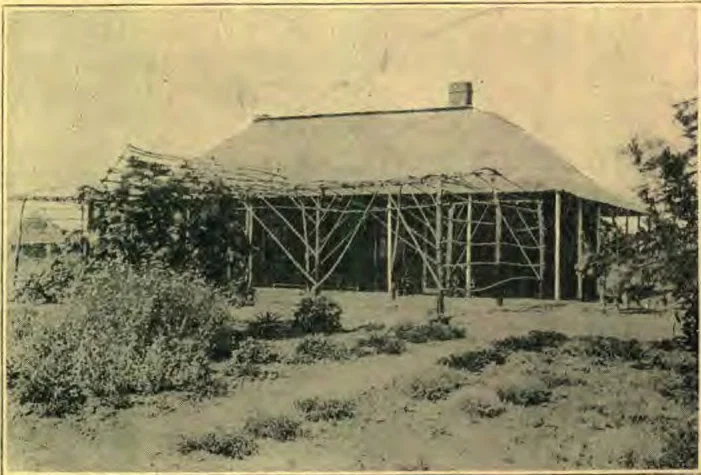
MISSIONARY'S HOME, BAROTSELAND
This journey carried me away beyond the utmost bounds of civilization. During four months I had no word from home. One time during this journey I met a white man who was buying cattle from the natives . In answer to my inquiries, he told me I would find water about three miles ahead, so I carried none with me. Whether or not I took the wrong footpath, I never knew, but I did not find the water. Twelve o’clock came, and I had eaten no breakfast, and had nothing to drink. About three o’clock in the afternoon I found a miserable pool of water, with a green scum over the top, and I drank all I could in spite of the filth. Sometimes one can drink water of that kind without harmful results; but this drink, added to the physical exhaustion that preceded it, brought on a severe attack of dysentery, from which I nearly died. I called those native boys around me, and gave them a message to my wife and child at home. Then I said:
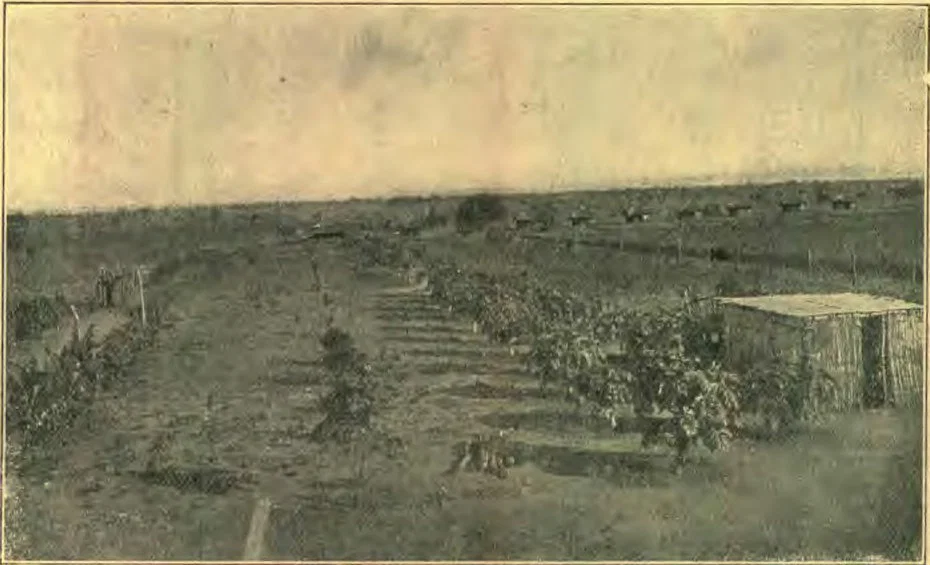
VIEW ON THE BAROTSELAND MISSION FARM, PEMBA
“Here’s another message I want you to take. Tell the people at home not to be discouraged because I have died on the way. I want you to bury me here by this big, brown tree, and my grave will show them the way to the mission station among these people.”
Well, that night those native Matabele boys came and stood around my bed, and sang, in the Matabele language, “Lonely? no, not lonely while Jesus standeth by.”
It is a wonderful experience to have the presence of Jesus under such circumstances. It seems as if he comes so close that one could put out one’s hand and touch him. I was sick three weeks. Then I grew stronger, and went about my work.
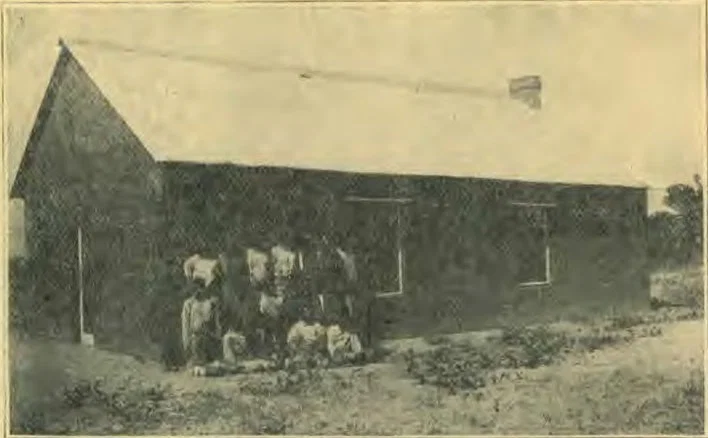
SCHOOLHOUSE, PEMBA MISSION
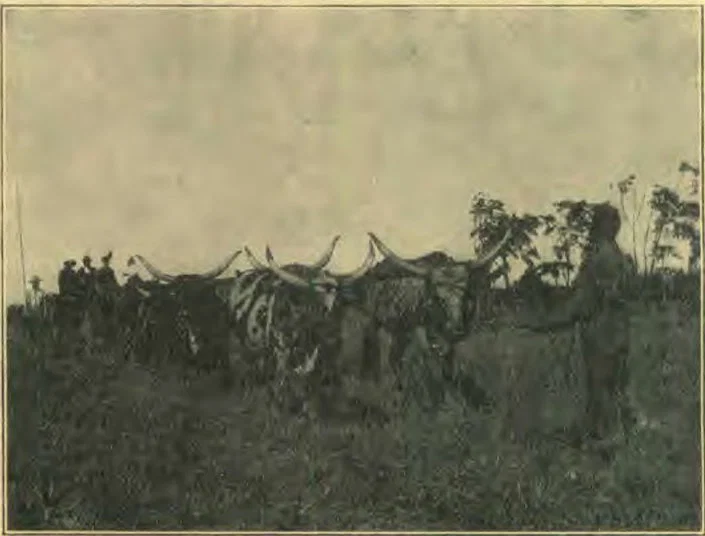
When the time came to open the mission station we traveled as far as we could on the railroad, and then prepared to make the rest of the distance—about two4hundred miles—by ox team. The oxen were unbroken, and it was an almost unbelievable task to get them into the yoke. Finally, after working for two or three days, we had twelve of them hitched to our wagon and were ready to start. The first day we went about five hundred yards. That was as far as we could go. The missionary learns many lessons in patience, all of which he greatly needs in dealing with the natives. The next day we started again, and after working all that week, we found that we were seven miles from our starting-point. Then we got stuck in the sand, and had to take the whole load, weighing three thousand pounds, out of the wagon and carry it on our backs for three miles. (If any of you are afraid of hard work, do not go to South Africa as missionaries.)
Finally we got the loads through the sand and into the wagon again and started on. On account of the extreme heat during the day we would harness the oxen about four o’clock in the morning, drive along until about eight, then rest until about four in the afternoon, and continue our journey until eight in the evening.
The country is infested with lions; so when we made our camp at night, we put the oxen around the wagon and built fires outside. You know the Bible says that our “adversary the devil, as a roaring lion, walketh about, seeking whom he may devour,” but God promises that he will be like “a wall of fire round about” his people. I never saw so much in these texts as I have since working in Africa.
We had many thrilling experiences with the lions on this journey, but finally the last mile was traveled, and we were ready to begin. All we had on the place was our wagon and its load.
Pupils Came Before There Was a Schoolhouse
I planned to spend during the first year four hours every day studying the language; but the next day after we started to put up a house, a young man about sixteen years of age came along and said, “Teacher, I have come to school.” I told him that we had no schoolhouse—all we had was that ox wagon on the open prairie.
“Oh, yes,” he said, “the word has gone out all over this country that you are a teacher and have come to teach us, and here I am. I have come to school.”
I talked with that young man and urged him to go home and stay awhile until I learned the language, but he insisted upon staying. “If you are a teacher,” he said, “you must teach me.” So I had to take him in. The next day five more came, and after I had taken in one, I had to take in the five. I did not know what to do. I could not talk to these boys in their language. I had no books. I did not know the language of my pupils, and they knew very little of mine. All I had was a small blackboard a box of chalk, three dozen slates, and one hundred pencils. It was a good thing these boys did not know what a school was, or they would have been disappointed.
OX TEAM ON WAY TO PEMBA MISSION
I would start work during the day, trying to get bricks made for the house, and at night try to learn a little story in their language. The next morning I would call the school, and tell the boys that little story, about five minutes long. Then I would draw some pictures on the blackboard. I did teach them arithmetic. Arithmetic was a strong feature in that school, for I could teach them arithmetic in English. I kept those boys busy and held onto them. Six weeks after arriving we had forty boys coming to school.
Finally we put up a little place built of poles and mud, sixteen feet wide by thirty feet long, and there we housed that school of over forty pupils. That one building was our schoolhouse, dining-room, kitchen, dormitory, and church. And we were thankful for that. I put up a table, and the boys even slept under it at night. The whole floor was about filled.
By and by we held our Sabbath meetings in the open air, under a big tree. I remember one Sabbath when we came home and found five new boys sitting outside of the house. I was afraid to ask them if they wanted to come to school. I passed them right by. I didn’t dare to ask them. I went into the house and had my dinner. Then I looked out, and they were still sitting there. About four o’clock in the afternoon I thought I might as well face it. I asked them what they wanted. They said they had come to school.
Sleeping on the Table
I didn’t know what to do with those boys. I called my native teacher, and said to him, “What in the world shall we do with these boys? The room is full. The rainy season is coming on.” The boy thought a minute, and then he said, “Well, teacher, there is nobody sleeping on the table.” So we took those boys in, and packed them away on the table, and they slept there for five long months before we got anything better for them.
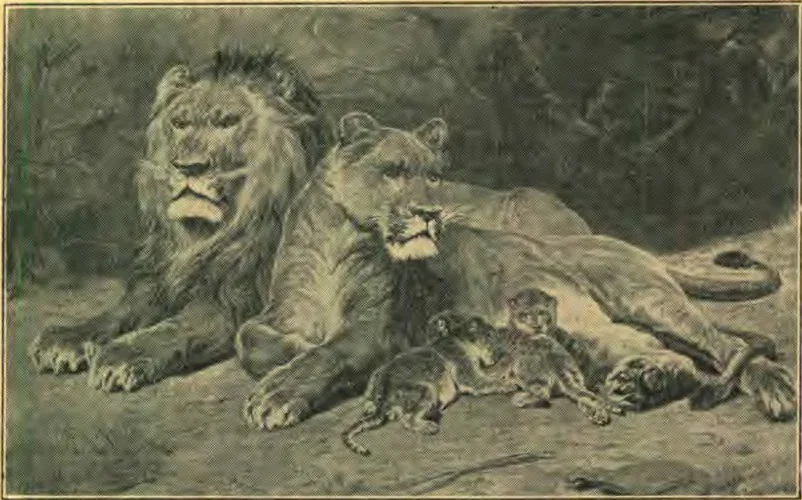
A LION FAMILY AT PEACE WITH THE WORLD
Dear young people, how would you like to go to school where you had such accommodations? Now we have reached the place where we have no room even on the table. Five hundred miles to the east of us there is not a school or any denomination working for these people. Three hundred miles to Lealin—not a single mission station of any denomination. The people walk one hundred, two hundred, even three hundred miles, sometimes, to come to school, and to be taught the gospel. What should you do if when they came to you under these conditions, and asked you to5teach them, you had to say, “Go home; we cannot help you. We cannot do anything for you”? That is what we are facing.
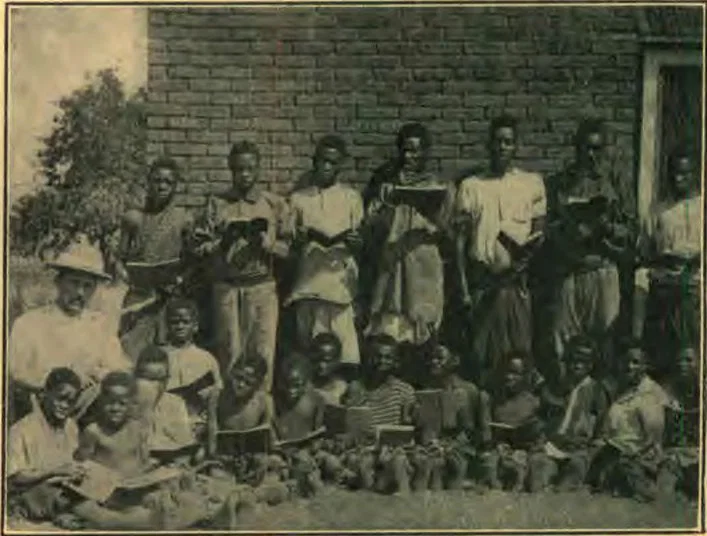
PUPILS AT THE PEMBA MISSION SCHOOL
We need some one to help us, young people who are earnest and willing and qualified to teach these people. Will you not go into your closet, and ask God whether he has any work for you in this part of his great harvest field?
Village Life in Africa
By Mrs. W. H. Anderson
I WISH you could go with me this morning to a native village where I was once called to visit a sick man and to dress a little child’s burns. Since that is not possible, I will tell you, as nearly as I can, what you would see. It is difficult to draw a pen-picture of heathenism so that it can be really seen.
Graves are Dug Days Before Death Occurs
On nearing the village, we hear wailing. Some one died there early this morning, and it is the death wail that greets our ears. Since death occurred only an hour before our arrival, we expected to see the burial; but when we reached the place, it was all over, and only the wailing and other features of the ceremony continued. The grave had been dug long before; for in heathen Africa burial takes place within an hour after death claims its victim, and the graves are often dug days before, so that all will be ready for the ceremonies.
Funerals are great events in an African village, and are attended by the people from villages for miles around. When we arrived the women were throwing themselves on the grave, and the men were running to and fro, stabbing their spears into the air. The grave was in the cattle kraal, because it was a woman who had died. Women and children are always buried in the courtyard, or cattle kraal. Had it been a man, he would have been buried in his hut, or across the door, so his spirit would ever after occupy the hut. No one lives in a hut after a person dies in it; therefore a woman or a stranger is taken outside to die. Strangers are taken outside the village, and left exposed to heat, rain, or cold until they die. Sometimes they are never even buried. This is heathenism!
We saw some one meet the new arrivals, and take them to the grave, there being no mound to mark the spot. Great pots of beer had been brewed for the occasion, and large kettles of beef, which had not been dressed, were on the fires. Heathenism demands that the cattle must have hair on them when they go with the deceased to the other land; so everything is devoured, hide, hair, and hoofs. Several head of cattle were killed while we were there. They are killed in such a brutal way,—speared until they fall, and then left to die.
We heard the noise of the clapping of hands in a corner of the yard. That was to thank the spirit of the deceased for the beer, some of which was placed on the grave, with some porridge. The feast lasted for two or three weeks. Cattle were killed and beer was brewed every day during this time. After a few days this native beer becomes very intoxicating. Then the scenes are wild and barbarous indeed.
An African Bed
I found the baby with the burned arm, dressed it, and made it comfortable, then went to see the sick man. He was lying on a bed made by placing rails on four forked poles that were stuck into the ground, with cross sticks for slats. There is neither mattress nor springs on the African’s bed. The sick man had no blanket to cover him, but a little fire had been built under the cot to keep him warm. After I had ministered to his needs and made him as comfortable as possible, I returned home.
Poor people, what a hard time they have when they are sick! No one takes care of them or tries to alleviate their pain. As soon as any one falls ill, the drums are brought, and a great noise is made to drive away the evil spirit. To the heathen that is the only reason for sickness, and when one dies, a feast is held to appease the spirits.
Native Houses
The native houses have no floors except mother earth, no chairs, tables, stoves, windows, or doors. There is a little low hole to crawl into the hut, and this is closed at night to keep out wild animals. A low, smoky fire adds to the general discomfort. Sheep, goats, fowls, and calves live in the huts with the people, for better protection. The women and children sleep among the sheep, to keep warm. They have no bedding, and neither men nor women wear anything more than a loin cloth. The children wear nothing at all.
Do the natives have plenty to eat?—Sometimes they do, and sometimes they do not. They are very improvident. When the years of plenty come they eat6all the time, but in the years of famine they starve. Last year one could count nearly every bone in their bodies—it was a famine year. They live on bulbs and roots when their gardens do not produce. At such times they live in the veldt during the day, and sleep in the kraals at night.
What kinds of food do they have?—Principally cornmeal and Kafir corn porridge. They like some kind of relish to eat with it, but if they do not have it, they eat the porridge as it comes from the pot.
The Batonga and Matabele people are great cattle raisers, so they usually have plenty of milk. In certain tribes, however, only the men are allowed to drink the milk. Another custom forbids any unmarried woman or girl to drink it. When a girl is married, one of the first duties performed by her husband is to give her a drink of milk in the sight of the people.
Bound by Custom’s Iron Fetters
The terrible customs of the heathen hold them like iron fetters. One of our Christian girls was discouraged, and came up to the house one day for a little heart-to-heart talk. As the conversation proceeded, she said:
“Why is it so easy to do wrong, when I do not want to do so?”
We asked her, “Do you ever have any desire to drink milk?”
“Yes, many times.”
“Then why do you not drink it?”
“I would die first, before I would do that,” was the reply.
“But why are you so determined not to do that?”
“Because that is our custom.”
“Then why are you not just as determined not to offend the Saviour as not to break your custom?”
That was a new thought to her.
How we should pity the heathen in his blindness, superstition, and sin, dying with no hope and without God. Is there no Saviour for them?—O yes, but they know him not. Is there no gospel for them?—Yes, but they cannot read it. Are there no educational blessings for them?—Not many, for there are so few to teach them.
Begging for the Bread of Life
People have come to me to beg for bread because they were hungry, and perhaps they have to you. I gave it without much concern. But when one begs for the gospel, and to be taught of the Saviour, it is such a different feeling. His soul is hungry for the bread of life, and at such a time what a weight of responsibility fills one’s soul. Perhaps very few of you have ever had any one beg for the word of life. But we have. Can you imagine, at all, how we feel when we have to say? “No, you must go back to your heathenism, superstition, and sin. There is no room for you. Every place is filled, and we are too crushed now to take on any more burdens.” What a responsibility to send a person away empty who has come on such an errand! Is the missionary alone to be charged with this?—No; some of it belongs to you. If you realize your share in this responsibility, it will lead you to make a complete surrender to God, it will keep you always on the altar of service. Then when the calls come, you and your means will be freely offered.
MRS. W. H. ANDERSON.
The Sugar Cane
By Ruth Reticker
Sugar
Four fifths of our sugar is made from sugar cane, the rest from sugar beets. Cane sugar and beet sugar, as they are called, are exactly alike when they are ready to be used. The same kind of sugar occurs also in flowers, in the stems and the roots of grasses, in fleshy roots, like carrots and sweet potatoes, and in the sap of trees, but not in quantities large enough to make it profitable to take it out. Other sugars, differing in some respects from ordinary sugar, occur in fruit and in milk, but we do not extract these in large quantities and shall not study about them in this lesson.
The Sugar Cane
Sugar cane is a giant-stemmed grass, in appearance something like Indian corn, growing to a height of 8 to 24 feet, with a tassel 2 to 4 feet long. Its stem is jointed every 3 to 6 inches, like bamboo. As the cane grows it stores up sap in its stem to nourish young leaves and buds. The sap is about four fifths water and one sixth sugar, while the rest is made up of other substances, which must be removed in making the sugar which we use.
When the cane is ready to be harvested its leaves are stripped off, for they contain no sugar. They may be pulled off by laborers or burned off, for a fire will strip a field of leaves and insects and leave the juicy stalks untouched. The stalks are cut off at the ground and carried to the mill near the sugar plantation. The upper part of the stalk contains no sugar, but has a bud, or eye, which will sprout if planted and properly watered. The top is usually cut off and thrown back into the earth.
Extracting and Purifying the Juice
At the mill the cane is passed through a series of grooved rollers which break it into short pieces and mat them together into a pulp. The rollers exert great pressure and squeeze out all but a very little of the sugar in the cane. At the last rollers hot water is sprayed on the pulp to soften the fiber and aid in extracting the juice. The same hot-water spray is used over and over again, until it becomes almost as sugary as the juice which was first squeezed out. After the fibrous, woody part of the stalk has been squeezed dry7by the rollers it is used for fuel to make steam to run the machinery of the mill and to keep the juice hot so that it will not ferment and will not thicken and clog the pipes of the mill.
The juice which is strained into tanks from the rollers is not at all appetizing. It must be purified by removing the dirt, cane stalk, and other foreign matter. Milk of lime is added to the juice and the mixture is heated. Some of the foreign substances rise to the top in a scum and are scooped off, and some settle to the bottom. The clear juice is drawn off and filtered through wood fiber or excelsior. All the impurities are thus removed except those dissolved in the juice.
The next step is to evaporate the thin, watery juice to a sirup. This is done in a vacuum in order not to scorch the sugar. The juice is boiled until a mass of crystals begins to form in the sirup. Boiling helps to separate the sugar from the impurities in the juice, for sugar crystals, once formed, attract sugar, leaving the impurities in the solution.
When the mass is about as thick as half-formed ice it is put into a perforated brass basket which is revolved 1,000 times a minute. The liquor is thrown out through the holes, to be boiled again, and the sugar crystals are left almost dry in the basket. Dry steam, which is then passed through the basket, makes the sugar dry enough to pack.
This is not sugar as we know it, but it is raw sugar, about 96 per cent pure, and of a dull-brown color. Raw sugar stands the journey from the tropics to the temperate zone much better than refined sugar. It is brought to this country and stored in big warehouses in our seaport cities, especially New York, Philadelphia, Boston, and San Francisco, and is refined as needed for our use.
Refining Sugar
Raw sugar must be changed back into sirup before it can be refined. But before it is melted it is washed by a fine spray of cold water directed against all the faces of the crystals as they are whirled in a machine that is called a centrifugal machine. This removes most of the impurities left on the outside of the crystals by the impure liquor from which they were formed. The washed sugar is then dissolved in hot water and the liquor is filtered through hot cloth bags to remove any impurities which have been left in the sugar from the cases in which it was imported, such as twine or lint from the Cuban bags, or fine particles of leaves from the Philippine mats or the Java baskets. Here again chemicals are mixed with the liquid to aid in making it pure.
The clear amber sirup which comes from the bag filters is passed very slowly through a special filter filled with bone char, or charcoal made of the bones of animals. The bone char removes the coloring matter. The whitened sirup is now boiled in vacuum pans for an hour and a half, until crystals form as they did in the raw sugar. The crystals are separated from the sirup by whirling and by washing with cold water, and are then dried by a current of hot air in an iron drum called a “sweater,” until there is less than four hundredths of one per cent of moisture in the sugar, and the grains are hard and bright. The crystals are then sifted through screens according to size, and at last the sugar is ready to be packed in bags or boxes or barrels, or molded into loaf sugar, or ground into pulverized sugar.
Making Beet Sugar
The sugar beet is white and shaped like a carrot, but is much larger. Sugar beets have been used for making sugar only in the past century, and mainly in Germany and France. The scientists of these countries have developed varieties of beets which have a high percentage of sugar-bearing juice, and the United States Department of Agriculture has done much to extend their cultivation in this country. In 1915 there were in the United States 67 factories, using more than 6,000,000 tons of beets and producing more than 850,000 tons of sugar.
Beet sugar is made and refined in one process. After the leaves and the crown are cut off in the field, the beets are taken by wagon or railroad to the factory. When they arrive there they are first washed. They are not crushed as the sugar cane is, but are sliced very thin by revolving corrugated knives. The slices of pulp are allowed to stand in water until the sugar-bearing juice in the pulp mixes with the water around the slices by a process called diffusion. When the juice around the slices is as sweet as the juice in the pulp, it is drawn off and poured on fresh slices, and fresh water is once more poured on the pulp. This process is repeated until as much sugar as possible has been taken from the beet slices.
The juice extracted from the beets, called “sweet water,” is purified with milk of lime and carbonic acid gas, and is then boiled until it makes a thick sirup. Sulphur fumes, instead of bone char, are used to whiten it. Crystals or grains are produced much as in refining cane sugar. Molasses cannot be made from the sirup which is left, because no way has been discovered to free it of impurities. It is fed to cattle, and the dried pulp of the beets is used as fertilizer. —Ruth Reticker, of the University of Chicago.
Dawn Follows the Hour of Failure
By Leigh Mitchell Hodges
FAILURE is often that early morning hour of darkness which precedes the dawning of the day of success.—Leigh Mitchell Hodges.
The Nightingale and Glowworm
By William Cowper
A NIGHTINGALE that all day long
Had cheered the village with his song.
Nor yet at eve his note suspended,
Nor yet when eventide was ended,
Began to feel, as well he might,
The keen demands of appetite;
When, looking eagerly around,
He spied far off upon the ground,
Something shining in the dark,
And knew the glowworm by his spark:
So, stooping down from hawthorn top,
He thought to put him in his crop.
The worm, aware of his intent,
Harangued him thus, right eloquent—
“Did you admire my lamp,” quoth he,
“As much as I your minstrelsy,
You would abhor to do me wrong,
As much as I to spoil your song;
For ’twas the selfsame power divine,
Taught you to sing and me to shine;
That you with music, I with light,
Might beautify and cheer the night.”
The songster heard his short oration,
And warbling out his approbation,
Released him, as my story tells,
And found a supper somewhere else.