Your ShelfYour Projects

Review and Herald, Vol. 79, No. 41.

Special Numbers
Earlier text: Christ the Missionary’s Example

What Tobacco Can Do

ETHAN LANPHEAR
It can poison a family to the third and fourth generations. I once knew a young man of a respectable family, in whose life this truth was exemplified. He early learned the habit of smoking tobacco. He married an intelligent young woman, and they started in life with favorable prospects. He continued his habit until he became an inveterate smoker, and was so saturated with the smoke that his presence was offensive to society, in church or at any other decent gathering. When remonstrated with for the offensive habit, he would say, “I don’t smoke enough to hurt me.”
In time they had two sons born to them. When quite young, these sons formed the habit of smoking, and as they grew to young manhood, father and sons kept their home blue with smoke, so much so that it was a very unpleasant home in which to make an evening visit.
The mother was finally taken sick, and gradually grew thin and feeble. The doctors treated her for various maladies. She was sent to the seashore, where she seemed to rally for a time; but on returning home, she had to breathe air defiled with tobacco smoke, and her decline was rapid. I asked the physician what killed that woman. His answer was, “I think tobacco smoke killed her; but probably I would better not say it publicly, for it might hurt some one’s feelings.”
After this woman’s death, her husband married her sister, who had lived with them for years. She had been in the family so long that she had become affected by the poison of the tobacco smoke. He continued his old habit, and she sickened and finally died, reduced almost to a skeleton. The husband is still living, and is himself a skeleton. He belongs to a church; but carries a stench of tobacco smoke into the church and wherever he goes, presenting a defiled temple of God if ever the human temple was defiled.
The younger son, who married a delicate little woman, continues the habit of smoking. A nice little girl has been born to them. The wife is a fine-spirited woman, rather feeble in health, and the little girl is sickly looking, with weak eyes, so that she is compelled to wear glasses.
Is it any wonder that hundreds of children wear glasses in these days, are poor in flesh and sickly looking? Can we expect it otherwise when children are born of parents pickled through and through with tobacco smoke, snuff, or alcohol?

Youthful Prodigies

What you should have in mind is so to educate and develop your child that the best possible results may be attainable when he is grown. You snatch the first indication that the little mind unfolds to you. You are filled with an unspeakable joy if he shows an early love for books. If he loves to lie for hours looking at pictures, and if before you are aware of it, he has learned to read, you are sure that you have a remarkable child. You easily convince yourself that no ordinary child has been given to your care; perhaps he may be a real genius. Or, if while yet a baby, he surprises you with some remarkable feat in numbers or memory, or unexpectedly hums some familiar tune, you are sure, so very sure, that your child is remarkable. You tingle with a desire to begin at once to cultivate that wonderful gift, and if you are a particularly foolish woman, you exhibit him to your admiring friends, and as soon as possible you have him appear on the platform of the Sunday-school entertainment. At the earliest possible age, he is sent to school. Then, not satisfied with the normal progress he is making, you begin drilling him at home. After he is in bed, you drill him on his spelling or number work. You are not satisfied that he leads the class; you want him to shine more and more. You furnish him unlimited reading, and tell with a quiver of pride how he has read almost two hundred books. Or, if the talent seems to be for music, you absorb half his play time in practice.
You do not think for a moment that all this driving and exhibition is anything but your desire to use the precious hours of childhood for laying the foundation of future usefulness. Yet it is quite true that silly love of ostentatious show is driving many a little fellow at a pace that is absolutely certain to ruin his future success.
There is no rule that can be laid down as invariable in human development, but it is near enough to it to make every mother of a prodigy shudder, that great men and women seldom develop from children who startle their friends with their brilliancy. The course that is absolutely necessary for that child is repression, a keeping in the background. A child that loves to read should never be led to believe that it is a great virtue, as he surely will if he hears his mother boasting about it. In fact, unrestrained reading will usually make a listless absorber, the most ineffective of all men. The literary taste which it indicates may in time direct his efforts in that channel; and if he is fortunate enough to have his lot cast in a large family where little attention is paid to his inclination, and wholesome work fills most of his time, he may develop into a strong literary power, but undirected reading of itself amounts to very little.
With remarkable quickness in the numerical powers, it is still truer that the youthful prodigy fails to develop. He will shine up to about sixteen years, seldom later, only to be pushed aside by some roustabout of a boy who has never been conspicuous for anything but a love of mischief and sport. In after years he will find himself entirely unable to compete with the country-reared boy who spent his young years cultivating strength and ability for hard work, while our prodigy was shining in the lower grades. His light has gone out forever, unless his wise parents have made little of his brightness, and compelled him to produce results where effort was necessary; for the capacity for work, hard work, is the great gift. . . .
It is a wise mother who checks her remarkable child, and who realizes that only disappointment is in store for both of them, if they build castles upon his childish ability.
The child mind should not get ahead of the body, and childish tastes and enjoyments should be natural to childhood for the production of men and women who have physical force enough to enable them to put into active service the powers of their brain. The sharp competition of to-day leaves far behind the man who depends on comfortable, easy effort for results, and our petted prodigy is fortunate if the love of his mother is wise enough to look with doubt and misgiving on his youthful brilliancy.—Charlotte W. Eastman, in American Mother.

Guarding Our Capital

WE start out in life with a definite amount of possible energy. We can spend it as we please; but, even with the best intentions, many people use up a large part of their capital in worry, anxiety, or by fretting over non-essentials — trifles which have nothing whatever to do with their success.
If we could only learn to control our thought-force, and to expend it where it is needed, instead of allowing it to ooze out or leak away in driblets on unimportant matters, what marvels we would accomplish!
In an average lifetime, just think how much real energy, which might be turned into success-capital, has been wasted in useless expenditures and leakages! Some people spend half the power they generate in vain worry, anxiety, bickering, splitting hairs over irrelevancies.
Much of our possible success-energy is wasted through fear, which, in all its phases, is the greatest enemy of the human race — fear of failure, fear that we shall come to want, fear of imaginary happenings which have no foundation in fact, dread of criticism, forebodings about the future, fear of misfortunes that may come to our friends, ourselves, or our business. How many promising lives have been wrecked by this gloomy phantom — fear! — Selected.

“Do It Now”

THAT is the motto hung under every clock in a big factory in America. It would be a good motto to print on the dial of every watch and clock in Christendom. Half of life's sad omissions, half of its regrets, would be saved if we did things the moment we are reminded of them.
Sometimes, to be sure, it is impossible to do a thing on the instant. In such cases our duty is to bear it in mind until the earliest possible moment when we are at liberty, and then go and do it. But fully one half of the obligations we think of, but do not fulfill at once, are among the things that might have been done immediately. Our postponing them is not for a better opportunity, but simply for readier inclination.
“Do it now.” You will save time—you may save deep regret. So much of life's ever-accumulating duty will have been discharged ere it has become a reproach and a subject of dread. The joy of duty promptly done is worth all that it costs. No habit is better worth cultivating. Is there any task undone for which the present moment, unless otherwise employed, affords a fitting opportunity? Why, then, postpone that instant duty? Do it now!—Northwestern Christian Advocate.

Peanut and Pea Recipe

An excellent way of utilizing peanuts is to cook them with field or stock peas. Have peanuts nicely blanched, but not brown. Pour on cold water, and cook until quite tender. Parboil the peas. If the water is hard, a very little soda may be added, just before removing from the fire. Rinse well, and put to cook in boiling water. The peanuts may now be added. A pinch of salt is all the seasoning needed. Use one part of peanuts to four of peas.
Mrs. Mattie Moore.

Wild Grape Juice

Perhaps some of the readers of the REVIEW would be interested to know that the juice of the common wild grape, so plentiful in some localities, is very nice when prepared in the following manner:—
Gather the clusters when ripe, and remove any moldy grapes. Cover with water in a granite, porcelain, or earthen pan, and boil until the skins are broken. Drain through a jelly bag. Then return them to the pan, cover with water, scald again, and drain.
Boil the juice, sweeten it, allowing three fourths of a pound of granulated sugar for each quart, and seal in Mason jars. Used with an equal amount of water, this is a pleasant drink in sickness, or it may be used for sauce, the same as other fruit.
Mrs. M. R. Reed.

Missionary Items From the European General Conference

L. R. CONRADI
The work in the territory of the European General Conference is steadily assuming greater proportions. We receive good tidings from Iceland on the north, to the valley of the Nile on the south, and from the Atlantic on the west, to the Siberian boundary on the east. We give herewith an extract from a letter received from Brother David Ostlund, of Seydisfjord, Iceland, and it is certainly encouraging that among eighty thousand people our small Icelandic paper has a circulation of nearly fifteen hundred.
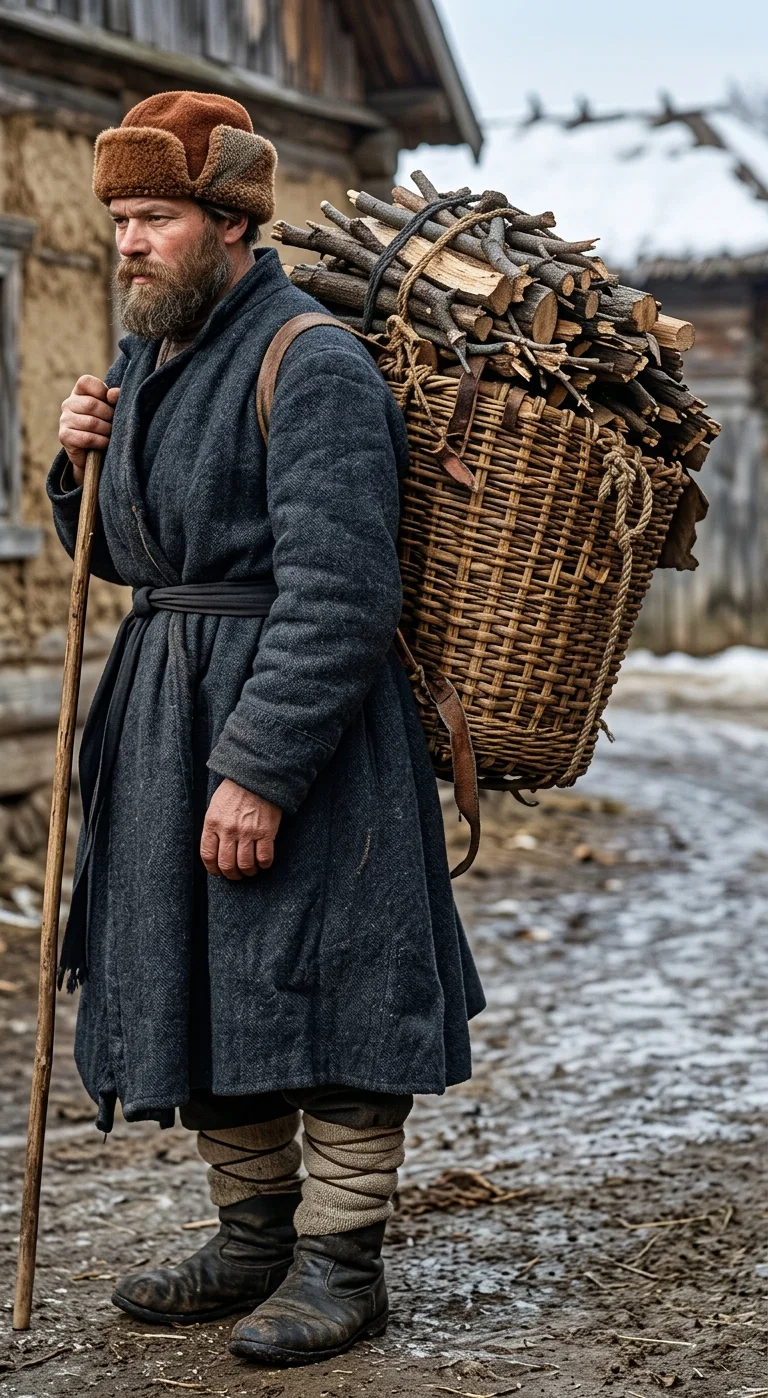
A VILLAGE IN RUSSIA
A VILLAGE IN RUSSIA
If each paper we publish were circulated in like ratio, millions of them would be distributed at the present time. Let us remember this worker in Iceland, in our prayers. His letter says:—
“The past winter has been a very unpleasant one, as we had the ice to contend with for such a long time—until June. The Seydisfjord was filled with ice, so we have had very little communication with the outside world the past year. The latter part of September, 1901, I sent money to a firm in Germany for some type for our printing office; but the type, which I had expected would arrive before New Year's, did not reach us until the last of May, 1902, because of the ice; the ships had to return without coming near the eastern coast of Iceland. One can doubtless imagine that such experiences make times hard, and it seems remarkable to me how we got along.”
“This is not the most encouraging field. The country is large and sparsely settled, and the people are very slow in religious matters. But yet the work has not been, and I believe it will not be, fruitless. One here and another there become interested in the truth, and for this I praise God.”
“The paper work is encouraging. We have a continually increasing subscription list. By the beginning of 1903, I hope that we shall have fifteen hundred regular subscribers. Although this sounds small, yet it is quite good for an island with seventy-nine thousand people. Our small printing press is getting along well. We have the type and other things necessary.”
“I am anxiously waiting for the promised laborer. The brethren here are beginning to fear that he will not come. Do not let another year pass before you send him.”
“I am now starting out on a circuit of the island. What I have seen and heard is of an encouraging nature. I will write again soon.”
We receive good reports from Russia. While the workers there meet as many obstacles as in any other place, perhaps, yet it is there that God is manifesting his power in a wonderful manner, as the following letter from our native minister, who was ordained last fall to work among the Russians, shows:—
“As to the work among the Russians, I can only say that the Lord has been with me, and blessed this work. While difficulties have not been wanting, yet I can exclaim with Paul: ‘For I reckon that the sufferings of this present time are not worthy to be compared with the glory which shall be revealed in us.’”
“Since our meeting last October, I have baptized forty-five persons, and sixty-five have been received into church membership by vote. From various places calls for labor are coming in, and souls are awaiting baptism. Among those who have recently united with us is a minister who has been a missionary for nine years.”
“I am very sorry that I could not attend the Friedensau meeting, but it was not possible for me to secure a passport; however, I hope sometime to have the privilege of attending such a gathering.”
“At present two of our brethren are in prison for their faith, each of them for a term of eight months. One has a family, but the other has not. Another has just received a sentence for eight months. Remember these brethren in bonds, before the throne of grace.”
We need more workers and more means to push this work among the Russian people.
A good letter has been received from Finland, in which Elder Hoffman, who has been working with Elder Fred Anderson in Wasa since the middle of June, writes:—
“I baptized seven persons after I returned from the general conference in London, and Brother Anderson has baptized one. Since the middle of June I have been here in Wasa most of the time with a tent. Brother Anderson, my wife, and I are here, and the interest is good. Several have begun to obey God's Word. The weather has been cold and rainy. The ground in the tent looks like a swamp most of the time. After the 10th of August we shall be unable to use the tent any longer, and will secure a hall, where Brother Anderson can follow up the interest.”
“Among some of those who are converted in this country we must find native workers. An intelligent young man united with us at Borga; he has been out selling books with Brother Hammar, and is doing real well. At first he was able to read and write but poorly, but since his conversion he has wonderfully improved. I told him to practice writing whenever he found opportunity to do so; at first his associates made fun of his attempts, but he is making rapid progress. Others are just as sorely in need of schooling, so we must have something of that kind. Please remember the work here.”
From Turkey we hear glad tidings of progress. Brother Baharian writes:—
“Yesterday I received a letter from Marash, stating that five brethren have accepted the message, and that about as many others are deeply interested in study with them.”
“From Hayraboly, in the province of Adrianople, an intelligent young man, who is a master in the Armenian language, and thoroughly understands French, has decided to obey. For several years this brother has been convinced of the truth, but has been kept back by his father's persecuting spirit, but now the victory is gained.”
“From Antioch we learn that one of our brethren has been laboring among the neighboring villages, and several have decided to render obedience to God's Word. It seems that the province of Aleppo will be open wide to the truth. This place ought to be visited by an ordained minister at once.”
“There is no lack of persecution. One brother accepted the truth under the most trying circumstances. He was persecuted and tried severely, but has remained faithful. Once he was obliged to flee from the country. We have another brother of the old school of pharmacists, that is, a physician and pharmacist combined. He had a shop without a legal certificate. About three years ago he accepted the truth, and has continued his work without molestation. But after a while the people became troubled at his preaching, and his enemies have had his shop closed by the government, but still he desires to preach the message.”
“In Adana five brethren have been tried in the courts, and one has been fined twenty-five piasters. They were arrested last year while assembled for worship on the Sabbath. The brother in whose house the meeting was held was fined.”
From letters just received from Cairo, we learn that the cholera is working some hardship to our gospel interest there, and that Satan is still on hand with a bitter, persecuting spirit. We quote:—
“The interest here among the native classes is better than ever before. The room in which we are accustomed to hold the meetings is too small, so we meet upon the terrace of the house in the evening. This gives us an elevated position, and plenty of fresh air. Every day I am having experiences of interest, and I am quite busy.”
A later letter says:—
A RUSSIAN PEASANT
A RUSSIAN PEASANT
“I have just received a letter from our minister in Upper Egypt. He expects to be here day after to-morrow to labor with me. The past week I have had meetings every night, and they have been well attended. Last night we had a meeting attended by Greeks and Copts, from seven to nine o'clock, and then ten Mohammedans came to hear the prophecies explained, and remained for more than two hours, being much interested. As I told them of the coming of our minister, and meetings in Arabic, they promised to return, and bring others with them.”
The last letter from there says:—
“One of our workers had a sunstroke yesterday, and we feared that he would not live. He is in a dangerous condition. The weather is very hot, hotter than it has ever been before since I have been living here. The city of Cairo has been declared contaminated by cholera, and the government is exercising a strict quarantine. As soon as any one shows signs of sickness, he is carried away, and those around him are isolated. We have been having the best of meetings, but as this epidemic has appeared, our meetings must stop; for the government will not allow any gatherings of the people. There is a great panic, and all the Europeans who have sufficient money are leaving the city. The trains and the steamers are full. Yesterday over eight hundred people fled from Cairo. But I hope that the epidemic may not last long.”
The brother who writes this letter has suffered a great deal from the excessive heat, losing much in flesh, and becoming emaciated. The workers in Egypt need our constant prayers. They have to labor in trying circumstances of which we know nothing. But God is with them, and they know what it is to trust in him.
Throughout the whole field, there are many reasons for rejoicing, but we see enough of the workings of the evil one to assure us that he is fulfilling the prophecy concerning himself—going about as a roaring lion, seeking whom he may devour. May God create in us all a more devout spirit of sacrifice and service, that the work may be speedily cut short in righteousness.
Hamburg, Germany.

A. E. LEMON, M. D

Newfoundland

A. E. LEMON, M. D

This, the oldest colony of the British Empire, is a large island lying between the Gulf of St. Lawrence and the Atlantic Ocean. It is one thousand miles in circumference, has an area of forty-two thousand two hundred square miles, and a population of over two hundred thousand. The main line of the Newfoundland railway system, five hundred and forty-eight miles long, connects the capital, St. John's, in the extreme east, with Port au Basques on the west coast. The latter place is connected by a daily steamer service with the Intercolonial Railway of Canada. Regular lines of steamships ply between St. John's and Liverpool, Montreal, Halifax, and New York. There is regular steamer service also between the different ports of the island.
The coast line is very irregular; bays, inlets, cliffs, and promontories adding to the beauty of the scenery and the danger of navigation. One third of the interior is covered with lakes, ponds, rivers, and streams, which abound with a variety of fish. The other two thirds, while not yet all explored, is made up of large tracts of forest, great areas of rich mining lands, and a considerable portion devoted to the raising of live stock, and the cultivation of grains, vegetables, and fruits. The climate is much milder than is generally supposed by those who have never lived here. The summer is cool, with abundant but not excessive rainfall. The winter is tempered by the ever-open waters of the ocean. And as the severity of the winter season has been decreasing for many years, it is believed that the Gulf Stream is gradually exerting a modifying influence on the climate of the island. There is very little zero weather, and last winter there was scarcely a week of sleighing. The people are of English, Irish, and Scotch descent. They speak only English, with a colonial accent. They live by fishing, farming, mining, lumbering, and trading. The mining industry is growing rapidly. The colony already produces a large proportion of the world's copper, and is now producing immense quantities of the finest iron ore, which in one place exists in great beds on the surface, and so close to the shore that it can be loaded directly onto large vessels. It finds a ready market in the great iron works at Sidney, Cape Breton, at Philadelphia, and even in Europe. Besides iron and copper, lead, manganese, coal, silver, and gold are them, found. Great possibilities, in the way of mining, as yet undeveloped, await the investment of money and labor. The fisheries are the greatest in the world, and afford employment to a large proportion of the inhabitants.
As a rule, the people are intelligent, hospitable, open hearted, and industrious. Their patriotism and loyalty to Great Britain are worthy of notice. Schools are numerous and well conducted. They are under denominational control, and partially supported by the government. The government is democratic; but as in all civilized countries, the politicians influence the people through the newspapers more than they would if every man loved his neighbor as himself. In religious belief, the population is about equally divided between the Church of England, Methodists, and Roman Catholics, there being but a small number of others, mostly of the Salvation Army, and a few Presbyterians.
St. John's, the capital, with a population of thirty thousand, is built on a rock, which slopes southward toward the harbor, which is one of the finest in the world. At the west end of the harbor is a dry dock capable of taking any vessel on this side of the Atlantic. The city is fairly well laid out, and contains a large number of fine buildings. There are several departmental stores, besides many smaller ones, and one can buy almost anything that can be had in the English or American markets, and at very reasonable prices.
Notwithstanding the naturally healthy conditions, the people, by the too free and general use of tea, tobacco, and in many places alcohol, have so injured their general health that the death rate is higher than it should be; although this is offset by the fact that according to the statistics issued by the government, there are almost twice as many births as there are deaths. Vice and immorality are not so prevalent here as in the United States. There is great need of a reform in the habits of the people with regard to eating and drinking and the general care of the body. They need to be taught that true religion consists not in a form of creed and worship, but in keeping the mind and the body pure and free from defilement, and in preserving a conscience void of offense toward God and man.
St. John's.

Christian and Missionary Alliance Foreign Missions

THE report of the Christian and Missionary Alliance for last year shows $185,162 as receipts for foreign missions. Work has been conducted in India, China, Japan, and Africa, in the Sudan, and in South America, Anam, Porto Rico, and the Philippines. Seventy missionaries were sent out during the year.

Mission Hospitals’ Foreign Patient Care

IN one year in seventy-seven hospitals and dispensaries under the Presbyterian Mission Board in foreign fields, 340,878 patients were treated, at a net cost of $22,009. In a single hospital in the city of New York in one year the net cost of treating 35,709 patients was $139,685.

“With Thy Might”

If you’ve any task to do, Let me whisper, friend, to you, Do it.
If you’ve anything to say, True and needed, yea or nay, Say it.
If you’ve anything to love, As a blessing from above, Love it.
If you’ve anything to give, That another’s joy may live, Give it.
If you know what torch to light, Guiding others through the night, Light it.
If you’ve any debt to pay, Rest you neither night nor day, Pay it.
If you’ve any joy to hold Next your heart lest it grow cold, Hold it.
If you’ve any grief to meet, At the loving Father’s feet, Meet it.
If you’re given light to see What a child of God should be, See it.
Whether life is bright or drear, There’s a message sweet or clear, Whispered down to every ear, Hear it.
— Missionary Review.

Bermuda

HAMILTON.—The last two Sabbaths have been precious seasons with us; for the good Spirit of the Lord came very near. The Sabbath-school lessons are appreciated. We do all we can to get out of them the design of the author of the lessons, and they have been a real help to us. After Sabbath school we usually have one of Sister White’s articles read. Every heart was touched yesterday as I read her letter to the brethren at Nashville; for this field is much like that, as the color line is nearly as marked here as there.
The Spirit is very near us here. I almost wonder sometimes if Jesus is just as precious in Michigan as he is in Bermuda; if he is, I cannot see why any one should hesitate to come here and labor for this people. As I write, I feel to say, as I have often heard Sister White say, “I love him! I love him! I love him!”
As I read of Elder Munson alone in Sumatra, with a population of three million souls in heathen darkness, I felt that I would withdraw my plea for Bermuda, and let the Lord take his own time for sending help here. Still, it does seem to be an important field, as it is near the United States, and thousands from America come here to spend the mild winters. Bermuda is also in a direct line between Halifax and Nova Scotia and the West Indies, and is situated about half way between the two places. There is a good fortnightly steamship service between the last two places mentioned.
Bermuda would be an excellent place for a sanitarium, with its semitropical summers and its mild winters, where frost is never known, and where the air is as pure as on the broad ocean. It is only a small spot on the great Atlantic. If the main islands were put together, with the ends touching one another, the total length would be only about thirty miles, and the breadth about three miles at the widest place.
An excellent way to open work here, would be for some of our worthy brethren to move here with their families, and settle in different parts of Bermuda. They could rent a farm, or garden, as it is called in the United States, and thus support themselves. One thing is sure: who ever comes must come trusting God. His life must be a life of faith. If the Lord could raise up children from stones if necessary, he could just as easily make bread from stones for those who trust in him. So no one need fear, as far as a living is concerned. I would be glad to correspond with any one who may desire to come. MARSHALL ENOCH.

Jamaica

PORT ANTONIO.—The cause of present truth is moving steadily onward here, in spite of strenuous opposition. The enemy is working hard to make us appear ridiculous and odious in the eyes of the public, by prompting his agents to publish misrepresenting articles in the island papers. We need a printing press, a school, and a health institution, to give stability to the work. These would be a blessing to our own people, as well as to those not of our faith.
Our cause in this island is illustrated by one of the economic conditions. There are many good roads throughout the island, and the more prosperous inhabitants use strong drays and wains to transport goods from place to place. The poor peasants, however, cannot afford such conveniences. They are passing by while I write, with large loads of fruit upon their heads. These burdens, which they call “head loads,” frequently run up to one hundred or one hundred and fifty pounds, or even more. It can be readily seen at what disadvantage they labor when they are compelled to follow this method of transportation. Yet our position in Jamaica is very similar. The fruits of labor spring up quickly, and there is need that each department of our work be established here. As it is, the ministers are doing it all after the “head load” plan—literal head loads, and heart loads too, of care, of anxiety, of plans as to how one can do the work of two or three. Although they will not own it, some are growing weary. These words are not written in a complaining spirit; they are written to beseech our brethren in America to be wise, and send one now, rather than be compelled to send two by and by. Since April I have baptized twenty-seven persons, and held one series of meetings. Another baptism will be held soon. At present we are holding quarterly meetings, and looking after the church building among the companies. The companies on this side of the island (northeast) are largely the fruits of Brother G. F. Enoch’s labors. When he was called away, he left three churches in the course of construction. These we are erecting as fast as means and material can be gathered. Since coming here, we have begun the work of alteration on our church in this place. We hope in due time, with the Lord’s blessing, to have a more neat and pleasant place of worship in this important center.
We are very busy, and are glad to be so. Our health is good, and our hopes bright.
W. J. TANNER, ELLA E. TANNER,

B. J. CADY

Tahiti

PAPEETE.—We have been much pleased to see what the Spirit of the Lord is doing for some of our young people in the school at Raiatea. One boy wrote us that their meetings were very good, and others have been writing to their relatives here in Tahiti, asking for forgiveness for wrongs, and also exhorting their older brothers and sisters to give themselves to the Lord. One who is acquainted with the Tahitians, and knows how loath they are to confess their sins and ask forgiveness, will understand that the Spirit of the Lord has been working on the hearts of these students. All seem contented and happy in their work. Our laborers on the school farm are Brother and Sister Beckner and Sister Anna Nelson. This school is on the island of Raiatea, one hundred and twenty miles from Tahiti. In the settlement of Uturoa, Sister S. G. Young, of Pitcairn Island, is employed to teach a number of white children the English language, and so gains her livelihood.
Another small Sabbath school has been organized in Raiatea, so we now have three schools on that island. Mrs. Cady is translating the Sabbath-school lessons into the Tahitian right along, and sending them to each school that has any native members. A number of our brethren have expressed themselves as being pleased with the lessons, and we believe that some of them at least are learning to apply their minds better in studying the Word of God. We have three Sabbath schools, besides two family schools lately started. The larger part of our members do not understand the English language, so cannot make use of the lessons as they are in English.
Brother Roth and family are living in a suburb of Papeete, and he is looking after the health-food store in that place. For the past two months Mrs. Cady and I have been in Tahiti. She remains in Papeete most of the time, as she has the bookkeeping, translating, and other writing to do, besides some Bible work.
I have been visiting around the islands, and returned from Paea a few days ago, where I spent two Sabbaths, holding meetings each evening. There was a good outside attendance at our meetings, and considerable interest was manifested by our own people. Our brethren in that district are about to begin to build a church, for which they have been saving money for several years.
We received news a few days ago of the safe arrival of the little cutter “Pitcairn” at Mangareva, on the nineteenth of July. As you know, this boat was purchased by the British government, and given to the Pitcairn people. As the Pitcairn islanders do not understand navigation, Brother Jones is sailing their vessel for a while, and is teaching some of the natives to navigate. They are already good sailors, but do not understand how to find out where they are at sea. As there is no harbor at Pitcairn, the cutter will be at Mangareva most of the time; and while there, Brother Jones will labor for the native people, as he and his wife are both doing well in acquiring the native language.
Satan and his agents are working hard to thwart our plans for good, and to lead souls farther and farther away from God. But we know that the Spirit of the Lord is freely given to turn souls from sin to the Saviour, and we want more of that Spirit to work upon our hearts.

B. J. CADY

St. Kitts

BASSETERRE.—The interest seems to be increasing in many places in these islands. Here in this town one more has signified his willingness to follow the Lord in all things, and others are coming rapidly to the place where they must choose their future course. At Fig Tree, in the country, there are many interested, but I am able to meet with them only once in two weeks. At Philips, in the country on the north side, where one of our brethren lives, some interest is shown. I meet with this company once a month.
This morning I returned from a short visit in Nevis, six miles from Charlestown, under the shadow of the volcano's mouth in Nevis Peak. Here I had several services with the people, and did considerable visiting. Many are interested; and as I spoke to them on the soon coming of Christ, and the importance of preparation for that event, the interest deepened. We held the services mostly in the open air; and though they had been unannounced, nearly one hundred and fifty gathered from the surrounding districts, while I played a few songs on the cornet. A brother and his wife from Basseterre are living in this district, and are helping the interest along. Here also I have promised to spend a few days each month.
Saba gives me no rest. Nearly every week we get letters from the one brother who is there and from friends, impressing upon us that we must return. I have promised to go there for a short time in the latter part of October.
And so the work is pressing upon us on every hand. We need three laborers here in this group, to look after present interests. As yet there are four islands that have not been touched, two not even by the canvasser. These are St. Eustatius, St. Maitens, St. Bartholomew, and Anguilla. I learn from some that in Anguilla there are those who have obtained our literature from this place, and are anxious to know more fully of our views. Of course nowhere are people seeking to find out that they must keep the Sabbath and these kindred truths. The recent events, and the growing indifference in spiritual things, cause more serious thought on the part of many; and as they hear the truth for this time, they recognize in it something that is new to them, and an explanation of the present troubles, and of God's requirements. I believe that there are many here who will obey God; but there is a great need of laborers.
S. A. WELLMAN.
Continue reading: New Brunswick