The Youth’s Instructor, Vol. 67, No. 11.

Army Strength at Armistice and Other War Department News

The Youth’s Instructor

Mar 18, 1919

Review and Herald Publishing Assn. · Takoma Park Station, Washington, D. C. · Mar 18, 1919

Army Strength at Armistice and Other War Department News

The War Department announces that at the time of the signing of the armistice our army was the second largest in France.
Lieut. Frank H. Harmon recently made a record air flight from New York to Washington, completing the trip in eighty-five minutes.
The steamship “George Washington,” with the Presidential party on board, returning from Europe, anchored in Boston Harbor.
Petitions are coming from the Near East, requesting of the Peace Conference the appointment of America as the guardian of the provinces which will be severed from Turkey.
Great Britain lost in the war more than 9,000,000 tons of shipping, ten times as much as that lost by France or Italy, and seventeen times as much as that lost by the United States.
The United States is the sole possessor of the secret process whereby an absolutely noninflammable gas can be obtained from helium. Experts claim that this discovery makes this country mistress of the air.
Admiral von Tirpitz, who is credited with having been the instigator of ruthless submarine warfare, has been the guest of General Will, of the Swiss Army, since the revolution in Germany, according to newspaper reports.
No very rich man has ever been President of the United States. Washington remains to this day the wealthiest of all our chief executives, and Roosevelt, who left an estate of about $500,000, probably stands second.
Except for a comparatively small amount that comes from Hawaii, Porto Rico, and the Philippines, the United States is entirely dependent on other countries for coffee. Yet we use about two fifths of the entire coffee crop of the world.
Vigilance on the part of the United States Secret Service, and quick action by the New York police, led to the arrest of fourteen aliens, admitted anarchists and conspirators in a plot to hurl a bomb at President Wilson, as he landed in Boston, returning from his trip abroad.
The venerable pastor of the late ex-President Roosevelt has a small grandson, and the two are great chums. One day the little lad surprised the family by refusing to go to church. No argument of any member, no inducement offered by his beloved “grandaddy,” could persuade him to enter the building. Several weeks passed, and then one day, after much coaxing, the grandfather induced him to go in and hear the organ. As they crossed the threshold, the youngster clung tightly to the pastor’s hand and whispered: “Say, grandpa, show me the zeal! Show me the zeal that eats folks up.” Then the mystery was all explained. At family worship he had heard the reading of the text, “The zeal of thine house hath eaten me up,” and made a practical application.
The laziest of birds, according to the Philadelphia North American, is the frogmouth. He sleeps all day, and at night, instead of foraging for food, sits on a limb and literally waits for the insects to come and feed him. He is such a sound sleeper that one can push him off his perch with a stick without awakening him. He inhabits Australia and the islands of the Indian Ocean.
The time-honored tambourine, used successfully by the Salvation Army for thirty-six years, is to be abandoned. Hereafter one effort will be made each year to collect funds for the work of this organization, and all the antiquated alms-gathering devices will be discarded. This coming May a drive for $10,000,000 will be made.
Rumor has it that the Prince of Wales is to marry an Italian princess.

Alphabet of Success

Ambition Nerve
Brains Optimism
Control Perseverance
Determination Quality
Efficiency Reliability
Fearlessness Sobriety
Grasp Thrift
Health Usefulness
Interest Veracity
Judgment Will
Keenness Xperience
Loyalty Years
Manliness Zeal

When He Would Break

A SIMPLE man who carried on business in Manchester, about whose integrity certain rumors were abroad, was asked, “Do you never fear you will break?” “Ay,” said the man very emphatically, “I shall break when the fiftieth psalm breaks in the fifteenth verse, ‘Call upon me in the day of trouble: I will deliver thee, and thou shalt glorify me’!”—The Christian Herald.

The Commander-in-Chief

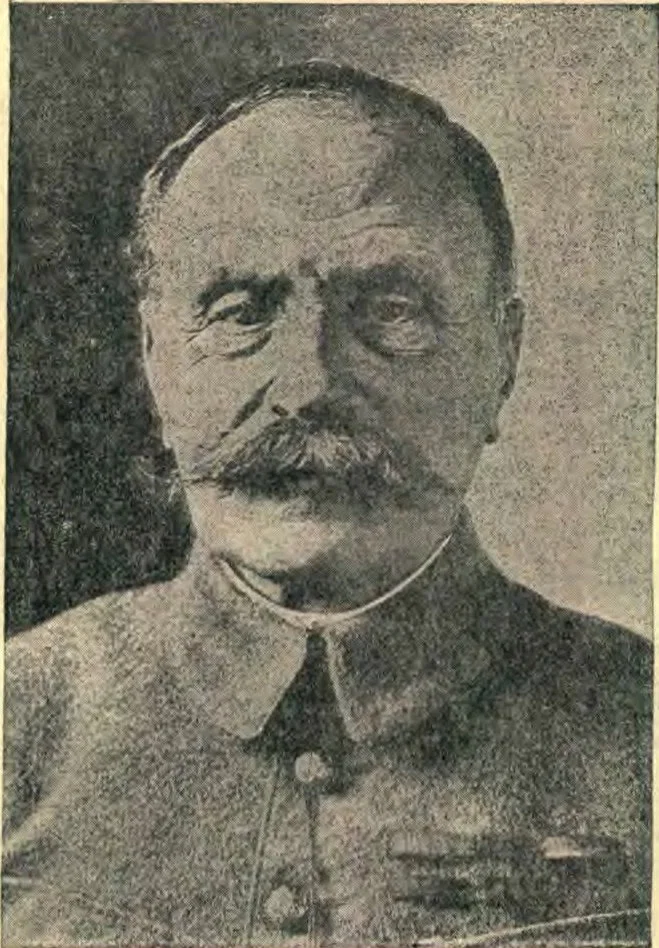
FERDINAND FÓCH is the idol of his countrymen and the hero of the great World War. His was the military genius which reorganized our forces in the face of a flushed, exultant foe, and led them to victory. The soldier, the gentleman, and the Christian are all combined in this one purposeful man—the marshal of France, the generalissimo of the Allies.

Childhood and Youth

Photo, Underwood and Underwood, N. Y.
MARSHAL FERDINAND FOCH
Photo, Underwood and Underwood, N. Y. MARSHAL FERDINAND FOCH
He was born Aug. 4, 1851, in the little mountain town of Tarbes, his father being an undersecretary of state in the prefecture of the Upper Pyrenees, and his early years were spent in this region rich in the traditions of such mighty warriors as Henry of Navarre and Napoleon Bonaparte. After finishing his work in the preparatory schools of Saint-Etienne and Metz, young Foch astonished his parents by deciding upon a military career, and accordingly made application for admission to the École polytechnique, the West Point of France. His brilliant work here soon distinguished him, and at the age of twenty-three, he was made captain in the artillery.

The Soldier

The young officer’s first real soldiering came during the Franco-Prussian War. The catastrophe which befell France in the loss of Alsace-Lorraine was a severe blow to his pride; although he suffered keen humiliation, he did not yield to depression, but set about to discover if possible the fundamental reasons why Prussia had won the struggle. Pursuant to this purpose he made an intensive study of strategy and military tactics, becoming a recognized authority on these subjects.

Director of the École de Guerre

When the great General Bonnal died, many names were submitted to the French premier as competent to head the great École de guerre (war school). But Mr. Clemenceau wanted a director above the ordinary, a leader for the young soldiers who was every inch a man, and so he himself decided to make the choice. The now “General” Foch never suspected, when the premier invited him to dine, that his name had been mentioned in connection with this honor. Suddenly, as dessert was served, Clemenceau remarked, “I have some good news for you, General. You have been appointed director of the École de guerre.”
“Director of the École de guerre,” repeated the bewildered general. “But, Premier, I am not even a candidate.”
“That may be, but you have been appointed, and I know you will fill the office capably,” replied the “Tiger of France.”
In this new capacity, he became the foremost teacher of the principles of strategy and tactics to the Frenchmen who were to take part in the World War. The strength of the Prussian Army, Foch taught his students, was due to the massing of their troops and their perfect organization for moving men and supplies. Its vulnerable point, he asserted, was the “absolute autocracy of the great headquarters, where plans were built, as an architect builds a house, impossible of modification if change became imperative.”
“You will be called upon later to become the brain of an army,” he told the young men in his classes, “so I say to you today: Learn to think.” He further taught them that the brain alone is not sufficient for thinking. The imagination, emotions, and aspirations must be centered upon the problem to be solved. Foch always maintained that the stirring strains of “La Marseillaise” helped the cadet to put on his soldier thinking cap. In his work as a teacher he emphasized the importance of individual responsibility, and trained his embryo officers to be men of judgment and initiative.
Part of his own rigid discipline was to look for the silver lining in every cloud. Optimism found in this quiet, purposeful soldier an ardent champion. He was often made the victim of politics, kept from his just deserts in the way of promotion, and assigned to seemingly unimportant commands, but “such was his fine confidence in life that he communicated to others, not his grievances, but his secret satisfactions.”

Called to Service in 1914

And then, in 1914, the terrible Great War gripped Europe. General Foch, recalled suddenly from a vacation to defend the frontier at Nancy, where he was commanding the Twentieth Corps, realized that the time had come when he was to put his theories to a practical test. The gallant Twentieth more than justified its peace-time reputation, and after the battle of Morhange, General Joffre intrusted him with the command of the Ninth Army. This was not, as might be generally supposed, an organized unit, but fragments of other organizations which had been badly broken up in the general retreat before the seemingly invincible Prussians. The retiring troops were engaged in violent rear-guard fighting, and discouraged as well, so it was no easy task which General Foch faced. But in a few days he accomplished the seemingly impossible, and the newly aligned battle front stretched from the channel to the Swiss border.

Battle of the Marne

The story of the battle of the Marne has been often told. At nightfall of the first day’s fighting, Foch’s new army had given ground practically everywhere. Morning brought an even fiercer German attack, but still the general did not flinch. Every temporary advance or forced retirement was made with perfect order and discipline. Even darker days followed, and it seemed that Paris must fall; yet at the sight of their leader, calm, courageous, and unafraid, the discouraged Frenchmen took heart. “The enemy,” he confided to them, “is trying to throw us back with such fury that I am sure it means things are going badly with them elsewhere, and they are seeking compensation.”
He was right. Von Kluck and Von Bülow were both retiring at his left, nevertheless Foch’s line was pushed back to the Aube River. Then Joffre sent the order: “The moment has come for the army to advance at all costs, and allow itself to be slain rather than give way.” The Ninth Army advanced against great odds. The day came on September 9, when the Prussians smashed its right wing, and wild with joy, began a premature celebration at La Fère-Champenoise, considering Paris within their grasp. That night Foch sent his now-famous message to the general headquarters: “My center gives way, my right recedes; the situation is excellent. I shall attack.” The gallant Forty-second Division was hurrying from his left flank to the rescue of their distressed comrades, and the surprised enemy found itself face to face with a new crisis. The Germans reeled, tried to reform their ranks, and then broke and fled in confusion. This daring attack saved the French capital. A few hours after the German evacuation, Foch established his headquarters at the scene of their ill-timed revelry.
With three fourths of his army beaten back it took a majestic faith for Foch to order an attack, but his was a faith which conquers despite difficulties. When the battle of the Marne was over, the Bishop of Cahors came to express his gratitude to the gray-haired general.
“Monseigneur,” answered Foch, “do not thank me, but Him to whom the victory alone belongs.”

Defense on the Yser

The German effort, broken at the Marne, was repeated six weeks later on the Yser. Foch was ordered to hurry his army to the threatened area, and with the same fearlessness he threw out his forces, in conjunction with the British and Belgian commanders, and attacked. It was on the eve of this battle that the unflinching warrior called the army chaplain to him and said: “Tomorrow we are to make a supreme effort in arms. Do you also make a supreme effort in prayer. All my trust is in God.” And after the victory was assured, he knelt in the dust of a shell-torn road, his war-scarred troops around him, and rendered homage to the great King in whom he trusts so implicitly.

Offensive on the Somme

The next task assigned General Foch was the organization of the offensive on the Somme, and even the enemy was forced to admire the superior planning which anticipated their every move, and brought the most carefully laid plans to disaster. At Dixmude, when it seemed that the French must surely be forced to retreat, it was Foch who ordered his soldiers to occupy higher ground, and open the sluices of the low country. This stroke of genius spread consternation throughout the Hun ranks, rendered hundreds of their large guns useless, and drowned their hope of victory in this direction.
In 1917 General Foch was made French chief of staff, and when the Allies realized the necessity of having a commander-in-chief, he was selected by unanimous consent. On March 26, 1918, he shouldered this gigantic task with the calm confidence that the armies he led represented the cause of right, and that right must win. France has since conferred upon this hero her highest honor—the title of Marshal of the Republic.
Marshal Foch’s belief in individual responsibility and judgment, which extends from the commanding officers to the humblest private in the ranks, is said to be the secret of the wonderful flexibility of his armies. “There probably never was before in history a battle fought in which every man comprehended as clearly as the commanders themselves what it was all about, and intelligently did their utmost to obtain the objective as at Château-Thierry.”

Foch’s Ten Commandments

This list of rules, drafted in the early days of his soldiering, and to which he still demands that his men adhere, are characteristic of their author, and well worth study:
“1. Keep your eyes and ears ready and your mouth in the safety notch, for it is your soldierly duty to see and hear clearly.
“2. Obey orders first, and, if still alive, kick afterward if you have been wronged.
“3. Keep your arms and equipment clean and in good order; treat your animals fairly and kindly, and your motor or other machine as if it belonged to you and was the only one in the world.
“4. Do not waste your ammunition, your gas, your food, your time, nor your opportunity.
“5. Tell the truth squarely, face the music, and take your punishment like a man; for a good soldier won’t lie, he doesn’t milk and is no squealer.
“6. Be merciful to the women of your foe and shame them not, for you are a man; pity and shield the children in your captured territory, for you were once a helpless child.
“7. Bear in mind that the enemy is your enemy and the enemy of humanity until he is killed or captured; then he is your dead brother or fellow soldier beaten or ashamed, whom you should no further humiliate.
“8. Do your best to keep your head clear and cool, your body clean and comfortable, and your feet in good condition, for you think with your head, fight with your body, and march with your feet.
“9. Be of good cheer and high courage; shirk neither work nor danger; suffer in silence, and cheer the comrades at your side with a smile.
“10. Dread defeat, but not wounds; fear dishonor, but not death, and die game; and whatever the task, remember the motto of the division: ‘It Shall Be Done.’”

The Christian and the Soldier

Yes, Marshal Foch led the Allied troops to victory, and dictated the humiliating terms of the armistice. But while the world at large sings his praises, and admirers try to explain his strategic moves by maps and diagrams, you will find the great general himself at worship in some quiet church, “humbly giving to God the glory, and absolutely declining to attribute it to himself.”

A Man of Prayer and Power

An American private, a California boy in France with the American Expeditionary Force, tells how one day he wandered into a quaint old church just back of the trenches. As he stood looking about him, a quiet, gray-haired man, with the eagles of a general on the collar of his shabby uniform, came in, and knelt in prayer. Only an orderly accompanied him. For full three quarters of an hour “the generalissimo of all the Allied armies was on his knees in humble supplication in that quiet church, while ten thousand guns were roaring at his word on a hundred hills that rocked with death. Millions of armed men crouched in trenches or rushed across blood-drenched terranes at his command. Generals, artillery, cavalry, engineers, and ranks fought and wrought across the map of Europe absolutely as he had commanded them,” and yet he counted it well worth his while to stop for a little communion with the great General, who never lost a battle. Most men as busy as Marshal Foch would feel that they could not spare this time. But we are told by those who know, that it “is no unusual thing for the commander-in-chief to do this. There is no day that he does not do the same thing, if there is a church within reach. He never fails to spend an hour on his knees every morning when he awakes from sleep; and every night it is the same. Moreover, it is not a new thing with him. He has done it his whole life long.”
One of his biographers says: “Men who do that which Foch does have no doubts. When Premier Clemenceau stood on the battle front with anxious heart, one look at the face of the general stilled his fears. He returned to Paris with the vision of sure and certain victory. The great agnostic statesman doubted, but the man of Christ did not doubt. The facts, then, in the case are that when the freedom of the world hung in the balance, the world turned to Foch as the one great genius who could save it from the Hun; and that Foch, who is perhaps the greatest soldier the world has produced, is, first of all, a Christian.”
When Marshal Foch was presented to President Wilson in Paris, he wore a plain service uniform without a single medal. The incident is characteristic of the man’s modesty, who has “neither time nor taste to talk about himself.” He is, according to his own statement, “a son of France, and a humble defender of human liberties.”
The great general is, as one writer declares, “a tender, heartbroken old father to whom the laying down of arms means not the leisure to wear laurels, but the right to sit again by his hearth, now desolate [for his only son was killed, and one of his daughters widowed by the war], and think back on happy days, and forward to a reassembled group in the house not made with hands.”
L. E. C.

If We Put Off Repentance Another Day

If we put off repentance another day, we have a day more to repent of, and a day less to repent in.— Mason.

Life Is a Check Signed in Blank

“LIFE is a check signed in blank; what it is worth depends on how you fill it out.”

Decision: The Essential Element of Success

Decision

DECISION is an essential element of success, it matters not whether one is engaged in the work of God or in worldly pursuits. If you would perfect a character that will be acceptable to God, you must cultivate the quality of firm, quick decision in favor of the right. Decide to turn your back upon the world; to forsake every pet theory, every fond hope, and every cherished desire that stands between you and eternal life. And when once you have made a decision, regard it as unchangeable as the laws of the Medes and Persians — unless of course you come to realize that your judgment is in error.
The cause of God today needs as workers men and women who can grasp the needs of a situation quickly and act immediately, before the enemy of souls has time to gather his forces to attack. We as a people are facing grave dangers, and it is necessary for our own salvation, and for the salvation of our fellows, that we do not waver and halt between two opinions.
James declares that “a double-minded man is unstable in all his ways,” and compares him to a wave of the sea that is driven and tossed by every wind that blows. This is a picture true to life, and descriptive of the man who lacks decision of character. Many a promising man has missed success because he could not choose his life work definitely. He tried this, that, and the other thing, but lack of decision prevented him from making a success in any line.
The man who trains himself to think clearly and logically will of necessity cultivate the habit of decision. When problems arise, he will be able to grasp them in their different phases and give a definite “yes” or “no” in answer.
The man who lacks decision is a mere jellyfish. He follows the line of least resistance, and always agrees with the one to whom he is talking. If he ever does develop courage to think for himself, he is turned aside by the first bit of opposition met. He never passes far beyond the introduction stage of any course he may plan to pursue; something else always attracts his vacillating mind.
Great men of past ages have been men of decision, men who did not feel it necessary to always please their fellows, but who had firm convictions of duty and stuck to them. Men of decision are the men who meet emergencies. It was Camillus’s power of quick decision that gave him courage to cast his sword into the scales in place of the ransom of gold with which the Romans were about to purchase peace from their enemies. It was the power of decision that gave Julius Cæsar courage to cross the Rubicon. Alexander the Great in a very short time built up one of the greatest empires of the ancient world. And how did he do it? By exercising the power of quick decision. He seldom gave the enemy a chance to gather force.
Jesus Christ, our great Example, was a man of decision. He was called upon to face mighty issues, and to decide without time for reflection questions of universal importance. If he had wavered for one moment during his temptation in the wilderness, or as he sat upon the pinnacle of the temple, or stood upon the mountain peak and viewed the kingdoms of the world, Satan would have grasped the opportunity to overcome him, and the world would have been left in darkness and despair. As he lived, so may we. Christlikeness will bring that decision of character which is one of the most important elements of success.
W. L. LATHAM.

The Soul's Rainbow

RACHEL HOPE HALL
The day had been dark and stormy; Torrents of driving rain Had hidden the bright rays of sunshine, And darkened the world again.
But as I peered from my window, The sun flecked forth its gold, Clasping the rain-kissed earth Within its gentle fold.
And I saw before me a promise, A promise made of old, In the form of a beautiful rainbow, A part of love's story told.
And I read in the tint of that rainbow A message from above, Which dispelled the gloom of darkness, Assuring, “God is love.”
This is the message it brought me, Quieting all my fears: The beauties of life would be lessened Had the eyes no tears.
So now in the midst of sorrow I recall through the weary years, That the soul could have no rainbow Had the eyes no tears.

Light Through the Cloud

RUTH NAOMI WILCOX
Among the rounding foothills, and not far from the high, rugged mountains, stands the Rocky Mountain Sanitarium.
It was a mid-August afternoon. The high peaks as well as the lowering hills looked parched and dry. White clouds floated slowly in the deep blue sky, and a sultry breeze stirred the leaves with a soft rustle. The most refreshing spot in the whole landscape seemed to be the white hospital, with its wide verandas shaded by green ivy. White-capped nurses in uniform slowly rolled their patients back and forth. Others were reading to the sick. Two or three groups of convalescent patients sat chatting as they sipped cold lemonade.
At the farther end of the wide porch, Mabel Dawson was resting after a strenuous day. As she sat looking down upon the broad, well-kept lawn and the little lake beyond, her thoughts strayed homeward. How she longed to be there for just one day, and have a chat with mother and some advice from father! How she would enjoy an afternoon on the banks of the gurgling little stream at the foot of the knoll where “home” stood!
Mabel was one of the most popular nurses in the sanitarium. Physicians, classmates, and patients all admired and respected her. Careful early training had made her faithful to duty, and her high spiritual and moral ideals had been an inspiration to many of her friends. Patients demanded her services, for they received strength from her confidence, and under her radiant good cheer forgot their suffering as she ministered to their needs. Mabel, however, knew nothing of her popularity. Hers was an unconscious charm.
But Mabel Dawson had her trials too. Today she wished she had never undertaken the nurses’ training course. She was discouraged. For a month now she had been nursing an extremely nervous old lady, one of the few who could not seem to respond to her happy, but quiet ways. From morning till night she heard only peevish words and complaints. Nothing seemed to please. Then, too, that morning Dr. Moore had severely chided her for some slight mistake. Life looked dark and gloomy, even though the sun shone radiantly.
The one joy of the day had been an invitation from a friend, one of the wealthy women patients in the sanitarium, asking Mabel to accompany her on a trip to Europe. All her expenses would be paid, and her only obligation would be the giving of an occasional treatment to her friend.
But now not even a trip to Europe seemed alluring as the tired nurse thought of home. She knew that her parents would not approve of her associating for so long a time with worldly people. She realized that the acceptance of the invitation would open the way to temptations that would test the strongest character. But then, she asked herself, what was the use anyway? Her lifelong desire had been to find a place in the organized work of her church and fill a position of trust and responsibility. But after graduation what chance would there be for her beyond nursing in private homes? There she would be all alone among worldly influences. But in this hour of discouragement she remembered her mother’s words: “When things look the darkest, the light is about to break through the dark clouds.” And so, with a glance at her watch, the old cheery smile flashed back, and she returned to her patient, determined to forget her blues.
On this same sultry August afternoon the sanitarium board had gathered for its monthly meeting. The head nurse was soon to leave, and they must choose some one to take her place. The names of several of the senior nurses were considered, but Mabel Dawson seemed most capable of all. Unanimously she was elected to the position.
When she went to her room late in the evening, she found this letter on her table:
“ROCKY MOUNTAIN SANITARIUM,
August 20, 1907.
“DEAR MISS DAWSON:
“As you probably know, our head nurse has passed in her resignation. For some time the board has been looking for some one to take her place. Your name has been favorably considered, and at the unanimous request of the board I take pleasure in asking you to accept the position of head nurse in this institution upon your graduation in the near future.
“Wishing you success, I remain
“Sincerely yours,
E. F. RAND, Secretary.”
As Mabel laid the letter down and heaved a sigh of surprise and relief, her mother’s words again flashed into her mind: “When things look the darkest, the light is about to break through the dark clouds.” Kneeling by her bedside, she devoutly thanked God for helping her to remain faithful to his cause, and for giving her her heart’s desire, and asked for renewed strength for efficient service in her chosen work.

The Father's Love and Power

NEVER let enter your mind a shadow of doubt as to the love of the Father's heart, or the power of the Father's arm.—Müller.

Accidental Bob

BOB'S dark skin proclaimed him a loyal son of the Southern sky. His brown eyes, dark hair, and pleasant smile made him prepossessing, despite the fact that his underlip and his hands were beyond regulation size. He was quick in his studies, and loved learning for its own sake. He was hard-working, frequently foregoing sleep and food to complete a task.
He was a fast workman, and capable, only for his blundering habit. He blundered here and he blundered there. He spilled the bucket of water here, and broke the bottle of bluing there. He tore the hall paper as he moved the coat rack; broke the mirror as he tried to shave; dropped the accumulated soot on the parlor rug as he changed the gas mantle; spilled the plastering on the morris chair, and the red paint on the sidewalk. He lost the tax receipt, and paid the wrong bill. He dropped his father's glasses, broke his aunt's choicest vase, and tore the pocket off a borrowed coat. If he was painting a roof, he spilled the paint or himself upon the roof and the sidewalk below. If he was staining inside work, the piano or Victrola would be sure to receive a partial coat. He managed always to do more than he was hired to do.
Friends and foes needed his work, but learned that they could not afford to hire him because of this extra work he always managed to do.
He was fast getting to the place where no one could trust him to do a satisfactory job, and had gained for himself among the boys the name of “Accidental Bob.”
Bob never meant to commit these unfortunate depredations. He was always sorry, but not after the godly sort, else somehow, by hook or by crook, he would have invented or discovered an antidote for his blundering propensity.
Evolutionists say man was an accident. We are willing to allow this of Bob Reed, else how could so many blunders result from one person's performances?
Bob's quickness at creating excuses for his irregularities was only equaled by his adeptness at blundering. He never sensed that these things were about to make life a failure for him, despite the high goal he had already set for himself.
In his town there lived an elderly man who was a devoted friend of Bob's parents and grandparents. In fact, the latter had given him his start in life. Having no heirs, this worthy gentleman had determined to settle a legacy upon Bob; but he could not do it unless there was a change in the boy. How to effect this change occupied his thought for days and weeks.
Finally he went to a neighbor who greatly needed some work done. He recommended Accidental Bob to him. “No; I had him once, and my house still bears his marks. He's a fairly good workman; but he's bound to spoil something before the job is finished.”
How would it do to have a written contract to the effect that he forfeit five dollars for the first accident of whatever character, and ten for each succeeding one?”
“Well, I might consider him under those conditions. Perhaps I will, if for no other reason than the hope of helping the boy to greater carefulness, for I like Bob.”
The contract was duly signed and carried out, much to the chagrin of Bob, and somewhat to the depletion of his purse.
Bob soon got another job in the opposite part of town; but was nonplused to find that the man inserted a similar clause in the contract. He bit his lip and signed it, determining that it should be null and void so far as his part was concerned. And his grit almost carried the day, but not quite.
Everywhere he went for weeks he found himself up against the same proposition. He met the situation in a manly spirit, and finally found that he was not a bit afraid to affix his name to the most drastic contract. For he had been so humiliated by his first experience, and so inconvenienced by the pecuniary loss it occasioned, that he did some serious thinking.
He kept up this thinking operation through the second, the third, and even the fourth experience, and at the finishing of the fifth contract he found it was possible to do his work without even one small mistake.
Then it was that he saw the real significance of his past blundering. He saw that it had not only injured his reputation, but had brought serious reproach upon his profession as a Christian. For the sake of the gospel truth, for his own sake, for the sake of others, he determined to overcome his carelessness.
His resolve was carried out so successfully that in time the boys, from overhearing the complimentary speech of their elders, began to call him Careful Bob instead of Accidental Bob.
Thus it was that Careful Bob became the heir to a neat little sum left him by one whom he later found was responsible for the rebate contracts that had wrought such a wholesome reformation in his life, transforming him from an exasperating blunderer to one who could be depended upon for unusual carefulness and precision. F. D. C.

AUDREY K. BROWN

Day

THROUGH the gate of morning Comes the young child Day; Softly lifts the sunbeams Gleaming ’cross his way.
Pausing just a moment Ere he passes through, Throwing shafts of sunlight On the morning dew.
Many gifts he carries Which he gives away; Some are kept and cherished, Others thrown away.
In his bag he carries Sorrow, woe, and pain, Hope, success, and failure, Smiles, and tears, and gain.
Through the gate of evening Day has passed away, Old and bent and weary, All his hair turned gray.
But he leaves the promise Of a sure return, Bringing us new lessons, If the old we learn.

AUDREY K. BROWN

We Wait for the Lord, Our Beloved

“We wait for the Lord, our Beloved, Our Comforter, Master, and Friend, The substance of all that we hope for, Beginning of faith and its end; We watch for our Saviour and Bridegroom, Who loved us and made us his own; For him we are looking and longing. For Jesus, and Jesus alone.”
Continue reading: It Is Not the Correct Thing