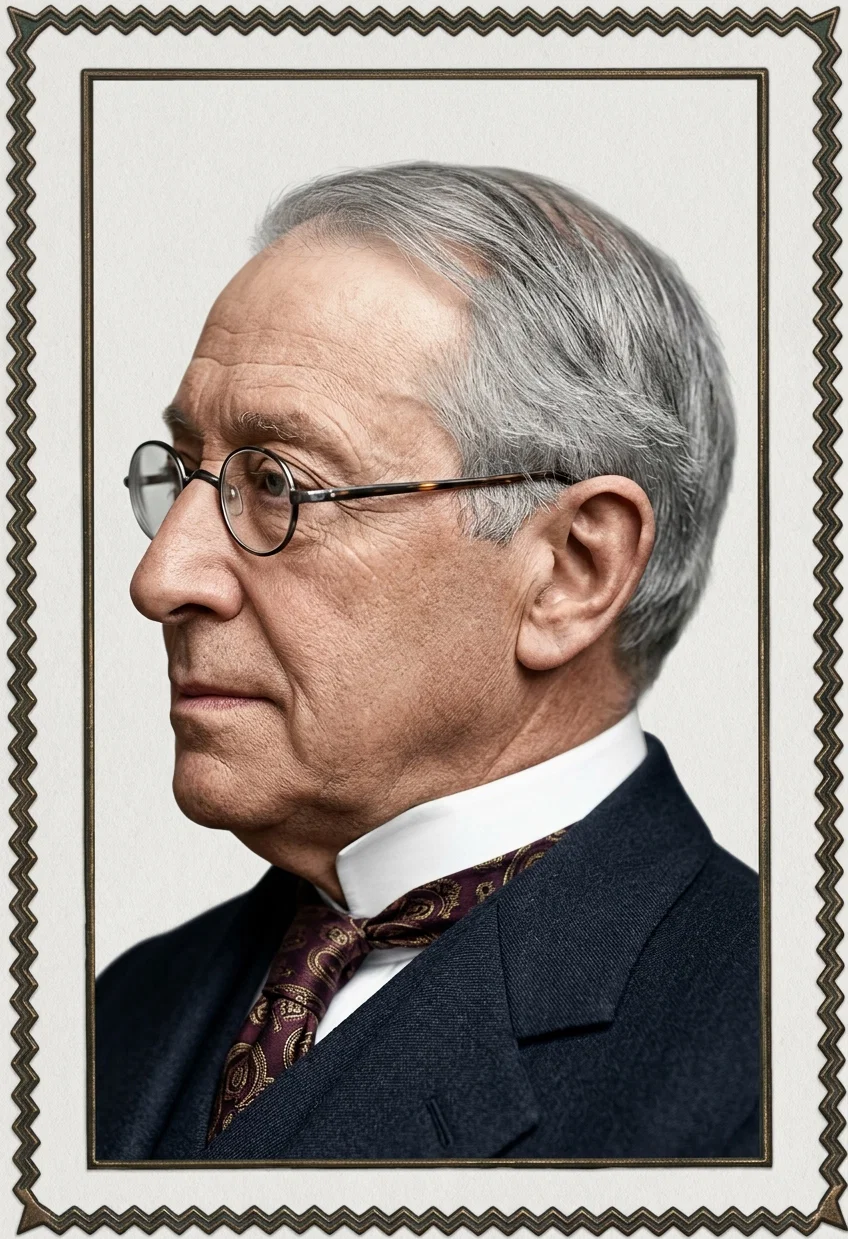
The Chicago “Inter-Ocean,” in commenting on Dr. Eliot’s prophecy of a “new religion,” observes that “such a religion might bring to some few spirits a mild sensual happiness, but it could do nothing at all to establish its own professed ideal of the brotherhood of man, because it would be purely individual and egotistical in its nature. Such proposals and prophecies are, of course, the product of the arid mind which says ‘partisanship’ and imagines it has said ‘ignorance;’ which says ‘doctrine’ and imagines it has said ‘bigotry;’ which says ‘dogma’ and imagines it has said ‘narrowness.’ It is all a mistake to call this “product of the arid mind” a new religion. The statement of Solomon that “there is nothing new under the sun” applies with astonishing aptness to ecclesiastical history. All the expedients imaginable seem to have been exhausted by which men would evade the simple duty of believing the truth and escape responsibility for doing their plain duty to God and man. In the rubbish-house of church history can be found the disjointed parts which Harvard’s ex-president has pieced together. In this composite will be found upon close analysis Unitarianism, deism, rationalism, natural evolution, not a little infidelity, and a few other scraps.
Mr. Bryan’s Opinion of Eliot’s Religion
It so happens that this new religion is the very religion that Dr. Eliot has practically monopolized for a lifetime. Its good features have been borrowed, without credit, from Christianity, and its immaterial features need no copyright to prevent their being appropriated. Dr. Eliot may be a great educator, but his prophecies are like other uninspired prophecies — half wish and half environment.
It is no new thing to have people resent11the existence of a divine standard of conduct. Some regard it as humiliating to confess that a life can be superior to their own, or to admit that there are commandments binding upon the conscience. But the Christian religion has grown in influence in spite of Dr. Eliot, and it will continue to exist even when his death withdraws the stimulus furnished by his opposition.
If the scholarly ex-president would only include the Bible in his model library and read it, he would find that it does not present a religion which deals “chiefly with sorrow and death,” but that it abounds in “joy and life.” He seems to have overlooked the fact that at the birth of the Founder of Christianity angels sang and proclaimed “Peace on earth and good-will toward men.” The old religion is good enough.
Literary Notices
“The American Standard Revised Bible.” Self-pronouncing, black type, interleaved edition. Thomas Nelson & Sons, 37 East 18th Street, New York.
This edition may emphatically be called the student’s Bible, and the careful student may make it to him a Bible most valuable. Every other leaf is a blank, ruled on both sides, for notes. If the student will take care in the selection of the matter which he places on these interleaves, he will have a “Bible Helps” par excellence. The type of the Bible before us is minion, but, black-faced on the thin, opaque India paper, is very clear. To one not used to them, the interleaves may bother a little at first, but not long. The corners of the thin paper will not crumple and fold so easily. The excellent Standard American Revised Version is now published in every form which the various Bible lovers could ask; it ought to become more popular. It is a revision based on the best Hebrew and Greek texts; it is a more uniform and clearer translation; it is a conservative translation; it presents the general style of our common translation; it replaces words the meaning of which have completely changed, by equally good English terms, such as “sod” by “boil;” “earing” by “plowing;” “astonied” by “astonished;” “prevent” (to go before) by “precede,” etc., etc. It is, all told, the best translation in the English language.
“Our Misunderstood Bible.” By H. Clay Trumbull. Price $1.00. The Sunday School Times Company, Philadelphia.
This book is written especially to clear up some points quite generally misunderstood, as is said in the preface: “Some of these misunderstandings are easily accounted for, and might be easily removed; others are not easily accounted for, yet have prevailed, without being accounted for, from generation to generation.”
One excellent point which the author clears up is that there is no break in God’s plan from the Old to the New Testament. The popular idea is “that law is the religion of the Old Testament, love is the religion of the New.” The author of this book says, “If it could be shown that the New Testament is not consistent with the Old, and that it presents God as of a different spirit from that in which He was revealed in the earlier disclosures of Himself to men, it would be necessary to accept one of these statements as true, and to reject the other as not true.”
Many similar ideas are taken up, carefully reviewed, and the truth of the matter, as seen by the author, clearly stated. There are some things in the book with reference to angels which we can not endorse as Biblical. However, those who desire to have an exact understanding of the Bible will do well to read this little book, as it will give the reader a better knowledge than before he read its pages.
“Christian Science Before the Bar of Reason.” By Rev. L. A. Lambert, LL.D. Price $1.00, postage 10 cents. Christian Press Association Pub. Co., New York.
While this book is written by a Catholic, it is nevertheless an excellent argument against Christian Science from the metaphysical standpoint. In this book Mr. Lambert shows the utter inconsistency of Christian Science, its inconsistency with reason, its inconsistency in language, its inconsistency in denying the personality of God, and claiming to be Christian.
An excellent point made in the book is that Christian Science is pantheistic in that it denies creation. Those who would like a good, fair presentation of the logical difficulties in the way of Christian Science, will be well repaid in their perusal of this book. Mr. Lambert has great skill in meeting skepticism, and has done a good work in arraigning “Christian Science Before the Bar of Reason.”
“The Real God: The Universal Mind and the Divinity of Man.” By J. Herman Randall. H. M. Caldwell Co., New York and Boston. Price 60 cents.
This is a very neatly printed little book. It sets forth in an alluring manner the false philosophy which is becoming so prevalent in these days, utterly denying the great facts of the atonement, and the personal God and Saviour. The author—who, sad to say, is a Baptist pastor—truly says that “there is at the present time, both inside the church and out, a feeling of unrest and dissatisfaction, more or less conscious that they are not getting out of religion all that they might.” But the wise thing to do in such a case as that, is not to turn from the great historic Christianity, but it is to seek for that rest, that strength, that life which can come only through the Lord Jesus Christ. The reason why the unrest is in the world at the present time is12because Christianity has been forsaken. The only real presence that the soul can ever know of God is that which comes through faith in the Lord Jesus Christ. The philosophy presented by such books as the one which we have under review, is that which deifies man, leads man to look within himself for that which does not exist, and utterly sets aside the only means by which man can come into possession of the divine Spirit. It is a philosophy which charms only to disappoint.
Temperance in England
The English Blue Book recently issued, shows that during the last two years the number of licensed bars in England and Wales has decreased 3,919. Nevertheless there remain 120,441, or 34 to every 10,000 of the population, or one bar to every 294 persons, men women, and children. Think of it, one to about every 60 men! There has been an increase of 980 “clubs” in which intoxicants are sold to their own members. There has been a decrease in convictions for drunkenness amounting to 9,261—equal to 5 per cent of the average total in previous years. Unfortunately there has been a marked increase in beer drinking wherever the old-age pensions have been noticeably distributed, and the “publican” (the liquor-dealer) seems to derive more benefit from this moiety than any vender of life's real necessities.
Spain and Professor Ferrer
WHEN Spain will hear the last of the execution of Professor Ferrer is difficult to tell. A wave of indignation seems to have swept all over the world. It is claimed that it was his teaching which led to the revolution in Spain, and yet others insist that all that he said would have been perfectly harmless if the government had not been what it is. In London the protest took the form of processions marching through the streets carrying red flags, crape bound. A black bordered banner was raised against the Nelson monument, with big letters that could be read from afar, “To hell with the murderer Alfonso.” The Countess of Warwick declared, “No words are too strong to express Europe’s horror at the murder of Ferrer.”
We have seen no European papers or opinions which even attempt to justify it; and it was said that under the world’s opinion Alfonso is blaming his minister because pardon of Ferrer was not suggested.
These sentiments of protest do not come from Socialists alone. The pope pleaded for clemency; the king of Italy sent his earnest protest; the great capitals and universities of Europe, the centers of intellectual thought in America, all expressed the same opinion. But Ferrer had taught what was considered revolutionary doctrine, and therefore he it was who was considered guilty of the revolt and bloodshed, and he must die.
But this is one of the indications that we are likely to see more and more of in the last days, and which is sometimes manifest in whole communities in America in mob law. Sometimes the very men that howl for mob law are not Socialists; are not anarchists. They are what would be called normal American citizens; but they yield to the mad idea suggested by the spirit of all evil, and are carried to extremes. A wild suggestion or two from some madman is sufficient to fire a whole community, and justice is never vindicated, and many times the totally innocent suffer.
Health Germs
PROFESSOR METCHNIKOFF'S health germs for the staying of old age have been placed in the form of chocolate drops so as to render them more palatable. The originator will be remembered as one who has advocated the taking of sour milk for the same purpose. Each of these new bon bons is guaranteed to contain at least ten million carefully isolated lactic acid, or massol bacilli in the highest state of activity. This bacillus is the great foe of the red bacillus, colus communis, or putrefaction microbe—not only its foe, but its undisputed master. By the taking of three of these bon bons daily, we are told, one's system is soon pretty thoroly cleansed from the putrefaction germs.
Men are doing everything in their power to prolong life, or make living easier. It is God only that can make man immortal. Physical health frequently comes by physical righteousness. Eternal health can come only by eternal righteousness.
San Francisco’s Election
THERE is one homely but vigorous and expressive text of Scripture that came to many as they heard of the results of San Francisco’s recent election: “It is happened unto them according to the true proverb, The dog is turned to his own vomit again; and the sow that was washed to her wallowing in the mire.” 2 Peter 2:22. Such is all “reform” with the principles of righteousness and life in Jesus Christ left out.
The Vegetarian Cook Book
By E. G. Fulton
By E. G. FULTON
The author has had years of experience in vegetarian cookery and in the management of vegetarian cafes, and cafeterias. With its aid the chef, cook, or housewife is able to prepare appetizing, healthful meals without the use of any flesh food.
This book contains 226 pages, including a handy and well-arranged index of all the recipes given.
Tastily bound in cloth, price, post-paid, 75 cents
Pacific Press Publishing Assn.
Mountain View, California
Portland, Ore. Regina, Sask., Can. Kansas City, Mo.
ELO THE EAGLE AND OTHER STORIES
By Floyd Bralliar
BY FLOYD BRALLIAR
THIS new animal book for young folks is receiving an eager welcome by all nature lovers. ELO THE EAGLE is the first of a series of ten interesting stories of animals, wild and otherwise; being, with one exception, the life histories of boyhood friends of the author. Many strange and laughable anecdotes are related by Mr. Bralliar, all of which are strictly true and vouched for by reliable witnesses.
The book is lavishly illustrated by special drawings, with a full-page half-tone design printed in Luxotype at the beginning of each chapter. Two hundred pages, printed on egg-shell paper, beautifully bound in red cloth. Price, post-paid, $1.00.
Easily sold by young people. Agents wanted.
Pacific Press Publishing Assn.
Mountain View, California
Portland, Ore. Regina, Sask., Can. Kansas City, Mo.
Scripture and Song in Worship
“Scripture and Song in Worship.” Arranged by Francis Wayland Shepardson and Lester Bartlett Jones. Well bound in cloth; price, post-paid, 59 cents. The University of Chicago Press, Chicago.
The aim of this collection is a service book for the Sunday-school or other religious gatherings. It consists of generally old standard hymns and songs set to music in connection with responsive Scripture readings, and sometimes prayers, arranged under eighteen different divisions, of which the following are typical: The Majesty and Power of God, Companionship with God, Prayer, The Birth of Jesus, Jesus the Teacher, Jesus the Saviour, The Risen Lord, The Sabbath, The Disciples of Jesus, Christian Service, Righteousness, Confidence, Courage, Missions, Triumph, Children’s Day Service, etc. The index is unique, giving the page, the first line of the hymn, the author, the name of the tune, and the composer. All in all it is an excellent book for the purpose designed.
With Christ in Palestine
“With Christ in Palestine.” By A. T. Schofield, M.D., illustrated with photogravures. Price $1.25. R. F. Fenno Co., 18 E. 17th St., New York.
This little work consists of four addresses given by the author before a London club, suggested by a visit to the Holy Land the year previous. These four addresses cover a description of Bethlehem, or the Birth of Christ; Nazareth, or the Life of Christ; Capernaum, or the Work of Christ; and Jerusalem, or the Death of Christ, with the various surroundings of these places. The stories are interestingly told, devout, Christian, helpful. One is brought nearer to the personal Saviour by reading it.
The Mistakes We Make
“The Mistakes We Make. A Practical Manual of Corrections in History, Language, and Fact for Readers and Writers.” Compiled and edited by Nathan Haskell Dole. Thomas Y. Crowell & Company, 46 E. 14th St., New York.
The little book before us is a very convenient little manual, and it treats in a kindly way the mistakes which we are all so likely to make. As the editor’s note declares, it “tries to take the place of a friend, good-natured, and yet critical.” It notes things called by wrong names; mistakes we make about places, plants, animals, birds, and insects; common mistakes of many kinds; words, phrases, and things that are misunderstood; mistakes in connection with ancient history, religious history, and English history; curious blunders in general history; blunders made by famous authors and others; misquotations, history stumbling-blocks, mistaken derivations, mistakes in speaking and writing, etc., etc. It is a handy and helpful little book.
“The Secret of Sex. The Discovery of a New Law of Nature.”
By E. Rumley Dawson, L. R. C. P., London; M. R. C. S., England. Cochrane Publishing Company, Tribune Building, New York.
The author of this little work, a physician of large experience, is not writing to pander to morbid curiosity, nor to please the prurient minded. He believes that he has discovered a simple law of nature by which sex may be controlled, and the argument and evidence which he presents seem to make his claim reasonable.
The Steel Square Pocket Book
“The Steel Square Pocket Book.” By Dwight L. Stoddard. Second edition. Revised and enlarged. Price 50 cents. Industrial Publication Co., 178 Fulton Street, New York.
This is a practical and convenient little book on the best methods of using the carpenter’s steel square. The author is a practical mechanic, and tells the reader just how he uses his square. There are many carpenters who know some things about a square, but who know very little indeed of all the uses to which the square can be put. How to measure lumber, how to cut octagons, braces, rafters; instruction on stair-making, bridging, degrees and pitches of roof, various kinds of gable, valley, hip and jack rafters; and about everything else needful is told in this plain, practical little book.
Bibles
Bibles.— Remember that we are headquarters for anything in the Bible line. We shall be pleased to send you our catalog of Bible selections on application. Pacific Press, Mountain View, Cal.
We Want More Agents
By Editor
Who desire to engage in clean, good-paying, interesting work of an elevating character. The Signs Monthly sells easily with but little experience. We will gladly help you get started.
Many agents are already at work with this magazine. Hundreds more who believe the message it contains are needed to help circulate it. You may have opportunities which have not been taken advantage of in the past. Will you not join us this month in the circulation of a liberal quantity? You will receive a blessing in it.
Twenty-five copies cost $1.00; they sell for $2.50. 100 cost $4.00. You sell them for $10.00. Order of your Tract Society.
This November issue is known as a “City” number. It is one of the most attractive and highly illustrated numbers of the SIGNS yet issued. Its subject will favorably impress every friend of good government; and its messages, presenting the lessons God would have conditions teach, must win their way to honest hearts.
Over 25,000 Copies Sold to Date, Nov. 5
PARTIAL CONTENTS OF THIS ISSUE
Current Topics. Review of work and power of E. H. Harriman, with map showing lines of railroad in which he held controlling interest. Our Nation’s expenditures for luxuries made interesting with five striking illustrations.
Cities. “Legalized Crime,” in which reports and incidents taken from recent Chicago records show actual conditions, and form a message to parents and the youth concerning the dangers. “New York,” some of the expositions made by ex-Commissioner, of Police Bingham. “Reforms:” San Francisco, Pittsburg, Los Angeles. Other articles give the prophecies which show the significance of these conditions.
Bible and Prophecy: “Christ the Author of the Sabbath.” “Struggles for Religious Liberty in the Western World.” “The Time and Manner of Receiving Perfected Life.” A Bible reading.
Home and Health: A story entitled “How the Message of Jesus’ Coming Began in America.” “The Road to Health.” By Dr. Kress.
Address your Tract Society, or Signs of the Times, Mountain View, Cal.