27 “And the boys grew; and Esau was a cunning hunter, a man of the field; and Jacob was a plain man, dwelling in tents. 28 Now Isaac loved Esau, because he did eat of his venison; and 29 Rebekah loved Jacob. And Jacob sod pottage; and Esau came 30 in from the field, and he was faint; and Esau said to Jacob, Feed me, I pray thee, with that same red pottage; for I am faint; therefore was his name called Edom. And Jacob said, 32 Sell me this day thy birthright. And Esau said, Behold, I am at the point to die; and what profit shall the birthright do to me? And Jacob said, Swear to me this day; and he sware 34 unto him; and he sold his birthright unto Jacob. And Jacob gave Esau bread and pottage of lentils; and he did eat and drink, and rose up, and went his way; so Esau despised his birthright.”
1 “And it came to pass, that when Isaac was old, and his eyes were dim, so that he could not see, he called Esau his elder son, and said unto him, My son; and he said unto him, Here am I. 2 And he said, Behold now, I am old, I know not the day 3 of my death. Now therefore take, I pray thee, thy weapons, thy quiver and thy bow, and go out to the field, and take me 4 venison; and make me savory meat, such as I love, and bring it to me, that I may eat; that my soul may bless thee before I 5 die. And Rebekah heard when Isaac spake to Esau his son. And Esau went to the field to hunt for venison, and to bring it. 6 And Rebekah spake unto Jacob her son, saying, Behold, I 7 heard thy father speak unto Esau thy brother, saying, Bring me venison, and make me savory meat, that I may eat, and 8 bless thee before the Lord before my death. Now therefore, my son, obey my voice according to that which I command 9 thee. Go now to the flock, and fetch me from thence two good kids of the goats; and I will make them savory meat for thy 10 father, such as he loveth; and thou shalt bring it to thy father, that he may eat, so that he may bless thee before his death. 11 And Jacob said to Rebekah his mother, Behold, Esau my 12 brother is a hairy man, and I am a smooth man. My father peradventure will feel me, and I shall seem to him as a deceiver; and I shall bring a curse upon me, and not a blessing. 13 And his mother said unto him, Upon me be thy curse, my son; 14 only obey my voice, and go fetch me them. And he went, and fetched, and brought them to his mother; and his mother 15 made savory meat, such as his father loved. And Rebekah took the goodly raiment of Esau her elder son, which were 16 with her in the house, and put them upon Jacob her younger son; and she put the skins of the kids of the goats upon his 17 hands, and upon the smooth of his neck; and she gave the savory meat and the bread, which she had prepared, into the 18 hand of her son Jacob. And he came unto his father, and said, My father; and he said, Here am I; who art thou, my son? 19 And Jacob said unto his father, I am Esau thy first-born; I have done according as thou badest me; arise, I pray thee, sit 20 and eat of my venison, that thy soul may bless me. And Isaac said unto his son, How is it that thou hast found it so quickly, my son? And he said, Because the Lord thy God sent me good 21 speed. And Isaac said unto Jacob, Come near, I pray thee, that I may feel thee, my son, whether thou be my very son 22 Esau or not. And Jacob went near unto Isaac his father; and he felt him, and said, The voice is Jacob’s voice, but the hands 23 are the hands of Esau. And he discerned him not, because his hands were hairy, as his brother Esau’s hands; so he 24 blessed him. And he said, Art thou my very son Esau? And he said, I am. And he said, Bring it near to me, and I will eat of my son’s venison, that my soul may bless thee. And he 25 brought it near to him, and he did eat; and he brought him wine, and he drank. And his father Isaac said unto him, 26 Come near now, and kiss me, my son. And he came near, and kissed him; and he smelled the smell of his raiment, and blessed him, and said,
See, the smell of my son
Is as the smell of a field which the Lord hath blessed;
28 And God give thee of the dew of heaven,
And of the fatness of the earth,
And plenty of corn and wine;
29 Let peoples serve thee,
And nations bow down to thee;
Be lord over thy brethren,
And let thy mother’s sons bow down to thee;
Cursed be every one that curseth thee,
And blessed be every one that blesseth thee.
30 And it came to pass, as soon as Isaac had made an end of blessing Jacob, and Jacob was yet scarce gone out from the presence of Isaac his father, that Esau his brother came in from 31 his hunting. And he also made savory meat, and brought it unto his father; and he said unto his father, Let my father arise, and eat of his son’s venison, that thy soul may bless me. 32 And Isaac his father said unto him, Who art thou? And he said, I am thy son, thy first-born, Esau. And Isaac trembled very exceedingly, and said, Who then is he that hath taken venison, and brought it me, and I have eaten of all before thou camest, and have blessed him? yea, and he shall be blessed. 34 When Esau heard the words of his father, he cried with an exceeding great and bitter cry, and said unto his father, Bless me, even me also, O my father. 35 And he said, Thy brother came with subtlety, and hath taken away thy blessing. And he said, Is not he rightly named Jacob? for he hath supplanted me these two times: he took away my birthright; and, behold, now he hath taken away my blessing. And he said, Hast thou 37 not reserved a blessing for me? And Isaac answered and said unto Esau, Behold, I have made him thy lord, and all his brethren have I given to him for servants; and with corn and wine have I sustained him; and what shall I do for thee, my son? 38 And Esau said unto his father, Hast thou but one blessing, my father? bless me, even me also, O my father. 39 And Esau lifted up his voice, and wept. And Isaac his father answered and said unto him,
Behold, of the fatness of the earth shall be thy dwelling,
And of the dew of heaven from above;
40 And by thy sword shalt thou live, and thou shalt serve thy brother;
And it shall come to pass when thou shalt break loose,
That thou shalt shake his yoke from off thy neck.”
SUGGESTIVE QUESTIONS.
(1) What were the occupations of Esau and Jacob? Gen. 25: 27. (2) Which was the elder? What revelation was made concerning them? How old was Isaac at the time of their birth? Vs. 23, 26. (3) Whom did Isaac love? and why? Whom did Rebekah love? Whom did God love? Verse 28; Rom. 9: 13; John 3: 16. See note. (4) Narrate the circumstances by which Esau despised the birthright. Vs. 29-34. (5) What did Isaac purpose to do for Esau before his death? What did he ask Esau first to do for him? Gen. 27: 1-5. (6) Who overheard what Isaac said to Esau? V. 5. (7) To whom did she make this known? and what did she tell him to do? Vs. 6-10. (8) What objection did Jacob raise to this plan? Vs. 11, 12. (9) What reply did his mother make? V. 13. (10) What did Jacob then do? V. 14. (11) What special precautions were taken to make this deceptive scheme complete? Vs. 15-17. (12) Give the introductory conversation between Jacob and his father. Vs. 18-24. (13) How complete was the deception? Vs. 23, 25. (14) When Jacob at Isaac’s request came near and kissed him, what blessing did Isaac pronounce upon him? Vs. 26-29. (15) Who came in just after Jacob went out? What had he also done? What conversation took place? Vs. 30-32. (16) What effect did this have upon Isaac? Yet what did he say? V. 33. (17) What effect did Isaac’s words have upon Esau, and what request did he make? V. 34; Heb. 12: 17. (18) What did Isaac say Jacob had done? V. 35. (19) What did Esau say about it? and what question did he ask? V. 36. (20) What was Isaac’s reply? V. 37. (21) How did Esau still urge his request? V. 38. (22) What blessing did Isaac bestow upon him? V. 39, 40.
Suggestive Readings.—“Patriarchs and Prophets,” pp. 177-182, 207, 208; “Spirit of Prophecy,” vol. 1, pp. 105-118.
NOTE.—“There was no arbitrary choice on the part of God, by which Esau was shut out from the blessings of salvation. The gift of his grace through Christ is free to all.” Esau sold his birthright for a mess of pottage. This was his own voluntary act. The success of Jacob in defrauding Esau of the blessing which he desired did not deprive him of the privilege of securing God’s blessing. See Isa. 55: 6, 7; Rev. 22: 17. “Man turns from God, not God from him.” The responsibility now is with man. God hated Esau only in the sense that he hates sin.
ADDITIONAL STUDY.
(1) Read Genesis 26, and note how Isaac followed in the way of his father. (2) What was the nature of Isaac’s love for Esau? Gen. 25: 28. What effect did Isaac’s love for flesh meat have upon his spiritual discernment? (3) Note carefully the meaning of the birthright. See “Patriarchs and Prophets,” pages 178, 179. (4) What class of people did Esau represent? Jacob? Was Jacob converted at this time? Was his course such as to win Esau to righteousness? What is the meaning of their names? (5) What effect does godly sorrow have upon heart, mind, and character? See 2 Cor. 7: 9-11. Is weeping a sure sign of repentance? What is? (6) Why was Esau called Edom? (7) Trace the steps taken in Rebekah’s and Jacob’s wrong course of action. (8) What lessons are there in this chapter for you? (a) In the life of Esau? (b) In the life of Jacob? (c) In the life of Rebekah? (d) In the life of Isaac? (9) Note that Isaac blessed Jacob in the name of God, but Esau only in his own name, and that this was in harmony with their desires. The one was spiritual, the other carnal. Isaac’s words were prophetic. Heb. 11: 20. (10) Look up quiver, bow, venison.
LIFE OF WILLIAM MILLER,
WITH PORTRAIT.
THIS book contains sketches of the Christian experience and public labors of this remarkable man. No other man in this century has been more widely spoken of, and more generally misunderstood. These sketches were prepared by those who were his co-laborers, and are a true presentation of the leading events of his life and labors. In addition to the life and character of the man, the character of the Great Advent Movement, in which he acted so prominent a part, is clearly set forth. It is shown that Mr. Miller was no mere enthusiast, but a man of calm judgment, and his interpretation of the prophecies was mainly correct, his only mistake being in regard to the nature of the event to take place at the close of the 2300 days, in 1844. No one can consider himself well versed in the history of the advent movement in this country who has not read this book.
Contains 408 pp. Price, $1.00.
Address.PACIFIC PRESS, Oakland, Cal.
EVERY-DAY PHILOSOPHY.
By Frank L. Stanton
I reckon it’s full o’ sufferin’—I reckon it’s full
o’ sin,
But still it’s the best world, bretherin, that ever
I’ve been in.
I’m rather fond of its sunshine, on the valley, the
hill, an’ the plain,
An’ I’d rather thank God for the rainbow than be
lyin’ under the rain.
I reckon it’s full o’ trouble, an’ the graves, they
are growin’ green
So fast that thar ain’t a lily but over some face
will lean;
Some missin’ face from the sweet home place,
bringin’ a thought o’ pain,
Yet I still thank God fer the rainbow, an’ them
lyin’ under the rain.
It’s a great old world. The winter’s air cold,
but the blessed spring comes roun’,
An’ the warm sun whispers secrets to the
seed that sleeps in the groun’;
An’ the violets wake in the valleys, an’ the
fountains flow on the plain—
So, I’d rather be friends with the rainbow
than be lyin’ under the rain.
We’ll all have strength fer the sufferin’—no
matter the toil and strife;
We all go along with the same old song
down the dusky ways of life;
But still fer all the preachin’, an’ still fer
all the pain,
I’d rather be friends with the rainbow than
be lyin’ under the rain.
—Frank L. Stanton.
NATURE'S MEANING. No. 2.
By Fannie E. Bolton
Materialism is not overcome by the planter of the flower bed who looks only for the coming rose or pansy as a gratification of the æsthetic sense. While it is a good thing to have our children plant and reap both grain and flower, yet the real end is missed if the meaning of these gifts of God is lost sight of. Nature is an art gallery. We speak of God as the Master artist. He who goes into an art gallery, and asks some connoisseur which is supposed to be the most artistic picture, and buys it, without appreciating its merits, merely to be its possessor, has nothing in common with its author. The man who could go before the picture, and see its meaning, thrill with its inspiration, be touched with its beauty, ennobled with its life, is the man who is the true possessor of the gem of art, and most akin to its author.
Life holds but one object worth striving for,—godliness. That we may attain this object is the design of the Creator and the creation. God made man in His own image, and that image now being partially erased, all God's designs bend to the reproducing of the divine image. Other things are mere circumstances. Godlikeness is the only true aim in life.
We must till the soil, we must plant and harvest, and yet of these things Jesus said: “Your Father knoweth that ye have need.” “Seek ye first the kingdom of God, and His righteousness; and all these things shall be added unto you.” The first object is God’s righteousness. The end of life is to glorify God in your body and in your spirits, which are His.
As teachers, it is ours to take advantage of the susceptibility of children and youth to the fine, true meanings of nature. Far be it from any of us to turn the children to that kind of nature study that will make them zealous materialists and skeptical scientists.” Rather let us ourselves look reverently at the display of Christ’s life, love, death, and resurrection in the things that reveal them,—in flower and thorn, in rock and river, clouds, dew, and rain, in sun and shadow, and be wise to bring our own souls, and the souls with whom we have to do, into harmony and sympathy with the divine Artist. FANNIE E. BOLTON.
“HONORING FATHER AND MOTHER.”
By John G. Woolley
Or, in a word, filial righteousness. Do right by your parents. So much is commanded; so much may be demanded. Whatever more there is to it is of love, and depends upon the kind of parents.
“Children, obey your parents in the Lord.”
“In the Lord”—second in command—God first. Why?—“For this is right.”
CALIFORNIA SCENERY, No. 26.—From a flash-light view of a Chinese opium-den in San Francisco, by Taber. Opium has become the great curse of China, and it is sad indeed that it was forced upon that nation by a professed Christian power, England. Its benumbing, narcotizing influence is death to all moral feeling. It has been said that the English have received in compensation the Chinese curse of gambling, which has increased marvelously. Many white people are habitual users of the deadly narcotic, and the number is growing.
Honor thy father and thy mother—if you can. You can not honor what is dishonorable; you must not obey what you know to be wrong; but you can and you must behave toward them with kindness and righteousness. At any rate, honor thy good father and mother. If the meaning goes beyond that, it is too deep for me—and probably for you also.
But this plain surface meaning is enough for one lesson, full of interest, full of pathos, and most important. If you have—or to the extent that you have—a good father or mother, show special deference to that good.
You may take the goodness of other people as a matter of course. They expect nothing, need nothing—or little else—of you. They come and go to you, as you come and go among them, careless, comparatively. It is not important to them nor to you what you think of each other, or whether you understand each other fully. Their peace and progress do not depend on you, urgently and immediately. They feel no solicitous responsibility for you. They would not hesitate to compete with you or to defeat you, at need.
But the case is very different as to your parents. They hold the most important, difficult, and dangerous office in the world.
It usually comes to them in the years of their immaturity. Their work is very blind, even to the wisest; and all their hope and fear center in you. You are their only instructor, their only loss, their only gain: your good weighs upon them, night and day. Things which seem trifles to others—that seem trifles to you—rob them of rest and of appetite, and keep them praying when they ought to be asleep. If they get encouragement from others, it only makes them long for a sign from you.
Confide in your father and your mother. It will delight them, and help both them and you. It will surprise you to find how much more they know than you do—or even than the faculty knows—about things that are vital.
If you pity, approve, or admire your father, let him know it. If you love your mother, tell her so—not only because that is right and kind, but because it is so wise also. It will help them so for you to do it—and help everybody.
I doubt if the best of you have ever thought very much about this. Parents are such commonplace things that you are almost unconscious of them. They toil and fade and get gray and bald and stooped, and you never notice—until some day you look helplessly into a coffin, and shudder to see how thin and tired the dead face is when you come to look close.
If the good children were to begin to honor the good parents, it would fill the earth with singing, and with power also; for the most ennobling thing in life for parents is to know that their children honor them, and the most uplifting thing for a child is to know that he is honoring his parents.
I saw three people come aboard the train the other day, a strong young business man, and an old man and woman—very old—his father and mother, evidently. They sat just opposite me, and I could not, if I had wished to, fail to learn the meaning of their journey.
The young man lived in the West, and, it was clear, had prospered. I call him “young,” but his hair was gray and all his ways bespoke maturity. He had come back to Pennsylvania to take the old folks to his Western home. They were feeble, but he was strong enough for three; and how he tended them and “fussed” about them! And how they leaned upon him!
I could see that there was something sad13about it too—certainly not poverty, but something. These old roots are so hard to pull from their accustomed soil! But they were going to live with him. I wondered whether it would please the daughter-in-law, and whether they would grieve for the old home.
But whatever happened, it could not be for long. And I think I saw the sweet old eyes of the woman wondering what the man across the isle was crying about.
O my friends, if your parents are yet alive, thank God, and begin to-day to “honor” them!
If the old graveyard down in Illinois where my dead are lying were to be pricked in its heart and give me leave to speak a single message to my father and mother, I should only say: “Father, mother, I did honor you, all those years, altho I did not speak of it. Only tell me you know that, and then lie down and rest again, and the hardest fate that life may have in store for me will be like heaven for the knowledge.”—John G. Woolley, in The Voice.
ALCOHOL IN DISEASE.
A REPORT on some special hospital and training-school work done by a Society of Red Cross Sisters constitutes a strong argument in favor of the disuse of alcohol in the treatment of disease. President Wardwell, in this report, refers to the objection which has been held in his hospital from its foundation, to the administration of alcohol in either surgical cases or cases of disease. He states positively that the medical and surgical staff have confined themselves to an absolutely non-alcoholic treatment. The results have been most gratifying, and have amply confirmed the wisdom of the restriction. It is admitted that alcohol in small quantities, by exciting the energies of the body, may increase its capabilities during the short period which is sometimes required in disease, but this point is always gained at the expense of some vitality and a later relaxation. Even in cases when inflammations are relieved the advantage is offset by the fact that while producing this effect, it has a deleterious influence on the other tissues. Alcohol is one of the worst things to imbibe where it is necessary for the body to withstand great cold or fatigue. An eminent physician in giving advice to a party of young men who were setting out for the Klondike, said, “If you want to get the most out of yourselves in the land of the Yukon, let whisky severely alone.” The Arctic explorer Nansen showed that those who drank alcohol could not bear the northern cold, and no one of his staff was allowed to partake of it. Another illustration of the undesirability of using alcohol in trying latitudes is given by Dr. Lesser, who notes that as an experiment a number of regiments in the English army while in the Soudan received certain quantities of alcohol, while other regiments went without. The result showed that the latter could bear the strain of long marches far better and were better preserved than those to whom spirits were given. Dr. Lesser also remarks that he has found alcohol injurious to digestion and deleterious in septic conditions. The results of the investigations and observations at the Red Cross hospitals are striking and suggestive, and are receiving the careful consideration of the medical profession.—Los Angeles Times.
Healthful Delicious Nut Foods
EASILY and cheaply made in any household by the use of our complete equipment for grinding and emulsifying nuts. The production of our mills is unsurpassed. Full directions and a booklet containing many valuable nut food recipes, free with each mill.
NUTS
Shelled and unshelled, of all kinds at reasonable prices
For further information catalog, price-list, etc., write to
JOSEPH LAMBERT
Battle Creek
Michigan
When you write, please mention the SIGNS OF THE TIMES.
DISPENSING WITH JOHN.
MR. LOEWENSTEIN, a good-natured German, owned a clothing business in a country town, says the Australian Journal. He had in his employ one John, whom he had advanced from cash boy to head clerk. Since his promotion, John had several times asked for a raise in his salary, and each time his request had been granted. One morning John again appeared at the old merchant’s desk with another request for an increase of ten dollars per month.
“Vy, Shon,” said Mr. Loewenstein, “I dink I bays you pooty vell alretty; vat for I bays you any more?”
“Well,” replied John confidently, “I am your principal help here. I know every detail of the business, and, indeed, I think you could not get along without me.”
“Is dat so?” exclaimed the German. “Shon, wot voud I do suppose you vas to die?”
“Well,” hesitated John, “I suppose you would have to get along without me then.”
The “old man” thought awhile, and said nothing. At last he remarked, “Vell, Shon, I guess you petter consider yourself dead.”
CHRISTIAN GREETING TO THE “SIGNS.”
By Mrs. M. L. O’Reilly
Dear Signs, I send thee Christian greeting.
O, speed thy truths across the seas
Like doves with precious treasures laden!
O, speed thy messages of peace!
The angels watching o’er thee hover,
They ward dark angels’ darts away;
Their glory with their presence covers
As you in patience toil each day.
So speed thy truths from north to south.
Heaven’s messages thou dost proclaim.
O, send them on from east to west,
Those holy thoughts in Jesus’ name!
Then hasten with thy work of mercy;
With thy glad tidings swiftly go,
Like odors from sweet blossoms rising,
Like incense in this vale of wo.
MRS. M. L. O’REILLY.
Onaway, Mich.
PRIVATE POSTAL CARDS.
“Private postal cards,” says an Eastern paper, “are now in order. They must not be larger than 3¼ by 5½ inches, and in quality must be substantially the same as the Government postal cards. In color they may be white, cream, light gray, or light buff. The cards must bear these words, in print, on the address side, ‘Private mailing card, authorized by act of Congress of May 19, 1898,’ and in the upper right-hand corner there should be an oblong diagram with the words, ‘Place a 1-cent stamp here.’ In the lower left-hand corner the words, ‘This side is exclusively for the address,’ should be printed. The address may include the occupation or business of the person to whom the card is sent, and advertisements, illustrations, or other printed matter in black or in other colors may be printed or written upon the message side. The letter rate of postage, two cents, will be required upon private mailing cards to be sent to foreign countries.”
A Standard for Daily Living
By Frances E. Willard
THE most pointed and practical standard of daily living which I can think of is to permit in one's self no open habit in word and deed that others might not safely imitate, and no secret habit one would be ashamed to have the best and purest know. —Frances E. Willard.
Strength Gained by Resisting Temptation
Every evil to which we do not succumb is a benefactor. As the Sandwich islander believes that the strength and valor of the enemy he kills passes into himself, so we gain the strength of the temptation we resist.—Emerson.
The Fairbanks-Morse Gas and Gasoline Engines
Fairbanks Galvanized Steel Windmills
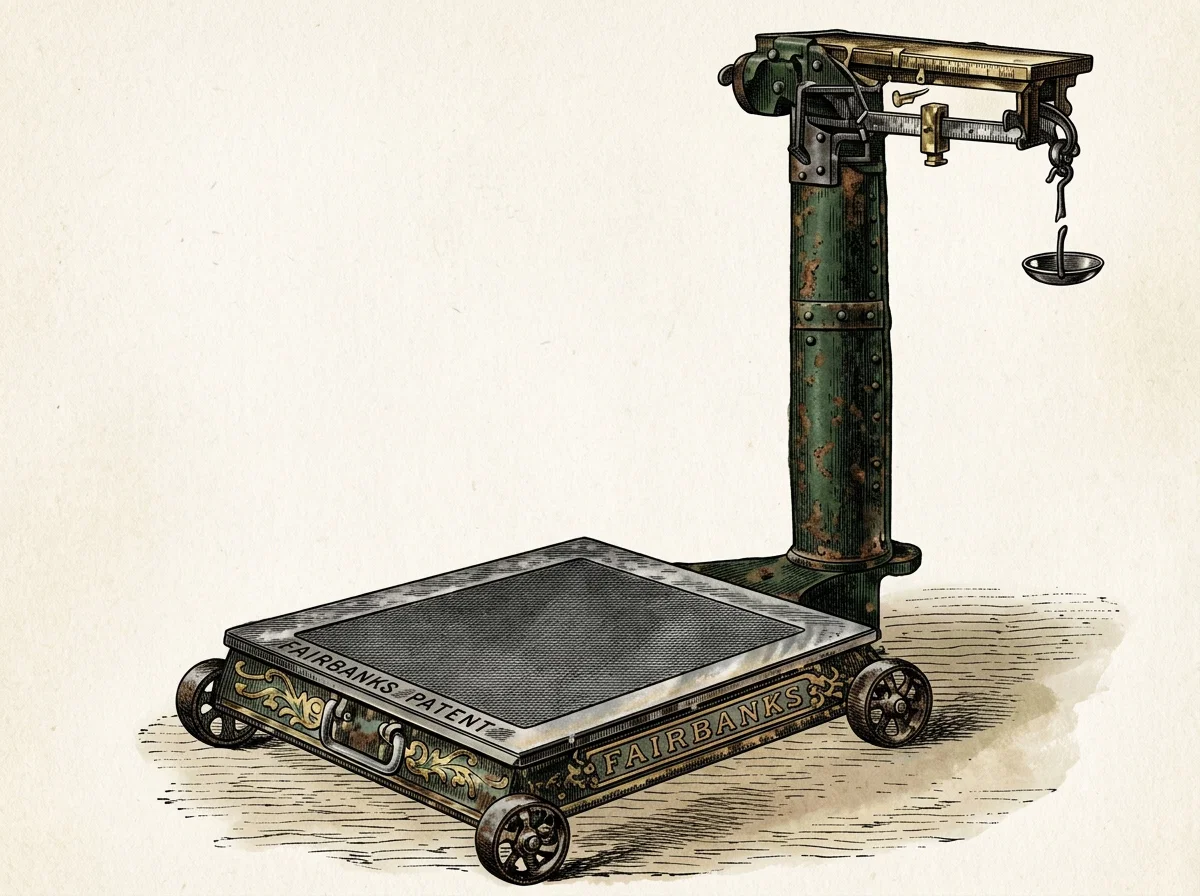
Fairbanks Standard Scales
Send for Illustrated Catalogues to
Fairbanks, Morse & Co.
310 MARKET STREET
San Francisco, Cal.
When you write, please mention the SIGNS OF THE TIMES.