Your ShelfYour Projects

Review and Herald, Vol. 79, No. 1.

TILL SHILOH COME
Earlier text: AN EXHIBIT,

MAKING PIE CRUST WITH KO-NUT.

E. L. DAVIDSON.
Instead of melting the ko-nut, scrape as you would turnip, then mix flour and ko-nut together, and mix with cold water. Stick together instead of working. You can keep the flour and ko-nut some time without mixing, if desired. Use it the same as for other baking.

THE CAUSE.

WE remember that when Elder James White stood alone as editor of the REVIEW, he frequently presented articles entitled, “The Cause,” in which he would discuss the various phases through which the work was passing, the influences which were arising against it, the duty of its friends in reference to the circumstances, and how the crisis should be met. We have again reached a time when, if he were living, we believe he would speak out anew with reference to the situation. There are rumors afloat now that the cause is suffering under a heavy load of odium, and that an offer is made to relieve the cause of the odium that rests upon it, by placing the Review and Herald Office upon a new basis, and transferring the plant to other ownership than that of the S. D. A. Publishing Association, who first incorporated it. From this it would appear that the odium under which it is averred that the cause rests, is concentrated upon the Publishing Association. There are some of us who have a very tender regard for this association, and feel very sensitive in reference to any insinuation that the charge of odium can justly rest upon it.
For instance, the writer of these lines had the honor to be one of the charter members when the institution was founded, May 3, 1861. He was present when the act of incorporation was formed, when the act under which it was incorporated was secured, when its constitution was adopted, and its by-laws formulated and accepted. Moreover he is acquainted with all the principles that were talked over by the original promoters and founders of this institution, and, besides, has been almost continuously a member of the board ever since, and has known of the policy and intentions by which it has sought to govern itself. Hence we feel at liberty to inquire where the odium comes in, and to which of the transactions of the association it attaches itself. The Publishing Association has endeavored to maintain a scrupulous regard for the rights of all its stockholders, so that no member has ever lost a dollar by its operations. It has always been true to its obligations to the government, paying its taxes when due, and meeting its bills so promptly as to be allowed a cash discount on its settlements. Odium attaches to a corporate body when it proves false to its corporate obligations. No such acts can be charged upon the Publishing Association. We repudiate all such charges. Let us be understood. We would not, speaking as a member of the board, claim that we have not been liable to misjudgment, and erred in opinion, as is common to mortals in this state. So we plead guilty to all the charges against selfishness, and the conditions and obligations devolving upon the Laodiceans, so forcibly of late set forth in the REVIEW and the sermons during the Week of Prayer. But the question arises how the odium would be lifted by transferring the property to another organization.
The association was organized as a body that belonged to the cause. It was a representative of the whole work. It was never a personal or private body, but a public factor in the cause. It was the original S. D. A. institution, not run for any personal or private ends. Its officers were placed in position by the voice of the people. Consider the good it has done, the thousands it has brought into the truth, and the associate institutions to which it has extended a helping hand. Any of our institutions trying to get upon their feet would fall back for support upon the Review and Herald Office. In this way it has helped sanitariums, schools, Conferences, and is now carrying above forty thousand dollars of indebtedness for the Battle Creek College, besides other large sums for our other institutions—nearly a hundred thousand dollars in all. It has thus acted as the mother institution, the fostering body for all other S. D. A. institutions, and all persons should be careful not to speak in a manner to injure its credit. These points should all be borne in mind before an insinuation detrimental to the standing of this institution is entertained. The old adage is that “a lie will go around the world while the truth is putting on its boots.” This institution has been considered the strongest and safest organization among us. Its credit is still good, and will continue to be so, so long as its friends stand by it. We have faith to believe it will do a much grander work during the remaining period of the Third Angel’s Message. EDITOR.

THE COMING RESTITUTION.

We have reached the time of “the restitution of all things,” to which, in the eternal purpose of God, His Church was to be brought just prior to the second advent of Christ. And that this is so, should be a cause of joy to His waiting people.
We should all of us earnestly desire that this purposed restitution of all things should be accomplished. We should earnestly desire that “all things” should be freed from the blight of sin and the darkness of error. We should long to see all things restored again to the state ordained by the Creator before sin began its work of destruction upon God’s handiwork. And we should rejoice that we ourselves are included in this restoration, and are to be brought back again to the perfect image of God.
This condition of things which will exist when the promised restitution has taken place, is the natural, normal condition, viewed from the standpoint of righteousness. In this world we view all things from a perverted standpoint. We see nothing as it is in truth, only as we apply the principles given us by revelation in the place of the maxims and standards of men. At the best we see only “through a glass darkly.” Sin has so changed and debased the things of this world, has so perverted everything and turned it from its natural use and purpose, that we are accustomed to think that a life of sin represents man in his normal condition, while Christianity is something abnormal, and is calculated to turn an individual into a strange, unnatural sort of being. But it is sin that is the strange, unnatural thing; and Christianity is God’s means of saving a person from his sins.
God wants His children to act like beings in a normal, unperverted state. He asks nothing more of us than this,—nothing extraordinary, nothing in the least degree contrary to reason or the dictates of the highest intelligence. He asks that we should love, reverence, and honor Him, our heavenly parent. We recognize the propriety of according all this to our earthly parents, and He only asks that we shall likewise recognize His parental claims, since He is our parent far more fully than it is possible for any human being to be. “It is He that hath made us,”—His power, and only His, which from the very first has wrought in us to keep us alive and cause us to grow in mind and body to the present hour. It is He who has cared for us, shielded us on the right hand and on the left, and favored us in every effort to grow up to usefulness and honor. How unnatural and abnormal a condition, then, is that in which an individual makes no acknowledgment of the parental relationship which the Creator sustains to him. And when to this is added the consideration that God is not only our Creator, but also our Redeemer, having paid an infinite price for our redemption from sin, how doubly unnatural is it to treat Him as though He were a stranger who never knew us, or as though He did not exist at all!
Christianity is reasonable. Indeed, it is God’s means to save us from all that is unreasonable; to restore clear sight to the mind, so that we may discern the truth, and that our feet may walk in a straight path, and we be delivered from the evils into which sin has led us. And when Christianity shall have done for us all that it will do, we shall be restored to perfect soundness in our mental, moral, and physical being; made whole, or, as the word means, holy. Then we shall have been brought back again to man’s natural state of being,—the state ordained by man’s Creator, and experienced by God’s creatures everywhere throughout unfallen worlds. The Lord asks us simply to give up, to let go of, the monstrous, unnatural, abnormal thing called sin, which has come in to mar for a time a small part of His creation, and to take our appointed place in the great family of God who shall live on in the perfect state throughout eternity. Let us be reasonable enough to choose God’s way and co-operate with Him for the realization of His wise purpose in our creation, now. L. A. S.

A CALL TO BIBLE STUDY.

WHEN the time came for the message of the coming of the Lord to be given to prepare the way for His first appearance upon this earth, “the word of God came unto John the son of Zacharias in the wilderness.” This was the inspiration and the power for his work. It is evident that the Spirit of God stirred his mind in the study of the prophecies concerning the coming of the Saviour, and made so clear to him his personal relation to that event that, with a heart aroused and quickened by his own message, he went forth to be the voice of the prophets. Thus the word came with life and power to the people. After an interim of about four hundred years, during which the voice of the prophets was silent, and the spirit of true religion had been largely lost, the spirit of prophecy was revived, not in new revelations, but in the right understanding of the old revelations, and so the message was again given “in the spirit and power of Elijah.”
Just that same experience needs to be repeated to-day. The word of God must come to the hearts of the messengers. The call of the hour is for ministers of the gospel who will not “leave the word of God, and serve tables,” but will give themselves “continually to prayer, and to the ministry of the word.” A great work is to be done in a short time. The message must be given with a new power. Men must have a new experience with the word of God. The spirit of prophecy must be revived in the understanding of truths long since uttered by the prophets, but which ought now to be proclaimed to the world. There ought to arise now a whole army of young men to whom God could give “knowledge and skill in all learning and wisdom,” as He did to Daniel and his companions, as they apply themselves earnestly and prayerfully to the study of the truth as it is in Jesus. Then they would learn for themselves that “there is a God in heaven that revealeth secrets,” and the preaching of the prophecies would become much more than a mere repetition of the words of the prophets; the spirit of the seer would be in the heart of the preacher.
It is because of the sense of this great need in the ministry that special opportunities are being offered during the present winter for young ministers and licentiates to get help for their work by spending a term at Emmanuel Missionary College. Elder J. A. Brunson is now giving his whole time to the Bible work there. Elder A. G. Daniells is planning to spend a portion of the winter term at the college, and will conduct Bible studies while there. I have also been requested by the Board of Trustees to assist in this work, and shall do all I can consistently with other demands upon my time. This ought to be the beginning of a new experience in our ministry. The younger workers, who have had some experience in the public teaching of the word, but realize the need of new inspiration and new power, are earnestly invited to avail themselves of this opportunity. The winter term begins January 8, and continues ten weeks. Further information as to terms, etc., may be obtained by addressing Emmanuel Missionary College, Berrien Springs, Mich.
W. W. PRESCOTT,
Chairman of Trustees.

Fear God, Not Men

THE one who truly fears God, will not fear men; and he who fears to stand up always for the right before men, is lacking in the fear of God.

In the Question Chair.

[Designed for the consideration of such questions as will be of interest and profit to the general reader. All correspondents should give their names and correct post-office address, that queries not replied to here may be answered by mail.]

844.— HOW DO THEY BEAR WITNESS?

WILL you please explain how the record and witness spoken of in 1 John 5:7, 8, is borne? also the language of Matt. 19:17, where Christ says, “Why callest thou me good? there is none good but one, that is, God”? Unitarians use this text to prove that Christ was not God, but only a man. L. M. H., San Jose, Cal.
ANSWER.—1. The “record” and “witness” spoken of is doubtless borne the same way that the witness of the Spirit is borne; namely, by enlightening the understanding and making an impression upon the moral nature, and through that channel molding the individuals.
2. In Matt. 19:16, 17, Christ taught His questioners to look more deeply into the nature of the subject they were considering than they were in the habit of doing. The circumstances of the occasion are thus stated: “And, behold, one came and said unto Him, Good Master, what good thing shall I do, that I may have eternal life? And He said unto him, Why callest thou me good? there is none good but one, that is, God.” Christ saw here an opportunity to impress a lesson on His hearers respecting himself; and He is not responsible if men pervert His language to mean just the opposite of what He intended according to the fair interpretation of His language. Unitarians, our correspondent says, argue from this that Christ is not God, but only a man. This conclusion we are obliged to consider only a perversion; for His words teach exactly the opposite. Thus: He was addressed as “Good Master.” He did not object to this manner of address. He did not say, Why callest thou me good? I am not good: but, In addressing me thus, you give me a character which I acknowledge, but which puts me in the same category with God; for there is only one Being who can properly and consistently be called “good,” and that is God. So by calling me “good,” you call me God, which I am. The reader will see how far one-sided the Unitarian application is.

845.— A CHAPTER IN REVELATION.

One of our ministers writes for an explanation of Rev. 6:8.
ANS.—We have presented the best light we have on all passages in Daniel and Revelation, in the published works on those books. To them we refer all inquirers on those points.

846.— DAY OF CHRIST’S BIRTH.

Will you tell me what reason you have for saying that Christ was not born on the twenty-fifth of December, and that He was born in the spring of the year? C. C. W., Middlefield, Ohio.
ANS.—We do not say any such thing. The day of Christ’s birth is a point much in dispute. It appears that nothing definite is known about it. The twenty-fifth of December seems to be wholly a matter of tradition. What has contributed largely toward fixing that date upon the religious world, is the attempt to make it coincide with an old festival, borrowed from the heathen, which was fixed upon that date. We have no honor to confer upon the old heathen festival. And inasmuch as the exact date is not known, we can celebrate the birth of Christ as a blessed event without reference to the day.

SECRET WORKINGS.

Do you know of the secret workings of the movement that is going forward in this country to bring about the enforcement of the “mark of the Beast” and the worship of his “Image”? Here is an incident of this nature which happened recently in Iowa. We quote it from the Iowa State paper, the Workers’ Bulletin:—
“Last summer a pastor in one of Iowa’s smaller cities called on the wife of one of our ministers. He asked her what church she attended, and she answered, ‘Not any.’ ‘Then you are not Christians,’ he suggested. She answered, ‘Yes; but we have no church here; we hold our Sabbath-school and meeting in a private house.’ He then asked her what she was, and upon her answer, ‘A Seventh-day Adventist,’ he inquired particularly how many there were of them, who they were, where they lived, where they held their meetings, etc.
“When her husband returned, she told him of her visitor and his questions. Shortly after this her husband met another pastor who was friendly, and telling him about it, asked what the object was in making such inquiries. He said, ‘I dislike to tell you.’ Upon being urged, he repeated, ‘I dislike to tell you. I am opposed to it, and spoke against it in the League, for I know your people. I know them to be quiet, honest, and inoffensive; but it means persecution to your people.’”
With this we will relate another incident, which so far as the writer knows has never appeared in print, nor in any other way been put into general circulation. It occurred some time ago in the city of Washington, D. C. A man who has been prominent in work for the preservation of religious freedom, was speaking with a leading official of the Catholic Church with whom in some public place he had happened to come in contact. The Catholic prelate did not know he was speaking with a Seventh-day Adventist. An effort was being made at the time to secure further Sunday legislation in that place, and this was the topic of conversation. The Catholic official expressed himself as decidedly in favor of such legislation. “Then what about these people who observe the seventh day?” inquired the Adventist. The latter, in relating the incident to the writer, said, “He turned upon me like a lion, and exclaimed, ‘They ought to be strung up, every mother’s son of them!’”
Do you think that Rome does not have her eye upon Seventh-day Adventists? Does Rome not know that there is one little body of consistent Protestants, whom she hates the more bitterly because they have a belief which guards them against all her attacks, and exposes all her deceptions? She is saying nothing in public now. She is dealing yet with the Protestant world in general. But wait. Rome knows how to wait, and she is waiting. Protestants will clasp hands with the papal power, as Church and State will be united, and then will come a mighty effort to “reform” Sabbath-keeping Christians out of the world. The sentiment in favor of this exists to-day. It is spreading, making its way in the dark, working secretly, but occasionally showing itself upon the surface of events. And what do these things mean to us? One thing they ought to mean; namely, that now is no time for losing sight of the truth we have proclaimed in the past, but instead, the opportune time for earnest work in the way of acquainting the people with the deceptions of the enemy, and setting before them the prophecies relating to the present time. Is this the work that we are doing?
L. A. S.

PURPOSE OF THE TESTIMONIES.

Some of our people do not receive the benefit they should from the Testimonies. The reason for this is that they do not apprehend the real purpose of these messages; namely, “to leave men and women without excuse,” and to assist in “bringing them back to the Word that they have neglected to follow.” (Vol. II, page 455).
As indicated by the running title at the head of every other page of the bound volumes, the Testimonies are intended especially “for the Church.” This fact should always be borne in mind.
Instead of being proud of the fact that we have six bound volumes of the Testimonies, containing an aggregate of 3,997 pages of reproof and admonition, Seventh-day Adventists should feel grieved that their conduct has been such as to call forth this amount of reproof and special instruction from the Lord. While a monument of God’s long-suffering and mercy toward His people, these books are also a monument of shame to the waywardness of His Church—to their neglect of Bible study.
Do these statements astonish you? Listen: “You are not familiar with the Scriptures. IF YOU HAD MADE GOD’S WORD YOUR STUDY, with a desire to reach the Bible standard and attain to Christian perfection, YOU WOULD NOT HAVE NEEDED THE TESTIMONIES. It is because you have neglected to acquaint yourselves with God’s inspired Book that He has sought to reach you by simple, direct testimonies, calling your attention to the words of inspiration which you had neglected to obey, and urging you to fashion your lives in accordance with its pure and elevated teachings.”—Id., page 605.
This same neglect of earnest Bible study is what so disables some of our ministers that they are unable to preach an entire sermon from the Bible, and the Bible alone. Some who profess to believe the truth have so utterly lost sight of the true purpose of the Testimonies that, to use the words of one of the members of our present Pastoral Committee of the General Conference, “they actually try to prove, from the Testimonies, that the Bible is true.”
Every true Seventh-day Adventist is a true Protestant; and, whether he be a minister or a layman, as a Protestant, he should be able to prove from the Bible, and the Bible alone, the doctrines which he holds to be true.
Brethren and sisters, let us take the right course to prevent the coming of still other messages of reproof. Let us prayerfully, earnestly study the Word. A. J. B.

War Threatens China

PEACE is wavering again in China. If the word that comes to us from observers in that country is correct, war is soon to break out again, and the situation promises to be worse than that which recently called the troops of Europe and the United States to the gates of Peking. Note the following statements made by Charles F. Gammon, superintendent of colporteurs for the American Bible Society in northern China:—
“While at Shanghai, I observed that the Chinese government was openly violating the provisions of the protocol. The great empire would shake off European domination. Thousands of boat-loads of small arms and ammunition were passing weekly up the Yang-tse-Kiang, and the arsenals were being enlarged and worked day and night. Cargoes of explosives were being received, and the dowager empress had issued instructions to recruit the army, and also to inform her as to the fighting strength of each division, and the time required to concentrate the forces at a given point. There were and are many unpromising features which weighed heavily upon the minds of those interested.
“I must believe that the end is not yet, and that within ten years, and possibly within five, a war will ensue the like of which the world has never known. For centuries China has been making repeated attempts to expel the foreigner, each time profiting by past experience, each time with more power and success, each time better equipped and better planned. It is now preparing as never before, buying vast quantities of superior weapons, and reorganizing its armies on a correct basis. Therefore, the next attempt will be in force, and terrible in execution. It will result in a universal upheaval and the final dismemberment of this empire—at a terrible cost.”

Political Instruction in Sunday Schools

CHARLES ALLING, a Chicago alderman, is quoted in the Chicago Tribune of December 26 as “advocating the instruction of Sunday-school children in political matters,” and saying: “What is the use of knowing how to get to heaven when you do not even know who represents your ward?” In the same paragraph it is stated that “on this line Judge Orrin N. Carter will address the pupils of the First Presbyterian Sunday-school to-morrow at noon. . . . He will advise them to attend the primaries and to belong to a political party.” But Christ says: “My kingdom is not of this world.”

WHEN HE CROWNS HIS OWN IN GLORY.

N. W. VINCENT.
(Mound Valley, Kan.)
When our Lord descends from heaven with His mighty angel band,— And that day comes on the prayerless like a snare,— Then He’ll gather all His loved ones from the sea and from the land; When He crowns His own in glory, we’d be there.
When the Lord makes up His jewels bright and radiant from the grave, Looks of sweetness, robes of brightness, they will wear; When He comes in might and grandeur all His waiting ones to save,— When He crowns His own in glory, we’d be there.
Well, that morning is approaching, soon the Prince of peace will come; Then to meet His smile and plaudit let’s prepare; So that when the angels waft us to our sweet, immortal home, When He crowns His own in glory, we’ll be there.
In that bright and awful morning then will come the solemn end, When God’s meek and patient children Christ will spare; Then will you and I, dear brother, each be found His faithful friend, When He crowns His own in glory to be there?
Yes, our Lord is coming quickly, fairer, brighter than the sun, All His saints will gladly meet Him in the air; Then they’ll share His smile and welcome; yes, His sweet and true, “Well done!” When He crowns His own in glory, we’d be there.
Saints immortal, glad, triumphant, shout, “O Death, where is thy sting?” Then with Christ to New Jerusalem repair, There to bow before the Father when presented by our King: When He crowns His own in glory, we’d be there.

THE TARN, FRANCE.

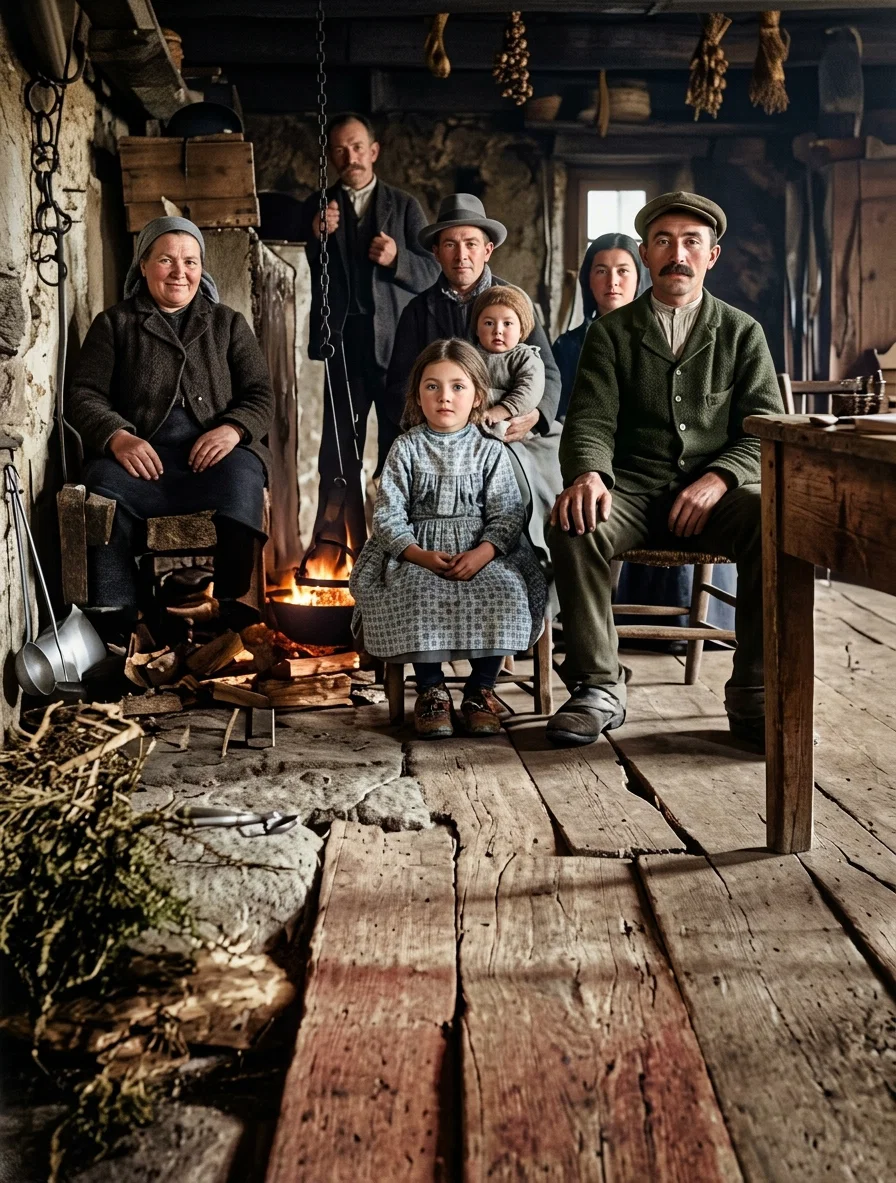
Have you ever heard of this interesting place? If not, I am sure that what you now read concerning it will make you, ever after, interested in it. The Tarn is a department of southern France, and corresponds somewhat to the state or county in the United States. It was in and around this department where the ancient Albigenses lived, and where the Huguenots were persecuted. Though years have passed since those events occurred, there still lives in places some of the old spirit. But dwelling up in the mountains, holding little intercourse with the outer world, the customs of these people are somewhat different from the surrounding Europeans, to say nothing of Americans. When I visited the church there, I met scores of people, not children, but grown men and women, who had never seen a railroad.
I am sure you will be interested to know how the Third Angel's Message penetrated to that place, and gave to the truth a devoted company retaining the simplicity of their fathers, and manifesting a deep devotion to the word of God. In the accompanying photograph I have given you a picture of the room, or rather the interior of the house, where we stayed; for there it is rare to find a house of more than one room. To the left in the picture you will see the great iron pot (marmite) which hangs suspended over the fire by means of an iron chain. In this great vessel everything is cooked, especially the soup, which is the much-loved dish. And their soup is soup. It is not the seasoned water of the American boarding house. In their soup, I was about to say, they place everything. But you don't mind that. After you have climbed up the steep and rugged paths to reach the house, or after you have been jolted in the stage for several hours, perhaps all day, that soup tastes good. It is probably not scientifically hygienic, but with the appetite it is hygienically disposed of.
You notice that the people have their hats on. They put their hats on just where we take them off. For example, all may be conversing, with their hats off, when the word comes that dinner is ready. Then they all put their hats on to go to the table.
NATIVES OF THE MOUNTAIN DISTRICT OF SOUTHERN FRANCE. THIS IS A VIEW OF THE ROOM WHERE OUR FIRST MEETING WAS HELD WITH THESE PEOPLE.
We left the train at Castres in southern France, and in the morning took the stage. Neither myself nor my interpreter could understand the language. It was not French; it was what they call "patois," that is, a dialect. We were stowed in under the front box with a jolly, vigorous young Catholic priest at our side. While he would talk French with us, he could talk the patois. He held conversation with the great, burly stage driver. This latter individual was shod in his great leathern boots, with a leather coat, and armed with a long, long-tailed whip, which he cracked most vigorously as he shouted out his patois to the five stage horses.
Upon the mountains and by the precipices we clattered along for four hours. Then a relay of fifteen minutes was given, only to resume our journey again for three hours. The cold of evening and the shades of night had overtaken us when we arrived at our destination. Our first service was held that very night in the room of which you have a picture, and on the Sabbath following, from far and near, from the mountains and the valleys, the brethren came to the Sabbath meeting.
And here we learned the story of how the truth reached them. When Brother J. N. Andrews was editor of Les Signes des Temps, he used to send out a great number of the papers in France, as we do in our missionary societies in America. The paper had been sent to a certain man residing in that region, and then a letter was addressed to him, asking him if he would kindly send to the office of Les Signes the names of men who he thought would be interested in these subjects. The man responded by sending in a list of names, in which list was the name of Brother Louis Carayon. At that time Brother Carayon was troubled over his spiritual condition. Surrounded by the darkness of Catholicism he longed for the knowledge of God, and for the assurance that his sins were forgiven. It was in this condition of mind that the first number of Les Signes found him. He opened the paper with the hope that he might receive some spiritual light. But on the first page his eye met this article, “What Is Our Condition After Death?” “Well,” he thought, “this can do me no good.” So he laid the paper aside.
Then came the second number, followed by the third. These also were placed aside. But one day, still troubled over his spiritual condition, so troubled that he could not work, he took up these papers. He began to read an article which exactly met his case. He read more. Then seeing the advertisements, he sent for some books, and very soon he had the truth before him. He accepted it, and began to work for others with all his might.
One night he was called to visit a sick man. He went, with his pockets full of the papers. At the bedside of the sick one, he met another man, a neighbor not very well known. With his usual zeal, in godly conversation, he offered the gentleman a copy of Les Signes. The stranger refused, saying that he knew the paper. In fact, he informed Brother Carayon that he was the person who had sent in his name to the office. But upon learning what the paper had done for Brother Carayon, he became very angry. He wrote a letter to the office, discontinued his own number, and refused absolutely to have anything more to do with the paper.
But Brother Carayon labored on. God blessed his labors, and very soon a company was raised up obedient to the truth. And the interest continues. While there, we held two meetings to which those not of our faith were invited, and the rooms were well filled. They are calling for a laborer to go there and hold meetings.
But that is just the difficulty. France is practically destitute of laborers. Those who come from America as laborers must learn the language. We have many able and bright young people, who could be trained for the work, but they have not the means, nor we either. We greatly need facilities for the training of workers. We could put twenty workers, if we had them, into places where there is now an interest.
I see many calls in the REVIEW and in our other American papers for means to be given to enterprises at home. But is it possible that our brethren do not think on these great, destitute fields over here? I notice with joy the record in the Missionary Magazine of donations to the French field. But what can fifty dollars now and then do when we need fifty times as much? I saw in the REVIEW lately a call for one thousand dollars for an enterprise in America. And now we will call: Who will give one thousand dollars toward providing the necessary facilities for the training of young people here for this great field? The Lord is coming soon, and these lands must be warned.
B. G. Wilkinson. 48 Weiberweg, Basel, Switzerland.

WEST VIRGINIA CONFERENCE.

This Conference was formerly a part of the Ohio Conference, and its charter members were the direct result of the labors of that Conference. About fourteen years ago this Conference was set off as an independent field, or Conference, consisting of West Virginia, and the three extreme western counties of Maryland,—Garrett, Allegany, and Washington,—with members barely sufficient to organize, and with no financial or numerical strength. It barely maintained an existence for several years, adding few to its numbers, and little to its wealth. In this feeble condition, and thus struggling for existence, it was overtaken by the canvassing boom of several years ago, and like several other of our weak Conferences, became greatly in debt to our publishing houses. This incumbrance, which amounted to three thousand dollars, together with other trials, greatly crippled the work, and brought discouragement and gloom over the few struggling churches upon whom the burden of debt and perplexity fell with crushing weight. The Conference membership was two hundred, six churches existing in fact, and three others in name. Two canvassers were the only laborers in the Conference. This was the state of things when I was called to labor here three years ago. Under these circumstances we took up the work as requested by the General Conference. We had no means, no ministers, no resources, and few members, but plenty of debts. Through the blessing of God, we are now out of debt, have six ministers in the field, and six canvassers. The membership is about four hundred, consisting of fourteen churches, and four unorganized companies. Thus our membership has been nearly doubled, and the number of churches doubled in the last three years. For this we praise the Lord.
Our annual Conference this year was held at Parkersburg, December 12–19, with excellent results. Elder H. W. Cottrell was present to assist in counsel and labor, all of which was much appreciated. Elder Hottel, President of the Virginia Conference and Brother Painter, from Pennsylvania, were also in attendance, and rendered valuable service.
The Conference officers are the same as last year, namely, President, S. M. Cobb; Recording Secretary, W. R. Foggin; Treasurer, C. E. White; Conference Committee, S. M. Cobb, David Haddix, W. R. Foggin, C. B. Rule, Henry Neptune; Tract Society Departmental Secretary and Treasurer, C. E. White; State Agent, F. M. Gardner; Sabbath-School Department Corresponding and Field Secretary, Emma S. Newcomer.
Advance steps were taken in every department of the work. S. M. Cobb.
Continue reading: EARLY RECOLLECTIONS IN THE THIRD ANGEL'S MESSAGE