Your ShelfYour Projects

Signs of the Times, Vol. 41, No. 17.

The Bible a Challenge to Atheism
Earlier text: Two Sides to the Question

Latin America and the Message

The Printed Page and the Active Worker—New Recruits to the Front The Beautiful Southern Continent By H. H. Hall
AVENIDA CENTRAL, SHADED BY THE BRAZIL-TREE
PREVIOUS articles from Brother Hall, the manager of our book department, have told, both by words and by illustrations, how our work, particularly in the publishing line, is advancing in England, Scandinavia, Germany, Spain, and other places he has visited in Europe. In this article, he has just well started in his work in South America. Later articles from him will tell of the things he has seen in the advancement of our work in other portions of South America, as well as what he finds in Central America and the West Indies.
It is a thing to be wondered at, as we contemplate the power that is taking hold of the hearts of men and women, and leading them into every corner of the world, to do self-sacrificing service in proclaiming the great and joyful message of the soon-coming Christ.
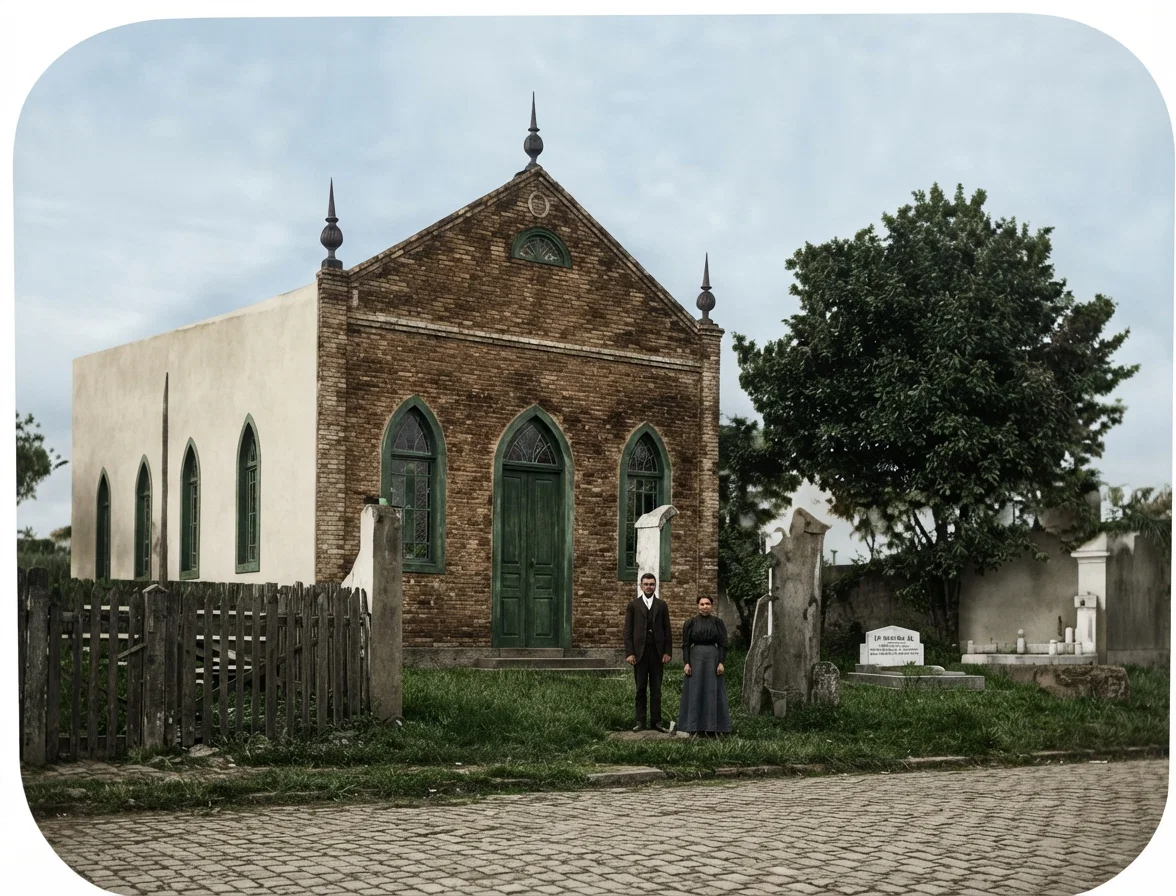
SEVENTH-DAY ADVENTIST CHURCH AT PORTO ALEGRE
URGED on by power generated in thirty monster boilers and so applied to its twin propellers as to turn them on an average of seventy times a minute, our steamship Amazon took but eight days to carry us from Madeira, off the coast of Morocco, to our first stop in South America. This is Pernambuco, where both the temperature and the low shore-line of palm-trees tell us we have entered the tropics.

Sharks and Yellow Fever

Although permission is given us to go ashore, we do not do so, for at least three reasons: first, the ship is about a mile from the dock, and the trip has to be made in small boats, and sharks abound; second, we do not like the looks of the bamboo basket in which we would be swung at the end of a wire rope to the bobbing boats below; and third, yellow fever is said to be taking its toll of lives in the city, and it is even rumored that the German consul and three Englishmen have been stricken.

Courageous in the Work Nevertheless

Yet not far from here we have a church of sixty members; and before this reaches the SIGNS office, Pastor Ricardo Wilfart will have arrived and entered upon his work in the vicinity.
We sail on down the coast to Bahia, situated in All-Saints Bay. It is a very old city, with a population of some two hundred thousand, and is said to have one hundred fifty churches. From the number of crosses we see from the harbor, we conclude that this is not an exaggeration. Here we also have a small company of believers; and Brother Max Rhode, formerly foreman in our Brazilian publishing house, is now on his way there to engage in Bible work. After taking on a few passengers and nearly two hundred tons of cured tobacco leaf — for the
people smoke down here — we proceed to the far-famed Rio de Janeiro.

Rio de Janeiro and Its Beauties

Travelers have vied with one another in praising its harbor and its improvements, and they have not overdone it. Perhaps the harbors of Sydney and San Francisco are as good, possibly Sydney is better; but Rio de Janeiro is safe, commodious, and beautiful, and is set in an environment of peculiarly shaped mountains that give it an individuality all its own. Then the city itself, with its more than a million inhabitants, its long curving beaches of fine white sand, its truly wonderful botanical gardens, its miles of broad boulevards skirting the water-front, its Avenida Central shaded with the Brazil-tree by day and brilliantly lighted by gas and electricity by night, paved like a floor, and its wide sidewalks laid in figured mosaics and flanked by truly magnificent buildings — well, these must be seen to be appreciated.

Our Mission Headquarters There

Rio de Janeiro is the headquarters of our Rio Espírito Santo Mission, of which Pastor F. R. Kuempel is the director. Pastor Ehlers and a company of workers are laboring in the city itself, where we already have a church of about forty members. Pastor Henry Meyer, who has been in charge of the work here, joined us on his way to his new field in southern Brazil. As we sailed out of the harbor, he pointed out to us the effects of the bombardment of the government buildings and fort by the mutinous marines in 1910. As will be remembered, these marines secured possession of the finest battle-ships in the navy, and used them to enforce their demands for certain reforms. The punishment meted out to some of them still forms a topic of subdued conversation about the city.

Santos and Its Coffee and Bananas

Another day brought us to the great coffee exporting port of Santos, where ships from all over the world were loading. This is largely done by long files of half naked men, each carrying a sack of about one hundred fifty pounds. I counted forty-two men in the group loading the ship nearest ours.
The huge warehouses on one side and the ships on the other shut out the little air that was stirring, while the tropical sun beat down upon the rocky pavement in a way that would seem almost to blind the men. Still they trotted on. This looked more like genuine labor than anything else I have seen on the trip, except possibly the coaling of the ship at Rio de Janeiro. That too was done by hand, baskets holding about fifty pounds being used for the purpose.
Here I had my first view of banana plantations, and saw great barges of the fruit loaded on waiting ships.

Administrative Divisions

Pastors F. W. Spies, president of the Brazilian Union Conference, and John Lipke, superintendent of the East Brazil Mission, came on board on their way to Montevideo, where they will assist in the South American Union Conference meeting.
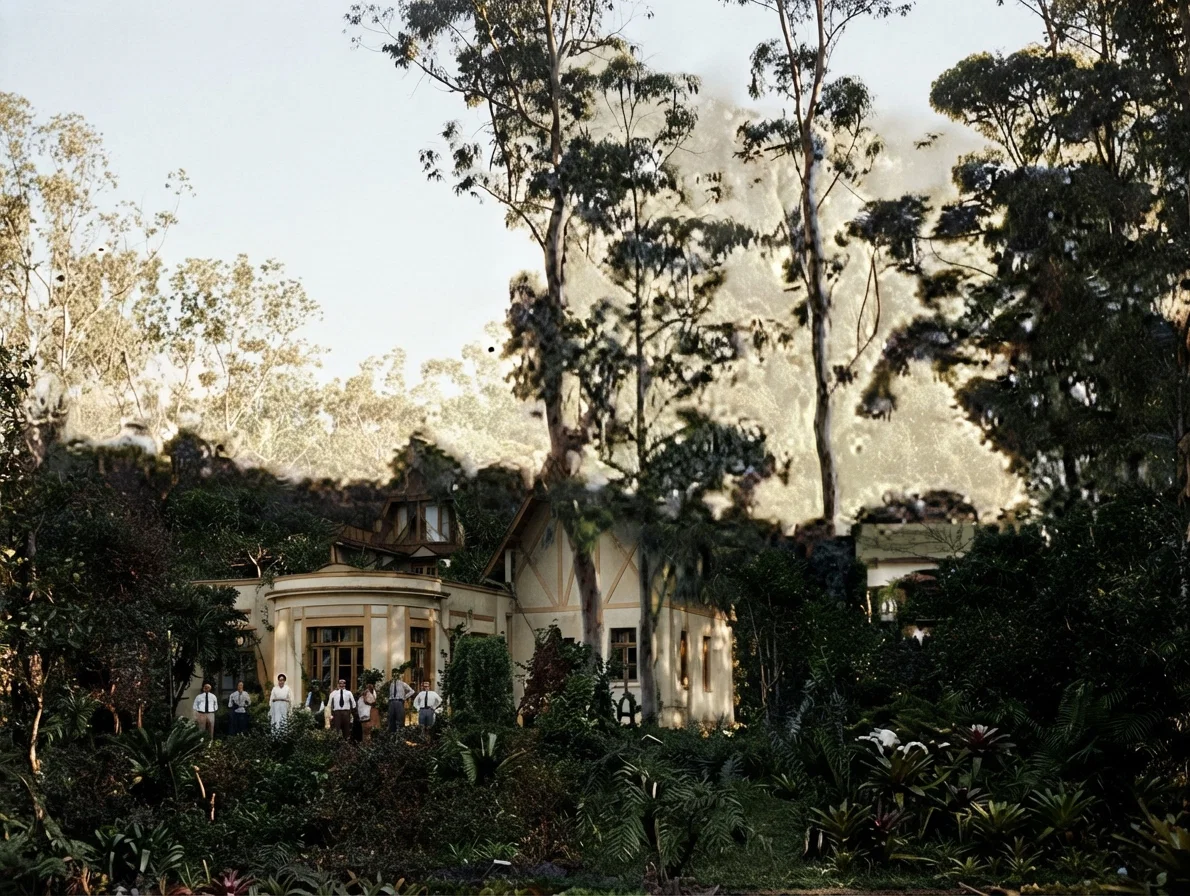
Perhaps it should be explained that our work in South America is separated into two general administrative divisions; namely, Brazil, where the Portuguese language is spoken; and Uruguay, Paraguay, Argentine, Chile, Peru, Bolivia, and Ecuador, the language of which is Spanish. The former division is known as the Brazilian Union Conference, and the latter as the South American Union Conference. The treasurer of the Brazilian Union and manager of the publishing house, August Pages, also came on board. I returned with him across the coast mountains, up which our train was pulled by cable, to São Bernardo, São Paulo, where we have a fairly complete publishing plant. It occupies three good brick buildings, a partial view of which is here given. It has nearly six thousand feet of floor space, and the books show an investment of about $30,000 gold. It is located about a mile from the station, and is surrounded by vegetation peculiar to the tropics.

Activities in the Publishing Work

The publishing work has become a very important factor in evangelical efforts here, as is evidenced by the following records: In 1911 the sales were $7,195.50, in 1912 they were $9,861.50, and in 1913 they were close to $16,000. During these three years, there have been published here very attractive editions of “Steps to Christ,” “Glorious Appearing,” and “Christ Our Saviour,” and a seven thousand edition of “Home and Health” is nearly finished — all Portuguese, of course. We completed arrangements whereby an eight thousand edition of “Patriarchs and Prophets” will be issued, and twelve thousand copies of “Coming King,” the Pacific Press taking seven or eight thousand copies in printed sheets for the Portuguese-speaking people of North America. Thus the heavy expense of translating and typesetting will be distributed over twice as many books as would be possible if both countries published it, and the cost will be reduced proportionately.
The office records show that there are in Brazil one thousand six hundred Sabbath-keeping believers in the soon coming of our Lord. These are divided among fifty-five churches and companies, twenty-one of which have their own church buildings. One of these buildings is here shown. It is in the state of Rio Grande do Sul, Brazil, where their local conference meeting has just closed. It is 25 x 50 feet, and built of brick, over which a heavy coat of plaster with hard white coating is smoothly distributed. This is the almost universal plan of construction of the better class of buildings there. It resembles concrete. The church is fitted with a baptistery, in which ten were baptized recently.

Reenforcements and the Prospects

The working force has been small; but reenforcements have been received during the past few months, as follows: J. H. Peters and wife, from North Dakota; Henry Haeft and wife, of Washington; J. H. Boehme and wife, of California; P. Hennig and wife and C. C. Specht and wife, of the German seminary, Clinton, Missouri; R. M. Carter and wife, of Kansas; Carl Wright and wife, of New Jersey; Sisters Louise Wierts from Philadelphia, Corrine Hoy from Massachusetts, and Sarah Kinner from New Jersey.
As this group of workers master the language and take the many important posts now unfilled, we may confidently expect to see great things accomplished in this great country, with its twenty-four million people.
And truly it is a great country. One realizes it more and more every day he remains here. If the whole of the United States except Alaska were placed within its borders, there would still be room enough for most of Germany. It contains about one fourteenth of the habitable surface of the globe, and has a coast line of five thousand four hundred miles, while the Amazon and its different affluents alone furnish some twenty-seven thousand miles of navigable waterways.
OUR PUBLISHING HOUSE IN SAO PAULO, BRAZIL

Study at Home

MANY young people are prevented from attending school by circumstances over which they have no control. But they need not despair. They should avail themselves of the opportunity afforded by the Fireside Correspondence School to keep up their studies until circumstances permit them to attend a resident school. One lady writes as follows:
"I am enjoying my study [Bible doctrines] very much indeed, and I find that the message as outlined in the study is clearer to me than at any time during the ten years I have been an Adventist. I thank you for urging me to start in when I did."
Another student, engaged in ministerial work, says:
"I assure you that from actual experience in both, I place the 'Fireside' above any other correspondence school in every respect." Certainly he does not refer to the number of courses offered.
The Fireside Correspondence School has some thirty courses prepared, including history, Bible, English, Greek, Latin, commercial, and mothers' normal subjects. For further particulars, address the principal, C. C. Lewis, Takoma Park, D. C.

Wishes to Find Brother

I desire to know the whereabouts of my brother, John E. Martin. When last heard from he was in Oklahoma. Any one knowing his address will confer a favor by communicating with B. K. Martin, Bonnie, Illinois, R. F. D. 1.

Wanted

A middle-aged woman to assist with cooking and general housework in Adventist family. A good home and fair wages to right person. For further information write Mrs. C. C. Morris, 207 Linden Street, Modesto, California.

Wine Is a Mocker

It Perverts the Judgment — It Gives the Brewer and the Wine-Grower Silks and the Drinker Rags

By MRS. S. N. HASKELL
"WINE is a mocker, strong drink is raging: and whosoever is deceived thereby is not wise." Prov. 20: 1. These words of Solomon, written nearly three thousand years ago, are as true to-day as when written. Wherever wine enters, evil of various forms immediately appears. Many good men and women have been deceived by it; but the character of the persons, before drinking the wine, does not prevent the appearance of the evil in them, after drinking it.

Great Men Perverted by It

Noah, who, previous to the Flood, had been a preacher of righteousness, was deceived by wine, became drunken, and immediately his purity and chastity departed, and he lay shamefully exposing his person in his own home. Gen. 9: 20-23.
The second mention of intoxicating wine, in the Bible, is when the daughters of Lot, corrupted with the licentiousness of Sodom, deceived their father with wine, until under its influence he did that from which his whole nature would have recoiled when sober. Gen. 19: 30-35.

It Deceives and Corrupts

The use of intoxicating wine is connected with licentiousness. "Whoredom and wine and new wine take away the heart." Hosea 4: 11; Prov. 23: 31-33. The person who allows himself to be deceived thereby soon becomes corrupt.
There are those who, for the love of wine, or of the money they receive from the sale or manufacture of it, may claim that it elevates the mind; but the history of intoxicating wine for over four thousand years, shows that it debases all who become contaminated with it. The wrecks of manhood strewn on the shores of the past verify the statement.
The Bible says wine defiles the one who drinks it. Dan. 1: 8. It is deceptive altogether. The exhilaration that comes after drinking it, is only a stimulation for a moment. It excites the nerves for a short time, only to leave them weakened and exhausted afterward. It is truly a deceptive mocker, one of the devil's active agents in the destruction of both the soul and the body of those whom Christ has purchased with His precious blood.

It Clouds the Vision

Wine causes the person who drinks it to err in vision and stumble in judgment. Isa. 28: 7. It will cause one to forget the law and pervert judgment. Prov. 31: 4, 5.
The drinking of intoxicating liquors clothes the families of the wine-growers and the brewers in silks, but it clothes the families of those who drink it in rags. Prov. 23: 20, 21. "He that loveth wine . . . shall not be rich." Prov. 21: 17.

Does the Bible Sanction It?

The advocates of the use of intoxicating liquors, or "moderate drinkers," as they are called, claim that the Bible sanctions the moderate use of wine, and that those only have wo and sorrow who "tarry long at the wine." They love to speak of "the eye that sparkles in the cup,"—the token that fermentation has taken place; but the Lord gives the following command to all, the moderate drinker as well as the drunkard: "Gaze not at the wine when it assumeth the ruby, when it sparkles in the goblet." Prov. 23: 31, Spurrell's translation.

Caused by Decay

Fermentation is a sign of decay. Death and decay followed sin into the world. Alcohol is the result of fermentation. It has a bad parentage. The Lord says, "Wo unto him who maketh his neighbor drink, who places the flagon near him." Hab. 2: 15, Spurrell's translation. Wo to the man that manufactures the intoxicating liquor. Wo to the man that offers it for sale, that "places the flagon near" the one who has become weakened by sin, or the youth who is just entering manhood.
To the wine-grower, the brewer, the saloon-keeper, and the bartender, who form the combination that "giveth his neighbor drink," God says, "Against thee shall be turned the cup in Jehovah's right hand, and great shame shall be on thy glory." Hab. 2: 16, Spurrell's translation.

WHAT WE EAT AND MORALITY

Our Food Does Much in Determining Our Characters

It Is Hard to Irritate the Stomach and Not the Temper

By DANIEL H. KRESS, M. D.
SHOW me what a man eats and drinks, and I will not go far astray in determining what that man is morally. There are foods and drinks of an irritating and stimulating nature that feed the lower passions and tend to war against the soul.
Wholesome foods may be combined in a way to cause fermentation, and a sour stomach and a sweet disposition are seldom associated.

FOODS AND DISPOSITIONS

Prayer has its place, but it alone will not sweeten the disposition of an individual who is careless in his habits of eating.
To make of the children of Israel what God desired them to be, "the light of the world," and a blessing to all the people they should be brought in contact with, He withheld from them the highly stimulating and irritating foods to which they had become addicted while in Egypt, and instead gave them manna to eat and water out of the rock to quench their thirst.

RELIGION AND PHYSICAL HABITS

A religion that does not correct the physical habits of man will not elevate him very much morally. The home should be a foretaste of heaven. But what the home is, depends upon what its inmates are; and what they are, may usually be determined by their food and drink.
The first pair were placed in a garden and surrounded with trees pleasant to the sight and good for food. God said to them, "Of every tree . . . thou mayest freely eat." Had men always followed this instruction, much misery would have been prevented.
The first home was marred by a departure from the bill of fare provided for its inmates. Satan knew that if he could influence mankind to an indulgence of the appetite, he would succeed in his efforts to demoralize them.

THE KITCHEN AS WELL AS THE SALOON

There is no doubt that much of the unhappiness in the homes of to-day is traceable to the foods prepared by well-meaning wives and mothers. Many divorces are attributable to the kitchen primarily, instead of the saloon.

BEECHER'S VIEW OF IT

Henry Ward Beecher, in one of his sermons, gave an admirable illustration of the influence of diet on the disposition, the morals, and the home. He said:
"It is not enough for you to pray that God will give you self-control. You are to study it both according to the law of moral truth and the law of physical truth. If men would go to their physicians, they frequently would find an answer to prayer in the revelations of truth concerning their structure.
"I have known men who prayed for the grace of good temper in vain until their physician told them to stop eating meat; for they were of a peculiar temperament that could not endure such stimulation. So long as they ate animal food, they could not control themselves, they were so irritable; but as soon as they began living on a diet of grains and fruits, they were able to keep their temper. They sought in prayer relief from their irritableness. Their physician, by the aid of science, revealed to them the cause of that irritableness, and their prayer was answered. They were not unwise in praying, but they were wise when to prayer they added medical advice.

TRANQUILLITY AND INDIGESTION

"It is quite in vain for you to pray for a tranquil spirit, or a genial, hopeful spirit, when your organs of digestion are out of order. Not that one who is sick should not pray for health; but prayer is to be joined to diet. It is vain for you to pray that God will give you patience, and then run heedlessly into those very circumstances where experience shows that the causes which lead to impatience will be omnipotent.
"Is it wise for me to ask that I may not be torn by briars, and then run into the thickest hedge? Is it wise for men to pray that God will give them all the fruit of the Spirit, and then associate with men that will contaminate them? Have I a right to pray that God will purify my heart, and then let my ears drink in all the vile sayings, and wicked speeches, and vulgar insinuations, of corrupt men? Can a man take fire in his hand and not be burned? Has a man a right to pray that he may be honest, and then go into temptation? Has a man a right to pray that he may be a truth-seeker, and then take no pains to seek the truth?

STUDY TO KNOW HOW

"It is folly for a man to pray for common morals even, and still more for spiritual graces, and then take no heed of the way, humanly speaking, by which these things are achieved. Just as soon might a man pray that he might have a knowledge of numbers, and then shut his arithmetic, and pray that he might be a practised civil engineer, and sit in his chamber, as to pray for Christian graces, and then do nothing.
"You must study these things. They are dependent on certain causes, and study is one of those causes. And the presumption of your prayer being answered is measured by the degree in which it leads you to study the conditions that tend to bring about that for which you pray. You are to work for it not without prayer, and you are to pray for it not without works."
In a home where simple foods are simply prepared, and where its inmates eat to live, happiness and good cheer are usually found.

'TIS BEST

BY MABEL CORINNE CRAKER
THAT grief that was so bitter, Which rent your aching breast, And robbed life of its sweetness, And joy, and love's caress, Made life seem but a burden. You longed for it to cease, Enfolded in your mantle, Rest in the grave of peace.
Dear heart, scorn not the sorrow, The struggle ne'er give o'er. The waves on which you're tossing Will break on heaven's shore. So look beyond the shadows, And bless the swelling tide, If it but draws you nearer To your Redeemer's side.
That cruel disappointment Which came, you knew not why. But crushed were fond ambitions. The sun in zenith sky Seemed but to mock your sadness, And jeer at your despair, And moon and stars seemed lending A far-off, vacant stare. But count as joy the heartaches, The shattered hopes abide, If but a little nearer They draw you to His side.

Steps to Christ

The thirteen chapters of this favorite little volume are truly "steps" which lead to a close companionship with Him who "has linked Himself with the children of men by ties that are never to be broken." These chapters are:
"God's Love for Man," "The Sinner's Need of Christ," "Repentance," "Confession," "Consecration," "Faith and Acceptance," "The Test of Discipleship," "Growing Up into Christ," "The Work and the Life," "A Knowledge of God," "The Privilege of Prayer," "What to Do with Doubt," and "Rejoicing in the Lord."
Beautiful cloth, gilt edge, presentation edition, $1.00. Published in 23 different languages.

The "Signs Magazine"

Our readers will find a most interesting volume for study in the May number of the Signs of the Times Magazine, now being mailed. Its contents treat on the subjects of the great Bible convention at Washington; some startling revelations concerning Spiritualism, its character, tendency, and effect; astronomy; the struggle between capital and labor, with the Bible prophecy; dawning of a better day, the millennium; and a variety of other interesting and timely studies on world affairs, with several pages of current topic notes. One dollar a year, fifty cents for six months. Ten cents in coin or stamps will bring you a specimen copy. Address Signs of the Times Magazine, Mountain View, California.

Cooking Oil for Sale

"Gold Medal" is the highest grade of all cooking oils. It always pleases. Costs a little more, but worth much more. Keeps sweet and pure for years. 5-gallon can, $4.35; 2 cans, $8.50; barrel, $36.00. Freight is low on oil, and two cans cost no more than one. Sanitarium Food Company, 558 Anthony Avenue, St. Paul, Minnesota.

Wanted

A Christian man, one who has control of his temper, so he will not abuse a cow if she happens to step or to switch the flies and hit him in the face, nor beat her for any offense. For such a man who is a good milker, there waits a position worth while. Write Garden City Sanitarium, San Jose, California, giving references and experience. Must be an S. D. A.

FAST TIME

To and From # DENVER, OMAHA, KANSAS CITY, CHICAGO, AND THE EAST
PACIFIC LIMITED From San Francisco 10:20 a.m.
SAN FRANCISCO LIMITED From San Francisco 5:00 p.m.
OVERLAND LIMITED DE LUXE From San Francisco 4:00 p.m.

TO CHICAGO IN LESS THAN THREE DAYS

Protected Throughout with Automatic Electric Block Signals

RAIL AND STEAMSHIP TICKETS SOLD TO ALL POINTS

For information write Mr. C. S. Fee, Passenger Traffic Manager S. P. Co., San Francisco, or any agent.

SOUTHERN PACIFIC

Cooperation Corner

THE opportunity is offered to help some one not so fortunate as ourselves. Many calls—in fact, a continual stream—are received at the office, for copies of the SIGNS for those who can not afford to pay for them. They, as well as we, desire to study these important subjects, but are not able to supply themselves with papers.
We call your attention to this from time to time, and many of our readers gladly contribute to our Cooperation Corner Fund. Here is a letter just received:
"Enclosed find $2.00 for Cooperation Corner. Please use anywhere most needed, from a SIGNS OF THE TIMES reader and one who believes and is interested in the message."
This good offering is much appreciated, and in behalf of the beneficiary, we acknowledge the gift.
Remittances should be sent to the SIGNS OF THE TIMES, Cooperation Corner.

Graduation Day Gifts

BOOKS are divided into two classes, said Ruskin, “books of the hour, and books for eternity.” Among our beautiful gift books that furnish lasting inspiration and constant spiritual help for young people are the following:

Thoughts from the Mount of Blessing

With this beautiful little work, the reader in imagination is taken back to the scene of the mountain side, amid the throng who listened eagerly to Christ's wonderful sermon commonly known as "The Beatitudes." Point by point the wisdom there uttered in simple parable form is presented, and practical spiritual lessons are suggested. Its general chapters are: "On the Mountain Side," "The Beatitudes," "The Spirituality of the Law," "The True Motive in Service," "The Lord's Prayer," and "Not Judging but Doing." Each of these chapters contains thoughts to brighten the way, and lead the reader to a deeper realization of the blessings of real Christian service. Fully illustrated, rich cloth binding, price 75 cents.

The Advance Guard of Missions

The stories of the Mayhews, the Wesleys, Christian Frederick Schwartz, William Carey, the Judsons, and scores of other faithful men and women who pioneered in mission work, as given here, form one of the most thrilling missionary books ever published. It is more than a book of biographical sketches. It pulsates with the spirit that led these men and women out into the needy fields beyond, and kept them there in self-sacrificing work. Each sketch is illustrated, and is filled with incidents that instruct and inspire. 27 chapters, 347 pages. Handsome cloth binding, marbled edges, price $1.50.
Prices 10% higher in Canada.
Address your tract society, or
PACIFIC PRESS PUBLISHING ASSN. MOUNTAIN VIEW, CALIFORNIA Portland, Oregon Kansas City, Mo. Calgary, Alberta, Canada

A "Twentieth Century Church"

ONE of our great cities of the West is building a nine story church at a cost of $750,000. It is to be open seven days in the week, and will contain cafés, bedrooms, restaurants, sleeping porches, tennis courts, and an auditorium seating 2,500. It is really to be a church-hotel-club.
The pastor of this proposed "twentieth century church" says:
"It is poor business to invest so much money and allow it to be idle six days of the week. Worship is not all. Men and women need social life. Young people want a place they can call their own. Many people shy at fine Gothic churchly buildings, just as they shy at a pale, pious, buttoned-up, strait-laced preacher."
"This is first century Christianity with twentieth century action. It is organized human kindness plus the strength of redeeming grace."
But the whole thing sounds as though "redeeming grace" would be kept in the background, and after all, the social club side of the enterprise would be the biggest thing. It is possible to keep people so happy and so contented in a social way that they fail to connect with the power of the Lord Jesus Christ that will transform their lives. Social and business disaster is sometimes the thing that has to come into a life in order to arouse the individual to the need of salvation.
The salvation of the Lord Jesus Christ fits people for the highest form of sociality and for the keenest enjoyment of social life. But after we have received salvation, our ideas of social life are very materially changed. The "pale, pious, buttoned-up, strait-laced preacher" is the extreme on one side, and the hilarious fun of the world is the extreme on the other. Both are to be guarded against and shunned as we would shun poison itself; for while God's word warns us against the strait-laced Pharisee that was thankful he was not as other men, it also utters its warning against those who would make the last days perilous by being lovers of pleasure more than lovers of God.
Continue reading: Good Friday and Easter