By Lucas A. Reed, M.S., Editor of the “Signs of the Times Magazine”
It was the power of the State that, uniting with the church of the time, put Christ to death. His uncompromising adherence to right, notwithstanding the sentence of death placed upon Him by the church and the State of His time, justified the apostles in obeying God rather than men. Acts 5: 29.
It was the interference of the State in matters of conscience that brought about the martyrdoms of the early Christian church. In following conscientiously the precept and example of Christ, they refused to obey Rome in matters of conscience.
So in the Dark Ages, the martyrs were those who dared to deny the authority of the rulers in matters of faith and religion. While accepting the State’s rule in civil matters, they denied it any right to invade the conscience.
The Reformers logically must take the same position that Christ and the apostles had taken.
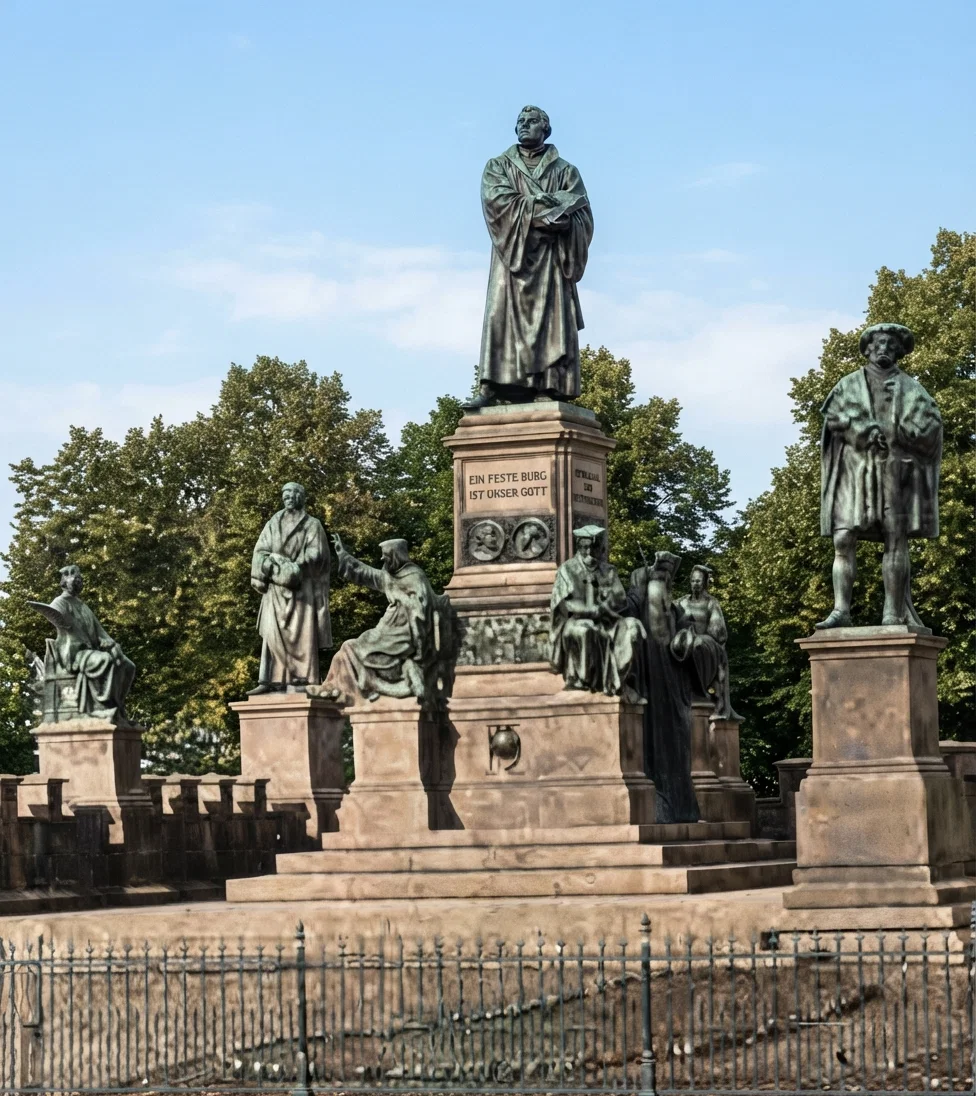
Statue of Martin Luther, the great German Reformer, who repudiated the interference of the State in religious matters. The basis of Christianity was the Word of God.
A Principle and a Watchword
For example, the work of Luther was well prophesied and exemplified when he, to do penance, sought to climb Pilate’s staircase, and heard the words of Holy Writ penetrating into the innermost sanctuaries of his conscience, showing to him that peace of soul and satisfaction for sin are not to be gained by the futile labors of man, but “the just shall live by his faith.” That one principle, “The just shall live by his faith,” became the great guide to Luther. It became the great battle-cry of the German Reformation. At once the soul’s way to God was opened up plain and clear to the very throne of God, not by the way of priestly confessor or penitential afflictions of the flesh, but through faith in Jesus alone. Not by the authority of men in power, not by the consent or the dissent of princes, was the soul to serve its Maker; but life, holy life, Christian life, was to be brought to earth through the faith of the individual alone.
It was therefore perfectly natural for Luther to attack the sale of indulgences peddled by Tetzel through Germany. He knew at once that no man, and no group of men, whether a church or a State, or both, could give man power to commit sin, or absolve him from the consequences; and so he boldly attacked that whole system of raising money for the church. He wrote out his ninety-five propositions against the doctrine of indulgence, nailed them to the church door at Wittenberg, and declared himself ready to defend them against all comers.
In Luther’s mind, worldly authority for religion went tumbling from the throne. The soul rests its faith in the Bible alone. This was the emancipation proclamation which he uttered to the world in his time.
It was therefore also just as logical, when Luther was called before the great diet at Augsburg, that he should not lean upon man, or take the teachings of men as his guide. His guidance was in the Word of God, his trust in his Maker alone; and when forced to give his answer as to whether he would retract, he could say clearly:
“Since your most serene majesty and the princes require a simple, clear, and direct answer, I will give one, and it is this: I can not submit my faith either to the pope or to the councils, because it is as clear as noonday that they have fallen into error, and even into glaring inconsistency with themselves. If, then, I am not convinced by proof from Holy Scripture, or by cogent reasons; if I am not satisfied by the very texts that I have cited, and if my judgment is not in this way brought into subjection to God’s Word,— I can nor will retract anything; for it can not be right for a Christian to speak against his conscience. Here I take my stand; I can not do otherwise. God be my help! Amen.”
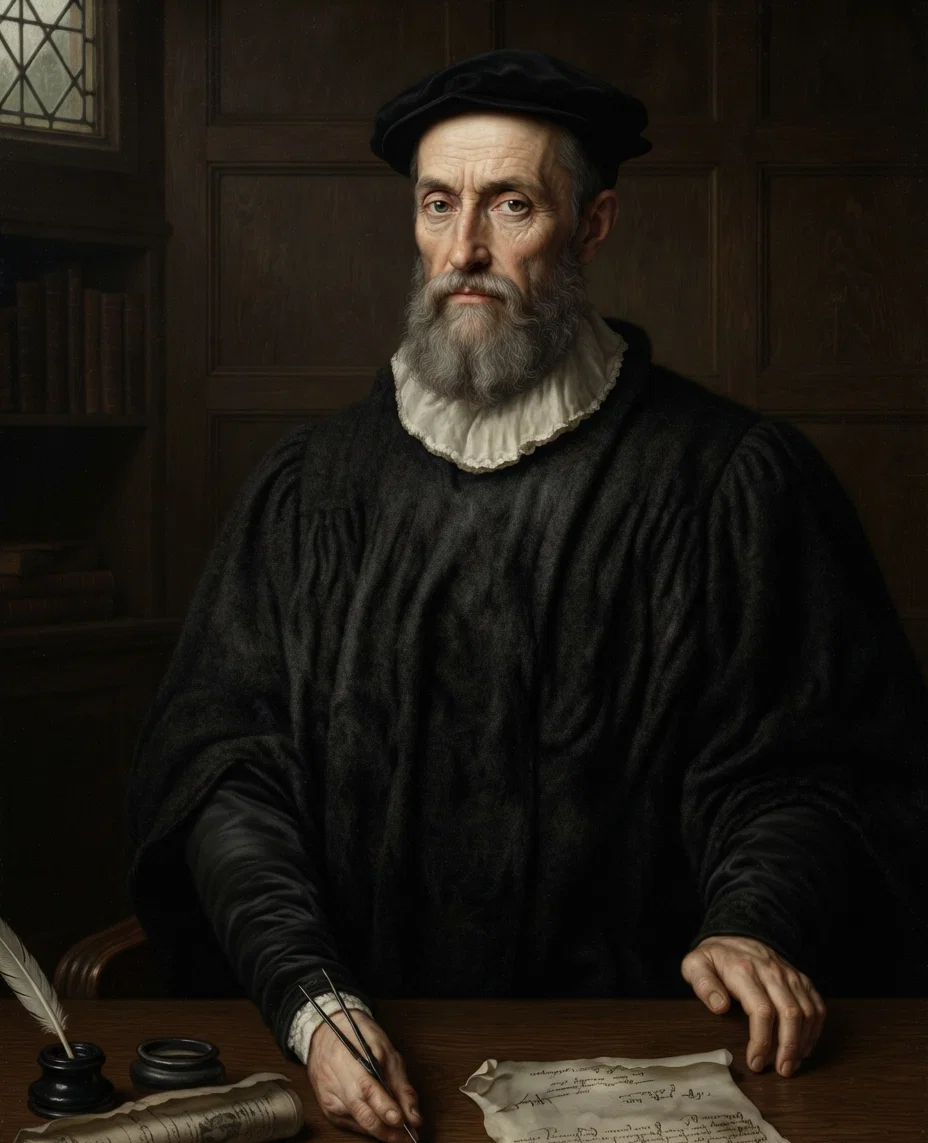
John Knox, the Scotch Reformer, of whom it is said that he “never feared the face of man”
Here the principle is laid down as clearly as it seems possible for human words to phrase it. No man is authority in matters of conscience, whether he be prince or prelate, legislator or church counselor, emperor or pope.
And when the spokesman of the diet told Luther, “If you do not retract, the emperor and the States of the empire will proceed to consider how to deal with an obstinate heretic,” and the listeners trembled at the threatening words, Luther himself could be calm, and say, “May God be my helper! for I can retract nothing.” And when, after consideration, they gave him still an opportunity, he remained firm, and said, “I have no other answer to give than I have already given.” The power that had forced princes and emperors to bow before it, broke harmlessly upon the faith of the simple, humble monk.
It was nothing strange that all the power of a church religion should be concentrated in its mighty wrath upon him; but in the providence of God he was kept safe, to continue the great work for the emancipation of human souls.
The Great Protest
Following out the great principles that gave birth to the Reformation, the protest of the princes marked a fresh impetus toward men’s adherence to faith only in the Word of God. The emperor had called a diet to convene at Spires in 1529, for the purpose of crushing heresy. The princes, if possible, by peaceful means, were to be induced to side against the Reformation. If they refused, Charles was prepared to resort to the power of the sword. It was a dark day for the Reformation, but the Reformers were not without hope. Melanchthon voiced their faith, “We are the execration and the sweepings of the earth; but Christ will look down on His poor people, and will preserve them.” The priests demanded that the States which had accepted the Reformation submit implicitly to Romish jurisdiction. This made the issue directly a matter of6
Questioner.—“Did civil government always exist in the world?”
Answer.—No; civil government is a temporary but necessary arrangement or expedient under sin.
Questioner.—“When do you understand civil government originated and became necessary?”
Answer.—When sin entered the world; in other words, when man became selfish. This fact is recognized by Mr. Andrew W. Young in his work on civil government. Explaining the necessity for civil government, he says:
"All men in society have the same rights. Therefore we can not rightfully supply our wants or gratify our own desires any further than is consistent with the rights of others. But man is by nature selfish, and many would infringe the rights of others, for their own selfish ends, unless restrained. Hence we see the necessity of some fixed rules, that each one may know what he may do, and what he must not do."—"Government Class Book," page 12.
But man was not created “selfish.” Hence civil government was not an original ordinance or arrangement of God. It became a necessity when man fell—when he sinned—when he became selfish. Then the “fixed rules” defining the metes and bounds of men’s actions, that each might “know” what he could and what he could not do, had to be promulgated. Then men, in defense of their rights, had to pool their rights and power, and vest power and authority in men as guardians of those rights. This, in whatever form it might assume, meant civil government.
The same is true also regarding moral law. This, in its negative, prohibitive, written form, became a necessity because of the entrance of sin. It was spoken “because of transgressions.” Gal. 3: 19. It was made “for the lawless and disobedient, for the ungodly and for sinners, for unholy and profane, for murderers of fathers and murderers of mothers, for manslayers, for whore-mongers, for them that defile themselves
Liberty
By Cowper
'Tis Liberty alone that gives the flower
Of fleeting life its luster and perfume;
And we are weeds without it. All constraint
Except what wisdom lays on evil men,
Is evil: hurts the faculties, impedes
Their progress in the road of science, blinds
The eyesight of discovery; and begets,
In those that suffer it, a sordid mind,
Bestial, a meager intellect, unfit
To be the tenant of man's noble form.
— Cowper.
The Origin and Province of Civil Government
By Willard Allen Colcord
By Willard Allen Colcord, Author of "The Rights of Man"
with mankind, for menstealers, for liars, for perjured persons, and if there be any other thing that is contrary to sound doctrine." 1 Tim. 1:9, 10. It entered "that the offense might abound," and came "that sin by the commandment might become exceeding sinful." Rom. 5:20; 7:13. The redeemed will neither need nor know the law of God in this form. And to those who even now become converted, its prohibitions against sin become promises of grace and power to keep from sinning. Much less do they need the prohibitions of civil law to restrain them from trampling upon the rights of others. They would not do thus were there no civil laws and no civil government. The law of God in their hearts—the law of love—prompts them to the very reverse course,—not only to respect the rights of others, but to bless them, to be loving and kind to them, and to do them good.
Questioner.—"But do not the Scriptures teach that we are to obey the powers that be?"
Answer.—Yes; the Bible is very plain and emphatic upon this point. It says, "Let every soul be subject unto the higher powers. For there is no power but of God: the powers that be are ordained of God." Rom. 13:1. Instead of encouraging disrespect for civil government and those in civil authority, the Scriptures teach Christians to be obedient and respectful to them. To Titus Paul writes, "Put them in mind to be subject to principalities and powers, to obey magistrates, to be ready to every good work." Titus 3:1. And Peter says: "Submit yourselves to every ordinance of man for the Lord’s sake: whether it be to the king, as supreme; or unto governors, as unto them that are sent by him for the punishment of evil-doers, and for the praise of them that do well. For so is the will of God, that with well-doing ye may put to silence the ignorance of foolish men. . . . Honor all men. Love the brotherhood. Fear God. Honor the king." 1 Peter 2:13-17.
Questioner.—"Upon what ground, then, can you claim the right not to observe Sunday when the law commands that you shall?"
Answer.—While the Scriptures teach respect for civil authority, they nowhere indicate that this authority is unlimited in its scope and field of action. Metes and bounds are set to it. It has been given no right whatever to enter the realm of religion; that is, to prescribe to men in matters of faith, or assume to indicate to them their obligations and duties to God. The same Bible that teaches us to be subject to the powers that be, teaches that in case of any conflict between the requirements of the powers that be and the requirements of God, "we ought to obey God rather than men." Acts 5:29. Sabbath observance is a duty which men owe to God, for the Sabbath itself belongs to God. It is "the Sabbath of the Lord thy God," "holy unto the Lord." No civil authority, therefore, has any right to legislate in regard to Sabbath observance; and when it not only presumes to do this, but commands men to observe as the Sabbath a day which God has not commanded to be observed as such, but, on the contrary, has indicated as a working-day, men have a right not to obey such a commandment, but to obey God and observe the day which He has set apart and blessed.
Questioner.—"You believe, then, that we have a right to resist the powers that be?"
Answer.—No; a man may refuse to comply with a wicked or unjust law, and not resist the authority or power that made the law. There is a difference between resistance and refusing to obey a law with which one can not conscientiously comply. Resistance implies the use of force. This the Christian is not to use. Explaining how he could refuse to comply with the Act of Uniformity and the Conventicle Act of 1662 and 1664 under Charles II, and still respect the powers that be, Bunyan said to the clerk of the court, who was urging Rom. 13:1 as proof that he should comply with these acts:
"Sir, the law provides two ways of obeying; the one to do that which in my conscience I do believe that I am to do actively; and where I can not obey actively, then I am willing to lie down and suffer what they may do to me."
The latter is what Bunyan did. For twelve long years he was imprisoned in Bedford jail, because he chose to worship God according to the dictates of his own conscience instead of according to the manner prescribed by acts of Parliament. But in refusing to comply with these religious laws, and while undergoing this imprisonment, he was not "resisting" the powers that be.
W. A. COLCORD.
LOGIC OF CHURCH AND STATE UNION
Cotton, in his elaborate controversy with Roger Williams, frankly asserted that persecution is not wrong in itself; it is wicked for falsehood to persecute truth, but it is the sacred duty of truth to persecute falsehood.—John Fiske, in “The Beginnings of New England.”
THEY ASKED TOLERATION — LIBERTY;
SHALL CHRISTIANS NOW ASK MORE?
Report of House of Representatives on Sunday Mails, 1831
Did the primitive Christians ask that government should recognize and observe their religious institutions? All they asked was toleration; all they complained of was persecution. What did the Protestants of Germany, or the Huguenots of France, ask of their Catholic superiors? — Toleration. What do the persecuted Catholics of Ireland ask of their oppressors? — Toleration. Do not all men in this country enjoy every religious right which martyrs and saints ever asked? Whence, then, the voice of complaint? Who is it that, in the full enjoyment of every principle which human laws can secure, wishes to wrest a portion of these principles from his neighbor?
Sinner and Tyrant
By John Greenleaf Whittier
That he who treads profanely on the
scrolls of law and creed,
In the depth of God’s great goodness may
find mercy in his need;
But wo to him who crushes the SOUL
with chain and rod,
And herds with lower natures the awful
form of God!
—Whittier.
RIGHTS VERSUS TOLERATION
United States Senate Report, 1829
WHAT OTHER NATIONS CALL RELIGIOUS TOLERATION, WE CALL RELIGIOUS RIGHTS. THEY ARE NOT EXERCISED IN VIRTUE OF GOVERNMENTAL INDULGENCE, BUT AS RIGHTS, OF WHICH GOVERNMENT CAN NOT DEPRIVE ANY PORTION OF CITIZENS, HOWEVER SMALL, DESPOTIC POWER MAY INVADE THOSE RIGHTS, BUT JUSTICE STILL CONFIRMS THEM.
THE CONSEQUENCES IN THE PRINCIPLE
By James Madison
From Madison's Memorial to the General Assembly of the Commonwealth of Virginia, 1785
The freemen of America did not wait till usurped power had strengthened itself by exercise, and entangled the question in precedents. They saw all the consequences in the principle, and they avoided the consequences by denying the principle. We revere this lesson too much soon to forget it. WHO DOES NOT SEE THAT THE SAME AUTHORITY WHICH CAN ESTABLISH CHRISTIANITY, IN EXCLUSION OF ALL OTHER RELIGIONS, MAY ESTABLISH, WITH THE SAME EASE, ANY PARTICULAR SECT OF CHRISTIANS, in exclusion of all other sects?
“This Man Receiveth Sinners”
By Ellen G. White
By Mrs. E. G. White
THEN draw near unto Him all the publicans and sinners for to hear Him. And the Pharisees and scribes murmured, saying, This Man receiveth sinners, and eateth with them. And He spake this parable unto them, saying, What man of you, having an hundred sheep, if he lose one of them, doth not leave the ninety and nine in the wilderness, and go after that which is lost, until he find it? And when he hath found it, he layeth it on his shoulders, rejoicing. And when he cometh home, he calleth together his friends and neighbors, saying unto them, Rejoice with me; for I have found my sheep which was lost. I say unto you, that likewise joy shall be in heaven over one sinner that repenteth, more than over ninety and nine just persons, which need no repentance.”
The scribes and Pharisees prided themselves upon the idea that they were God’s chosen people, yet they were filled with self-righteousness. Christ “came unto His own, and His own received Him not.” He did not flatter the Pharisees or exalt them in any way. He received the publicans and sinners whom the Jews heartily despised, and because His lessons of humility, compassion, and love rebuked their selfishness and pride, they would none of Him, but turned from Him in scorn. They made great ostentation, wore long robes, and stood praying on the corners of the streets, but none of these pretensions to piety awed the great Teacher or drew from Him one word of approval. They flattered themselves, but He did not flatter them. The teaching of Christ was against all vanity and pride, for these were abhorrent to the Most High. It is the humble and the contrite whose prayers are heard in heaven. The Lord declares that He knoweth the proud afar off. He says, “To this man will I look, even to him that is poor and of a contrite spirit, and trembleth at My word.”
When the scribes and Pharisees saw the publicans and sinners following Christ and listening with living interest to His teaching, they could not tolerate either Teacher or listeners. They hated Christ, and said, “This Man receiveth sinners, and eateth with them.” By this accusation they thought to make the false impression that Jesus loved the association of those who were sinful and defiled, and was insensible to their wickedness. To this reproach Jesus replied by the parable of the lost sheep. “God so loved the world, that He gave His only-begotten Son, that whosoever believeth in Him should not perish, but have everlasting life.”
The parable of the lost sheep places man in the position of one who is helpless and undone. All are lost unless they are transformed in character. The lost condition of the sheep necessitates the coming of the True Shepherd, that, at any cost to Himself, He may seek and save those that are perishing.
Those who are wise in their own conceit do not realize the position in which they are placed by this parable. The Son of Man came to seek and to save that which is lost. Does not the shepherd leave the ninety and nine in the wilderness and go after that which is lost until he find it?
In giving His only-begotten Son to save us, the Lord God shows what is the estimate He puts upon man. To the question, What is the price of the soul of man? the answer is, The life of the only-begotten Son of God. And as Christ came to save man, high or low, rich or poor, white or black, are any to be treated with contempt? Satan has studied to lay in ruins the image of God, and through intemperance and sin, obliterate all trace of His character in man. Christ came, clothing His divinity with humanity, that He might meet humanity and not extinguish humanity by divinity. He came to save the lost sheep, and became a servant in lowly ministry to lift up the lowly.
The Science of Salvation
is a grand theme, and all the glory of restoring the image of God in man is to be laid at the feet of the Eternal. Holy angels have left the royal courts, and have come down to earth to encamp in the valleys in chariots of fire, a vast army, not to despise, not to rule, or require man to worship them, but to minister to those who shall be heirs of salvation. Could human eyes be opened, they would see in times of danger, when Satan goes forth as a roaring lion, seeking whom he may devour, that heavenly beings encamp around the little flock who love and fear God.8(Continued on page 10)
“This Man Receiveth Sinners”
(Continued from page 7)
The heavenly Shepherd left the ninety and nine to seek the lost one. However dark the night, however severe the tempest, the shepherd goes forth, at every step calling by name his lost sheep, until he hears its terrified, faint, and dying cry. Then he hunts amid the dangerous places, crosses the tangled briars, and finds his sheep. He rescues it from peril, places it on his shoulder, and with rejoicing returns to the fold. At every step he cries, “Rejoice with me; for I have found my sheep which was lost.” “And when he cometh home, he calleth together his friends and neighbors, saying unto them, Rejoice with me; for I have found my sheep which was lost.”
Could we see the heavenly angels watching with intense interest the steps of the Shepherd as He goes into the desert to seek and to save the lost, what wonder would fill our hearts! “I say unto you, that likewise joy shall be in heaven over one sinner that repenteth, more than over ninety and nine just persons [in their own estimation], which need no repentance.” It is he who is sick who feels the need of a physician, and the mission of Christ to the world was to seek and to save those who were perishing. “For God so loved the world, that He gave His only-begotten Son, that whosoever believeth in Him should not perish, but have everlasting life.”
—★—
California and Liberty
By John Orr Corliss
II — Court Decisions Regarding California Sunday Law
NOTWITHSTANDING the strong majority by which the Democratic Party took the reins of the California State administration in January, 1883, and the consequent repeal of the Sunday law which had hitherto been the source of so much sect animosity and neighborhood disturbance, the clergy of the State at once set about to secure the re-enactment of the obnoxious statute.
A Weekly Rest Law
In order to avoid the odium of working in behalf of a religious measure, special enactments were secured from time to time, as possible steps toward future statutes more general and comprehensive in nature. The first of these was a law approved February 27, 1893, entitled, “An act to provide a day of rest from labor.” Its provisions are as follows:
Day of Rest
“Section 1. Every person employed in any occupation of labor shall be entitled to one day’s rest therefrom in seven; and it shall be unlawful for any employer of labor to cause his employees, or any of them, to work more than six days in seven; provided, however, that the provisions of this section shall not apply to any case of emergency.”
Meaning of Term
“Sec. 2. For the purposes of this act, the term ‘day’s rest’ shall mean and apply to all cases, whether the employee is engaged by the day, week, month, or year, and whether the work performed is done in the day or nighttime.”
Penalty for Violation
“Sec. 3. Any person violating the provisions of this act shall be deemed guilty of a misdemeanor.”
Time Act Shall Take Effect
“Sec. 4. This act shall take effect and be in force thirty days from and after its passage.”
It will be readily seen that this statute places the guilt of its violation on the employer of the enforced labor, rather than upon the employee. No statute could be framed to meet the needs of overworked laborers better than this one, which has been a part of California’s civil code for nearly a score of years. It certainly provides for one day of rest in each week for every laboring man in the State. If these shall unite, in their choice, on Sunday as that weekly day of rest, well and good; the statute grants this demand. It concedes, in fact, all that any working man can ask for himself, and in granting this it affords the fullest personal liberty that any republic can offer its citizens.
On the other hand, to enact a positive Sunday rest law, which would require everybody, irrespective of his circumstances or desire, to rest on that day, would deprive men of their constitutional right of choice in “pursuit of happiness” so strongly guaranteed by the Federal Fundamental Law. An assemblyman of the thirty-eighth session of the California legislature, who then desired a Sunday law, was asked why the statute above cited was not sufficient to meet the needs of the laboring man, without putting a Sunday law on the statutes. He replied that the statute was of no value because it carried no penalty. But is this true? If so, in justice to the laboring class, it should at once be amended.
Let us, however, look at the statute before rendering a final decision. Upon investigation we find that it provided that “any person violating the provisions of this act shall be deemed guilty of a misdemeanor.” But what is a misdemeanor? Bouvier’s Law Dictionary says that this is —
“A term used to express every offense inferior to felony, punishable by indictment, or by particular prescribed proceedings. In its final acceptance, it is applied to all those crimes and offenses for which the law has not provided a particular name.”
Thus we learn that a misdemeanor, being an infringement of civil rights, is punishable by indictment or by particular prescribed proceedings when no prescribed penalty is provided by the act establishing the misdemeanor. This leaves in the hands of the trial court the right to prescribe the penalty, which may be a fine as high as $500, or six months’ imprisonment, or both. This would seem a penalty heavy enough to meet the most extreme demand.
Fear of Employees
But clerks and others say, “We do not like to complain of our employers, and so lose our jobs.” In that case, every such person can take the other alternative, and work; but there is the law to protect his interests, and if he chooses not to avail himself of its provision, he should not complain, nor ask the State to pass a religious rest law, repugnant to so many citizens, in order to relieve him of the responsibility of demanding his rights under the existing statute.
With all this provision upon the statutes, for the protection of labor’s rights, one is forced to conclude that the demand for a uniform Sunday rest law comes from religious teachers in the church, who ignore the provisions of civil law for the better condition of the working classes, and that their demand is in the interest of their religious doctrines, rather than for the freedom of the laboring man.
Making Labor a Crime
In 1895 a law was enacted making it a misdemeanor to keep open and conduct a barber shop, or to work as a barber, on Sundays and other holidays after the hour of twelve o’clock noon of said days. Under this law, one Leo Jentzsch was indicted, and on a writ of habeas corpus his case was carried to the State Supreme Court. Justice Henshaw, in the course of his judicial reasoning upon the statute, said:
“It is not easy to see where or how this law protects labor from the unjust exactions of capital. A man’s constitutional liberty means more than his personal freedom. It means, with many other rights, his right freely to labor, and to own the fruits of his toil. IT IS A CURIOUS LAW FOR THE PROTECTION OF LABOR WHICH PUNISHES THE LABORER FOR WORKING. Yet that is precisely what this law does. The laboring barber, engaged in a most respectable, useful, and cleanly pursuit, is singled out from the thousands of his fellows in employments, and told that, WILLY-NILLY, he shall not work upon holidays and Sundays after twelve o’clock noon. His wishes, tastes, or necessities are not consulted. IF HE LABORS HE IS A CRIMINAL. Such protection to labor carried a little further would send him from the jail to the poorhouse.
“How comes it that the legislative eye was so keen to discern the needs of the oppressed barber, and yet was blind to his toiling brethren in other vocations? Steam car and streetcar operatives labor through long and weary Sunday hours, so do the mill and factory hands. There is no Sunday period of rest and no protection for the overworked employees of our daily papers. Do these not need rest and protection? The bare suggestion of these considerations shows the injustice and inequality of this law.”
In conclusion the justice quoted the following opinion from Judge Cooley:
“Every one has a right to demand that he be governed by GENERAL rules, and a SPECIAL statute that singles his case out as one to be regulated by A DIFFERENT LAW from that which is applied in all similar cases would not be LEGITIMATE LEGISLATION, but an arbitrary mandate unrecognized by the law.”
The decision was next rendered, in which the full bench concurred: “The prisoner is discharged.”
Several judicial opinions of the same nature have been handed down from the courts of California, but the space of this article permits the use of but one other. Under the Sunday law of 1858, a Jewish clothier of Sacramento, by the name of Newman, was arrested for keeping open his store on Sunday. He was tried, and sentenced to pay a fine of fifty dollars, and twenty dollars additional as costs of prosecution. Failing to pay the fine and costs, he was imprisoned, but petitioned the Supreme Court for a writ of habeas corpus, and was discharged from imprisonment.
In rendering decision, Chief Justice Terry cited two sections of the State Constitution, the first of which declares:
“All men are by nature free and independent, and have certain inalienable rights, among which are those of enjoying and defending life and liberty, acquiring, possessing, and protecting property, and pursuing and obtaining safety and happiness.”
The fourth section affirms:
“The free exercise and enjoyment of RELIGIOUS PROFESSION AND WORSHIP, WITHOUT DISCRIMINATION or preference, shall FOREVER BE ALLOWED IN THIS STATE.”
After quoting these sections of the Constitution, Justice Terry asked two pertinent questions relative to the law under which Newman was convicted, as follows: 1. “Does the act of the legislature make a discrimination or preference favorable to one religious profession, or is it a mere civil rule of conduct?” 2. “Has the legislature the power to enact a municipal regulation which enforces upon the citizen a compulsory abstinence from his ordinary, lawful, and peaceable avocations for one day of the week?”
Purely Religious
Reasoning upon the question of the law’s constitutionality, the conclusion was drawn that “the truth is, however much it may be disguised, that this one day of rest is a purely religious idea. Derived from the Sabbatical institutions of the ancient Hebrews, it has been adopted into all the creeds of succeed9ing religious sects, throughout the civilized world.”
Usurpation of Power
Speaking directly to the case in hand, Justice Terry pertinently said:
“One of the objects for which the judicial department is established, is the protection of the constitutional rights of the citizen. The question presented in this case is not merely one of expediency or abuse of power. It is a question of USURPATION OF POWER. If the legislature have the authority to appoint a time of compulsory rest, we would have no right to interfere with it, even if they required a cessation from toil for six days in the week, instead of one. If they possess this power, it is without limit, and may extend to the prohibition of all occupations at all times.”
The opinion concludes:
“In our opinion, the act in question is in conflict with the first section of article first of the Constitution, because, without necessity, it infringes upon the liberty of the citizen, by restraining his right to acquire property.
“And that is in conflict with the fourth section of the same article, because it was intended as, and is in effect, a discrimination in favor of one religious profession, and gives it a preference over all others.
“It follows that the prisoner was improperly convicted, and it is ordered that he be discharged from custody.”
In the concurring opinion rendered by Justice Burnett, occurs this decisive expression:
“The act of the legislature under consideration violates this [the fourth] section of the Constitution, because IT ESTABLISHES A COMPULSORY RELIGIOUS OBSERVANCE.”
Again:
“The act violates as much the religious freedom of the Christian as of the Jew. Because the conscientious views of the Christian compel him to keep Sunday as a Sabbath, he has the right to object, when the legislature invades his freedom of religious worship, and assumes the power to compel him to do that which he has the right to omit if he pleases. The principle is the same, whether the act of the legislature COMPELS us to do that which we wish to do or not to do.”
True, Justice Field, the remaining member of the supreme bench at that time, dissented from these opinions. But inasmuch as he had for a long time held a bitter personal pique against Justice Terry, it would be easy to suspect his motive in doing so; for it does not require a judicial mind to discover that the reasoning of the two concurring opinions was absolutely sound in logic and good sense. Justice Field justified Sunday legislation on the ground that “Christianity is the prevailing faith of our people,” and the “basis of our civilization,” thus making religion the basis of all Sunday legislation. He did not contend that the Constitution upheld such legislation, but that the majority should rule in such matters.
But why should the religious views of the majority in any nation be enforced upon a minority who do not believe the same? Why should not the minority be entitled to protection in their religious rights as well as in their civil rights? To refuse such protection is nothing short of intolerance, which one can hardly believe that the liberty-loving people of California are yet ready to endorse.