England, it is estimated, spends annually over $1,500,000 for the destruction of rats. These destructive rodents are themselves a plague. She is hoping to get considerable of this back in utilizing rat skins for various purposes.
The 1909 Alaska-Yukon Pacific Exposition, in Seattle, expects to have a wonderful demonstration of new fighting-ships and old-class vessels on exhibit, at least a part of the time. No show that is accessible to the sea is considered complete in these days without a war exhibit.
With the diminution of our great timber supply, it is encouraging to note that the cotton stalk which for years has been considered utterly worthless after the fleecy product has been picked from it, can now be used in the manufacture of paper. This brings nearly all the cotton plant into use. From the fiber, cloth is made, the oil is now in demand everywhere, considered by many as superior to olive-oil; fertilizers and oil-cakes for stock are made from the hulls of the seeds, and now the stalk goes into paper.
In the story in a popular magazine of a master diver, who lived in New York, his character was summed up in these words: “One who was not afraid, and who spoke the truth.” This is said of him as tho it were exceptional in his case. It ought not to be. That ought to be true of every Christian; one who is not afraid of men, or of any of the elements of earth, because he has seen God, and who would speak the truth under all circumstances because in truth alone is righteousness and life and safety.
“Uneasy lies the head which wears a crown,” is a saying of Shakespeare, we believe. It would seem that the German emperor must be thinking along these lines somewhat at the present time. He has been talking too much to suit his subjects. He has been compromising his prime minister and the German Empire, and yet in his autocratic power none of his strongest advisers have dared to say anything. His son, however, the crown prince, has come forward, the report tells us, and plainly told his father that his power was greatly waning, and that the best thing he could possibly do would be to try to mend the great breaks which had been made by his rashness; all of which, with many more things, goes to show on how slender a thread the peace of the world is hanging. One word, one deed, and the whole equilibrium of the world is upset. The demand in Germany now is for a limited monarchy instead of an autocracy. How far from that lies socialism? Such the prophecy of Revelation 17 seems to indicate will exist when the Lord comes.
Fundamental Differences.— Mr. Frank W. Gale, publicist for Christian Science, declares that “the fundamental difference between Christian Science and the Bishop’s [Fallows] movement, is that the former depends upon the power of God, Divine Mind, for salvation from all sin, and for the healing of every kind of disease as taught and practised by Christ Jesus; while the latter distinguishes between functional and organic diseases, and aims to relieve one by suggestion and mental means, and the other by drugs and other material methods.” But it seems to us that there is this fundamental difference between Christian Science and Christianity as taught by Christ Jesus, for He did recognize sin as more than real belief; did recognize that there were material bodies and actual diseases, and also made very clear in His teaching that the power to restore and heal did not exist within, but came from above in answer to faith; and that faith was the laying hold of a power which was above us, eternal and omnipotent, rather than a recognition that that power was already within.
The same energetic strife for superiority in air navigation which has been agitating Europe for some months still continues. The French are hoping for much from the Wright Aeroplane, while the Germans have faith in their air-ship. The Russians have designed a new aeroplane, hoping that that will be the superior of all others thus far; but it is still kept secret. It is a serious question whether air navigation will figure so largely as some have supposed. They must be frail craft at the best, and getting near enough to cause great damage, they can be readily punctured by the high-power guns of the present day.
We do not know how much the National Municipal League is lending itself to the church-and-state regime, born under the National Reform roof tree, and nurtured by the Federation of Churches. It looks, however, as tho it were yielding itself to become one of the branches. In its sheet sent out under date of October 17, it asks this question: “Has your city a Sunday-closing law? Is or can the law be enforced?” We would like to suggest to the National Municipal League that the powers of government are purely civic and never ought to enter the religious field at all. Sunday is a religious institution. If it is designed by these questions to help promote temperance legislation, we would say that the only true temperance is temperance seven days in the week. To pass a temperance law for one day of the week is not to honor temperance, but rather to enthrone the saloon. The design of such a law is always to specialize and exalt a day.
Reports from the East indicate that in different parts of New York and Pennsylvania, foot and mouth disease prevails among the live stock. Secretary Wilson apprehends that a large number of dairy cattle will become infected, so that the milk supply of New York, Philadelphia, Baltimore, and Washington will be seriously injured, and he fears, too, that the infection will be carried by the railroad cars as far west as the Mississippi River. Already shipments of milk from the infected localities are forbidden by quarantine declared by the states and the Federal Government. Two hundred inspectors are in the field killing cattle which show the least symptoms of infection, and the territory to cover is becoming larger each day. It appears in eruptions or blisters in the mouth; around the coronets of the feet, between the toes, and on the udders. Horses, dogs, cats, and even poultry are carriers of the contagion. It is seldom fatal to humans, being chiefly contracted by children and adults who drink large quantities of unboiled milk. Twelve counties of Pennsylvania are now under quarantine.
President G. Stanley Hall, an authority in educational matters, writes in Appleton’s Magazine: “My studies have years ago convinced me that never has even the American boy been quite so wild as now, and never in the world have so many young cubs been so half-orphaned and left to female guidance in school, home, and church. It may seem to some a slight thing that city gangs defy and outwit the police, or commit petty depredations, break into a store to steal fruit or cigarettes, collect pistols, half of them toy ones, in cellars, sheds, or other lairs; plan petty rogueries in dark alleys, scare or insult schoolgirls, play tricks on passers-by, swagger and bully each other; but these are nurseries where the criminals of the future are being reared.” And yet he tells us that at this impressionable age is just the time that the boy ought to be trained, a time when the father should have a part in the training instead of the mother, but we would like to add, a time when both father and mother should spend all the time and interest possible in the training of the boy. It is the crisis in his life, and those who neglect it, neglect it both at their own peril and the peril of the boy. President Hall is simply stating what is an observed fact everywhere, and such facts ought to call for humility of soul on the part of the church and the religious teachers of the world.
Our Old Testament readings of the week begin with Jacob’s meeting Esau on his return from Syria, just after his all night of prayer, in which he had gained the victory with God. The gift which he had sent on before, together with the Spirit of God, had softened Esau’s heart, and when Jacob met him it was not as an enemy, but as a friend. Chapter 34 is not pleasant reading, but it reveals the low state of morality in Canaan and the higher standard of Jacob’s sons. Two of the noted things in chapter 35 is a renewal of God’s promise to Jacob, and the death of Rachel. The next chapter is almost wholly taken up with the descendants of Esau, or Edom.
Chapters 37 to 41 record the always interesting story of Joseph, his early life, the envy of his brothers, his sale to the Ishmaelites as a slave, his sojourn in Egypt, and God’s wonderfully good dealings with him in it all. Chapters 42 to 45 continue the story, tell us of the great famine that possessed the land, and how Joseph became reunited to his father’s family. Chapter 44:18-34 presents one of the most eloquent passages in the English language; Judah’s plea before Joseph for Benjamin.
The remainder of the book of Genesis is the story of Jacob’s going down into Egypt, his blessing of his sons, his prophecy concerning them, the adoption of Joseph’s sons, and his death. The impression which the Israelites made upon Egypt is shown by the regard that was paid to Jacob at the time of his burial. God’s care for the Seed is everywhere manifest.
Our New Testament lessons cover chapters 10 to 13 inclusive in Matthew. The calling of the twelve disciples, the instruction of Jesus to them as He sent them out, His testimony concerning John the Baptist, His upbraiding of various cities which had turned from the light, His rebuke of their slavish Sabbath-keeping, showing by His own example how the Sabbath should be observed, and various striking parables of His kingdom, what wonderfully instructive lessons they are, and how much stronger the devout reader should come through the week after feeding upon such nourishment.
Zion City Church Divided Into Factions
According to the “Home and Herald” of Chicago, the “Christian Catholic Apostolic Church” which Alexander Dowie gathered in Zion City “is split up into four great factions and many minor ones.” It is a sad, discouraging picture which Mr. Barton draws of the conditions in Zion City. So it ever will be with those who put their trust in the assumptions of man.
Federal Council of the Churches of Christ in America
By W. H. Heckman
Held in Philadelphia, Dec. 2 to 8, 1908
From Our Own Correspondent
[This report is from an experienced Gospel minister, a president of a conference, one fitted by experience to weigh principles and measures. It deals with a subject of not only nation-wide, but of world-wide importance. The first part of the report, given last week, dealt with the opening of the council, cooperation in mission work, and its attitude toward labor.—EDITOR.]
Resolutions on Sunday Observance.
THE climax, however, of this significant meeting was reached when the Committee on Sunday Observance brought in its report. The discussion which followed the report, and the resolution adopted, clearly demonstrated the real animating thought of those who oppose the Sabbath of Jehovah and its observers.
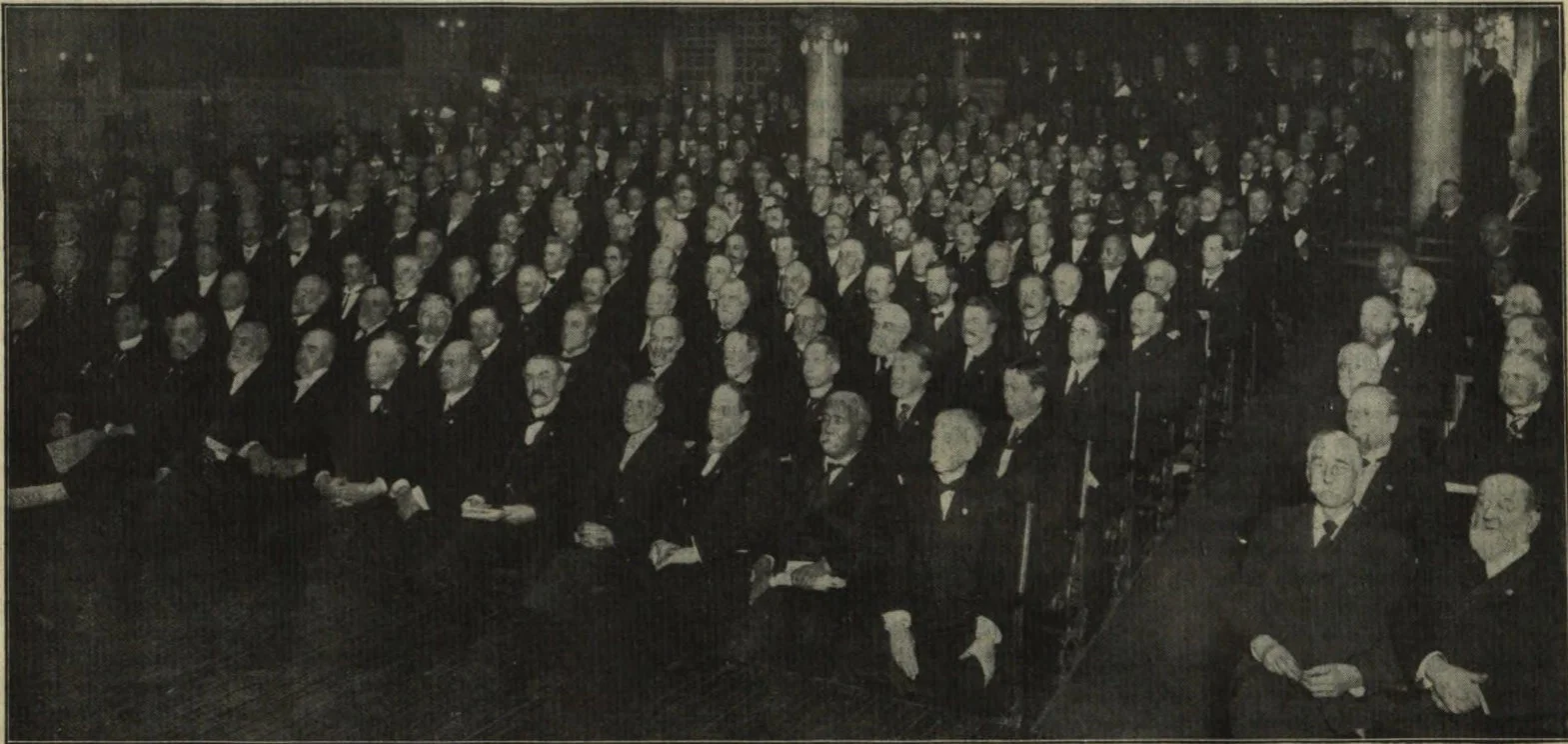
The Delegates to the Federal Council of Churches.
The resolution, as will be observed, called for “a new and stronger emphasis of . . . the first day of the week as . . . the rest day for every man, woman, and child. All encroachments upon the claims and sanctities of the Lord’s day should be stoutly resisted through the press, the Lord’s day associations and alliances, and by such legislation as may be secured to protect and preserve the bulwark of our American Christianity.”
“Resolved, That we rejoice in the prospect of unity of action among the various organizations striving in America for the preservation of the Lord’s day as a day of rest and worship.”
A Rift in the Lute.
These resolutions were discussed at length and were the occasion of the “first serious breach,” as a morning paper expressed it, of the peace of the sessions.
The Rev. Dr. Wayland Hoyt (Baptist) proposed a resolution which stated:
“It is not our intention that anything should be done to interfere with the convictions of those brethren represented with us in this council, who conscientiously observe the seventh instead of the first day of the week as a day for rest and worship.”
This resolution was hotly protested by Bishop Thomas B. Neely (Methodist), of New Orleans, and others. He said:
“I can not support that resolution. We must decide upon one day as the Sabbath. If we do not take a stand upon which day we believe we should observe as a day set apart for the worship of God, and of rest, this will give a wrong impression to the people. Is it the Lord’s day or some other day that we are standing for? If it is the Lord’s day, we should take the resolution by the committee and nothing more, and I trust that the resolution [Dr. Wayland Hoyt’s] as proposed be not accepted. We believe in the Lord’s day and must stand for it.”
In support of his resolution, Dr. Hoyt said: “I hope the resolution will pass. Let us remember that the brethren of the Seventh-day Baptist denomination are members of this council as are any other bodies. If we are going to observe brotherhood and Christian love, we are not going to clash because of the religious convictions of brethren associated with us in this council of churches. Those brethren: I do not myself sympathize with them in their belief; I have respect for their convictions. I do respect them for the fact that they are willing to sacrifice. I respect them for their willingness to stand firm and true to what they believe.”
Dr. Hoyt further stated that he fully sympathized with the spirit of the resolution already submitted—favoring the Lord’s day (Sunday), yet he earnestly hoped that his resolution favoring the Seventh-day Baptists would pass, as he believed God looked smilingly upon the desire to be absolutely fair and just and brotherly to all represented in this federation of churches.
The Rev. Dr. Arthur E. Main, Dean of the Alfred (N. Y.) Theological Seminary (Seventh-day Baptist), made an eloquent plea for religious liberty, in part saying:
“We know that we represent the smallest body in this conference, and on that account we recognize with gratitude your recognition of us. You recognize us as standing together with you in the fundamental principles of salvation. . . . Shall it be that this council refuses to say that we shall not be interfered with in the exercise of our religious convictions when we have stood with you in all these things?”
In reply, a delegate said:
“I think it is a mistake to approach this question from the theoretical side. The question is: Is the Sabbath, or the Lord’s day, the first or the seventh day of the week? That is the question that is before us. This is not the time or the place to settle this question. But it is one that will be decided sometime. In the meantime we will have Sabbath observance on that day (the first day), or we will not have it for one hundred years. . . . It is very unfortunate that this resolution was introduced. Our committee declines to consider it as unwise. The question is whether this council will step back and leave the first day of the week without its due recognition from this body. . . . We are confronted with a condition, not a theory.”
It was then moved that the resolution be read again, which was done by Dr. Hoyt.
Appeal for Tolerance Rejected.
Rev. William F. Richardson, of the Disciples of Christ, Kansas City, Mo., closed this discussion with a stinging speech insisting upon an unqualified declaration in favor of Sunday, saying among other things:
“We must remember that with the brethren who have come to sit with us, there are others who hold hostile relations to us and the principles we believe to be right. . . . If we were to accept this resolution, that would give the impression that we acknowledge that there is another day than the first day of the week which is the Lord’s day, the Sabbath, a day of rest and for worship of God. I say there are those who will take advantage of any such admission on our part. The Jews will feel a still stronger assurance in their belief. . . . The Seventh-day Adventists will take part in their antagonism to many of the things which we hold sacred, in addition to their assaults upon the first day of the week as a day of rest and worship. . . . This resolution [Dr. Hoyt’s] should be left alone; it should not come before us. We must take our stand as a body united in the belief that the Lord’s day is a day of rest and worship. Thus we can take our stand before the world. . . . Let us as a body stand in this conviction and therefore not accept the resolution.”
THE RESOLUTION WAS VOTED DOWN BY A LARGE MAJORITY.
The Chairman States His Views.
In opening the discussion upon Sunday observance, the Rev. Frederick D. Power, chairman of the committee, deplored the multiplication of Sunday amusements, theaters, excursions, ball games, and social functions as a serious menace to the sanctity of the Lord’s day. He said:11
“We are gratified that the President has ordered the minimum of work in the government departments on Sunday, and the American Federation of Labor has declared emphatically in favor of Sunday as a day of rest.”
“Introduction by immigrants of the Continental conceptions of Sunday; the organization of secular unions and liberty leagues for its destruction; . . . the indifference, neglect, and even open violation on the part of many church people; and determined resistance to Sunday regulations on the part of mistaken religionists, must be met. Nothing less than physical and spiritual health, family and Christian life, national prosperity and the advancement of the kingdom of God, call for such federation of the forces of righteousness to hold the Christian institution inviolate. The Lord’s day is the day of days.”
The overwhelming defeat which the resolution favoring Seventh-day Baptists received, refusing even to go on record as willing not to interfere with the convictions of those who conscientiously observe the seventh instead of the first day of the week, and the spirit manifested by the champions of the Sunday-Sabbath at this representative gathering, is but a slight indication of what seventh-day observers may expect in the very near future when they refuse to respect the legal Sunday. “Future events cast their shadows before.”
The Use of the Civil Power.
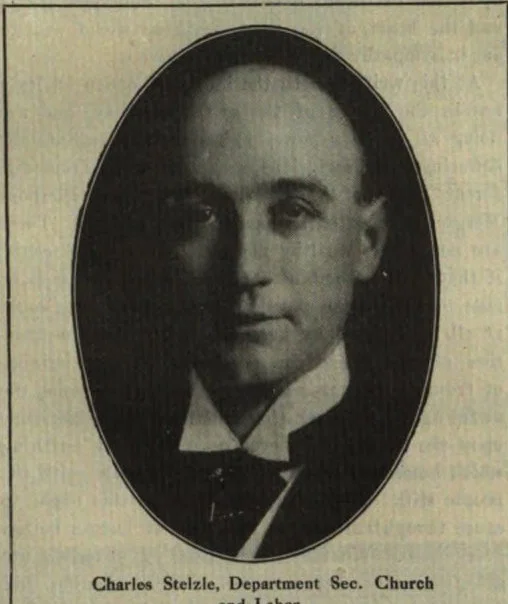
Charles Stelzle, Department Sec. Church and Labor.
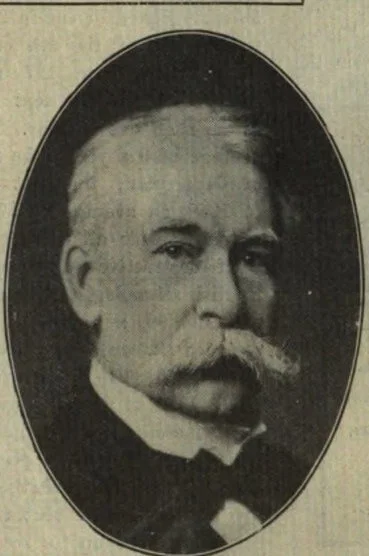
E. B. Sanford, Cor. Sec. Federal Council.
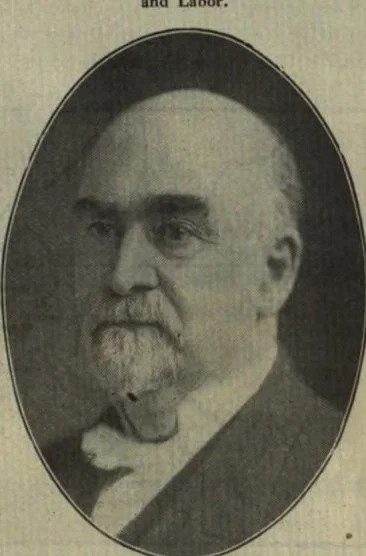
Bishop E. Hendrix, the New President.
F. M. North, Sec. City Evang. Union of M. E. Ch.
Henry Wade Rogers, Chairman “International Relations.”
To what extent the new union of churches proposes to use the civil power in suppressing what it calls “moral” evils, is already very apparent. Attention in this connection is again called to the statement made by Rev. Dr. Roberts, one of its leading spirits: “Our action on Sunday labor will be put on an economic basis. We will try to have the Sabbath (Sunday) as a day of rest ESTABLISHED BY LAW. . . .” Again, it was stated by one speaker that when the request was made for the appointment of additional chaplains, the President suggested that if the churches would PREVAIL UPON THEIR CONGRESSMEN, the bill would go through. If Congressmen will give deference to the demands of the church for legislation in one matter that is specifically religious, it follows that the church may frequently demand and receive similar favors from the state.
On this basis we need not be surprised to see another bold attempt on the part of the church, through its great union, to hasten the establishment of religion by the state—through the adoption of a national Sunday law. That this is the avowed purpose of the Federal Council any one may understand by reading the resolution on the “Lord’s Day.” It calls for “such legislation as may be secured to protect and preserve this bulwark (Sunday) of our AMERICAN Christianity.” It continues: “That we rejoice in the prospect of unity of action among the various organizations striving in America for the preservation of the LORD’S DAY AS A DAY OF REST AND WORSHIP.” The “unity of action among the various organizations” refers to the Young People’s Society of Christian Endeavor; the several Woman’s Christian Temperance Unions; the American Federation of Labor, with its membership numbering 2,000,000, and the newly formed Federal Council of the Churches of Christ in America, with its 50,000,000 adherents. The mighty influence of any one of these organizations, with religio-political representatives at state and national halls, is not a matter of little consequence or to be lightly regarded; but what can be said of the possibilities of the Lord’s Day Alliance of the United States, which designs to be “NATION-WIDE IN ITS SCOPE AND . . . CONCENTRATE THE ENERGY OF ALL FORCES WORKING FOR THE PRESERVATION OF THE LORD’S DAY”? Where is the politician of the 20th century who would dare to disregard the requests of this greatest of all great Religious Unions, when it demands a national Sunday law?
The Secular Press.
It is also a significant fact that the Federal Council desires to keep on friendly terms with the secular press, for in them it will find its most efficient means in molding public sentiment in its favor. And when this is accomplished, what can be said of the strong, even cruel, prejudice that shall everywhere be shown toward those who may sincerely and conscientiously oppose such legislation? Stinging calumny and ridicule will be hurled alike from the press, the pulpit, and the platform against those who refuse to honor the Sunday which has unlawfully and inconsistently been called the “Lord’s day.”
To the careful Bible student the inconsistencies of the Federal Council of the Churches of Christ in America in many of its deliberations were strikingly apparent. While the Scriptures clearly reveal that this world’s history will end in universal war, the council forgetting or overlooking this fact stated: “We may take it for granted that the nations will decrease their efforts to increase armaments,” and that “war must end and increase of armaments must cease.” In connection with these statements, the speaker, Henry Wade Rogers, LL.D., Dean of the Yale Law School, clearly showed that the great nations of to-day had all increased their navy budgets from fifty to two hundred per cent, the latter figures being credited to the United States.
W. H. HECKMAN.
Big Things: Honor Above Dollars in Commerce
Big Things.—Attorney Charles S. Wheeler, in a recent speech before the Merchants' Association of San Francisco, pointed out, as many other thinking men are doing, the dishonesty that there is in commercial circles. His argument was that honor should be placed above dollars. Great organizations of capital and vast sums of money have lured people from honesty. He stated some very striking facts in his speech; namely, that in the thirty years between 1870 and 1900 America doubled her population; more than doubled her railway tonnage; increased her interlake traffic thirty-one times; her petroleum output eleven times; her steel product 153 times; her total exports 256 per cent; while the export of manufactories increased 535 per cent. In 1870 the wealth of this country was estimated at thirty thousand million dollars; in 1890 it was sixty-five thousand million; in 1900 it was ninety-four thousand million. With all this has come the big corporations—a condition, not a theory—and either it must be controlled or killed. To declare an industrial war, too, was almost worse, and inflicted almost as much suffering as an actual conflict of arms under old conditions. Think of one corporation alone—the United States Steel—having over 200,000 employees, making with their families nearly one million people dependent upon that one corporation.
New Coins
Preparations are now being made in the mints of Denver, San Francisco, and Philadelphia for the coinage of new five-dollar and two-and-one-half-dollar gold pieces. They are entirely different from any coin heretofore minted. The design on the face of the coin is sunken. In other words, the edge of the coin is high. This was necessary in order that the coins should “stack,” or pile, without tipping. In this way a strong relief of the design can be impressed on the coin. On the obverse side is a real Indian head with a war bonnet of feathers; on the reverse, an eagle. The new coins will bear the motto, “In God We Trust.”