Federal Council of the Churches of Christ in America
By W. H. HECKMAN
Held in Philadelphia, Dec. 2 to 8, 1908
From Our Own Correspondent
[This report is from an experienced Gospel minister, a president of a conference, one fitted by experience to weigh principles and measures. It deals with a subject of not only nation-wide, but of world-wide importance. The first part of the report, given last week, dealt with the opening of the council, cooperation in mission work, and its attitude toward labor.—EDITOR.]
Resolutions on Sunday Observance.
THE climax, however, of this significant meeting was reached when the Committee on Sunday Observance brought in its report. The discussion which followed the report, and the resolution adopted, clearly demonstrated the real animating thought of those who oppose the Sabbath of Jehovah and its observers.
The resolution, as will be observed, called for "a new and stronger emphasis of . . . the first day of the week as . . . the rest day for every man, woman, and child. . . . All encroachments upon the claims and sanctities of the Lord's day should be stoutly resisted through the press, the Lord's day associations and alliances, and by such legislation as may be secured to protect and preserve the bulwark of our American Christianity."
"Resolved, That we rejoice in the prospect of unity of action among the various organizations striving in America for the preservation of the Lord's day as a day of rest and worship."
A Rift in the Lute.
These resolutions were discussed at length and were the occasion of the "first serious breach," as a morning paper expressed it, of the peace of the sessions.
The Rev. Dr. Wayland Hoyt (Baptist) proposed a resolution which stated:
"It is not our intention that anything should be done to interfere with the convictions of those brethren represented with us in this council, who conscientiously observe the seventh instead of the first day of the week as a day for rest and worship."
This resolution was hotly protested by Bishop Thomas B. Neely (Methodist), of New Orleans, and others. He said:
"I can not support that resolution. We must decide upon one day as the Sabbath. If we do not take a stand upon which day we believe we should observe as a day set apart for the worship of God, and of rest, this will give a wrong impression to the people. Is it the Lord's day or some other day that we are standing for? If it is the Lord's day, we should take the resolution by the committee and nothing more, and I trust that the resolution [Dr. Wayland Hoyt's] as proposed be not accepted. We believe in the Lord's day and must stand for it."
In support of his resolution, Dr. Hoyt said:
"I hope the resolution will pass. Let us remember that the brethren of the Seventh-day Baptist denomination are members of this council as are any other bodies. If we are going to observe brotherhood and Christian love, we are not going to clash because of the religious convictions of brethren associated with us in this council of churches. These brethren: I do not myself sympathize with them in their belief; I have respect for their convictions. I do respect them for the fact that they are willing to sacrifice. I respect them for their willingness to stand firm and true to what they believe."
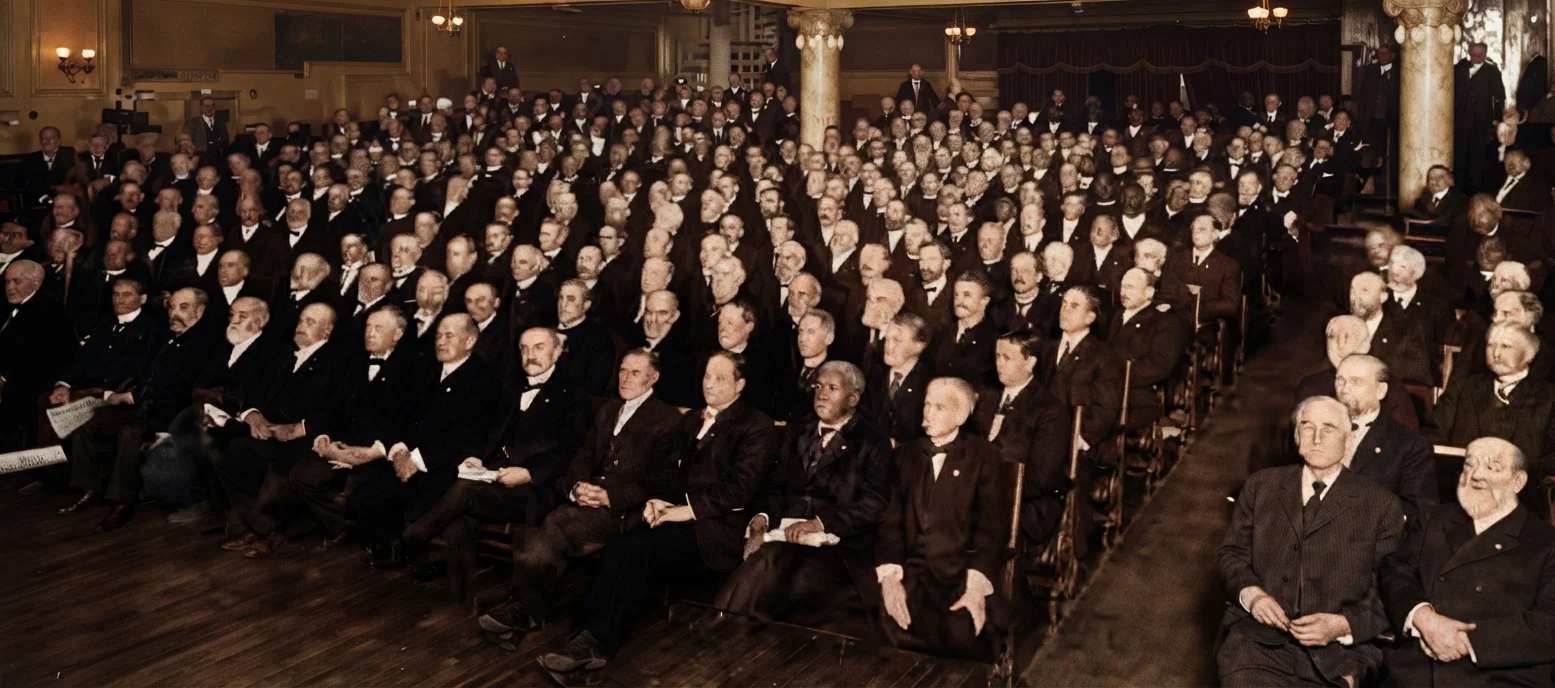
The Delegates to the Federal Council of Churches.
Dr. Hoyt further stated that he fully sympathized with the spirit of the resolution already submitted — favoring the Lord's day (Sunday), yet he earnestly hoped that his resolution favoring the Seventh-day Baptists would pass, as he believed God looked smilingly upon the desire to be absolutely fair and just and brotherly to all represented in this federation of churches.
The Rev. Dr. Arthur E. Main, Dean of the Alfred (N. Y.) Theological Seminary (Seventh-day Baptist), made an eloquent plea for religious liberty, in part saying:
"We know that we represent the smallest body in this conference, and on that account we recognize with gratitude your recognition of us. . . . You recognize us as standing together with you in the fundamental principles of salvation. . . . Shall it be that this council refuses to say that we shall not be interfered with in the exercise of our religious convictions when we have stood with you in all these things?"
In reply, a delegate said:
"I think it is a mistake to approach this question from the theoretical side. The question is: Is the Sabbath, or the Lord's day, the first or the seventh day of the week? That is the question that is before us. This is not the time or the place to settle this question. But it is one that will be decided sometime. In the meantime we will have Sabbath observance on that day (the first day), or we will not have it for one hundred years. . . . It is very unfortunate that this resolution was introduced. Our committee declines to consider it as unwise. The question is whether this council will step back and leave the first day of the week without its due recognition from this body. . . . We are confronted with a condition, not a theory."
It was then moved that the resolution be read again, which was done by Dr. Hoyt.
Appeal for Tolerance Rejected.
Rev. William F. Richardson, of the Disciples of Christ, Kansas City, Mo., closed this discussion with a stinging speech insisting upon an unqualified declaration in favor of Sunday, saying among other things:
"We must remember that with the brethren who have come to sit with us, there are others who hold hostile relations to us and the principles we believe to be right. . . . If we were to accept this resolution, that would give the impression that we acknowledge that there is another day than the first day of the week which is the Lord's day, the Sabbath, a day of rest and for worship of God. I say there are those who will take advantage of any such admission on our part. The Jews will feel a still stronger assurance in their belief. . . . The Seventh-day Adventists will take part in their antagonism to many of the things which we hold sacred, in addition to their assaults upon the first day of the week as a day of rest and worship. . . . This resolution [Dr. Hoyt's] should be left alone; it should not come before us. We must take our stand as a body united in the belief that the Lord's day is a day of rest and worship. Thus we can take our stand before the world. . . . Let us as a body stand in this conviction and therefore not accept the resolution."
THE RESOLUTION WAS VOTED DOWN BY A LARGE MAJORITY.
The Chairman States His Views.
In opening the discussion upon Sunday observance, the Rev. Frederick D. Power, chairman of the committee, deplored the multiplication of Sunday amusements, theaters, excursions, ball games, and social functions as a serious menace to the sanctity of the Lord's day. He said:11
"We are gratified that the President has ordered the minimum of work in the government departments on Sunday, and the American Federation of Labor has declared emphatically in favor of Sunday as a day of rest."
"Introduction by immigrants of the Continental conceptions of Sunday; the organization of secular unions and liberty leagues for its destruction; ... the indifference, neglect, and even open violation on the part of many church people; and determined resistance to Sunday regulations on the part of mistaken religionists, must be met. Nothing less than physical and spiritual health, family and Christian life, national prosperity and the advancement of the kingdom of God, call for such federation of the forces of righteousness to hold the Christian institution inviolate. The Lord's day is the day of days."
The overwhelming defeat which the resolution favoring Seventh-day Baptists received, refusing even to go on record as willing not to interfere with the convictions of those who conscientiously observe the seventh instead of the first day of the week, and the spirit manifested by the champions of the Sunday-Sabbath at this representative gathering, is but a slight indication of what seventh-day observers may expect in the very near future when they refuse to respect the legal Sunday. "Future events cast their shadows before."
The Use of the Civil Power.
To what extent the new union of churches proposes to use the civil power in suppressing what it calls "moral" evils, is already very apparent. Attention in this connection is again called to the statement made by Rev. Dr. Roberts, one of its leading spirits: "Our action on Sunday labor will be put on an economic basis. We will try to have the Sabbath (Sunday) as a day of rest ESTABLISHED BY LAW. . . ." Again, it was stated by one speaker that when the request was made for the appointment of additional chaplains, the President suggested that if the churches would PREVAIL UPON THEIR CONGRESSMEN, the bill would go through. If Congressmen will give deference to the demands of the church for legislation in one matter that is specifically religious, it follows that the church may frequently demand and receive similar favors from the state.
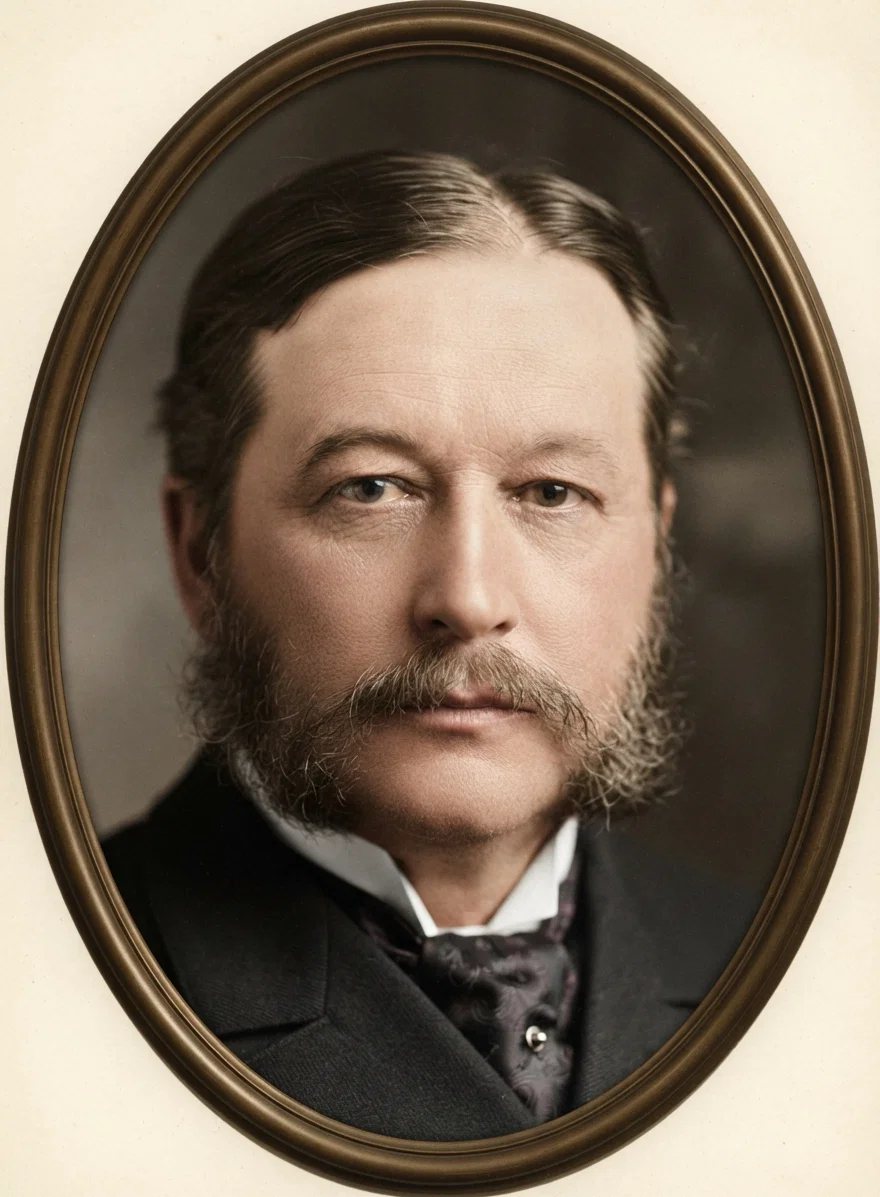
Charles Stelzle, Department Sec. Church and Labor.
On this basis we need not be surprised to see another bold attempt on the part of the church, through its great union, to hasten the establishment of religion by the state — through the adoption of a national Sunday law. That this is the avowed purpose of the Federal Council any one may understand by reading the resolution on the "Lord's Day." It calls for "such legislation as may be secured to protect and preserve this bulwark (Sunday) of our AMERICAN Christianity." It continues: "That we rejoice in the prospect of unity of action among the various organizations striving in America for the preservation of the LORD'S DAY AS A DAY OF REST AND WORSHIP." The "unity of action among the various organizations" refers to the Young People's Society of Christian Endeavor; the several Woman's Christian Temperance Unions; the American Federation of Labor, with its membership numbering 2,000,000, and the newly formed Federal Council of the Churches of Christ in America, with its 50,000,000 adherents. The
mighty influence of any one of these organizations, with religio-political representatives at state and national halls, is not a matter of little consequence or to be lightly regarded; but what can be said of the possibilities of the Lord's Day Alliance of the United States, which designs to be "NATION-WIDE IN ITS SCOPE AND . . . CONCENTRATE THE ENERGY OF ALL FORCES WORKING FOR THE PRESERVATION OF THE LORD'S DAY"? Where is the politician of the 20th century who would dare to disregard the requests of this greatest of all great Religious Unions, when it demands a national Sunday law?
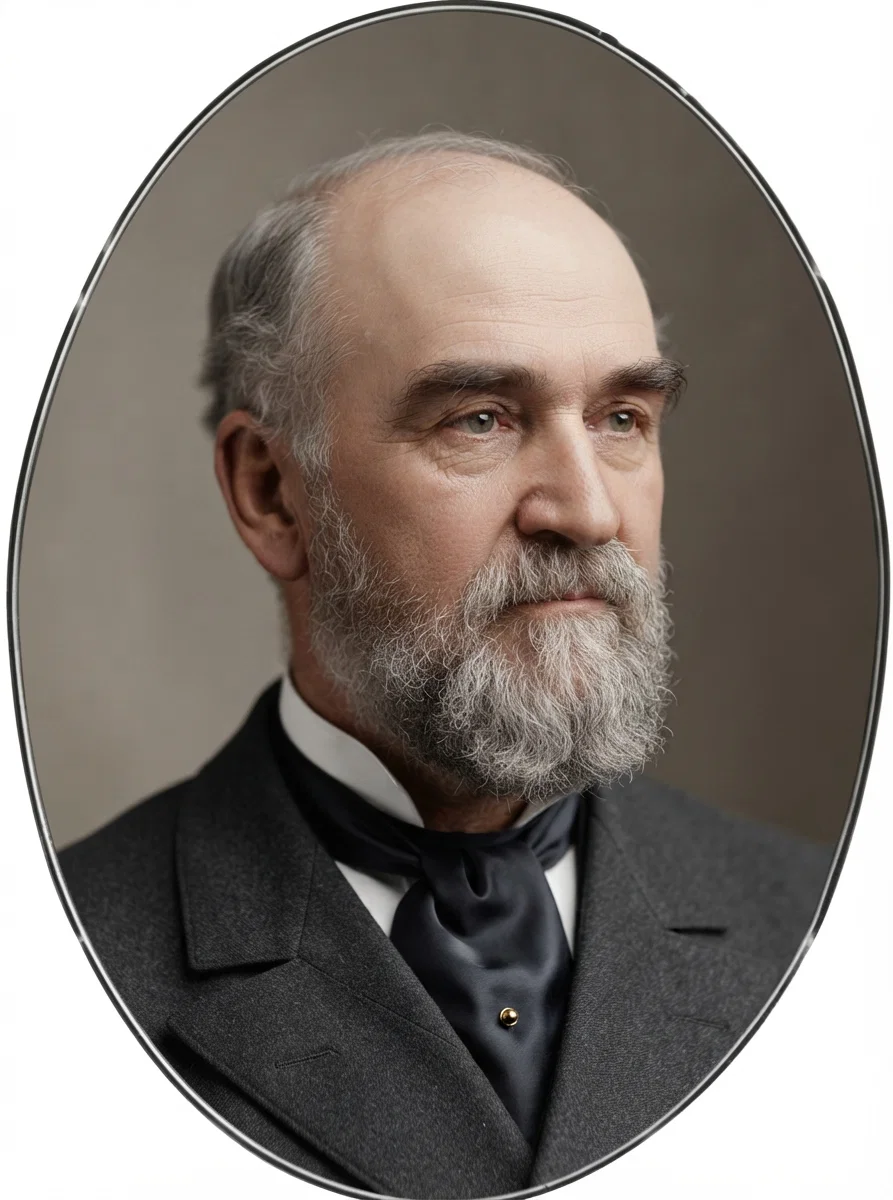
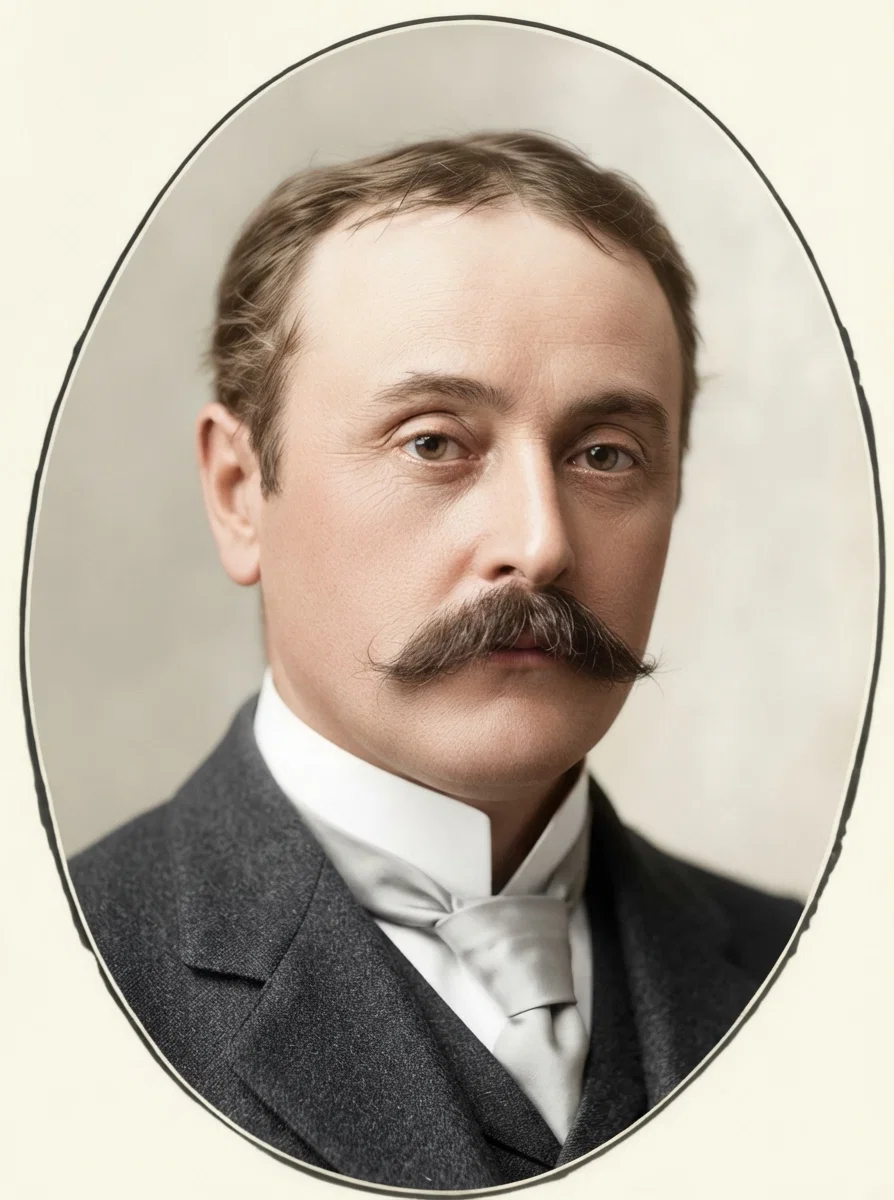
E. B. Sanford, Cor. Sec. Federal Council.
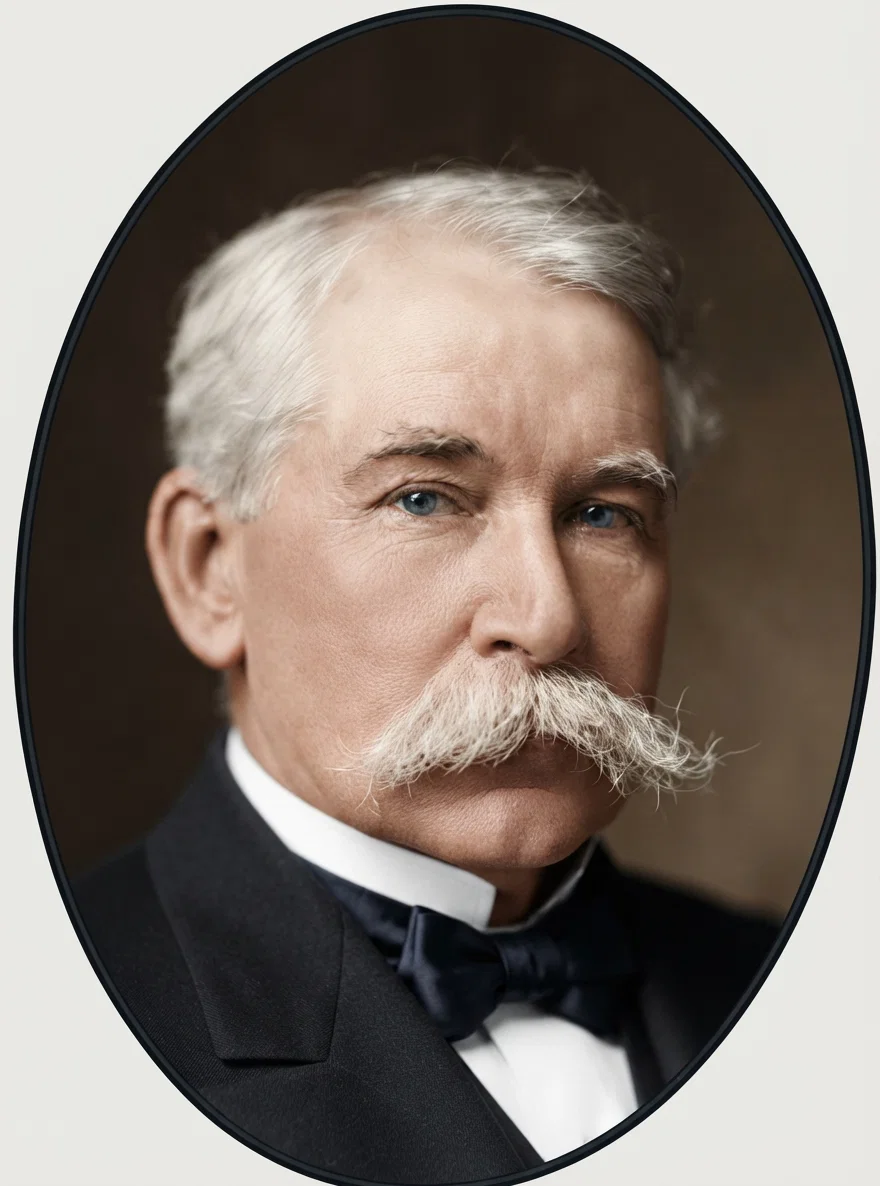
Bishop E. Hendrix, the New President.
F. M. North, Sec. City Evang. Union of M. E. Ch.
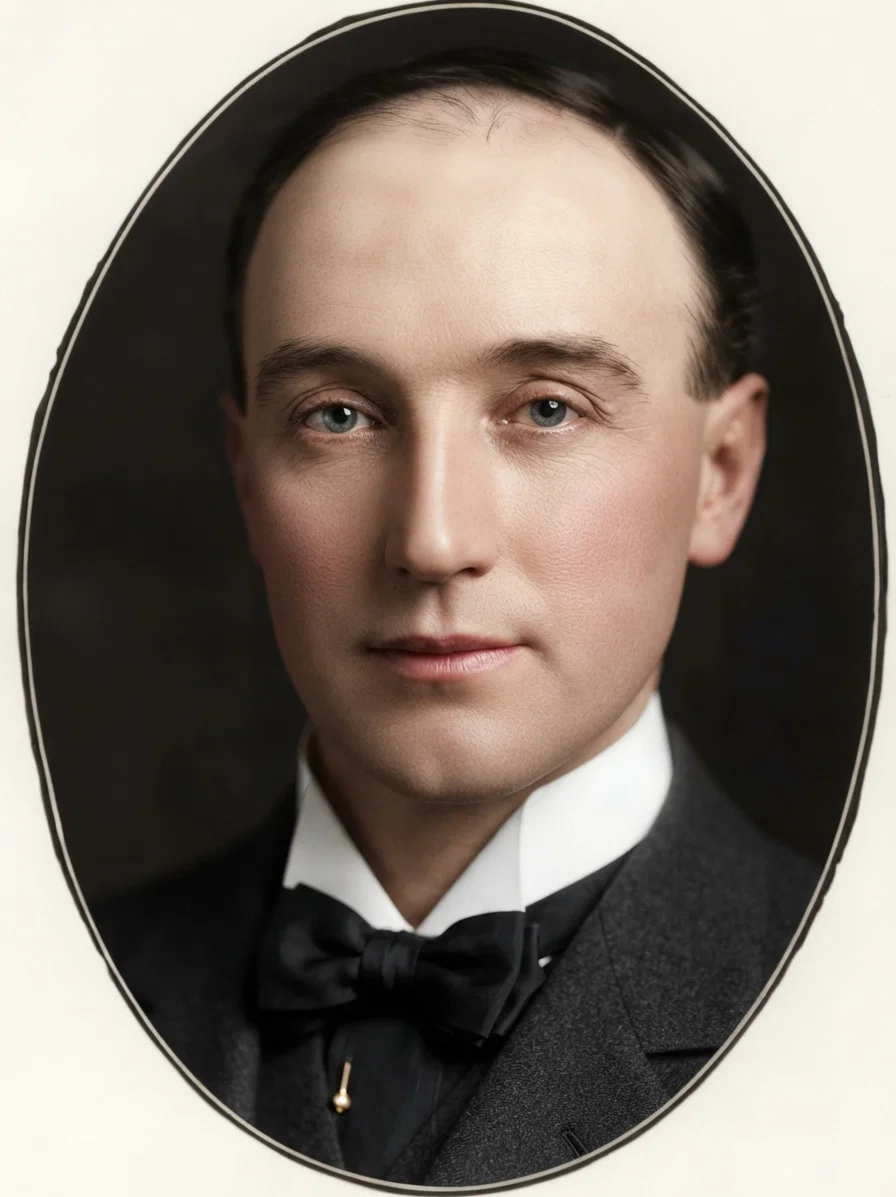
Henry Wade Rogers, Chairman "International Relations."
The Secular Press.
It is also a significant fact that the Federal Council desires to keep on friendly terms with the secular press, for in them it will find its most efficient means in molding public sentiment in its favor. And when this is accomplished, what can be said of the strong, even cruel, prejudice that shall everywhere be shown toward those who may sincerely and conscientiously oppose such legislation? Stinging calumny and ridicule will be hurled alike from the press, the pulpit, and the platform against those who refuse to honor the Sunday which has unlawfully and inconsistently been called the "Lord's day."
To the careful Bible student the inconsistencies of the Federal Council of the Churches of Christ in America in many of its deliberations were strikingly apparent. While the Scriptures clearly reveal that this world's history will end in universal war, the council forgetting or overlooking this fact stated: "We may take it for granted that the nations will decrease their efforts to increase armaments," and that "war must end and increase of armaments must cease." In connection with these statements, the speaker, Henry Wade Rogers, LL.D., Dean of the Yale Law School, clearly showed that the great nations of to-day had all increased their navy budgets from fifty to two hundred per cent, the latter figures being credited to the United States.
W. H. HECKMAN.
Signs of the Times
Big Things.
Attorney Charles S. Wheeler, in a recent speech before the Merchants' Association of San Francisco, pointed out, as many other thinking men are doing, the dishonesty that there is in commercial circles. His argument was that honor should be placed above dollars. Great organizations of capital and vast sums of money have lured people from honesty. He stated some very striking facts in his speech; namely, that in the thirty years between 1870 and 1900 America doubled her population; more than doubled her railway tonnage; increased her interlake traffic thirty-one times; her petroleum output eleven times; her steel product 153 times; her total exports 256 per cent; while the export of manufactories increased 535 per cent. In 1870 the wealth of this country was estimated at thirty thousand million dollars; in 1890 it was sixty-five thousand million; in 1900 it was ninety-four thousand million. With all this has come the big corporations—a condition, not a theory—and either it must be controlled or killed. To declare an industrial war, too, was almost worse, and inflicted almost as much suffering as an actual conflict of arms under old conditions. Think of one corporation alone—the United States Steel—having over 200,000 employees, making with their families nearly one million people dependent upon that one corporation.
New Coins
New Coins.—Preparations are now being made in the mints of Denver, San Francisco, and Philadelphia for the coinage of new five-dollar and two-and-one-half-dollar gold pieces. They are entirely different from any coin heretofore minted. The design on the face of the coin is sunken. In other words, the edge of the coin is high. This was necessary in order that the coins should "stack," or pile, without tipping. In this way a strong relief of the design can be impressed on the coin. On the obverse side is a real Indian head with a war bonnet of feathers; on the reverse, an eagle. The new coins will bear the motto, "In God We Trust."
An Unspeakable Horror
By Editor
Southern Italy Devastated
200,000 Reported Dead
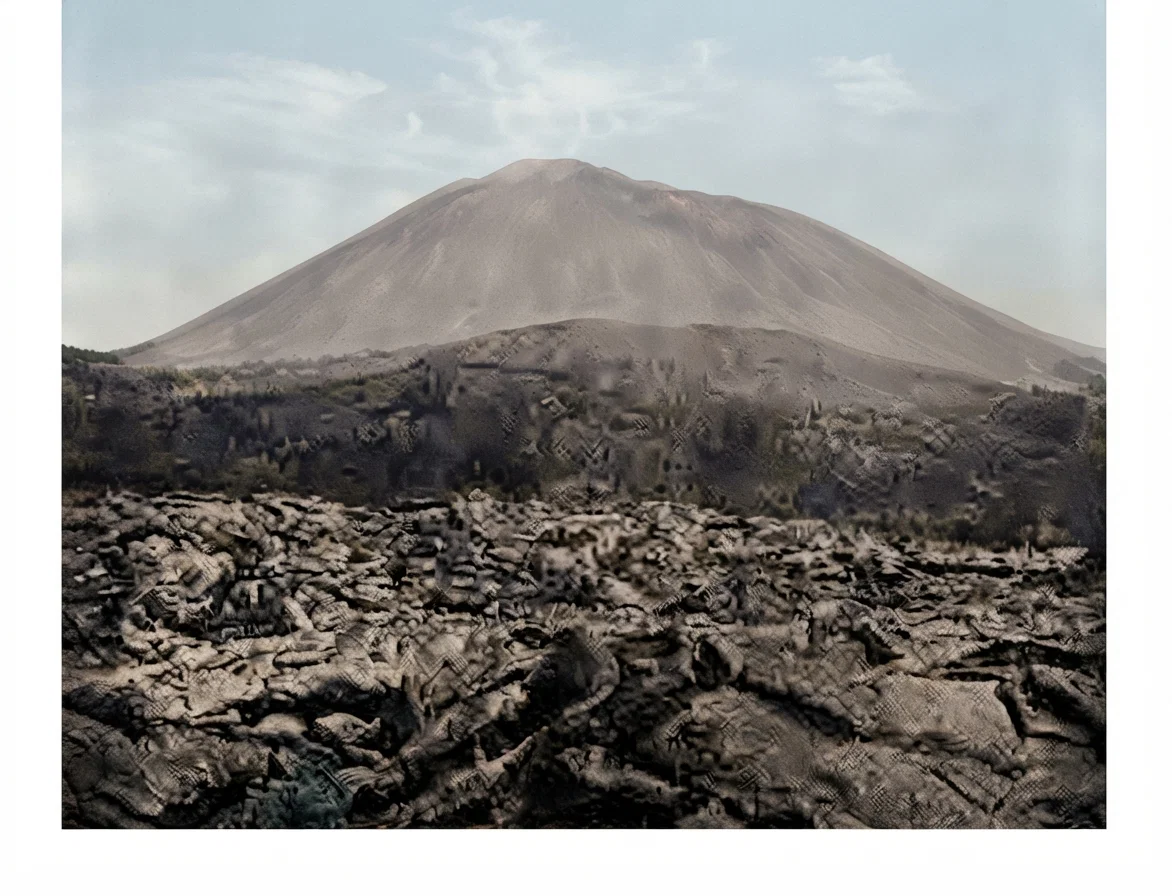
Cone and lava fields of Vesuvius after the eruption of 1872.
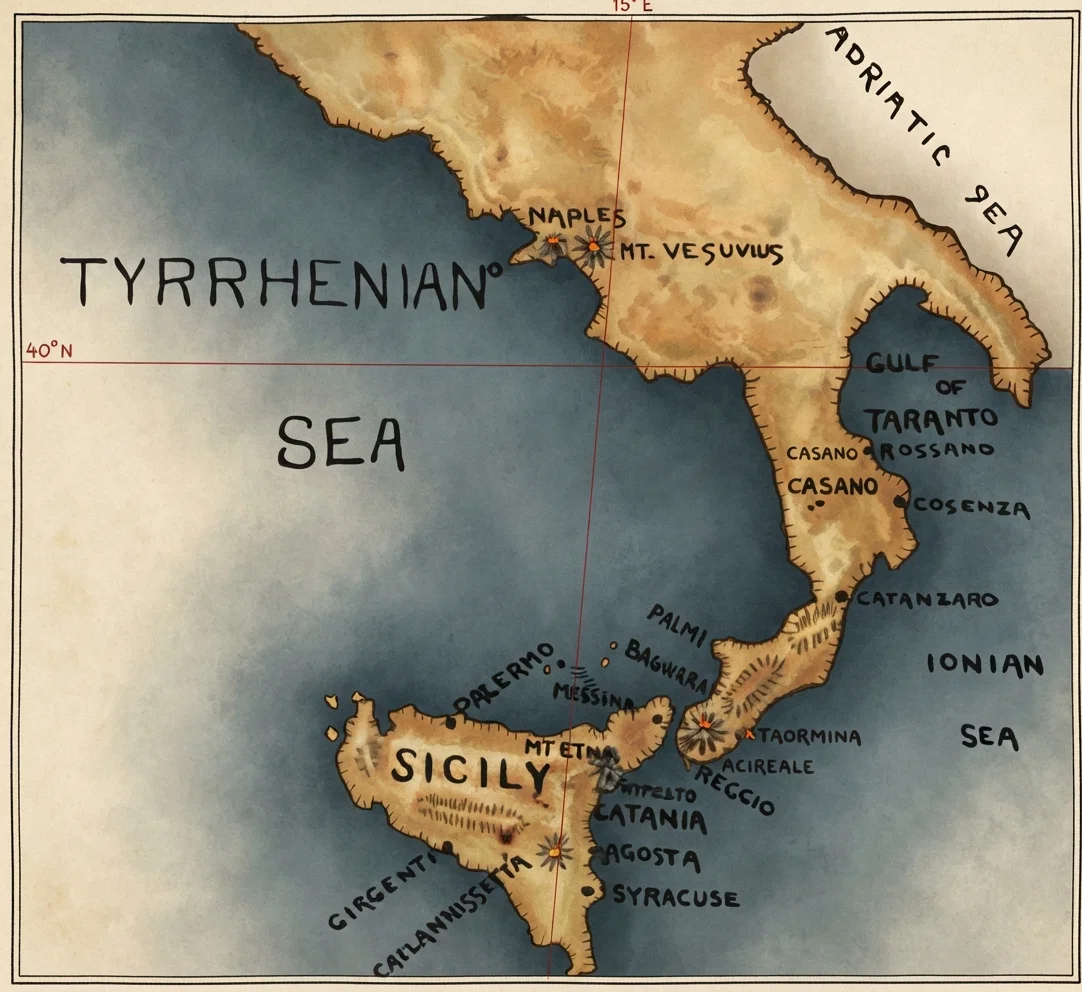
ON December 28, at 5 A.M., a most fearful earthquake devastated all Southwestern Italy, indicated on our map, drawn for the purpose. On that day it was stated that probably 20,000 were killed. The next day the report was given as 100,000, and on the morning of December 31 the cable told us that 120,000 were killed in Messina and Reggio alone. The last estimate to reach us is 200,000 dead. One of the refugees from Messina states that 100,000 were killed in that city alone. It will be seen that the center of the earthquake district is the volcano Etna which is in eruption. We do not know that we can add anything to the awful descriptions which will be given by the entire daily press of the United States. We mention some of the towns which are said to be destroyed.
Messina and Reggio have been totally destroyed. Messina is on the Island of Sicily, and Reggio in the Province of Calabria in Italy. Among other towns in Calabria, Palmi with 20,000 inhabitants, Baguare with 10,000, Scylla with 8,000, Villa San Giovanni 10,000, and all the coast villages near Messina. Taormina, where many Americans live, was seriously damaged.
Marine reports are that the coasts of Southern Italy are entirely altered, especially so the Straits of Messina. The famous Cape Pharo has been entirely destroyed and sunk in the sea. The Lipari Islands were reported swallowed up, but later news declared them safe, tho badly shaken.
The distress and suffering beggar description. Many of the people, half-mad, poured into the churches while they were falling; victims are imprisoned in ruins, and starving hordes are fleeing from city to city, and pouring into partially destroyed towns where there is nothing for them to eat. It is said that the death list will reach 300,000. It may be that it will not reach half that sum, and yet every report from the stricken district is more awful than the previous. Among the towns on the Island of Sicily reported destroyed are Catania, Agosta, ancient Syracuse, Catlaninissetta, and Girgenti. The territory affected is about 100 miles square, including, of course, the water district as well as the land. In the extent of territory affected it is not very different from that of the California earthquake of 1906, but in violence it seems to have greatly exceeded it. The time during which it lasted is recorded as thirty-two seconds on the seismographs in other parts of the world. It was probably longer than that in the affected district. No language can describe the awful terror which is upon the excitable inhabitants of Southern Italy; and the heart of the whole civilized world will go out in sympathy for those who survive.
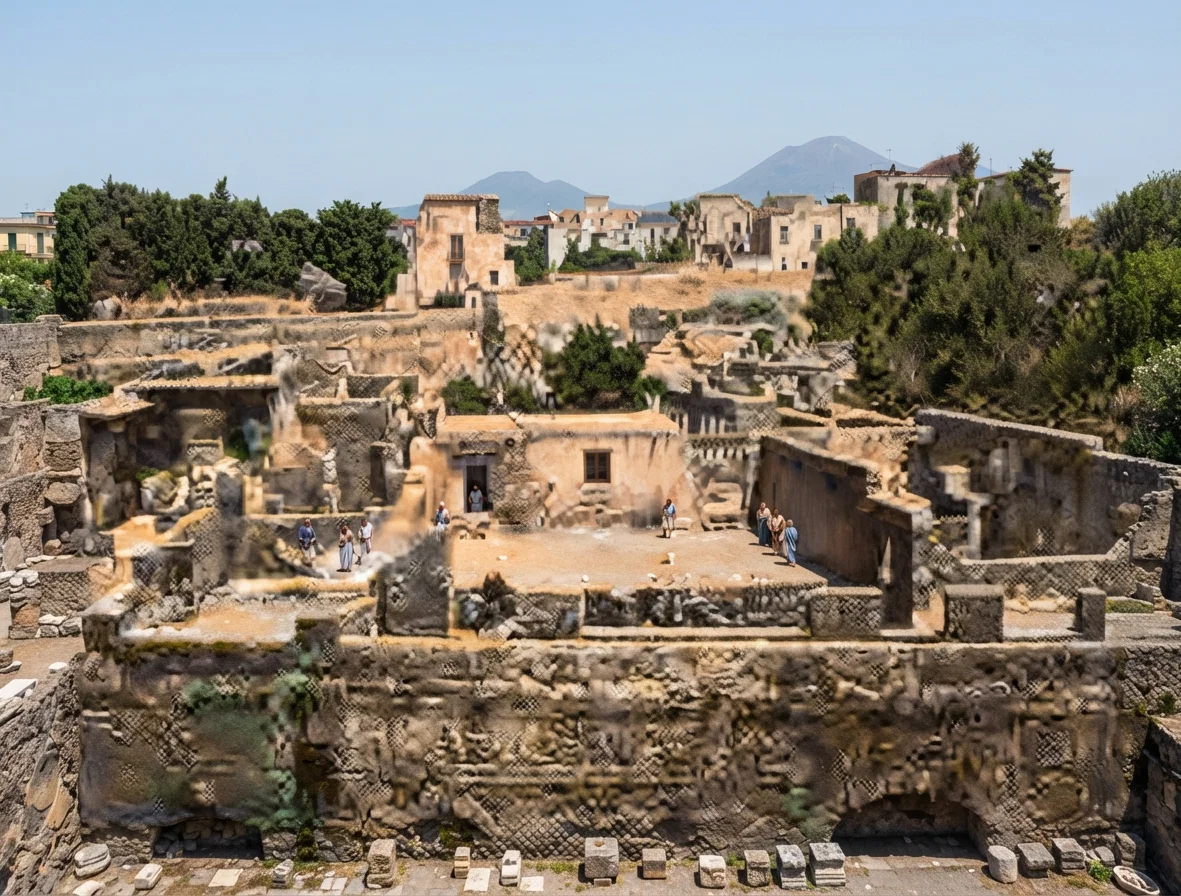
A general view of Herculaneum, buried in an eruption of Vesuvius in A.D. 79. It lies beneath the surface from 30 to 120 feet.
At this writing both the king and queen of Italy are in the center of the awful calamity, and are doing all in their power to relieve and palliate the suffering. Subscriptions are pouring in from different parts of the world. Mr. John Pierpont Morgan is reported as having given $10,000. There are not a few wealthy men in America who could, if they would, combine their donations and soon be able to relieve the physical needs of all who could at all be relieved by humanity. The utter destruction of the cities, the crushing out and burning of from one to three hundred thousand persons, the awful agony of separation and fear which has come upon the people, can never be relieved by anything which humanity can do. These will abide with the people still. Such an awful event as this ought to cause thoughtfulness on the part of human beings everywhere. We may think that we ourselves are safe, we may solace ourselves with the thought that we are not living in an earthquake zone. One scientist fifty years ago declared that the United States was not in the earthquake belt, and that the cities of this country had nothing to fear. Since that time, however, Charleston was visited, and also San Francisco. Could we but remember God's word that the earth "shall wax old as doth a garment," and that as an old garment it is liable to breaks and tearing in different parts, we would not wonder. That same word has also told us of the time when a mightier earthquake than the earth has yet seen will occur, when the cities of the nations shall fall. Could we but appreciate this, there would be a turning to God, and a seeking for that refuge from these calamities which no power of man can give.
Map of earthquake district. The transverse lines are longitude 15th degree east, and latitude 40th degree north. The square represents a territory of sea and land 420 by 350 miles square. Mt. Etna is the center of the disturbance. Messina, Catania, Agosta, Syracuse, and Reggio, are among the greatest sufferers. Mt. Vesuvius is at the north of the district.
The God who made the earth, and who yet reigns notwithstanding the sin which He has suffered for a while to exist, still has a care for the sin-laden planet. And when His great plan has been worked out, when to the entire universe sin will be seen to be sinful, and only sinful, the same creative power of God will renew the earth, make it stable forever, and people it with all those who have had faith in Him.
It is a good thing in times like these to have a faith that reaches beyond the earthquake, beyond all its untold calamities, beyond the many forms of death and distress which grow out of it.
In the meantime all Christian hearts sympathize with the sufferers; and all truly enlightened Christians can answer the messengers of the nation who are enquiring for places of refuge, "that Jehovah hath founded Zion, and in her shall the afflicted of His people take refuge."
General view of Palermo, the largest town in the north of the island of Sicily, where some damage was done.
An eruption of Vesuvius, April 26, 1872, at 3:30 P.M. Etna is now belching forth smoke and lava in a similar way, beclouding the sun by day, and illuminating the heavens by night.
The Great Earthquakes of the Past.
HE district of Italy now afflicted has suffered fearful things in past centuries. There were 15,000 lives lost in Catania in the year 1137; 40,000 in Naples in 1456; 70,000 in Naples in 1626; 6,000 in Palermo in 1726; 30,000 in the Province of Calabria in 1783; 10,000 in Calabria in 1857.
Earthquake records show that there were recorded before A.D. 1, in a period of 1,700 years, 58 earthquakes, or one in 29 years. From that time to the end of the 9th century, a period of 900 years, there were 197 recorded, about one in 4½ years. In the next 600 years there was an average of one a year. The next 300 years an average of 9 a year; the next 50 years an average of 64 a year; the next 18 years, or from 1850 to 1868, an average of 277 in a year. These, of course, include all trembles of the earth recorded.
Of destructive earthquakes, Robert Mallet, the English seismologist, tells us that between B.C. 1700 and A.D. 96, a period of 1,796 years, there were recorded sixteen destructive earthquakes. From A.D. 96 to 1850, 204, or an average of one in 8 years. From 1850 to 1865 an average of one a year, in which more or less life and property were destroyed. From 1865 to 1868, a period of three years, there were 15 destructive earthquakes, or an average of five a year. Since that time we are sure the old earth has kept up its record, and this last awful earthquake in Italy seems to have been the greatest on record since the Deluge.
While doubtless the seismographs have recorded earthquakes in later times which once would not have been noticed at all, this is not true as regards destructive earthquakes. The constant increase in the perturbations of the old earth certainly mean something. Man's perversions of God's laws in the beginning brought sin, and sin brought death, and whether we regard His word or not, the great fact is true just the same that a continuation of sin against God will bring continual trouble and calamity. When man whom God made ruler over this earth sinned, all below man was affected. Perversion of spiritual law means perversion of physical law. The earth is suffering for man's sake.