The following extracts from recent letters will give some idea of the enthusiasm with which "Bible Nature Series Number One" has been received by teachers all over the country. It would seem almost impossible to formulate stronger expressions of commendation than are contained in these letters.
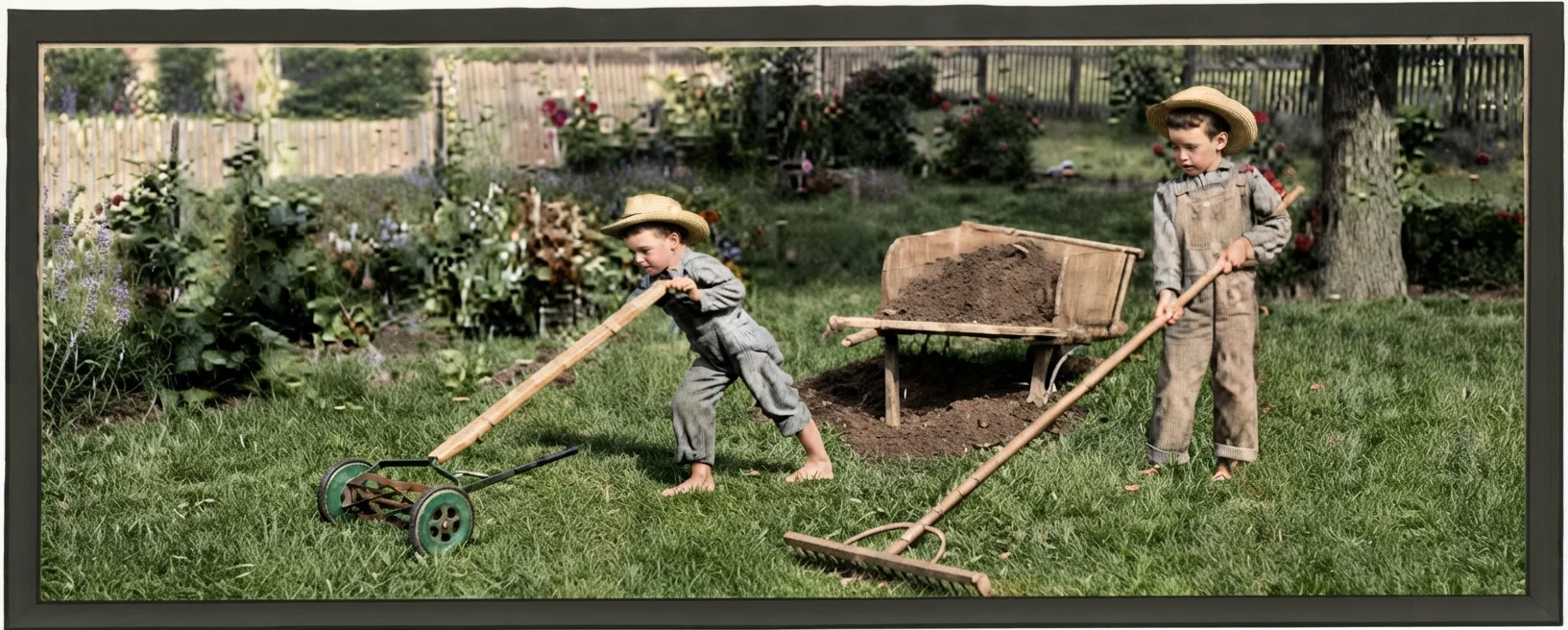
From a photograph of the finished book.
From the East comes this straightforward testimony:
"It becomes a pleasure to me to acknowledge the receipt of a copy of 'Bible Nature Series Number One' and also the 'Note Book.' I am very much pleased with these, and as fast as we can, expect to use them in our school."—B. F. Machlan, Principal South Lancaster Academy, South Lancaster, Mass.
From the West comes a still stronger word of approval:
"The book that I have been looking for, 'Bible Nature Series Number One,' is here. And as I turned from page to page and saw the wealth of illustrations and the lessons so nicely graded and beautifully worded, I said to myself, 'This is no disappointment.'
"The book as a whole in the matter of printing, binding, drawings, subject-matter, and general arrangement, is most excellent; and in particular fills a long-felt need. The world needs this series that it may learn true science-teaching."—I. C. Colcord, Ed. Supt. California Conference, Healdsburg, Cal.
From the British Dominion in the far North we have the following:
"I am more than pleased with 'Bible Nature Series Number One.' It seems to me that with such school books we have reason to believe that our educational system is destined to become very successful."—A. C. Anderson, Ed. Sec. Alberta Conference, Harmattan, Alberta, Can.
Now from the South we hear the following:
"I like it very much, and certainly think it will fill a long-felt need in our schools. It is just the book I have long been wanting."—Kate C. Bickham, Ed. Sec. Louisiana Conference, Shreveport, La.
Then from college presidents, principals of schools, educational secretaries, and leading educators all over the country come similar expressions of approval.
O. J. Graf, President Emanuel Missionary College, says:
"The copy of 'Bible Nature Series Number One,' and also the 'Note Book' have reached me. I believe they will be a great help to our teachers in the lower grades."
Next, from E. D. Sharpe, President of the Western Normal Institute, we have the following:
"I consider the book a little jewel, the best ever sent out by educational departments. I shall be glad to use it in our school."
C. Sorenson, Principal Keene Industrial Academy, has the following to say:
"The copy of the 'Bible Nature Series Number One' came to hand recently. I am much pleased with the general appearance and scope of the same. I think this is exactly what we have needed in our work."
M. B. Van Kirk, Principal Southern Training School, adds his tribute:
"The sample copy of 'Bible Nature Series Number One' has been received. I have given it quite a thorough examination. I want to assure you that I like it very much. I believe it will be a great help to the nature studies in our graded schools."
Prof. George McCready Price, Secretary Loma Linda College of Evangelists, has this to say:
"If the man who makes two blades of grass grow where only one grew before is a benefactor of the race, surely the one who multiplies a thousandfold the bright and happy thoughts of teachers and children alike is much more deserving of our gratitude and esteem. Professor Cady has done an excellent piece of work in getting up this revised edition, and the publishers have done their part well in getting it ready for the reader. The arrangement of subjects can now be said to be in accord with psychological principles, and the maps and glimpses of physical geography are a very valuable addition. I hope the series will be continued."
E. L. Neff, Ed. Sec. Oklahoma Conference, says:
"I am sure the book will meet with a hearty welcome from teachers, pupils, and parents. It will fill a long-felt need among us. I like the plan of the book, and am glad we have a work that teaches the great truths of science in harmony with God's word and one that is free from the errors so common in books treating on these subjects."
Nellie D. Plugh, Ed. Sec. Northern Illinois Conference, adds her word of commendation, as follows:
COMMON BEAN SOAKED BEAN COTYLEDON AND BABY PLANT
"I am well pleased with 'Bible Nature Series Number One' and feel free to recommend it to my teachers. For work in the fourth grade I know of nothing that will equal it. I have thought it might be a good substitute for a reader in that grade. The entire book is very suggestive to the wide-awake teacher and will prove a blessing in our schools, I am sure."
Ethel M. Harris, Ed. Sec. New York Conference, adds her testimony as follows:
"I want to write and let you know how much I appreciate the 'Nature Series Note Book Number One.' There is nothing I have found so helpful in years and which the little ones seem to enjoy so well."
Prof. E. S. Ballenger, Ed. Sec. Southern California Conference, says:
"I am very much pleased with the 'Nature Study Book,' and find that our teachers are highly gratified with the success they are meeting with in teaching it. I wish to compliment you also on the very attractive cover that you have put on this book. To my mind it is the most attractive of the school books thus far published."
Mrs. Alma McKibbin, author of "Bible Lessons," expresses her satisfaction with the new book as follows:
"I can not refrain from writing to tell you how delighted I am with the new 'Bible Nature Series No. 1.'"
"When my copy came I was busy at work in the kitchen, but the dishes waited to be washed, and my bread ran over, while I went through the book from cover to cover. Each page was a delight, each lesson a pleasure as I remembered how I used to struggle over those subjects trying to simplify them, and here they are all ready for my use. I felt as if I must show them to some one at once."
This new series of text-books has received such unqualified indorsement that we urge every teacher not using the book in their fourth grade work to procure a sample copy at once and see what a great help "Bible Nature Series Number One" will be. It is not only a complete text-book for the study of Bible and Nature in the fourth grade, but it combines with this in the most natural manner the study of geography, physiology, botany, and natural science. This arrangement greatly simplifies the work of the teacher, and also relieves the parent of the heavy burden in the purchasing of text-books.
Price, $1.20 postpaid.
A beautiful 16-page booklet has been prepared, containing sample pages of "Bible Nature Series," one being a map in colors. This booklet will be sent free on request sent to the publishers.
Pacific Press Publishing Association
Mountain View, California
A Conversation in Which Conscience Takes Part.
By An Observer
Sabbath Afternoon.
“WHAT a tedious sermon we had today,” remarked Mrs. A. “It must have been an hour long.”
“No,” said her son, a young man, “he preached just forty-five minutes.”
“Well, thirty minutes is long enough,” said the daughter petulantly.
“But he preached good,” said a clear, penetrating, but quiet voice. “Don’t you think he preached good?”
“Perhaps he did,” was the reluctant response; but meetings are too long for these busy days. I think our prayer and missionary-meetings are altogether too long.”
“Why did you stay through the meeting, mama?” inquired a little boy.
“I didn’t. When the leader arose to make his last appeal, I left.”
“Was it not interesting and necessary?” questioned the clear voice again.
“Yes, I suppose it was; but I was weary, and I needed sleep for the hard day’s work to-morrow.”
At a Week-Day Dinner.
“You were not up, my dear, when I went to the office this morning,” remarked the husband as he sat down to dinner. “When did you and the children get in last night?”
“It was nearly midnight.”
“You had a full program, I suppose.”
“Yes; she replied, and it was long; and the hour was late when it closed.”
“But,” said the husband, “I thought that you and the children, all of whom were nearly ill and needed the rest, were not going to stay late. Why did you?”
“Well, it would not look well to march out before others were ready, or to break into the program before it was finished. So we stayed.”
Said the clear voice again: “Think! The sermon seems long when only forty minutes in giving, yet you could stay three hours or more to the pleasure party. The sermon was a message for which both speaker and hearer will be held responsible in the great Judgment-day. The party program added nothing to life; no one felt uplifted or strengthened by it morally or spiritually. At its best it was full of neutral nothings, and its three hours’ time in overcrowded, ill-ventilated rooms left you unfitted for the hard day’s work on the morrow.
“You could leave the prayer- and missionary-meeting, when the very leader you helped to choose wished to plead with you a little longer for the work of God. Your leaving was discouraging to him, and added to his burden. Yet that was in your mind a proper thing to do. But you could not leave the party, because it would be unconventional; it would not look well.
“Now, listening to a sermon, attending prayer-meeting, donating to church work, will not save a soul. But the fact that you weary so quickly of religious services, that you greatly prefer the party of pleasure, ought to be a great index-finger pointing to a low spiritual condition, a dangerous state of spiritual health, boding fatal disease and death.
“You can read some story for hours upon a stretch, some light inconsequential reading, but it becomes wearisome to read at one time the word of God, to exceed a half-hour. What do these things mean?”
The clear, penetrating voice fell to a sad cadence and ceased. The faces of the children took upon them a more serious, resolute look. The wife and mother bowed her head upon her hand, thoughtful and penitent.
We pass the parable on to others. What do they think of the words of the voice? Will their effect be permanent, we wonder? or will the next evening party sweep them all away as with a flood?
AN OBSERVER.
Fred’s Big Sister.
By Julia F. Dean
“DON’T go much on sisters,” Rodney Black was heard to remark, “but I could stand a dozen like Fred’s, she’s O. K. Lucky dog, that Fred Wilkins.”
“Same here,” Tim Welsh added. “She’s better posted on fish bait and baseball than Fred is himself, and as to cookies — O, my!”
Fred Wilkins’ house was the most popular resort for the boys of the neighborhood, but Fred said, good-naturedly, “I’m not chalking up any credit to myself for it; it’s all Sue.”
There never was a girl like her for making mouth-watering tarts and turnovers, doughnuts, and cookies, and she knew enough of a boy’s appetite to make them by the gross and the bushel, instead of paltry dozens and pints. As to skill in bandaging and caring for torn and bruised fingers and toes, even the doctors, so the boys said, had to take a back seat for Sister Sue. Yet, after all, her crowning talent was the wonderful way she had of patching and darning a ragged, jagged tear in coat or trousers, so that even one’s own mother couldn’t discover it.
“Say, she’s going to have a birthday next Wednesday,” confided one of the boys to the other. “Let’s do the handsome thing and get her a present. She’s always loading us up with good things and doing for us generally.”
The group of boys hilariously agreed, and it was decided to ask Fred to learn from Sister Sue what she most desired as a gift. Fred agreed, and promised to report promptly. But two days passed and Fred kept away from the other boys, or gave unsatisfactory answers when approached. Finally the boys cornered him.
“Well, you see,” he said shamefacedly, “Sue ain’t like other girls, always wanting things. If it was Bess, now, she’d tell a dozen things she’d like in one breath.”
“Well, it isn’t Bess, it’s Sue,” cried Will Davis. “What does Sue want?”
Fred took a long breath. “Well, you see,” he began again, “she couldn’t know I was quizzing her for anybody but myself, and she said — pshaw, I ain’t going to tell you,” he broke off impatiently, “it isn’t any of your business, anyway.”
The boys grew indignant. “Well,” said a voice, “I guess it is our business. If you think it is going to cost too much — we’re not a stingy lot. We’re ready to do it up fine. Out with it, Fred!”
Fred straightened up at that, with a “do-or-die” expression on his face. “Maybe you’ll wish I hadn’t. It is something that’ll cost like fun, but I said I’d report, and I’m a man of my word, so here goes. She just said, ‘Frederick Jackson Wilkins, if you want to give me a birthday present that I’d like better than anything else, you take a sheet of blank paper and write on it an iron-clad promise that you’ll stop smoking cigarettes, and sign it.’ And that’s all I could get out of her.”
Fred said afterward, when he told Sue about it, “You could have sliced up the silence that fell over the bunch of boys with my jack-knife.” Every boy of them had known that Fred’s sister Sue had no use for cigarettes, and they had always been careful to keep them out of sight. It was Fred who finally spoke again.
“Well, I didn’t suppose you’d like it a bit better than I did, but you made me tell.”
“Say, are you going to give Sue what she asked for?” spoke up a boy, dryly.
Fred’s face flushed, but his voice had a manly ring, as he promptly answered, “You just better believe I am. She’s too good a sister to disappoint.”
“That’s what I say,” blurted out Tom Folk. “It would please her mightily to have all us boys do the same thing, too. Let’s do it. All in favor say ‘Aye.’”
“Aye, Aye,” was the firm but quiet response from every boy.15“There’s one of the boys wants to see you, Sue, out in the yard,” said Fred Wilkins to his sister on the morning of her birthday. “He won’t come in.”
Sue smilingly accommodated herself to a boy’s whim and hurried out into the yard, where she found Rodney Black. He handed her an envelope, bulky and broad. “From us boys, to just start off your birthday cheerful,” he told her.
Fred lingered around when Sue opened the envelope and read the promises written in many boyish hands to stop smoking, and heard a fervent, girlish, “Bless their hearts. How did they ever know how much I wanted them to do this very thing?”
She wouldn’t have been a girl if she hadn’t been wonderfully pleased at the mammoth box of bonbons that came later, labeled in boyish hand, “Bought with the money we didn’t spend on cigs.” But she always insisted that, delicious as it was, it wasn’t to be mentioned in the same breath with the presents that came in the envelope.
Work.
By Henry Van Dyke
LET me but do my work from day to day
In field or forest, at the desk or loom,
In roaring market-place or tranquil room;
Let me but find it in my heart to say,
When vagrant wishes beckon me astray:
“This is my work; my blessing, not my doom;
Of all who live I am the one by whom
This work can best be done, in the right way.”
Then I shall see it not too great, nor small,
To suit my spirit and to prove my powers;
Then shall I cheerful greet the laboring hours
And cheerful turn when the long shadows fall
At eventide, to play and love and rest,
Because I know for me my life is best.
—Henry Van Dyke.
SUBSCRIPTION RATES TO UNITED STATES AND CANADA
By Editor
Manuscripts should be addressed to the editor. Address all business and make all money-orders, etc., payable to the Signs of the Times, Mountain View, Cal.
N. B. We send no papers from this office to individuals without pay in advance. When persons receive copies without ordering them, they are sent by other parties, and we can give no information in regard to them. Persons thus receiving copies of the SIGNS are not indebted to the office, and will not be called upon to pay for them. Please read the papers you may receive, and hand them to your friends to read.
SUBSCRIPTION RATES TO UNITED STATES AND CANADA
Four months .........................$0.50
Six months .......................... .75
One year ............................ 1.50
To foreign countries ................ 1.75
One new yearly subscription and one renewal, or two new yearly subscriptions, sent at one time, $2.50.
Two new yearly subscriptions and one renewal, or three new yearly subscriptions, sent at one time, $3.25.
Three new yearly subscriptions and one renewal, or four new yearly subscriptions, sent at one time, $4.00.
Sample copies sent on application.
A Little Hero.
RECENTLY a Dublin gentleman proposed to drive with his wife to the beautiful Glasnevin Cemetery. Calling his little son, a bright boy of some four years old, he told him to get ready to accompany them. The child's countenance fell, and the father said, "Don't you want to go, Willie?" The little lip quivered. "Yes, papa, if you wish."
The child was strangely silent during the drive, and when the carriage reached the entrance he clung to his mother's side and looked up in her face with pathetic wistfulness. The party alighted and walked among the graves and along the tree-shaded avenues, looking at the inscriptions on the last resting places of the dwellers in the beautiful city of the dead.
After an hour or so they returned to the carriage, and the father lifted the little boy to his seat. The child looked surprised, drew a breath of relief and asked, "Why, am I going home with you?" "Of course you are; why not?" "I thought when they took little boys to the cemetery they left them there," said the child. Many a man does not show the heroism in the face of death that this child evinced in what to him had evidently been a summons to leave the world.—London Telegraph.
Signs of the Times
By Editor
Would You Like
By Editor
Nice, clean work, requiring part or all of your time—a work that proves educational and remunerative, and affords unlimited missionary opportunities? Such work is offered in the sale of the Signs of the Times Monthly.
FROM
100 to 200 per cent profit
This magazine sells readily among factory employees, business men, and in residence districts. Women and young people—even boys and girls—can engage in this work, and many are selling from 50 to 500 copies a month. A few agents dispose of 1,000 copies each per month. Territory unlimited. Agents wanted in every city and town.
Write at once for sample copy and further particulars. We furnish all helps. Address, YOUR TRACT SOCIETY, or
SIGNS OF THE TIMES
Mountain View - - - California
On the Farm.
THE sun is setting and the toiler halts.
Across the furrows, shadowed by its rays,
The smoke from out his own home chimney curls
In lazy clouds and fades away in air.
His hand drops from his plow; the cool air blows
Across his face a moment, as he stands
Foot deep in stubble, then homeward starting,
Caring for his faithful, weary team,
He onward moves to meet his welcome home.
The cheerful kitchen walls throw back
A kindly glow, and in the gleam he sees
The table with the simple supper spread;
And then his wife, lighting the evening lamp.
After the meal a happy hour goes by
With children prattling gaily on his knees.
And then a prayer unto his Saviour-God,
For mercy and protection through the night.
Later to rest, a peaceful, dreamless sleep
Until the rising sun proclaims the day.
—Adapted.
Notice of Annual Meeting of the Stockholders of the Pacific Press Publishing Company.
NOTICE is hereby given to all whom it may concern, that the annual meeting of the stockholders of the Pacific Press Publishing Company, a corporation, organized and existing under, and by virtue of, the laws of the State of California, will be held at the office of the Company, on Villa St., in the Town of Mountain View, California, on Monday, the 25th day of January, A. D., 1909, at 10 o'clock A. M.
The election of directors for the ensuing year, the advisability of amending, repealing, or adopting new by-laws, and such other business as may be necessary or proper to be transacted will come before the meeting.
By order of the directors,
H. W. COTTRELL, President,
H. G. CHILDS, Secretary.
Notice of Annual Meeting of the Members of the Pacific Press Publishing Association.
NOTICE is hereby given to all whom it may concern, that the annual meeting of the members of the Pacific Press Publishing Association, a corporation, organized and existing under, and by virtue of, the laws of the State of California, will be held at the office of the Association on Villa St., in the Town of Mountain View, County of Santa Clara, State of California, on Monday, the 25th day of January, A.D., 1909, at 11 o'clock A.M.
The election of directors for the ensuing year, and such other business as may be necessary or proper to be transacted will come before the meeting.
By order of the directors,
M. C. WILCOX, President.
H. H. HALL, Secretary.
DATE OF EXPIRATION.
By C. H. Jones
The SIGNS' wrapper bears date of last issue due on your subscription. Unless renewed in advance, paper stops with expiration date.
If herewith is an order-blank, you will know you have overlooked sending renewal. You will not wish to miss a single issue. Back numbers often can not be furnished.
C. H. Jones, Circulation Manager.
Early Writings
By Editor
Early Writings. By Mrs. E. G. White. A new edition of this popular work, rearranged and reprinted from new plates. This book is a compilation of the first published writings of the author, and contains many encouraging words for those who are looking for the soon return of our Lord. Cloth, 75c; limp leather, $1.25. Address this office.
Those Bible Readings.
By Editor
Mrs. Stuttle's latest and best book. It is a compilation of the series of home Bible studies which appeared in the Signs of the Times' Home Department. In this book, many vital points of Bible truth are discussed and studied. Just the book to send to your friends. It is present truth in a nutshell, simplified and made attractive and easy. Price, 75 cents.
Address this office.
Calendars.
By Editor
WE ACKNOWLEDGE with thanks a beautiful little hand-painted and lettered calendar from Mr. Pedro Lemos of the firm of Lemos Brothers, Artists, Designers, and Engravers, of Oakland. The little panel picture is a suggestive and helpful illustration of "He leadeth me beside the still waters." This little gem is without price.
"Missionary Calendar for 1909," compiled by A. W. Roffe, published by the Christian Worker Publishing House, 274 Bathurst St., Toronto, Can. It consists of thirteen sheets, the first forming a neat cover. Each day has some appropriate scripture or missionary item of importance, with a cut of some mission field. It is a calendar of inspiration. Price not given. Last year it was twenty-five cents. Address the publisher.
A memorial calendar, by E. Komtzky, Station E, Baltimore, Md. Printed in colors, with great, inspiring thoughts on every page. The author of these calendars anonymously distributed them freely for years to those who were interested in "seed sowing." Altho at the head of a large manufacturing business, he found time to do this work for the Master.
Last year he fell asleep in Jesus. In memory of him and to carry on his work, his wife and family continue for the present to publish the calendar. May it be a blessing wherever it goes.
"Self-denial Calendar and Box" for the benefit of educational and Gospel work among the colored people of the South. A good place to put the pennies and nickels and dimes which otherwise might be spent foolishly. It is sent out by the Southern Missionary Society, Madison, Tenn.
And there are others, and others, for all of which thanks.
In Labor's Ranks
In Labor's Ranks.—The various organizations of Labor, and especially the American Federation of Labor, have been stirred to their very depths by the decision of Justice Daniel Thew Wright, Federal Judge in the District of Columbia, who sentenced, December 23, for Court contempt, pressed by the National Association of Manufacturers, Samuel Gompers to a year's imprisonment, John Mitchell, nine months, and Frank Morrison, six months. These men are respectively president, vice-president, and secretary of the Federation. The opinion was very strong, and what might be called bitter. Protests have poured in from almost every labor organization in the United States. Appeal has been made to the United States Supreme Court, and demands have been made upon the President by various parties for a review of the case, or pardon, but he has stated that he could not do anything while it was before the Courts. It has stirred up tremendous feeling on the part of organized labor, and doubtless it will create sympathy for the men, from the fact that they are punished for what has been done many times by others who have escaped punishment. There are millions who will ask that if leading labor men are to be imprisoned, why are not leading trust men, who have violated the laws, imprisoned also? The most striking reason in the Judge's sentence is that there has been open and continued defiance of the Courts. The outcome is not yet.
Contained in This Issue.
By Editor
Question Corner
Questions Nos. 2693 to 2701 . . . . . . . . 2
General
"Herein Is Love" . . . . . . . . . . . . . . . . . . 3
The Prophetic Image of Daniel 2 . . . . . . . 4
The Eighth Commandment . . . . . . . . . . . 5
Is the Sabbath Jewish? . . . . . . . . . . . . . . 6
The Only Righteousness . . . . . . . . . . . . . . 7
Our authority is the Bible, the Holy Scriptures of the Old and New Testaments. When the Common ("King James" or "Authorized") Version, or the American Standard Revised Version is used, the version will not generally be designated in reference. Any Bible quotation in this paper, therefore, differing from the Common Version, unless otherwise indicated, will be almost invariably from the American Standard edition of the Revised Bible, copyright 1901, by Thomas Nelson & Sons.
For further particulars, subscription rates, etc., see page 15.
Red Cross Charity Stamps
A novel means that the Red Cross Society has of raising money, is to issue a stamp costing half a cent, to be affixed to letters in addition to postage, for the benefit of work against consumption. In Delaware last year the Red Cross Society adopted a penny Red Cross stamp and sold three thousand dollars worth of them. This year it will issue the stamp in every state. It is not good for postage, but it will bear a message of benevolence and kindliness wherever it goes and help the society in its work.
Vicious Legislation.
By Editor
CONGRESS has reassembled, and it will have pressed upon it legislation of all sorts and kinds, evil and good; and the evil will be so mixed with the good that the average legislator will not be able to determine relative values. For instance: The Christian Advocate, of November 26, pleads for five bills which should be "pressed to their passage," and says, "The probability is that the moral sentiment of the country will force their enactment if they can be brought to vote." Three of these are in the interest of temperance and one against gambling, all of which are proper subjects of legislation, for they pertain wholly to civil matters. The fifth one, however, is a Sunday bill—religious legislation pure and simple. It is called by the Advocate "a protection against Sunday toil and traffic." It is brought in under the guise of reform; it is rather a step toward the Dark Ages. Every responsible soul in the United States has the right to refuse to work on Sunday if he so desires.
Such bills compel the government to decide between the citizens of different religious beliefs, to discriminate and favor the one, and against the other. It is a step which demands further steps until religious dogmas and tenets are become a never-ending part of legislation. This editorial of the Christian Advocate is borrowed almost word for word from an editorial sent out by Wilbur F. Crafts, the Sunday-law champion.
New Special Delivery Stamp
A new special delivery postage stamp has been issued by the Government, of a dark-green color; severely plain, but delicately executed. Running diagonally across the face is an illustration of an olive branch, the leaves of which entwine a Mercury hat, symbolic of peace and haste.