The Youth’s Instructor, Vol. 36, No. 25.

A GREAT PHILOSOPHER

The Youth’s Instructor

Jun 20, 1888

S. D. A. Publishing Association · Battle Creek, Mich. · Jun 20, 1888

A GREAT PHILOSOPHER.
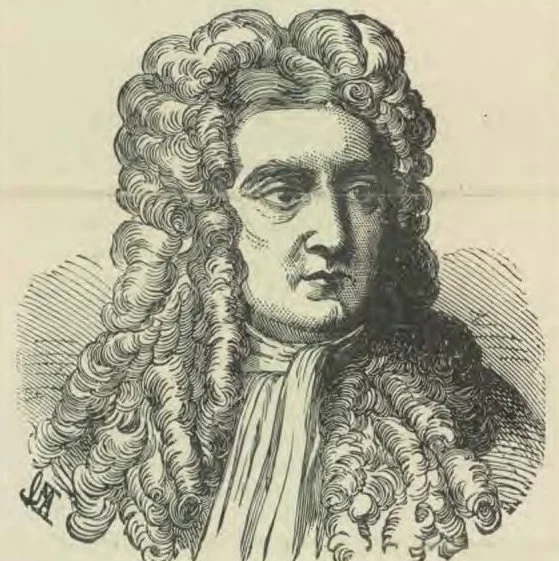
There were two boys quarreling. It was the lowest boy in school, and a boy who stood above him. The upper boy kicked the other boy severely, giving him great pain, and the dull boy determined to be revenged. But he took an unusual way to do it; and I am sure that if all insults were revenged in the same way, the world would be better off. The dull boy set out to get above the boy who had injured him. He studied with might and main, until from being the lowest scholar in school, he rose to be the head boy. And what is better still, he did not drop his studious habits as soon as he had attained his immediate object; for he found it such a delight to learn, that he continued to study diligently and vigorously throughout his life. This happened over two hundred years ago, in a boys’ school at Grantham, England, and the boy was Sir Isaac Newton.
The common sports of the play-ground were little to his taste. He preferred to work with his tools, making all sorts of mechanical contrivances; and up in the chamber of the house where he boarded, he made a water-clock, carrying up every morning water sufficient to run it for the day. This was in the days when clocks were more of a rarity than at the present time, and for many years “Isaac’s clock” was consulted daily by the family.
Isaac introduced kite-flying into school, and took much pains to perfect his kites, experimenting to get the sticks just the right length, the strings fastened in the best place, and the tail of the proper length and material; for even in play nothing was “good enough” or “would do” if he could think of a way to make it better.
Sometimes on dark nights he would tie to the tail of his kite a paper lantern, whose bright, erratic light inspired the simple country folk with the belief that it was a comet. He made at one time a toy wind-mill, modeled after one which he watched the workman erect on the Grantham road. He studied every detail of the large mill, and made his little one such an exact counterpart that it excited universal admiration. His playmates spent many a delightful hour in pouring in grain into the tiny hopper and watching it turn into snowy flour. Isaac placed his wind-mill on top of the house, where it was operated by the action of the wind on its sails. But not content with this mode of working his toy, he one day captured a mouse, which he called the miller, and made him run the mill by means of a tread-wheel, in an endless chase after a bit of corn that lay just out of reach.
Water-clocks did not give this young genius all the satisfaction he desired; for impurities in the water frequently clogged the machinery, and made them keep inaccurate time. So he turned his attention to sun-dials; and by closely observing the lights and shadows on the walls and roofs of buildings, he succeeded, by means of fixed pins, in marking the hours and half hours. One of these, the result of several years’ observations, was known as “Isaac’s dial,” and served as a town clock, being often consulted by the country people.
As Newton grew older, he became devoted to the study of philosophy and mathematics, and made many discoveries about the properties of light and heat, gravitation, and the motions of the heavenly bodies,—discoveries so far-reaching in their results and so important to science that we marvel at the strength of mind and the keenness of intellect which enabled him to grasp these difficult truths and make them so plain that others could understand them. Till near the close of his life, he lectured on philosophy and mathematics before the students at Cambridge, and was reckoned the wisest man and the most profound thinker of his time. He was made a fellow of the Royal Society,—a company composed of the most learned men and philosophers of the day; and the queen so much admired his genius and learning that she made him knight. He was appointed to a lucrative office in the government, so that, though he was for the greater part of his life a poor man, he was enabled to end his days in ease.
Yet with all his learning, and the honor that was shown him, and the wealth that came to him, he remained one of the most humble of men. “I do not know how I may appear to the world,” he said; “but to myself I seem to have been only like a boy playing on the seashore, and diverting myself in now and then finding a smoother pebble or a prettier shell than ordinary, while the great ocean of truth lay all undiscovered before me.” True wisdom always makes one humble, for it enables him to see how very much more there is to learn, which, try his utmost, he will never be able to master in one short lifetime.
It will be interesting to know to what source Sir Isaac attributed his success. A statement he makes in one of his letters contains the secret, and it is a secret of such importance that it will be well to think of it more than once. “If I have done the public service this way,” he said, “it is due to nothing but industry and patient thought.” To be sure, Newton could not have accomplished what he did unless he had had a strong and powerful mind. But the strongest mind can accomplish no great good without these two requisites,—“industry” and “patient thought.” And when boys and girls plan for the great things they mean to do in the world, they should remember that they will not gain these things simply by wishing for them, or admiring them. They will succeed only in proportion as they work; for success rarely comes except as the result of steady and persistent toil.
Newton’s generosity knew no limit, we are told. He valued wealth only for the good it enabled him to do; and he used to remark that “they who gave nothing away till they died, never gave at all.”
Another thing that should be remembered of him was his simple, heartfelt piety. He took great delight in studying the Bible; and whenever his learned friends ventured to say anything in his hearing which was disrespectful to religion, he never failed to check them, sometimes remarking, “I have studied these things,—you have not.” The more he pried into the laws that govern the universe, the more he became impressed with the infinite wisdom and power of the Creator. Though it is only at rare intervals that a man attains to the degree of wisdom Newton reached, all may admire and imitate his modesty, his industry, his generosity, and his sincere piety.
W. E. L.

BURDENS ON YOUNG SHOULDERS.

“Now, boys, you must take upon yourselves the entire responsibility of getting to school in season. I will see that your breakfast is ready on time; but I shall not find your books or your hats for you, or remind you that it is time to start. If you go through college, it will take you seven years—three for preparation and four for the college course. I will provide clothing, books, all expenses, but you must see to it that you are every day punctual in your attendance. I cannot assume that burden in addition to all the rest.”
Thus spoke a mother to her two sons, who were just starting on their preparatory studies for a college course. She had a double reason for thus throwing upon them the burden of responsibility for punctual attendance upon their school studies. It was necessary that they, being fatherless, should early learn to spur themselves to duty, to hold themselves to account for their successes and failures; and she had already assumed all the burdens she could bear. From that hour she never in a single instance reminded them that they were likely to be late. She did with great care go over the monthly reports their teacher sent home, and show her gratification when their standing was high. She kept advised of their daily progress, overlooking their studies in the evening, sympathizing with their enthusiasm, and helping in the solution of their duties; but all the responsibility of their progress she made them feel rested on themselves. By the striking of the clock in their room they knew when it was time to get up, when it was time to go to bed, when the hour of breakfast arrived. If they carelessly laid down their hats and coats out of place, she did not interest herself in the least to help in finding them. It was unnecessary even to remark: “If you had hung them in place, you would easily put your hand on them;” for they had heard from earliest infancy, “A place for everything, and everything in its place;” “A time for everything, and everything in its time.”
As the result of this course on the mother’s part, the two boys, though walking two miles to school in all weathers, were rarely late; and when they entered college, to which they went daily by the train, they were uniformly and easily on time. Punctuality had become a habit, and they needed no outside prodding in keeping their engagements. This sense of responsibility continually enlarged until it embraced an increasingly wide area, and when they reached full manhood, they were entirely accustomed to bearing its burdens manfully.
During all this time, of course, the school gave the law to the family life. Every arrangement was made for the easy performance of school duties. Such diversions as would suggest or demand late hours at night were avoided. The evening meal was served at such an hour as would give time for study when it was over; or an early hour for retiring was insisted on that an hour for study before breakfast might be secured without robbing the time for sleep.—Christian Advocate.

LITTLE BY LITTLE.

NOT in a roaring river pouring Falls the summer rain. But with a sprinkle, patter, tinkle, On roof and hill and plain. Drop by drop; how the green leaves grow! Drop by drop; how the fair buds blow!
The snows that cover the bare earth over To wrap her winter sleep, Fly hither, thither, feather by feather, Until they lie knee-deep. Flake by flake guards the bulb from harm; Flake by flake is the wheat kept warm.
The orchard gladdens the eye, and reddens With apples all its trees; But not in a minute was drawn within it The sweets of sun and breeze; The black seed first, then the tender shoot, The trunk, the blossom, and now the fruit.
Never were seven-league boots given Except in the fairy-tale. Nor can wishing hurry the speed, or carry One over peak and dale. Step by step, in shine and shade, Is the long road traveled, the journey made.
Second by second time is reckoned; As winged are they as bees, Too swift for counting, yet soon amounting To years and centuries. Every tick of the clock says one; And all it can do for the world is done.
Small however the true endeavor, Great may its outcome be; A burden lightened; a lone life brightened; A slave to sin set free; The sick and the sorrowing visited, The naked clothed, and the hungry fed.
—Sunday-School Times.

THE SALT WORKS AT SAGINAW.

A tall, slender frame structure, like a tower! I wonder what it is for? Suppose we satisfy our curiosity by going inside. The only thing here is a large pump, like those operated by windmills. This one, however, is run by the engine of the lumber mill across the way. We can see that a shaft, inclosed in a wooden frame, reaches from one building to the other.
But we wonder what the pump is for,—to supply water to the boiler? That object could be attained at a depth of less than a hundred feet; whereas the water from this well comes from a depth of many hundred feet; and some similar wells are nearly a mile deep.
On tasting the water, the inquiry is answered; with a wry face we exclaim, “Salt!” and true it is that this pump daily brings to the surface about one thousand barrels of brine, which have lain in crevices of the rock, the same as ordinary well-water. Nearly every lumber mill in this valley, and some also in other parts of Michigan, utilize the extra steam power in operating salt-wells, and the smaller lumber in the manufacture of salt-barrels.
You may be aware that what is designated “rock-salt” is taken in solid masses from the mines, much as other minerals are procured; but table and dairy salt is obtained by an altogether different process.
In some instances, salt is found to exist in rock where no water stands; and in such cases water is often forced into the mine, and then pumped up again, holding in solution large quantities of salt.
The salt grows rusted in coming through the iron pipes, so that, though it appears clear when it first rises, it has, after standing a few hours, a tinge of brick-color. To rid the salt of this rust, a whiting is prepared from lime, and spread upon the surface of a large, elevated vat of brine, in which it gradually settles, carrying with it to the bottom of the bin the iron and all other impurities, leaving the water a deep sea-green.
Thus purified, the principal process following is that of evaporation. Adjoining the purifying vat, and a little lower, is another into which the brine is conveyed, and there heated by steam-pipes to nearly the boiling-point; thence it is lowered into an adjacent building, which contains in one vast room several wide tanks, two or three feet deep, extending its entire length of about one hundred and fifty feet. In these the brine is kept at a temperature but little below boiling. The gentleman in charge of this department in one plant which we visited, asserted that should one's hand or foot be dipped into this hot brine, however quickly withdrawn, that member would be useless for at least six months, if not forever after. Thus powerful is common salt, for we know that the effect of clear hot water would be much less serious.
The reservoirs are all of wood, the brine being allowed to come in contact with no metal, on account of the damaging effect of each on the other. Above the evaporating vats were platforms, narrower, but of the same length, over which a courteous employé conducted us; and in appreciation of the opportunity thus afforded of observing the effects of heat, we endeavored to ignore our scruples at walking where an article designed for use on our tables was soon to be deposited. Gradually rising in crystal-like flakes to the surface, the salt forms a light seam, sections of which time after time break away, and plunge, a scale-like substance, to augment the deposit at the bottom of the bin.
The offensive odor from the dense steam filling the room, is much like that from chloride of lime, to which it is chemically near akin. Indeed, we were assured that the effects of this steam were very apparent on the complexion of the employés of the “works.”
When the water has apparently all passed off in steam, which process occupies several hours, the sediment is shoveled onto the platforms previously mentioned, there to drain and dry, and is afterward conveyed in wheelbarrows to an adjoining room, and “dumped” from the high platforms to the floor. The room is partitioned into sections for the storage of the commodity, of which there is about one barrel for each six of the water from which it is adduced. Although the salt seems dry when deposited here, water still drips from it into the basement below, and it is not deemed fit to barrel until it has remained thus exposed to the air for more than a week.
Much of the commodity is at that stage pronounced ready for the market, for use in feeding cattle, preserving meats, etc. But to be reduced to the fineness of table or dairy salt, it is submitted to a further process in a heated, revolving cylinder, about six feet in diameter, and sufficiently inclined to cause the salt to flow through. It is then elevated to an upper story, and passed through what appears like a huge coffee-mill, operated by steam; and afterward it is conveyed to a receptacle near the ceiling, by means of an arrangement similar to an old-fashioned chain-pump.
The most animating part of the work is the final disposition of the goods into sacks. It is drawn, from its elevated station near the roof, through wooden tubes, which are furnished with an attachment for gauging or stopping the supply at will. These pipes terminate a sufficient distance above a table extending the entire length of the room, to allow a salt-sack, placed beneath one of the tubes for filling, to be removed in an upright position. Scores of women and girls, dusty as millers, are ranged along this table; and their deftness can be best comprehended from the fact that some of them fill, tie, and sew up daily more than fifteen hundred sacks,—nearly three each minute.
The uses of salt are more varied than at first thought we would remember. A demand far greater than the supply is made for the refuse article, which is used for fertilizing land, the same as is plaster. One extensive use of salt is for the preservation of fish, etc.; and evidently it is to this use that reference is made in the text, “Have salt within yourselves,” signifying that, as the strength of this ingredient preserves meats from the influence of an impure atmosphere, so should the strength of right principles within fortify us against the contaminating influences which exist about us. Anciently the sacrifices of the Hebrews were all seasoned with salt, intimating the enduring nature of the covenant sealed thereby, and the purity of their motives; and a city which was destroyed by one of their kings was thereupon sown with salt, signifying the perpetuity of the destruction, a custom practiced in many other countries, even in modern France. Allusion is evidently made to the flavoring property of salt, in the text, “Let your speech be always with grace, seasoned with salt,” a reminder that our conversation should be such as to win rather than repel the listener,—a wholesome, appetizing mental diet.
MRS. ADA D. WELLMAN

“THE DOT UPON THE I.”

IN Russia’s far-off, frozen clime There lived a lovely child, The Lord to deeds and words of love His tender heart inclined.
He loved to hear his parents read In God’s most holy word, And treasured up within his breast The blessed truths he heard.
This little boy was very sick, And when about to die, He called his father to his side, And said, “I want to buy
“Bibles to send to heathen lands, Where they know not the Lord: That they may all read for themselves In His most holy word.
“I cannot send whole Bibles there, Perhaps not one short word; But I would like to give some help To spread its truths abroad.
“Those three bright pennies in my box I think a type would buy, To print in Christ’s most holy name The dot upon the i.”
That stricken father did not fail Those little coins to send. O children, think how many coins In wanton waste you spend!
Christ will receive the smallest gift, When follies tempt your eye; Think of the little Russian boy’s Small dot upon the i.
—Children’s Work for Children.

WHY NOT HAVE A "GUMPIRE?"

“Who is that big boy, Alec, who calls out so long, and seems to make people mind him?”
Mildred was watching a game of base-ball, and Alec was trying to explain it to her.
“Oh!” said he, “that is the umpire; you see he decides what is fair, and what isn’t, and that keeps the boys from quarreling.”
“Do they all mind him?” questioned the little girl. “Have to,” answered Alec, “because that’s the rule.”
A few weeks later, Alec and Mildred went to the country with their mother, to board for some time in a big farm-house, with ever so many other little people.
Somehow it seemed very hard at first to get along smoothly; some wanted to play one thing, and some another; some wanted to take too many turns in the swing, and some wanted more than their share of cherries.
“Why not have a gumpire?” cried Mildred one day.
“A gump what?” said the others.
But Alec laughed and laughed till he rolled over in the grass.
“She means an umpire,” he explained, when he could get his breath; and when he told them what an umpire was, they thought it a fine idea.
And, indeed, it proved to be a good plan. They took it by turns, being umpire a day about; and they were very careful to do as the umpire decided, when any dispute arose. So all that summer they played under the maple-trees without any quarreling.
“I’ll tell you what it is,” said the father of one of the little folks, “this idea of having an umpire, and giving him authority, is fitting our children to be good citizens of the United States.”
“Better than that,” said one of the other gentlemen, with a grave smile, “it is fitting them to become members of that kingdom whose law is, ‘As much as lieth in you, live peaceably with all men.’”—The Sunday-School Times.

A BRAVE MAN.

The city of Marseilles in France was once terribly afflicted with a plague.
Everybody was sad; for no one, not even the physicians, knew how to stop the ravages it made in all the homes.
One day the doctors met to talk over the matter, and it was decided that nothing could be done until a corpse was examined to find out the cause of the plague.
But who would become the victim? for it was certain that he who should make the examination would die soon after. There was silence in the room. Suddenly one of the most celebrated physicians, a man in the prime of life, rose from his seat, and said: “Be it so; I devote myself for the safety of my country. . . . To-morrow, at the break of day, I will dissect a corpse, and write down as I proceed, what I observe.”
He left the room, made his will, for he was rich, and spent the night in religious exercises.
In the morning he fulfilled his promise. He examined a corpse, writing down all his surgical observations, and then, throwing the papers into a vase of vinegar that they might not convey the disease to another, he left the room. In twelve hours he died of the plague.
Marseilles will ever hold sacred the name of this true hero, Dr. Guyon.—Selected.

Spending Before Earning Makes One a Slave

THE young man who spends his money before he earns it, is always slave to him who earns it before he spends it.

Doing Good Without Seeking Notice

He who makes a great fuss about doing good will do very little. He who wishes to be seen and noticed when he is doing good will not do it long.

ORIGIN OF HAND-SHAKING.

In early and barbarous times, every savage or semi-savage was his own law-giver, judge, soldier, and policeman, and had to watch over his own safety, in default of all other protection. When two friends or acquaintances, or two strangers desiring to be friends or acquaintances, chanced to meet, they offered each to the other the right hand alike of offense and defense, and the hand that wields the sword, the dagger, the club, the tomahawk, or other weapon of war. Each did this to show that the hand was empty, and that neither war nor treachery was intended. A man cannot well stab another while he is engaged in the act of shaking hands with him, unless he is a double-dyed traitor and villain, and strives to aim a cowardly blow with the left while giving the right and pretending to be on good terms with him.—Selected.

THE THIRD ANGEL'S MESSAGE.

LESSON 1.—THE TIME OF THE MESSAGE.

INTRODUCTION.—The general subject of the series of lessons commencing with the present one, is “The Third Angel's Message.” The portion of Scripture taken as the basis of this series of lessons, is R. V. 14: 9–12, which students should turn to and read, and keep familiarly before them during the study of the entire series. In the texts referred to, an angel, designated as the “third,” is represented as going forth with a message of solemn import, which is being vehemently proclaimed by him to the world. It is also to be borne in mind that this angel and his work symbolize a dispensation of God's providence, carried forward in the earth by chosen agents during a particular period of time, for the accomplishment of specific purposes. In order to prepare for an intelligent and correct consideration of the subject proper, the lessons begin at a point of time many centuries before the third angel's message is due, and by studying the development of causes, aim to demonstrate the historical necessity and peculiar characteristics of that message. The outline of the present lesson may be stated thus:—
The four universal kingdoms—Babylon, Medo-Persia, Grecia, and Rome; division of the Roman Empire; the Papacy—its rise, character, work and fall.

QUESTIONS.

1. What four kingdoms are represented in Dan. 2: 31–40 and Dan. 7: 1–7? Ans.—Babylon (Dan. 2: 37, 38); Medo-Persia (Dan. 5: 28); Grecia (Dan. 8: 20, 21); Rome (Luke 2: 1).
2. What is represented by the ten horns upon the fourth beast? Dan. 7: 7, 24.
3. To what date did the kingdom of Babylon continue? Ans.—B. C. 538.
4. To what date did Medo-Persia continue? Ans.—B. C. 331.
5. Grecia? Ans.—B. C. 168.
6. Rome? Ans.—A. D. 476.
7. When Rome fell, what stood in its place? Dan. 7: 24, first part.
8. What was to arise after them and yet among them? Dan. 7: 8, first part, and verse 24, last part.
9. What was the nature of this power as compared with the ten? Verse 20, last clause.
10. What else was peculiar about the horn? Verses 8 and 20, last clause of each.
11. What did he both speak and do? Verse 25.
12. What power of all the earth has done to the greatest extent what is here said? Ans.—The Papacy.
13. Upon the rise of this horn, what was done with three of the ten? Dan. 7: 8, 20.
14. What three of the ten kingdoms fell? Ans.—The Heruli, the Vandals, and the Ostrogoths. See “Thoughts on Daniel,” 7: 24. Those who wish to study the history on this point, see Gibbon, chap. 39, par. 6–8: 41: 7–12, 21–28.
15. At what dates? Ans.—Heruli A. D. 493, Vandals 534, Ostrogoths 538.
16. What, then, is the date of the establishment of the Papacy? See note.
17. How long was the Papacy to have power over the saints, the times, and the laws? Dan. 7: 25.
18. Literally, what length of time is this? Rev. 12: 14, 6; Eze. 4: 4–6. See note.
19. Beginning as it did in A. D. 538, when should it end? Ans.—A. D. 1798.
20. What historical event marks the end of the 1260 years of Papal supremacy? Ans.—The French army under Berthier abolished the Papacy in Rome, proclaimed a republic there, A. D. 1798, and carried Pope Pius VI, a captive from place to place till he died at Valence, France, August 28, 1799.

NOTES AND COMMENTS.

QUESTION 16.—As this little horn power, the Papacy, was to be established by the fall of three of the ten, and as the last of the three fell in 538, it is clear that A. D. 538 is the date from which the establishment of the Papacy must be reckoned.
QUESTION 18.—Rev. 12: 14 uses the same expression as that in Dan. 7: 25, saying, “To the woman were given two wings of a great eagle, that she might fly into the wilderness, . . . for a time, and times, and half a time;” and verse 6 says, “The woman fled into the wilderness, . . . that they should feed her there a thousand, two hundred, and threescore days.” These texts make it positive that the words “time, and times, and the dividing of time” signify 1260 days. But as these days are used as symbols, each day signifies a year, because that is the law. The Lord told Ezekiel that in conducting a symbolical siege against Jerusalem, he should lie on his left side “three hundred and ninety days;” and on his right side “forty days;” because this was to be a “sign” to the house of Israel and Judah, and the Lord had laid upon him, and by this signified to them, “the years of their iniquity according to the number of the days,” because, “I have appointed thee each day for a year.” It is the appointment of God that when days are used in connection with symbols, each day shall stand for a year.
QUESTION 20.—In A. D. 1797, Napoleon was ordered by the French Directory to destroy the Papal Government. The pope was helpless, but instead of obeying orders, Napoleon, on his own responsibility made peace with him, and returned to France. The words of the history are as follows:—
“Bonaparte now invaded the Papal territories, and rapidly overran them. He had orders from the Directory to destroy the Papal Government, but, on his own responsibility, he disregarded these instructions, and concluded with the helpless Pontiff the peace of Tolentino on the 19th of February, 1797.
“Upon the return of Bonaparte from Italy, General Berthier was ordered by the Directory to carry out its instructions respecting the Papal Government, which Bonaparte had declined to execute. The people of the Papal States were thoroughly discontented. Berthier marched to Rome, and was received as a deliverer. He proclaimed the restoration of the Roman Republic; made Pope Pius VI. a prisoner, and stripped him of all his property, . . . and removed him to France, where he was detained in captivity.”—Pictorial History of the World, p. 756.
The pope was just as helpless in 1797 as he was in 1798, but 1797 was too early; the time did not expire till 1798; and “the Scriptures cannot be broken.” John 10: 35.

WONDERS OF THE ANIMAL KINGDOM.

THE microscopic world is full of wonders. There are tiny little creatures, which, notwithstanding their extreme minuteness, possess in some cases a surprisingly complicated internal organization. Their form is, as a rule, fixed, yet some of them change their shape at will, and present to the eyes of the astonished observers so many different aspects that at the expiration of five minutes they cannot be recognized. At one moment they are globular or three-cornered; an instant after, they are seen taking on the appearance of a star.
Accordingly, these creatures, with their deceptive changes of form, have received the name of Protei, from the famous sea-god of antiquity, who by his wonderful metamorphoses was enabled to elude attempts to catch him.
Some animalcules of this class surround themselves with self-produced feet like living roots, the arrangement of which they are seen to vary in a thousand ways. Sometimes they extend them to an immense length; sometimes they withdraw them entirely. They spread them out separately, join them together, or entwine them like the locks of a gorgon.—Golden Days.

VEGETABLE LAMPS.

A recent book by Mr. C. F. Holder, on “Living Lights,” contains a great amount of curious and interesting information in regard to phosphorescent animals and plants on land and in the sea. Australia, the writer says, has produced a number of luminous toad-stools. Drummond found some striking forms near Swan River. He had noticed two species growing as parasites on the stumps of trees. Their appearance in the daytime did not attract particular attention, but at night they developed into veritable plant lamps, exceeding anything that he had ever seen. One was about two inches across, and grew in clusters on the stump of a banksia-tree which was surrounded by water. When the little plant was secured from its miniature island home, it could have been used as a lamp for several successive nights, a newspaper being read by placing the agaric on it, the light illuminating the type in the immediate vicinity. As the plant dried, the light gradually diminished. In the Cardiff coal mines an interesting plant is found, which emits so brilliant a light that the men have been able to “see their hands by it,” and it was visible at a distance of six feet.
In the same book from which the foregoing facts are taken is a chapter on luminous showers. Ice has often been observed to emit luminous sparks; and probably one of the grandest spectacles ever witnessed is the luminous cap of a snow-covered mountain. The glaciers of the Alps have been seen in a soft phosphoric glow, the icy rivers being distinctly marked by the phenomenon, which is so brilliant at times that the appearance of a second sunset is occasioned. Not only are the summits of Alpine peaks and the glaciers luminous, but the valleys of the Piedmont, Valais, and others have been seen to emit from their covering of snow a soft blue light of singular beauty. So intense is this light about the cap of Mont Blanc that it has been photographed. Luminous vapors or mists may be mentioned in this connection. Massachusetts was visited by a fog some years ago that was so dense that observers a few feet away were invisible, yet darkness was not an accompaniment; the mist seemed to be light-emitting itself, having a reddish metallic hue. Others described it as a fiery red or yellow, while to some it appeared to be composed of faintly luminous matter.—Christian at Work.

THE HUMAN BREATH A POISON.

At a recent meeting of the Academie des Sciences, Professor Brown-Sequard referred to some experiments he had conducted with a view to determine what, if any, were the toxic effects of the human breath. In condensing the watery vapor coming from the human lungs, he obtained a poisonous liquid capable of producing immediate death. This poison is an alkaloid (organic), and not a microbe or series of microbes, as might have been imagined. He injected this liquid under the skin of a rabbit, and the effect was speedily mortal. The animal died without convulsions; the heart and large vessels were engorged with reddish blood, contrary to what is observed after ordinary death, when the quantity of blood is moderate and of a dark color. In conclusion, this eminent physiologist said that it was fully proved that respired air contained a volatile toxic principle far more dangerous than the carbonic acid, which was also one of its constituents, and that the human breath, as well as that of animals, contained a highly poisonous agent.—The Medical Press.

A RECIPE FOR PRESERVING HEALTH.

Take a large portion of contentment, and a cup filled to the brim with thankfulness. To these add a good quantity of humility (and nothing but the genuine will answer). Then add an abundance of patience. Cover these over with faith, and let them stand. The mixture will lose none of its strength by age, but it is necessary to add a fresh supply every day, or it will become weak and insipid. The only medium through which you can obtain this supply is by prayer. Be sure that it is kept in a clear atmosphere of cheerfulness. It will not be injured by keeping it in a state of fermentation by love and good works. A good draught of this many times a day, with frequent exercise in the open air, is a good promoter of health.—H. R.

SABBATH-SCHOOL LESSON PAMPHLET.

In accordance with the recommendation adopted at the last session of the International Association, the Sabbath-school lessons for the first six months of 1888 were printed and bound in pamphlet form for the use of officers and teachers. This plan was an experiment, having never been tried before, but we find that it gives universal satisfaction—three editions of the pamphlet having been printed and sold.
The lessons for the remaining six months of 1888 have been put up in the same form, and are now ready for delivery. They comprise sixteen lessons on the subject of “The Third Angel’s Message,” and ten lessons on the second epistle of Peter. We believe that two more important subjects have never been presented to our Sabbath-schools.
The series on the Third Angel’s Message notices briefly the rise and fall of the four great universal kingdoms, the development of the Papacy, and the formation of its image. The subject is treated in a clear and forcible manner, and if these lessons are thoroughly learned, we, as a people, will have a better understanding of the work for our times than we have ever had before.
The series on Second Peter is a running commentary on that epistle, the comments being in the form of Scripture quotations, so that besides a close examination of the text of the epistle, the students will have their attention directed to a great many parallel passages. This epistle is pre-eminently an epistle concerning the second advent of Christ, and so is especially applicable to this time.
These lessons have been examined and approved by the Executive Committee of the International Sabbath-school Association, and other leading brethren.
Both series of lessons will be accompanied by copious notes, which will increase the size of the pamphlet several pages more than the last one, and of necessity the cost of publication will also be increased. But we feel sure that all will feel amply repaid for any increase in price by the explanatory notes which accompany these lessons.
This lesson pamphlet will contain thirty-two pages. Price, fifteen cents, post-paid. Address all orders to Pacific Press, Oakland, Cal. C. H. JONES.
Continue reading: THE TEN SERVANTS