The Youth’s Instructor, Vol. 64, No. 46.

Miscellaneous News Items from the War Era
Earlier text: Learning to Swim

Jesus’ Coming

For nineteen hundred years the children of God have looked forward to the second coming of Jesus, when sin and death and suffering would be no more; when the graves of the righteous dead would open, and friends long separated would again be united; when Jesus himself would descend from heaven to gather his loved ones home.
The ground for such a hope is threefold:—
First, the promise the Saviour made in John 14: 3. On that eventful evening when he and the twelve surrounded the Passover table just before his betrayal, he tore the veil from the future, and notified the astonished guests that he was about to leave them to return to the Father, and that after he had prepared mansions for them, he would return and receive them unto himself.
Second, forty days after the resurrection, when Christ and his faithful eleven had wended their way to Mt. Olivet, the Master suddenly began to ascend from their midst, just as they had read about Enoch and Elijah and Moses doing in days of old. Filled with awe and wonder, they steadfastly gazed into heaven, we are told in Acts 1: 9-11, when two angels clothed in white, said, “Ye men of Galilee, why stand ye gazing up into heaven? this same Jesus, which is taken up from you into heaven, shall so come in like manner as ye have seen him go into heaven.”
Third, at the close of the first century an old man with long, gray hair and beard, stood on the rocky isle of Patmos. Above him was the clear, Oriental sky, at his feet the blue waters of the Mediterranean Sea. It was John, the beloved disciple. But he was not conscious of his surroundings. A voice from heaven was speaking to him, “Behold, he cometh with clouds; and every eye shall see him, . . . and all kindreds of the earth shall wail because of him.” Rev. 1: 7.
Jesus, angels, and the apostle John all testified that the Lord is coming again. But the great question in the minds of the believers is and has been, “When shall these things be? and what shall be the sign of thy coming, and of the end of the world?” Matt. 24: 3. These questions were answered by the Saviour, when he walked among men. He told the disciples when he would come, how he would come, and what would take place when he came.
In answer to the question when, Jesus, in Matt. 24: 14, said, “This gospel of the kingdom shall be preached in all the world; . . . then shall the end come.” In our day the veil has been removed from the entire inhabited earth. Exploration has revealed the whole world. The railroads and great ocean liners have made all places accessible, while the mails, telephone, and telegraph have made it possible to transmit the gospel easily and quickly to every nation, tongue, and people.
But the Saviour specified definite signs that would precede his coming. Luke 21: 25, 26. God would advertise the second coming of Christ in the sun, in the moon, in the stars, upon the earth, and in the sea. Thus any one who observes the heavens, the handiwork of God, or the affairs of mankind, need not be ignorant of the approach of that great day. In Matt. 24: 29 we are told that the sun and moon should be darkened (this occurred May 19, 1780), and that the stars would fall from heaven (this occurred Nov. 13, 1833).
The signs all foretell that his coming is near. Soon the great event described by Paul will take place. “The Lord himself shall descend from heaven with a shout, with the voice of the archangel, and with the trump of God: and the dead in Christ shall rise first: then we which are alive and remain shall be caught up together with them in the clouds, to meet the Lord in the air: and so shall we ever be with the Lord.” 1 Thess. 4: 16, 17.
MEDITATIONS.—The verses this week bring to me with new force the realization that Jesus’ coming is very near. One by one the signs which were to foretell his coming have appeared until very few remain. But while everything points unmistakably to the soon coming of our Saviour, it is possible for me to become so wrapped up in the affairs of this life that I shall not heed the approach of the Lord’s return. I pray that this may ever be kept before me, and that I may do all things with reference to the nearness of that event.
SPECIAL PRAYER.—Most of us have friends or relatives in our denominational schools this year. We are anxious for them to succeed in their school work, and most of all, that they may enjoy a good Christian experience. We desire that those who have not given their hearts to the Lord may do so during this school year. Let us this week pray for the children and young people in our schools.
C. L. BENSON.

A Pocket Fire Escape

FIRE breaks out in your hotel. It is right at your door, and you cannot reach the elevator or the stairway. Your window is six stories from the ground, and the fire escape is on the other side of the building.
Reaching into your right-hand coat pocket, you pull out a roll of thin steel tape, like the familiar surveyor’s tape measure. You fasten one end to the bedpost, and place your wife in a loop provided for the purpose. You get into a similar loop, and jump bravely out of the window. The slender string bears both of you safely to the ground—providing that your total weight does not exceed eight hundred pounds.
This remarkable little pocket fire escape was invented by Pietro Vescova, of Stockton, California, and has attracted widespread interest. The tiny instrument is only four and three quarters inches in diameter, and the tape is slightly more than an inch wide.
Hundreds of trial descents have been made by the inventor, who claims that his life-saving device is infallible.—Every Week.

Pleasures Like Poppies: Lines on Transient Joy

PLEASURES are like poppies spread, You seize the flower, its bloom is shed; Or like a snowflake in the river, A moment white, then lost forever. — Burns.

Missionary Volunteer Society Programs for Week Ending November 25

THE programs for the Missionary Volunteer Societies, Senior and Junior, for this date, with notes, illustrations, and other helpful material, will be found in the Church Officers’ Gazette for November.

The First Presidential Thanksgiving Proclamation

By the President of the United States of America

A PROCLAMATION

WHEREAS, It is the duty of all Nations to acknowledge the Providence of Almighty God, to obey his Will, to be grateful for his Benefits, and humbly to implore his Protection and Favour; And whereas both houses of Congress have, by their joint Committee; requested me “To recommend to the People of the UNITED STATES, a Day of PUBLIC THANKSGIVING and PRAYER, to be observed by acknowledging with grateful Hearts the many Signal Favours of Almighty God, especially by affording them an opportunity peaceably to establish a Form of Government for their Safety and Happiness.”
Now, THEREFORE, I do recommend and assign THURSDAY the Twenty-Sixth Day of November next, to be devoted by the People of these States, to the Service of that great and glorious Being, who is the beneficent Author of all the good that was, that is, or that will be: That we may then all unite in rendering unto him our sincere and humble thanks for his kind Care and Protection of the People of this Country previous to their becoming a Nation;—for the signal and manifold Mercies, and the favourable Interpositions of his Providence in the Course & Conclusion of the late War;—for the great Degree of Tranquility, Union, and Plenty, which we have since enjoyed;—for the peaceable and rational Manner in which we have been enabled to establish Constitutions of Government for our Safety and Happiness, and particularly the national one now lately instituted;—for the civil and religious Liberty with which we are blessed, and the means we have of acquiring and diffusing useful knowledge;—and in general, for all the great and various Favours which he hath been pleased to confer upon us.
AND ALSO, that we may then unite in most humbly offering our Prayers and supplications to the great Lord and Ruler of Nations, and beseech him to pardon our National and other Transgressions;—to enable us all, whether in public or private Stations, to perform our several and relative Duties properly and punctually;—to render our National Government a Blessing to all the people, by constantly being a government of wise, just and Constitutional Laws, directly and faithfully obeyed;—to protect and guide all Sovereigns and nations, (especially such as have shown kindness unto us) and to bless them with good Government, Peace and Concord;—to promote the Knowledge and Practice of true Religion and Virtue, and the increase of Science among them and us;—and generally to grant unto all mankind such a Degree of temporal Prosperity as He alone knows to be best.
Given under my Hand at the City of New York, the third Day of October, in the Year of our Lord one Thousand Seven Hundred and Eighty-Nine.
G. WASHINGTON.

The Bible Year

Assignment for November 19 to 25

November 19: Luke 23, 24.
November 20: Acts 1 to 3.
November 21: Acts 4 to 6.
November 22: Acts 7, 8.
November 23: Acts 9, 10.
November 24: Acts 11 to 13.
November 25: Acts 14 to 16.
For helps and suggestions on this assignment, see the Review for November 16.

Questions and Answers

I. WE have frequent visits from ministers and various other workers. Shall we drop out our program, and give the time to the worker? or shall we conduct the program just the same as if he were not present?
In many places this is a perplexing problem. The visiting worker often has a message of courage which is greatly appreciated by the young people. Unfortunately it is usually the Missionary Volunteer program which it is expected will give way rather than any other meeting. But owing to the fact that this department is new, and its plans and programs only partially established, it is extremely important that as few breaks as possible occur. Again, one great purpose of this movement is the development of workers through the responsibilities of the society work. However interesting and good these frequent talks by passing workers, it is a question whether the members would not receive more benefit from proceeding with their program. Some workers realize this, and prefer to listen to the program and watch and encourage the development of the youth by suggestions rather than to take the time from them. It is difficult to maintain the interest in a series of connected lessons where there are frequent omissions. In many cases it may be most satisfactory to shorten the program by omitting the less important features and condensing the lessons, and share the time with the visitor.
M. M.

VIII — Peter Delivered from Prison

(November 25)
LESSON SCRIPTURE: Acts 12: 1-25.
MEMORY VERSE: “The Lord is my helper, and I will not fear what man shall do unto me.” Heb. 13: 6.

Questions

1. By whom was the church again persecuted? Acts 12: 1. Note 1.
2. Who was first to suffer? Verse 2. Note 2.
3. How did this affect the Jews? How did Herod try again to please them? Verse 3.
4. What was done to Peter? When did Herod intend he should die? Verse 4. Note 3.
5. How did the church try to help Peter? Verse 5.
6. How was the prisoner guarded the night before he was to be executed? Verse 6. Note 4.
7. Who visited the prison that night? How was Peter awakened? What did the angel tell him to do? Verses 7, 8.
8. What did Peter think of this experience? How were they enabled to pass through the prison gates? Verses 9, 10. Note 5.
9. After the angel departed, what did the apostle say to himself? Verse 11.
10. To whose house did he go? Who were already there? What were they doing? Verse 12.
11. Who answered Peter’s knock? Why did Rhoda not open the door? What did she do? What did the people say? Verses 13-15.
12. How did the people receive Peter? What did he declare to them? Where did he then go? Verses 16, 17. Note 6.
13. What took place in the morning? How were the keepers punished? Verses 18, 19.
14. How was the quarrel settled between Herod and the people of Tyre and Sidon? Verse 20.
15. Relate what took place on a special day. Verses 21, 22.
16. What punishment did Herod suffer? Verse 23. Note 7.

Questions for Diligent Students

1. Name as many Christians as you can who have been imprisoned for their faith.
2. What shows that those who were praying for Peter lacked faith?

Notes

1. This was Herod Agrippa I, a grandson of Herod the Great who murdered the babes of Bethlehem. He was a nephew of Herod Antipas who beheaded John the Baptist. He reigned only three years. This Herod tried to please the Jews. He was very careful to observe Jewish ceremonies. He was part Jew and partly Edomite, and feared the people would hate him as they had his grandfather. On one occasion he read from Deuteronomy the words, “Thou mayest not set a stranger over thee, which is not thy brother,” and he pretended to weep while the people exclaimed, “Don’t weep, Agrippa! You are our brother.”
2. Why was James killed? “God deals with his children differently. Peter and James, both good men, both apostles of Jesus, fall into prison; God saves one by a miracle, the other he allows to be beheaded. God did not love Peter any more than James. To both he gave what was best, but the best was different for each.”—Burrell.
3. Peter was kept in the famous prison in Herod’s residence, the fortress of Antonia. It immediately adjoined the temple on the northwest. Peter was not killed at once, because it would have offended the Jews if he had been executed during the Passover.
4. Peter was guarded “by four quaternions (bands of four soldiers), each quaternion being on guard through a three-hour watch. Two of the soldiers were chained to his arms, one on either side; a third was outside the door, and the fourth in the passage leading to the strong outer gate. Doubtless Herod knew how the apostles had escaped from prison once before, and he meant to keep Peter securely this time.”
5. As the angel told Peter what to do the disciple was dumb with amazement. The prison doors opened without a sound and closed again, and the guards were motionless. Not a word was spoken, no sound was made. Peter thought it was all a dream, but he followed the angel till he was in the open street, and then his deliverer vanished.
6. “How was Peter received?—With such an outburst of excited questions and exclamations, while his voice was drowned out, that he could only shake his hand at them for silence. Then he told them the wonderful story, and bade them tell it to James, the brother of Jesus, the head of the Jerusalem church, and to the other disciples, while he sought safety in another house, or perhaps in another city.”—Peloubet.
7. Herod knew that he deserved none of the praise and homage offered him, but he was filled with pride as the people declared he was a god instead of a man. But suddenly a terrible change came, he became pale as the dead, and he stood for a moment in pain and terror. He remembered the suffering he had brought to Christ’s followers, and he knew God was now dealing with him in punishment. The same angel that visited Peter in the prison and smote him to awaken him, smote the wicked king. See “Acts of the Apostles,” p. 152.

Forging Character Through Daily Effort

You cannot dream yourself into a character; you must hammer and forge yourself one.—J. A. Froude.

What Shall It Profit a Man

WHAT shall it profit a man, if he shall gain the whole world, and lose his own soul? — Mark.

C. J. TOLF

Loyalty

GATHER into a superheated crucible all of the best attributes of the colporteur,—honor, integrity, courage, reliability, fidelity, devotion, consecration, faithfulness, all qualities that make for manliness,—reduce these to a single essential, and there results, in its fullest, finest, and most complete form, loyalty.
The real test of loyalty is not so much what one must do to best conserve the interests of his conference, but rather what one can do,—that indeed is loyal industry.
Loyalty is faithfulness, especially under trying circumstances; a mutual band of obligation between employer and employee; an entire, whole, unbroken devotion to a cause. It is not only a requisite of the employee, but is likewise a requirement of the employer.
“Over a hundred years ago, May 19, 1780, a darkening of the sun occurred while the legislature of Connecticut was in session. The heavens became so dark it seemed as though the end of the world was at hand, and a legislator moved that an adjournment be taken. One old Puritan, Davenport of Stamford, arose and said if the last day had come he wanted to be found in his place doing his duty, and moved that candles be brought so that the house could proceed with its business. To be loyally acting at his post of duty was this sturdy old Puritan’s choice.”
Real loyalty comes to the surface when our cause is attacked.
“It is all very well to be happy When life runs away like a song, But the fellow worth while is the man with a smile When everything goes dead wrong.”

C. J. TOLF

Thanksgiving for Thanksgiving

I THANK thee, Father, once again For many blessings gladly known, And many more beyond my ken That thou dost see, and thou alone; But most of all my heart I raise To praise thee for the power to praise.
Thy bounty, it is wondrous kind; But oh, the smiling of thy face! My life is all in love designed, But thou thyself art grace of grace.— Thyself, oh, infinitely more Than all thy bounty's golden store!
That I can feel thy Fatherhood, That I can press my hand in thine, That I can know that thou art good, And all thy power is love divine,— This knowledge every bliss outranks; I thank thee for the gift of thanks.
— Amos R. Wells.

Albania’s Condition

WHILE the people of the United States have been sending thirty million dollars’ worth of relief to Europe and Turkey, two hundred thousand women and children in Albania have died of starvation.
William Willard Howard, of New York, who has returned from his third trip to this hunger zone of Europe, predicts that the entire population of Albania will die of famine and pestilence, unless helped. He says that in Albania corn is fifty dollars a bushel, flour eighty dollars a sack, and macaroni five dollars a pound.
Thirty millions of dollars have been given by the people of the United States for relief work of various kinds in Belgium, Poland, Armenia, Syria, and the warring countries of Europe, while two hundred thousand women and children in southeastern Europe have starved to death unheeded and uncared for.
“The Albanians have not taken part in the war. They fed and sheltered the refugees from Serbia, even with the last measure of corn that the famine-smitten villages possessed. Yet armies have swept over their country, taking what could be found to take, leaving to the women and children only the carcasses of dead horses in the streets, and these have been utilized by the starving ones.”

Be Good for Something

BE not simply good; be good for something.— Thoreau.

“Everybody’s Lonesome”

EVERYBODY’S lonesome in this world of ours, Everybody’s longing for friendship’s pure, sweet flowers. O, every one is sighing for a word of kindly cheer, And many hearts are aching for appreciation here.
Everybody’s lonesome for just what you can give; Then why should you not give it, that dying souls may live? O let this be the talisman wherever man is known, That everybody’s lonesome and every one’s alone.
ELOISE CASE,
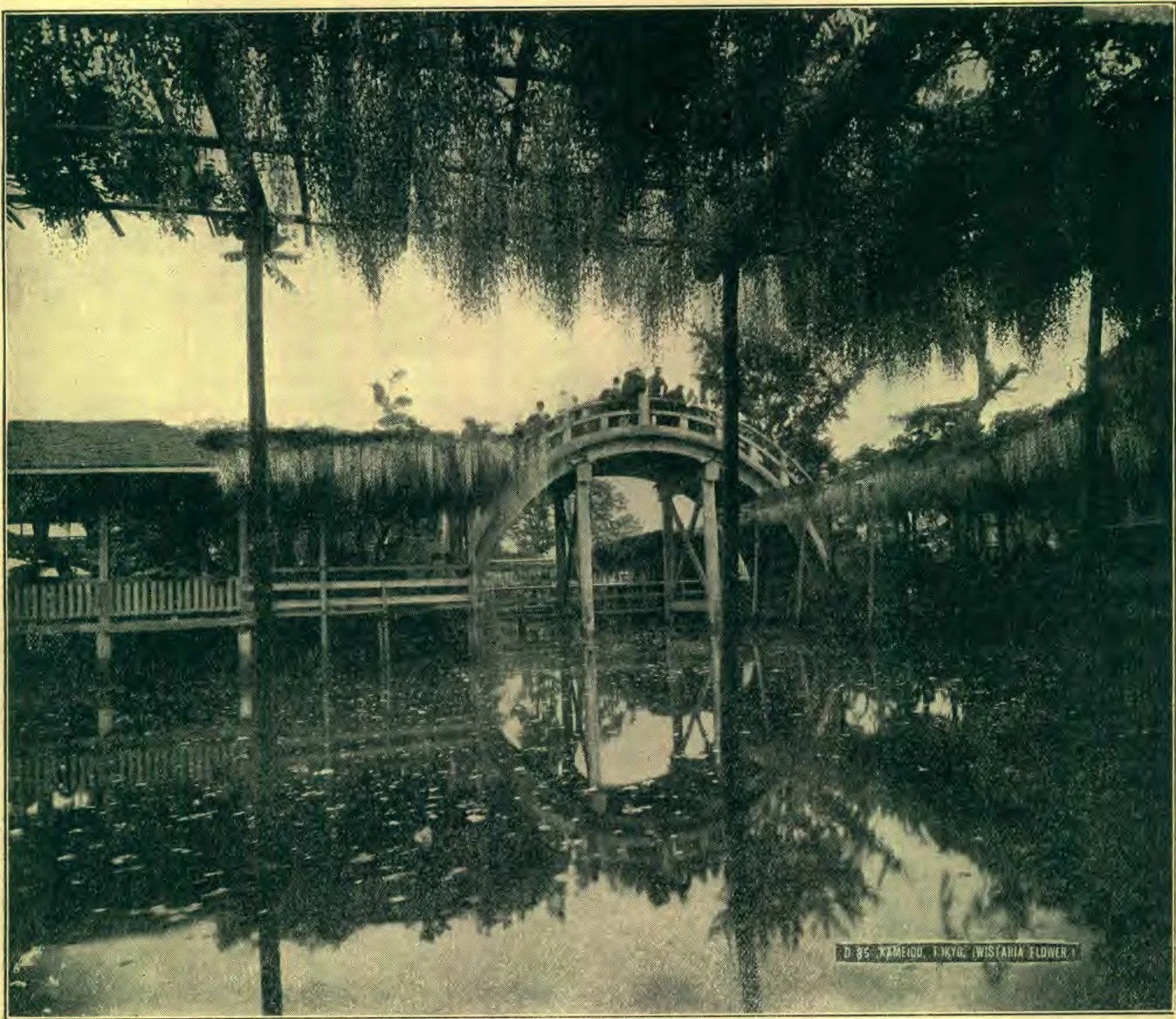
A WEALTH OF WISTARIA, TOKIO, JAPAN

You have reached the end of this edition.

The Youth’s Instructor · Nov 14, 1916