The Youth’s Instructor, Vol. 48, No. 6.

PLAYING ESKIMO TWO MILES ABOVE THE SEA
Earlier text: PLAYING ESKIMO TWO MILES ABOVE THE SEA

“IF GOD SO CLOTHE THE GRASS”

We have seen that, when ripe, fruits in their natural state are made conspicuous by their color, which contrasts strongly with the color of the foliage. But before the fruit was ripe, and ready for the seed sowing, it was practically of the same color as the foliage, and so almost indistinguishable from it. Thus the fruit is prevented from being taken before the seeds have matured.
When the fruit is ripe, birds and other creatures are attracted not only by the conspicuous color, but by the pleasant food that they find stored in the pulp. This food is the price that the tree pays to the birds and to man for their work in sowing the seeds contained in the fruit.
But not until the seeds are ready to be separated from the plant do the fruits become thus pleasant to the taste.
Before the seeds are matured and ready to be scattered, the fruit is decidedly unpleasant to the taste, and, indeed, contains alkaloids and glucosides that are positively poisonous to animals. By this protection the fruit is left on the tree until the seeds are ready to be separated from the parent plant. Some of these poisonous alkaloids are well known, being, unfortunately, often used as medicines, as, for instance, morphine, nicotine, atropine, and strychnine.
“Glucosides, of which more than a hundred are already known, have a use very similar to that of the alkaloids. Saponin is poisonous to man and animals; amygdalin splits up into the poisonous prussic acid, oil of bitter almonds, and sugar; and many others behave in exactly the same way. Tannin has an extremely bitter taste, and therefore protects branches, cortex, and fruits from being eaten.”
Thus the Creator has provided that the fruit shall not be taken from the tree until it shall be of some use to the tree by the scattering of its seeds. Later, the alkaloids and glucosides are altered, “perhaps under the influence of the acids, which are present in large quantities in unripe fruits, and their place taken by sugars and other harmless materials. Thus what is at first unattractive, and even repulsive, becomes, on ripening, a nutritious food, much sought after by animals, which at the same time unconsciously disperse the seeds. In this connection the walnut is very instructive. Until the seed contained in the ‘nut’ (here really the stone of a drupaceous fruit) is ripe, the latter is surrounded by a fleshy investment rich in tannin. It is not known that at this stage the nuts are ever interfered with by nut-crackers or other animals. But on the ripening of the seed the fleshy envelope splits, and the nut becomes accessible.”
“In other cases it is not by acids or bitter stuffs that the seeds are protected, but by strong-scented or sticky substances, which are contained in the cells and passages of the fruit. Thus, in the scales of the cone of the arolla pine, quantities of resin are present until the seeds are ripe. If the cones are cut with a knife, this resin escapes, and can only be removed from the blade with the utmost difficulty. Were a nut-cracker to peck the scales at this stage to obtain the young seeds, its beak would get all besmirched with the resin.”
“The well-known ‘hips’ of roses, which ripen in the autumn, do not fall away from the plant, but remain attached. The seeds are contained in hard, tiny, nut-like fruits, which are inclosed in the fleshy and excavated receptacle. They are destined to be distributed by blackbirds, jackdaws, and other birds, which devour the hips for the nutriment contained in the fleshy investment; the little nuts, however, pass out undigested in some place more or less distant from the rose bush. While these birds, attracted by the colored fruits, are welcome guests, the case is quite the reverse as regards mice and other little rodents, which gnaw the nuts, and devour their contents, the seeds. But the rose-hips are well protected against these animals. The stems and branches, up which they must climb to reach the fruits, are provided with sharp prickles, with downwardly directed points, which give complete immunity against these animals. I have repeatedly, in the late autumn, when the mice desert the fields, and take up their winter quarters in the abodes of man, strewed the ground in my garden with rose-hips of an evening. Invariably, next morning, I found that they had been gnawed and demolished by mice, while those remaining in place on the plants were untouched.”
And if you did not know it before, you now learn one reason—I say one reason, for there are others—why there are thorns among the roses. You see that the thorns are a protection to the rose, keeping its seeds from being eaten by mice and other destructive animals. It is quite possible that if there were no thorns among the roses, there would soon, perhaps, be no roses. Are there unpleasant things in your life, like these thorns among the roses? Be patient, and even thankful, knowing that if God permits them, he has a purpose in so doing, and intends that they shall actually minister to your comfort and protection. If God so clothe the rose-bush and these other plants, which are here to-day, and to-morrow are gone forever, how much more will he not care for you?
L. A. REED.

WHERE ARE THE FLOWERS?

Where are all the pretty, fragrant flowers that blossomed last summer?—Only down in the ground.
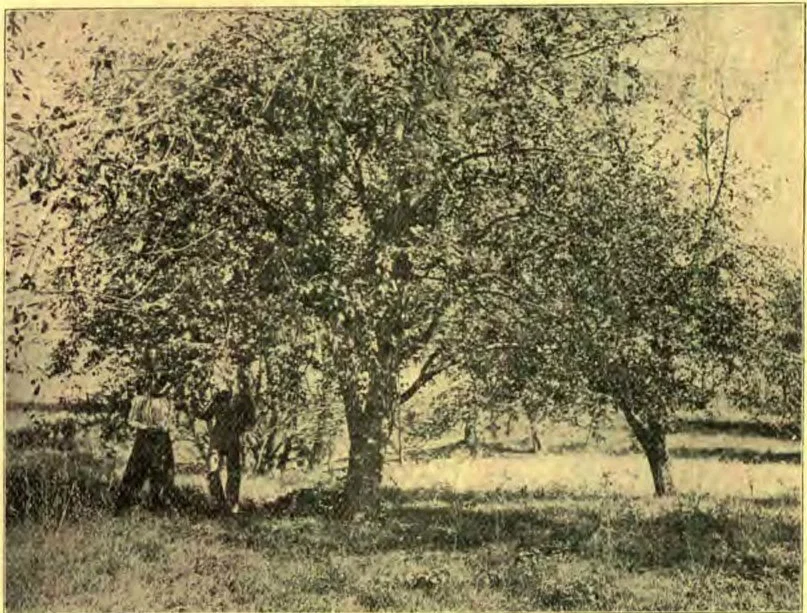
ORCHARD IN AUTUMN.
ORCHARD IN AUTUMN.
Nothing but great ugly roots! But the spring rain and the warm sunshine will soon liven them up, and then here and there a tiny spot will begin to swell up, and all the little cells will put out little buds, which will break off, and grow into other cells, till soon a little bud will be seen, about as large as a pin-head. Still the little cells will grow until the bud pushes up, through the earth and leaves and sticks, a small green shoot.
Then the leaves that are all wrapped up like scales, will begin slowly to unfold, and the little leaf-stalks will grow longer, and carry the leaves on their ends out from the plant, to make room for more leaves.
Soon, right at the place where the leaves are joined on, more little buds will appear, and these buds will become branches.
Then another strange thing will happen. Some of these buds will stop pushing forward and throwing out leaves, and will begin to swell and grow very big. The little leaves on the outside, that were just ready to unfold, stay tightly rolled up; but the little leaves inside turn white or red or yellow or blue, and still farther in, they become like little threads. Pretty soon this bud will burst, all at once, into a flower.
Those leaves that were packed away in the very center of the bud, do not open out at all, but grow together to form fruit and seeds. A ripe apple or peach does not look much like a leaf; but this change is only one of the wonderful things God is doing through nature.
N. W. LAWRENCE.

No Luscious Fruit Without Sweet Spring Flowers

“No LUSCIOUS fruit of autumn Without the sweet spring flowers; No lavish, golden harvest Without the early showers; No noble, honored manhood Without a childlike truth; No grand old age so peaceful Without pure aims in youth.”

WINTER DAYS

If every little snowflake Declared it wouldn't fall, And if every little sunbeam Wouldn't shine at all, Perhaps the little children Would forget the way to smile, And winter days would surely last A weary, dreary while.
But here come hurrying snowflakes, And the world will soon be white; And then the dancing sunbeams Will add their golden light; And happy, smiling children Will clap their hands, and say, "Hurrah for sleds and snowballs This lovely winter day!"
— Anna M. Pratt.

THE BLESSED HOPE

“WHERE is the promise of his coming?” for “all things continue as they were from the beginning of the creation.” This is what the apostle Peter tells us will be said in the last days by “scoffers,” who do not believe the word of the Lord, which tells them of his coming.
From the days of Adam and Eve, God’s people have looked forward to the coming of the Lord Jesus Christ. This has been their one great hope and comfort through all the ages. Enoch, “the seventh from Adam,” prophesied of this time, saying: “Behold the Lord cometh with ten thousand of his saints.” Job, who lived very early in this world’s history, spoke also of the same “blessed hope,” in these beautiful words: “I know that my Redeemer liveth, and that he shall stand at the latter day upon the earth: and though after my skin worms destroy this body, yet in my flesh shall I see God.” He knew that although his body should go into the grave and crumble into dust, yet at the coming of Jesus, “the resurrection and the life,” he would awake from his long sleep to “see God.”
In another beautiful passage he tells us what was to waken him in that glorious day for which he longed: “Call thou, and I will answer thee.” Yes; at the voice of Jesus, even the dead awake, and answer to his call. He “calleth those things that be not as though they were,” and immediately they are. He calls the dead, and they live.
Perhaps you are thinking of how he showed his power to do this when he was on the earth, —how he stood at the grave of Lazarus, and cried with a loud voice, “Lazarus, come forth!” “And he that was dead came forth,” even though he was “bound hand and foot with grave clothes.”
Oh, there is power in his word of life,—power that can overcome death and every obstacle, and cause all things to be exactly what he says. It was just as easy for Jesus to call Lazarus forth then as it will be in the hour that is coming, when “all that are in the graves shall hear his voice, and shall come forth.”
The apostle Paul tells us not to sorrow as those that are without hope, over “them that are asleep.” For “the Lord himself shall descend from heaven with a shout, with the voice of the Archangel, and with the trump of God: and the dead in Christ shall rise.” And again he tells us that at the coming of the Lord, “the trumpet shall sound, and the dead shall be raised incorruptible.”
Think how much, then, dear children, depends upon the coming of the Lord Jesus. Think of the thousands of his children still sleeping in the dust, waiting for his mighty voice to shake the earth, and rend the tombs, and form them again from “the dust of the ground,” out of which he made man in the beginning by the power of his word.
As you, little ones, fall peacefully asleep at night, knowing that in the morning you will hear the voice of your mother calling you from your slumbers to the light and joy of a new day,—just so peacefully, and in the sure hope of a joyful awakening, did those holy men of old, of whom you love to read in your Bibles,—Abraham, Jacob, Samuel, David, Daniel,—lie down to rest when their appointed time came to sleep with their fathers.
And of the “early Christians,” those who lived in the centuries just after the time when Jesus was on earth, we are told that “they were accustomed to bid their dying friends ‘Good night,’ so sure were they of their awakening in the resurrection morning.” But what a long, long night, you will think—thousands of years for some of God’s children. Yes, the night has been long, but it will soon come to an end. The Lord has waited many years, that men might come to repentance; but soon he will come, and all those that sleep in the dust of the earth shall awake.
EDITH E. ADAMS.

THE BETRAYAL

(February 17, 1900)
Memory Verses.—Matt. 26:52, 53.
Time: A. D. 31. Place: Mount of Olives. Persons: Jesus, disciples, Judas Iscariot, officers, multitude, priests, elders.

QUESTIONS

1. How did Judas know where Jesus was, that he might betray him? John 18:2. What provision had been made for Jesus’ arrest? V. 3. As Jesus met the mob, what did he ask? V. 4.
2. When they replied that they sought Jesus of Nazareth, what answer did he give them? V. 5. When he had thus spoken, what took place? V. 6; note 1. When they had revived from this shock, what question was again addressed to the multitude by Jesus? What reply was given? V. 7. What answer did Jesus then make? Why? Vs. 8, 9; note 2.
3. What arrangement for the betrayal of Jesus had previously been made by Judas Iscariot? Matt. 26:48. Feigning love for Jesus (see “Desire of Ages”), how did he carry out his part? V. 49. As he approached Jesus and kissed him, what tender words of rebuke did Jesus speak? V. 50; Luke 22:48.
4. Emboldened by Judas’s familiarity, what did the mob now do? Matt. 26:50. Upon seeing this, what did the disciples ask Jesus? Luke 22:49. Angered that Jesus should receive such treatment, what did one of the disciples do? Matt. 26:51. Which disciple was this? John 18:10; note 3.
5. What did Jesus immediately do? Luke 22:51. What rebuke and counsel did he give to Peter? Matt. 26:52, 53; John 18:11. By what was Jesus led thus firmly to choose the cup of suffering? Matt. 26:54.
6. Turning to the mob, what did Jesus say? Luke 22:52, 53. Why was all this permitted to take place? Matt. 26:56; note 4.
7. When the disciples saw that Jesus refused to deliver himself, what did they do? Mark 14:50; note 5. To what place was Jesus taken from the garden? V. 53.

NOTES

1. As these words were spoken, the angel who had lately ministered to Jesus, moved between him and the mob. A divine light illuminated the Saviour’s face, and a dove-like form overshadowed him. In the presence of this divine glory, the murderous throng could not stand for a moment. They staggered back. Priests, elders, soldiers, and even Judas, fell as dead men to the ground.—“The Desire of Ages,” page 694. As the mob was at this time struck down by the glory of God, so will the wicked be destroyed at the second coming of Christ. 2 Thess. 2:8; Rev. 6:15, 16.
2. In the presence of the murderous throng that was hunting his life, Jesus’ thoughts were not for himself, but for his disciples. He was even now laying down his life. He placed himself in the way, that the storm might fall on him instead of his followers. Who can not but love such a character? To-day “this same Jesus” invites us to find shelter in him. We, like the disciples, may be imperfect in faith and practice; but Jesus, though he knows all about it, has only thoughts of peace toward us. Dear young friend, place yourself in his care now. He will “never leave thee, nor forsake thee.”
3. Peter had said that he was ready to go with his Lord to prison and to death. He had not said it in faith, but with confidence in his own strength and bravery. His trust was in the sword, and at the first opportunity he used the weapon in which his trust was placed. But this was the human way, not the divine. No man can follow Jesus after human methods; for Jesus is going in another direction, directly opposite. To follow Jesus to prison and death, only his ways may be cherished. Every step taken with the sword must be retraced, else final destruction will result. Human bravery is of no account, only as it is surrendered to God: it then becomes boldness in the Lord.
4. Every event in the life of Christ was a fulfillment of Scripture. In the counsels of heaven his life-work had been laid out, Jesus himself making known to the angels that he must die the death of the cross. All was determined beforehand. Acts 4:27, 28. We can not comprehend these wonderful plans of God, but we may nevertheless rejoice in their accomplishment. God has a plan for each and every one of his children.
5. The disciples had at no time really believed, it would seem, that Jesus would suffer himself to die. They hoped he would exert his divine power in his own behalf. But this he could not do, and still be our example. Just as he lived, we may live; for all the power that he exercised in living righteously we may have. In the action of the disciples we see how long wrong teaching follows men, and how blind and weak they are in consequence. Not only were the disciples robbed of all the precious blessings of Gethsemane, but they forsook Jesus as soon as the real trial came.

BE YE THANKFUL

WE are too apt to remember our misfortunes and forget our blessings. Dick’s idea is a good one. Try it.
“I feel so vexed and out of temper with Ben,” cried Dick, “that I really must —”
“Do something in revenge?” inquired his cousin Cecilia.
“No; just look over my Book of Thanks.”
“What’s that?” said Cecilia, as she saw him turning over the leaves of a copy-book nearly full of writing in a round text hand.
“Here it is,” said Dick; then he read: “‘March 8. Ben lent me his hat.’ Here again: ‘January 4. When I lost my shilling, Ben made it up to me kindly.’ Well,” observed the boy, pleasantly, “Ben is a good boy, after all.”
“What do you note down in that book?” said Cecilia, looking over his shoulder.
“All the kindnesses that are ever shown me. You would wonder how many they are. It is a help, to mark them down; for then I do not forget them as I might if I only trusted to my memory. When I am cross or out of temper, I almost always feel good-humored again if I only look over my Book of Thanks.”—Selected.

DO YOU KNOW THEM?

I'll give you a riddle to guess to-day: Two pretty curtains were rolled away; Two little windows were opened wide, And I could see who was living inside. A dear little girl peeped out and smiled; Afterward came a naughty child; And the windows were dim with a sudden shower, And the curtains were crumpled and red for an hour; But the sunbeams burst through the clouds, and then The good little girl came back again. There she stayed, to my heart's delight, Till the curtains fell, and she said good night. Can you guess what windows were opened wide, And who are the children that lived inside?
— Youth's Companion.

WOULD YOU BE A SOLDIER TRUE?

Would you be a soldier true, Where the Lord has need of you?
When the tempter whispers low, Can you firmly answer “No”?
Can you lend a helping hand, That some needy soul may stand?
Can you smile when you are sad, Just to make somebody glad?
Can you give up your own way In some cherished work or play?
Can you sacrifice a toy That some other might enjoy?
Can you for the right appear When companions laugh and jeer?
Can you crush the bitter word So it never shall be heard?
If unkindness you must learn, Can you give love in return?
Then you are a soldier true, Where the Lord has need of you.
— Selected.

“Beautiful Joe.”

An Autobiography By Marshall Saunders.
Beautiful Joe is a real dog, and “Beautiful Joe” is his real name. He belonged during the first part of his life to a cruel master, who mutilated him in the manner described in the story. He was rescued from him, and is now living in a happy home, with pleasant surroundings and enjoys a wide local celebrity.—Author’s Preface.
This story awakens the interest of the reader in the first chapter, and sustains it to the end. It must make an impression for good, and in the interests of kindness and gentleness, upon all who read it.
The book is well bound in cloth, with gilt side-stamp; 304 pages; illustrated. Price, 60 cents. Smaller edition, cloth, without illustrations, 25 cents.
The 60-cent book will be sent, post-paid, for four new yearly subscriptions to the YOUTH’S INSTRUCTOR, at 75 cents each; or with the INSTRUCTOR one year for only $1.25. The 25-cent book will be sent with the INSTRUCTOR one year for $.90.

Self-Pronouncing S. S. Teachers’ Reference Bible.
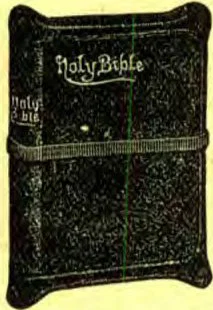
CONTAINS the celebrated Teachers’ Helps, comprising nearly 400 pages. Also a complete series of fifteen new maps.
Description. — Imperial Seal Binding, Tuck Edges, known as “Divinity Circuit,” Rounded Corners, Full Red under Gilt Edges.
We offer this Bible, post-paid, for only SIX NEW YEARLY SUBSCRIPTIONS at 75 cents; or TWELVE NEW SIX MONTHS’ SUBSCRIPTIONS at 40 cents.
We will also send it, post-paid, with the INSTRUCTOR one year for $2.25. For 20 cents extra we will stamp your name in gold upon the cover.

Making Home Happy.

By Mrs. L. D. Avery-Stuttle.
This subject is presented in an interesting story form, and every reader will feel inspired to strive to make his home cheerful. Happy homes are needed everywhere, and “Making Home Happy” is a good little book to help bring about this result.
The book contains 206 pages, with four full-page illustrations, besides smaller ones. Price, bound in cloth, 50 cents.
We will send it, post-paid, for three new yearly subscriptions to the INSTRUCTOR at 75 cents each; or with the INSTRUCTOR one year for $1.00.

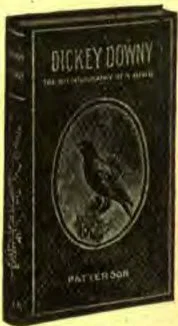
“Dickey Downy.”

By Virginia Sharpe Patterson.
This little volume is charmingly written, its object being to teach the children to love and protect the birds. That it is interesting, the following selected chapter-headings will abundantly show:—
The Orchard.
Dickey Downy's Meditations.
Dickey's Cousins. A Winter in the South.
The Prison. The Hunters.
Polly's Farewell.
The book is bound in cloth, and contains 192 pages, with four beautiful colored plates. Price, post-paid, 60 cents.
We offer this book, post-paid, or three new yearly subscriptions to the YOUTH'S INSTRUCTOR, at 75 cents each, or with the INSTRUCTOR one year for only $1.15.

The Bible as the Greatest Book

WHATEVER other books you read or neglect to read, let me entreat you to give yourselves thoroughly and systematically to the mastery of that which is the oldest, the greatest, and the best of all—the Bible. Our literature owes more to it than to any other, and however literary we may be, we shall enjoy it the more. Here are the earliest histories, the noblest lyrics, the loftiest philosophy, the most honest biographers, and the most earnest letters that were ever penned. And besides all these attractions, here is the portraiture of a perfect life, the exposition of true religion, and the proclamation of the only atonement for the sins of men.— W. M. Taylor.

Making Home Peaceful

By Mrs. L. D. Avery-Stuttle.

A Happy Sequel to Making Home Happy.

The purpose of the author has been to show the reader, by means of a happily conceived object-lesson, how the true Christ-love can be given tangible expression in every-day home life, and how the incoming of that love will transform a joyless abode into a happy home.
The book is uniform in size and style of binding with “Making Home Happy.” Price, bound in cloth, 50 cents; in paper covers, 25 cents.
The cloth-bound 50-cent book will be sent, post-paid, for three new yearly subscriptions to the YOUTH'S INSTRUCTOR; or with the INSTRUCTOR one year for only $1.00.

To Reach BATTLE CREEK

FROM
CHICAGO, BUFFALO, DETROIT, OR TOLEDO,
Purchase Tickets Reading over the MICHIGAN CENTRAL “The Niagara Falls Route.”
A First-class Line for First-class Travel between Chicago and New York and Boston. Elegantly equipped through trains pass Battle Creek in each direction daily.
R. N. R. WHEELER, Ticket Agent, Battle Creek.
O. W. RUGGLES, Gen’l P. and T. Agt., Chicago, Ill.

TAKE THE Canadian Pacific Railway

for . . . CHATHAM, OTTAWA, MONTREAL, LONDON, GALT, QUEBEC, WOODSTOCK, TORONTO, BOSTON, PORTLAND, and
All points in New England, the Maritime Provinces, Great Britain, and the Continent.
Illustrated literature, time-tables, and full particulars, upon application to—
J. FRANCIS LEE, GEN. AGENT,
Passenger Dept. 228 SOUTH CLARK ST., CHICAGO
Branch Offices: 76 Ottawa St., Grand Rapids, Mich.; Room D, Chamber of Commerce, Cincinnati, Ohio; 315 Chestnut St., St. Louis, Mo.

Cincinnati Northern Railroad Co.

TIME TABLE NO. 3.

IN EFFECT SEPT. 24, 1899.
Trains Pass Battle Creek, as follows:

WEST-BOUND.

Train Time
No. 21, Mail and Express 6.58 P. M.
No. 23, Accommodation 2.07 P. M.
No. 27, Local Freight 8.25 A. M.

EAST-BOUND.

Train Time
No. 22, Mail and Express 8.25 A. M.
No. 24, Accommodation 1.45 P. M.
No. 28, Local Freight 5.30 P. M.
Direct connections are made at Toledo with all roads diverging. Close connections for Detroit and Cincinnati.
J. L. READE, Ticket Agt., Battle Creek. E. R. SMITH, City Pass. Agt., 6 West Main St.
Continue reading: GRAND TRUNK RAILWAY SYSTEM