DEAR YOUNG FRIENDS: Do we all have a proper appreciation of the value of this virtue? Do we all consider how much we gain by always speaking the truth? or, on the other hand, how much we lose by deviating in the least from that which is truthful? I very much fear we do not. If we did, I think there would be a great deal more truth told, and a great deal less that is untrue.
I presume that there is not one of those who may read this who has not at some time in his or her life been tempted, and perhaps yielded to the temptation, to tell that which was not the exact truth. Why is this? If we are always sure to lose by telling that which is untrue, as we are, why are we all sometimes inclined to choose the “hard way”—that which will never help us out of difficulty, or make us any more happy? You all know, I suppose, why this is, and who it is that would make us choose this “hard way,” and will if he can tempt us to think that it will be easier for us to tell that which may appear more favorable for ourselves than the truth might. Yes, we have an enemy that is just so wicked as this—one that the Bible calls the “father of lies.” It is his delight to make us believe that by doing or saying something that is not right, we can make ourselves more happy; and in this way he causes us to sin against God who would have us do right in everything.
Now, how are we to overcome this deceitful enemy? for overcome him we must if we would enjoy the happiness promised to the righteous. We can do it by having a strong determination to do right, and by asking God to help us by his holy Spirit, which he has promised to do. Yes, God has promised to give us his Spirit to be led by it. It is this that seems to speak to us when we are about to say something that is not just right, and says: Speak the truth, let what will come. This voice speaks to us whether we heed it or not. We may have become so accustomed to passing its warnings and admonitions by unnoticed that we may not realize when it speaks to us; but it is faithful to warn, and if we do not heed the warning, we are the ones at fault, and our condition is a fearful one.
Do we think what is to become of all who do not heed this warning voice? The Bible tells us that they are to be cast into the lake which burns with fire and brimstone69; which is the second death—a death from which there is no resurrection. What a fearful end! And to think that we shall bring this upon ourselves by listening to the tempter and not following the voice of the good Spirit is indeed a fearful thought.
Then do we realize what we are to gain if we overcome in this respect? It is one of the things that must be overcome if we would inherit eternal life; and we are promised a home in the New Earth if we are faithful here and overcome everything about us that is displeasing in the sight of God. If we are happy enough to reach that place, we shall have no tempting devil to torment us; but we shall always delight to do the will of the Lord, and shall be forever happy in his presence.
Let us all, then, strive to be faithful here and to overcome all that is evil about us, that at last we may meet in that New Earth where sin and death can never come.
E. W. WHITNEY.
PRESERVE THE INSTRUCTOR.
By A. S. Hutchins
DOUBTLESS there are thousands of young friends, East, West, North and South, that very highly prize the YOUTH'S INSTRUCTOR. In its monthly visits, filled with precious instruction, for all its readers, it meets a cordial welcome by a large circle of friends. And we are certain it is worthy of the reception with which it meets.
Those who write for its columns, its Editor and publishers, all feel an ardent desire that it may prove a present and future blessing to every one of its dear readers. And no doubt many, many, can testify most cheerfully to the wholesome influence which it has and does exert upon their minds.
That some prize it very much is apparent from the fact that they read every line of each number with so much interest. But this is not all, they so carefully fold and lay away each one, or hang them up in some safe place, for future reference, that we are sure they value them. Though thoroughly read, how whole and clean they look! They show that they have fallen into careful hands. A little niece and nephew, Clara and Charlie, have had the INSTRUCTOR a good while. Every number is safely preserved. They divide them, each one having half of them, and a drawer in which they are kept. Who can but admire this care and order?
But in some families there is a painful contrast. The INSTRUCTOR is read or partially hurried over, then laid aside as though all the benefit had been received from its instructive pages that could be. Sometimes when but a few weeks from the press, it is torn up or flung aside.
One thoughtless youth, not long since, took an INSTRUCTOR for gun wadding. It was the number containing the excellent story of Berthie's Graveyard. Could Berthie get hold of that gun would you blame her for burying that too?
Dear young friends, let this kind visitor to your homes be carefully read, its Heaven-given instruction treasured up and reduced to practice, and then preserved for future reference, or given to some one that might read it and by it be greatly benefited.
A. S. HUTCHINS.
THE GIFT OF GOD.
By Addie Merriam
WATER, in many places in Asia, is not so plentiful as it is in our own country, and many of the inhabitants suffer, and even die, with thirst. Water is so scarce and so highly prized by them that they call it the “Gift of God;” and persons called water carriers go through the streets carrying water upon their backs in large leathern bottles made from the skins of animals. As they pass along the street, they cry, “The Gift of God. Who will buy?”
How thankful we should be that we live in a more favored clime, and that water, pure and cold, as when Adam and Eve first slaked their thirst in Paradise, is to be obtained without money, and without price.
Now, the design of this article is not only to remind you of the gratitude due the Creator for this inestimable blessing, but to call your attention to another gift of God, which far surpasses it in value. This gift is eternal life. What a princely gift! No one but Jehovah could offer such a gift. He has given us richly of all things, not sparing even his only begotten Son, that through him he might offer us eternal life, which we have forfeited by disobedience.
Shall we hesitate to accept this gift so freely offered? It seems strange that any one should; and yet many are undecided whether to choose life or death. Beware lest hesitating too long it becomes too late, and you take up with the doleful lamentation, “The harvest is past, the summer is ended, and we are not saved.”
Shall we utterly reject this great gift? It seems incredible that any one should; yet multitudes are doing this. And for what are they rejecting it? For a few fleeting, sinful pleasures; for the gifts of earth that fade and perish with the using.
O reader, stop and consider before you rashly reject this priceless gift. If you think so much of this life that is so brief, can you not place a just estimate upon that life that never ends? In this life everything is so uncertain; there is more of disappointment than success; more of sorrow than joy. But in the future life that is offered as a reward for a well-spent life here, there will be happiness without alloy. Tongue cannot express, pen convey, nor the artist portray, the glories of Heaven, or the bliss of its inhabitants. Let us, then, not despise, but accept, and so become the happy recipients of this gift of God, which is eternal life through Jesus Christ our Lord.
ADDIE MERRIAM.
Battle Creek, Mich.
The Importance of Improvement in Youth.
By L. A. B.
THERE are certain great and important principles to be learned and acted upon if we ever expect to become noble men and women. In the first place, we must remember our accountability to God, and realize the importance of improving upon the talent which he has given us. It matters not how lonely our station may be, or how limited our advantages for improving upon this talent, yet at the same time we shall be held responsible for the manner in which it is improved. We all can, by the grace of God assisting us, exert a good influence on those around us and by a godly walk and chaste conversation, exemplify Christ in our life.
The second great principle is our duty to our fellow-men. Our motto should be, Do unto others as ye would that they should do unto you. And if we could but remember to put into practice the command of our Saviour, “Thou shalt love the Lord thy God with all thy heart, and with all thy soul, and with all thy mind, and with all thy strength, and thy neighbor as thyself,” how consistent our lives would be, and our light would be as a city set on a hill which cannot be hid. If we, to the utmost of our ability, live out these principles, and improve upon the talent which God has given us, we shall have that peace in our hearts which passeth all understanding, and at last when the Master comes, have an entrance into the city of God. But, if when the Lord of the harvest comes, he shall find that we have not gained other talents, how great will be our condemnation. We shall be cast out where there will be wailing and gnashing of teeth.
Oh! that we could realize the importance of the work that we are engaged in, and the great danger there is of our being deceived by the enemy of all righteousness, and that we might keep this solemn thought before us, that God is looking down upon us from on high, and can see and read our inmost thoughts, that a record of our life is being kept in Heaven, what a difference it would make in our lives. We would not shrink from any duty that presents itself, but would be willing to endure hardness as good soldiers for Christ. Oh! that we might all resolve by the help of God to live to his honor and glory, and make such an improvement on our talent that when the Saviour comes, he may receive his own with usury.
L. A. B.
Iowa.
SPEAK NOT TO HIM A BITTER WORD.
Wouldst thou a wanderer reclaim,
A wild and restless spirit tame,
Check the warm flow of youthful blood,
And lead a lost one back to God?
Pause, if thy spirit’s wrath be stirred,
Speak not to him a bitter word,
Speak not, that bitter word may be
The stamp that seals his destiny.
If widely he hath gone astray,
And dark excess has marked his way,
’T is pitiful, but yet beware,
Reform must come from kindly care.
Forbid thy parting lips to move
But in the gentle tones of love,
Though sadly his young heart hath erred,
Speak not to him a bitter word.
The lowering frown he will not bear;
The venomed chiding, will not hear;
The ardent spirit will not brook
The stinging tooth of sharp rebuke;
Thou wouldst not goad the restless steed,
To calm his fire or check his speed,
Then let no angry tones be heard,
Speak not to him a bitter word.
Go kindly to him, make him feel
Your heart yearns deeply for his weal;
Tell him the perils of the way
Wherein his devious footsteps stray,
So shalt thou win him—call him back—
From pleasure’s smooth, seductive track;
And warnings thou hast mildly given,
May guide the wanderer to Heaven.
FORGETTING GOD.
By Jos. Clarke
Let us not forget God in the midst of our hurry and labor of life. The old and the middle-aged may be in danger from being absorbed in the cares of life, the young are in danger from its pleasures and its charms.
The excitement of mental pursuits, the rush of passion, the strife for precedence in mental weight and talents, the desire for popularity, all these, and a thousand other objects, come forward, beckoning imperatively for attention.
The heavenly treasure, the city above, also presents attraction, but these being only seen by the eye of faith, are almost wholly unnoticed by the gay world. The novelties of the season, the attractions of the town, city, and country, all are seen and appreciated; and many flock to the crowded theater, and the ball, and the party, where all is mirth. Nothing farther is noticed. One might suppose that this is all there is of life, all there is of pleasure. No city above is noticed. The offer of eternal life is esteemed a blank, and the offer of worldly pleasure is a prize, you would suppose, from the way of most.
How is it with you, dear reader? Are you looking daily and hourly for the blessing of God? Do you constantly enjoy that smile known only to the pure in heart?
Jos. Clarke.
Two Classes of Virtue's Followers
Virtue has ever two classes of followers. The first walk in her train from the love they bear her divine form, for the delight of gazing on those lines of beauty which glorify her face, and for the ineffable serenity she breathes into their souls. The other class have their eyes fastened solely on the rewards scattered along her path. Blind to her rare symmetry and the majesty of her step, deaf to the music of her voice, they are only eager to clutch the shining gifts she lets fall. The first class do right because right is right, not for love of gain nor for fear. Gain is the motive of base spirits, and fear the spur of craven souls.
God's Care for Creation and Every Creature
The same God who molded out the sun and kindled the stars, watches the flight of the insects. He who balances the clouds, and hung the earth on nothing, notices the fall of the sparrow. He who gave Saturn his two rings, and placed the moon like a ball of silver in the broad arch of heaven, gives the rose its elegant tint. And the same Being notices equally the praise of the cherubim, and prayers of the little child.
GOOD RESOLUTIONS.
Jessie came home from school, and seeing the closet door open, she went in. In one corner of the closet stood a jar, where her mother usually kept bath-biscuit—a nice, rich cake of which Jessie was very fond. She opened the jar, and looked in, and put in her hand and took out two. Hearing a noise while in the act, she started like a guilty person, and wanted to hide. However, she took two, hastily ate one, slipped the other in her pocket, and ran out-doors. After both were eaten, and the pleasure gone, Jessie felt very ill at ease. She wished she had not taken them. Shrank from appearing at the tea-table, lest her mother should have found that two cakes were missing, and might suspect her. You see how very suspicious guilt is.
“I will never, never do so again,” said Jessie to herself that night. “I'll always ask. It is a sort of stealing to take things so; it is a sin. I'll never do so again; and so I've said before, over and over,” thought the child, as a miserable sense of broken resolutions crossed her mind. “Oh, dear!” she groaned, “I want to be good, but I can't.” She tried to pray, and after a great while went to sleep with “never do so again,” on her lips and in her heart.
The next day, at recess, Martha Scott called a few of her cronies to her desk.
“See here, girls, what I've got.”
They huddled round when she opened a paper and displayed six large pickles, for some school-girls have an unaccountable liking for pickles. The girls set up a shout.
“Did your mother give them to you?” asked one.
“Of course she didn't,” answered Martha.
“It's wrong to take without leave,” said Jessie.
“I guess Jessie's conscience isn't clear on that point,” cried one of the girls, sharply.
“Well, it's wrong,” persisted Jessie.
“Do you always ask leave? Come now, Jessie, do you, Miss Reproof, do you?” cried Martha Scott.
“Yes,” cried Jessie, quickly and angrily, “I do.”
She certainly spoke before she thought.
“Jessie, Jessie,” whispered conscience, “that is a lie.”
“I know it, I know it,” whispered Jessie back in anguish of spirit.
Jessie helped eat the pickles; but something stuck in her throat. It was not the pickle; I think it was the lie.
“Oh! dear, dear,” she said to herself, and all day it was inside, “Oh! dear, dear;” which meant “What a weak, sinful thing I am. I can't keep my resolutions. When I am tempted, they are like cobwebs before a dust-brush; 'tis no use to make them. I shall never be good, never, never.”
As soon as Jessie had an opportunity, which was the next day, she asked, “Do you think, mother, it is any use to make good resolutions? Do you think they make us any better?”
She wanted very much to understand the matter, for Jessie had had the notion that good resolutions had a great deal to do with making people good. Her own experience had, indeed, been quite to the contrary, and what it all meant puzzled her sorely. Therefore, she anxiously waited for her mother's answer.
“Not when good resolutions take the place of something to be done; not when they take the place of penitence,” answered her mother; “for there are some people who ease their conscience by good resolutions against sin and temptation to come, when they should be repenting and giving up that sin which made their conscience ill at ease.”
“How repent and give it up?” asked Jessie.
“Be so truly and thoroughly sorry for it as to be willing to confess it, to feel very humble on account of it, and to desire above all things to be separated from it—to be ‘washed from it,’ as the Bible says.”
“And how can we feel so?” asked Jessie, with tender concern.
“By the help of the Holy Spirit,” answered her mother; “that is his work: to convince us of sin; to mellow our hearts; and make us ready and willing to give up thoroughly everything which grieves and displeases God.”
“‘Holy Spirit!’—I never thought of that before; ‘confess it’—I never thought of that before,” said Jessie, only half aloud, as if speaking to herself; she looked very serious: “and resolutions, mamma—” But mamma was gone. The baby was crying in the distance.
Jessie went away full of new ideas. She had heard the same things over and over, I dare say; but now they made an impression, because she felt she had a personal interest in them as she never had before. That night, as Jessie's mother sat alone reading in the sitting-room, and the children had long before gone to bed, the door opened gently, and “Mother, are you alone?” came softly through the little crack.
“Jessie!” exclaimed her mother, holding out her hand; “come in, child. What is the matter?”
Jessie stole in, and taking her mother's out-stretched hand, and resting her head on her mother's shoulder, she sobbed out, “O mother—”
Then what did she do? She confessed taking the bath-biscuit, the weakness of her good resolutions, the next day's lie, and all the wretchedness which followed. Penitent and humble she sank at her mother's knee, not to ‘say her prayers,’ that is, use words upon a thoughtless tongue, as she had so often done before; but she prayed, “O God, forgive me for Jesus' sake.”
And did Jessie ever confess to Martha Scott the lie she told her? Yes, for she meant to make a clean breast of it. And what did Martha Scott say, do you suppose?
“You foolish girl, Jessie,” she cried; “I'd never confess I told a lie till doom's day; you are a foolish girl.”
If her mother's tender and approving looks had spoken peace to her troubled soul, Martha's71hard and unfeeling words stung her to the quick. Jessie had yet to learn how differently the people of the world view the feelings of the penitent heart, from God's people. The people of the world hug sin, and are too proud to give it up; while there is joy in a pious heart, yes, and joy in Heaven, over one sinner that repenteth.
Children who are taking the first steps in a heavenly life must not be frightened and discouraged by such harsh treatment from their mates; they will find a sweetness and love in their own bosoms which more than make up for every unkindness; and this is to be got, not merely by making good resolutions against the future inroads of sin, which, I think, is all that many do who are disappointed at finding no real strength and comfort in it, but by a penitent confession, a thorough now giving up of what is wrong—not of one fault only, but all your faults; not repenting for a fault once, but every time it overcomes or tempts you.
Take a bad act in hand at once, like a fever, or any other dangerous disease. How odd it would be if a person sick of fever should lay groaning to himself, “I resolve never, never to have another fever,” without taking proper measures to get rid of the one he already has, and eradicating it from his system. It is curing he wants, and good resolutions are not medicine; but they are excellent to strengthen and brace the body after it is cured.—Child's Paper.
OUR FORGOTTEN BLESSINGS.
By Jennie Merriam
IN our eager desire to obtain the good things of life, we often appear utterly to forget that which we now possess, and murmur that we are not more comfortably surrounded; and thus thoughtlessly and wickedly ignore our many priceless blessings.
Among our greatest blessings, greater than houses, gold, or lands, is good health. God is often thanked for spared lives; this is not so easily overlooked in our dread of the King of Terrors—death. Health seems a small blessing until we are deprived of it. But when weary days of sickness and pain come, and we toss restlessly from side to side, and remember the healthful days for which we gave no thanks, our hearts are softened, tears moisten our eyes, and we resolve if health is ever ours again, it shall not be counted among the forgotten blessings.
Home and friends! how sweet the names! yet these are frequently forgotten. When our family circles are broken, and one after another are borne away to their last resting-place, and friends are few, then we shall look back and remember with bitter anguish the time when these blessings were ours, but forgotten.
How many of us thank God that we have our reason? How proper and just that we should. When in conversation with people of high intellectual powers, we are able to converse in an intelligent manner, and can understand and appreciate their feelings, do we think this is all by our own power? Do we realize that this is the gift of God, and should not be among the forgotten blessings?
Of all our senses, sight is the most perfect and delightful; yet who thanks God for the gift of sight? This would be a dark, dreary world if we could not see the green grass, pretty, bright-colored flowers, and the stately trees, clothed in their foliage of green. Though the curse rests heavily upon this earth, yet there are beautiful things to feast the eye upon. And do we feel thankful that we are permitted to see all this beauty while others grope in darkness?
While in conversation with a lady, not long since, she related a little incident which illustrates this point: A gentleman was traveling on one of our great railroads, and reading the daily paper to while away the time. Feeling somewhat weary, he laid down his paper and took off his glasses, when, to his surprise, he was in total darkness. He thought he had been suddenly stricken with blindness, when, with a piercing shriek from the great iron horse, they emerged from a tunnel. The gentleman was heard fervently thanking God that he was not deprived, as he had supposed, of the gift of sight.
The last blessing of which we shall speak so far exceeds all others that words are but feeble for its description. It is the most precious of all God's gifts—his dear Son. Shall this be counted as nought? When we think of the love of Jesus, his great condescension in coming into this world to suffer and die for us, a race of rebels, should not thanksgiving, praise, and adoration, ascend from all our hearts? Should not we who have felt the sweet peace of sins forgiven through his blood be ever ready and willing to thank and praise his holy name?
Dear reader, let us stop and consider whether we are thankful for life, health, home, and friends, or if, in the eager pursuit of happiness, we forget the many good things we enjoy, and thus they are numbered among the forgotten blessings.
JENNIE MERRIAM.
Battle Creek, Mich.
FAITH
My food is but spare,
And humble my cot,
Yet Jesus dwells there
And blesses my lot,
Though thinly I'm clad,
And tempests oft roll,
He is raiment, and bread,
And drink, to my soul.
His presence is wealth,
His grace is a treasure;
His promise is health
And joy out of measure;
His word is my rest,
His Spirit my guide;
In him I am blest,
Whatever betide.
Since Jesus is mine,
Farewell to all sorrow;
I will not repine,
Nor think of to-morrow.
The lily so fair,
And raven so black,
He nurses with care,
Then how shall I lack?
TO THE LITTLE ONES.
Quite a large number of our readers are especially interested in the “Children’s Corner,” and eagerly watch for its appearance from month to month. Perhaps you wonder what there is in the Corner for you this month.
First, we give you a little poem, which you will all like because it is about the “lambs” of the flock. And if you choose, you may have somebody teach it to you. Do you like to repeat poetry?
Next is an item we clip from a child’s paper. How many of the children will be able to tell what is the moral of this little story? Here it is:
“A plate of apples was being passed around among a party of children. There was a fine red one at the top, which one little girl took. “‘How greedy you are,’ said her next neighbor, ‘to take the largest. I meant to have had that.’”
And here are a few
LETTERS.
SONOMA CO., CAL.
DEAR EDITOR: I want to tell you how much I love our little paper. I wish it would come every week; but I will try to be content with it once a month, and profit by its teachings. I am thirteen years old, and have been keeping the Sabbath a year and a half with my parents. Yours in the love of the truth.
ELLA A. FREEMAN.
NASONVILLE, WIS.
I have often tried to get some of my school-mates to send for the paper that I took. I have persuaded three to send for it. I will try to get some more to take it. I am a boy twelve years old. I do like your paper very much and will try to have others share of its goodness. We live all alone here. Not one in this place that keeps the Lord’s Sabbath but our family. Pray for us when it is well with you.
WILLIE C. WITTER.
LOCKE, MICH.
DEAR EDITOR: I am trying to keep all the commandments of God and do his will, that I may have a home in the new earth. I would like to meet all the readers of the INSTRUCTOR in Heaven. Pray for me.
FRANK E. BROWN.
Formation of Character
If you ever watched an icicle as it formed, you would have noticed how it froze, one drop at a time, until it was a foot long, or more. If the water was clean, the icicle remained clear, and it sparkled brightly in the sun; but if the water was slightly muddy, the icicle looked foul, and its beauty was spoiled. Just so our characters are formed. One little thought or feeling at a time adds its influence. If every thought be pure and right, the soul will be bright and lovely, and will sparkle with happiness; but if there be thoughts and feelings impure and wrong, the mind will be soiled, the character depraved and darkened, and there will be final deformity and wretchedness. How important, then, that we should be on our guard against every evil impulse and desire!—Young Reaper.
THE LAMBS.
And is it true, as I am told, That there are lambs within the fold Of God's beloved Son? That Jesus Christ with tender care Will in his arms most gently bear The helpless little one.
And I a little straying lamb, May come to Jesus as I am, Though goodness I have none; May now be folded in his breast, As birds within the parent's nest, And be his little one.
And he can do all this for me, Because in sorrow on the tree He once for sinners hung; And having put their sins away, He now rejoices, day by day, To cleanse the little one.
Others there are who love me too; But who with all their love could do What Jesus Christ has done? Then if he teaches me to pray, I'll surely go to him and say, “Lord, keep thy little one.”
Then by this gracious Shepherd fed, And by his mercy gently led Where living waters run, My greatest pleasure will be this, That I'm a little lamb of his Who loves the little one.
SOWING LITTLE SEEDS.
By William H. Lane
LITTLE Bessie had a present of a new book, and she eagerly opened it to look at the first picture. It was the picture of a boy sitting by the side of a stream, throwing seeds into the water.
“I wonder what this picture is about?” said she. “Why does the boy throw seeds into the water?”
“I know,” said her brother Edward, who had been looking at the book, “he is sowing the seeds of water lilies.”
“How small the seeds look,” said Bessie. “It seems strange that such large plants should grow from such little things.”
“You are sowing just such tiny seeds every day, Bessie; and they will come up large, strong plants after awhile,” said her father.
“Oh! no, father; I have not planted any seeds for a long while.”
“I have seen my daughter sow a number of seeds to-day.”
Bessie looked puzzled, and her father smiled, and said:
“Yes; I have watched you planting flowers, and seeds, and weeds, to-day.”
“Now I know that you are joking, for I would not plant ugly weeds.”
“I will tell you what I mean. When you laid aside that interesting book, and attended to what your mother wished done, you were sowing seeds of kindness and love. When you broke the dish you knew your mother valued, and came instantly and told her, you were sowing the seeds of truth. When you took the cup of cold water to the poor woman at the gate, you were sowing the seeds of mercy. These are all beautiful flowers, Bessie; but I hope my little girl has been planting the great tree of love to God, and that she will tend and watch it until its branches reach the skies, and meet before the throne.”
“And the weeds, father?”
“When you were impatient with baby, you sowed the seeds of ill-temper. When you waited some time after your mother called you, you sowed disobedience and selfishness. These are all noxious weeds. Pull them up. Do not let them grow in your garden.” WILLIAM H. LANE.
Pride: What God Thinks of the Proud
PRIDE.—Do you know what God thinks of proud people?
“Every one that is proud in heart is an abomination to the Lord.”
“Though the Lord be high, yet hath he respect unto the lowly; but the proud knoweth he afar off.”
“The Lord will destroy the house of the proud.”
“Pride goeth before destruction, and a haughty spirit before a fall.”
THE ANCHOR.
By J. E. White
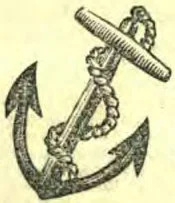
Do you know what this picture is made to represent? It is an anchor. You have seen people fasten a horse to a hitching post, have you not? Well, this anchor is made of iron, and is used to fasten great ships on the ocean. A large rope, called a cable, is fastened to the anchor, and then the anchor is thrown overboard into the water. It sinks down, down, down, till it comes to the bottom of the ocean, and those great prongs you see in the picture that look like fish-hooks, stick fast in the ground, and hold the ship from drifting away. It saves the ship many times in storms from being driven on to rocks where it would be broken in pieces. The anchor is not always sure. Sometimes it does not hold in the ground, and sometimes the cable breaks which holds the ship to it. So you see it is not always to be relied upon in danger. But what has the Christian as an anchor that is always to be relied upon, and is called “both sure and steadfast”? See Heb. 6:19.
J. E. WHITE.
FAITH IN JESUS.
By H. M. Van Slyke
DEAR CHILDREN: When you read the Bible, do you find a new beauty in it every time? If you do, you must love to study it. Will you please read with me the first six verses of the third chapter of Mark: “And he [Jesus] entered again into the synagogue; and there was a man there which had a withered hand. And they watched him, whether he would heal him on the Sabbath day; that they might accuse him. And he said unto the man which had the withered hand, Stand forth. And he saith unto him, Is it lawful to do good on the Sabbath days, or to do evil? to save life, or to kill? But they held their peace. And when he had looked round about on them with anger, being grieved for the hardness of their hearts, he saith unto the man, Stretch forth thine hand. And he stretched it out; and his hand was restored whole as the other.”
Christ had entered the synagogue, or church of the Jews, as he often did, to teach the people the way of life; but they watched him, that they might accuse him.
Instead of opening their hearts to the reception of divine truth, they violated the commandments, which teach only love, by hating the Son of God, and even upon the holy Sabbath seeking an excuse to destroy him.
See how mildly the loving Jesus rebukes them for their iniquity by saying, Is it lawful to do good on the Sabbath days, or to do evil? to save life, or to kill?
Had they examined their own hearts and confessed their sin, he would have unfolded to them the mysteries of the kingdom of God. But they held their peace, convinced of sin. Because of the hardness of their hearts, the Saviour was grieved, and turning to the needy man, who at his command had stood forth in the crowd, said, Stretch forth thine hand. Alone he could not do it—that poor cripple from whose hand life had long since fled. But did he try? Yes, he believed in the power of Jesus; and the narrative says he stretched it out, and it became whole as the other.
Do you not think that man was glad to have the use of his hand again? Do you not suppose he would say, Thank you, every time he met his Lord? I have no doubt he would, and do all in his power in return for the great blessing.
John says, In the beginning was the Word, and the Word was with God, and the Word was God. The Word was made flesh and dwelt among men (and we beheld his glory, the glory as of the only begotten of the Father), full of grace and truth. This same Jesus who was with the Father in the creation of the world, and afterward was made flesh and dwelt among men, is yet, in the word of God, entreating us to be like him, that we may be the sons of God.
Our natural feelings are selfish. We want the most praise and the best of everything. These things make us cripples. God created all things for his glory, but in our fallen natures we can no more glorify God than the man with the withered hand could earn his living by labor. Christ, in the word of God, commands us to stand forth; to separate ourselves from the world. This we can do, like the man in the congregation, and Jesus will work for us—for all is given to him in Heaven and earth. We cannot convert ourselves, but we can stand forth—we are needy. Let us look to Jesus, he will turn us from the error of our ways, and heal all our infirmities, that we may become sons and daughters of the Most High.
H. M. VAN SLYKE.
Hamilton, Mo.
New Postal Regulations.
By A. P. V. H.
For the special benefit of Subscribers to the Youth’s Instructor we give the following from “Regulations under the new Postal code:” —
“Newspapers of small size, issued less frequently than once a week, may be sent in packages to one address at the rate of one cent for each package not exceeding four ounces in weight, and an additional charge of one cent for each additional four ounces or fraction thereof, the postage to be paid quarterly or yearly in advance.”
At this rate the postage on five copies of the Instructor addressed to one individual for one year is twelve cents—ten copies twenty-four cents—fifteen copies thirty-six cents—and onward at twelve cents for each five copies which the package may contain, to be paid quarterly or yearly in advance at the office of delivery. A. P. V. H.