The Youth’s Instructor, Vol. LII, No. 41

The Interior of South America
Earlier text: The Interior of South America

Wrights, Pennsylvania

WITH pleasure I report through your columns the work of our young people in Wrights, McKean Co., Pennsylvania. About fifteen months have passed since there was organized a Young People’s Society at this place. It has been our aim throughout the year to aid in the spreading of the third angel’s message to the world, and to train ourselves for true missionaries. As the members of this Society are somewhat scattered, we hold our meetings only once a month.
We have received $5.07 as donations.
Some of our members are but six years of age, yet they take pleasure in telling their experience in missionary work during the month. Nearly all have a missionary garden or hen, and report that their gardens are doing well at the present. One little boy says that his cabbages look better than his papa’s.
We are planning for a Harvest Ingathering service later on. There are twelve members in our Society, and we all thank the Lord and praise him for the missionary spirit he has given us.
We are thankful that we can each have a part in spreading the third angel’s message to a dying world. We ask the prayers of all who have access to the throne of grace, to aid us in this good work.
FRED WETMORE, President, MRS. ANNIE J. WETMORE, Secretary.

Report of Young People’s Society at Nogales, Arizona

We have a membership of eight. Our Society meets each Sabbath evening at my home. We have been studying Bible stories, and such subjects as tithing, the commandments, beatitudes, coming of Jesus, and the Sabbath.
Twelve Bible readings have been held during the quarter. Twenty-three papers have been mailed and given away, thirty-six books sold; twenty-nine books loaned, and thirty pages of tracts given away.
This report is not so good as I wish it were, but the Mexicans do not like to have their girls go out alone to sell books. The Christians are persecuted and called heretical. These children can not read English, and few can read at all, as they are quite small. They are earnest Christians, however, and we hope to see them good messengers of the gospel of salvation.
Mrs. Isabelle R. Garcia.

Washington, D. C.

The Young People's Work was begun in this city about nine months ago with a little company of six members. Meetings were held each Sabbath. Later, circumstances seemed to demand a new organization. This was effected in April, 1904, with a membership of fifteen. Our Society has continued to grow until now the membership is fifty-nine. Interesting meetings are held each Sabbath afternoon at four o’clock. A missionary spirit is being developed. One hundred and sixteen sets of The Family Bible Teacher are being distributed; five Bible readings are being given weekly; a Sunday-school with a good interest has been organized in Takoma Park. In response to an appeal from Millington, Md., after the destructive fire at that place, a box of clothing was sent to the destitute. Contributions amounting to $15.56 have been made. Our prayer is that the work will go on until every home in the nation’s capital shall have heard the third angel’s message.
DAISY ORNDORF, Secretary.

L. D. SANTEE

Prayer

PRAYER never reaches the Lord if the heart is not in the praying. And a faithful record is kept of all we are doing and saying. All of our motives and acts by the angel scribe are recorded, And we by the books are condemned, or we by the books are rewarded.
It is not the deeds we have done, as we life's course are pursuing, That will bring to us the reward, but the love that lies under the doing; And the homage that God accepts, that opens to us the “forever,” Is the faithful, affectionate heart that prompted the spirit's endeavor.
Back of the sound is the silence, and many a word is unspoken, That Christ, who knows all of the thought, receives as love's answering token. Back of the service performed is the love that the service has given, And back of the toils of the earth is the resting and rapture of heaven.
Song may be pleasing and sweet, but little its rhyme is bestowing If the warm, loving heart of the singer beat not in the melody flowing, But when, from the true heart's abundance, the service of duty is given, Ah, then do the thorns of the earth intermix with the roses of heaven.
Prayer, to be heard in heaven, is the soul's deep yearning emotion, Then will the ear of the Lord attend the spirit's devotion; When love is deepest and purest, it is then that the angels are nighest, And pleadings from hearts of affection will reach the ear of the Highest.
Back of the tomb is a life that is sweet and pure and unending; Like morning's flush in the gloom, a radiance the prospect is lending. Back of the joy we can tell, lie the infinite issues of feeling, And a rapture for aye unexpressed, will be felt at the Saviour's revealing.

L. D. SANTEE

Sentence Sermons

No well-spent to-morrow can atone for a misspent to-day.
In religion as in business, fickleness is feebleness, steadfastness is strength; fluctuation is failure, stick-to-it-iveness is success.
A soldier puts on the uniform because he is a soldier, but the uniform doesn't make him a soldier. So a Christian joins the church because he is a Christian, but it is not church-membership that makes him a Christian.—Howard B. Grose.

Grant and the Word That Was Not in His Lexicon

“How history repeats itself, You'll say, when you remember Grant, Who, in his boyhood days, once sought Throughout the lexicon for ‘can't.’”
“He could not find the word that day, The earnest boy whose name was Grant; He never found it through long years, With all their power to disenchant.”
“No hostile host could give him pause; Rivers and mountains could not daunt; He never found that hindering word— The steadfast man whose name was Grant.”

One by One

One by one they fade away, Blossoms of the summer day; Bud, and leaf, and waving grass Bloom in beauty, then they pass; 'Neath the shining of the sun, They are fading, one by one.
One by one our loved ones die, All along our paths they lie, Some in age, and full of fears, Others fall in childhood's years, With life's journey just begun, They are dying, one by one.
L. D. SANTEE.

How Abraham Lincoln Signed the Temperance Pledge
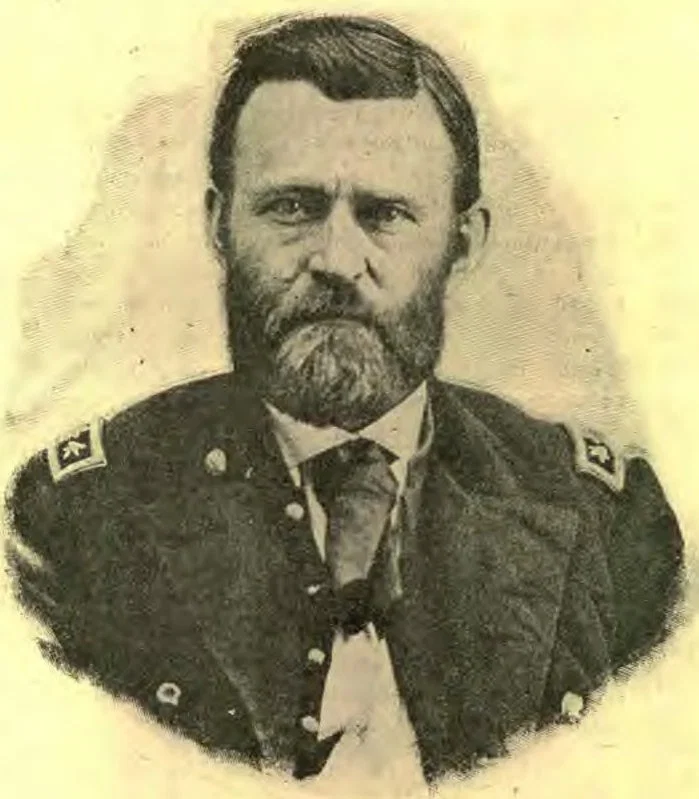
Abraham Lincoln was an earnest advocate of temperance. Total abstinence from both liquor and tobacco was part of his religion.
Grant, it is said, never defended their use, and promised his friend, the great-hearted president, that when the war was over, he would give up tobacco. This he never did, and the hero of many battles died at last a victim of nicotin.
Lincoln’s idea of temperance did not mean indulging even moderately in what is dangerous. He often defined temperance as “the moderate use of that which is good, and total abstinence from that which is evil.” He was very simple in all his habits of life, and set a good example in using the good things of life and not abusing them.
Temperance people who are strongly opposed to the use of liquor or tobacco need to be on their guard against other kinds of intemperance, as in eating, and especially in the use of stimulants like tea and coffee.
The boy who voluntarily gives up coffee, or anything else, because he does not wish to become a slave to the habit, shows his strong character by the act. This makes such a boy akin to Abraham Lincoln, and other heroes of the world, who were masters of their own appetites.
Among the many interesting stories that are told of Lincoln is one of his boyhood of great significance. This story ought to be told over and over, so that every boy in America would hear it, and heed it. Modern life gives the boys of to-day that which Lincoln did not have, but they miss much of the largeness, the breeziness, and the all-roundness of life that the boy Lincoln enjoyed. He lived in close touch with the great, strong, true things of nature, and they must have meant much to this boy of open eyes and open heart and open lungs. He had few books, but the few he had he mastered, and they helped him to think deep thoughts, even as a boy.
The good and noble appealed to him. It is not strange, therefore, that he took his stand for temperance when the question was first presented to him.
When Lincoln was a boy, almost every one drank, and temperance had less advocates than at present. Among those who were working for temperance in that early day was “Old Uncle John,” as he was called, who gathered the people together for meetings in the rough log schoolhouses of the sparsely settled communities in that section of the country. People came out of curiosity, but he often found little sympathy for his cause.
One long-to-be-remembered night he made his plea, ending with an invitation to come forward and sign the pledge. There was only one who moved, as the story goes. A tall and far from handsome boy got to his feet and came up the aisle. Even in that rough audience he made an ungainly appearance in his sadly outgrown clothes, coarse and too short. But a hush fell on the rough men as that boy, with determination in his face, stooped to write the name “Abraham Lincoln” on the pledge.
The work of that night lives in history. Lincoln always attributed much of his success in life to his temperance principles, and years afterward, when as president of the United States he had the pleasure of entertaining “Old Uncle John” in the White House, he said to him, “I owe more to you than to almost any one of whom I can think. If I had not signed the pledge with you in the days of my youthful temptation, I should probably have gone the way of a majority of my early companions who lived drunkard’s lives, and now are filling drunkard’s graves.”
Whatever the circumstances, there was never any letting down in Lincoln’s principles. When a candidate for president, his attitude was early shown by his cold-water reception of the committee appointed to notify him of his nomination. It was believed necessary to serve wine to the committee, and friends brought in wine and wineglasses. Lincoln thanked them for their intended kindness, but ordered it away at once, and called for a pitcher of water and glasses, saying, “We will drink to the fortunes of our party in the best beverage ever brewed for man.”
Those who wish truly to honor the memory of Lincoln will honor his memory by serving water only at Lincoln’s birthday banquets. In our nation, which is becoming sodden with drink, and nerveless through tobacco poison, no twelfth of February should be allowed to pass without a cold-water banquet to help emphasize the total abstinence principles of one whom all the world loves and honors.—Selected.

Keep a Clean Mouth

A DISTINGUISHED author says, “I resolved, when a child, never to use a word which I could not pronounce before my mother.” He kept his resolution, and became a pure-minded, noble, honored gentleman. His rule and example are worthy of imitation for every boy.
Boys readily learn a class of low, vulgar words and expressions which are never heard in respectable circles. Of course, we can not imagine a decent girl using words she would not utter before her father or teacher or most esteemed friend.
Such vulgarity is thought by some boys to be “smart,” the next thing to “swearing,” and yet “not so wicked;” but it is a habit which leads to profanity, and fills the mind with evil thoughts. It vulgarizes and degrades the soul, and prepares the way for many of the gross and fearful sins which now corrupt society.
Young readers, keep your mouths free from all impurity, and your “tongue from evil;” but in order to do this, ask Jesus to cleanse your heart and keep it clean; for “out of the abundance of the heart the mouth speaketh.”—Selected.

Sweetest Nuts Have Hardest Shells

“SWEETEST nuts have hardest shells.”

The Empty Vessel Makes the Greatest Sound

“THE empty vessel makes the greatest sound.”

An Incident for the Boys

At the head of an important department in one of the great stores in New York City is a man with an interesting history. His career affords a fine illustration of the kind of spirit that wins in the business world of to-day. Only a few years ago he appeared at this store as an applicant for a position. “No place for you,” gruffly said the manager. “But I’ve got to have a place,” persisted the man. “My family will starve unless I get something to do. Look at me. Things have gone against me, but through no fault of mine. Am I a decent-looking fellow?” “Yes, you are,” replied the manager, “but I have no place which I can give you.”
“But my wife and children are dependent upon me, and will soon be at the point of suffering unless I get work. Is there not some way in which I could be useful, and for which I could receive a sufficient amount with which to buy bread at least?” There was an earnestness of voice that made its appeal. “What are you willing to do?” said the manager. “Anything and everything,” replied our friend. “Well, I suppose I could give you a place as sort of lackey boy. You will have to do plenty of work, some of it very disagreeable, and your pay will be but six dollars a week.” “All right, sir, I’ll take the job, and I thank you for it.”
Thus humbly did he begin. He studied to make himself useful. He was one of the first to be on hand in the morning, and often lingered after close of hours to put everything in perfect order for the next day. He did not wait to be told what to do. He could not have taken a livelier interest had he been one of the proprietors. In a short time promotion came. After a few months he was put in charge of a delivery route. Some way he found time to do extra work. Every day he brought in new orders for goods. The increase of trade on his route attracted attention. Little by little he won his way until he was placed at the head of a most important department. For several years he has drawn a salary of eighteen thousand dollars a year. How silly the cry that there are no opportunities for young men in business! There were never better opportunities than now. Push, pluck, and a right spirit are the great needs, and are sure to win.—Rev. Wm. F. Anderson, in Epworth Herald.

Glorying in the Cross

There is nothing in which one should so glory as the cross of Jesus. It is the transcendent mystery of the atonement. On it Jesus died, and through that death there is fulness of saving grace to all who believe. Let the author glory in his book, the inventor in his machine, the business man in the success of some commodity, the scientist in the advancement of some pet theory, but with Thomas Bowning let us declare:—
“In the cross of Christ I glory, Towering o’er the wrecks of time; All the light of sacred story Gathers round its head sublime.”
The apostle Paul might have gloried in the fact that he was a Jew by birth, and related to Abraham. He might have gloried because he was a Roman citizen, and entitled to liberty; or he might have gloried in his education, being loaded down with the treasures of Eastern and classic lore, and having sat at Gamaliel’s feet; but he preferred to glory in the cross of Jesus, saying: “God forbid that I should glory save in the cross of our Lord Jesus Christ.” Gal. 6:14.
Why? you ask. Because it meant the love of God to him in the sacrifice of Jesus. When Luther was in doubt and darkness, Staupitz pointed him to the objective love and work of Jesus, and said: “Look to the wounds of Christ, Brother Martin, look to the wounds of Christ, and there you will see how God feels toward you.”
Not only to look, but to glory, means to cling always. “Simply to thy cross I cling,” is a song we often sing. During that awful fight at Santiago, Admiral Sampson saw a sight he related to some boys. He said: “It was Sunday morning; and we always have prayers on the admiral’s ship Sunday morning. The little reading desk, with the cross carved on it, was still standing on deck. We had gone into battle so hastily that no one had time to put the desk away. It was a little thing, easily moved about. So we sailed along, and there was death and destruction on the face of the waters. And the battle was won. But among the dead things and the burning things that floated on the water was a man swimming. He was a Spanish soldier, one of our enemies. He was making a struggle for life, but there was nothing near enough for him to cling to, and each stroke he made was fainter than the last. The shore was a long way off. According to the rules of war, we had no time to save his life; besides, he was our enemy. Some of us on that side of the ship watched the man curiously, wondering how long he would hold out. Then all of a sudden one of our sailors picked up that little reading desk, and pitched it over the side of the ship into the sea. ‘Here, friend,’ he cried, ‘cling to that! cling to the cross, and it’ll take you safe to shore!’ The Spaniard did not understand the English words, but the action was unmistakable; and the last we saw of him he was clinging to the cross and moving toward the shore.”
O, yes, dear ones! the cross of Jesus means more to us than anything else. Let us glory in it all the time, and cling to it as long as life lasts. With it we are safe, with it we learn day by day to appreciate him more who died upon it. Jesus! Jesus!
“The cross! the cross! the blood-stained cross! The hallow’d cross I see! Reminding me of precious blood That once was shed for me.
“By faith that blood now sweeps away My sins, as like a flood, Nor lets one guilty blemish stay; All praise to Jesus’ blood!”
WILLIAM PEARCE.

The Power and Splendor of Babylon During Nebuchadnezzar’s Reign

NEBUCHADNEZZAR was the greatest ruler of the age in which he lived. Ezekiel spoke of him as “a king of kings,” and prophesied that God would allow him to complete the destruction of Jerusalem, and that because the inhabitants of “the renowned city” of Tyre would say against Jerusalem, “Aha, she is broken that was the gates of the people: she is turned unto me: I shall be replenished, now she is laid waste,” God would “bring upon Tyrus Nebuchadnezzar king of Babylon,” “the terrible of the nations,” who would make this place “in the midst of the seas”; “a desolate city” that should be “built no more.” The prophet further declared: “Nebuchadnezzar king of Babylon caused his army to serve a great service against Tyrus: . . . yet he had no wages, nor his army; . . . therefore thus saith the Lord God: . . . I have given him the land of Egypt for his labor wherewith he served against it, because they wrought for me.”
The capital of Nebuchadnezzar’s world-empire is spoken of by Isaiah as “Babylon, the glory of kingdoms, the beauty of the Chaldee’s excellency,” “the golden city;” “the lady of the kingdoms” “that dwellest upon many waters, abundant in treasures;” and by Jeremiah as “the praise of the whole earth.” Jeremiah also speaks of “the broad walls of Babylon . . . and her high gates;” Isaiah, of her “gates of brass.”
Habakkuk describes the Babylonians as “that bitter and hasty nation, . . . terrible and dreadful. . . . Their horses also are swifter than leopards, and are more fierce than the evening wolves.” Jeremiah writes in regard to “the “mighty men of Babylon.”
Nebuchadnezzar was an instrument of God’s judgments. “Thus saith the Lord: . . . I have made the earth, the man and the beast that are upon the ground, by my great power and by my outstretched arm, and have given it unto whom it seemed meet unto me. And now have I given all these lands into the hand of Nebuchadnezzar the king of Babylon, my servant; and the beasts of the field have I given him also to serve him. And it shall come to pass, that the nation and kingdom which will not serve the same Nebuchadnezzar the king of Babylon, and that will not put their neck under the yoke of the king of Babylon, that nation will I punish, saith the Lord, with the sword, and with the famine, and with the pestilence, until I have consumed them by his hand. Therefore harken not ye to your prophets, nor to your diviners, nor to your dreamers, nor to your enchanters, nor to your sorcerers, which speak unto you, saying, Ye shall not serve the king of Babylon: for they prophesy a lie unto you, to remove you far from your land; and that I should drive you out, and ye should perish. But the nations that bring their neck under the yoke of the king of Babylon, and serve him, those will I let remain still in their own land, saith the Lord; and they shall till it, and dwell therein.”
The vision of the great image, in which Babylon was represented as the head of gold, was given Nebuchadnezzar in order that he might have a clear understanding in regard to the end of all things earthly, and also in regard to the setting up of God’s everlasting kingdom. Although in the interpretation he was declared to be “a king of kings,” this was because “the God of heaven” had given him “a kingdom, power, and strength, and glory.” His kingdom was universal, extending “wheresoever the children of men dwell,” yet it was to be followed by three other universal kingdoms, after which “the God of heaven” would “set up a kingdom,” which should “never be destroyed.”
In the providence of God, Nebuchadnezzar was given ample opportunity to ascribe to the Lord the glory for the splendor of his reign. And for a time after the vision of the great image, he acknowledged God as supreme. Falling back into idolatrous habits, he was again, by the miraculous deliverance of the three Hebrews from the fiery furnace, led to acknowledge that God’s “kingdom is an everlasting kingdom, and his dominion is from generation to generation.” But once more the king perverted the warnings God had given him, and turned aside from the path of humility to follow the imaginations of his naturally proud heart. Thinking that his kingdom should be more extensive and powerful than any that would follow, he made great additions to the city of Babylon, and gave himself up to a life of pleasure and self-glorification. Of this time he himself says: “I Nebuchadnezzar was at rest in mine house, and flourishing in my palace.” MRS. E. G. WHITE.

INTERMEDIATE LESSON

IV—Nebuchadnezzar’s Dream

(October 22)
LESSON SCRIPTURE: Dan. 2: 1-24.
MEMORY VERSE: “He giveth wisdom unto the wise, and knowledge to them that know understanding.” Verse 21, last part.
In the second year of his reign, Nebuchadnezzar “dreamed dreams, wherewith his spirit was troubled, and his sleep brake from him. Then the king commanded to call the magicians, and the astrologers, and the sorcerers, and the Chaldeans, for to show the king his dreams. So they came and stood before the king. And the king said unto them, I have dreamed a dream, and my spirit was troubled to know the dream.”
“Then spake the Chaldeans to the king, . . . O king, live forever: tell thy servants the dream, and we will show the interpretation. The king answered and said to the Chaldeans, The thing is gone from me: if ye will not make known unto me the dream, with the interpretation thereof, ye shall be cut in pieces, and your houses shall be made a dunghill. But if ye show the dream, and the interpretation thereof, ye shall receive of me gifts and rewards and great honor.”
Again the Chaldeans said: “Let the king tell his servants the dream, and we will show the interpretation of it.” Then the king was angry, and said: “I know of a certainty that ye would gain the time, because ye see the thing is gone from me. But if ye will not make known unto me the dream, there is but one decree for you: . . . therefore tell me the dream, and I shall know that you can show me the interpretation thereof.”
“The Chaldeans answered before the king, and said, There is not a man upon the earth that can show the king’s matter; therefore there is no king, lord, nor ruler, that asked such things at any magician, or astrologer, or Chaldean. And it is a rare thing that the king requireth, and there is none other that can show it before the king, except the gods, whose dwelling is not with flesh.”
“For this cause the king was angry and very furious, and commanded to destroy all the wise men of Babylon. And the decree went forth that the wise men should be slain; and they sought Daniel and his fellows to be slain.”
When Daniel learned of the decree, he said to Arioch, the king’s captain, “Why is the decree so hasty from the king? Then Arioch made the thing known to Daniel. Then Daniel went in, and desired of the king that he would give him time, and that he would show the king the interpretation. Then Daniel went to his house, and made the thing known to Hananiah, Mishael, and Azariah, his companions: that they would desire mercies of the God of heaven concerning this secret. . . .
“Then was the secret revealed unto Daniel in a night vision. . . . Daniel answered and said, Blessed be the name of God forever and ever: for wisdom and might are his: and he changeth the times and the seasons: he removeth kings and setteth up kings: he giveth wisdom unto the wise, and knowledge to them that know understanding: he revealeth the deep and secret things: he knoweth what is in the darkness, and the light dwelleth with him. I thank thee, and praise thee, O thou God of my fathers, who hast given me wisdom and might, and hast made known unto me now what we desired of thee: for thou hast now made known unto us the king’s matter.”

Questions

1. Whom did Nebuchadnezzar command to come to him? When they stood before him, what did he say?
2. What did the Chaldeans ask the king to do? How did he answer them? What reward did he offer if they would make the dream known to him? What did he threaten if they failed?
3. What answer did the Chaldeans again make? What did the king say they were trying to gain? What did he say he would know they were able to do if they could tell him the dream?
4. What kind of thing did the wise men say the king required? Who alone could reveal it? What decree did Nebuchadnezzar then send forth?
5. In carrying out this decree, who were sought among the other wise men? What did Daniel ask when he learned of the decree?
6. To whom did Daniel then go? What did he ask of the king? When his request had been granted, what did he and his three companions do?
7. How were their prayers answered? What did Daniel do before he went to the king to tell the dream and its meaning? Can you think of any lesson that we may learn from Daniel’s offering a prayer of praise and thanksgiving before he went to the king?

IV—Signs in the Heavens

(October 22)
MEMORY VERSE: “So likewise ye, when ye shall see all these things, know that he is near, even at the doors.” Matt. 24:33.

Questions

1. What question of the disciples indicated that they expected that there would be signs preceding the second coming of the Lord? Matt. 24:3.
2. What reply did Jesus make? Verses 29, 30; Luke 21:25–27.
3. By what convulsion of nature are these signs introduced? Rev. 6:12; note 1.
4. What sign was to appear in the sun? What was it to follow? Matt. 24:29.
5. Note how definitely Mark locates this sign. Mark 13:24.
6. What tribulation is here referred to? How was it shortened? Matt. 24:21, 22; note 2.
7. When did the darkening of the sun occur? Describe this event. Note 3.
8. What sign followed next in order? Matt. 24:29; note 4.
9. What sign was to be seen in the stars? Verse 29.
10. When was this fulfilled? Note 5.
11. How vividly is this event described by the prophet on Patmos? Rev. 6:13.
12. What occurrence in nature illustrates what we are to understand by these signs? Matt. 24:32, 33.
13. How near will be the coming of the Lord when these signs are fulfilled? Verse 34.
14. How positive are we that his word will not fail? Verse 35.
15. What are we who live in the time when these signs have been fulfilled exhorted to do? Verses 42, 44.

Notes

1. This is doubtless the great earthquake of Nov. 1, 1755, known as the “Lisbon earthquake.” It extended over a tract of land of four million of square miles. Europe, Africa, America, the West Indies, and as far north as Greenland felt its effects. Mountains were shaken to their foundations, and ninety thousand persons are said to have perished in Lisbon alone. One writer says, “The terror of the people was beyond description. Nobody wept; it was beyond tears.”
2. The tribulation here mentioned is that of the Dark Ages caused by the papal supremacy. It began in A. D. 538, when the decree of Emperor Justinian went into effect, which made the pope the head of the church and the corrector of heretics, and ended at the close of the prophetic period of 1260 years (Dan. 7:25) in A. D. 1798. The days ended in 1798, the persecution, because of the Reformation, was shortened about twenty years. This sign was to be in those days, but after the persecution.
3. Webster’s Dictionary, edition 1869, says: “The dark day, May 19, 1780—so called on account of a remarkable darkness on that day extending over all New England. . . . The true cause of this remarkable phenomenon is not known.”
“The dark day in northern America was one of those wonderful phenomena of nature which will always be read of with interest, but which philosophy is at a loss to explain.” Herschel.
“The 19th of May, in the year 1780, I well remember. I was then in my sixteenth year. The morning was clear and pleasant, but somewhere about eight o’clock, my father came into the house, and said there was an uncommon appearance in the sun. There were not any clouds, but the air was thick, having a smoky appearance, and the sun shone with a pale and yellowish hue, but kept growing darker and darker, until it was hid from sight. At noon we lit a candle, but it did not give light as in the night, and my father could not see to read with two candles.”—Milo Bostwick, Camden, N. J., March 3, 1848.
4. “At eight o’clock in the evening, the darkness was so impenetrably thick as to render traveling positively impracticable; and although the moon rose nearly full about nine o’clock, yet it did not give light enough to enable a person to distinguish between the heavens and the earth.”—“Great Events of the Greatest Century,” page 44.
“A great part of the following night also (May 19, 1780) was singularly dark. The moon, though in the full, gave no light, as in our text.”—Sermon by Rev. Elam Potter, May 28, 1780.
5. “But the most sublime phenomenon of shooting stars, of which the world has furnished any record, was witnessed through the United States on the morning of the 13th of November, 1833. The entire extent of this astonishing exhibition has not been precisely ascertained; but it covered no inconsiderable portion of the earth’s surface. . . . The first appearance was that of fireworks of the most imposing grandeur, covering the entire vault of heaven with myriads of fire-balls, resembling sky-rockets. Their coruscations were bright, gleaming, and incessant, and they fell thick as the flakes in the early snows of December. To the splendors of this celestial exhibition the most brilliant sky-rocket and fireworks of art bear less relation than the twinkling of the most tiny star to the broad glare of the sun. The whole heavens seemed in motion, and suggested to some the awful grandeur of the image employed in the Apocalypse, upon the opening of the sixth seal, when ‘the stars of heaven fell unto the earth, even as a fig-tree casteth her untimely figs, when she is shaken of a mighty wind.’”—Burritt’s Geography of the Heavens, page 163, ed. 1854.
“Soon our eyes were drawn to the east, for a small black cloud had appeared, about half as large as a man’s hand, which we all knew was the sign of the Son of man.”—“Early Writings,” page 11.

If True, Why?

FREQUENTLY have I heard it remarked by a strong young man that there is no place in our work for the young men. Even after spending years in preparation, he says, the conference gives them nothing to do. He is a young man who has a love for the truth, and yet he sees not the opportunities before him, or at least fails to realize that he is a part of the conference, and that he should therefore see to getting himself work, and work that will directly result in the spread of the third angel’s message. The men who are now bearing heavy responsibilities in the cause of God are chiefly men who have set themselves to work.
I do not say this, thinking the conference has no responsibility to provide work for the young people; for it certainly is one of the most imperative duties and especial privileges of every conference to see that all the consecrated, willing young persons are wisely and helpfully encouraged to enlist for life in the work of spreading this truth. But because the conference fails to give one a salaried position, is he released from obedience to the Lord’s command, “Go work to-day in my vineyard”?

A Possible Reason

Without doubt there is some good reason why the conference does not provide immediate work for all of its young people. It is possible that some may have ability sufficient for good service, yet possess traits of character that it is feared will witness against the cause of Christ. Let the young people think of this point, and let the harsher judgment fall upon themselves rather than upon the conference. Some are conscious of such traits, and yet complain because the conference does not place them in responsible positions. There is power in God to remove quickly every known hindering trait from the character; then why not lay hold of this power at once? After the accomplishment of this work, could not one look to the conference for help with greater confidence?
The cause of God is calling loudly for workers. The canvasser has a wide field for sowing seeds of truth. Why should not young men and women delight in this work? The pages of literature must be scattered like the leaves of autumn, and if our young people do not take hold of the work, God will raise up those not of our faith who will do it. The Saviour’s words to the Pharisees are suggestive: “If these should hold their peace, the stones would immediately cry out.”
An experience related in a recent Atlantic Union Gleaner may suffice for an admonition on this subject:—
“About three weeks ago I received a letter from a young man who wished to canvass for one of our books. The young man is not of our faith. He is a member of the Lutheran Church, and is desirous of studying for the ministry; but as he has no means but that which he earns now as a grocery salesman, he was seeking something to help him out. This young man had read ‘Prophecies of Jesus,’ and thought that work would just suit him, as it seemed to be in harmony with the Lutheran faith. As this book can not now be secured, I showed the young man a prospectus for ‘Bible Readings,’ and he was at once attracted by it. He studied the canvass, and was ready for work in a very few days. As he intended to work among his own church people, I thought best to let him go out alone after giving him some private instruction. The first report sent in showed that he had taken six orders in two half-days, and the next one showed a total of $46.50 for about twenty-two hours’ work, and the young man thinks he can do still better. He is placing his books in many homes where a regular canvasser would not be admitted, and these books may be a means of bringing many into the kingdom of God. It may be that his own soul will be watered, and he may imbibe the truth contained in his work.”

Hardships a Delight

Notwithstanding all the hardships, inconveniences, and unpleasantness incident to the canvassing work, sweet is the experience of the consecrated worker as he finds here and there one whose mind and heart is all ready for the light of truth. He often realizes the direct guidance of the angels of God as he meets these very persons. A few experiences like the one related recently by a worker in Dakota would certainly so eclipse the rebuffs and hardships that come to the canvasser that he could honestly say, with the apostle Paul, “I take pleasure in infirmities, in reproaches, in necessities, in persecutions, in distresses for Christ’s sake.” The young man says:—
“While canvassing south of Hurley, I came to the home of the mother of several bright children, and, of course, immediately introduced my work. She was very much interested in the truth the books contained, and asked if I was not an Adventist, and the books I was selling Adventist books. I answered in the affirmative, and she then asked if we were the people that kept Saturday for Sunday. I said that we were the people who kept Saturday for the Sabbath. This led to a study of the Sabbath question. After a study, which lasted some time, she said that she had often wondered, while studying her Bible, how the law of God, which is unchangeable, could be abolished. I read her Isa. 42:21, and like texts. She said, ‘Surely Sunday is the Sabbath of the New Testament. If I find that the New Testament upholds the Old in this, I will obey.’ I read her Luke 23:54-56 and 24:1, remarking that the preparation day spoken of there is the same day that is solemnized as Good Friday now, and the first day of the week as Easter Sunday, and also that the Bible says that the day intervening is the Sabbath day, according to the commandment which says the seventh day is the Sabbath. She then studied further with me, but took my side after that. She told me that if she found this was what the Bible taught, her conscience wouldn’t allow her to do anything but obey the command of God.”
“I have been there since, and when I last called, she was deeply interested in the study of the truth; and I am very sure she will soon take a decided stand for the right.”
May the importance of the last lingering hours of earth’s probation constrain every one who believes the third angel’s message to earnest work for the cause of truth.

Our Little Folks' Bible Nature Book Published

A NEW book, “Our Little Folks’ Bible Nature,” by Mrs. Ella King Sanders, has recently been published by the Review and Herald Office. This book will be welcomed by the church-school teachers as an aid in their work for the little people; for it is far superior to anything our offices hitherto have offered the teachers. It is attractively printed and illustrated, and when combined with the necessary blackboard and oral work, will render pleasant and effective service to the little knowledge seekers.
Continue reading: He Meant Business