The Youth’s Instructor, Vol. 33, No. 20.

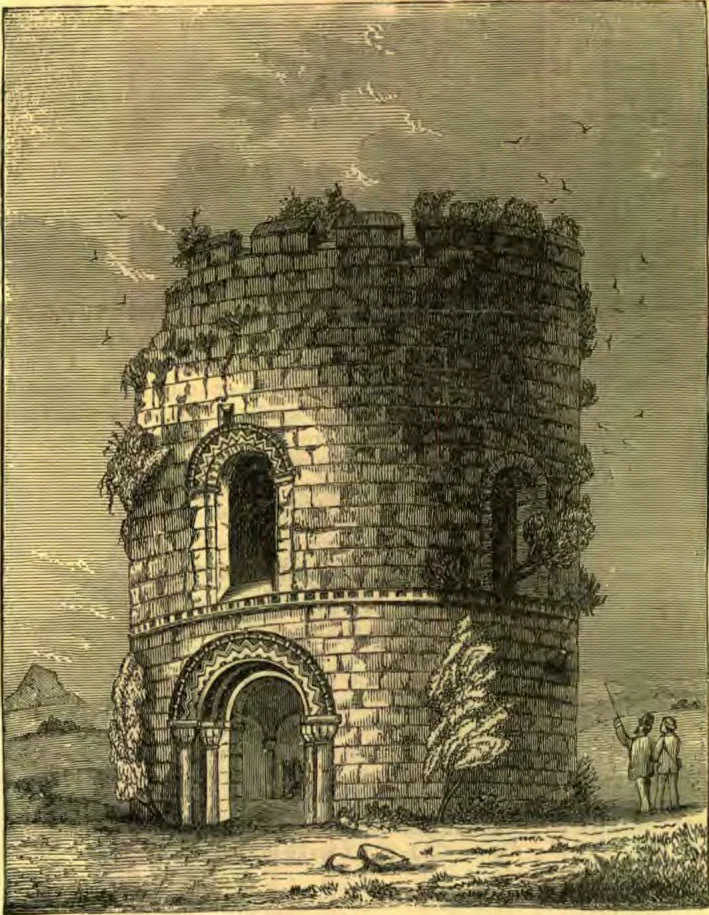
Ludlow Castle

The Youth’s Instructor

Jun 3, 1885

S. D. A. Publishing Association · Battle Creek, Mich. · Jun 3, 1885

Ludlow Castle.

In the town of Ludlow, England, there stands on a rocky eminence the ruins of what was once a fine castle. It was built soon after the Conquest, by Roger de Montgomery, and after him, was held at different times by the great lords of the kingdom.
When Edward IV. was king, he repaired Ludlow castle, and fitted it up as the palace of the Prince of Wales. Here was held the Court of the Marches, where the Lords Presidents met to counsel together over the affairs of the kingdom. The little Prince Edward lived in this castle with his uncle, Lord Rivers, who directed his studies and his plays according to the king’s commandment. When he sat at meat, it was ordered “that there be read before him noble stories, as behoveth a prince to understand; and that the communication at all times, in his presence, be of virtue, honor, knowledge, wisdom, and deeds of worship, and nothing that shall move him to vice.”
I imagine that in some of the rooms of this old castle the little prince must have done some very hard studying, for there is no royal road to learning. And he got tired of his lessons, the same as boys do now, and wished he could go and play. No doubt he often looked off from his books, through the deep windows, to the uplands and glades, and the long stretch of woods that everywhere spread out from the castle. May be he sometimes was allowed to go on a hunt in these wild, dark woods with the lords and nobles.
But he did not live in Ludlow very long. When he was twelve years old, his father, King Edward, died; and here in this castle the little prince was first proclaimed king, under the title of Edward V. He was a very young child to have the cares of the kingdom thrust upon him. On his dying bed, the king looked around on his courtiers standing by, and said, “If you among yourselves, in a child’s reign, fall at debate, many a good man shall perish, and haply he too, and ye too, ere this land shall find peace again.” But when the grand funeral was over, and the lords settled down again to the business of the kingdom, they forgot all about the king’s advice, and fell to quarrelling. In three months from the time the prince was proclaimed king, he and his brother Richard, Duke of York, very mysteriously disappeared. It is believed that their uncle Richard, Duke of York, who was a very ambitious and cruel man, and wanted to be king himself, had these two little brothers killed. At any rate, he met the prince in company with Lord Rivers and Lord Gray, on their way to the coronation; and after professing to have great love for his little nephew, and great anxiety for his safety, he sent the two lords back on some pretext, and they never saw Edward again. The Duke said the young king would be a great deal safer in the Tower; so he shut him up there, and that was the last people saw of him. A great many lords died very suddenly and mysteriously while Richard, Duke of York, was king.
This town of Ludlow, where the prince spent a part of his short life, is very charming. It stands on a knoll; and to the westward, on a steep line of rocks, rise the gray towers of Ludlow castle. The one shown in our picture is the Round Tower. As far as the eye can see, stretches a

HOW RAIN SAVED AN ARMY.

Ned came in from the office with the evening mail, shaking the water from coat and hat as a great Newfoundland dog would shake his shaggy coat on coming out of the water.
“Why! does it rain?” asked Lou, looking up from the book which had absorbed her thoughts for the last half hour.
“Indeed, it does; the creek is rising, too; we shall soon have a raging torrent at the foot of the hill!”
“Well, there’s no army waiting to cross,” returned Lou.
“What do you mean?” asked Ned, handing the letters to his father.
“Oh, I was only thinking of the time when a rain saved an army,” replied she. “I don’t suppose that a hundred years or so from now it will be known or be of interest that it rains to-night. But the fact that it rained on that twenty-eighth of January, 1781, is one of the things set down in history as important.”
“Just tell me about it,” said Ned.
“I am afraid you are a lazy fellow,” said his father.
“You seem to make Lou do a great deal of reading up for your benefit.”
“O, no, father! Lou does it for her own benefit, and it is really pure benevolence on my part to let her talk.”
“Well, you remember that after General Gates had won a reputation by the capture of Burgoyne, and the defeat of the British army at Saratoga, he was given the command of the Southern department; but only to suffer defeats and misfortunes. He was superseded by General Greene, who speedily rallied and reorganized the army, which he found greatly reduced in numbers. One division of his army defeated the British at Cowpens; but finding that he had so few men in comparison with the army of Cornwallis, he decided to retreat to Virginia, to save the remnant, and seek reinforcements. On the twenty-eighth of January, he reached and crossed the Catawba, getting safely over with all his baggage. Cornwallis was only two hours later in arriving at the ford; but as it was now nightfall, he concluded to wait and cross by daylight, having no doubt of being able to capture Greene’s army. But during the night a perfect torrent of rain fell, so that in the morning the discomfited General looked out upon a river swollen and unfordable. And it was a fortnight before he could cross with his army. Then, the roads having become only partly settled, the two armies began a race of sixty miles for the Yadkin. Again Greene came out ahead, and again Cornwallis was delayed by a rain which came up just as he was about to cross. However, by leading his army up the river about twenty-five miles to a shallow place, he succeeded in crossing, and the third race began. The two armies were on parallel roads only twenty-five miles apart; but Greene came out ahead, and reached Virginia, where he was reinforced.”
“Was not Greene the general of whom it has been said that all his defeats had the effect of victories?” interrupted Ned.
“Yes; and I believe he never gained a decided victory. At Guilford Court House the raw recruits broke line, and fled at the first fire; and this caused great confusion. The Americans were forced to retreat after some hard fighting; but Cornwallis was so badly cut up that he also retreated. The battle of the Eutaw Springs is called the hardest fought battle of the war, and there, as before, Greene failed of a decisive and complete victory only by the folly of some of his soldiers; but the enemy were so crippled that they retreated.”
“This was during the last year of the war?”
“It was almost the end. This engagement closed the Southern campaign.”
For a few moments, Ned busied himself in tracing out the plan of the campaign on a small map. Presently Lou said:—
“I have read two or three amusing anecdotes connected with this Southern campaign. At Cowpens, Morgan was attacked by the British under Tarleton. The attack was fierce, but the Americans stood well, and at a crisis of the battle, the cavalry under Colonel William Washington made a furious onset, and routed the British dragoons. During the assault, Tarleton and Colonel Washington had a personal encounter, in which Tarleton was wounded. Long after, the British officer remarked to a lady that he had understood that Colonel Washington was very illiterate, that he could not even write his name. To this the lady replied, ‘Well, Colonel, you bear evidence that he can at least make his mark!’”
“And another time Tarleton said he would like to see Colonel Washington; and the same lady remarked, ‘If you had looked behind you at Cowpens, you might have seen him.’”
“She was witty!” said Ned, laughing. “Do you know whether this Colonel Washington was of George Washington’s family?”
“He was, I think, a distant relative. But the funniest thing is the story of an American soldier at Eutaw Springs, who was rushing headlong in the flying pursuit of the retreating British. He suddenly found himself ahead of his comrades, and surrounded by the British. Of course he expected to be killed or taken prisoner; at least he would have thought so if he had taken time to think. But he seized a British officer by the collar, and wrested his sword from him; then, keeping the officer between himself and the enemy, he backed off. The enemy would not fire upon their own officer, and so he was pretty sure of escaping. The British officer stormed, and began to get off a string of titles, saying, I am Sir this and that, giving his rank in the army, and his title at home. The American said, ‘Exactly! you are just the man I was looking for!’”
“But,” said Ned, with a puzzled expression, “I don’t see how it was; I thought it was sometime in the latter part of the summer that Cornwallis was shut up in Yorktown; I don’t understand how he came to be there. Eutaw Springs is away down in South Carolina.”
“Oh, Cornwallis did not command at Eutaw Springs! Stuart was the British commander there. From Guilford Court House, Cornwallis retreated to Wilmington, and from thence went to Petersburg, and took Arnold’s place, ravaging the country about until there was nothing left to destroy; then he took himself into Yorktown, and fortified it. At first he intended to fortify Portsmouth, but Clinton ordered otherwise.”
“And then the end came.”
“Yes. October 19, 1781.”—The Pansy.

SUNRISE ON THE HILLS.

I STOOD upon the hills, when heaven's wide arch Was glorious with the sun's returning march, And woods were brightened, and soft gales Went forth to kiss the sun-clad vales. The clouds were far beneath me; bathed in light, They gathered midway round the rocky height, And, in their fading glory, shone Like hosts in battle overthrown, As many a pinnacle, with shifting glance, Through the gray mist thrust up its shattered lance, And rocking on the cliff was left The dark pine, blasted, bare, and cleft. The vale of cloud was lifted, and below Glowed the rich valley, and the river's flow Was darkened by the forest's shade, Or glistened in the white cascade, Where upward, in the mellow blush of day The noisy bittern wheeled his spiral way.
I heard the distant waters dash, I saw the current whirl and flash, And richly, by the blue lake's silver beach, The woods were bending with a silent reach. Then o'er the vale, with gentle swell, The music of the village bell Came sweetly to the echo-giving hills; And the wild horn, whose voice the woodland fills, Was ringing to the merry shout, That faint and far the glen sent out, Where, answering to the sudden shot, thin smoke Through thick-leaved branches from the dingle broke.
If thou art worn and hard beset With sorrows, that thou wouldst forget, If thou wouldst read a lesson, that will keep Thy heart from fainting and thy soul from sleep, Go to the woods and hills! No tears Dim the sweet look that Nature wears.
—Longfellow.

Hills, Valleys, and the River Teme

beautiful view of hills, vales, and forests; while in a little valley flows the Teme, one of the “prettiest and tiniest of rivers,” running through a deep ravine that cuts off the knoll on which stands the town. W. E. L.

CÆSAR DUCORNET, THE WONDERFUL CRIPPLE.

Cæsar Ducornet was born without arms, and in that helpless state grew up under the care of his parents, who were poor shoe-makers, and lived in the town of Lisle. Little Cæsar, finding he had no arms, began very early to make use of his feet. His legs were very short, and on each foot he had but four toes; yet he managed to throw a ball, cut with a knife, and draw lines on the floor with chalk.
One day he was found with a pen between his toes, trying to write the alphabet on paper. This fact was mentioned to an old writing-master, who was so pleased with the boy’s efforts, that he offered to teach him to write. The offer was accepted, and in one year the armless Cæsar wrote better than any boy in the old writing-master’s school, and every soul cried out, “Well done!” Having thus reached the head of the writing-class, Cæsar tried his best with his foot at drawing. He covered his copy-book with sketches and designs, which were so striking as to attract the attention of an artist. He got him admitted into the Academy of Design, where, in a few years, he won the highest prize in all the classes through which he passed. Then the people all cried out, “Well done!” They were proud of the boy who painted without arms. Cæsar now adopted painting as his profession. His pictures and portraits were in great demand; his works were placed in churches and galleries. Some of them were of great merit, as well as of large size, and are still carefully preserved. But how he could paint such pictures is marvelous, for he was not only armless but thighless, his short legs being closely united to the trunk. Well, by one of his feet he held a palette, by the other a pencil; in his mouth, also, he carried a large brush and a second pencil, and with all this apparatus he moved and twisted about like a lamp-lighter.
Thus did this wonderful man conquer his difficulties. For thirty years he toiled on in this way, until his feet were struck with paralysis. He died in the arms of his father, on April 20, 1836.—S. S. Classmate.

CURIOSITY

JIMMY GLENN was walking slowly forward, not noticing his progress at all, for he was trying to pry into a note which his father had sent him to deliver. Since he did not wish to disturb the seal, he was holding it so that he could read a few of the words, hoping to be able to guess the rest. He was roused from this by Uncle Sandy, an old gentleman well known to the entire neighborhood.
“For shame! to use for such a purpose one of the faculties God gave you.”
“Jimmy started, blushed scarlet, then said: “Why, Uncle Sandy, God didn’t make my curiosity. I never got it from him.”
“Then where did it come from?” was the reply. “No human being possesses a faculty that God did not create. All faculties have their proper uses; they are only wrong when we allow them to grow in the wrong direction.”
“How am I to use my curiosity in a proper way?” asked Jimmy.
“I can best answer your question,” replied Uncle Sandy, “by giving you a bit of history. There was a time when men wished much to know what could be found beyond the great world of waters. Columbus and his men, in the face of great danger, sought an answer to that question. This was not wrong, it was no forbidden secret into which they pried; any one who patiently sought the answer in the right way might find it.
“If our Maker gave us a faculty but poorly developed, it becomes our duty to cultivate it,” answered Uncle Sandy. “Many times a faculty seems excessively developed because we apply it to wrong purposes. Curiosity is merely a desire to know. Suppose you apply it, in future, to the finding out of useful things; your lessons, for instance. How would that do?”
Jimmy only blushed. After a few moments he added: “But, Uncle Sandy, I can’t feel that God gave us all these bad faculties; there’s anger, hate, jealousy.”
“God made us with noble faculties only; if we apply them to the wrong objects they become ignoble. There will come a time when he will ask us to account for the use of each talent. It will be well for us if we can then show that we used our curiosity for a useful purpose.”
“What with love?”
“If it has helped us to minister to our fellow-men and to regard them as brothers, children of the same Father, that will give us no regret.”
“What with hate?”
“If we have learned to hate sin and the evil one, the direction in which we have used this faculty will bring us joy.”—S. S. Classmate.

TWO INCIDENTS ILLUSTRATING LINCOLN'S HONESTY.

I PRESUME there are not many of the INSTRUCTOR family who have not heard over and over again the old proverb, “Honesty is the best policy.” While I cannot find this proverb in the Bible, I see that it is full of advice in regard to being honest and having an honest report. This is what we should strive to have. You don't see how Judas could betray his Lord, and I do not think he would have done it had it not been for his one great fault, the love of money, which caused him to be dishonest.
I think that Abraham Lincoln must have believed this old proverb, and tried to live it out in his daily life; and that you may know why I think so, I will tell you two short stories I have read of his honesty.
Once, while clerking in a store at New Salem, Ill., he sold a woman a small bill of goods, which, according to his reckoning, came to two dollars and six and a quarter cents. He received the money, and the woman went home. On looking over the bill again, to make himself sure of correctness, he found that he had taken six and a quarter cents too much. It was night, and, closing and locking the store, he started out on foot, a distance of two or three miles, for the house of his defrauded customer; and delivering over to her the sum whose possession had so much troubled him, he went home satisfied.
On another occasion, just as he was closing the store, a woman entered, and asked for a half pound of tea. The tea was weighed out and paid for, and the store was left for the night. The next morning, Lincoln entered, to begin the duties of the day, when he discovered a four ounce weight on the scales. He saw at once that he had made a mistake, and, shutting the store, he took a long walk before breakfast to deliver the remainder of the tea.
These are very humble incidents, but they illustrate the man's perfect conscientiousness—his sensitive honesty—better perhaps than they would if they were of greater moment. We cannot all be presidents of the United States; but we can be honest, for “honesty is the best policy.” LUCY H. CANRIGHT.

RIGHT, NOT PRIVILEGE.

EVERY boy who has read “Tom Brown at Rugby” admires the hero’s sturdy independence, his scorn of a falsehood, and his love of out-door sports. But every honest reader of the book feels that the most manly part of Tom’s character is disclosed in the scene where he kneels down in the face of the whole dormitory of boys, and says his prayers.
The scene has been repeated in other schools since then. But every boy who has had the courage to pray openly, when he knew he ought, can testify that it was one of the hardest things he ever did. There are several ways of doing this reverential act. It may be made unnecessarily demonstrative, or it may be performed so as to extort the respect of the boys.
In a large and respectable school near Boston, two boys, from different States, and strangers to each other, were compelled by circumstances to room together. It was the beginning of the term, and the two students spent the first day in arranging their room, and getting acquainted.
When night came, the younger of the boys asked the other if he did not think it would be a good idea to close the day with a short reading from the Bible, and a prayer. The request was modestly made, without whining or cant of any kind. The other boy, however, bluntly refused to listen to the proposal.
“Then you’ll have no objection if I pray by myself, I suppose?” said the younger. “It has been my custom, and I wish to keep it up.”
“I don’t want any praying in this room, and I won’t have it!” retorted his companion.
The younger boy rose slowly, walked to the middle of the room, and standing upon a seam in the carpet which divided the room nearly equally, said quietly,—
“Half of this room is mine. I pay for it. You may choose which half you will have. I will take the other, and I will pray in that half, or get another room. But pray I must and will, whether you consent or refuse.”
The older boy was instantly conquered. To this day, he admires the sturdy independence which claimed as a right what he had boorishly denied as a privilege. A Christian might as well ask leave to breathe, as to ask permission to pray. There is a false sentiment connected with Christian actions which interferes with their free exercise. If there is anything to be admired, it is the manliness which knows the right and dares to do it, without asking any one’s permission.—The Youth’s Companion.

FOR TWO LITTLE GIRLS ONLY.

THERE is a story told of a minister who said in his pulpit, “I see before me a woman who neglects her family, spending too much of her time in gossiping around the neighborhood. I will throw my hymn-book at her.” And as he pretended to take aim, every woman in the congregation dodged.
There is an older story and a truer one, and one which can never provoke a smile, it is so sad, about our Lord’s sitting at supper with his disciples and saying, “One of you shall betray me. And they began to be sorrowful, and to say unto him, one by one, Is it I?”
Each one of them knew his own weakness as well as each one of us knows that we have done things in careless moments that we may well be ashamed of having done.
I went last Sabbath to a certain church for the first time, especially to hear its popular pastor preach; but the sermon was as nearly as possible spoiled; for in the pew before me were two little silly, whispering, giggling girls. They had so much to say to each other that I am sure they had not met before within a week, so they could not have been sisters.
They must have mothers, for each one was so well dressed that I felt sure a mother’s all-observing eye had inspected their toilets. But I think their mothers could not have expected that the church manners of these little girls would be so much below their dress.
They compared library-books, and of course rustled the leaves. They had but one fan between them (although I do not think the thermometer would have registered in that pew more than eighty degrees), and this fan was used with diligence by one, while the other waited with impatience for her turn to flutter.
They were in the midst of a throng of worshipers, and they distracted the attention of a number of them.
It is touching the lowest and weakest of motives to ask you, dear little girls, was it nothing to make yourselves so conspicuous by your thoughtlessness that every grown person who was annoyed will recall that hour so miserably spent by you whenever you come before their eyes? What Mrs. S. — said and what Mr. T. — thought about you is something.
But higher than that. Do you think it a small thing to have broken a prayer, to have wrangled over your fan between persons so eager to listen, and the preacher giving them beautiful thoughts to comfort and to help them?
And higher yet, to reach for a motive for different behavior next Sunday. You were in the house of God, where we believe his Spirit meets us in the hours sacred to his worship. He saw you if you did not see him. You were forgetful of his loving presence, were you not? although so many times you have heard, “The Lord is in his holy temple; let all the earth keep silence before him;” and, “Where two or three are gathered together in my name, there am I in the midst of them.”—Child’s Paper.

A DANGEROUS REPTILE.

There is a species of serpent that is found in all parts of the known world; its home is not so much in the jungle and wilderness as one might suppose. It visits the haunts of men, showing that it is of a social nature; cities, villages, and sparsely populated neighborhoods, each and all claim its attention. Its form is often so beautiful that it becomes a household pet; and it is flattered and caressed as much as the most honored guest. It is found among the first circles of society, dazzling all with its brilliant mask, and alluring with its specious wiles the most unwary; the fairest forms, the purest characters, are chosen to satisfy its craving and demoralized appetite.
It certainly does hiss long and loud; but never until it has struck its poisonous fangs to the very heart. The best physicians have failed to find an antidote for its venom. Unlike that of most poisonous reptiles, its bite does not produce immediate death; but the victim lingers along, it may be, for years, often suffering the most excruciating torture.
It causes more tears, more heartaches, more bloodshed, than any other living creature.
Would you see this serpent in its ugliest mood? Visit the knots of men that are gathered upon the street corners, the tavern steps, at the store and post-office. It is always there. If you wish to behold it in its most attractive form, go to the sewing circle, the afternoon tea party, the evening social, and see what a smooth tongue it has. You will never think, unless on your guard, how poisonous are the well-rounded sentences, that frequently end with, “but—I was going to tell you something I heard, but I guess I won’t, unless you’ll promise not to tell who gave you the information. For of course I don’t want to be mixed up with the affair.”
The name of this serpent—this honored but dishonorable friend, is—SLANDER.—Cottage Hearth.

Virtue Is Something Sterling

VIRTUE is something sterling, that will stay When gold and silver fly away.

THE LATE-TO-SABBATH-SCHOOL FAMILY.

The other day I stopped with a family who have numerous relatives throughout the country. I have met some of them in most every church which I have visited. So I thought it might be well to tell what I know of them, as their relatives in other places, perhaps, would like to hear from them. They are a religious family; most of them are members of the church, and all read the INSTRUCTOR, and belong to the Sabbath-school. As I know that they will read this, I shall be careful to say nothing about them but the truth. All the members of this family, wherever they live, or whatever their circumstances are, whether they are rich or poor, young or old, whether they live in the country or in the village, resemble each other remarkably in one respect. I will describe them, and let the children guess what it is.
Their family name is Late-to-Sabbath-School. I have heard that some of the family do not like the name, and have thought several times of petitioning the Legislature to have it changed; but they were always just a little too late to have it attended to.
I stopped a few days with them awhile ago. Generally they are quite a social people, and love to talk and visit Sabbath evening. I suggested that we get the Sabbath-school lesson; but each one seemed to be busy about something else. The husband, whose given name was No-Interest, was rather sleepy that evening; so he did not take much interest in it; and their eldest child, a bright girl of twelve years, whose name was Don't-Care, was very busy reading a book, and did not seem to care much about it. Their boy, a smart little fellow of nine years, whom they called Absent-Mind, lay on the floor, playing with the cat. I asked him to bring me the INSTRUCTOR; but he had left it somewhere, and could not find it. Mrs. Late-to-Sabbath-School said they would have to get up early in the morning, and get their lessons.
The first thing I heard Sabbath morning was the mother saying, “Here, No-Interest, I declare, it is seven o’clock, and no one out of bed yet. We must get right up and get things to going, or we shall be late again to Sabbath-school; now you get up and build the fire, and I will call the children.”
After stretching and yawning, No-Interest got out of bed; while the mother called, “Don't-Care! Don't-Care! come, now, it is getting late; get right up and call Absent-Mind. You know you have got to get your Sabbath-school lesson, and we want to be on time to-day. Do you hear?”
A faint answer was heard upstairs, indicating that somebody was partially awake. Then all was silent again for half an hour, when the same thing was gone through with again, only in a little sharper tone. This time she added, “Now if you don't get right up, I will come up there and see to you.”
This brought them down stairs, but not in the best frame of mind. It took quite a long while for them to dress. Absent-Mind got his pants on wrong side to, and then couldn't find one of his stockings, and finally declared that the cat must have carried it off. His mother had to spend several minutes hunting up his things. Don't-Care, when about half dressed, became absorbed in a book again. Her father said, “Daughter, you ought to finish dressing, and get your Sabbath-school lesson.”
She replied, “I don't care if I don't have it. It's an awful hard one. I don't see what they make them so long for.”
“There, that will do,” said the father. “Now, children, wash yourselves, or you will be late to Sabbath-school.”
At eight o'clock, breakfast was ready. After breakfast, the mother said, “Now, husband, it is getting late, and we have so much to do, let us have prayers short this morning.” So a short psalm was read, and a few words of prayer were offered, and then there was hurrying to and fro. Mrs. Late-to-Sabbath-School seemed to have the whole burden of the family on her shoulders.
“Come, now, No-Interest, you sit down and teach the children their lessons.”
“Oh, I have no time. I have got to change my clothes. You will have to see to them,” he replied.
“That is always the way it is. You do not take any interest in their lessons; yet you scold if they do not have them well. I think if there is any one who ought to set an example, and see that the children have their lessons, it is you,” said the mother.
He made no reply, but took his hat and went out to the barn. Then she turned to the children, and said, “Now, children, you get your lesson book, and sit right down there and learn your lesson the first thing you do. I don't want you to go to Sabbath-school, and have people say that you do not know anything.”
“I can't get the old lesson,” said the little girl. “I don't see what is the use of it. Besides, I have got to dress.”
“Well, then, be about it,” said the mother. “Come now, Absent-Mind, get your things on, and I will try and find a few minutes to sit down with you.”
Soon after, I heard a voice calling, “Ma, ma, where is my jacket? I can't find it.”
“It is where you put it, I suppose,” was the answer. “Hunt it up, or you will have to go without it.”
By and by I heard some one calling again, “Ma, ma, Absent-Mind is not dressing at all, but is bothering me. Can't she stop?”
At this, Mrs. Late-to-Sabbath-School went upstairs, and straightened things out rather quickly; and as she came down with the children, she said, “There, now, sit down there and get your lessons, and don't let me hear anything more from you.”
There was some very hard studying done then for about twenty minutes. The mental strain was so great that Absent-Mind had to relieve himself once in a while by pulling the cat's tail, and Don't-Care took a rest to re-arrange her curls.
At half past nine, Bro. Late-to-Sabbath-School announced, “The team is ready. All aboard!” Then there was hunting for hats, caps, and baskets, and the mother said, “We ought to have been off twenty minutes ago; we shall be late again. Come, now, children, no more playing there. Absent-Mind, if you don't do as I tell you, you shall stay at home to-day.” However, that did not seem to frighten him much.
When we were started, the mother said, “Here it is a quarter of ten, and it is two miles to church. You will have to hurry, or we shall be late again. I don't see how it is that we are always late to Sabbath-school. I try my best, anyhow. Now let us see, children, if you have got your lessons. Don't-Care, what is the lesson about to-day?”
“It is about—it is about—let me see.”
“Oh, I know,” says Absent-Mind. “It is about Moses.”
“No, it isn't. It is about Samuel.”
“Yes, that is right,” said the mother.
“Father, what does it say about Samuel?”
“Oh, I didn't have time to look at the lesson to-day,” said he.
“Well,” said the mother, “I can't blame the children, then, if they don't have theirs, when their father sets them such an example as that.”
When they reached the church, school had evidently been going on some time, for all the classes were reciting. The children sat down by the stove to warm themselves, and the superintendent had to come and invite them to take their places in their class. After some holding back, they finally went in time to have one or two questions asked them, neither of which they could answer. The father got in just as they came to the review, but stayed back by the stove with the mother. They made out to answer one question apiece in the review.
Coming home, Mrs. Late-to-Sabbath-School said, “I never did like that superintendent. He is always finding fault with some one, and you never can please him.”
“Yes,” said Don't-Care, “I don't like our teacher one bit. She is always scolding me when I do my best. I wish they did not have any Sabbath-school. I would rather stay at home and read.”
I have not been to visit them since, and I do not know how they are getting along. I would like to know, however, how many of the INSTRUCTOR readers belong to this family. No answer? Not one that belongs to this family? Was I so much mistaken? Well, I am glad of that after all; for, to be plain, I don't like the family very well, and the less there is of them, the better.
D. M. CANRIGHT.

IMPORTANT BIBLE SUBJECTS.

LESSON 47.—INHERITANCE OF THE SAINTS. (CONTINUED.)

CHILDREN OF ABRAHAM.

[NOTE TO THE STUDENT.—Do not consider the lesson learned until you can give at least the substance of every text, with the correct reference for each. The references in black letters indicate those texts that should be committed to memory. A little diligent application each day will enable you to do this.]
1. When the Lord made certain promises to Abraham, who was invariably included?
2. Through which of his sons was this seed to be reckoned?
3. Did this insure that all of his descendants through Isaac, would be heirs of the promised inheritance? Matt. 3:7-9.
4. What have we already learned was the condition on which the promise was based?
5. To what righteousness (or obedience) does the promise have reference? Rom. 4:13.
6. Was Abraham’s righteousness of this character? Gal. 3:6.
7. Then who only are the children of Abraham, in the sense in which the term is used in the promise? Gal. 3:7.
8. If only those who have faith are the children of Abraham, how could it be said that “in Isaac shall thy seed be called”?—Ans. Isaac was the child of faith (Gen. 15:4-6). He himself also possessed the same faith that his father had (Heb. 11:13), and therefore only those who have that faith are counted as his descendants.
9. How is true faith invariably manifested? James 2:17, 26.
10. How did Jesus prove to some of the Jews that they were not the children of Abraham? John 8:39, 40.
11. What were the works of Abraham? Gen. 26:5.
12. Did the Jews as a nation keep these commandments? John 8:40; Matt. 15:3-6.
13. Whose children did they thus become? John 8:44.
14. Then if one is not a child of Abraham, whose child will he be?

FUNERALS IN FOOCHOW.

For lack of knowledge of the true God, as revealed in the Bible, people do very strange things; and without this guide book, we should do no better. It is because the nations reject light, that they are left to grope their way in darkness. Unless we walk in the light when it is given us, we, too, may be left to walk blindly.
“From my post of observation on the veranda, I have watched some very curious funeral ceremonies, especially during a festival answering to All Souls’ Day. Then the whole population turn out, and go forth all over the country to visit their ancestral graves, which are scattered about in the most promiscuous fashion, on such spots as the soothsayers have declared to be especially pleasing to the dead. Each family carries offerings of food on many trays: roast ducks, a pig roasted whole, rich cakes, and sweet, rice wine. These are things of which, happily for their descendants, the dead cannot partake; so after they have been duly laid out upon the grave, and a religious service read by one of the party, from the ritual of the dead, these good things are replaced on the trays, and carried home again for the family festival.
“But the dead are supposed to need many things in the far country—clothes, horses, furniture, houses, writing materials; whatever is needful for comfort here must be transmitted from earth to the spirit-world by the simple process of burning. Fortunately it is not necessary to burn real articles—paper or pasteboard imitations will do as well; so thousands of persons are employed solely in the manufacture of these articles, while thousands more devote their whole lives to coating paper with tinfoil, to be made into shoe-shaped ingots of silver, and imitation dollars, and the semblance of other coins, especially strings of countless cash, all of which are destined for burnt-offerings.
“Affection does not prompt all this immense annual expenditure in honoring the dead. It is generally the result of most slavish fear; for every Chinaman believes in the power of the dead to avenge neglect by causing all manner of evil to the living; so trouble of every description, disease, failure in business, loss of sons, and all other conceivable afflictions, are due to the curse of the dead, to whom he may not even be related. The avenging spirit is very probably some neglected beggar, who has been allowed to live and die unpitied, but who, after death, becomes a power of evil, whom no sane man dares to neglect.”
Continue reading: HOW THEY BEGAN